Jet Lag, Poor Sleep, and Melatonin | Bryan Johnson Podcast
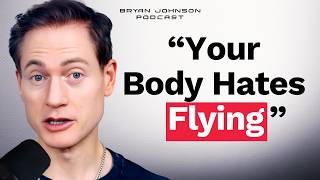
Bryan Johnson and Dr. Mike Mallon examine how jet lag damages performance, citing a study showing circadian misalignment can turn Olympic gold medals into silver. Johnson tracked his own 11-day European trip and saw rapid declines in cognition, mood, and metabolism. Interventions like morning light and timed melatonin can cut jet lag from 12 days to 2-3, but they recommend limiting international travel to one trip per quarter.
Chapters
The study on the Olympic athletes, it was 173 Olympic teams across 15 games. What they saw is that athletes who might have won the gold dropped to silver. If they hadn't recovered from the circadian.
Rhythm adaptation, they could have gotten gold, but they got silver instead, which is pretty terrible.
But this is costing them in performance, so it's actually hurting their companies and their teams.
And these athletes are typically flying, you know, like, weeks in advance to prepare and allow their bodies to shift so that they can perform at their highest level, and they're still having difficulty.
If you're an elite athlete and you spent four years preparing for this event, like, man, I would not mess around with circadian rhythm and not getting adapted to that new time zone. So it's a very real phenomenon. Hi, everyone. Welcome to the Brian Johnson Podcast. Today we're talking about jet lag, and sadly, our friend Kate is not here today because she's sick. We spent 11 days in Europe, and it was damaging. Today we're going to talk about what the right amount of international travel is and what you can do about it. Let's go, Mike. We're down. We're down to TMA today.
I was just thinking the same thing. It's gonna be weird without Kate here.
It is. How do you feel about this?
I don't know. I'm a little nervous. I'm being honest.
Yeah.
Who's gonna. No one can fill her shoes.
Yeah, it's true. I called her this morning, like, how you doing? And it was a bad situation. She's been teeth. She's been teetering for a couple days and just went for the wrong way yesterday.
Yeah, in some ways it would.
Like.
I'm sure it's like she doesn't feel like being on a podcast right now, but it'd be kind of great to have her on to talk about, like, maybe why she's sick.
Yeah, even just a very, very brief experience appearance would be helpful.
But I think about, like, all the times I've traveled and, like, how often I get sick. There's nothing, like, with a greater likelihood of making me sick than time on an airplane, especially if there's, like, a big change in. In time zones.
So I guess the backdrop of this is, is Kate and I just got back from 11 days of international travel, and we did an experiment where we went really hard. So we stayed up later than normal. We got less sleep than normal. Um, I did do a few naps here and there, which we'll talk about, but we did. We went really hard for 11 days. And we saw this continuous decline in almost all things. You know, like I just wake every day. We feel like we lost like three or four IQ points. Our brains became a bit more, you know, foggy. We became a bit more grumpy. We wanted bad foods. It just was like this progression. We both saw where it was going. It was a bad situation.
Why, why did you do this? What was the hypothesis? Like, let's see if we can, we can kill ourselves with, with travel?
Yeah. Yes. I mean we, we rarely do international travel. We did India and China last year for two weeks and it was fantastic. I mean it really is important for don't die, like be out and about. And we got to see so many people in these two countries. So it was definitely like worth it from like what we're trying to achieve in life. But also it came at this massive cost and I hadn't really felt jet lag since I've been doing blueprint. So I remember from previous times in life but I wasn't as acutely aware of how I feel then this trip I had hyper awareness of my states. And so really, yeah, it taught me these incredible valuable lessons about what actually happens to the body when you travel internationally and you couple that with not ideal sleep.
Well, it's a bummer that we don't have Kate here today, but it's sort of a little bit perfect for what we're going to talk about today. Do you want to introduce the topic, Brian?
Yes, Today we are talking about jet lag. And I've learned more about this topic in the past week than I have in my entire life. And experiencing this firsthand has really allowed me to see this with clarity. That I just came back from a conference yesterday while I was with about 150 founders, really accomplished individuals, their companies are growing extraordinarily fast and it's just taken as a default that if you're in this position you travel internationally all the time and you're always switching time zones and you kind of just like grin and bear it, but you just do it because it's part of the job. But the thing, the point I was trying to make to these founders is that they're doing this but, but they don't see the actual accounting of the effects on the body. And you know, just like their company, they see when they do things that make money and they see the things they do that cost them money. But when you do things for the body, you know, like when you travel internationally and don't get Great sleep. You don't necessarily have an accounting of what is happening inside the body, and so therefore you default to your subjective feelings. And so this week has been really helpful in going through the science and my own personal experience, looking at my own data, what happens when you travel internationally? And so today we're going to talk about jet lag. What it is, what's happening inside the body and what you can do about it.
Awesome. Yeah. What you were saying just a minute ago about how now that you've started doing blueprint, you're so hyper aware of how you feel when you travel. I bet a lot of these people that you're talking with at this conference don't even really realize the damage that they could potentially be doing to their bodies with regular travel. You know, the CEO lifestyle of like, you know, traveling 15, 20 days a month, they probably don't even really pick up on it.
Right. They have no idea. I was talking to this one woman and she's like, you know what? I, I travel internationally, but I, I sleep well. I think I'm, I'm, I'm fine. I said, have you ever measured your sleep? Do you know actually what's happening or have you measured anything else? She's like, no. And I, well, how can you say that things are fine or that you're somehow not, not getting, not experiencing severe damage in your cognition and other bodily functions? It's just like, the thing is, it is culturally acceptable to just give it a pass, but if you actually look at the data, it's really bad. So I think measurement is actually virtuous for so many reasons. But also it's filling this gap where cultural norms have emerged that have encouraged people to do certain things that are really bad for them, like these. It's bad for the investors, for the founder to be rolling around the entire world. It is bad for investors, for the founders not getting to sleep. It is bad for a boss. It's bad for everybody.
I think jet lag is really interesting because it has an evolutionary understanding of why jet lag happens in the first place. We as humans evolved with the sun. Throughout our entire history, there has been a sun that comes up for some number of hours during the day and then goes down. And that, through evolution, has created a circadian rhythm in our bodies. Our bodies expect to see this light. And what happens is the light actually hits the back of our eyes, specifically as a type of light. It's blue light. And it activates that circadian rhythm as the primary thing that drives the super chiasmatic nucleus or the part of the brain that, like, creates the rhythm. And it's also impacted by things like when you eat, when you exercise. Temperature can affect it as well. And when we travel, you know, we didn't evolve with airplanes, so, like, our bodies aren't used to, like, hey, I'm just gonna all of a sudden switch the. The time of day that the sun comes up by 12 hours, like, your brain just goes freaking haywire, you know? That's exactly what. Like, it doesn't know what to do. So it takes. They say it takes about, like, an hour or a day for every hour of travel that you do. So if you went from, you know, let's see, you went from LA to Europe, right? So what, seven hours, eight hours?
Nine?
Is that right? Nine hours. So theoretically, it could take you up to, like, nine days to actually get your body completely flipped. So I'm curious, you just did this. What was the. What was the timeframe? Like, how long did it take you to go from, you know, feeling terrible, obviously, when you got there to starting to feel better?
Yeah, that's about right. By day eight, nine, ten, I thought, I'm finally in this new circadian rhythm at the very tail end of when we were about to leave.
Perfect.
I know.
They actually say that. That eastbound travel is worse than westbound travel because you're. You are speeding up rather than slowing down. So, like, it's like you. You know, you. You get there, and then it's like you have to go to sleep earlier, and then you wake up at a different time as opposed to, like, slowing down. If you'. It's almost just, like, staying up later. And it always. Which makes sense to me because it always feels easier to stay up later than it does to go to bed earlier. Like, go to bed earlier. My body's just like, I'm not doing this. Sorry. Like, no way. But, like, staying up later, it's like, now I can go to sleep, and it's easier to go that direction.
Yeah. You know, the entire time, I was actually monitoring my body so closely. You know, I noticed on. On, like, day one, day two, your. Your body's in shock. Like, you, right?
You.
You've missed a. A substantial portion of an expected sleep. And your body's just kind of confused. You feel that fatigue and the overhang. And then day three, four, you stabilize just a little bit. But then other things kick in. Like, you notice that the kinds of foods you want to eat change. So instead of your typical. I mean, my protocol of eating veggies legumes, extra virgin olive, olive oil, berries, not seeds. Now, for the first time, like something salty or something fatty or like these high calorie, dense junk foods, they start appearing like, you know what? Maybe. And that's. That's coupled up with when you're out and about and you're trying to do all your meetings and go from place to place, and those things are conveniently aware that are present. It's like your mind starts drifting, like, maybe I should. And so you start seeing this drift in mind state. And then by eight, nine, right. It just gets, like, overwhelming. The thing that surprised me is by day 10, I felt like an animal. Like, I had animalistic instincts. It was so primal. It's like in, like right now, if I were to be offered a bag of chips, I would say, like, that's no, like, that's awful. I'm gonna feel sick, and it's not worth the trade off. By day 10 or 11, I was kind of like, huh, maybe it really just. It changed my relationship with these foods so substantially. It transported me back in time to my entrepreneurial days building Braintree Venmo, where I really didn't want to eat junk food every day, but I was powerless to stop myself. But it basically, you know, nine, ten days of sleep deprivation, plus the international travel, the different time zone annihilated my willpower. I took me to zero. It was actually crazy to witness.
That's interesting. I. So first off, I can't imagine you eating a bag of chips. Those. That kind of blows my mind. But it does sort of make sense if you think about, like, what's happening when you've got this sort of sleep disruption, right? Like, you were probably, my guess is having difficulty sleeping those nights. So you built. You accumulated a, like a sleep deficit over those days. And what we do know from multiple different studies is that the more, the more sleep deficit you create. Just a few, like an hour a night will actually change your willpower and can decrease your likelihood of making good decisions. And people will see people make different decisions when they're actually eating. So. And other things can happen too, right? So, like, not only are you making poor decisions, you're also probably gonna experience, like, brain fog, maybe even mood swings, which I would guess disposal describes, like, sort of this primal instincts. Your hormones get screwed up because our hormones are actually on like a. A daily variation, right? Like, sex hormones peak typically in the morning, at least for men. Testosterone peaks in the morning and trickles down. Cortisol peaks in the morning, trickles down there's also, you know, expected times that your body's used to eating. So like your gut works on a, on, on a circadian cycle as well, where basically it's. It's ready and primed to eat at the times of day that you typically feed it. Right. So if you switch and go to Europe, the. Then now the body's not expecting to see food at what feels like 2 o' clock in the morning. And all that stuff builds up, screws your brain up, and really makes you feel completely off.
Yeah. In, in preparing for this podcast today, looking over the science the team put together, I was really surprised at how dramatic and how fast changes happen in the body with even like a, a very slight shift, like you miss an hour, an hour and a half of sleep, how, how dramatic, how dramatically the body shifts in response, let alone moving 10 time zones, like, it absolutely wrecks the body. So in. I was really surprised to see the evidence and then also to experience it and to see this for the first time in my life. Yeah, Mike. I think that the thing that was most educational for me during this trip is it's the first time that I actually really was aware of the scientific evidence and experience international travel for the first time. And I could piece together these various things, from hormones to microbiome disruption to blood glucose to satiety. You know, how do I feel after food? So maybe we can go through these things, but this really. I think a lot of people just don't understand the significance of how badly things are disrupted in what ways. And if they could see the patterns and then map it back to what they're experiencing, it might give them a bit more awareness and help them maybe modulate the amount of international travel to do. We're going to talk about in a minute. Maybe a rule of thumb of, like, if you do travel internationally, what is a budget you can set for, how much time is prudent before it crosses over some threshold? So do you want to go over some of the scientific evidence we have dug up here on just like, awareness of what's happening and then also some of the things people can do to mitigate it?
Sure. So a lot of this stuff are things that we already talk about around sleep in general. Right. Like, for example, blue light exposure. Blue light exposure is obviously something that you've talked about a ton of, how we should avoid blue light exposure because it limits the amount of melatonin production. So there's been studies on this, and some of these studies have shown that just evening blue light exposure can actually advance your melatonin release by about 40 minutes. So that means your body is not naturally producing melatonin until 40 minutes after you would typically produce it because of that blue light exposure. So that's, that's one example. I'm curious, like on this trip, Brian, how did you use blue light as you're traveling to I guess improve your sleep on the plane or when you got to the location, what did you do to augment blue light?
Yeah, like, I only really did two things on light. First is when I aborted the plane, I had blue light blocking glasses on. And then I turned my screen off in front of me to avoid any kind of disruption so I could go to sleep. Go to sleep first thing on the plane and try to get a full night's sleep. And then two is when I landed, I tried to immediately get on that time zone. So I woke up in the morning around, actually I think, think around 4 or 5 in the morning. But in Sweden, it's light, I think like 18 hours a day or 19 hours a day at this point. So I get up and immediately get sunlight in my eyes for a few minutes. So trying to adapt. So would, would you have suggest I did anything else to help the adaptation process?
I think it's reasonable what you want to do when you're getting on the plane, if you're planning to sleep. And typically when you're moving, when you're going to east to Europe, is it does make sense to sleep. So you just want to avoid blue light at all costs. So blue lighting, blue light blocking glasses, red light on your phone, don't watch the screens, things that you've talked about before, These all make total sense. But then you have to sort of keep that up once you get to location. So like once you're in Europe, you have to make sure that you're not giving your eyes any blue light in that time that you're trying to wind down. So as soon as sunlight, as soon as the sun is setting or really like an hour before the sun starts setting, you really want to avoid blue light. So you can start telling your, your brain, hey, it's time, time to go to bed. Because your brain is not expecting to produce melatonin at that time. So you have to sort of trick it. Right. The other thing I'll say, and, and this has been, this has been looked at as well, is using sunlight in the morning at your location for telling your brain that, hey, it's, it's, it's morning time. And this means like Getting outside or getting like you know, 10,000 lux light exposure at what is morning time in the new location?
Right.
So if you're traveling to Europe, one way you could do this is you know, you land typically early in the morning, get outside as quickly as possible, get sunlight in your face. Also a great time to exercise.
Yeah, I mean I guess like on the backdrop, I was gonna say this question until the end, but we're gonna talk about a lot of strategies on what you can do. And so like we've, we planned this out where I said when I land I'm going to wake up in the morning, I'm going to get light in my eyes. First thing I'm going to have my morning breakfast, which I do normally, my pre workout breakfast. And then next I'm going to exercise, I'm going to say hey body like doing all these things to say we are in a new time zone. Change the circadian rhythm on a new protocol here. And then of course you can do things like later in the evening, avoid blue light, try to be consistent in your bedtime. But overall do you think these things actually make a meaningful difference or are we just basically chipping away at the. Are we basically under some kind of illusion that these actions do anything to help us whatever because you're shocked your body over 10 time zones? Like the more I got into the science on this and I saw like time melatonin here and do this there and even we looked at the Olympic athlete study that was actually really cool too. But I guess I wonder overall, do you think these things meaningfully outside of light in the eyes, eating first thing and, and exercising, do you think these other things actually make a big difference or are you basically just like the majority of the, of the damage is done and you just have to let the body adapt?
I feel like we're, we're jumping to the headline here. That's cool. So sometimes a little bit, yes, some this matters. So like you know, traveling to Europe or 12 hour time shift sucks and it's gonna suck for your body almost no matter what you do. It's a matter of how long does it suck.
Right.
So like the, the modalities we're talking about are not going to prevent these symptoms. It's just gonna shorten the duration of symptoms. And that's what a lot of these studies have shown. Like for example the, the interventional trial that, that we looked at where it's melatonin, exercise timing and light exposure in professional athletes. This was like a study that was a Non controlled study that they did in an Argentinian soccer team, only 22 males, but they basically very specifically gave them a certain amount of melatonin at a certain time of night. They controlled when they got daylight exposure, when they got to the location and when they exercised. And they found that the time shift for a 12 hour difference, so this is 12 hour time zone difference, that time shift only took their bodies a little over two days, which is pretty crazy fast. So a small study, like can't say it for sure. It didn't, it didn't prevent the time shift difficulty so it didn't prevent the changes related to the circadian rhythm mess up but it just made it shorter so they flipped quicker basically. So what, what we're talking about when we talk about all these, these modalities for improving jet lag, it's not about like preventing jet lag as much as it is just reducing the duration and the severity of the jet lag. And I do think, I do think a lot of these work and it makes sense to focus on these things that actually do affect the circadian rhythm in the brain, which we know is light eating and exercise. Really that's, that's about it. Like those are the, those are the primary levers outside of medications. And there are some medications we should probably talk about around this, around this because they are interesting. We can maybe get to those in a little bit. But yeah, I do think, I do think it matters it. But it also does still suck. And that's why I think something that you alluded to earlier, like there probably should be, we should have a standard for what is the limit that I'll expose my body to in a month in terms of travel. Because like no matter how good you are at implementing these interventions, you're still subjecting your body to some pretty difficult stuff.
That's really helpful context and a backdrop because I was thinking through, people are going to listen to this and most people already feel overwhelmed with life and to then add on, you know, like a 13 step jet lag protocol is just not practical. They've got meetings to get to, they've got things like events to attend. And so I was trying to like set the context because I'm sure that many people are, feel like, are going to feel overwhelmed and so, so okay, the, the point you're making is there's interesting evidence, it's not conclusive but that you can actually do a few things to lower, to lessen the severity and accelerate that adaptation process outside the three things, light exercise and Food first thing in the morning. Do you want to get into the evidence on the harm of jet lag first and then we do protocols or what do you want to do?
We can talk a little bit about the harm. I mean, the harm is pretty much the same harms that we know from lack of sleep to some extent. There are some other things. Like, for example, we see an increased risk of diabetes and inflammation, cardiovascular disease whenever there's a time shift. And that can even happen for people who like, sleep later on the weekends as opposed to their regular, their regular times during the week. Um, there's, you know, other studies that, that, that have shown that basically like, like there wasn't one in the Olympic athletes that you talked about that I think's really interesting where like they could have gotten gold but they got silver instead, which is pretty terrible. But like, just such an interesting, like, outcome study of like, you know, what's happening to like business people in that case. Right. Like, you know, are you missing deals because you didn't appropriately manage your sleep with travel that you would have gotten otherwise because you're not as cognitively, you know, performing as well. Pretty interesting.
That was exactly my thought. And this is what I was referencing when I was speaking to these founders. These are some of the most elite founders in the entire world. And as I heard them talking, I thought this is just catastrophic because the study on the Olympic athletes, it was 173 Olympic teams across 15 games. And like you said, what they saw is that athletes who might have won the gold dropped to silver if they hadn't recovered from the circadian rhythm adaptation. And so it really is, I mean, if you're an elite athlete and you spent four years preparing for this event, like, man, I would not mess around with circadian rhythm and not getting adapted to that new time zone. But it's a significant thing. And so, yeah, these founders who are basically Olympic level, you know, professional athletes are doing this international travel at an even more robust pace than these guys. They're traveling more, but this is costing them in performance. So it's actually hurting their companies and their teams because they're not fully accounting for the cost on their cognition and overall well being. They're actually lessening their performance. So it's a very real phenomena.
Yeah, I wonder about like those people who choose to take the red eye before the, like the night before the morning of the meeting. And they're in this meeting after a red eye flight. And it's an important meeting. Like, you cannot be, you know, at your Best. You cannot be performing at a, at a cognitively superior level if you haven't slept, you've been on a plane all night and you're jet lagged. It's crazy. I mean, these athletes are typically flying, you know, like weeks in advance to prepare and allow their bodies to shift so that they can perform at their highest level and they're still having difficulty. So yeah, it, it, it's, it's interesting to me that people are so bullish on, I guess, red eyes and also just the amount of travel that they're willing to do for, for business.
I hope this really marks a shift in culture. I mean, for example, I was trying to create a rule of thumb for my friends and I suggested to them one international trip per quarter max. And so let's just say that the time zone changed, let's call it 10 hours that you get one and let's call it. The average duration is five days. Your budget is one per quarter, no more.
I think that's reasonable. Uh, I think that like really I prefer longer duration travel to shorter regular travel. So if you can take one flight where you actually give your body a chance to sort of flip, that's probably better than taking multiple shorter flights because that's much closer to shift work, which we know is extremely bad. Right. Like shift work is, is, you know, 2 to 2.5 times increased risk of diabetes and cardiovascular disease and dementia and all of the, you know, and death, all the bad things. Right. And that's because your body doesn't get a chance to shift, to actually shift, to make that circadian rhythm shift. So taking like one international flight in a quarter gives your, gives you a chance to get that work done. Right. But at the same time allowing your body an easier shifting process both there and back.
Let's reason through this if we can. I think it'd be really helpful if we could give people a rule of thumb on what is an allowable budget for international travel. Let's assume for sake of discussion that a person's going to spend three to four days in that time zone that they're not going to be able to be there for a full, you know, nine, ten days. It's too much time. They've got to go there, attend an event or have an important meeting and then come back. So they're doing basically shift work. Right. They don't have the time to adapt. So someone is running a company or, you know, they, their job requires them to do international travel. What is a reasonable budget for them for that kind of travel.
And we're talking about international travel there for three to four days.
Yes. Yeah. Let's say the baseline is, let's say it's an arrow. Yeah. I mean, I agree with you. I mean, I feel the same way after doing this, but of course, like, you know, there's, there's. So the world has so much to offer. It's really nice. And sometimes there's that middle ground to play. Let's say someone does need or want to have international travels.
I mean, I think this is one of those things where you're balancing, you're balancing something that has a clear negative effect on your health. Right. And, and there may be other positive that it has on your health. Right. Like, you know, if you're successful in your business, you're, you have more money to then spend on other aspects of your health or potentially more time to spend on, spend on those things that are beneficial to your health. If you enjoy traveling, there might be benefit associated with spending time in a new place that you've never experienced before. So it's a risk benefit situation. In general. Like, any travel with that amount of time zone difference is going to have a negative impact on your health. So I would try to limit it to something as reasonable as possible. For me, that, like, I think once a quarter sounds reasonable. That's a, that gets you, gets you to location, but it's not putting, you know, hampering your body on a regular basis. When you're talking about three to four days, you know, that's not far from like the amount of shift work that we're talking about that causes, you know, damage if done, you know, once a month or more. So I think, like, if you're doing that once a month, you're putting yourself pretty much in that like, risk category as shift work, in my opinion. And that would be, that would be concerning. Like, that would be difficult to counteract that negative with any positives from travel in my mind. So I would say no more than, no more than once a month would be, would be the absolute limit.
So if we said that if you want to push the envelope one time per month, three to four days, that person is going to have a recovery time of one to two weeks for the body to get back into normalization. Is that right? Like I, the, the recovery time period post international travel is substantial.
Yeah. So it sort of depends on if you've totally flipped or not. Um, if you, if you've only been there for three or four days, then you're not completely flipping. You're partially flipping right, so that three or four days you're not going to be normal. Right. So you're, you're jet lagged during those three to four days and then you're likely, depending on how far you've traveled, you're likely going to be at least three or four more days before you return back to normal. Right. In your case, you went to Europe for what, like 10 days. So it's going to take you a lot longer to, to, to resolve back. But if we're going for three to four days, then we would expect, you know, per time zone, one day per hour of time zone change.
And then do you think some of the metabolic disruptions, microbiome, et cetera, do you think those potentially carry on longer than three to four days for the body to renormalize post the travel?
Certainly can, yeah. I mean microbiome changes are a bit of an unknown for us in terms of how long it takes to get back to normal. But we know that the gut is going to take at least, you know, anywhere from four to 10 days to return back to normal after international travel. So you would, you would suspect that the microbiome is going to be at least the same, if not more.
And so. All right, so if we're starting to sketch this out, if somebody is really wanting to push the envelope, they could travel one time per month, three to four days. They could while they're, when they're there because they're not fully adapting to the timeframe, do they still do the same things, wake up in the morning, sunlight, exercise and food, or do they have a different protocol because they're not fully adapting to that time zone?
Yeah, that's a good question. So the, the question is, do I try to maintain my, maintain my time zone that I came from? And that is possible, but very hard to do in most, most realities. Right. So the, the way you would have to do that is you would have to avoid light, you would have to eat on your regular time zone, you'd have to sleep on your regular time zone and you would have to exercise in your regular time zone. If you're just going to say the east coast from the west coast, that can be possible if you've got a pretty lax job where you can be like, hey, I'm not coming until noon. And like, you know, you sleep until, you know, 10:00am Wake up, get some sunlight, get exercise, go in at noon, work from noon to 7, you know, and then don't go to bed until midnight or something like that. You could actually do that. And I actually do that sometimes when I travel to the East Coast. That is possible. That's very hard to do when you're going all the way to Europe because you're on a completely flipped time zone. It's a nine hour difference. It does not gonna work very well. Right. And like you have to, because you have to completely avoid the light. You have to completely eat on your time zone times. But it's, it's possible in some, with some changes. So in most cases you're gonna end up with some jet lag where you're forced to sort of partially switch and then you're gonna have that recovery time when you get back.
Yep. So I think, you know, most people, it's going to be impractical because the use case here is for people traveling for work. And so when they arrive in that new time zone, they probably have meetings and events that are happening on that local time zone. So there's just no way they'll be able to superimpose their agenda. So. All right, so first thing is, if you're really pushing the envelope and you're willing to take some damage in exchange for your ambitious pursuits, one time per month is max. And even in that, you know, you still, you're going to be forced to adapt in those small, smaller time frames because you just need to be present in those meetings. Let's say somebody who is willing. I guess what the thing we're trying to identify here is when the cost starts becoming so substantial, it actually harms the person and their ability to make good decisions or like crosses some kind of threshold where it's like kind of suicidal. You know, like there's like some harm. There's like some harm equation where like you were willing to say yes to certain things as a trade off of life's realities. Then there's a different level where you really are engaging in behavior that is just that it's just like. Is damaging. Yeah. And damaging beyond drinking. Yes. There we go. Yeah. So you cross into a threshold where it just doesn't pass a reason. Like nobody wants this to happen. It's the kind of self sacrifice that nobody wants. I mean, it's like kamikaze like behavior.
Yeah.
If they feel really motivated about their mission or purpose and they're gonna come up with their arguments of like, I've gotta do it because of blank, blank, blank. I get it. But you're definitely in like red zone territory. Okay, so let's say that is number one. Let's say somebody's now doing a more moderate approach of where they do need to be present internationally for certain things, business or pleasure. What's the middle ground? The next one.
What's the middle ground? The middle ground I think would be like, yeah, it would be once every three months. Travel. Travel once every three months. For me, it seems reasonable. What you're talking about, Brian, is a lot like. A lot like the, the discussion around sleep in my mind, right? Like, you know, there's this, there's this mentality that I have to pull all nighters to make my business successful, and I'm sacrificing for that in the same way that there's this mentality that I have to travel this much to make my business successful. But like, what we don't see is the missed opportunities because bad decisions are being made because you didn't sleep or because you've traveled so much that your, your brain's not performing as well cognitively as it should. Like, it's the, it's these missed opportunities and these unrealized reductions in performance within ourselves that you're now aware of because you've been doing blueprint for long enough that you can tell, like, man, I am off. I'm. I'm feeling primal. I need to eat a bag of chips. Wait, this isn't me. Why am I having. Why am I feeling like this? You're aware of that stuff now because you know what good feels like, right? And so many people have spent so much time not knowing what good feels like that they, they are like continuously putting themselves in these situations where they're not ready to perform because they, they're not sleeping or because they're traveling too much. So it's like one of those things where you don't really know how much better you could be performing until you dial back on the thing that is causing the negative impact in your health.
Yeah. Okay. I figured out how I would articulate this. So let's look at these tiers. Let's just say the people around you, what would be the threshold for them? So, for example, my children, like, what would they say would be my threshold to be a good father? And let's say that my employees, what would they say would be a good boss? You know, even though the company benefits by the person traveling internationally by doing deals and being present and doing other things, at some point it becomes damaging, right? It becomes not a positive thing, but a negative thing. And then from an investor perspective, at what point do you not want your team members to be doing this? Because again, it inflicts more damage upon the company than not. So let's just say like those are the thresholds where it's the people around you which suffer the most given these things as the, as the threshold. So there's probably like we're, we're keeping this on a 90 day cycle. If you want to do the extreme 13 to 4 day trip per month would be the extreme 1 to 3, 1 to 3, 4. One to three to four day trip every 60 days will be middle ground. And one three to four day trip every 90 days would be on the safer side. That's these are for quick trips.
That feels pretty good. If we like I would. And I think it's important that we talk about time zone difference there. So when those, when you describe those trips, I would actually not just include international, I would include three time zones. I think Pacific to east falls into this category. Like so personally I travel to the east coast at least once a quarter. Right. And that, that's hard. And if I do, if I push that and I go to once a month, I am unhappy. Like in general, like I, it, I, I don't feel well. I have trouble sleeping and not just while I'm there, but when I get home I like by the time I'm back to feeling like I'm sleeping again, it's ready time for the next trip. So like just from my own personal experience, once a month is too much. Once every six days doesn't feel great. And then once a quarter is tolerable. Like and I think that, I think that's probably, I think that's probably good for everyone, to be honest.
Yeah. You know I, I love this conversation so much because a cost accounting has never been done for this kind of thing. We just do hand wavy things of like. But I'm working so hard, I've got to do it. I feel fine. Yeah, it sucks. But like I'm okay. There's not been an evaluation of data only. And given that we now have like with what we're doing, we have this high fidelity measurement and we see from both the evidence and my personal data just how damaging it is. We can now back into these really back of the envelope calculations of what is a reasonable allocation of time for international travel right now. Like everyone I know is just like as much as you can do. There's no limitations at all in people's planning. And so I like this a lot that there actually could be a reasonable back of the envelope approach which will get better and better if we get Higher fidelity data, we'll know more and more and then we can just say like, this is the trade off space. Whereas right now the costs are largely hidden or deferred. And so it's just like a problem for future self to address. So I love this that we're now at a point as a species where we can begin evaluating our cultural norms in the context of what it's costing us in life.
Yeah, totally. I agree with you. This is a good conversation to have. I think it's also good though to recognize that as much as many of us would like to not travel as much, some of us have to for our livelihood. Right. So there are definitely people who are going to be listening to this who are saying, like, that's great, Brian, thanks, but I got to travel, you know, 15 days a month. So we should probably talk about like specifically what those people can do outside of just trying not to travel as much to improve their, their jet lag. So maybe a good place to start would be just talking about like what your approach has been, your own protocol, like what are the things that you're thinking about when you're traveling around? Around some of the stuff that we've talked about that we know impacts it around light exposure, around diet, around exercise. What. What are you doing? Like on your protocol?
Yeah, I mean, so just one final comment as we move on to this next topic is that when I was talking to this founder, he said I'm. Because he was saying like, I hate international travel. Like, of course I love being there. Once I get there and I get to do the event or to see.
People about that we know impacts it around light exposure, around diet, around exercise. What are you doing? Like on your protocol?
Yeah, I mean, so just one final comment as we move on to this next topic is that when I was talking to this founder, he said I'm. Because he was saying like, I hate international travel. Like, of course I love being there. Once I get there and I get to do the event or to see people, I love it. It's great. Also it's awful and I feel terrible and it takes me forever to recover. And like, you know, it's like he, he lives the like, oh, we all experience these two sides. And then he said, I'm going to tell my investors that Brian Johnson told me I can only travel one time per. Travel internationally, one time per quarter. And but I guess like that really stuck with me because there's no even. So what you're saying, Mike, is true that a lot of people's livelihoods depend upon them to travel internationally or you know, they, or just not even internationally, but through time zones. Yes, totally true. Also because there's no boundaries that anybody has set. It's a free for all. And so that means people can put expectations on others. Like as part of your job we expect you to travel blank. And like that's really potentially not a good thing for anybody in that equation. So to me this is like actually a really awesome conversation because it opens up the dialogue of what actually is an appropriate level of travel that anybody can imagine, whether it be their own want or whether someone else is part of a job. But this to me is just absent from a global conversation and it's very damaging. I think society is actually less well because we don't have guidelines and we just, I remember like when, when Hillary Clinton was the Secretary of State, she did something like she wish she visited, I forget like a hundred plus countries in like some small duration of time. And I, at the time I wasn't doing health, but I just like that is insane. Like how can this person maintain, how can she be standing her own two feet with that kind of insanity of travel? Like flipping around with these different time zones like that, that's like a story of like heroic heroism. Right. Like you, you want to apply. But now it's just, it's a different conversation. So. Yeah, I, I, you can tell, like I'm really digging the conversation. It went in a different direction.
Yeah, no, I, I like, I like what you're, I like what you're saying though, because you're right. Like I think my, my urge is to like, let's tell people how to make it better. And you're like, let's tell people not to do it.
Yeah.
Which I totally respect. Right. Like, because I honestly like, well, I mean I led with like, can I tell people not to travel? Like you were trying to give me to commit to like a timeframe. Like what's reasonable? And honestly, like none is reasonable when it comes to health. So like we do need to do a better job of directing the, like the cultural expectations and norms. And I, I, I do think it's really interesting the point that you bring up around like expectations around travel for employees is like telling somebody like, I expect you to treat yourself poorly. I expect yourself to expose you, you need to expose yourself to cardiovascular disease and dementia and early death because that's what this business expects. Like, you can't say that. Right? Yeah, but we can tell people to travel and like expose themselves to those Sorts of risks. We just don't, culturally, we don't talk about these risks or understand them. And it's clear when you get on a, on a plane and everybody's drinking alcohol and there's bright lights everywhere and screens and nobody's sleeping, like, we just don't respect the damage that travel can do in our culture. And we need to. So I agree with you. You're making great points.
And we're also inevitably heading into a future where we will have the cost accounting for health, where right now it's like, okay, I'm going to have a, have this job which pays me blank, you know, per year in salary. And then in exchange for that, right, I learn certain skills, I progress in my career, I, I can achieve certain things which allow me to pursue other opportunities in the future. But then on the flip side of the cost side is, okay, but at what expense? Like, what are you asking me to do? Am I working 20 hours a day? Am I traveling to 14 countries every year? You know, am I. And you. Then you could basically say, okay, if I do this job for two years, I'm basically going to pay with 3.4 certain things which allow me to pursue other opportunities in the future. But then on the flip side of the cost side is, okay, but at what expense? Like, what are you asking me to do? Am I working 20 hours a day? Am I traveling to 14 countries every year? You know, am I? And you. Then you can basically say, okay, if I do this job for two years, I'm basically going to pay with 3.4 years of life. So I'm willing, I'm basically trading life for that financial compensation. And that's a real, I mean, people are doing that today. It's happening. We just don't have the numbers. I think what's cool about what we're doing right now is we were probably providing the best baseline of what that cost structure is in the world of what people truly pay in that exchange. Now, of course, this is in the backdrop of AI, where years of life. So I'm basically trading life for that financial compensation. And that's a real, I mean, people are doing that today. It's happening. We just don't have the numbers. I think what's cool about what we're doing right now is we, we're probably providing the best baseline of what that cost structure is in the world of what people truly pay in that exchange. Now, of course, this is in the backdrop of AI, where the workplace dynamics are going to change a lot. And how we do. Things will change a lot more so than the past. But this has really been a missing piece of the conversation that wellness has not been in the accounting stack and also not part of the dialogue of what is reasonable to ask somebody to do in exchange for that.
100 agree with you. I also 100 think that people want to hear what your protocol is.
Yeah, I mean honestly, the I wonder, okay, I'll show you what my protocol is. But I don't honestly think it's that great because I, I haven't gone to like the absolute edges of that protocol. Like I know there's more things I could do but then again like when I'm traveling internationally, like when we did China and India, we did something. The workplace dynamics are going to change a lot and how we do things will change a lot more so than the past. But this is really like you know, 30 events in 11 days. And then same with, with Europe. We did like we are back to back. We've been a missing piece of the conversation that wellness has not been in the accounting stack and also not part of the dialogue of what is reasonable to ask somebody to do in exchange for that.
100% agree with you. I also 100 think that people want to hear what your protocol is.
Yeah. I mean honestly, the act every second of the day. And so I just really tried to do the basics. Like you know, when I got on the plane, blue eyed glasses, turn the screen off. I did not eat, I was fasting, I went to sleep, I got a full night's sleep. That was great. When I land, I lighten the eyes every single day. First thing. Yep. Exercise, then food. And then outside of that I do melatonin in the evenings, which I think there's actually some science to say that the melatonin. See I guess when you're, when you're going west to east anyways, there's like I wonder, okay, I'll show you what my protocol is. But I don't honestly think it's that great because some timing on melatonin that you can do. But I didn't even adhere to that. I took melatonin in the evening. I think I, I haven't gone to like the absolute edges of that protocol. I took a double dose like we talked about but outside of that I really did. Oh, also the biggest thing I did down this trip, I know there's more things I could do but then again, like when I'm traveling internationally, like when we did China and India, we did something is I incorporated naps they were absolutely game changing. So in like, you know, 30 events in 11 days. And then same with, with Europe. We did like, we are back to back. Yeah. Like, so I would, I was able to sneak in like 60 minute naps. So longer than 20 minutes. And if, if my sleep data was correct, I was out in like one minute and I was getting something like, you know, 52 minutes of deep sleep. My body was just craving sleep, so I had the incredibly sound sleep. I'd wake up after that post nap. So maybe I was sleeping too long, but I was definitely back every second of the day. And so I just really tried to do the basics. Like, you know, when I got on the plane, made me help me feel rejuvenated in a way that a 20 minute nap wouldn't. So what would you say? Was that a bad practice or a good one?
The naps are variable from person to person. I generally don't recommend them because it.
Can blue light glasses turn the screen off. I did not eat. I was fasting. I went to sleep. I got a full night's sleep. That was great. When I land light in the eyes every single day, first thing disrupt the actual sleeping cycle.
Um, I'm, I'm having the thought, Brian, that like we didn't really talk about like your sleep jet lag protocol before you went on either of these trips for some reason. And like.
Yep. Exercise, then food. And then outside of that, I do melatonin in the evenings, which I think.
There'S, there's actually some thinking like why didn't we. Like we should have, we should have dialed this in a little bit more. Like, so the, the melatonin thing I would stick with, I would stick with before bed. Like at typical bedtime, destination bedtime. Right. And you can even start that before you leave. So you can actually take it before you leave for the, for the debt, whatever the destination is. Right. And then you take melatonin, at least for the first three nights. I. So just in general, like, one thing I would say is I am pretty bullish on, on pharmacological interventions for Jelly. Not just like, I like melatonin. Um, I also, I also like extended release melatonin. So even using a combination of instant plus extended, because the instant melatonin, instant release melatonin only lasts for about an hour in your bloodstream. And for a lot of people, they'll wait, they'll fall asleep, but then they wake up in the middle of the night and then they feel like it's, you know, 3 o' clock in the afternoon and they can't go back to sleep. So the extended release can be helpful. Also really like for places where you're traveling and you have to stay up for a longer period, like for example, Europe, I like Modafinil, um, and has a half life of about 12 hours. Keeps you awake through activating dopamine in your brain and can be really helpful. There's also some newer medications that are really interesting. There's one that activates melatonin receptors. It's a melatonin receptor antagonist or agonist. That one's really interesting as well as there's a new one that blocks orexin receptors in the brain and the both of those are non habit forming. Don't have any of the downsides that a lot of like benzodiazepines, Ambien, things like that have and actually help protect sleep architecture. So it could be potentially beneficial for, for travel. So yeah, there I think all of these things are super interesting. There's lots of opportunities in general. The things that you're saying though are the basis, right? Like it's the, it's the light exposure, it's the digestion, switching your eating cycle to wherever you're going, it's the exercise in the morning. Those are the things that are going to have that impact where it's, it shortens that duration of jet lag from 12 days to two days. And that's, that's really, that's really important. So maybe there's some opportunity for like improvement in general with pharmaco pharmacologics. But you're doing all the basics really well.
Yeah. So for those of you listening, I guess this is a, a window into our world. So before I left on this trip, I mean at any given time we are researching and pursuing, you know, 10 things simultaneously. So like when we do our team calls on a daily basis, it is just like we lock in so much stuff. And so it wasn't that we just didn't think about the international travel, it's just that we are absolutely maxed out in our capacity in pursuing our various research projects. But yeah, you're right, Mike. We actually didn't set up an international travel protocol. We really should have. I mean I was basically doing what I did before in India and China with, you know, the, the power laws. But so why don't we clean this up for listeners? So if somebody is traveling internationally, let's. Should we break this out into east and west or is that too granular?
I think that might be a little Granular. Like, let's just hit the ba. The very basics that way. Like, what are the top five things you can do with international travel to improve.
Yep, yep. Okay, cool. So we covered the basics of light sip exercise. Let's talk about. Will you list out the pharmacological interventions or the melatonin? What can people do out in addition to those basics?
In addition to the basics of the light sleep exercise? Melatonin. Yeah, those are the basics. Those are the. Those are the five things.
Oh, interesting. Okay, what did this group do to change to reduce symptom time from 12 days to two days?
They took, um. So they took melatonin. Right. And then they did. They did light exposure and exercise in the early morning and the early afternoon.
And that's it. Oh, that's it. I mean, that's. That's what I was doing. Yeah.
They're doing what you're doing.
Yeah. Interesting.
Basically.
Okay. All right, Mike, as the last item here is what is your take on stimulants? So if somebody arrives in your time zone, they're feeling beat down from the change. Coffee is an easy go to. To give you a quick upper. I know. You know, modafinil is an option. Oh, also, I'll say that when I was in Dubai, we went and did cryotherapy, and yeah, that absolutely, like, it eliminated my feeling of jet lag for about three hours. I felt spry and alert. It was amazing. But, you know, the three or four hours passed and I was back in my. My haze. But, like, it was really efficacious. So what's your take on other things like. Like coffee, caffeine, modafinil, and something like cold therapy? Yeah.
So I think it depends on the timing of day that you land. So if you're landing in morning of destination, which often happens when you're going, like, for example, to Europe, then I think stimulants are fine. It's okay to use stimulants in those. In those cases. And what you don't want to do is land somewhere in, like, the afternoon or the early evening and, you know, for whatever reason, drink a stimulant. Like, drink coffee or take a stimulant. That's going to disrupt your sleep. So you want to make sure that you're giving your body ample time to metabolize that stimulant before destination sleep time. Otherwise. Otherwise you're going to make it much harder to go to sleep at the time that you're supposed to be doing, which is just going to make the jet lag actually worse. Cryotherapy is interesting, like cold exposure. There's been some studies on this and it can be really beneficial for multiple days after arriving. You do it in the morning as sort of like a, you know, it releases, you know, epinephrine and cortisol and it gives you that like morning, natural morning boost of cortisol that your body might not be normally giving you because of the jet lag. So I like, I like cold exposure as well. It's just a slightly different mechanism than what you would see with, say, caffeine or modafinil.
You know, I think I. Next time I travel internationally, I'm going to try that. I'm going to see if I can do cold, cold therapy in the morning, waking up and to see if that meaningfully changes.
Yeah, you could maybe just do like a, like an ice face dunk. Like, yeah, if you're. Or a cold shower would be fine too. It doesn't need to be like really complicated. It doesn't need to be cryotherapy necessarily. You could just jump in the shower, take a cold shower, and that's probably enough to release enough cortisol to give you the symptoms that you're, that you're looking for.
Cool. I, I love this discussion so much and I hope it's useful for people. Like, here's what I'm taking away is that I walked into this discussion today. One, missing Kate. I hope she's okay. Two is, you know, really, I wanted to map out an instruction manual of what people could do to minimize jet lag because that's what people are asking. And instead we went down the path and we said, actually you probably shouldn't travel as much internationally as you're currently doing or imagining you're capable of doing because the damage is really significant. And that trade off is actually hurting you and your loved ones and your co workers and your investors and everyone around you. You think you're being a hero, but it's actually really damaging to everyone. And so there's actually a reasonable expectation that people can have of each other that there is such a thing as too much international travel, where it becomes damaging for everybody in that equation. And that if you have a rule of thumb and that shared expectation that we talked about, whether you're three to four days per month or per 60 days or per 90 days, it's a decent rule of thumb to think about health. And I think honestly, this is the biggest value. And I haven't heard anybody ever say there's Such a thing as too much international travel. Right. It's like, when you are going hard, it's like, just. Just breathe through it. Just like, hammer away. So I like this a lot. What's your take?
I love it. I love that we came in here. We recognize that, like, every single one of these studies, while there's literature to suggest that some of these things we're talking about have benefit, it's marginal. Right. It's a 15 improvement. It's a 50 improvement. But nowhere is there an intervention or a combination of interventions that are going to resolve jet lag. It is still going to be a thing.
It's.
And we're gonna have to either decide as a culture whether we're gonna tolerate it at the level that we're currently tolerating it or whether we're gonna change.
Yeah. Yeah. You know, the. The thing that struck with me the very most is in that 11 days where I was, on purpose getting less sleep, we were doing this experiment, I literally became a different person. The way I thought, what I wanted, what I imagined, my willpower, my discipline, my mood, my. How much optimism I felt relative to pessimism. Like, it just literally changed me as a human. Just 11 days. And that's pretty scary, you know? Like, I've been so consistent in my routines, and my thought patterns have also been very stable, and that just threw me out of whack, and it's actually really alarming. So I'm glad that I actually have that experience to feel it so acutely. And now when I talk to people, I can come from a place of a deep understanding of where they're at. And they. They are in that state I was in. They don't know it. So they're. They're in that, like, what I would consider to be an absolute emergency state, and they're kind of, like, honestly, pretty good. Like, I think I'm just fine with it. Right. Like, I think my body handles it really well. It's like, no, it's not. This is not. You're not doing well. Your body's not doing well. This is not a. Not a good situation.
Wow. Yeah. That's crazy. I mean, like, you're. You're sitting here saying, like, I'm a completely different person. Kate's so sick. She's not even on this podcast. Completely different experiences of travel.
Yeah. Yeah. That actually is the best. That's the best point is we sadly lost Kate's presence because the damage that she sustained overwhelmed her body. And I was close. If we both got Sick, like it just, we could feel it. We both had a little tickle in our throats and then we went to another conference yesterday and I. And we stay in. We stayed up late for this one and I think that put her over the edge. I got a nap in the day, which I think got me. So today I'm feeling pretty good, but like a teeny bit sickness. But yeah. So hopefully Kate will be back. But maybe she made the comment to me this morning that it's possible that people in the future will look back at us and our, our disposition towards getting sick was so lax. When really when you get sick, like it's really causing a lot of damage in the body. And so just like we're, we're always trying to imagine like what, what future generations will see so clearly, which we're blinded to and that that could be one.
Yeah. Not only did they eat bags of chips, but they traveled across multiple time zones and continued to work when they were sick. And yeah, I can. The list goes on and on about the ways that we treat ourselves.
Yeah, cool. Well, I feel great about this. I'm, I'm, I'm personally honestly going to go out now and when I talk to people, I zero in on a few things like sleep and exercise. I'm now going to focus a lot more on travel. I. This has not been part of my questionnaire. Like, how are you doing? What is your travel schedule? How many time zones are you flipping through each month? So this is really helpful for me.
That's great. That's great. Well, thanks, Brian. This has been awesome.
Yeah, it's been great. Okay, guys, so thanks for hanging with us today. Hopefully you change your, your travel routine to have this in mind and it will make you a better person in life. Be well. This is the Brian Johnson Podcast. Special thanks to my co hosts Kate Tolo and Dr. Mike Mallon. For more science breakdowns and protocols, subscribe to my YouTube channel. Follow the podcast on your favorite platform or follow me on Instagram or X at brianjohnson.





