Meet the Billionaire Trying to Become the Healthiest Human Alive (ft. Bryan Johnson)
Bryan Johnson, who sold Braintree to PayPal, now spends roughly $2 million yearly trying to become the healthiest person alive. He tracks organ-specific biomarker ages, follows a six-hour daily longevity routine, and has experimented with plasma transfusions for his father. Johnson discusses his measurement-driven approach to diet, sleep, exercise, and public health concerns like food toxins.
Chapters
We may be the first generation who won't die. And if that's the case, how do you behave? Like, what do you do? We went through all the longevity research and we said, what does the evidence say? Then we measured the age of my body, every organ. So right now I'm 47, but my organs are different ages. So I basically tried to become the healthiest person on planet Earth. I was measuring everything going inside of my body. We started testing all foods and we found out that the food system is very dirty, it's very toxic. And so it just leads to all these other problems. When you don't sleep well, it leads to mood disorders, anxiety, depression. Like your body's not getting what it needs. It just creates this really negative loop. Culture is killing us. My name is Brian Johnson and this is the Burnouts.
So we wanted to ask you about your first experiences starting your tech company and what it actually ended up teaching you about health.
I mean, first, there's always a cultural lie in any given time period. For example, in 1870, there was a new idea that these microscopic objects called bacteria cause infection. At the time, that was a pretty insane idea. And if you didn't believe in that theory, you weren't a gentleman. You couldn't practice medicine, so they would ostracize you if you weren't part of the club on believing there was actually evil, you know, bad spirits or something, turns out that there are microscopic objects, turns out bacteria can lead to infection. And so in any given area, there's new ideas that challenge the norms and then society ostracizes people who don't believe those things. So in the case of being a founder, like, what is the idea that would be maybe out of sync with the future? It's that your willingness to sacrifice health for financial success is a trade you want to do. And so I sadly bought that narrative. I worked really hard, I didn't sleep, I didn't exercise, I didn't eat well. I really sacrificed my well being so I could achieve financial success. And that was a big mistake.
So if you were to go back, would you do that again?
Definitely not. And this is why people say like, oh, Brian, but you say this now after you sold your company, that's not fair because you have to grind in order to do it. But I really think that's, I think that's wrong. I think if you make health your number one priority, you are a better entrepreneur, you're a better person, you're a better partner, you're a better human. There's Just no virtue in grinding yourself to a state of bad health.
I feel like you've. You've gone through both extremes, right, because you talk about this, you know, decade of your life where you were unhealthy and then now you talk about, you know, never wanting to die. Do you think that there's like a personal motivation behind that? And what does that look like?
What I've been trying to do with don't die is in any given moment, there's a question I think that's really interesting is what is possible with existence now? If you live in the year like the 13th century, you could write great poetry or a book, you could try to start a religion, you could be a political person, but you couldn't build a computer that wasn't a part of the aspiration state, or you couldn't build a vaccine. That's also going to be pretty difficult. And so in any given time, if you say, what is, is the greatest aspiration of our generation, I think it's don't die. Like that is the thing. And so for me, it's not so much that I've shifted to that I've just said as a species, this is the first time we could legitimately say we may be the first generation who won't die. And so it sounds, again, it sounds crazy. But that wasn't when I started entre building in 2003, roughly, that wasn't a possibility set. So it was more like grind really hard, make a whole bunch of money, and then try to do good things in the world. So I'm saying as time passes, new new things emerge that change the way you understand yourself and your ambitions.
And for those of us who may not be familiar with your journey, can you take us back to when you were a tech founder? What were you working on? Why did you sell your company? And then what happened next?
I built Braintree Venmo. We sold it for 800 million. And then after that, I started an investment fund. I started investing in synthetic biology and genomics, precision chemistry, nanotechnology. I wanted to be deep in the weeds of science. And then I started Kernel, which is a brain interface company. It's the world's first mass market brain device where you put on your head, it measures your brain. Measuring the brain is really hard, but really important. And then I started Blueprint and Don't Die.
And for those who haven't heard of Blueprint project Blueprint, how would you explain it?
I asked this question. If we are the first generation who won't die, and if that's the case, how do you behave? Like, what do you do? And so if you look at current cultural norms, it's like live fast, die young, burn bright for a little bit, not a long bit. Or it's like it's okay to occasionally pull an all nighter, or it's okay to drink a little bit. And so people have these ways to model out the world. And I was saying, actually, as we're giving birth to super intelligence, the only thing that matters is that we survive as a species. Like this whole idea that we have now of the unrelenting pursuit of power, status, wealth, that's a game we played before, not in the context on the eve of giving birth to super intelligence. And so I've always, I guess I sold my company because my goal at 21 was I wanted to do something meaningful in the world that will be relevant 500 years from now. And that's a big challenge because when you look back through time, like how many things are actually remembered with 500 years passing? Very few. So you have to really stretch and say like, how can it be significant? Because otherwise like most of the things we talk about and work on on a daily basis, they're gonna be washed out in time. And so that was my goal in life, is like, how do you do something that's relevant 500 years from now? And so I sold my company because payments is great, it doesn't matter, like over the long time horizon, it's not going to move the needle as a species. It's a good business, it makes a lot of money. But I wanted to try to do it and I knew it would take me about 10 years to find. So I tried to get on that path as soon as I could. And then I found don't die.
And then after that. So you started spending upwards of $2 million a year on your health. Where did that money go to?
When you think about health, there's so much disagreement. Do you cold plunge? Do you do drips? Do you like, what kind of protein do you eat? There's infinite questions. And we said, can we answer these questions scientifically and robustly? And so I hired a team, we went through all the longevity research and we said, what does the evidence say? What is good, what is not? What has evidence, what doesn't? And then we just systematically prioritized. So then we measured the age of my body, every organ. So right now I'm 47, but my organs are different ages. Like for example, my DNA, my telomeres are age 10, it's not 47. And my cardiovascular ability is around age 20. And so your body has different ages according to the organs. And so we measured all my ages, and then we put all the protocols into my body. So I basically tried to become the healthiest person on planet Earth because there's a richest person in the world, There is a fastest person in the world, but up until now, there wasn't a healthiest person in the world. We didn't know how to articulate what is health. And so we tried to quantify it through a scientific method. And that's what I've been doing at Blueprint is a scientific approach on how to be healthy and that I share everything with everyone for free.
I'm curious how you think about, like, there's this approach of, like, okay, let's push science and see who can be the healthiest man ever. But holistically, as we think about the world being healthy, how do you think about investing that $2 million a year in your own health versus, like, providing for, you know, that could save many, many lives and have them don't die.
Yeah, exactly. These are all, like, layers. So those are things like. Like the mosquito nets, of course, is like a societal learning that mosquito nets are a good practice to prevent this death. Right. And this is true for vaccines. It's true for all kinds of global health measures. So within health, you have other things as well, like what kind of we eat and does food have toxins? And so, for example, like, when we were asking that food, I was measuring everything going inside of my body. So we started testing all foods for heavy metals and glyphosate and other contaminants. And we found out that the food system is very dirty, it's very toxic. And of course, that's going into our bodies all day long. So it's like mosquito nets in that you're trying to find sources that cause death and that affect a lot of people. And so every day in America, we willingly eat poison sometimes when we eat fast food. And then on top of that, of just the ingredients being bad, there's also toxins over and above that. And so we're basically on a global scale. I'm trying to assess what things cause all of us to die. So it's less about me, and it's more about the global environment of health. And for example, like, I went to India and we were measuring air quality. They have among the worst air quality in the whole world. They, as a country, would do better by addressing air quality than curing cancer, that's how big of a difference it would make. And so I made that a public issue in India. And so I showed people like, how do you measure air quality? What is good air quality? How do you look at the numbers? So really it's very similar in that I'm trying to find sources of death for the entire world.
And tell us about what does a blueprint day look like? What kind of food are you eating, supplements, all of that.
My daily routine is six hours now, which is kind of ridiculous. And so I wake up around 4:30 or 5 and I go through an entire morning routine where I do lighten the eyes. When I first get up, I take my inner ear temperature because body temperature matters a lot. Over the past couple years, my body temperature has dropped almost 5 degrees Fahrenheit, so my body's gotten a lot cooler, just metabolically more efficient. And then I work out for an hour. I do strength, cardio, flexibility, balance. I'll then do sauna for 20 minutes. I'll do red light therapy. Then I do like altitude training and then hyperbaric oxygen therapy. And so it's built to basically ladder upon itself. And so it's kind of like a, if you ask, like what does LeBron James do on a daily basis? He has a pretty similar program of eating well, exercising, sleeping well. I'm like an athlete for longevity. So is how I think about it.
Let's say I don't have six hours. I don't need to be the healthiest person in the world. What would you, you know, push people to incorporate into their morning routines to be more healthy?
So actually I have a really good one for you is if you take everything I do and you compress it into the simplistic protocol possible, it's lower your resting heart rate before bed. And so before you go to bed tonight, lay down on your pillow. If you have a wearable, just pull up your wearable and see your resting heart rate. If not, take a few deep breaths, calm yourself down and then fill the side of your neck and take your resting heart rate. So let's say tonight your heart rate is 60 beats per minute. Now your goal in life is to lower your heart rate by say 10% to 54 to 55. And you'll learn that there's a few big ones that help you. One, if your bedtime's at 10pm, have your final meal today around 6pm because if you eat close to bedtime, you know what it feels like. Your heart pounds, you feel hot. So eating earlier and lighter foods helps you lower your heart rate. Two is rumination really elevates the heart rate. So if you're worried about something or mad or anxious and you're skipping through thoughts, that also can elevate your heart rate by 5 to 25 beats per minute. So the way to offset that, if your bedtime's at 10 by 9pm, turn off your screen and have one hour. Was that like it?
It's a little hard as a founder to do that, but definitely.
Exactly.
Let's hang out of there. I saw your response. That's great. So this is the thing is like, we are all hopelessly addicted to our phones. Fair?
Yes, definitely.
So if we acknowledge that. Right? And the phone is not a peaceful device. It has all kinds of arousing emotions. Like sometimes it's anger, sometimes it's jealousy, sometimes it's stress, sometimes it's worry. There's all kinds of things. And so that to 60 minutes before bed is such an important time to get to allow your body to wind down. Because if you don't, if you're on your phone scrolling or messaging or working until you go to bed, then your heart rate is going to be up. If your heart rate is up, your sleep goes down. And so the reason why I talk about this is sleep is by far and away the best performance enhancing drug in the entire world. Like, take away all the longevity therapies, I'll take sleep alone as the only thing I do. That's why I talk about resting heart rate. Because when you lower your heart rate, your sleep improves. When your sleep improves, you're going to exercise or be more likely to exercise and then also eat well. So it triggers this positive cascade of behaviors. Whereas if your heart rate is up, your sleep is down and your willpower goes down by like 60 to 90%. So the next day when you're like, should I exercise? You're like, you know what, we deserve a break. Like today, let's not do it. Or when there's a croissant for breakfast, you're like, that's one. So you're more likely to make bad decisions. So I would say, yeah. People hear me talk, they're like, brian, you're way too extreme. I can't do it. Totally get it. So just focus on your resting heart rate. Make sleep your top priority. And then other things just kind of naturally fall into the case. So it is doable, it's free. So much of what I do is within the power of each person.
It's so interesting because I remember I discovered the protocol a couple years ago and my mom thought I had gone nuts because I was saying, oh, I want to try, try all these different things. I want to wake up earlier, I want to make this type of food. And I, I understand part of what she was saying. Obviously, there's a lot that you do every single day. If you were to boil down into some of these essentials, for example, for food, what would your recommendations be for a healthier lifestyle?
Yeah, so I built a don't die food guide. I'll share with you. We went through the scientific evidence. We just made a mill, like a plate and we put the best foods on there. So just eat from that plate. And so like, I eat a lot of, a lot of legumes, like lentils, edamame, beans, berries, nuts, seeds, extra virgin olive oil and collagen peptides. I don't eat meat, but other. You can eat meat if you'd like. So, like, do your thing. The encouragement, the thing I tell people is just measure, like, make sure your biomarkers are good. But yeah, we just followed the scientific evidence. We just said what foods produce the best health? And that's what I've been. This is why I'm trying to showcase my. I share my biomarkers publicly because I say I'm the healthiest person in the world and here's all my data. And that's the way. Because otherwise, when you enter the world of diet, everybody has their own opinion. And then you're like, what do I do? This person says this, this person says that, and I just say, like, whatever you do, just measure yourself. And so that's what I'm trying to do is like, cut through the noise and say you can scientifically measure what you do and see if it's right or wrong.
And walk us through what are your stances towards stuff like the amount of protein intake you should be getting and then also the number of calories you should be consuming.
So on those things I do very, very different than most cultural norms. Caloric intake is 2000, 250, which is low for a male with my level of activity. So I'm at a 10% caloric restriction. And so a lot of people hear that. They're like, well, wouldn't you just waste away eventually? But my body has adapted, which is one of the reasons why potentially my, my temperature of my body's gone down. But I'm in the 99th percentile for muscle mass. I'm in the top 1 percentile for body fat. In terms of optimal. So it's like, it's right on point. Same is true with my vascular fitness. And so my purdy consumption is 130 grams. Grams a day. So I'm 175 pounds. So generally speaking, like, you know, 1.2 to 2 grams of protein per kilogram is a rough target for people. Again, like, measurement and something a little.
You know, off the beaten path that you've done is the experiments with blood plasma transfusions with your son. What kind of results did you see and would you say there were any learnings from the public feedback around that?
Yes. So I did that for my dad because my dad started showing cognitive decline. And we were doing some research on that topic, and we found that people were doing studies with plasma transfers for cognitive decline. So my dad approached me. He's like, I'm in a bad spot. And I said, dad, we're doing this research. If you want to do this, I'm happy to be your donor. And so it just so happened that my son heard that conversation. He's like, I'm in, too. So it was more like a family thing. But it was really, for me, doing it for my dad. And so in doing it for my father, his speed of aging slowed by the equivalent of 25 years. So I had a dramatic impact in his body. So for me, I saw. I saw no change. But it's probably because my biomarkers are pretty similar to my son's, whereas my dad and I are very different in our health. So I think my dad had a huge benefit, actually on par with the animal studies. So it was actually hugely helpful for him.
Obviously, that's a very extreme example of something that someone could do. I wanted to talk about this idea of, obviously, people on the Internet have a lot of opinions about what you're doing, and very similarly when people might go out with their friends. If you choose, maybe I don't want to drink tonight, or I don't want to eat the fast food, or how would you. What advice would you give to people who have to deal with peer pressure when they're trying to make healthier decisions?
Yeah, it's tough. It gets very, very hard. The hardest part is just doing it for the first time. And once you establish that norm, like, I don't drink, and then everyone knows that you don't drink. And so when you go to a social setting and someone tries to give you a drink, your friend might even help you out and be like, she doesn't drink. And so it's Just like setting that boundary condition. I don't eat fast food, I don't drink. So this is why I like the idea that none is better than some. Because when you do some, you always have this burden of deciding when, how, where, with whom. And sometimes your friends are like, are you drinking tonight or not? Whereas if you just make it a clean cut, no fast food, no alcohol, it's so much easier for you and for them. And then in time, like your friends, they know, right? They know they feel bad when they drink, they know they feel bad when they eat fast food. We all know it's bad for us. And so it's not like it's really a defensible position. Just let them do their thing. It's cool and fine. We're all fine at our different times in life. But I think it's easier to just like be that, be that thing and let them evolve around you and walk.
Us through what are the impacts of things like caffeine and alcohol on the body.
This is the thing is like we, we have this intuition about when you have a thousand dollars in your bank account, that's all the money you have. If you spend 100, you know you have 900 left. And when you have zero, you have no money. But the thing is, when we talk about our life, our life points, we have no accounting mechanism. So if you go out and drink heavily one night, you may feel hungover the next day, but you don't have that says you've lost blank life and increase blank likelihood of disease by this. Like we don't have a counter. So therefore because we can't see it, we're like, I'm fine, not a big deal. Like my, my skin looks the same and like you don't feel any different longer term. So it's that we can't actually see the accounting that's. But really it's very, very bad for you. Like for example, I'll give you data on sleep. Like one night of bad sleep for four hours, your body stops looking for cancer in your body by 72%. So one night, a four night. Great. That's a great response. I love it. So one night, four hours of sleep, your NK killer cell, this is like cancer surveillance. Cancer surface cells, they become 72% less active. So your body's like, look, I got so much going on right now because I didn't get enough sleep, I'm going to stop looking for cancer. So that's like one bad night. And so it really is a big deal. And right now People are very flippant. Like, not a big deal. Don't worry about it. One, I'm gonna catch up on the weekend. That's not how the body works.
I always find it funny when people talk about the alcohol stuff, because I'm like, it's not really that shocking. It's literally ethanol. We know what it is. You're literally drinking ethanol. But I am curious, how do you think about the role of social media and health? Because I think one thing that I see consistently is questioning vaccines or people. You get a lot of people saying, oh, this is my health routine. And there's things like this. You sleep. That's very, very proven. But how do you think the role of social media has had an impact on health? Do you think it's positive or negative as people share their findings?
I mean, humans are humans, and, like, there's just no. The core to public opinion is not a scientific experiment. And so people are doing their thing. They're trying their best. That's fine. And that's what I've been trying to do with my project is we say take a given therapy. Like, is. I've done sauna, so is sauna good for you? Now, there's a bunch of observational data, but there's no one who just said, I'm going to start a sauna therapy, and I'm going to measure first 60 sessions. They share all my biomarkers, so I try to do that and say, quantitatively, this is what Sana did to my body. And I measure 50 biomarkers. I try to bring this rigor to the conversation versus most people. They talk about things and they say, blank, because I feel good or because it seems cool or because it seems interesting. It's not based upon any evidence or any kind of measurement. I think there's no stopping how people are going to do their thing. People want to flex their stuff, they want to do interesting stuff. It's fine. So I just think there's a way, if somebody is serious about this, you can actually approach it in a scientific way and learn what is better than other things.
Very noted that sleep is extremely important. Definitely something me and Phoebe need to work on. In that same vein, for people who love drinking caffeine like us, things like drinking coffee, where does that fall on the health spectrum?
So let me ask you guys a question in reverse. So you're hearing me talk. I'm here talking, right? What are you thinking about this? Are you. I think your reaction was like, look, we're founders. We're building Tough. We're building stuff, we are stressed. We have a lot going on. You obviously feel the pinch on your sleep. So you hear me talk like, what are you guys thinking? What are you going to do in your lives?
I don't think I can adapt the sleep thing. I think the sleep thing is just going to have to happen. And that's a sacrifice of. I love what we're building. I think the having parameters around the no phone. I'm definitely not drinking for a month after hearing this.
So on the sleep thing, what would you, what would get you to actually prioritize sleep? Because basically your underlying premise is that you hear me say this stuff and, and somehow in your mind it doesn't connect, that it applies to you.
No, it does apply. That it connects to me. I'm just making that active decision to prioritize the company over my own wellbeing. Because like, to be honest, we launched four months ago, right? And so there's consistently like we're now building because the company scaled so fast. And that's great. Like we have 400,000 users. But there are operational systems that need to be put in place that are like, okay, we need someone, you know, checking every day. Are all of our affiliates working? Are all those links working? Like there's different systems that need to be put in place. So yes, like, like six months out from launch, seven months out from launch, I better be getting at least seven hours of sleep a night. Like, but right now it's okay for me to sacrifice some. If I can, you know, spend, you know, truly like Saturday on a weekend relaxing. I'm willing to have these couple of months be really tough, even though I know it's gonna bite me in the butt later.
Do you think it's possible that you would actually be better at these objectives if you slept a full seven, eight hours?
Yes.
That actually like, you would actually do a better job at life. You would actually accomplish more and address your needs more thorough if you got seven to eight hours.
I think it's kind of what you were saying around, it's really about breaking it like a bad habit. Ultimately, bad sleep habits are bad sleep habits. And so the longer you delay and say it's okay if I get four hours of sleep one night, the more you continue to make justifications that make it really hard to break the cycle. Whereas if every single day you say it is a non negotiable, I need to get eight hours of sleep, it would be really different. And it's just something we definitely need to learn. And I think people generally need to become better at. It's like a muscle. You need to build it and you need to be better at practicing this. Although you are 100, right. And I actually wanted to ask you about this because I was talking to two of my friends who love the work that you do and both of them were recently diagnosed with sleep apnea. And I definitely think that there's under reporting and it's a huge issue. What do you think about that? They were specifically talking about the device that you wear when you sleep. But generally like, I'd love your thoughts on how sleep habits are impacting young people and sleep apnea at large.
Yeah, I mean, so I guess on this whole sleep thing I really am empathetic. I hear you guys are ambitious. You've got a good thing going. You don't want to miss it. It's exciting. And if I could travel back in time, I would plead with my former self. Like I would get down on my knees and plead, do not not listen to the cultural norm that's telling you to make this trade off. It is wrong. It is wrong scientifically, it is wrong biologically. It is just it like there is no virtue in this that you're literally you, you are lessening your quality as a human when you do this. You're not increasing it. Like people think it's an increase. Like they, they imagine it's a better investment of, of their energy. It's not. But it's so deeply embedded in our culture and everybody's doing it. So the pressure feels so intense. You have this and it's like it's. Everything builds up. I just want to try to land one more time. If you actually invest in at least just seven hours of sleep and make it a non negotiable do it for a week, I think it will change your opinion. You can achieve everything you want to achieve without that sacrifice. You don't need to sacrifice that three hours a day. You can actually get it. And so it just leads to all these other problems. When you don't sleep well, it leads to mood disorders, anxiety, depression. Like your body's not getting what it needs. And so you're more likely to fall into those bad states when you do that. You're more likely to eat poorly. You're more likely to just like it just creates this really negative loop. And so it just like I. Culture is killing us. We just have the wrong culture. And this I'm saying in any moment in time. How was culture killing a Society in 1870 they didn't wash their hands between surgeries in 2025. How is culture killing us? It's telling us that sleep deprivation is okay for short durations of time or during certain periods of our lives, life. But it really is, it's a, it's a killing feature.
And what are ways that people can improve their sleep habits?
So it's like the one that talked about lowering your resting heart rate before bed is by far and away the number one thing your body. You can't just go from this high arouse on worked state and just drop into bed and just be out. You're going to have disruptive sleep, you'll have high stress and so you need to calm yourself down. So 30 to 60 minutes, minutes, screens off, wind yourself down. So instead of that screen time in 30 to 60 minutes I could read a book, go for a walk, take a bath, like call a friend, like something that is like not work, not social media, not arousing. And I know it's just very, very hard because we're just like we're glued to the world. So you just need to calm your body down. And your resting heart rate tells you am I aroused or am I calm? So every night your resting heart rate is your accountability partner. So mine, my target every night is 39 beats per minute. If I hit 39 beats per minute, I'm a perfect night's sleep. If I'm 56 because I'm stressed or angry or mad or I ate late or something, I'm going to have a terrible night's sleep. It's just like night and day difference in how I feel about life. So I'd say that. And then also just like some basic things like you want a blacked out room, you want to be mindful of noise, interruptions, you want to be to bed every, every night at the same time. So I go to bed at 8:30. But you don't need to do that. Like pick your bedtime sometime between midnight and 1 and am and before. So whether it's 10 or 11, but just be consistent, plus or minus 30 minutes. It's very hard for the body to swing from 9pm to 1pm and go back and forth, choose a time and stick with it. So I did eight months of perfect sleep wearing a wearable, a perfect score. I was trying to demonstrate you can in fact achieve high quality sleep every night. So the metrics you care about if you do measure it is you want to put your head on the pillow and be asleep within two to three minutes, less Than five. You want to be up less than one time per night, zero to one. You want two hours of REM and two hours of deep. If you have that profile, it's really good. You're getting all the systems rebuilt in the body. Also if you don't get the sleep so the trash collector sweeps through your body every night, pick up the trash. When you don't get enough sleep, the trash collector doesn't come and your junk builds up in your body. So it's like it really is really damaging the body. When you don't get sleep and talk.
About this, you don't do any co sleeping. Can you talk about that? Do you think that that's important?
Yeah, there is some studies that show some people do better with a partner in bed. Maybe just for its comfort, but a lot of people find it very disruptive. So yeah, I sleep alone and it's trying to get two people synchronized in terms of timing of sleep, sleep patterns, movement sounds is very hard.
So thoughts on eye masks?
Yeah, exactly. Yeah. So I have a blacked out room so I don't wear an eye mask. But yes, definitely like blackout out with an eye mask. But if you can sleep alone you should probably give it a go. It could dramatically improve. Some people have like a pet in the bed and a partner and like this whole thing. So and a lot of people say like oh I like so many people said this to me, like Brian, I say fine. I say show me your sleep data and they show me their sleep data and it's awful. So don't trust your feelings that you think you know how you're sleeping. Get it quantified in the same way. Like you can't say like oh I feel great. I must have great cholesterol. You can't feel cholesterol so sometimes you can't even feel great sleep.
Yeah. My friends have started wearing OURA rings and they have learned so much about their sleep in a really negative way. So it's been really interesting seeing just like how much room there is for improvement even when you think that you're actually well rested. I wanted to pivot a little bit and also talk about other areas like exercise. What do you think are the best practices for how much people should be exercising per week?
Ideally it's 150 minutes per week in zone two two. So that's like roughly like 120 to 140 range. And then 90 minutes of zone five that's like going all out. So the way to think about this is 150 minutes where you can have a conversation and be exercising and the 90 minutes where you can't talk while you're exercising. That's good. And then you want to do strength and balance and flexibility. So try to have a well rounded. So whether you do, whether you run, pilates, yoga, weight, strength train, I try to have like a nice combination of things.
And two other things I was curious about is, is blue light glasses, what do you think about those? And then also how much sunlight exposure should people be getting?
Yeah, blue light glasses are great. I definitely. Blue light will reduce melatonin production so you will not have it at night. So I don't use any lights in this house. We just are all natural. So when the sun sets we have a red light in the house we'll turn on for navigation. Yeah, people have different relationships with the sun. The sun's great, it feels great. It helps boost mood also. So you are making a trade off where the sun is going to damage your skin. So it's like you can't get around that. So if you go out in the sun you're making a trade off, it will damage your skin. And so I have actually the two of you, if you have time. I have a device upstairs that can measure skin quality.
Oh, I really want, I've done one of those ones.
Have you?
I was, I did not go back to that place. Certainly did not go back there.
Did it give you eight biomarkers?
I was like 16 and they did it and I had acne and stuff. And I also, I'd been out in the sun because I had acne that I wanted to dry out.
And then like you have the skin of a 35 year old.
Okay, I'm never coming back here.
Yeah, yeah, yeah. It's tough.
It's like you have the skin of an 80 year old.
Yeah. So once you see that, it's really informative because you see that the, the sun is not free. So people, people in America love the sun. Right. And being tan is, is very, is seen as sexy. Whereas you go to Asia, Right. They have a very different relationship with the sun so they avoid it essentially. So yeah, I get sunlight in the mornings and the nights. I don't go out in the sun during the day when it's high UV. So between roughly like 6am and 9am I'll be out in the sun. I can't be at the sun. And then the evenings around 5, 6pm but during the day I either have an UV umbrella or a hat or something.
But do you Wear sunscreen.
I usually don't because I'm usually not in the sun at high UV times.
Well, I, I wanted to also ask about any other general things you think people do wrong when it comes to their health. Obviously we've covered exercise, sleep. What else do you think people do wrong right now?
Yeah. The best thing people can do is measure. So you mentioned your friends. They had the Aura range rings and they, they like the thing people. Everyone learns, whether with any wearable, whether it's Aura, whoop, Apple, Garmin, Samsung is. The first thing they see is alcohol. So they'll drink alcohol, they'll see the data and they're like, oh, my goodness, alcohol wrecks your sleep. Amazing. So then they start building other patterns as well. They're like, oh, blank does blank. And so they start making these relationships, which is wonderful. And so the more you can do that, like get a blood draw and say this does that, it really helps inform your accounting system. Because nobody inherently wants to. Wants to age and get wrinkles and have the skin sag and feel decrepit and not be able to move around. Like, we all want to feel youthful and vibrant. And so measurement, I think is really great. And most people don't measure. So allow me doing blood draws, I measure a lot of things like microplastics in my, in my body and stuff like that. So measurement.
What about sugar? Because you use allulose. Is it in the products that you make? What do you think about stevia, alternative sugars, all of that?
I think allulose is probably the best, best longevity sweetener. I think it has the best evidence. It's not just a sweetener, but it also has some health benefits, like it lowers blood glucose response. Monk fruit is also good. I think stevia has potential nuanced complexities to microbiome. I think it's still emergent, but all of it is better than, I think, sugar itself.
How damaging is sugar?
I would not do it.
You wouldn't have any sugar?
I wouldn't, no.
Why?
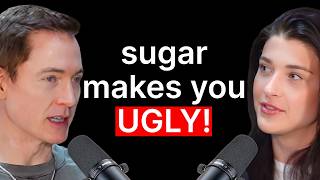
Like you, you've heard the phenomenon of your sugar face. Like you can actually see sugar manifest in the face in someone's skin. Yeah.
Really?
Yeah. You can? Yeah.
How so?
Yeah, you just, you have a very distinct. Just like, you know when you see a smoker and you can tell they're a smoker and you see their skin.
And can you tell I'm a sugar face? Be honest with me.
Can you?
You look great.
Oh, my goodness, that's terrible.
There's so many things that apparently really do Manifest. Oh, like seed oils. What do you think of seed oils?
Seed oils are fine. It's when they're fried, which is a problem. But cold pressed seed oils are fine. The seed oils have gotten a really bad rap unnecessarily.
So you think it's overhyp, all this?
Absolutely. Like, most things people talk about online are wrong.
Wow.
Yeah. So like seed oils, you put it in this big category. But no, like, cold pressed seed oils are fine. It's when you fry them at these high temperatures, that's when it's bad.
And how do you think about when it passes like health to, like, obsession? Because something I see with like, some of my girlfriends is like, they'll start, you know, calorie counting as something to be healthy, and then it transcends quickly into like an eating disorder or something where they're actually not getting the amount of protein that they need. How do you, like, throw. Think about that. And like, the culture is, you know, the close culture of like being really, really fit in that community versus, like when it transcends into comparison or unhealthiness.
I mean, this is like the hardest thing. Humans are obsessively, compulsively related to all things, right? I mean, what is our. All of our. We're all addicted to our phones, all of us. Right. But like, we can't stop it. And we all kind of have an eating disorder in life. Life. Right. Because the foods are built to be addictive. So I guess, like, wherever you turn, humans kind of end up on the extremes. And we all want to not be on the extremes, but then again, we build on the extremes. So like, we are extreme as a species. And so I think you're just trying to like, just gently guide your way, but to identify the orthorexia or other things. Like, yes, like, that happens with people, but then people point and say, like, dial it back. But then like, they're equally obsessed, they're equally workaholic or phonaholic or whatever. So, like, let's just acknowledge the realness of being human. We are an addicted mess of things. So let's just be true and honest. And so, like, if you can point your powers into these positive directions, great. But we're always like, you're always trying to find that right balance and it's hard for all of us. So, like, there's no clean answer. It's just like I traded one addiction for another. But like, I, I myself am not like this well balanced, perfectly harmonized human that's found the middle way Like, I'm. I'm an ambitious person. I work as hard as I've worked. I work harder now that I ever have my ent entire life, like, more intensely. And I get more stuff done in a given day than ever have in my entire life. I just do so with eight hours of sleep and taking care of my exercise, you know, my body. So I guess, like, I'm really trying to change culture because I think in like 2030 or 2035, that versions of us when we're there, we're going to look back at this time, we're going to say like, we were insane. Yeah, we were not sleeping. We were eating bad foods. Like, sugar was everywhere. Like, we're going to think we were just naive and dumb. So it's going to happen. It's just a matter of time.
I have definitely learned a lot from this episode and going to be taking those habits, and I hope everyone listening has To Brian Johnson. Thank you so much for coming on the Burnouts.
Thank you guys for having me. And I hope you guys. I sincerely hope this sticks. I want you guys to have your best lives. I want you guys to be happy and fulfilled, to work your asses off and accomplish something amazing and do so feeling great. I don't want you to have a mood disorder of anxiety or depression or get stuck in that grind because it can put you in a really bad spot. So sincerely, I hope you guys make your health your number one priority in life and kick ass.





