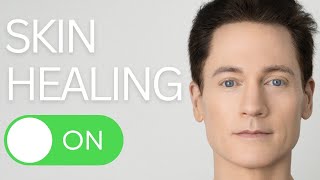
In this YouTube video, Bryan Johnson, the founder of the Blueprint anti‑aging program, walks viewers through his current favorite facial and scalp treatment. He explains that three years of intensive skin work were prompted by severe sun‑induced damage he accumulated as a child. The session combines Tixel thermomechanical ablation—a high‑temperature, micro‑spike device that creates controlled channels in the epidermis and dermis—with topical application of GMP‑grade mesenchymal stem‑cell exosomes (a hybrid of human bone‑marrow and umbilical‑cord derived exosomes, ~10 billion exosomes per vial). For scalp treatment, a 1927 nm laser is used to open channels for the same exosome cocktail, offering a less invasive alternative to PRP. Bryan and the clinic staff (Ollie, Holly, and others) discuss protocol details: skin must be completely dry, depth settings range from 100‑1000 µm, the device heats to ~400 °C, and a Zimmer chiller cools the skin to –10 °C to –20 °C for pain reduction. Recovery intervals are suggested at four‑to‑eight weeks depending on settings, with exosomes potentially halving downtime. Bryan compares this approach to microneedling, PRP, and other hair‑growth methods (minoxidil, laser caps), expressing enthusiasm for the perceived efficacy and speed of results. The tone is informal, instructional, and upbeat, with occasional humor (“Am I your Frankenstein?”).
Chapters
My name is Brian Johnson, and for the past three years I've been trying to slow my speed of aging as much as possible using data and science. Today is my favorite face treatment. So when we started Blueprint three years ago, I had really bad skin damage. I was in the sun all the time as a kid. I never wore sunscreen. So we started Blueprint. We did my baseline measurements to look at UV damage. Browns, reds. It was really bad. I looked like a zombie. And we've been working at skin quality for the past three years, trying all kinds of things. And today I'm going to share with you my favorite treatment. How you doing? How are you?
You look amazing.
I brought exosomes for the hair and then delivery of exosomes. So same as the face. Come on in, guys. All right. Okay. So what we've got going on today is exosomes. These are for the face. So we do this Tixel therapy, which is thermomechanical ablation. It opens up channels in the skin for the exosomes to be absorbed much more effectively. We also have exosomes for the hair. We're going to use a 1927 nanometer laser, same thing as drug assisted laser for the hair. We're doing this instead of prp, so it's less invasive and hopefully more effective. The protocol is getting my face really, really dry. So I just washed my face, so I'm just drying it off. It's more efficacious when it's dry.
So it's 81 titanium, little spikes that go in. They're like little pyramid shapes that stab the skin at a depth setting between 100 and 1000 micrometers depth. So it goes pretty deep. It goes through the epidermis, which is around 100 microns deep. So you're gonna affect the base dermal layers, which is important. And yeah, it heats by 400 degrees Celsius. I don't know what that is in Fahrenheit. It'll be like 10 billion Fahrenheit or something. What does it feel like?
Feels like, feels like you're getting a hot sear on your skin. But it's very quick. The pain to benefit ratio is very high.
And then you can do like topicals as well at the same time. Exosomes, mesenchymal stem cell exosomes. Typically they can half the recovery time as well, which is nice. It works on all skin types more easily. There's no light involved. And again, you're not going to get the hair removal. So with many lasers it's hard for guys to do it around jaw. Going to remove beard. With the drug delivery option as well, you can kind of personalize that to the patient's skin condition because it creates these open channels depending on which settings you use.
Holly, do you think every six weeks or four weeks for this?
Depends on your recovery. We are using exosomes, so it could be four weeks. You know, in the manual, they do say if you're going on very high settings, then more in the, you know, four to eight weeks kind of range, you don't need anesthetic. So that's another reason why it's more scalable to the whole body, because you can only do so much topical anesthetic, normally, lidocaine, otherwise you get overdose. It's very dangerous. So in theory, it is quite slow, but you can do large body surface areas in a single session. And you can use the Zimmer chiller, which we've got here, to cool the skin down to minus 10, minus 20 degrees. Cold air blowing on it, and that provides the pain reduction.
That's a wrap. We got it all wrapped up like just endless fun. I love every second of it. Genetically, I should be bald. I still have hair, which is great. We're trying to increase hair growth, and we've been trying things like liquid minoxidil and laser diodes for a hair cap and prp. We're trying to move on to better stuff, and now we're trying exosomes. This is mixed up. So we're going to use a 1927 laser, open up the channels for the drug delivery, and then deliver the exosomes. Which are made of.
Yeah, with a combination. 10 billion exosomes per vial. These are antiage NDX exosomes. And it's a hybrid cocktail. GMP grade. A mix of human bone marrow stem cells and human umbilical cord stem cells.
I'm really wondering if I'm Frankenstein, Ollie. Am I your Frankenstein?
What was that article that came out? It was like Dr. Strange blood. That was my name.
Yep. There we go. There we have it.
I'm gonna start here. You divide it into sections, and then I need to, too.
Yeah. Okay. Y. Cool. That sounds good. Yep.
What are these for?
Look cool. Makes sense. Yeah. Like, you always want to look cool when you're doing a therapy. Never mess around with not looking cool.
One, two. How's that?
Fine. So much better, Ollie, than micro needling or. Or prp. A really good day for therapies. We've tried a lot of. We think tixel is probably the most effective therapy we've done on the skin. We have two more to go and then we'll see how we are doing.