The Dark Side of Fame, Money & High Performance With Dr. Mike Israetel | Bryan Johnson Podcast
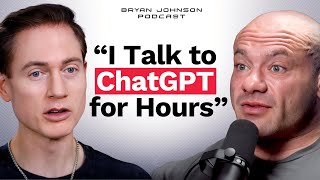
Dr. Mike Israetel talks with Bryan Johnson about handling social media toxicity and criticism. Bryan frames negativity as a reflection of the critic's insecurities, citing Warren Buffett's advice to avoid being an idiot. The conversation touches on gratitude, identity, and why they ran out of time for their planned topics.
Chapters
Hey, Mike, I see you're pulling up with the vibe today to the podcast.
What's up, Brian? It's good to be on. Thanks for having me.
Yeah, I'm glad you dressed up. I'm glad you're feeling good. Seems like you're in your flow.
I'm flowy and I'm not wearing anything.
Perfect. That was the costume, though. You hit it. Let's go, you guys. Today on the podcast, we have Dr. Mike Israel. If you don't know who he is, you're living under a rock. He knows a whole bunch of stuff about muscle and performance, and if you do something online, he's going to dress you down and tell you don't know you're talking about. So today, Dr. Mike is going to treat us to his knowledge, extensive knowledge on health and wellness. Mike Zertel. I think what they were commenting on is your face is suggesting satisfaction, comfort. You feel great comfort.
You look very comfortable.
It does just suggest, like, Russian anhedonia.
You look like you're sitting in a cloud. Is it actually that comfortable?
Yes. I think that comfort during work, that is deep work and very cognitive is like, super important to me. Me at least. And I, I vibe with, but cannot absolutely relate in any way to, like a standing desk or a walking desk. I think that's insane. If you put me in a standing or walking desk, within a minute I would get pissed. And within two, I would just leave and go sit down and do my deep work in a comfortable chair. So.
Huh. Interesting.
You look like you're in, like, a zero gravity chair. Like you're about to be at. At any minute in one of those, like, salt bats. You know what I'm talking about? Like the, the, the. The sensory deprivation chamber.
That's.
That's literally what you look like right now.
About 10 grams of.
That's the protocol. But Mike, I hear you. When, when I have to do deep work, I have to sit down. If I'm standing up or I'm walking like it. Deep work is not happening. I can have conversation. It's actually standing up is good for having conversations. But when you want to deep work, I have to pause everything and be in a stable state. Otherwise it's not happening.
Agreed. I actually have my best conversations when I'm walking around. Same.
Yeah.
With headphones in. And then if I have to do the deepest work, it has to be super relaxed sitting down. Actually have. You guys can't see it. Maybe you can in the reflection because this is my office and I had a 360 degree mirror installation. So other than the door, everything is mirrors. There's a reason for that. I can explain. I'm also a psychopath, but that's it.
Manipulated.
I have like a 32 inch or 48 inch curved monitor, so, like, I can do multiple tabs. It's like pure bliss. Like, I saw the Matrix and I saw their work setups and I was like, I need that. I need that as soon as I can afford it.
I mean, Mike, we can kind of. We can kind of see it in the background. We can see your legs. You want to. Yeah, Kick them out. We can.
I'm too short to reach the ground.
That's amazing.
My screen. Let's see. I think I'm like a 50 inch screen. Is that right?
Oh, big flex, Brian. All right.
Yours is at least 1 inch bigger than Mike's.
Yeah, I just have to make a couple more hundred million and I'll be there with you.
You know, a friend of mine told me about this and I was not convinced. Then he set it up, and it's curved. It took me like a day for my eyes to set, but, man, it is the biggest game changer I've had. I. It's when I go back to a laptop now, I feel like somebody's take me out on a stretcher. It's like I can't see. I feel. Yeah, I feel like I've got claustrophobia. It just changed everything. So now I've got like six things up simultaneously.
But is that worth it, though? Like, because now when we travel, you're like, I don't have my screen. I can't do it.
It's rendered me useless.
Yeah.
Can I ask a question that maybe you guys can edit out or something if it comes off wrong?
Love it.
Excellent.
We're not going to edit it out.
Penises. No, I'm kidding. Do you guys fly private at this point?
I use. So I had a jet, I guess, like, no, we don't. We fly commercial. Yeah. The. The history of this is a couple years ago, I was really stressed out in building my company. I was just like, it was full on. And one day I was going home from work and I saw the sign that said, come learn how to fly. And I was like, you know what? I need a hobby. So I went and learned how to fly. And then I thought, this is so cool. I'm going to buy a plane and fly myself to various conferences and meetings. So I bought a little. I went from a Cessna that I bought this little bonanza, which is like a little step up. It's got a decent range. I started flying myself from Chicago to Texas and Chicago to Florida, New York.
Wow.
But the problem was in that plane, you typically fly, you know, around like 12, 13,000ft. You can't go above 14,500ft because you need oxygen. So you're in the lower layers of the atmosphere, which means you're always encountering weather, so you have to be mindful of storms. And. And so I almost died twice. Those, like, stories of different days. But after almost dying twice, I said, okay, I'm either going to stop flying or I'm going to buy a jet. Because then you. With the jet, you, you know, above the clouds, you're 30,000ft. You're flying within the controlled airspace. And so I got a jet and did that for a couple years.
You flew it?
Yeah.
Holy.
And then. And then covet happened. And then, like, you know, I wasn't flying for several years and I started doing blueprint and my life became very rigorous, so I didn't travel much. And so the plane just became a major burden. So, yeah, so I, I fly commercial now, but definitely love, love the jet. It's also, it's. It's such a complicated thing because it's. Right. It's expensive. You're burning so much fuel, it's hard to justify. It's a. Psychologically. It's a very emotional. A very psychologically complex topic. Yeah. Mike, what's your take on that? Why do you ask?
I thought that was all incredibly fascinating. I was going to try to say a relatable thing, but then I realized you might be too rich to relate to in this juncture.
Try me. Let's do it.
It turns out you do fly commercial. Like going from a really good setup, like a good work setup like you and I were talking about, and then trying to work on your laptop or iPad in a commercial airplane seat is like, if I do any kind of work, it's just on my iPhone. Like, I can't do the whole laptop in the. Even in, like, business class, first class. It just doesn't work for me. I. If I feel inherently uncomfortable, my priority is to become comfortable first. And then if the work plus the sit, the sitting is a certain degree of discomfort, the cognitive bandwidth for deep work just goes down the drain. So what I use flights more for is, like, idea generating. I used to. Nowadays I actually look forward to very long flights because it gives me more time to talk to ChatGPT and, like, the amount of benefit I gained from Talking to that thing, it cannot be put into words. It's like drinking from, like, a cup of knowledge that is never full or never gets empty. It's insane.
I feel the same way. I talk to chatgpt nonstop.
That's awesome.
For me, a flight is instant flow state. Like, I get on it. I. I take that first, like, 15, 20 minutes where you don't have Internet, right. Because you're, like, listening to them, like, talk or whatever, and then you're taking off. I meditate during that. And then as soon as we're in the air and Internet's back on, like, bam. Flow state. Like, I'm like. I'm like a sardine in a can with my laptop in, you know, in coach, like. Like pushed up against the seat in front of me, but I just crush. I mean, like, it's. It's ridiculous how much work I can get done.
I'm with you, Mike. Same experience.
I'm really jealous.
It's unique to a plane, though. You feel it specifically on a flight.
Yeah.
I don't know if it's like, maybe it's the hypoxia. Maybe it's the radiation exposure.
Yeah, yeah. Something.
There's something going on that works.
Yeah. Either I'm, like, hyper productive at my laptop, like, especially at long flights, the best I can get through so much work, or I feel like I'm having a psychedelic trip. Like, I get so many ideas through that time. I'm just, like, having a moment. It's great.
Yeah, the idea thing works.
I don't know what that is.
Just get some time to yourself. There's nothing else to do. It's just you and your mind and you get going every now and again for very long flights. I'll take edible marijuana at the beginning of the flight, and boy, oh, boy, am I going sky high with that one. But, yeah, it doesn't really lead to. You know what? I do have a lot of creativity when I'm on edible marijuana, and it's this thing with creativity where, like, probably half of it is just total nonsense, and the other half of it's pretty insightful. And some fraction of that is actually quite brilliant according to my own metrics, which suck. But, like, so I'll write down a ton of ideas when I'm high, and then I'll look at them later and be like, that's dumb. I'm deleting that. That's frankly embarrassing. This is just pure nonsense. But this is a gem. And this is going on the YouTube channel next week, so it's kind of an interesting thing, but every now and again, people will talk to me while I'm high as shit on a plane. And that's extra fun because I have this weird thing with drugs. There's never a drug that I've taken that doesn't make me want to engage more in conversation with people. Like no drug at all or any drug. I'm just more conversational. It's kind of strange.
That's awesome.
Yeah. Sir, I was just asking you if you wanted pretzels, but this is definitely going in a different direction. But I really appreciate your spirit.
That's funny. What do you mean by pretzel exactly? I mean, is it an allegory for the soul? Like, you're just. I shut up. Take those.
Israel. Where do you. Where do you find your best ideas come from? So if you're mapping out so edible marijuana, like, where do you find your best gems?
I have to ask, how do you. How do you mean where? Like in what context? In what setting and what pharmacological arrangement?
All the above. If you just trace back, just grade your subject, make a subjective assessment of your best ideas over the past 10 years and does it come from sleep? Come from focused states of work of edible paired with flights? Conversation with friends with ChatGPT? Where do you find unique insights coming from?
What a great question. I've been giving a little bit more thought recently to what creativity is, because I'm trying to model it out to see how AI could be creative or to see if it's currently capable of creativity and how you would optimize either prompting or engineering and AI system to become creative. There's a lot of people, there's like, you know, the moat of what AI can't do, that humans can, is shrinking all the time. Little island. And a lot of people are like, but creativity. And I think that's total bs. I think creativity is a mechanistic process you can describe in neural network language and in just data architecture. So there's a couple of different things that have to happen for creativity to occur. And all of them are pretty important. One is that if you. If you think of your knowledge base as a big tree with leaves and branches and branches off those branches and branches off those branches. That's kind of how like a knowledge base of understanding the world actually looks like if you map it on a neural network. And so that tree is really important because if you're just getting creativity out of thin air, like, what if like dragons, like actually were purple? Like that's nonsense somewhere doesn't connect to anything. Dragons aren't real. What the fuck are you talking about? They don't even have a color. And so creativity, like, without any connection to that architecture of real things in the real world is like, sort of pointless. It's great for hitting the bong and then talking to your friends, but no better than that. And then. So what I like to do is I like to really build out my tree of knowledge. So I read all the time, I ingest all the time, podcasts all the time, think, think, think, think, think. And then so I get this knowledge tree going and I've built it sort of my entire life. And then I do a couple of things to that knowledge tree, and it's a cyclical process. One is I extend out the branches off the branches off the branches. And that's really creativity. And that's basically like I have this idea that's pretty well based in fact. But there's three ways I can go with it. I'm not sure which one is correct. I'm not sure any of them are correct. So what I do is that I generate of ideas. Those typically come to me in many cases when I'm unfortunately when I'm trying to fall asleep. And like, I keep my phone with me at all times. So, like, be almost asleep. I'll have a fucking to what to me is a brilliant idea and I know it's good. And if I can share something with listeners that I think is really, really wise, Never, ever, ever, if you can help it without turning neurotic, let your ideas go. If you have a good idea, don't forget it, write it down. Just get your iPhone out, go to notes and write it down. It Some of the best things I've ever done in my life with producing any kind of value I'm capable of has been just writing down ide and keeping them for later. And people are like, how do you have so many ideas? Like, I don't think I have a ton of ideas. I just write all of them down. And the ones that work work really well. So I'll turn over my phone. Reluctantly, I'm like, okay, this is good enough to disrupt my sleep cycle. Brian Johnson appears as a devil on my shoulder. You should be going to sleep, motherfucker. Sorry. Brian Johnson is a really good idea. And then so I type the idea down, I put it away about half the time, my brain keeps going and it's like, dude, you're branching off this one now. And it's even more Good ideas. I'm like fuck, fuck, fuck. So I just jot all them down. Usually I'll run a ground and this only takes like 10 or 15 minutes. It's not like come up for hours or anything like that. And then so pre sleep period works really well for me. Another one is edible. Marijuana typically does really good things for my idea generating. It has a huge error range. So I can never truly tell if my idea is good when I'm on drugs because I know I'm on drugs and I'm irrational. But I get a high volume of ideas and some I can kind of feel like vibe wise, like this is stupid, it's actually nonsense, or you get a sense of profundity but without the logical anchor of actually anything profound going on. You're like, people are just like monkeys that like walk upright. You're like, that's actually true, but so what? You're like, I guess the so what was just a feeling and not really any logic. But sometimes some of those ideas really do web off into some good stuff. So I have this cycle that I go through. It's the creativity cycle of taking off of this tree of understood things, putting branches off of it and then just leaving them, writing them down or thinking about them. And then later when I'm in different phases, when I'm downstairs in the basement and I'm doing deep work, when I'm on a walk and I'm really thinking deeply, I'll apply a logical operator to filter them out. So I turn from creative hippie dippy guy into red team conservative asshole. This doesn't make the, you know, company cut off for the board meeting. Your idea sucks. You're fired, Johnson. Sorry, no offense Brian, but that kind of red teaming hypercritical skeptical mind is actually dog shit at generating new ideas. But it really vets the living shit out of ideas. To see like, okay, this cool idea I had, how well does it stack up? I cross link evidence, I cross link logic, I really try to argue against it and at some point that branch either gets cut off because like that was stupid, that was wrong, or I'm like, no, this is good, we're keeping this branch. And then off that next branch. The next time I ideate, I prune a couple more ideas off of it, or I get a couple more ideas going and then I do that same cyclical period. And that roughly takes like about a week. So when I'm in my free flowing states through the week, I'll write ideas down and then when I'm in My really deep work states downstairs in the basement, more focused, not under the influence of marijuana earlier in the morning, when I tend to be a little bit more inhibitory, dominant, less expressive, less verbally fluid. Then I tend to be more of, like a stickler and kind of low key, pissed. And like these stupid pothead ideas. Let's put them to the test. And then I prune, prune, prune. And then that way my. My network, my map of meaning just keeps going and going and going. And it takes growing and pruning, growing and pruning, growing and pruning. And after a few weeks, few months, few years, I guess I've got some pretty good ideas in there. So that's kind of my process.
Cool. Malin, what about you?
For me, it's.
That was so. Wait, that was so well thought out.
Cool.
Can we just acknowledge that it was like, cool. Next.
The best part is Brian's like, yeah, whatever. This guy's high still. Anyway, yeah, whatever.
Let's talk somebody else. First off, Mike, that's like, man, that's legit. I've thought about creativity a decent amount, but, like, I love your approach. The interesting thing, I don't know if you knew this, but, like, apparently the falling asleep thing is actually that's a real deal. And there's people who have really challenging problems, like physicists and scientists and mathematicians.
And things like that.
Ray Kurzweil.
Yeah. And basically the idea is, like, you force yourself to get to that point of falling asleep in order to trigger that thought process. So there's people who actually do the exact opposite thing that Brian tells us to do, which is go to sleep in order to generate creativity, which is super interesting.
Brian, do you hate new ideas?
I would say my best source of ideas is sleep. Unquestionably. Unquestionably.
Brian talks about this all the time. Like, he'll, like, he'll wake up in the morning and be like, you guys, best idea last night. And it's always through his dream. So it's actually exactly aligned with what you're talking about.
I sleep so that I can think. Like, it's during the day. It just feels like it. In my current role in life, it comes in so fast and furious. I don't ever have enough space to just stretch myself out. And so sleep is the only time I think I actually get a relaxed mental state where I can explore various things and, like, my very best ideas of the world. Like, I'm. I'm mostly okay. I'm 99.9% NPC. The words I assemble on a daily basis to express reality are ideas and concepts that people have put together, you know, like, throughout history. Like, very little novelty as me as a human. Although I've had like a few interesting ideas, very, very small subset, but I'd say those have come in my sleep. But yeah, I mean, Mike, Alan, you were saying?
Yeah.
So for, for me, interestingly enough, it's exercise. So jog or a run, sometimes even like an intense jog or run is where I find it. And this, what's really interesting is like, focus for me is hard unless I'm keeping my body busy. And I don't know if that's like an ADH hyperactivity thing. Like, I don't, I don't know what's going on there.
But like, you're like the opposite of Mike.
In medical school, I used to study on an elliptical. I would literally like take the study, the study notes and I, I, I laminated them so I could sweat on them.
That's so smart.
Yeah, I would take them onto the bike or onto the elliptical and just like spend like hours, like, you know, abolishing any like, muscle protein synthesis that was possible, but just like zone two, like, so I can think. And like, it's always been like that for me. Every idea, every creative idea that's turned into a success has happened on a run to the point that my business partner and I, like, when, when I call him and say, hey, I was on a run, I had an idea, it's like, he's just like, Bing starts listening. Otherwise it's like it wasn't really an idea. But like, if I tell him, like, I was on a run and then I had an idea, he's like, all right, let's talk. You know, it's, it's interesting.
That's amazing, huh?
How about you, Kate?
So I do the opposite of you, Mike, where I try to absorb as little information in reality as possible because I feel like my mind is self generating enough with ideas. And so whenever I need like a little pick me up, I'll just listen to like a tiny little bit of a podcast. Like even a couple of minutes, it'll generate a new idea and then I'll go off in that direction for like, you know, maybe a couple of months even, and then come back. Honestly, I think I just need space. And then it just comes. I think I'm kind of like always on a little bit of a. I feel like I'm kind of always high, just naturally a little bit. And so I Just need to give myself some space.
That's the most white girl shit I've ever.
I can attest to this when. When, you know, Kate and I, we. We do. We. It's like fast and furious all day long. If she gets just a free hour, it is amazing where her mind goes, like, all these different branches. So, yeah, me, my. My objective has been create space for Kate to think, to play.
Yeah, that's really.
Which is why I love playing so much, because you're just like. It's just space. You just got to sit down.
That explains it.
Yeah.
I've been dealing with a thing recently that I'm not so happy about. But I so much love deep work. I'm not proud to admit it. I'm not endorsing it, but I really hate a high degree of varied tasks. Like, email this person back, connect this person to marketing, ping back a few pictures of yourself drinking a genius shot, that kind of stuff. Like, I would want. Just want to claw my eyes out instead of doing that shit. I want to be in a windowless room, to just have space and time to just. Just work with ideas and produce, produce, produce. And it's gotten, like, a little bad lately where, like, I have, like, all these, like, I look at my schedule and I'm like, random shit kind of day. Like the Brian Johnson move, move, move. And like, Brian, like, Kate, I don't know how the fuck you guys do it. Dude, I would opt right the hell out. Like, I just want to be left the fuck alone. My ideal workspace is like a military research center in the one of the moons of Uranus or some shit like that. Like, I'm back 10 years later. I'll see you guys in a bit. I gotta go off to myself. And the thing is, I'm hyper social, but, like, socialization for me is for fun and for vibes and having a good time and talking about ideas and stuff, but it never feels like work. So if you, like, get me to talk to people for like three hours straight and be like, all right, that was a good work day, I'd be like, I didn't do any work. Like, I have, like, a crazy industriousness drive that eats at my soul every day that I'm awake. And if I'm not by myself, like, producing in quiet, I start to go insane. And so, like, how do you guys deal with that? Do you feel like after a bunch of different stuff, like your India trip and blah, blah, blah, do you feel like you've done work or is there Something in you that like, I haven't done anything work. We're just like touring around the fucking place.
Yes to all of that.
Okay.
Yeah, it's painful. Very painful.
Yeah. I wonder if like, so Israel expressed his sentiment. I would say if you take what Mike said and we said, is it the case that most people feel like they're trapped in a torture chamber of that thing, that they're pinned down by a never ending stream of messages of social media that if you don't post, you're missing out. If you're not scrolling, you're not up to speed? You know, if you're not involved in the actual tribe, I would hypothesize that most of society feels tortured by the systems that are in place and almost like the necessity that you have to engage to be part of the tribe. What do you think?
Yeah, the messaging thing is out of control. The constant always on and like the expectation to respond immediately to people all the time, it's just ridiculous.
Is that a thing? Is that an expectation?
Well, you get a text message, you have to respond within three days, otherwise you're. I just find that ridiculous.
Look, Seer immediately is a little longer.
Yeah, yeah. Like I want two months to respond until a text message. I want that to be totally fine because otherwise you're just bombarded. It's like for us specifically, it's like Instagram, DMs, WhatsApp, Slack, email, text messages, Twitter, you know, it's endless, the constant communication.
I can't believe I'm saying this, and I reserve a whole lot of shut up, Mike for saying this, but as you get more famous or whatever the hell all of this is, I think a lot of people from the outside looking in are like, this is amazing. This person must be in paradise to have millions of followers or whatever and like lots of money and all that stuff. It's got to be so cool. And I also had ideas about that when I was younger and significantly less relevant. And then I noticed that I actually talked to ChatGPT lately. I was like, hey, what's the mental health like of famous people? And ChatGPT is usually really nice. It's like legendarily terrible. And I was like, you're kidding. He's like, no, legit. Like celebrities are like dealing with like anorexia nervosa levels of like real risk to self harm and all this stuff. And I was like, oh no, no joke. And it's like, yeah, they get almost exclusively negative feedback on everything. The positive feedback is from people that don't know them at all. And it's just like flittering into the air. And it goes in one ear and out the other. And the amount of people tugging at you in different directions is absolutely wild. And I remember hearing back in the day, I don't know if this is true, that Joe Rogan has three cell phones. One for people he'll get on the podcast, one for acquaintances, the close friends, and then one for, like, core group, and, like three numbers or whatever. And I was like, I remember hearing that and being like, that's ridiculous. And then as, like, my YouTube went like this, I was like, the more and more every month, I was like, yeah, yep, Joe's on to something that's really a thing. Because a lot of people will hit you up and be like, hey, how's it going? Blah, blah, this and that. Can you connect me to blah, blah, blah? And I'm just like, oh, my God, I have like three day jobs, plus I have to respond to, like, ostensibly hundreds of people a week. It's nuts. And if you have that expectation of yourself to do it, it gets really wild really fast. Do you guys have, like, how do you guys handle all that stuff?
Yeah. Yeah. I mean, Kate's reaction, nailed it. Like, I agree with you. You feel like you're caught in a tornado. The forces that move about, you're just not strong enough to. To wrestle the chaos. It's challenging because, like, for example, I get maybe, I don't know, I'm guessing 100 to 150 messages per day of, you know, these are important people. And they're messaging like, hey, I'm being extorted by blank. Can you talk this morning? So it's not like, you know, it's not like a casual conversation of, like, when you get to it, or like, you know, my parent just is having this very serious medical condition. Can you talk about how you'd approach the situation if you were me? It's like, these are like urgent, pressing requests, sometimes from, like, nation state leaders, sometimes from friends, Sometimes it's like all power levels of society. And then in the meantime, you know, our schedules are back to back from, like, all day long. And then you layer in all the other stuff. Like. Yeah, it is just absolutely overwhelming. And so it's. It's not even a case where it's very hard to not respond to friends. It's very hard to not respond to people who, like, genuinely need help. So it does. It. It just really creates a situation. Then. Then you layer on this other complication And I wish people would talk about this more often if retell you. And I spoke about the this a little bit when we were together, which is, you know, I was poor until I was 34 years old. I'm now 47, and I saw new money. And so I never learned what it means to have money and the complications that that creates in your life. And when you have money, everything changes in your life. Everybody who enters your life is now some kind of thing that needs to be considered. Like, if I look at the people who have been close to me, over half of them have. Have done something that have ended up in some kind of violation of trust. And I don't think it's that they are bad people. I just think that when you get in that situation, it is very hard to discern what is theirs and what is yours. And as I've talked to other people, they tell me the exact same patterns, the exact same stories that it inevitably, it just happens. And so I wonder. I was trying to evaluate myself, like, is this something I'm doing? Like, am I just a. Like a bad boss or a bad manager or a bad person? Like, what is causing this? But it just seems like it's algorithmic. It's a pattern. It emerges, it happens. And that also just creates this other layer of, like, now you have to view the world through this lens of suspicion. And that sucks. Like, you really want to see the best in people, but it just turns sideways so frequently. It's really quite challenging. So, yeah, like, it creates an environment where I understand why Kate and I were just. With this. I'm not even going to say who the name was. This very wealthy, powerful person, and they've been in wealth and power their entire life. And they basically just said, like, I'm out. They're like, you know, 40s, I'm out on this. Like, I've. I've been through so many shit situations with extortion and lying and stealing. I just can't do it. Like, I'm done. And every time I think I'm. I'm okay, it just goes wrong. So this is not to say that always does, but, like, it does seem like a very prominent pattern and it's just a reality. I wish people talked about it more often.
I think early on, Brian, in getting to know you, we were kind of talking about this because you were just starting to get to this, like, level of fame. That was insane. And it's almost like the money is another person next to you and they have their own existence. And you just happen to be directly tied with this person and this person is.
Your friends are like, hey, you know that one guy, Money, right? Yeah, we're good friends. Like, can you tell him I want some of him?
Right, exactly. And we live in this capitalistic society, which means that money is the highest value thing. And so it just distorts reality. It has absolutely nothing to do with who you are. It's just like you're associated with this person and anytime anyone comes near them, it just distorts their thinking because it has this enormous power in the world. Like it's just undeniable. Like we all need money to live and it's our exchange of time and energy is for money. So it's just like, yeah, algorithmic. You were looking pretty shocked, my Israel, when Brian was saying this hasn't been your experience. Just like power, fame.
Same with Brian. I haven't been rich for hardly a very long time. And so the other thing is, like my wife Crystal and I, we just like pretty much keep to ourselves in large capacity. We live kind of in the middle of nowhere and we stay at home and just work in our offices and we watch Netflix together at night and we take walks in our backyard. Like it's a very simple life. Tell you guys this, if I was single, I would be like in real deep shit because landmines everywhere. The other thing is, Brian, when you said like something like half of the people you ended up having some weird situation with, I've definitely had some of those in the past and they always strike me because I'm incredibly. I guess it's maybe a good and a bad thing. The money and the fame have absolutely had zero impact on, as far as I can tell, my own psychology. I'm just the same regular idiot that I always was. I have like an anathema to putting myself in my own head, status wise, above other people. If anyone's ever interacted with me in real life, it is highly probable that you got me being super kind and respectful and all that bullshit and joking and making dick jokes. Because I'm just like that with everyone. It's not an act. There's no act. There's no surface, the layer. There's none of that shit. That the problem is, is that like I see myself that way and I think people see me that way. It's just like Mike, the regular village idiot. But in reality, I guess nowadays some people, maybe many people see me as like that rich famous guy. And so it's a different vibe. And then I end up having a disgust discordance between how I think I'm being perceived and how people perceive me. And then, like, my friends and my wife will be like, that person's nice to you because you're Dr. Mike. And I was like, oh, I thought we were getting along great. They're like, no. And I'm like, well, shit, I can't tell anymore. And then to me, it's easy because I'm just still nice to everyone I give a shit. But it's one of those things where the difference between being nice and cool to people and the difference between giving people job opportunities, working with them, getting into contractual relationships with them is then I have to. To turn on the Jew brain, lawyer brain. And then it's just port to the attorneys, because business people, attorneys, I have an awesome team around that does all those things. But it's a very different thing. Like, you know, you meet someone, you chill, you vibe, you see them a couple times in whatever kind of context. And, like, you know what would be a good idea is. And then they pitch you with some kind of, like, company idea, blah, blah, blah. And some of these pitches are dope. Some of them are super worthwhile. You meet some of the best people randomly and get into business with them. And, like, that's just how it works. But at the same time, you can't just say yes to everything. And you can't even, I guess, technically trust people that they're, like, good business partners for you. Because I always think, like, okay, all ideas are from great people that have really vetted them and they're really ready to work and there's no con. And half the time that's just not true, which is super sad. But I just have to be like, I love that idea. Let me talk to my technical people. And nine times out of ten, the technical people are like, we already have a scope. You're already overflowing on work. It's an automatic no unless it's Warren Buffett. And I'm like, okay, okay, sorry. The answer is no. And I can't say it's awful for me to say that, But I have to keep that separation. That's how I deal with it. I don't know if it's a good way to deal with it. Brian, any tips? You know, like, is it like a business face that. A serious business face and then a dope vibe face? Because I'm not going to be a dick to random people. Yeah, don't talk to me. I'm on the subway. Like, that's fucked up. I'm never going to do that. But as far as business dealings and do you bring people over to your house? I think that's a different discussion.
Yeah. Mike Mallon, what's your, what's your advice on this? What's your take on this?
I don't have any, I don't have any advice. I'm not as wealthy as you guys, so.
But that means it gives you an outside perspective on the shit, which is extra valid. Well, Brian and I are delusional fame hungry idiots there.
I think, like my take on it is. And I have had the luxury of experiencing of like some time with people who have a significant amount of money. The interesting take that I've had from it is that the more time I spend with those people, the less I want money. I think it's like, allowed me to come to a realization of like, I, I don't want that thing anymore. You know, like, if you had asked me 10 years ago, I'd be like, Man, $500 million, that sounds amazing. Now I'm like, no, I, I'm good. I don't even want that. You know, I, I value other things in my life. So it's a lot. It's given me this opportunity to value time, to value the luxury of relationships without caveats.
That's what all the rich people say anyway.
Yep.
Which I see as a, a huge issue, the, the value of privacy. So, like, I've gained this gratitude for this place I am in life that otherwise I think would have been really hard to get to based on our current culture.
What is it about hanging out with rich people that made you think this? Was it the fact that they don't seem to be getting a lot out of their money as much as you would think? Because like, behind closed doors they're like, dude, literally Tricks Rabbit is coming to this party. Like, actual Tricks Rabbit, he's real, he's genetically engineered. He just hands out drugs that are not bad for you and make you have rainbow face for 10 hours straight. And you realize, like, actually it's just a lot of lawyers and accountants and the guy gets like a champagne flute to himself on his private flight as he reconsiders his whole life every Tuesday very well. This man knows my Tuesdays. Is it that. What is it that's made you kind of reserved about like, oh, maybe money's not this amazing, amazing, amazing thing. Maybe it's just really cool and everyone should have more of it. But it's not like an elixir that makes you infamous, definitely happy and deproblematizes your life.
That's a really good question. I think for me it's seeing the complexity around relationships and their relationships and how they've had to interact with people with sort of this constant attention to is this person trying to get something from me or trying to work me over for an angle into a business or to get money from them or something like that. It's watching them not able to just be themselves because they've constantly got that companion of money, if we want to call it that, next to them, who they're having to also like look out for and maintain and manage, right? It's the time spent managing the money rather than managing life. It's the time spent managing those relationships from that perspective. And then also some, some conversations, like I've had conversations with people who, who are fairly well to do, who are quite openly are like, you know, this is just a pain in my ass. You know, like, it's like, like sure, I get all these cool things, I have this nice house, have these nice cars. But like, I spend all of my time like worrying about it and focusing on it. And it's like one of those things, like once you get it, it's hard. Like you can't just say like screw it, I don't want this anymore. You know, I mean like there, there's exceptions to that, right?
Oh, you sure can. But most people don't.
You gotta be, you gotta be upper level conscious to just like drop, drop all that cash, right? I mean like, because at the same time you're also like, well, if I just give this up, who gets it and can they do as good in the world as I can if that's my purpose or my goal, right? So most people are not going to make that decision.
What's your take, Kate?
That money represents freedom in a lot of people's minds. But the irony is you exchange one freedom for another. So it opens all these doors and it closes a whole bunch of other doors. And it's not clear that one life is better than the other. Obviously the big caveat here is there is this whole other level of like not having access to money where it's just miserable, where you're constantly having to fight this uphill battle. I remember like how painful it is when you don't have enough money to pay for your phone, to have access to the Internet and to send like that's just, that makes work miserable. It's just such an uphill battle. So besides that, once you've got this base level quality of life, more money. It's not clear. Especially because in order to gain money, most of the time people have to work really hard. They have to be a certain kind of personality. And so once they have that money, it's not like that personality goes away. And so it's not like they're basking in the fruits of their labor and, you know, living this life that you imagine them to be. They're probably lonely because they didn't build relationships early in life because they prioritize making money. You know, So I just don't buy this vision that people have of money.
There was this study that like, suggested that that $75,000 is the threshold needed to be happy and that happiness was not increased by being around. And I think this is an older study, so maybe 75 is 100 now or something like that.
I have an update to that study if you're curious.
Okay, great. But at some point, you don't actually increase your happiness as you go above this level. Right. And I think there's some reason to suggest that maybe you could be decreasing your happiness as you go above that level.
Yeah, the update to that study is it's like a curvilinear graph where it's a really steep ascent of happiness. And then north of 75 to 100k, the curve still goes up, but at a much shallower rate. And if you measure it individual by individual, it actually is a huge variance. So I think the big takeaway is money makes you much happier. If you start with having very little of it, and then you have enough to get all your ends met and you can go to the movies anytime you want after that, it definitely makes you happier. But like, way more money, it takes way, way, way more to make you as happy as you know. If you go from 50k to 150k a year of income, that's like, it's revolutionary. It changes everything. If you go from 150k to 250k, you're like, oh, things are a little better. But if you would have to go to 500k to get the same happiness bump that you got just from 100k increase earlier from 500k, you'd have to go to 2 million a year to get that same happiness bump. And it really is real. But obviously it projects out like that. So you just have to keep going and going and going to see the same gains. And the other thing I think is really insightful about money is money is a miraculous mega tool for a Fuckload of happiness. But you have to apply that tool in a very complex context where there are a lot of like, you know, Super Mario, like he jumps into the pit and dies. If he jumps and gets the coins, he lives and he gets rich. It looks more like that where if you're really intent on maximizing happiness and you have a lot of money, you can do just crazy shit and just be happy all the damn time. But you can't just expect the money to show up and then you're happy because you have to engineer your life for happiness. Money can facilitate that, but it is not automatically a thing. So, like, if you work a lot and you recreate in the normal way that you do, and you have your normal relationships and then you pour a bunch of money on that, it makes you just a little bit happier. And then you're like, why am I not a ton happier? Because you haven't addressed the fact that the money is bringing in huge solutions with quite a few big problems, like problems of privacy, problems of liability, problems of opportunity cost, in my case, because I'm, you know, I'm saying genetically Jewish problems of massive guilt all the time. Like, why do I have this money and not other people? And technically, I'm investing almost all of it in the stock market. So it's net yield to society is the best it could ever be by laws of economics. It had be to. It's nice to say and think logically. It still doesn't make me feel that good about it. And so you get all these wormholes. So I think money, a lot of it gets just absolutely just objective good. But you got to really think through how am I going to use this money to make myself happier. I think most rich people just either assume money poured down the drain is going to be better, or they just do the same shit they always did, which is like continuing to make more money. And then they're roughly as happy as they ever were. Because it's, to be honest, like, you can only spend so much money. And the marginal amount of happiness you get from spending more money is a real tricky thing because a lot of people haven't even asked themselves the question of what really makes me happy. Like, a lot of people just go for regular tropes. Like, I want a private plane, I want parties full of people at them, and I want all of them to vibe dope. Do you actually really like that? Like, no, I fucking hate flying. Why do you have a G6? Like, what's just rich people do. And so if you're really intent on it. I think money can be wonderful, but it's not one of those things that sure shit is going to make your life amazing. I think next to money, because I think in the next five to 10 years, 10 years, almost certainly everyone in the modern world is going to be trillionaire level rich relative to purchasing power, like in a magical way. And Brian and I can, I'm sure going wormhole for 10 years talking about this. But I think the thing that hits is fame. Fame is a lot like money, except it doesn't pay you shit. And it changes, I think even more than money does. Because I'm now legit jealous of like a hedge fund manager who's like behind a, you know, paywall at his hedge fund site of here is my management team. He walks out in New York City, no one knows, no one cares. Is some old ass Jewish dude who gives a shit, like here's a cane, mister. But like if you have a ton of fame, then your life is really, really different because you can't have a privacy level in public. Like there's the thing I talk about. There's an expectation of anonymity when you're in crowds. Like you guys all probably have this memory of going out into a major city like New York City and just walking around. There's a million people around and it might as well be zero people. No one cares. Everyone leaves you the fuck alone. You just like vibing. My wife and I used to love going to various cities every now and again and just walking around and looking at stuff. That shit is gone, fellas. Because I get Dr. Miked all the time and I personally love getting Dr. Mike. It's awesome. I love talking to people. I love meeting new people. My wife is more of a private person, so she thinks I'm thinks it's cool, but it wears on Hertz. It's cognitive bandwidth. And so like that whole privacy shit is gone. And that's something like imagine if you're like Taylor Swift, where do you go? Nowhere. You can't go anywhere. You need a full stack SEAL team X Delta security team to go anywhere. That's next level shit. I think fame is money on steroids for really warping the shit out of your life. I have a tiny little taste of it. But Brian, I'm sure you deal with, with this kind of stuff all the time.
Yeah, we took a flight this week and it was, I was in on the airplane and a line formed to do selfies with me and like the stewardess is there like the whole. The plane can't board because people are in line doing selfies. And so it was. I mean, I love it. It's great. I love hanging out, talking to people and they've got amazing stories. So it's. I really enjoy it. I wish, like in the same way I've spent the past five years trying to work on health, I can now, and with most people, like, they can pull up and I can say, I'm going to spend 20 minutes with you and I'm going to explain to you exactly how you achieve the power laws of health, how you stabilize your mood, how you get high quality sleep, how you keep your weight in check. I mean, just these basic life habits. When I made money, I wish somebody would have called me and said, hey, Brian, I'm going to spend 20 minutes with you and explain to you what it means to have money. Money.
Can we do it now?
Yeah.
No, I'm serious. Like, can you give us.
No, we don't have 20 minutes. We got things to do.
Yeah, you know it, Kate. It's a great prompt. And I would say I'm not as robustly. Yeah, I basically, I've not done the reps with, with health. I've done this thousands of times and I've dialed this down with data.
What have you learned though? Like, like even just do a rep now, we won't, we won't hold it against you. Right. Audience comment section.
Okay, number, number one.
Oh, Brian, your setup's all wrong. This is gonna be terrible.
Okay, number one is everybody wants something from you. You have to start that with as a default. You have to. And if you're just playing probabilities, we all have self interest. And as much as we want to cloak that self interest in stories that are sound, you know, are kind sounding, they are hero making, we all are pursuing our self interest. And so you don't have to necessarily assume the person's bad. You don't have to assume they're nefarious. What you do have to assume is they want something because those things are cloaked. And you're more likely to assume something than somebody else. You're marked to assume good things. And I come from a religious upbringing where it's a high trust society. So when you meet somebody, the default is trust them. The default is they are not going to do something that is going to harm you. That is not the way the world works. Right. So I'm really having to shake my old intuitions of you show up, everyone's good, everybody has good intentions, what they say is what they mean. There's no other alternative motives. So number one is like, you just have to have this really sober assessment of what relationships are and then create the boundary conditions. So it's not a bad thing. It's just like we are doing this thing together and here are our expectations. We're going to write them down, we're going to be explicit, we're going to be right, we're going to cover all the basis. And in doing that, that then gives you freedom to behave in the relationship in a trusting manner. But if you don't have that block of trust established in the beginning with proper expectations and they're actually written, you have this wide open space of gamemanship of you don't quite know where things are going and then you're stuck being blinded to what the person's motivations are and where they can go with it. And that's where you get in a really bad spot. And so I just say, like, you really want to establish upfront those expectations, otherwise it gets scored. I say that as number one.
Yeah. And I feel like we've learned now in any interaction that's new with someone new, we get out in front of these conversations, we say like, these things have happened to us, like, this is what we explicitly want you to not do. And we just say it's it. And they're like, like, I sign up for that. And it's a much more seamless conversation from that point onwards because you're like, I'm baselined.
You know, what's an example of that? I'm having a hard time coming up with ideas.
When we're hiring for core team members, we will say, like, in the past, people have stolen from Brian. And so trust is actually the number one important thing in this relationship. Like, above all else, protect that. And so your, your position is so close to us that you should know that any chance that you have, any opportunity you have to break trust, don't do it. Because the moment that happens, the whole relationship will fall apart. And level setting that expectation right early on, like, for example, you know, don't talk shit about us behind our back. Like, that is an example of breaking trust. There's no reason to do it. If you've got, you know, a problem with us, how we handle things, etc. Come to us. We're reasonable people, will help you work through it. We'll, we'll change our behavior. We're totally open. But a lot of people, you know, when there's fame and money Involved, they. They just operate in ways that don't respect trust, and they're setting it up as a. As a front.
I mean, so, for example, like, we're. We're speaking. We're bringing on a new team member right now into my personal life. And we sat down and we listed out people in my past 12 years of life, and it was something like nearly 50% of those in my private personal circle had stolen from me. Had they been caught stealing?
What do you mean, stealing, like physical goods or money?
Everything.
Yeah. Using the. Using their company card to pay for personal items over years and running up huge bills.
Stealing cash.
Stealing cash? Yeah. Like it's. I mean, like everything. And so now I just simply say, like Kate was mentioning, don't steal from me. Right. And that means even the smallest thing, don't take something that is mine and, you know, assume it's okay or yours. That is a slippery slope. Because when one thing happens, the next thing happens, and pretty soon you're in a predicament. But it just becomes so rampant that. Yeah, addressing it on the nose. I expect you to not steal from me if that is a very clear expectation. And there's other nuances in that relationship. But. But it's. It's. It's such a. It seems like it's such a basic thing, but that's what I would think.
Yeah, but that's the thing money distorts.
It's like the basicness of it that make. That makes that sound so bad. Right. Like, the fact that you even have to say that up front in the conversation as opposed to just like, we are. We are now in relationship, and like, you know, basic principles apply, but you're actually having to say out loud, like, don't steal from me. Which, like, yeah, cross applied to my prior comment about.
Yeah. And this is also. This is the takedown piece that New York Times did on me. And they're basically saying, like, oh, Evil Johnson, he has these NDAs he puts in place. And what I'm trying to do is, I'm trying to say it is a really beneficial situation for everybody involved to be upfront with expectations, to clearly articulate to everybody this is what's happening. This is what goes on. If you like it, great. But really, it's my lessons learned over the past 10 years of you don't want to do things where expectations have not been presented properly.
Yeah. Like a very clear example like that was published in the New York Times was, we talk about Brian's erection stats. And before you work at the company. You should know that, because if you're not comfortable with that, probably not the right fit for you. And so then, you know, we explicitly state that with people. And then the New York Times takes that and says, you know, well, these guys are just, you know, insane. It's like, actually, we are talking about Brian's erection. So really, you should probably know that before you work with us.
That makes sense.
This is where you have a dick joke. Is it on?
Oh, boy, do I ever. I don't know. I was kind of more in a serious mental head space of, I guess it's all love and respect and everyone has to do a job. And so I respect the New York Times and other similar publications for, like, doing hit pieces because it's what they do. Like, you're a journalist, you do hit pieces. They get a lot of clicks. You get a pat on the back from your boss, you get a little bonus. You go on vacation. It's nice. And because you're a journalist and you'll probably never have mainstream relevancy or anyone will ever recognize you, you don't ever have to deal with the after effects of, like, oh, shit, like, it's really fucked up someone's life for a few weeks. Like. And I think a lot of people, I guess, do this, like, you know, fuck them, they're rich, they're famous, like, they'll be all right. And there's a lot of truth to that, too. Like, you can make fun of, you know, Kim Kardashian all you want. She's still a fucking billionaire. She could give a fuck. But she's also a real person and probably scrolls on her feed and gets really hurt by some of the comments and something you have to keep in mind, but it really does irk me a little bit. All that being said, you know, hey, you know, you got to get your media shit going. It's all good. It does irk me when people who claim to be working for, you know, the, the paper of record that, like, you know, they're just doing these hit pieces and damn near manufacturing, almost manufacturing false information or going on rumor or any kind of just bs and they're. It's like, I just always have this vision of, like, them, like hitting submit on the article and just feeling proud and going to have drinks with their friends while they're fucking up someone's life. And it's like, dude, if someone wrote a hit piece on you, no one would get it because you're fucking irrelevant. But if you were relevant, it would hurt you deeply, in a way that you could understand if you just read your own piece back and inserted your own name into the shit. And it's just really unfortunate. I just. I guess what I'd say is folks that write, like, articles like that, like, respect for doing the job that you're doing, but your job is kind of a cocksucker thing to do. And if you're good with it, hey, listen, we all need rich people to get checked. And every now and again, a good smut piece is just fun reading. But, like, don't pat yourself on the back too hard for doing the shit that you're doing. Like when I was doing the exercise scientist critiques for, you know, Kim Kardashian and those celebrities and Mark Wahlberg, and I said varieties of unkind things, you know, all jokes and stuff like that, I didn't feel good about myself, and I didn't deserve to feel good about myself because I was saying, like, mean things and talking shit, and that's not a fun thing to do, and it's not cool. It's fine, but it's not great. And I'm some kind of smut YouTuber. When you work for the New York Times, you would think you'd have a higher standard than to publish hit pieces, but, you know, if it smells, it sells. So it's a weird dynamic.
Yeah. I think, honestly, what. What. This conversation today for me has just been therapy. Like, we. For real. I mean, I'm coming off of a few months of some pretty brutal hate, and it. No one's ever perfect in life, but when you. When you're out there as much as I am, like, you just have an endless supply of things to twist and turn and contort and make me feel seem like the worst person ever. And there's been this. This clustering of people that have just been hammering away on me. And so it just kind of got to an apex where 12 years now of having money and I'm finally, like, piecing all these things together that I hadn't before. And I'm just trying to create a new model of the world. It's not meant to say people are bad. It's not meant to even have a sour note. It's just to say humans are complicated, and humans don't even know sometimes who they are or what they're doing and why, including myself. Much of my. My own health journey has been to acknowledge my own incapacity, to act in my own best interest. Right? It's like when. When Evening Brian shows up and he wants to overeat and stay up late and do all sorts of things that cause me to be in poor health and potentially have, you know, more depressive symptoms. I'm almost powerless in face of that, Brian, to stop him. And I finally wrestled my worst proclivities, the versions of me that I would say are just not great people. And I finally wrestled those in my life. And I feel like now I'm trying to wrestle those in my relationships where I'm really trying to understand who I'm playing with, what they're doing, what their objectives are, and what the different versions of themselves are they could present to me. The good version of somebody is like, we're going to do this together. And then they have other versions of themselves that show up and they're like, but wait a second, second. So it's, it's really, it's, it's like, it's like a somber thing. I'm trying to be a realist. I want to have a positive attitude about the world and about the future of humanity. It also needs to be balanced with some level of accurate realism where you can't bend the world to the way you want, especially how other people behave. And therefore, you kind of need to realize what those rules are. And I feel like I arrived in a world late as an adult because I was so insulated in the world, in this tight religious community. I just never learned the basic lessons of life until I was, you know, well into my 30s. So I just feel like I'm finally playing catch up. And of learning these basic lessons, I really should have learned much earlier in my life.
Brian, I honestly find your positivity infectious and inspiring because I follow you on Twitter and I'm having some trouble with Twitter lately. I deleted the To Twitter app off my phone because my. I got into liking some posts that were critical of Donald Trump's economic policies of late, which I'm hypercritical of because I'm economically literate. It ended up recommending all these accounts to me and flood and flooding my, my, my, my feed with people who complain about what Trump does and seemingly do nothing else. And I just got 90% and bitching. I can't believe XYZ Treasury Secretary is doing XYZ policy and there's tons of people arguing. And you have like, right wing Karen in the comments who knows nothing, but she loves her president no matter what. And you have left wing Jim in there that's like, you're an ignorant idiot and they're just going at it and I'm reading this stuff, and I feel the black sludge of toxicity, like, pouring out of my ears. I'm like, I can't do this shit anymore. I used to want, like, conversations on Twitter. I would post something and see what replies were. The replies are mostly just people vastly misunderstimating my intellect and vastly overestimating their own. And I just don't have the time to beat them to death with facts every now and again. I'll do it for sport. It doesn't make me feel good anyway, because it just embarrasses the shit out of them. But it's one of those, like, wow, there's really nothing good here. And then I scroll past Brian's shit, and Brian's like, hey, just reminding you guys to go to sleep. And someone's like, you're a cocksucker. And he's like, thank you. And I'm like, whoa, this is what I need in my life.
So that's great positive feedback.
No, it's really awesome. And, Brian, I just want to ask you, like, does it wear on you? How do you do it? Because I have, like, a Russian side that wants rage and violence all the time and loves confrontation. And someone's like, you're dumb and your views on AI are wrong. I just want to be like, you don't even know how to articulate why I'm wrong. You just have a lot of feelings. I could crush you. And then I'm like, wait. I'm just, like, combating a fictional person in my head because this guy probably logged off of Twitter and just going to bang his wife. Now he's not thinking about me. And so, like, how do you deal? How do you deal with the negativity? Because you get so much of it on Twitter. Have you read your comments? It's just a bunch of people that are good at almost nothing, telling you you suck at the things you're the best at in this world. How does that grab you?
Yeah, yeah, Kate, what's your stuff? I mean, Kate's with me all day, every day. What's your assessment, Kate?
So if it's not personally attacking things that Brian works extremely hard at, everything's fine, right? Like, stupid jokes, like, fine, whatever. But when it's like, hey, he's lying about this thing, that sucks, that's really hard. And I think for both of us, it's taken a huge toll the last couple months. Like, it's been. For me, it's been like, man, I want out of this game. Like, it's not fun anymore when you can't say anything and people are just going to miss like not trust you. So.
Yeah, it's tough, isn't it?
Yeah.
Yeah. Mike, I would say like I, I really don't give a. What anybody says legitimately. I think that when you look back through history, you see that most humans are absolute idiots, that we ourselves are idiotic most of the time. It is very hard as a human to not be idiotic. And I try to basically just try to catch myself. I mean, Warren Buffet kind of had this idea of like, just don't be an idiot. Like when you make investments, right. If you cannot be an idiot, right, you're already outperforming the market. And so I view most people of just dealing with their own idiocy in terms of how they're trying to process reality. And I'm empathetic to it. I'm empathetic to myself. I'm trying not to be an idiot it moment to moment. It's very, very hard not to. And so like Kate is saying, like we, we really are, we are genuinely trying to make a positive impact in the world, but that does not mean we get the good grace of anybody and we don't expect it. But what we do try to do is we try to show up and be legitimate, we try to be factual, we try to put our best foot forward, we try to help people out. So yeah, it's just like on balance I feel like over the long run we will prevail. Like when I read through biographies or history, the person who persists through these various phases of their trajectories, they always prevail. And so we will too. It's just like these momentary blips. And so I think on a macro scale we're winning and we'll continue to win. So I really am really unbothered overall on like the macro trajectory. Even though the day to day turbulence can, can suck.
How do you deal with that? Suck, Brian, like when you read a comment from someone relevant, someone important, someone esteemed, and they're like basically trying to clown you, how does that hit you? How do you deal with it? What do you tell yourself in your head? Like you want to take this person, sign a waiver at an MMA gym and just go to town, that's not going to happen and it's super unproductive. And now you're an ape. Back it up. Like what's your stream like that? How do you calm yourself down?
I realized they are talking about themselves. Explain behind every critique is a confession. Right? It's almost, it's very, very hard for humans to make psychological critique without it being about them in some form or fashion. And if you just take the, if you look at, if you examine what the person is saying and where they're coming from, they usually implicate themselves. It's not about the person they're pointing at, it's about their own behaviors. And oftentimes you find the irony that they are guilty of the thing they're accusing the person of. And so that's, to me, I just, when it comes at me, I'm just like, it's not about me. Like they're pointing at themselves and they're doing this weird. It's like when Bill Cosby, right, when, when you look back at all of his commentary over the decades, he literally told in a stand up comedy that he was drugging women. He, he made confessions and interviews. It was all there in plain sight. And then just, you know, towards the end of his life, it got pieced together. So people leave these confession clues throughout their entire life as they confess to their darkest sides, but they, they parade this as critique of others because they want to insulate themselves from that critique. They want to project it onto someone else.
So it turns more into empathizing with how tough they have it versus getting angry about how much they're being.
Yeah, exactly. I mean, I, I know like when I was in a depressed state, like, man, that is torture to try to understand how to like go from moment to moment. And now that I'm actually in a really good state, but it took me a lot of effort to get here. I know what it's like to be in a bad state. And so I have to assume the majority of society just because every, most people I know are trapped in bad health, bad food, bad habits, bad sleep. And when those things are not going well, you're just not in a good mental state. And like, no wonder you're going to come out and just take a really harsh take of the world, which is why it's so. There's so much animosity. Like you're saying when you go on X, it is just an absolute warfare in there. So, yeah, I don't blame people. I really empathize that they're in a system that has beaten them down and they're trying to make it moment to moment. So yeah, I just have deep empathy for whatever they're going through.
Makes a lot of sense. I call it people just having a lot of feelings. Like when you're really upset at something. You have a lot of feelings. I understand. You could have. Absolutely. Almost everyone has some kind of valid point in there. Everyone's criticisms are always welcome in a certain sense. But if you're really, really passionate, you're really full of hate. It really is just. You're full of hate and you just happen to be today's or this minute's vector for them to kind of spew their hate out, which makes sense. Yeah.
You guys were out of time.
Sadly, we got to zero of our proposed topics.
I, I loved it though. It was like therapy. I myself soothed. I hope it's relatable for everyone watching at home, but I don't know if that's true.
Yeah, Mike Mallon had. How was it for you today?
I thought it was interesting. Um, yeah, I don't, I don't know why you guys had the medical doctor on, but I'm glad I got to contribute and joke around a little bit with you guys and super interesting to hear everyone's perspective. Um, I thought that was great.
Yeah, I'll say. You know, so both my Dr. Mike Mallon and Dr. Mike Israel, you're both new friends in my life. Dr. Mike and I, Mallon and I have worked together for what, coming up on a year? Yeah. But I, Mike, I love our friendship. You know, we've, we hit it off. I think we get along really well. We understand each other. We have such a fantastic relationship and it's so meaningful. Israel tell. Like, we just became new friends and it was immediately just like fantastic.
We made out within seconds of seeing each other.
Yeah. So, you know, like. Yeah, you know, and then Kate is just spectacular. Like, you know, we share a brain at this point. We do so much together. So. Yeah, it's just, it's really amazing to, to be with people I love. It's such a good feeling to connect on a deep level. So yeah, just gratitude for you guys. Appreciate the relationships.
Same. Thanks, Brian.
It's special to get that. Brian. Very few people will explicitly articulate their gratitude and you're definitely one of them. And I think it's a habit that I need to do a lot more of because I struggle with a lot of self criticism and thank you, Jewish genetics. I'll just dump it on that. But it's just never ending. And so being able to be grateful for simple things like new friends is something that I think only like ridiculous hippie girls do when they're in their early 20s on MDMA. Kate, why are you smiling? But you know when you, as a successful business person, Brian, and a successful human do these little mini gratefulness kind of. Of outlets, it reminds me that, like, you know, you can choose to be happier and you can choose to pull yourself out of a sludge of default misery, and that choice cannot be made for you. And if you just default, then you'll run your whole life on default mode.
Yeah. I think the gratitude you're expressing is the full circle in our conversation. It's the ability to feel like we can be ourselves and communicate without worrying what others are wanting to get from us or there's some sort of exchange that's happening. So, yeah, agreed. Very grateful for that.
I love that we're now doing. We're now being grateful of Mike being grateful for Brian being grateful.
This is too much gratefulness. We need negativity back. You guys all.
Yeah, cool. Mike, I hope you. You come back. Yeah, we. We didn't get to any of the topics. You know, I just want to give you. I want to give you a shout out on your. Your surgery and for. Yeah, for sharing that so publicly. I think that's badass. I love that you just put it out there. You talk about it. It's open. So that's really cool. So really admire you for doing that. I mean, as you know, as we all know, most everyone hides these kinds of things.
Oh, is that a thing? I didn't know people. I actually had no idea. No joke. I'm not even kidding. I have no idea how people deal with this stuff.
So I'm glad that your proclivity is just to make it public and share it. And so that was. I thought that was great.
I have no privacy impulse at all. I could walk naked down the street if it wasn't illegal or didn't scare me every day. I don't give a flying fuck. You've seen one, you've seen them all. Kate, why are you staring off into the distance thinking about genitals? Now, this is strange. As soon as I got to talking about naked, you were like.
I've got a vacuum in the background now, so can you guys hear it?
Not at all.
Someone's vacuuming your house?
Yeah, my hallway. In my hallway.
Oh, I see. Because you got. Yeah. You got family in town.
Yeah, I wish she was vacuuming my house. That'd be great.
But no, Mike, I didn't get to. I didn't get to tell you my joke. My joke is. Mike, I just want to say I am such a huge fan of your name. Such a great name.
I love the name. And Mike. I didn't know I was going to have this conversation, but I'm actually in love with your name as well.
Oh, wow.
Not like. It's not lust, it's true love. It's marriage type of stuff. I see myself in you, and I mean that literally and figuratively.
What is your relationship with Mike? Do you find it. Is it too common for your identity? Or are you comfortable with Mike? Is it hard to come across another mic?
Mike? I have no. I have no problem with Mike or any mics. I am. I am a lover of all mics.
I don't really have an identity. To be completely honest, every time that I talk deeply with AI and other folks about this, that in the future when we're all sharing a meta brain, there's going to be a question mark about identity. I think identity is largely an illusion. I have no attachment to any name whatsoever. My name. If you told me tomorrow, like, hey, everything's great, but you have to call yourself Matt, I'd be Matt. I'd be Bill. I'll be a number. I don't give a flying fuck. I have zero attachment to my name whatsoever. I have zero attachment to almost anything whatsoever. Like, just never hits organically. Just don't get it. Yeah, people really love their name or whatever. Like, all jokes aside, I'm like, well, that's nice. Like, I didn't choose my name. Mike's a fine name, but I don't like, yeah, Mike, that really feels like something. It doesn't feel like anything, you know, I don't know if there is a name that would feel like anything that got creepy.
Well, I was like, Mike, I was. I was really excited to talk to you about these topics. So, like, for real, I think it'd be great if we do this again maybe, and, like, I don't know, focus. Talk about some longevity and, like, some help stuff. That'd be. It'd be cool for me. Although this one was great. I loved it.
Whenever you guys want to have me back on, I'm ready to talk longevity, my approach to it and all that other stuff. That would be awesome. So just let me know.
Yeah, let's do it. Part three, Part three on the Brian Johnson podcast.
Yes. Yes.
All right, guys, everyone be well.





