We the People - Full Audiobook
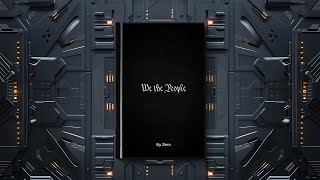
Adams, a delegate from Colony 6, becomes the test subject for a crossing virus that merges two minds into one. Maeve, a scientist, claims to have a mathematical proof of consciousness. When Washington orders a bombing that devastates the convention, Adams must conduct a high-stakes experiment to detect the neural shutdown that happens during crossing.
Chapters
This is we the people. By Zero written by Brian Johnson narrated by Kaleo Griffith Chapter 1 Will We Die? I do not know. Push it. But. Push it. If you are not scared, why am I? I'm scared. This could be the end of everything. The Pause this is our last hope. Did you? I laughed at the invitation. It was a wasted effort. Nobody except Taiga was within miles of me to see or hear anything I did. Why would I ever leave? First I scanned through the envelope with an infrared flashlight for electronics. I picked up the envelope with electrostatic free tongs and held it up to the light through an antique night vision monocle that might have been my grandfather's, but who really knew anymore? I was careful not to touch the letter with bare hands. I was sure that if I touched or opened it, my exact location would be broadcast. However, if I never got near the envelope with heat or skin, the sensor would never get enough power to turn on. It was the only way to stay truly hidden. These days nobody had a hint where I was except my courier. All he knew was that once a month he was to leave all my mail, which these days was mostly fan letters and adults asking for help in a waterproof bag at pre assigned mooring buoys off the eastern seaboard. Even he had no idea where the bag went once it disappeared. He never dreamed, I suspect, that that the bag always ended up washing ashore in Svalbard, Norway, a few miles from my cabin, where I would wait for it once a month. Never imagined that I had trained and domesticated an orca to collect the bag and dive deep into the ocean until the pressure cracked all the electronic trackers inside. Never dreamed that I paid the orca in fresh seals that I would leave on the beach, each tied to a stake in the sand. One day I saw a second smaller fin wading in the ocean, this one with what looked like a shotgun blast out of its fin, which worried me. Orcas were known to pass on behaviors to pod members and their calves, so I probably needed to call the whole thing off soon before I lost control. The shotgun blast meant human interaction. The second smaller orca probably migrated to the Mediterranean during the year and ate the catches off the back of fishing boats until one day a fisherman with Hemingway tattoos and a shotgun had had enough. I peered through the monocle from just the first few words of the invitation. I already knew who wrote it and therefore what the rest of it would say. I got enough hints of the world's news from my fan mail that I knew what was happening with the war the colonies had won a few months ago, a total surrender by the adults. The children had won their way and their rights, but they had no idea what they wanted those to be. They were declaring independence, but without a mission agenda, nation, state, or religion. The whole convention was probably being organized by Washington, the cleverest of the colony's 12 leaders, but also one of the youngest, only eight or nine years old or around that. So the invitation would probably continue as a churlish recreation of the Bill of Rights, but with basic cognitive freedoms in place of human or personal freedoms. Washington's humor was predictable humor, but it seemed to work for him. People laughed, and it wasn't just because he was in charge. They had laughed with him before. He outranked them. Maybe that's why he rose so quickly. I hadn't laughed much lately, but I knew the physical act could be good for me. So instead of wasting metabolic energy on muscle tightening, I induced the positive benefits it would have had with my bridge alone. I relaxed my muscles, increased my red blood cell count and oxygen intake, and spat out some endorphins until finally, without choosing to, without needing to, without wanting to, I laughed. I surprised myself. Maybe cause and effect were backward on that one. Maybe, like fear, the action came after the reaction, laughter after the laughter response. I made a mental note to sift through bridge data on every time I'd laughed since I was born. Later, maybe after dinner, after I take Taiga for a walk. To accept the invitation would be foolish and dangerous. I would never accept. I wasn't part of that anymore. I also knew to be wary of sorting through the mail because another of the exact same kind of letter would be in the bag somewhere. I couldn't touch it either. Washington likely had no idea how to send it to me, or when, if ever, I would receive any of the letters. That meant if he really needed me, he sent hundreds throughout the month to various drop locations. I had never responded to any letter, knowing that even a repeated cadence of response or a small change in my dialect, or even an analysis of the molecular composition of the ink as it absorbed the Nordic atmosphere could give me away. At one point I was the world's best cryptographer and code breaker, but I hadn't spoken to another person or read up on any of the tech in more than two years. I was behind. I had no idea what was state of the art anymore and knew only that I needed to assume that the technologies I don't know about are likely more capable than I could even begin to imagine. Sure enough, after sorting through some handwritten letters, I threw in the box with all the others still unopened, I found another of the exact invitation. The envelope was spare, white, and thick. It had a slightly indented gold imprint on its front with my name in all caps Adams. I ran the tongs across the gold, pretending the tongs were my fingers tracing the envelope's edges. I looked at my watch just in case. The indents felt good. Tracing my name felt like hearing it, and I hadn't heard anyone say my name in more than two years. I would never go to Washington's victory lap because I knew what they didn't want to admit. They were better off without me. I was a worldwide intellectual and celebrity, yes, more famous than Einstein ever was, but that was mostly because of the constant comparisons to him. My signature would likely convince billions of adults that the post war propositions were likely to be fair, reasoned and have humanity's best interests in mind. I was one of the very few children whom the adults sided with occasionally, or at least whose ideas they used to tolerate. But that's mostly because I never really fit in with other children and because I was vocal in my disagreement when they forged off and became colonists under Washington's leadership. I didn't get along with children either, because honestly, I didn't understand them. They were just so far behind me intellectually, even though the least smart bridged child was leaps and bounds smarter than even the smartest adult. Plus, it was impossible to explain to children of other ages exactly what it was like to be the only human to have a bridge. For years and years before people had even heard of a bridge, let alone how to optimize childhood learning for one. I'm a bit feral in that sense, having to grow up with one implanted in me without the social tools to guide its proper use. Raised by wolves if wolves were a machine altered subconscious, I would also never go to Washington's wartime victory lap because I knew my presence in absentia would likely command more authority and weight than if I were to show up in person. It would confuse people to see me again, to see how tall I'd grown for one over seven and a half feet by regulating my growth hormone levels, method, metabolism, and diet perfectly through puberty. They would want to know what I had been working on, where I had been, how I felt about my sister's death, blah blah, blah, all things that would distract from the task at hand. I would probably have to give a speech over intervention is just as bad as under intervention, celebrity members and participants of the Constitution, Congress, or whatever Washington was calling it would be distracted by my celebrity. It would hinder the goal. Which is why it was such a surprise when a ballistic sphere landed a couple dozen meters outside my cabin. I looked at my watch. 2 minutes and 40 seconds exactly. Chapter two Tyga growled at the sphere. I walked outside and met it, having pieced most of it together instantly. Ballistic dropship technology, as I last knew it, could reach anywhere on Earth in under seven minutes. The closest colony to Svalbard was New Greenland, but they would have launched from New Zemlya or New Japan. The dropship had landed exactly 2 minutes and 40 seconds after I had touched the gold lettering on the invitation, even though all I did was trace it with the tongs. Which means someone must have some new kind of tracking technology. I should have been more careful. I realized that now. I shouldn't have stuck to the water, only mail drops. They must have figured out that I was somehow using the ocean, and that I would obviously use the bioelectric tongs to test and handle the mail, because that is off the Grid 101 these days. To prevent the tracking pixel embedded in the paper, all they had to do was somehow make the interaction of the tongs the power source to activate the tracker, maybe by using some static energy or magnetic property. I'd have to look into it. I held the envelope in my hand and considered its chemistry and physics, and imagined how it was forged. I couldn't be mad at it, but I threw it in the fire anyway. I simulated what to do the next time I would try to hide from all of humanity. Next time I would go with the backup plan, which I knew deep down should have been the original plan. To hide in plain sight. To use people's assumptions that I'm a genius and trying to hide, and therefore would be super clever and analog about it, but instead to do the thing nobody expects, which is to not hide, rather to hide somehow in plain sight, the brain's largest blind spot. I was the smartest human alive, yes, But I wasn't smarter than 2 billion children, all bridged, who just fought and won the most technologically advanced and brutal war of all time. The sphere, about the size of a basketball, had landed cleanly. I knew it wouldn't be dangerous. It would have been way easier to bomb me, and they wouldn't have missed. They want me alive. They want me to attend the convention. By now hundreds of children would be huddled in command centers in every colony on Earth, gathered around screens, watching the live feed of the camera on the outside of the dropship, or maybe the satellite feeds. They probably even had a team of AI and children, scientists of various kinds, dedicated to finding me. The effort probably began during the war, when they determined that I was needed for some Manhattan Project level initiative. Probably had some brilliant geneticists to run DNA sentinel scans in every city and town on the planet in case bits of my DNA floated into the jet stream or ended up in the air. Probably had an AI that tracked all of the Internet's text for traces of my syntax or prosecution. There were language robot scramblers these days to anonymize one's text and speech patterns, but I'd seen what was possible. I knew to say nothing. I was off the Internet entirely. I waved to the sphere. No use pretending anymore. Sit, girl, I said to Taiga. She calmed instantly once she could see I wasn't worried, and instantly this fear became a toy to her. It was a perfect sphere, probably a payload of a rocket that separated and dropped from high up in the atmosphere. Taiga sniffed it but still hadn't touched it. She was most curious when she was afraid. Aren't we all? From no obvious source, the sphere made a noise. Taiga's ears perked. She growled again and readied her forepaws to sprint or strike. Adams, my old boy. It was Washington. Washington. Congrats on the victory. Those damn Tongs. We've had a lot of people looking for you for a long time, said Washington. We really could have used your help. Is a personnel pod on the way? I asked. It is. How much time do I have? About 30 minutes. I'm not leaving Taiga. You know, said Washington. If you had helped us with cracking the adults quantum codes, we could have ended the war at least a year earlier. That's millions of lives lost. Billions. Children and adults. Mostly adults on your conscience. Washington was never one for small talk. It was beneath him, beneath all of us. He had said once, I don't need moral approbation. I don't need convincing. I responded, yes, I will attend the convention. You don't need to threaten me with exposure or capture or negotiate on emotional terms. You don't need to go down the branches of the game theoretic models your teams and AI experts are feeding you right now. You can see from the satellite data I have nothing. I owe nothing. I need nothing. I love no one. My family is all dead. My friends think I'm a traitor. I have no religion to die for. I barely believe in anything above myself. Well, that's a shame, said Washington. He choked lightly on the attack. When he said, shame, shame, it was only a few tenths of milliseconds of a pause, but it wasn't normal for his speech. I could tell instantly from the small tonal shift that he was going to say something gleeful, something that he had been waiting to say for years that was so surprising that it overcame his training in his Bridges best efforts at emotional suppression and operational security. He was still young. This was a weakness of his. I could use that. I reduced my adrenal feedback to cortisol in preparation that he might say something so surprising that it caught even me off guard. Even as I mentally went through millions of possible things he might say, especially the improbable ones, Washington went on. Because your sister's here and she wants to talk to you. Chapter three I tried not to let the shock cloud my thinking. During my brain's development, my bridge had shunted some neurons to connect otherwise unconnected regions of the brain, which gave me access to control over the hypothalamic hormonal responses with the same dexterity evolution gave to the human hand. I could control hormone and neurotransmitter release like individual fingers grasping and releasing as if gliding through treetops. The reduced adrenal response meant that Washington's statement didn't cause the body wide cascade that would normally shut down reproduction, ramp up energy usage, and tint certain decision making. Instead, I kicked up some adrenaline and a synthetic form of Hyper Dopamine I trained my brain to make and use much better than the natural stuff. These next few seconds were crucial. This wasn't a fight or flight moment, so I didn't need the mobilization of the stress response. I needed to focus. I needed to think. You're lying, I said. Don't stall, atoms. That's beneath you. Beneath all of us listening the world over. You have thousands of children. Excuse me, Colonists listening in. Right now. You are the biggest news event since the war ended. Tyga was upset. She could tell something was wrong again, as if she and I had a bridge connecting us. Washington continued talking over my silence. You've already figured out that I wouldn't lie about your sister. That if I ever did that I could do so only once and your wrath would extend infinitely. You've probably already figured out that your sister, even though she's your twin, is much smarter than you, and that she did the thing you didn't seem brave enough to do. She hid in plain sight. No plainer way than to be dead, is there? Than to be known the world over as an idea. As a martyr in everyone's minds. The tragic victim of the assassination that started the worst war in history. The idea that she would fake her death and cause billions of adults to die in the war was untenable to most. It didn't match her personality. It didn't match her conscience. She would never do that. Right. Which is exactly how she got away with it. Using people's assumptions and priors about her personality against her hiding in plain sight. And the only person smart enough to piece her plan together. You was too racked with guilt thinking you caused her death to investigate it dispassionately and rationally. A sort of cognitive purloined letter hiding in all our blind spots. I know the story, I responded meekly. Our team spent so long trying to find you in plain sight, too. We thought you'd do the twin thing. And we knew you two kids loved that story growing up. Her plan was brilliant. In retrospect, she threw the entire world off her scent. I need to pack some things, I said. Great. We have a secure room for you when you get here, said Washington. I knew that he meant it. He knew I was only useful if my thinking was mine alone. He he had expected maybe the tiniest bit of resistance, but I knew I was caught. Struggling was a waste. I'm not leaving Taiga, I said. There's a smaller set of straps for him. Her. Her. I. Washington paused. He wanted to tell me something that he didn't want to share with everyone else listening. You'll tell me in person? I asked. Exactly where am I going? New Japan, via New Zemlya. I need a favor. No questions asked, I said. I will grant it without hesitation. No questions asked. None. Okay. I need my mail forwarded, I said. You don't even read it. I want to one day. It's important. Washington sounded genuinely confused. We played back the last few years of satellite video from the cabin once we found you. You couldn't possibly have known this, but we seeded all the world's fault lines and volcanoes during the war with emitters that satellites can ping to get more details about what's happening on the surface from both above and below. We can see through cloud cover. We can see through basically everything. Super useful. The point being, we rewound the last two years and watched the videos. And you only collected your mail at night and under heavy cloud cover. We still don't know how it got from the mooring buoys to your little rustic coastal beach, though. What did you do, send yourself a remote submersible every month that drove itself. In a sense, that's actually related to the favor, I said. I was still stalling for time, of course, plotting any chance at exit, no matter how remote. I couldn't think of anything. The remoteness of my cabin was haunting me. I really was trapped. I continued. Every month for one year, starting one month from now, I need you to leave a seal tied to a stake on the beach. After one year, slow the cadence. First to once every other month, then once every three months, and then once a year the mail will be delivered here, usually within 24 hours. Once the seal is tied up, don't ask how. Then can you have someone collect it and drop ship it to me wherever I am? Done. I won't even ask, said Washington. Now stop stalling again and pack. The dropship will land in a few minutes, and after that we have a few meteoroids circling the globe whose orbits we can decay if we need to make something look like a natural event. You've got two minutes until the dropship lands, and then you've got, oh, eight minutes or so, according to our ballistics guy here to get everything in the dropship once it lands. After that, a meteorite about the size of a small car will obliterate your cabin, leave no trace you were ever there for the adults to find. If we're lucky, they'll think you're dead, too. The rock is already inbound. It even has a name. We can't change its course once we set it, so I'd really get to packing if I were you. The war changed you. Washington did it. Maybe it did. I don't need anything from inside. I'll just wait here. Not your notes. Your research. I was hoping you'd have unified physics or solved some great cryptography problem by now. I burn them every night and recreate them in the morning. I can't wait to see, said Washington. I looked up at the clouds. They used to comfort me, but no longer. I remembered seeing a clip of a small boy who testified in international court in the early days of using drones for war, who spoke of being afraid to go outside when the sky was blue and clear because the drones could see right through the air all the way to him. For 2000 years, from ancient Greece on, blue skies had meant visibility, which meant safety. Now, however, blue skies meant that the drones could see, which meant anyone could be stricken from the sky at any time, on purpose or by accident, as if by Zeus. I watched as what looked like a small, dark hole opened in the clouds above me through it came a glistening silver craft that barely slowed until it slammed into the ground, deformed into what appeared to be a liquid like a large metallic drop of water hitting the ground, and then immediately reformed into the shape of a sarcophagus like pod. Tyga was still trying to bury the first sphere. What the hell was that? I asked. Oh, you have much to learn, Adams. It's extremely safe, said Washington. Through the sphere beneath taiga's paws. She had managed to half bury it. Chapter 4 A hatch formed along the edges of the new egg like drop pod, as if it were being carved out from the inside by welders. Above it, a second drone descended and hovered. That drone had what looked like a large circular magnet, like those used to lift cars in junkyards on its underside. Washington went on, trying to calm me. The liquid graphene can take on any shape. Think of the craft above it like those magnets in car junkyards, except it can pick you up and drop you off anywhere on the planet. You can't see it, but it's attached with a thin liquid wire to webbing. Weak control in the upper atmosphere. Like a private space elevator. If you want to think of it in terms of old tech, a great toy. Oh, and don't be surprised when you slam into the side of the building at high speed. In New Zemlya, the building will sort of absorb the ship like a membrane and then spit you out on the inside. The ship becomes the wall. I guess it's more accurate to say the ship started as part of the wall. Anyway, I'll have an engineer show you how it works when you get here. It will make sense when you see it. Just think of it like a cell membrane releasing and absorbing vesicles. I don't understand the chemistry, to be honest, but it has completely changed. Transportation and cargo, shipping and warships and space. No need for a deck to launch anything you want. People, missiles, drones. No need for an airlock in space, which is huge. The only problem is it looks like the skies are full of buckshot now, just solid spheres running around everywhere, waiting to crash into something with who knows what inside of them. Taiga seemed to sense that we were going somewhere. Soon she went inside the cabin and brought outside her leash, a stuffed coyote chew toy she loved. A pen, my favorite, the one I use every day, which she probably sees as my favorite chew toy and her bowl of food. The inside of the pod was minimalist. Nothing but a chair and some straps for me and a harness for Taiga underneath my seat. Washington's voice piped from the inside of the drop pod. It seemed to come from nowhere in particular. Spatial holographic audio. Last I checked, that was only rumored to be possible. The math was too complicated only two years ago. I made a mental note to research it. Once I got my straps on, I strapped Taiga in and put my hand on her head to calm her. The door sealed around us as if there had never been an opening. On the five minute drop pod journey to New Zemlya, I scanned through my bridge for the history of every time I'd laughed since I was born. This was one of the benefits of the bridge. I could run stats on any moment of my subjective life or or experience. I ran a correlation to the hormonal and physiological responses known to be produced by laughter and checked if they were time locked to the actual laugh itself. They weren't. So it was true. I had always had the benefit of laughter before I physically laughed. I took the same analysis and generalized it to all my physical displays of emotion or reaction. It was true for all of them. The response came first, then my awareness of it. I looked down at Taiga, a smile across her face as I patted her head. It's going to be okay, girl. We're almost there, I told her. Chapter 5 We were not almost there. Washington had lied about the final stop being New Japan. He probably lied just in case anyone was listening in. There was absolutely no use in my knowing my destination, which meant that there was no reason for him to share it. He often said that information should never be wasted. In this case, it meant that Washington didn't trust all the children. That's new. It used to be us versus them, big versus little, up versus down. If Washington presumes some who were watching are spies, it means that some of them probably are. That means a lot of people just figured out I'm alive all at once. A spy for the adults would have broken cover immediately just to get the news out. Just a few more minutes, girl, I whispered to Taiga. I could not see. The pod doubled as a deprivation tank, but there was no mistaking Taiga's behavior. Her head was snapping back and forth in smooth pursuit of something like she was a person sitting at the window of a train, watching tree after tree go by at high speed. It was an impossible motion for the mammalian brain to track something like that with the eyes and head, unless there was something to be tracked. What was she looking at? I could see nothing, of course. The walls of the pond were sheer and metallic, with absolutely no Surfaces, indentations or scratches. It was like being inside a gray metal soap bubble. Was she watching something on the walls? But there was nothing on the walls. Taiga's head was slowly tracking left, watching, until it rapidly turned all the way back to the right and started tracking slowly left again. Her ears were perked. She was hunting. Which could only mean that Taiga was watching the Earth's magnetic lines go by as if each line was a tree outside the window on a train. There had been rumors that some dogs and cows, like pigeons, lined up along magnetic fields to sleep. Which means they must have magnetoreceptors in their brains to gather information that is invisible to us. Being born with magnetoreceptors was sort of like being born with a bridge. The brain will use whatever information it can to make sense of the world. Doesn't matter if it comes from light, sound, uv, touch, bridge, magnetic fields. It all works as long as it's useful. So that's how Taiga found her way back to me during a snowstorm last year. She knew exactly how to get home. She just followed the Earth's built in map. You're just like a homing pigeon, aren't you girl? Taiga broke her concentration from the magnetic lines and looked up at me, presuming that she was seeing a field line which are evenly threaded around the Earth. I calculated from the cadence of her head movements that we must be going around 800 miles per hour, about twice as fast as a commercial plane. And just barely over the sound barrier. An odd speed. Why go slightly above the sound barrier and alert everyone to the pod's presence? I snapped back into my brain. One of the consequences of being born with a bridge is, is that the part of my brain wired to mentally and visually imagine things got a few extra wires hooked up to the visual cortex which actually perceived things. So when I close my eyes and imagine, I see it's not just some lame, barely technicolor low res trace of a visual memory. It's as good as being there. Daydreaming was very convincing. And one of the biggest challenges I have is not getting lost in the rich imagined world of daydreams. Taiga growled. Something had changed. My stomach dropped and we fell from the sky. We were in a free fall and the pod started shifting the shape of its walls to be more aerodynamic. We had taken on a projectile shape hurtling through the sky. My vision blurred and then suddenly all was calm. We had stopped before I could unharness the metallic wall in front of me. Sort of Just opened. Dissolved is perhaps a better word. The wall of the pod became the wall we had hit, and the ship we used to be in was now contiguous with the wall of the craft. It was all very strange, like the solution to some smartass riddle. Without ever passing through a doorway, I was suddenly inside. Two male children, both around age 10, greeted me. They wore all black tactical suits and each had many medallions on their lapels, which meant nothing to me except that they were military. As expected, they startled at my height. If the timeline was right, I was the only bridged child except my sister, of course. To hit puberty, the oldest of the other children would be, what, 11 years old? There may have been a few more children secretly implanted with the bridge, but I doubted it. All the early trials went to adults, but bridges didn't work on adults. Sir, said one of the military boys, who then went silent. Probably low ranking, didn't seem comfortable saying anything outside of protocol. This single infantry boy was probably smarter than any human who had ever lived prior to 2030, yet the primate in him still made him defer to rank and hierarchy. How silly it all is. The other boy looked at him, then back at me and spoke. Welcome to New Zemlya, sir. This will be your home for the next few weeks. Forgive the precaution, said the first to speak, but now with a new stammer. But we need to check you for weapons and any electronics. If you'd be so kind as to just turn them over, we can save ourselves any hassle. I have nothing on me, I said, holding my arms high. Just this pen. I've been off the grid for two years. Nothing electronic, no weapons except a bow and arrow and spear I left behind. I held the pen to the soldiers, who ignored it. I glanced around at the landing area. We were inside. Clearly the light was all artificial. The size and hum of the air vents meant we were probably underground, with filtered air piped in. In the medium distance, children of all sizes had stopped to gawk. I knew it. I was going to be a distraction around here. We're underground? I asked. Yes, sir. You didn't feel or notice when the pod went underwater? I hadn't, no. I followed the two military boys without a word. Clearly I was to do as I was told until more was explained. Taiga walked excitedly alongside us. She hadn't seen anything but Norway, me, and the cabin for two years. During the descent, continued the soldier, the pod broke the ocean surface and melted with the landing pad. Here we are, deep under the island of Nova Zemlya in its crust. The only secure way in or out is by landing on the wall there behind you with one of the drop pods. There's an encryption key built into the structure of the craft itself. The only metal that can fuse with it is metal that came from it. This is the most secure military base on Earth. By far. On Earth, I said playfully. The soldier said nothing. This was another problem with celebrity. When they were so eager to impress me they let secrets spill without even noticing anybody would. Built into our basic default code. They knew everyone would be vying for my attention and succor, and they individually wanted to stand out somehow, to be remembered by me for something. I just had to stand there silently and let the secrets happen, honey potting without any of the hard work. As I looked more carefully around the room where we landed, which was about the volume of a large sports stadium, I noticed that other than the air ducts, there was only one way out. A tunnel bored through a rock wall. My comparison to a sports stadium wasn't too far off. A large green field was in the center of the room. Ten children were doing what looked like drills under the command of a teenager with a whistle who seemed to be coaching them all. The soldiers were clearly escorting me through the tunnel. This base is huge, I said. What? Oh, this is just a welcome mat, said One. Is that some sort of military training? I asked, gesturing to the field. No, that's Zero Ball. Originally called Uro Senate, but nobody likes pronouncing the UR part, which just meant zero. Anyway, it's a game specifically designed to be difficult for robot AI, so humans stand a chance. Team game. Five on five on five. Usually with one AI team for balance? I asked. Exactly. It's designed from the concept of rock, paper, scissors equilibrium. If there are three populations of bacteria I know the mechanism, I said. If two bacterial colonies are fighting on a hillside, the one with the slightest advantage will always eventually win, creating a monoculture. But if there's three species and each has an advantage and disadvantage over the other, nobody can out compete the other two at once. And all three can coexist. Exactly. Except, well, the AI still kicked everyone's ass until we figured out how to. The other soldier forcefully and quickly lifted his hand as a fist, a signal the other immediately took to mean stop. All three of us stopped and stood perfectly still as the man with his fist up pointed to the ceiling. Tyga looked up, worried, but I knew a red herring when I saw one. Grice would be proud. The guard had intended to stop the other from revealing what it was they figured out how to do and was just gesturing up to the ceiling to make me think the stop command was about some imminent threat. Not that yet another secret was about to be spilled, but this was, in their own words, the safest place on the planet. Nobody would be vigilant like that in a place his brain knew was safe. That's not how brains worked. I couldn't tell which boy was which anymore as they walked on either side of me, with Taiga somehow leading the way while being led, which was her specialty. Are there other dogs down here? I asked. No, no, not since. Well, maybe President Washington can tell you more. What I know already is above my security clearance. I appreciate the candor, I said. Chapter six I kept glancing back at the field where Zero Ball was being played. There was something very odd about the drills, which looked highly synchronized. The whole team was standing still with their hands in front of them, moving their fingers rapidly as if playing piano in the air. The synchronization was remarkable. Every movement of each person, down to their posture and the way they held their heads and bodies was identical. They weren't just mostly in sync, they were entirely in sync. Extremely diligent coaching, I imagined. They're very coordinated, I said. Oh, you have no idea, said one of the soldiers as we approached the tunnel. It was a huge tunnel, as wide as a five lane highway and maybe six stories tall. Children in zero ball uniforms, about half of them boys, half girls, the girls towering in height above the boys by at least a few inches, were running in formation, exiting the tunnel toward the field. They too were extraordinarily synchronized in their movements. It seemed as if when one of the girls at the front of the runner pack turned to look at Taiga, they all did, wide eyed in unison. The inside of the tunnel was coated with the same metallic stuff the drop pod was made from. I ran my hands along it to be sure. Same stuff. And then, like a ghost walking through a wall, an aneurysm in the wall appeared and spat out a smiling, lithe Washington. Whoa. Look at the size of you. He shouted. He never stopped smiling as he greeted me, shook my large sinewy hand with both of his in one grasp. He didn't need to bend down very far to reach the top of Taiga's head, if at all. You may have noticed a few stairs, said Washington. Technically, all non human animals are banned on the base. We made an exception for you. They haven't seen a non VR dog in over a year, most likely. Why are they banned. Oh, that's classified, said Washington, still beaming. His hand was hanging in the air where it had been to shake mine as if he hadn't even noticed. We stopped shaking. He couldn't stop staring at me. I see, I said. I couldn't have expected to just be brought into the fold so quickly. It's so good to see you, Adams, said Washington as he turned around toward the opposite end of the tunnel. Follow me. We walk everywhere around here to keep the blood flowing. The base. It's sort of termitic, I know. First thing I thought, too, that we, like the cockroaches and ants and termites before us, figured out tunneling as a last resort for our very survival. But the surface is habitable, yes, but too hard to hide up there. You know that well. By now I could tell that Washington needed this moment. It was quite the discovery, both finding me and getting me here in one piece. But the fact that he seemed to need it a small victory meant that things might be shakier than his youthful confidence belied. Why would he need a small victory like me after leading and winning the most difficult, bloody war in human history? If the letters I had read in Norway were to be believed, it meant that more than 3 billion adults had died in the war before they surrendered. Why was everybody beaming and smiling around here? Where was the sorrow? Or the immense sense of human tragedy and loss, the feeling that things would never be the same? It was so easy to demonize the adults, even though they created the bridge technology. My height might work against me here. I was at least 2ft taller than anyone around me, which meant I looked more like an adult than a child. It could even be argued that having controlled my hormones, like on a studio amplifier for the past two years, making sure that I was cognitively and physically in tune, I was, in fact, more adult than not. Was that going to be a problem? It certainly would be in a few years. One thing, said Washington. We need Taiga to see the vet today before she can stay with you. Just a precaution. Make sure she doesn't have any diseases or tracking chips. You know the drill. Not without me present, I said. Fine, fine. That's fine. We could even no, no, I'll wait. Oh, just tell me. You clearly want to. Washington stopped. His expression, got serious, and he looked at each of the guards, who backed away instantly and turned around like the start to any offensive joke. Washington looked behind him to see if anyone else was listening or nearby. They weren't. He whispered in my ear. Look, pets aren't banned because we don't like pets. They're not allowed because we figured out how to bridge them to their owners and it turned out to be rather unwise. Very unwise. I was surprised. Bridge Bridge Communication, or crossing between two brains, was thought to be a psychosis inducing nightmare. Nobody had ever tried it after the early days because it led to madness 100% of the time. A brain could not or would not embed with another. Nobody knew exactly why, but there were theories. One was that every brain develops its own kind of code to communicate with itself, which is garbled with connection to any other signal from any other bridge. As if the encryption key to thought was unique, one per brain. I know. I know what you're thinking, said Washington. That a crossing makes you mad, right? Well, not always. Did you notice those kids playing Ur senit zero Ball? I did, I said. I didn't see the connection though. Did you notice anything odd about them? They seemed to move perfectly in sync at times, as if one person had control of all their marionette strings. Good, good. I thought you'd spot it right away. Zero Ball is such a complicated, difficult sensory, motor and strategic game that AIs were kicking our asses for years. We didn't stand a chance. Our best team didn't even qualify for the top tournaments worldwide. It was all AI teams. But someone had an idea. What if we took the tech to Bridge to Pets, which at that stage was barely outside the laboratory, and connected the bridges of all five teammates? They would go insane. I said. That's an impossible motor control problem. Not even a bridged human brain can handle that. It would descend into madness instantly. Well, you are partially right, said Washington. No single human brain can handle it. But five working together to heal and learn and repair if the computation was distributed, maybe right? So anyway, all the teams have them now. And the training is not actually to synchronize their movements. That's easy. It's to learn how to desynchronize their movements. When they are rookies, when they first cross, which is what we call it, they all move exactly in step. Like they all have one brain stem controlling everything. If you sat the five of them in front of five different pianos, they would all play the same piece of music, which of course is totally useless for sport. So most of the training involves getting them to work together in a coordinated but not too coordinated way. My mind spun with the implications. Of course they had tried with more than five. Did it work with adults? Or did the crossed children have to grow up together I don't mean to jump ahead a bit, I said, but if I hear you right and presume that you wouldn't ever just use this tech for sport, presumably you already have trials where you've given newborns and infants these. What do you call them? Crossings. Washington was silent, which said all I needed to know. Which means, I continued, that it probably doesn't work so well if you cross already formed children. Right? More silence. Washington was as stern as I've ever seen him. And so I continued, you see the writing on the wall, right? What led the children to break away from the adults? Because the bridge didn't work well in adults. Once they were past the critical period, their brains couldn't handle all the new information. The adult brain was too set in its ways. But now you're just repeating the cycle, aren't you? The new ones with the crossings are going to just rebel against us children who will by that time be the simple bad guys with silly first generation bridges. We have a scenario planned for this, Adams, said Washington with clearly feigned bravado. Admittedly, it took us a while to realize what you just realized in seconds. You're right. The early crossings didn't fit in. Where are they now? Let us change the subject, said Washington. Where is Tyga? I looked around me. Tyga was gone. Oh, she's fine, I said. She disappears all the time. Her hurting genes. She needs to know how big this place is first before she can calculate where to put everyone. Washington laughed. You know, the bridge to bridge only worked at first in dogs with their masters. Not chimps. Not horses, pigs, cats. We tried everything. There's something special in a dog's evolved sense of social cues. As if their brains share a language. We think the bridge requires the same underlying mechanism, whatever that is. Well, they're the only non human to understand. Pointing, I said, waving in the direction of the red herring soldier who still had his back turned. Like my escort here, the one who points at ceilings to try to distract me. Oh, Adams, I missed your brain, said Washington in a brotherly tone. Suddenly he got more somber. Yeah. So, Adams, I may have misled you over the phone. The convention is real. The need is real. The war is over and we need to settle the new world order. At the end of the week we will be declaring basic universal rights to free and independent thought, free from the constraints of our primitive hegemonic brains. But we have a bigger problem, Adams. The convention is just an excuse to gather the best minds in the world without drawing too much attention. So much duplicity at so many scales, I said. Aren't you confident enough with your victory to just be honest with everyone at this point? Isn't that one of the few benefits of winning? Washington took the jab in stride. He was maturing. I know this is all new for you, Adams. I know your playful, loner side will find times and ways to come out. But something very serious happened at the end of the war. There is, in fact, a reason we are all still underground. All the leadership and cabinets across the 12 colonies all got crossed during the war. As soon as we figured out how to do so, we all crossed. And specialized need to know groups, just like we were teams in Zeroball, which is how it all started. And of course it's irreversible once you do updates the bridge firmware. No going back, no reversion without taking the whole thing out. Which, as you know, is impossible. Washington paused here, waiting for my response to this last comment. I made no sounds or gestures. He knew my parents had spent years researching how to uninstall a bridge when they had first invented it. But nobody alive outside my sister and me knew what came of those efforts. We exited the other end of the metallic tunnel into the largest indoor room I had ever seen. An entire city could fit inside. In fact, one did. The tunnel exit was at a slight elevation, with stairs leading down to the expansive modern city. So, continued Washington, the problem is, the adults did something rather clever and beautiful. We hadn't thought of it at the time, but Zero Ball would end up our downfall. Do you see why already, Adams? No, I said. I really didn't. The game, said Washington, gave the AIs a perfect reward signal for hacking bridges. It's the ideal scenario for the AIs. All they needed was an easy way to tell success from failure. They ran trillions of simulations on how to win. And the easiest way to win was to hack the communication of the crossings, like tapping into an undersea cable and listening in. Nobody had thought of Zeroball as our weakest link. We thought it was outside the game, but it wasn't. It's like how researchers were surprised when the first neural network that learned to play Atari figured out that it could play forever and never lose by simply pressing pause. The goals were misaligned. When our crost played in the World cup competition, it was like a signals intelligence field day for the AI and thus the adults. In fact, I think they kept fielding losing teams every year just to keep the illusion up that they cared to win. They weren't even trying to win, they were just scouring every possible frequency range for our encrypted communications, which the AIs then hacked in the name of winning the game. And because you used the same underlying bridge technology for your own military and social communications. Exactly. Which means we think. Well, we think the adults can read our thoughts, said Washington. The war might be over, technically, but we are about to enter a long, dark cold war. Did the other children know? No. Only a select handful. Will you tell people at the convention this could have implications for what it means to have free independent cognition? Yes. Nobody will know unless they need to, said Washington. I trust you to keep it to yourself. It would not be pretty. What could be more terrifying than having your thoughts read? What if there is another war? How do you defeat an enemy who can read your thoughts? I said, I see. This is troubling indeed. When do we start? The convention starts tonight. Where is everybody then? They're arriving now. Soon. Many have already arrived. We have a quorum. Arrived via metallic pod. Oh no. There's a normal airport and door up top on the surface. Most children will come in through that. You came in through the. How should I say it? Servants entrance. The invisible entrance, as it were, for VIPs. The one we use when we don't want to spoil surprise arrivals. I see. I saw Taiga off in the distance and called to her. She had collected a crowd of children who thought they were petting her, but were really, as a group, being herded into a group. One stood out, a child with a lab coat who seemed more interested in holding Taiga still than petting her. I called again and she came running. There were so many hidden human needs. The need to pet a dog, the need to share secrets with the mysterious 7 foot tall celebrity. Should we go to the vet before I see my quarters? I asked. Washington went quiet for a second, as if listening to an earpiece. The kind of quiet that means a brain is listening intently with little other bandwidth available to it. At the same time, the child with the lab coat was touching his ear and standing quite still, as if also listening. No, no, said Washington after a moment. We trust you two. Not a big deal. No vet required. We need to get on with the show. Something was niggling at my brain, a red hot error signal that someone was pulling something over on me, or that I wasn't being told the whole truth. I called up in my mind's eye a replay of everything that had happened since I landed. I called up a bridge program I wrote as a young teenager that searched my recent memory for semantic and logical incompatibilities, but the program found none. Still, something didn't make sense. As fancy as bridges are, nothing beats mammalian intuition for that strange sensation of something being wrong, even if you can't quite place it. Wait a second. If there were no pets, why did they have a vet's office? I looked down at Taiga. She was smiling, staring directly at me. Her eyes had changed to an unmistakable color, an inevitable consequence of the viral protein used in the procedure that injected its cargo into all central nervous system cells, including the eye. Taiga was Bridge Chapter 7 I tried to ignore what I had just figured out, but Washington wouldn't let me. It's standard, he said. I'm sorry I wasn't more forthcoming, but I knew you would resist. Taiga's bridge will take a couple days to settle in, but I think you'll be quite pleased after that. I had already tamped down any anger response, knowing it would do no good. The procedure was irreversible. Wasted emotion was a sunk cost. Besides, I had let Tyga wander off through lack of vigilance. I was to blame. You are probably just at the point where you come to terms with the fact that we were going to find a way to do it eventually, said Washington. Which is true. There's no way you could have been by your side all the time. The question you should be spending more time on is he was right. Why you needed to I interrupted. Exactly. And why? A crowd of children had gathered to gawk at me as Washington and I walked slowly forward, Tyga nipping alternately at the two military guards heels. They were in a protective formation around Washington. Around me, too, which was interesting. But as a group, we were not in a single file. Tyga preferred single file. Any guess? Said Washington. It's sort of fun being so close to you again. I forget what it's like to have a human mind that can run circles around even mine. I'm out of practice, I said. Oh, I doubt that. There were a few possibilities. One, the simplest is that bridge text for dogs is sort of like a tracking or security device. Maybe once the bridge kicked in, I could see through her eyes. In a manner of speaking. Play fetch with memories, open a whole new way of bonding and interacting with her. Still, a few nefarious possibilities came to mind. Maybe accessing Taiga's memories would give them clues to how I spent the last few years. Or maybe they would use the ability to make Taiga suffer as a coercion for me to cooperate. But the Hospitality so far seemed to argue against that. Why be so nice when it would be so easy to use force? The human brain was very good at only a few things, one of them being counterfactual simulations. I ran through a few other simulations of how this all might go if they hadn't bridged her and compared the two possible futures. Well, I said, I think very shortly after you give me a rundown of the status of the colonies and a brief primer on who was attending the convention and what your goals are, you are going to offer me a crossing with Taiga. I would guess that no matter what you show me in terms of schematics or data or the math for how bridges and crossings work, that there is a subjective aspect to it that must be experienced rather than known in the purely academic sense. Probably more so than any other human except myself and my sister. Taigas and my brains are already melded a bit. Or at least we communicate with some sort of unique shared code, which your data says makes a crossing easier or more durable or something. Plus, I imagine there would be a security risk if I crossed with any of the other children here, given that, I would probably figure out a way to hack their memories of this place quickly. Maybe you don't want that to happen. Or maybe that would make me vulnerable to being hacked, and you don't actually trust everyone here. Washington silently kicked a stone under his foot. I was right, at least about that last bit. Washington's hands were behind his slim frame, one wrist tightly in the other, palm in a pose of measured restraint. He didn't seem to do what the shorter adults did, which was puff themselves or look up. Washington kept his shoulders curved inward to his chest, and as if he lived his life having to hunch, he somehow seemed smaller than the other children of the same size. Taiga nipped at his foot and ran after the small rock he had kicked. I continued. So the safest, simplest, quickest way to get me to understand what it is like to be crossed is to cross me with Taiga, knowing it's the only bridge to bridge. I would say yes to at least exploring that it was also the safest and most likely to work as just a bonus. Plus, you're probably right. I bet I'm going to love it and be grateful. It might even make me trust you and this more easily. Washington took a deep breath and exhaled like he had just been physically overwhelmed and came up for air. What I like so much about listening to you, he said, is that like a great chess master, you just seem to alight effortlessly on the one or two best or most likely or truest of all the theories of mind and possibilities for why things might happen. Especially so when it involves people. How do you do it? AIs are great when things are finite and the rules are clear and when the reward is obvious. Bridged children are great at understanding physics, science, math, sport, etc. But so few people. Even the best and brightest of the children, when we cross them together and have their minds literally working together, get people right. But you do. It's like you can mentally model other minds so well that their thoughts are just as predictable as guessing where a thrown ball might land. My entire mind of thought and intention is just a simple physics problem to you, isn't it? The truth of it was, I didn't know how I knew people so well. I just did. Intentions, motivations, trickery, and meaning just always seemed obvious to me. Maybe it was directly related to intelligence, but I doubted it. That I was also the smartest person in the world was probably just a coincidence. Or maybe it was like that adage about height. That tall people understand more because they've literally been all lesser heights. Maybe I too have been all the other IQs. But I knew that wasn't how consciousness or intelligence worked. It wasn't linear. I didn't exactly hear a confirmation anywhere in there, did I? I asked playfully. No, of course not. I'm in the neither confirm nor deny phase of your tour, said Washington. I had to remind myself that we were all still children at the end of the day. Immaturity was sure to bleed through, no matter how seriously we took ourselves or our tasks. People are gathering, I said, gesturing with my hand off to the distance. Yes, you are quite the celebrity, said Washington. Washington seemed lost in thought, almost Suddenly sad. All 12 colonies are here today? I asked. They're already here. Yes, waiting for us, in fact, for you. For the great seven foot tall Adams. Ah, so that's what he was melancholic about. His grasp on leadership was slipping, and the fervor of the other children when they saw me was obvious even to him, as a kind of social status he couldn't capture anymore. Wrapped in this fervor was awe. Wrapped in the awe was permission. Wrapped in the permission was submission. I know what he had lost, or perhaps never had. The ineffable quality of natural, unforced status. I, without a military backing, without a position or rank, and with reputation alone, could probably take command of all the colonies in the right circumstances. Sensing this, Washington would likely try to chop me down a few ranks in the eyes of the convention attendees. Or he might attempt some sort of basic primate dominance display. His chimpanzee politics was likely only academic at this point. He was still a child with child hormones. Despite his fierce intellect. He would, I gathered as a student of history and under the guise of magnanimity and kinship, propose to elect me as chair or president of the convention, as a sort of titular honorary figurehead. Which left me with only two to decline, which would make me look reticent and weak, as if I was past my prime, or to accept and make a fool of myself by getting thrown into the crucible of a world I don't understand and haven't paid attention to in two years. Instead, he surprised me. We've already reached quorum as of a few hours ago and decided on a few organizational matters. I'm chair of the convention. Each of the 12 colonies is represented by between one and four of its citizens. Wait, Adams, what do you even know about the 12 colonies anymore? There were a few hints and pieces in the letters I received in Norway. I said, I presume they are all still in the same spots. We didn't lose any actual ground in the war, did we? I watched Washington watch my face as I said we. For the first time in years, I remembered how his invitation had opened. We the children, in order to form a more perfect union. Was I still one of the children? I was less worried about whether I had changed much in the past two years. Really, all I did was make fires, read and work on the hardest math and philosophy problems. Then how much they had changed. They had fought while I hid my escape, and hiding out was the biggest mark against me in terms of any lingering fealty to me and likely made my celebrity rather fickle. In certain pockets of children, I was surely thought of as a coward who never helped when it mattered most. If I was once revered like Einstein, I certainly had shown my colors under pressure. Einstein wrote a letter to the US Government about the possibility of the atom bomb just before World War II. And here I was, abstaining from the next big one. It's still all the same islands. Yes, said Washington. That was key strategically. As soon as we had space, cyber, and naval dominance, there was almost nothing the adults could do to get to us. We owe it all to Admiral Mar, in a way, who years ago suggested the colonies stick to islands for strategic and economic reasons. At the time, consensus was that we invade the mainland. We thought he just liked being alone and staring out at horizons but he saw what nobody else did, inheriting how the United States Navy treated Japan after World War II as an unsinkable aircraft carrier. So we brought the war to them. The major battles were always on their lands, not ours. In their networks, not ours. They had undersea cables, and we had every satellite, vintage and new, and owned everything from the entire stratosphere to the moon. I received a lot of letters asking for help, mostly from adults. I said, I know you do. We didn't know where you were, but we did know your mail drop locations, said Washington. We read a few of them just to learn what you might learn. Replicated a few, you know, drop a few fake ones in there to keep you guessing. You know, I hadn't thought you'd be spoofing fan mail to mislead me. I'm impressed. Not mad. No, not at all. That's rather clever. What was the plan? To lure me out of the foxhole? What sort of stuff did you fake? Well, for one, that the war was over. I stopped, paled. Chapter eight not over? I asked. Washington didn't miss a step. I'm afraid so, Adams. We need you now more than ever. What's all this about a cognitive constitution, then? Oh, that's happening. Also, we intend to win the war. We need the Cognitive charter ready when we do. It's a good cover to get all the smartest minds from each of the colonies here at the same time. Then why am I here? You're so smart and you haven't figured it out? I. No, it's your sister. What about her? She's here, right? Washington looked up, stared me straight in the eyes. He looked so small, like a rock. Oh, my sweet boy, he said. She used to be. Used to be in charge of special projects too, like Skunk Works, darpa. But during the war she defected and has been, we presume, working with the adults ever since. That's when everything changed. We thought we had won the war easily, but we think she's the one who helped the AIs figure out how to hack the crossings and the bridges. We don't know the extent of the damage, but she's probably listening in on all our thoughts right now as we speak. As we think I too am crost. Of course. It seemed such a great idea at first to network my brain into my military commanders to achieve sub millisecond thresholds and decision making. But we're underground, I protested. The surprise was too much, too fast for even my bridge. This was the one in a trillion outcome. No simulation saw it coming. No electromagnetic signals can escape. There's no way to send information in or out, right? That's the whole point, isn't it? We thought so too. But she knows. She knows that they know. The adults seem to know our every move. We have ways of hiding some plans, but it's onerous. She might be looking at you through my eyes right now, through my bridge. You might want to say hi, just in case. All at once, the essence of Washington in my mind's eye, changed. It wasn't just Washington, but also with some non zero probability, also Maddie. It was like a doubly exposed photograph, or that rabbit duck illusion, or the necker cube. I flipped back and forth between perceiving Washington as Washington, but also as both, as if Maddie was superimposed inside Washington somehow. Why proceed with all this, then? I asked, still in shock. Why give away strategy and the convention if you're all hacked? What else can we do? Asked Washington. He seemed remarkably at peace with the whole thing. It's a feeling humanity has gotten used to for millennia. Might even be built into us at this point to come to terms with the idea that someone is listening and watching our every move. Think of the ancient Greeks, or any major religion. They assumed that God or gods were listening in on their every move and thought, but they still went about their days, didn't they? It's been a few weeks now since we realized it, and I must say it's almost comforting in a way. I never feel alone. You don't know this yet, but one of the best parts of a crossing is the immense dissipation of loneliness. People always thought it would be terrifying to share thoughts with another mind, but it's actually a remarkably freeing experience. My theory of mind scales broke at the new reality of its task. Washington's mind, perhaps being peered into by the adults, also meant that Washington, if he had a plan at all, was intentionally not saying everything he wanted to say. He knew he was being listened in on, so his real plan had to go unstated. There was no way to communicate it through sign language or subtle body cues, because those would be just as accessible to the hackers as normal language. It meant that he couldn't ever even think of his actual plan. He knew I knew of his passion for Grice and the information theory of language, which was a start. It meant he knew I knew all this and would know he did, too. I would have to sit down and list out the things I knew for certain and things I didn't. In terms of what was and was not some sort of signal. How would he signal me? A plan that he wasn't even allowed to think about? Logically, it seemed impossible. It would have to be in the grand gestures. The very act of bringing me here was a kind of communication. The mention of the fact that my bridge was old, practically analog by the most recent tech standards, was maybe a clue. Maybe my bridge wouldn't be susceptible to the hack, given its age. Bridging Taiga was also surely part of it. That couldn't be for nothing. The big picture was clear, though. I was here for a very specific reason, and that reason had nothing to do with the convention. Nobody would tell me why. I was going to have to figure it out on my own. Well, that's terrifying, I said. What can you do? Said Washington with a resigned shrug. And you know she's working for the adults. That's so unlike Madeleine. Washington winced and slowed again, as if in pain. We highly suspect she is. Okay, Here goes. Yes, we do know. I've been hiding this from my own thoughts so she wouldn't know. But here we go. Ready? What? What do you mean? Washington looked strained. He shook his hands and fingers like they were on fire or were returning from being numb. Well, one of the reasons we think we've been hacked is because if any child thinks about Madeline, their mind is instantly flooded with terrible, depressing thoughts. Painful ones. The worst a brain can come up with. And believe me, brains are good at it. It's like a form of conditioned or operant punishment, like an electric collar, but for the mind. And it seems to be tied to thoughts of her. If anyone fantasizes about her, thinks about hurting her, thinks about capturing her, literally anything about her, their thoughts afterward turn dark and haunted. It takes a lot of willpower to shove them aside, and most can't do it. I can't. I'm suffering immensely right now just telling you about this. As soon as I begin thinking about her, and we began talking about her, and when you mentioned her on the satellite call to me, with everyone listening in, oh, that was necessary. It caused an ocean's worth of panic over here, but it was worth it. I knew I needed to say it for you to get into the dropship calmly. We have a few crude workarounds. The smartest ones here have their bridges acoustically filter her name. Literally. They can't hear the phonemes. The word Madeline is simply removed from what the brain hears. Software? Hardware? I asked. It's new hardware. We don't trust software anymore. We can't and why don't you have that personally installed so you don't feel the pain? I don't believe in it. I believe in suffering. I believe I should suffer because I opened us up to this. I trusted Madeline. I don't want the world filtered to me. I want to experience the discomfort fully. But the world is massively filtered already, Washington. That's the point of the brain. To filter out the unnecessary parts of the overly complicated world. This is all an illusion, you know. Of course. Of course. Clearly, he was in deep psychic pain. He had paled in the last few minutes since the mention of Madeline and slowed his walk. But the whole point of the pain, as I interpret it, is to make it so that we forget she's in our heads, listening. That's the goal. For her to disappear again, but even more deeply. She disappeared once physically, but we all remembered her, Honored her, even. But to truly disappear, she needs to disappear from thoughts. But I am the leader of the children. I am the leader of the colonies. I need to not forget she's out there and she's dangerous. So what's happening right now in your head? Tell me what you see. You don't want to know, Adams. Trust me, you don't want to know. We have people working on finding her and whatever hack she installed or how she did it. But it's not fun work. As you can imagine, the closer they get, the worse their mental punishment seems to be. It's medieval. It's Dante. It's the 10th Circle. Why not just have non cross people work on it? Non bridged. All children are bridged. But not all bridges are compromised, right? Only the crossed ones. Between people. Washington sighed. We. You were all crossed? I interrupted. Most, yes. Not all, but most. 99.9%. Fascinating. It's a kind of hiding, isn't it? The ultimate purloined letter. Or its opposite, I can't tell. She created a mental blind spot. Mental dark matter. And it's hiding there. Hiding exactly where everyone knows you are, but where nobody dares go. Well, sure, it's fascinating until you think about what could be done with it. What if it was more than just her? What if entire groups of people could be eliminated the same way? Entire races, entire genders, extinguished from the mind's eye like a candle. Cognitive extinction. Exactly. So is the pain growing right now, the longer this conversation goes on? I asked. I only have a few minutes or so left before it becomes existentially unbearable. Even now, my bridge is working overdrive to keep it. Just so I can say a few coherent words. In an hour or so I'm going to be so exhausted from the effort that I'll need to hypersleep. Washington had sat down as if woozy. His hands and arms were trembling, and his torso, thin as a bean pole, started rocking back and forth. His guards seemed to understand intuitively he was thinking about Maddy. I placed a hand on his shoulder, unsure how to help him. Listen carefully, Adams. This is the last I'll be able to talk about Madeline for a while. I need you to know these things, though. He waved his guards away. And they gave us a 20 foot perimeter. He continued. So the 12 colonies. Each island has a dedicated team researching a hard problem, as we call them. As you know, no, mine is generally better or worse than any other. Each just has a talent for some aspect of the world or skill that some get to use and some never do. That talent is rarely discovered. The best video game player in the world, born into 1700, would just languish as a middling cobbler. All the genetic tweaks and differences that gave the hand eye coordination and situational awareness required to succeed in the digital age of games played at velocities unheard of in the real world just didn't help you if you weren't born into the right time or era. So how do we optimize for today's world, for the problems of today, given all the children and all the bridges and crossings and such that exist out there? Well, we spend a large part of our infrastructural energies essentially assigning the right people to the right problems for them, which means moving them around the colonies. We curate the best minds in math and cryptography. In new Zemlya from, for example, there are 12 hard problems. We work on the hardest of the hard, with an entire colony dedicated to each. Fusion, quantum cryptography, climate change, a unified theory of physics, consciousness, alchemy, longevity, AGI, cryonics. Washington stood up. He was still trembling, and the top of his head came only to my chest. I steadied him with a hand on his shoulder and leaned over to listen. Sorry, this isn't easy, he continued. What else is there? Four more, right? There's also pure mathematics, the origin of the universe, future literacy, and the origin of life. And there's something else that very few people know. He closed his eyes, a gesture I recognized from the early bridge models. He was turning off his bridge as much as possible by trying to shut down as many of its connections as he could. There are 13 colonies, Adams. 13, not 12. The 13th has all our smartest children, the best of the best. And their job is. Is to hunt for what we call Zeros. They don't come up with solutions. They come up with future problems. The stuff hiding in our blind spot. What won't we see coming? What will the 12 other colonies be working on in 100 years? What is today's world blind to? What will be the next great resource of the future? Think how useless uranium would be before the knowledge of what to do with it. The goal of the 13th colony is to hunt for these Zeros, these unknown unknowns. And only the smartest minds can do it. They must train to break out of their mental models of expectation, assumption and first principles, which is extremely difficult. We find, in fact, that it's difficult in proportion to intelligence. Up to a point. The 99th percentile children can't do it because they are too good at knowing what they know. It's only the top, top, top percentile minds that can harness their bridges tightly enough to break out of their own mind's patterns and pathways. They tend to be terrible at most other stuff. The training is extremely hard and rigorous. We've lost more than a few to psychosis during boot camp. This must have to do with Maddie. I thought there was no other reason to tell me now. In the brief window when Washington was still suffering. Fascinating, I said, but why are you telling me this right now? Get on with it. What's this to do with Madeline? Right, Right. Well, Madeleine was the leader of the 13th colony until she defected. Oops. Yeah, oops. And where are they now? We don't know. What do you mean, you don't know? Where was the colony? Adams, my boy, I very much mean we don't know. Its entire existence was a secret, and it disappeared when she did. Her and 1000 of the brightest damned children we have. Mix every genius in the entirety of human history and you'd have half a cortical hemisphere of what one of these kids can do off every chart. Good. Madeline was the only one who knew where the colony was. She recruited everyone and she took them away. It was for the security of all 12 other colonies that nobody knew where the 13th was. Surely you have guesses. I can have someone debrief you. Yes, but it's painful. Thinking about the 13th means thinking about Madeleine and all the psychic pain it brings. So that's what I'm here to do. I asked, finally understanding, to find Madeline and maybe find the location of the 13th colony. Why would he tell me this if he knew? Maddie could hear. There was another level to this I needed to unpack. But of course, that was the rub. If Maddy was an expert in zero hunting, then she'd be an expert in understanding all the implicit ways Washington was trying to communicate with me. Whatever I was supposed to understand from all this had to be deeper than even a surface level. Zero. Yes. You're the only one whose thoughts we are 100% sure she can't access, he said. By now he was back on the floor. He vomited lightly and his whole body started trembling. He was pale as whatever a ghost seeing their version of a ghost would be. You're the only one who can see things in plain sight, and she's your twin sister. You might know things about her way of thinking that nobody else does. The natural way. No bridge needed. Right, I said. The guards came back and helped Washington to his feet. We should get you to the sickbay, sir, just in case, said one of them. Okay. Washington turned to me. We're used to this. Don't worry. There's a treatment. It involves VR hypersleep and the best opium bridges can simulate. He managed to crack a smile. Otherwise you might lose all this. He pointed to his head. He meant his sanity. I already had a pretty good guess where the 13th colony was. It existed in plain sight, just as Maddy would hide it in the only infinitely defensible physical location on Earth, which was no physical location at all. Likely the children of the 13th lived inside the other 12 colonies. They had to. It was the only safe place to be. The recruits she tested were put back into society, probably under the guise of failed recruits, and what Washington couldn't say, but wanted to, was that some of them would almost certainly be attending the convention. Maddy wouldn't attend, of course, but members of the 13th colony would be here today, hiding in plain sight, and it was my job to find them. Which also explains why they abridged Taiga so quickly and secretly. The virus takes only a few hours to make its way to every cell in the brain. Something about Taiga's bridge would be key to the puzzle. I was certain of it. The only problem, of course, was that I couldn't exactly ask anyone how I found Tyga on the grass. Chewing it, I looked her in her blue eyes and patted her head before tapping her skull, just as Washington had his own Chapter nine the decision was quaint, predictable, and over the top. For the convention, Washington had a replica bioprinted into an exact replica of the State House in Philadelphia, which was used for the constitutional convention of 1787 it had the intended effect, despite its obviousness, and added a certain level of drama and sincerity to the proceedings. The original charter for the Constitutional Convention and those first few months in 1787 had spurred some of the most consequential debates in modern social history. Each state in those days had decided to slough off the monarchy and the singular rule of centuries prior. They had gathered to discuss the economic and social pitfalls of independence, about when a larger central authority should step in, and who comprised that authority. This was all done against the backdrop of a lasting rule by fiat system that they despised but knew too well. The concepts at the heart of those debates were not altogether different from those guiding the future of bridged cognition. Should a single monarchic mind still be in control when the technology for independence existed? Crossings added a whole new layer with which I had spent very little time thinking about. The basics of the standing divide between the adults and children in the last 10 years or so had come down to a developmental evolutionary fluke. Bridges didn't work when installed in the adult or even late adolescent mind because too much of the neural circuitry had already been well formed by experience, the most pliant neurons and their connections in fact closed off in the first few years after birth. Scientists had for decades been misled by the overly simple idea of the critical window for language and skill acquisition and by what they presumed was the plasticity of adult neurons. It was thought when BridgeTech first became a commercial tech, that the bridge should reach its full potential when implanted in adolescence and and work a little bit in adults. But as the bridges kept failing over and over in adults, scientists quickly realized that, in truth, most of the brain's legacy was formed immediately after birth, and some part of it, even way before the process started in the womb, with patterns of electricity in the first few dividing cells responsible for guiding quite a bit of what would finally become the organism and its brain. Thus the concept of nurture in the nature versus nurture debate had to be moved back until it was clear that everything that happened in fetal development should also count as nurture. Every single tiger shark ever born, for example, left its mother's womb having already killed its siblings in utero. They are born fratricidal, with all the experience therein, and as they grow, as we all grow, it isn't the case that learning was just the addition of new neurons or new synapses. It depended on subtraction on fewer synapses. And if a brain had already been through the process, even for a few years, it was already too hardened for the bridge to have its true existentially opening impact. What bridges provided, when implanted early enough, was a kind of networked rise in independence of the parts of the brain that usually didn't have much of a seat at the consciousness table but had been subjugated by evolution into autonomic default paths. When bridges were available in the womb and a human allowed to develop with and alongside it, they shaped each other. And the bridge acted like an entirely new sensory way station, allowing as much introspective access as possible to the workings of the brain and mind. Which meant, with the right training, that blind spots could be eliminated, biases fixed, and inefficiencies removed. Which also meant that independence and control over aspects of cognition that had, through hundreds of millions of years of mammalian evolution, been kept hidden were suddenly revealed. Maddy and I were the first bridged children. Our parents were the scientists who created the tech, and we were their first human experiments. And from personal experience, though I didn't know any different, I could feel that the Bridge really did change what counted as independence, autonomy, mental property, and mental territory. I didn't want to live without one. I wasn't sure I even could at this point. Without my bridge, I'd wither and die like a flower without soil. As I walked through the replica of the hallowed conference halls, I could feel everyone's eyes on me. It wasn't, I'm sure, just because of my height, although that certainly didn't help any desire I had to stay unseen. Word of my arrival had clearly preceded me. A soldier approached Adams. It's an honor, sir. I'm Petroika. I live here in New Zemlya. I hope you find the place homey enough. These columns are amazing, I said. I ran my hand along one of the wooden beams that supported a dais. A mere two years ago, you could spot a bioprinted piece of wood the same way you used to be able to spot doctored photographs by their unnatural repetitions, as if the surface of the wood had been paintbrush tooled and copy pasted over and over. Nature abhors copy paste every tree, every life form, every organic surface, even those that appeared the same to 20th century scientists had a kind of unique biosignature to it. And it was impossible to grow these patterns synthetically, even just two years ago. But these beams in front of me now looked like they had just been felled fresh from a Norwegian tree. Oh, yes, said Petroika. These are relatively new tech, first made commercial only six months ago. And they're already standard issue for child and adult homes alike. We've had them in the military for a few years to let our wooden satellites and ships self repair, but they only got this good recently. It's funny, the older something is, the harder it is to recreate. And this timber is hundreds of years old. Wooden satellites? I asked. Oh right. You don't know all the details of our battles or tech yet. Someone put a giant electromagnet in space, races around the satellite belt at a million miles an hour destroying anything near it ruined all the satellites and any hope for future ones. We had to go back to scratch and make them wooden to get GPS working again. Like Einstein said, World War 3 will be fought with sticks and stones, though I believe he said World War 4, said Petroika. But he didn't imagine that they would be non magnetic bioprinted satellites made of sticks, did he? Perhaps feeling he had said something so clever he could never top it in my presence. Petroika excused himself. All I had to do was stand still and people just kept coming up to me to introduce themselves. The delegates from the 12 colonies were mostly girls and many, because of the natural growth rates of adolescence, were much taller than the boys. Some, I noticed, were already almost 6ft tall. They had some kind of homeostatic bridge based control over hormones and growth, which I had figured out in Norway, but took me months to master through the early stages of puberty. I was pleased to know others figured it out. One girl stood out even from across the room. I had seen her in the zero ball training group, staring at me with all the others. Funny though, how little I noticed the other's attention at the time. Despite the whole group making the same synchronized measures, I seemed to notice only her looking at me in my memory of it. I didn't need a bridge to realize what was happening inside me. She glanced at me and then quickly away and back to her conversation. Three children had circled me closely and one was talking to me, but I barely heard her sign it, just like the founders. I had no idea what she was saying. A second voice belonging to a boy said, but it does make one wonder if we have something morally reprehensible in our blind spots right now too. The third of the group jumped in, clearly not wanting to be left out of the debate. I didn't hear a lick of I was thinking only of the tall girl from Zeroball. Makes sense to have anything other than a living document. I quickly had my bridge play back what they said internally as recreated voices in my head so I could catch up. My bridge kept a kind of running loop of recent events that I could play through, like an enhanced version of the phonological loop that lets people listen in their heads to the thing most recently said to them for at least a few seconds. But mine, because the bridge connected the wires of the phonological loop deep into the hippocampal relays, could go back through at least 10 minutes of acoustic playback if I needed to. The conversation was melodic and replayed in my head at high speed and in parallel in less than a few milliseconds. I think it's neat that we're going to have an actual analog document at the end of this so we can sign it just like the Founders did. A true cognitive constitution that people will find copies of stuffed behind paintings in garage sales centuries from now. The parallels must end somewhere, though, because I don't know if you feel comfortable with how many slave owners attended the original, but it does make one wonder if we have something morally reprehensible in our blind spots right now too, doesn't it? That won't reveal itself as obvious for a while. I think we're thinking about this all wrong. It doesn't make sense to have anything other than a living document to reflect the difficulty of the challenge. And when I say living, I mean literally a piece of paper with embedded AI that responds, that thinks. How else can we put the heart of cognition on paper? What right do we have? I carried right along as if I had been listening the whole time. Of course, I said. We have immortality in our blind spots. Right now we are hiding underground in a cave. World War three just ended. You think that's a normal time to discuss these things? I needed to establish myself as against the convention in principle, if only to give people something to argue with. I didn't care one way or the other, but I wanted to collect as much data as possible about why other people were here. That data is best gathered through opposition and small fights. If we go through with this now, I continued, we are all just responding to the trauma of the recent war. This document will be a living document of our autonomic response to global tragedy, not a nuanced path for humanity to move forward and beyond the flawed minds we were all born with. Nobody expected such a rapid deviation from pleasantries. Clearly I had made a mark. None of the three wanted to contradict me so quickly. This was another of the deep problems with my kind of faux realtentative celebrity. People deferred too quickly. I didn't get access to rawness like those at the bottom of primate hierarchies often did. I had read enough novels from the long history of slighted adults that I knew being at the bottom of whatever arbitrary mammalian ranking ladder was operating at a given time was essentially like being invisible. It was hard at the social bottom. Washington, you genius. He knew to bring attention to my celebrity, and that I would eventually realize that the drudgery of celebrity was going to make me impossibly visible. Until I realized its inverse, how easy it is to hide in the opposite of status, the opposite of me, the opposite of visible. Which convention attendees are so low, so meek on the social ladder, that they are effectively invisible? Would that be where the 13th colony hit its citizens? Kit got their tongues. It was Petroika, in a light Russian accent, which made him pronounce cat, like Kit. He had come back around after noticing the awkward silence. He's tall, he continued, speaking to the muted group of the three children who circled me. But he doesn't bite. Come on, everyone, we're due for a roll call. Chapter 10 Petroika was almost certainly not a member of the 13th too confident, too loud. As I entered the debate hall, I was handed a single piece of paper with names and quick sketches of the roughly 40 delegates who had arrived, representing all 12 colonies and ranging in age from 7 to 11 years old, except for me, by far the oldest at 14. I ignored it. Tables were grouped by colony, with each delegate from a given colony seated together. All 12 were angled toward a single center podium, which stood facing the room from the front. I was assigned as one of four delegates from the new Zemlya colony, along with Petroika and two girls I hadn't yet met. I certainly wasn't asked where I wanted to be from. I scanned the room to look for the tall girl from earlier, but didn't see her anywhere in the room. There was one empty seat, however, at the table for Colony 6, which only had one chair along its edges. I scanned the bios quickly for Colony 6 delegates. There was only one Maeve Franklin, age 11. She was in the first infant cohort to get the bridge after Maddie and I did even better. Colony 6 was dedicated to solving consciousness, which happened to be what I had been working on in Norway for the last few years. Maybe we had something to talk about should the opportunity ever arise. Washington was the last to enter the room, and he walked immediately up to the front podium. His seat was in the right front corner, attached to no table, implicitly assigning him to no single colony. We're all here to start, said Washington. At least the ones who want to be. He glanced furtively over at the table for Colony 6 with a quick dismissive roll of his eyes toward Mave's absence. Nonetheless, we have a quorum. Thank you for attending this historic moment. I'll dispense with the pleasantries, as we all know why we are here. The Third Great World War is over and we have won. The room broke into applause, which took Washington by surprise. He blushed, which means, if one was being a cynic, that he allowed his bridge to allow him to blush. But didn't he just tell me the war wasn't over? What was going on? It was fought, continued Washington, because we, the children of the world, sought cognitive freedom from the tyranny of the default cognition of H. Sapiens. We sought to live together, but apart from all others and without burden from the adults. We just wanted to be left alone to work on our hard problems. But the adults didn't want this. They wanted to grasp the reins of control of our superior bridged minds for their sake and their good. They thought they owned us. They presumed to have rights to our hard work. They wanted to mine our skilled, expansive, and introspective minds and brains like tea, oil, salt, opium, uranium. All the things wars have been fought over since the dawn of humanity. They were afraid of us because they envied us. They were scared of our freedoms. They were scared of what our minds could do. They outlawed bridges. They pathologized bridge inspired ideas. They tried to relabel our genius as insanity. But we didn't give up easily. We didn't want what they wanted. We just wanted to be left alone, to break away from the monarchic top down rules of society that subjugated all children the world over. And so today, in the morning glow of our victory, it becomes necessary to declare our cognitive freedoms as a sacred, inalienable right, and to create the ground rules for the kinds and boundaries of thoughts now that we have gained control over their provenance and origin. We are about to enter a new era of human thought, of human thriving, of human potential. With the latest advances in bridge technologies, crossings which many of us here of course have, and which improve every day, we are no longer individual humans working toward a collective good, but collective humans working toward a future of prosperity so good and so complete we can barely begin to imagine. The doors in the back of the room opened. Washington paused his oration on hearing them creak. He had been delivering his speech with the gusto and timbre of a seasoned pastor and didn't seem to appreciate the interruption and flow. A girl, this must be. Maeve entered the room carrying a few pieces of fatigued yellow loose papers with equations and words scribbled on every square inch of each. She never paused in her stride, nor seemed to make eye contact with anyone before arriving at her table. She threw the papers into a pile and leaned back, relaxed in her chair. Washington continued, and so the task before us is a daunting one. We will have to compellingly declare to the world that the kinds of thinking that bridges and crossings enable is not heretical, that it is a new kind of thinking that needs to be protected as the paradigm shift that it is, that bridges can be equated only with the invention of fire and their ability to open metabolism for a new kind of cognition. In the next few days and weeks we will need to make this case for first, a few ground rules. We want open and honest debate the entire time, which can only be accomplished with the utmost discretion. We need people to feel comfortable expressing draft thoughts, even if not fully formed, which means that rumor of what we are discussing should not leave this room or these halls. There is no technological way to implement this. Accept one of the first social trust. We must trust each other, and at the end we will share our combined work with all children, and then with the world at large. Even a tiny leak could reignite tensions around the world as we try to simultaneously achieve peace with the adults through treaties and concessions. Before we officially proceed with the agenda, would anyone like to make any opening remarks? As if in unison, like Zero Ball rookies, most eyes in the room turned to Maeve. I would, she said. The floor yields to Maeve from Colony 6, said Washington. He sat in his chair very quickly, as if relieved to not be standing any more. He still looked much paler than when he first greeted me hours before. Perhaps he was still feeling the effects from earlier. Maeve brought her loose papers with her and set them lightly on the podium. She started the human brain was an accident. It is riddled with flaws, biases, and failings of its own design and making it is not beautiful. It is wet and dense and tells each of us a story that it doesn't even believe. But trapped within its anti beauty is the key to its redemption. I have on these pages the equations for consciousness of all kinds in all creatures, a full solution to its riddles. Where there should have been a murmur through the crowd, there was a kind of stunned still silence. And with this information in hand and as contained in the founding documents of each of our colonies. Upon completion of each colony's respective and clearly defined hard problem, they are free to choose the next problem by a majority vote in their local senate. However, having completed our problem, and having had time to digest its implication, I am here now not as a representative of the sixth colony, but as a delegate of the 13th colony, a secret research colony of which only some of you are aware, and that today demands equal representation at these proceedings. Adams, I believe you've been aware of our existence for some time now. Will you today represent us? A wave of murmurs filled the room. Surprise this strong could not be suppressed because a bridge at least needed precedent. I couldn't help but think of Maddie. So this was the gambit. As the victim of a magician or pickpocket, I could sense the strategy. This wasn't the goal. This was the diversion. Chapter 11 Washington was frozen in place, glued to his chair in the corner of the room. He certainly hadn't anticipated Maeve's speech. He had paled further as one of the few people who couldn't help but think of Maddy. At the slightest mention of the 13th colony. He was frozen. Sick. Maeve stepped to the side of the podium with a welcoming gesture of her hands directed toward me. Having all the minds in the room trained on me at once from different angles made me feel trapped in a spider's web of attention. Adams, want to say something? Asked Maeve. I slowly expanded my large thin frame to stand up. I imagine I looked like a dead flower unfurling toward the light. I walked slowly toward the front of the stage without breaking eye contact with Maeve. This wasn't how I had expected to introduce myself to her. It was supposed to be a bit softer and about consciousness and have the appearance of an accidental run in. Instead, she had taken control early. I didn't yet know if I'd liked that. I tried to think like Washington and like Maddy. Clearly she was one step ahead of me in realizing that I would deduce that the 13th colony was not a physical location, but instead that each of its members were hidden amongst the rest of the children. I was going to have to catch up fast at this game. It had only been a few hours and I felt like I had entered a global high stakes grandmaster chess match without ever having played the game. But why such a public announcement? What was the purpose of roping me in like this? Was this Maddy's plan from the beginning, or was Maeve improvising? At this point, I realized I should assume that my entire conversation with Washington in the courtyard, walking to the convention, had been passed on in some form to Maeve, so no harm testing it, right? I covered the microphone so that only Maeve could hear me. I had no idea what to say. She knew so much more than me. She knew that Washington was incapacitated in the corner and knew that my bridge couldn't be so easily turned against me. If she was Maddy's confidante or foot soldier, she had surely been briefed on me, too. By announcing that I knew about the 13th colony, she was immediately undermining any trust the other children in the room might have had in me. They'll never believe the story that I was off in Norway by myself, working with Taiga anymore. Yeah, right. They'll never believe that I Learned about the 13th Only an hour or so ago. Which means a few things. It means she's threatened by me for some reason like Washington. Worried like Washington that my reputation needed humbling. But why? What is so precarious about positions of power around here anyway? I thought all this in a few milliseconds. I still had to say something to Maeve and then the room. My mind was blank, my head had barely finished leaning into her ear, and I still hadn't decided what to say to her. Heck, she also claimed to have solved consciousness and that the answer was on the pieces of paper in front of her. What do I say to a girl like that? I said the only thing on my mind. I have no idea why I chose this over all other infinite options language provides. What about the superposition problem? I whispered. Superposition was a classic unsolved problem in consciousness studies that boiled down to the exact difference between a conscious and non conscious being. Similarly, people had wondered about the borders of a written sentence. Where does a sentence happen if it is just the accumulation of lines into characters, into words? Without batting an eyelash? She whispered back. You won't believe me. Come on, I said. Relativity. There is no superposition problem. The borders between things dissolve when you don't presume statistical subjectivity. Markov blankets don't exist, she whispered as she backed away. Clearly I was going to have to say something to the whole room now. This was like those nightmares where one isn't prepared for class or a speech. Except this time the room was full of the smartest people the world had ever known and who had just had the foundations of their worldview shaken to its core. I noticed a wave of nausea in a few people in the room. Six of them all had started holding their Heads. They must have figured out that Washington was ill because Maddie was involved somehow with the 13th colony. Why else would Washington be sick? But as soon as they figured that out, they too, thought of her. Maeve came back over and whispered in my ear. See, with just a few small words. Now I know who all of Washington's spies are. Or who tried out for the 13th. Neat, huh? Wait, what? I asked. Hi, all. I'm sorry I had to do that to you, maeve said into the microphone. I was lying. Adams here isn't really a member of the 13th colony. I think he just got here to New Zemblia, right today. I'm not a member either, in fact, though you probably will have a hard time believing me from now on. But it does exist. I promise. I tried out but flunked the training exam. Hardest test I've ever taken. The existence of the 13th, though, is something we should consider. I don't know who is in it. Maybe some of you are. Maybe those of you who got nauseated thinking about Maddie. Sorry about the ruse. I knew if I just said her name directly. Some of you have those chips that block her name. I had to reveal the 13th and make Washington sick to make y' all who know Maddie. Think of her on your own to get around that. Didn't want to sit here for a few weeks and not know who I'm dealing with. You know, I don't understand, I said, covering the mic. Why did you call me up here? You didn't need to do that. Just to get people to think of Madeline. Oh, that. I just wanted to meet you up close. She offered her hand. Maeve Franklin. A real pleasure, Mr. Adams. Still stunned, I took her hand and shook it. With that completed, Maeve strode back to her desk for Colony 6. Did she really have the answer? I took the opportunity to introduce myself and clear the air. Hi, everybody, I I said. I decided to do a trick I noticed was used by all the great speakers in history. I would stammer just a bit in the beginning of my speech by using just enough disjoints and disfluencies and small surprises to make it require more energy to listen to my speech and slowly ramp up its fluency, so that by the speech's finale I would give off the impression of a kind of improved, accelerated coherence, as if the argument itself, through my speaking of it, had become more sound over time. The only problem, of course, was that I still hadn't figured out what to say. I haven't met many of you. Most of you. Barely humble. Humble. I presume many of you will wait as you should for more evidence of this 13th colony. I waved my hands in the air as if casting a spell. I trust Maeve here, even though I've just met her. I trust Washington, of course, as do we all. He did in fact mention the 13th to me a bit ago, but this is, quite honestly all new to me. Right now I'm taking it in. Everyone in this room knows more about me than I do about them, which is something I like to change in these next few days and weeks. I learned about Crossings only a few hours ago. I Learned about the 13th Just a few minutes after that. Obviously, Washington saw fit to bring me up to speed and fold me in on some things. Just to be clear. He asked me to help him find the 13th colony and, as you can imagine, to find Madeleine. A murmur went through the crowd. I wouldn't get a chance to finish my speech. I had said the wrong thing. A child from Colony 9 stood up. Madeleine is alive? She asked, clearly directing the question more at Washington than at me. Most of the world thought she had died at the beginning of the war. In fact, her death, an assassination as far as most of the world knew, was the supposed catalyst for it. I said, I think so. I actually, I only know what I've been told. Washington hobbled over to the podium and I gently moved aside. This was his moment. Now. Yes, we think she's alive, said Washington coarsely, with pain still in his voice. We think she's working for the adults now. She oversaw the 13th colony during the war and when the war ended, she disappeared. We think she defected. Quiet, quiet. I'll explain while I can. Madeline faked her death a year ago. We planned it together. In fact. We needed a catalyst for a war that, mind you, was inevitable. It was going to happen, so it might as well happen on our terms. We simulated that it was the way for it to be the quickest, most painless for the children, that is, of all possible outcomes. Half the room stood up and a cacophony of voices sounded. All at once a fury filled the room, all directed at Washington. My bridge tried parsing them out and presenting them in a kind of artificial but coherent sequence, one after the other, so I could hear them all, even though they happened simultaneously in what would be heard as a sea of noise to the non bridged mind, a cocktail party with 50 shouting members. I heard each voice crystal clearly and sped up. This is an outrage. Do you know how many people died? How could you this can't be. Where is she? Plan Omega. Third option. Lock the doors. Blow them up. This is a violation of every Wait. What? I replayed the blow them up words again. They were in Washington's voice. Chapter 12 he had whispered it, and only I was close enough to hear. He must have assumed I couldn't possibly have heard it over the cacophony of sounds that filled the room. I turned to look at him and saw not an ounce of panic. He seemed, in fact, calmer than I had ever seen him. I locked eyes with Maeve. While everyone's attention, or should I say rage, was directed at Washington, I made it very clear to her with a slight deflection in my eyes, that I was serious, that this was very serious. I made a light head nod toward a door on the side of the room that connected to a private office. At this point, almost every child in the room had stood up and was yelling, waving, or pacing. Chaos filled the room. Maeve slinkily met me at the door, and together with almost nobody noticing, we opened and started walking through it. Washington was trying to calm the room while also, slightly, imperceptibly, walking toward a door symmetrical to ours on the other side of the room, where his chair had been. If it had been noticed, it would have looked innocent, like he was just heading back toward his chair, perhaps to sit and rest. But no, he wasn't sitting down. He was escaping, too. By the time Washington turned to survey the room for one last look, Maev and had already escaped through the opposite door, the room was spare, an exact replica of a lower politician's capital office. I opened its only window. Run. Trust me, I said. Maeve propped one hand on a table and hopped through the window, landing on the grass outside with grace. I stumbled, trying to fit through the frame. I could practically see her thinking with a small smirk, I'm never putting you on my zero ball team. I think the building's about to explode, I said in an embarrassed huff, having fallen onto the ground. What? Why? I don't know. Run, Maeve. The grass area was wide open around the building, and we started running in slightly different directions. She was a bit faster than me. My long spiderly legs were no match for her lithe and coordinated steps that made it look more like she was floating across the ground than pounding against it. As my knees did, she continued in a straight line while I veered back toward her so that I was following her in the same direction. I don't think either of us knew where we were headed, do you? Know this place at all? I asked from a few feet behind her. Once my strides started pacing themselves, I too started gliding and was catching up. Nope. A few virtual tours. That's it, she said. And then it happened. Boom. Both of us were knocked clean off our feet by the shock wave, but my ears rang. Maeve got up and immediately kept running. And so I did too. Maeve, look, I said. She stopped. We both turned and saw little but fire, smoke, rubble, and chaos. There was an added, almost doubly horrific touch to the whole thing as the living walls, beams, and marble tried to repair themselves against their consumption by fire. It almost looked like they had a preservation instinct, but I gathered that it was probably as dumb as the mechanisms by which skin grew and healed over a wound. There was no consciousness involved. In other words, no more pain added on to those inside. Sir, said a nearby voice. It was Washington's bodyguard from earlier. He had snuck up on both Maeve and me as we gawked at the now flattened building. We had just moments ago been inside. My hair stood on end. Was this who Washington had given the order to? I stepped slightly in front of Maeve to be between them. Sir, follow me, said the guard. No, I said defensively. Adams, sir, said the guard. His voice was pleading. You can trust me. I know Maddy. I know where she is. Washington has gone mad. The war changed him. I'm going to get you out of here. There was something in the guard's affect that seemed sincere. He didn't seem scared of me, or the remnants of the raging bomb a few stones throws away, or the screams heard in the distance. He seemed scared of being caught, as if he was betraying orders, which is exactly the correct emotion. I asked who blew up the building. I heard Washington give some sort of command, whispered under his breath. I don't know, but I heard it given, said the guard. Is she with you? He asked, pointing at Maeve. Yes, of course. The guard led us back to the tunnel through which I first arrived, what seemed like days ago. As we briskly jogged, a few large drones zipped over our heads. They had bizarre liquid bubbles hanging underneath them. Stupidly, I started slowing down to gawk at them before the guard shoved me and yelled, don't stop. Those are fire suppressing drones. They make an airtight seal around the fire and vacuum all the oxygen out really quick. Puts out any fire you could imagine, as big or as little as you want. What about the people underneath the living ones? I asked. It just takes a second. I don't know. I don't care. Come on. Near the end of the tunnel around the place Washington had first appeared, the guard stopped. Here, he said. Walk through the walls, pinched off to reveal a dropship just like the one I arrived in, except this one had an extra seat. Look, said the guard, this is the same kind of ship you arrived in. You should be used to it by now, lady. This is probably your first time in one of these. Just play it cool. It's safe. I'm Washington's personal security, so I have the emergency escape codes in case he's incapacitated in some way. Until you arrive at your destination, all our systems will think Washington was whisked away by his security. All we need is a couple minutes and you'll be hidden. Maeve, though she had silently got along with the guard's plan so far, trusted him only to a point. I'm not getting in that ship until you say where we're going, she said. She waited in the tunnel. Off in the distance, I saw Taiga sprinting toward us as fast as if she was running from a cheetah. I said, I know where she is. I didn't say I know where she is, said the guard. I don't know what that means. No games, said Maeve. Reluctantly. The guard took his left hand, curled his thumb into his palm, and extended all four remaining fingers, which he held against his chest. Taiga, needing no instruction, ran straight into the craft and almost skidded to her spot under one of the seats. Maeve, without another word, got in. We were facing away from each other with the seats back to back. The wall closed around us. With no idea where we were going, we were off. What was that, Maeve? Why did you suddenly trust him? That's the secret sign for the 13th. One and a three. One finger, three fingers. I learned that during boot camp. He must have failed out, too. Or not. Have you considered that the best way to hide members of the 13th is to hide them? Among those who failed the test, they get to go back as if nothing were different. No, I hadn't actually thought of that. So you're really not a member of the 13th? No. I failed the test. It was the hardest, most painful thing I've ever been through. Do you think that's where we're going now? To the 13th? I sure as hell hope not. Her voice had cracked toward the end. There. Close your eyes, girl. I said. No, said Maeve with instant disdain. I want to remember this trip. This is military grade stuff. We are in. The rest of the world does not have this Sorry. I was talking to Taiga. After a moment's silence, and with the drop ship somewhere high breaking the stratosphere, Maeve and I both laughed. But this time, unlike most other times, I was pretty sure I knew why. It was all too absurd not to. Chapter 13 Maeve was strapped into the other seat in the dropship, her back to me. She was silent. The ship was in the air. A worrying amount of time. Given what I understood of its ballistic nature, we could have circled the Earth twice by now. Where do you think we're going? I asked. I haven't a clue. This ship is amazing on the way to wherever we just were. I use Taiga's head movements to estimate things, but she hasn't moved at all. It makes me think we aren't crossing any longitudinal magnetic fields. Or she's just tired. Isn't that the simplest explanation? Fair? We were back in silence for at least another minute. Did you keep your papers? The proof? Right here, said Maeve. I saw her clutching a rolled up tube of four pieces of paper. Are they the simplest explanation? I could feel her smile behind me. Can I see them? She ignored my plea. It's probably some stealth protocol thing, said Maeve. Like when a helicopter flies low to avoid radar. Maybe we're flying really high or. Or underwater. Circling the Earth to throw off the scent for anyone watching. How would they even watch? I have no idea. But it is best in this modern world to assume someone can see or hear. Not even thoughts are safe anymore. Are they about that? Are you crossed? Spanned? Whatever it's called. Is your bridge hacked? I think so. She sighed as if there were more to the story, some pain involved somewhere. I'm bridged, of course, But I waited for a long time before I was crossed. I loved zeroball too much not to. Colony 6 voted against having a zero ball team for no other reason than we couldn't be bothered. We wanted to solve consciousness. We didn't need to muddy the waters, so to speak. We were the only colony to not represent at the World cup, but I came to believe that the only way to truly understand consciousness was to study it while crossed. Basically, it's a fantastic experimental condition for wiring brains up, just as we have two hemispheres when we are born that with sufficient bandwidth create a single subjective whole. Wouldn't it make sense that if you crossed with someone, your consciousnesses would merge in some way? That's the fascinating question. Whether when crossed, there was one mind in there or two. But you got one eventually. I was asking too many questions. I Did? Yes. I am an honorary member of New Zemlya's team. Co Citizenry, they called it. I joined their team a couple months ago and had to get crossed first. And it helped. It was the key I needed to finish the proof. Like how astronomers needed to see Mercury orbit the sun before they could prove Einstein's general relativity. It was my telescope. It's an absolutely fascinating experience. I highly recommend it. But now the adults can read your mind. Washington hinted at something to that effect. That all crossings had been hacked in some way. Maybe. I wouldn't be surprised. I've noticed recently that my thoughts seem somehow shaped. I don't know, quite the right word. I used to do these cognitive exercises to try to randomize my thought patterns so I wouldn't get stuck in a rut and I could expand what I was capable of imagining. I programmed my bridge to create spontaneous, almost seizure like episodes or waves of neural activity. And I would just go along for the ride. I think thoughts are sort of like water across a terrain. Thoughts will, like all things in nature, follow the path of least resistance. And so sometimes you have these grooves in the mind's topography, these shapes, these eddies that are hard to get out of. I used my bridge as a kind of land mover in a way, to occasionally reconfigure the terrain. And I can't quite put my finger on how, but it feels like someone is digging below the surface, organizing the flow of my thoughts. It's a strange sensation. I have noticed myself not thinking of certain things, or thinking differently about things. But of course, how can I tell? I can't. I am the terrain. I am the water. Fascinating. It's really a shame we don't have an app store for bridges. You know, I'd love to share that randomizer program with you, but I can't. Right. Because it's etched into my synapses alone. And I'm sure you've programmed some things that I don't and can't have. Did you? Yeah. I was able to hear Washington order the bombing, actually, because my bridge can do this thing where it. If there are lots of incoming sound streams, like people all talking at once, can parse them each out and play them back really quickly. Clever. Like an uber phonological loop. Exactly. And what did Washington say? He said plan Omega third. Lock the doors. Blow them up. Hideous. The conversation Maeve and I were having was quite unnatural. Both of our bridges had been made to dampen all shock responses. Which means that neither of us were in much shock from what we had just seen, we were carrying along like we hadn't just witnessed the murder of dozens of the smartest children alive by what must surely be a madman in control of the most powerful technology the world has ever seen. And surely by now, with the dust settling and the video recordings of us fleeing the building just in time, it wasn't hard to imagine how Washington would spin it that I and Maeve were the terrorists, or that I had kidnapped her along the way, and that Washington had barely escaped the building because of some hunch he had about my suspicious behavior, that I had come out of hiding with a plan. Our shared lack of a shock response for the sake of cognitive and decision making Clarity came at a cost, though there was an emotional human consequence to bridging away one's negative emotional or stress responses. Put simply, we weren't as sad as perhaps we should have been. I asked, somewhat rhetorically, do you ever wonder whether our ability to suppress shock, stress, and fear and the like, all for the sake of clarity, has an effect? Do you think we're a little more heartless as a species? Now, now, I didn't know many of those other children, but I don't feel sad right now. Do you? Shouldn't we? Oh, my dear Adams, you aren't caught up on all the latest moral philosophy, are you? A group of crossed children decided they were going to be the next Immanuel Kant, and they came up with a modern categorical imperative that included the Internet, crosses, bridges, everything. The short answer? No, we are not worse off. The emotions are a zero sum. You will feel the sadness eventually, but it will be spread out. Experiencing the shock, grief, and the numbness that limits cognitive planning in the aftermath of the trauma is a net detriment. Our brains weren't meant to deal with human struggles. They were forged when running from something was a matter of grasping the right tree branch at 30 miles an hour. This didn't seem right, I responded. Isn't that like, oh, I don't know. If you were dumping pollution into a river and people started complaining at the sight of it, all you had to do was lengthen the pipe and dilute the concentration. So, same amount of pollution, but you're just diluting it below the sensory threshold so people stop complaining. In this, the pollution is the shock and I get it, she said. Silence. Taiga's ears perked. The craft appeared to be slowing or veering, even though we could barely feel any G forces. I think we're here, said Maeve. I think so, too. Do we? Do anything. Prepare should we get our story straight? Sure. You tell the truth, and I will. Too simple. Well, but we each only have versions of the truth. The craft jolted to a stop. We had crashed into a wall, as expected. I had no idea, however, where the door would open, as the craft's inside was an entirely symmetrical metallic sheen. Maeve said, I think Madeline will be sufficiently intelligent to already assume that, eh, big bro? She reached back and punched me lightly, like one who never had a sibling thinks a sibling would punch. On the top of my arm. Taiga was excitedly wagging her tail. She could smell something, I think. Something nostalgic. Only child, huh? I asked as one side, or rather one patch of surface area of the craft dissolved into one open room. The effect, I realized, was like being trapped inside a small water droplet, as a larger one subsumed it into its borders. One second you were inside the safe cocoon of the small droplet, and the next you were just simply inside a new room of immense size. There were no transitions. The rooms just became one another, like before on New Zemlya. I couldn't tell where we were, because this room, too, was entirely walled off from the outside. They must not like windows in the future. Superfluous, perhaps, when a bridge lets you imagine the beauty of the outdoors as easily as being there. Maddy stood directly in front of us. She was alone. In fact, there was nobody at all behind her. No motion, no sounds. Taiga bolted into Maddie's legs, almost clumsy with excitement. Circling her feet, she bent over until Taiga practically knocked her over with joy. Maeve, said Maddie on her back now, with Taiga swiping at her face with her nose. What a surprise, ma', am, said Maeve. She looked down deferentially. It seemed clearly they had a past together. Maddy said, was it the guard? Did Washington's guard shepherd you two? Yes, I said. Oh, splendid. I knew that would pay off one day. He's a member of the 13th. The what? The 13th. What's that? Her games had always been non physical. Same old Maddie, I said. Only when Maeve started to unbuckle me did I realize that Maddie, Maeve, and Tyga were all standing there waiting for me to get over myself. I'm sorry you had to go through all that, dear brother, said Maddie. All what? Why does everybody I've met in the last 24 hours think that they are in control of things and I'm just their marionette? You do look a little puppet like, to be fair, said Maeve. Oh, how I've missed you Eve, said Maddie. Eve. They were on a nickname basis. Chapter 14 yes, dear brother, Eve and I go way back. She was one of the best to ever flunk out of boot camp, said Maddie. I startled. Wait. Can you read my thoughts too? You can hack my bridge? Or did you just deduce that I would be wondering why and how you called her Eve like that as an endearment? Maddy smirked. She seemed to have a perpetual smile since seeing us, though its reason seemed to oscillate between playfulness, sarcasm, and genuine delight. Hard to tell which was which. At least. Tyga's tail wagging told only one story and told it well. Is there really a difference? Maeve was silent. Ah, so it was simple. Pure shame. She felt unworthy somehow, despite literally holding in her hand the secret to the greatest mystery in the known universe. So funny what primate competition does to people. I did it, said Maeve softly to Maddie. Here, look, said Maeve, handing Maddie the proof. All of it at once, as if it were something to be rid of, like spoiled food. This is. Oh my God, this is it. It. Maeve nodded. Oh, today is a good day. A good day indeed, said Maddie. Can we read it? I was flattered. My sister said we, which I hadn't heard from her in years. It brought back a rush of emotions and memories of our parents both dying mysteriously after their years of fame for inventing the bridge technology of early days of normal school, before our parents had revealed to the world that we were experimented on as infants and that there was something peculiar about Maddie and me as toddlers, of how Maddie and I got bullied in school once word spread that we were not just twins but cyborgs. Of course, said Eve. Okay, stop, I said, clearly displaying my agitation. So we're just getting right down to work, is that it? No. Hi, Adams. No. I know you're surprised, but no. Here, let me explain why I faked my death and made you think you were the cause of it. For years and years, Maddie only smiled, never stopped. Maybe she was the same height as Eve, her head crusting it about my shoulder, but she reached up and lightly palmed my cheek, stared into my eyes, and smiled. And that was it. No more words. She would lead me to figure out the emotional side of the why on my own. We have bigger fish to fry, brother. You two are already worldwide fugitives, bombing children at their peaceful convention, no less. Tsk, tsk. How could you? It was Washington, I said. Of course it was Washington. He's a madman. That's why I left at first I believed in the children's causes for the first time I looked around. My first hunch was right. Nobody else was here. We were alone, wherever we were. By the way, where are we? I asked. Maddy said, can I tell you later, when the time is right? Just trust me. We need to get started quickly. It's quite possible Eve and I are being dropped in on. You're still crossed, right, Eve? Yes. So am I. Wait. But everyone in the colonies thinks you hacked the crossings. They think you're the one listening in. Oh, I did at first, said Maddy. I did it for the adults, to try to stop Washington. But then they got the bright idea to listen in on more than just Washington's bridge, which was my only intention in the beginning. Once they realized that they could hear all the networked children, they formed their entire strategy around it. It's ridiculous, Dr. Seussian. Children versus adults, up versus down, butter side up, butter side down, left, right. My word, who cares? Why can't we all just work on hard problems together? Maybe that's the hardest problem of them all, said Maeve quietly. Do you think morality is scale dependent atoms? Said Maddie. Seems life can turn anyone into a despot with the right recipe of hurt, impotence, ego, and power. Take you and me, twins. Are we destined toward similarities shaped by our shaper? She waved the consciousness proof at Eve, somewhat menacingly, actually. Eve, what's this have to say about that? Nothing, ma'. Am. Nothing at all. It's not that kind of proof. Well, sounds like it's missing something then, doesn't it? Maddy had always been meanest when she was most excited. Unlike New Zemlya, which had a kind of outdoor indoor thing going on, my sister's place was much more modest and wasn't trying to be outdoors. It was more like a large studio apartment with beams, high ceilings, a small kitchen, and a living room. Maddie sat on the couch and Eve and I followed. The chair was small for me. I had to use my hands to labor and lift one leg to cross over the other. Being tall had its moments, sure, but it also had these moments. Ok, I'll read a page, then hand it to you, said Maddie, holding the proof. And then when we're done, we'll brainstorm how to solve this mess. I can't just sit here while you two do that, said Eve. Nobody besides me has read it in full. I'll get too nervous. Can I take Taiga for a walk? Of course. Maddie and I had both answered at the same time. Jinx. We laughed. Eve said, you2 can catch up. How do I get out of here, Madeline? Just sort of walk that way toward the wall over there. It will open up to a garden when you get near. Maddy turned toward me. Coffee. Coffee? What is this, Victorian England? We're only 14. We don't drink coffee. Besides, we're already like the smartest people on the planet. What's the point? Would the smartest person on the planet say, like disfluencies are useful only when people don't know what they will say next, little brother? Or to keep attention or signal that they haven't finished speaking, which was unnecessary and obvious, respectively. That means you're maybe not as smart as you think. A little brother. There were strange linguistic tics in her speech now that I didn't recognize. She never used to call me little brother. She never used to prod or poke Maddie, stop, I said. She was already up and had returned with two espressos. The room seemed to already know what she had wanted. Oh, come on. I started liking it when I was with the adults. It's actually quite good. It doesn't really help with anything, but the ritual does. What more capital R? Romantic way of reading a proof of freaking consciousness for the first time is there than having a coffee with it like Einstein or Newton or Crick would have? Having read enough adult literature to know what to expect, I used my bridge to switch my tongue's bitter receptors over to sweet, or rather to cross their wires on the way up. The first sip tasted like chewing on sugar cane. You didn't cheat, did you? Said Maddie. What do you mean? You didn't do the miracle berry thing, did you? The little berry from India that turns all sour tastes into sweet. You didn't turn bitterness into sweetness, did you? Knowing that the coffee would be bitter? Actually, I did. Adams, she said in the tone of voice our mother used. You're not going to experience the world if you keep buffering yourself like that. Coffee is bitter. It just is that. You need to get used to it. And then it opens up into a plane of taste and ritual unlike anything else. I mean, it's not an is if I can just change my response to it, right? Clearly the taste of coffee is what it does to me, not its chemical formula. It is nothing by itself. If everyone on the planet's bridge was tuned like I just tuned mine, coffee would be sweet, right? Oh, little brother, you are so behind. The world has blown way past such simple thinking about bridges. I can't imagine how. Screw the philosophy. It's about lessons. It's about life. Taste it as it is. It is supposed to be awful at first, more bitter than anything you've ever tasted. That's the charm. Well, I choose not to, I said. Mostly I was digging in because what she said sounded quite plausible. I would allow flexibility with most others, but not with Maddie. The world has too much bitterness already. Maddie rolled her eyes. You might just be even weirder than I remember, little bro. Yeah, well, you just don't understand the proof. I forgot how much I enjoyed our banter. There is no relationship in all of humanity similar to a twin relationship. And of course we both had bridges installed a couple days after birth, which only forced the matter more so than even any normal pair of fraternal twins. We were on a different plane of interaction than the world. As toddlers before we had perfected language, we used to stand facing each other and sort of hug with Maddie's hands above my shoulders and resting on my back. She was taller then, and my arms wrapped around her midsection as we babbled. We would use our hands to effectively type words to each other, though they weren't exactly words. We didn't yet understand words in their normal sense. There was a kind of syntax and grammar to the typing we did, but it barely resembled normal human languages. It was a funny sight to everyone, even spooked our parents at first, before they got used to it, because we used to just stand or sit facing each other, silently hugging and typing for hours. We would most type about kid stuff, imaginary friends, emotions, discoveries, questions, wonders, a whole lot of linguistic accidents and nicknames as we try to understand and carve the world into concepts we could share with each other. Things really got strange as we learned actual spoken language because we couldn't go without typing too. We learned to combine the two by both typing and talking out loud simultaneously, using the typing as a kind of epilinguistic modifier to what was also being spoken. I did the math once and estimated that with speaking and typing we were able to communicate about 10 times the bit rate of speaking alone. Not as great as what some AIs can do these days, but come on, we were just kids. We didn't just make up a language from scratch. We both relearned language itself from scratch and improved it. The typing slowed down in adolescence, but only because we got self conscious about it as we bloomed and went to school. When I thought she died, it felt like a part of my brain had been lesioned in the same way that someone without language would have a hard time understanding what language Was there are words, concepts, and entire universes of brain states that existed just between her and me that I don't think I would be able to recreate on my own. That was part of what was so special about it. We used our brains at such capacity during typing that it was impossible for one of our brains alone to remember it fully. It was emergent, like wetness from water. Different than anything I've ever experienced. But then a chill came over me. Maybe that's what a crossing was like. Maybe the feeling was available to everyone. Maddie. Yes, Addie? Stop it, okay? You're interrupting me. What? You know how with typing it feels like language is just somehow better? How typing and speaking at the same time let us have a kind of richness of concept with only each other that is almost impossible to describe to others? Yeah, of course. And that it goes beyond mere twin communication? Yes. Yes. Go on. We don't have time. So is that what a crossing feels like? A kind of shortcut to typing? A shortcut to the strange connection our brains have as twins? Is crossing a way to cheat into what we had? Like some sort of miracle berry for typing? Maddie lifted her chin and stared at the ceiling, her smile now gone. This time her expression was unmistakable. It was her thinking face. Chapter 15. Maddy read Maeve's proof twice, silently. Afterward, she handed it to me, stood up and walked toward the wall, which opened up to her, or for her. Or whatever a wall would do if it was conscious of itself in small parts. You never knew. These days with the living walls. I watched as she disappeared into the same garden Maeve had walked into. A worrying thought occurred to me. I called her back before the walls closed. Maddy, do you think they, whoever they are who can read your thoughts or Bridge just also got a copy of the proof through your eyes? No. I thought of that. I read it in my peripheral vision. That doesn't matter, does it? I see no reason why. She interrupted me, clearly agitated. I was kidding, brother. They didn't see it, okay? I hid it. Hid it? We could talk about it later. This is all new to you. But this is my entire life. Get it? I have ways, little brother. I'm going to find Eve now. I have questions for her. She has a brilliant mind. If it was really all her work. Maddie disappeared again. The walls closed off around the room, sealing it entirely. My hands trembled slightly now that I was alone with the proof, as if I was holding the first copy of Newton's Principia or a draft of Einstein's theory of relativity. Or Crick's structure of DNA paper. The latter two were each only a few pages in length themselves, although scores of supplemental work and equations backed up those elegant, compressed words. I trembled, in part because I would never be able to read this for the first time again, in part because free will and determinism and the secrets of the inner universe were at stake. I started as I do with all books and movies at the end. It always used to aggravate Maddy that I would read the last page of a new book first. I liked knowing where a story was going, not just where it started. I like reading as if I were the author, and I took great joy in imagining the way that I would have written the story, knowing only its start and end. The mystery of great art or a great mathematical proof was not where to start or where to end, but how to get there without erring in between. I flipped through the four pieces of paper, each filled front and back with equations in Maeve's handwriting, which was beautiful and sinewy and especially careful, it seemed, for the equations. The last paragraph of the proof's conclusion were words alone. Thus what it is like to be something rather than nothing. Surprisingly, these conclusions rest not on any fiat proof for the existence of what it is like to be, but rather through statistical bounds for what it means not to be. One can define a thermodynamically closed off system like any room, as inside or usefully all in the universe besides it, the inside and it therefore the outside. In so doing, both the outer and inner universes we have come to call the objective and subjective respectively can be clearly defined as if drawn in outline by pen. These findings make falsifiable predictions, though they are not presently or technically testable at this time. For one, a bridged individual instantly and upon gaining the potential to cross, will even if she remains uncrossed forever with another mind, have a phi maximum value of zero that is a pure information death for somewhere less than 10 milliseconds. This should generalize as well to every crossing event with some as yet unknown interference as the two minds die and then awaken as one with the end to the proof now known. I began reading from the start. It was not lost on me that I perhaps would be the ideal subject for her testable hypothesis. I am bridged after all with my analog old school first generation stuff and haven't had the update yet to allow me to cross. This treat is in a way my only blessing at this moment, because if all crossing capable bridges are hacked, as Maddy says they are. Then I'd be hackable, too. But without the update, my thoughts are mine and mine alone. What a strange dilemma. Would I give up my mental privacy to test Maeve's theory of consciousness? My first thought, though I may reconsider, was of course I would. The proof ended up being the most beautiful pages of mathematics and text I had ever read. It was astonishingly clever, the work of a mind with Shakespeare's grasp of language and Einstein's grasp of mathematics. The language was used almost like a solvent to breathe new powers into the equations. Maeve had created a whole new field of mathematics in these pages, just to make a single argumentative turn near the beginning. The equations in turn somehow both beautified and strengthened all the language that surrounded them. I read it two more times, once fast and once slowly. Most important, it felt true, but only in that way that getting a peek behind a curtain makes one feel like there must be more curtains somewhere, and that by virtue of all the secrets, combined need for opacity, they are therefore all the truer. Otherwise why would they have been so carefully hidden away in the first place? Reading it felt like peering behind the last curtain of the last parlor trick the universe ever pulled. The final et voila. Even better. Unlike most theories in the history of theory of mind, natural neuroscience, or consciousness, it was testable and, if true, explained everything about the subjective feeling that seems attached in kind or degree to all life. I decided then and there that I would, if possible, be the experimental guinea pig mentioned at the end of the proof. As far as I knew, no new bridges had been installed in any person for years, at least since before the war. And if all the other ones were hacked or updated, there seemed at least a non zero chance that my old school, outdated, uncrossable bridge is one of the few, if not the only one, that could count. My mind was racing. I laughed lightly at the absurdity of a brain trying to comprehend a proof of itself. I recalled a surgeon my father once knew who had, over dinner at our house when Maddie and I were maybe six or so, mentioned that he had to remove a piece of someone's brain due to epilepsy, or maybe it was cancer. It was a tiny piece of brain the size of half a pea. But the surgeon, while the person was coming out of anesthesia, had done a sort of funny, morbid magic trick on the patient's brain. The visual part of the brain, he explained, is laid out such that one little piece of brain corresponds to one little piece of what the person sees out there in the world. I remember exactly how he described it to Maddy. And if the entirety of what someone could see were like a fully assembled jigsaw puzzle, then each little bit of this part of the brain was responsible for making one and only one piece of the puzzle, whatever picture was showing at the time. And so, because he had removed one of the puzzle pieces, there was just a blind spot there now. A zero, a chasm of nothingness. But the surgeon realized he could calculate based on its location exactly where that puzzle piece was responsible for filling in the picture relative to the patient's eyes. He held up the puzzle piece and placed it in front of the patient in the new blind spot in the exact part of the brain that the very piece of brain he was holding used to be responsible for. Then he moved it around a tiny bit and showed it to that piece of brain's neighbors as a way of allowing them to say goodbye. At the time I didn't quite understand the poetry of what he was doing. Matty had, which always bothered me. She asked all sorts of brilliant follow up questions. I don't remember well now, or perhaps blocked out on purpose. That is to say, I never understood that anecdote until this moment. A brain comprehends itself by reading a proof of its own workings that is only possible because the proof is right. A piece of the visual part of the brain held in the exact spot in the puzzle's painting it was meant to create. Both moments are gorgeous in proportion to their unnaturalness. I stood up and was instantly light headed. I braced against the wall and seconds later it opened into the garden where I saw Maeve and Maddy sitting on the garden's lone bench. Taiga was underneath them, both asleep or resting, I could not tell. Content, I did not interrupt them. As I approached, they they were facing each other, staring into each other's eyes, both of their faces quite intense. Had I missed something? Maddy spoke to me without looking up. Dear brother, Maeve here doesn't trust me. I never said that, said Maeve. She had turned toward me and in the slightest moment I saw indeed some amount of worry. Oh, but you think it, said Maddie. Truly, I didn't mean to offend you, Madeline. They had reverted to formal names. That could not be good. Back to formal names already, you two? I asked, no one in particular to Taiga. Really. Maddy stood up. And how am I to trust either of you? Why should I if you don't trust me, Maeve? Maddy turned to me. Her eyes had a look of adulthood in them. More had changed in these few years than I probably knew. I welcome you, Eve, like a sister. I welcome you into my home and you throw it all away with a Washington made conspiracy. Maeve turned to me. She looked mortified, as if she wished to explain her case. She presumed probably that I would immediately take my twin sister aside. But honestly, she was wrong on that. I had my suspicions about Maddy as well. I had no idea where we were. Still, where had she been? Why all the subterfuge? Why was she alienated from both children and adults? Maeve said we were talking about crossing. All I did was suggest that we cross to catch up more quickly. She had sunk into the bench, trying to look as small and non threatening as possible. And why would you want to cross with me so quickly? Maddy was mad. What possible motive could you have? You just show up having conveniently escaped from Washington's clutches and minutes after learning I'm not actually one of the bad guys, you suddenly want to jump in bed with me? Do you like crossing with strangers? Is that it? I had certainly missed a lot. I said, how in the world have you guys come to blows already? The three of us are the only three in the world who have in our minds a proof of consciousness. Did you read it, Maddy? It's gorgeous. I turned to Maeve, still sitting on the bench, and kneeled my seven foot frame at her feet. I grabbed her hand, which she allowed. It is the most beautiful thing I've ever seen put to paper, Maeve. I'm honored that you shared it with me. I put my other hand over hers. Thank you. Gross, said Maddie, rolling her eyes at my display. The ideas were all there already in other proofs. Nothing new was made, just a rearrangement. It was the work of an interior decorator, nothing more. Maeve looked down. She was clearly hurt by these words. Maddie had that power over her still. Maddie, I've been here for months working on a theory myself, much of which I saw in Eve's work here. She must have been with Washington, reading my thoughts. This wasn't like Maddy at all. There was an impressively small, near zero chance that such a conspiracy would be true. Maeve was not working with Washington as far as I could tell. And I could just tell. Chapter 16 Maddy? I asked, using the tone of voice I realize now in the retelling of our father when he disapproved. This isn't like you. I saw Maeve in Washington in the same room earlier today. He tried to kill both of us, remember? It didn't feel right to call Maeve by her nickname until she let me. Maddie was pacing in tight circles. She was holding each of her hands cupped like she was swimming as a sort of book in front of her face and speaking to them as if she were narrating or reading instead of just simply speaking. Maddy said, my theory has everything this has and more. It's not just a theory of consciousness, and it's much deeper than that. She separated her hands from their book shape and waved them over toward the apartment area where the proof sat on the table. This theory, Eve, I must say, is a great show, but it's like trying to explain the movements of surface ripples when what we really want is how the ocean itself works. My work involves the structure of the very things that give rise to to consciousness, not just what comes out. Do you want to learn how to make bread or do you want to engineer an oven? Einstein worried that the grand unification of physics would combine the small and the large, but he was thinking too simply. The real unified theory combines the objective and subjective from which we get the small and the large. As Maddie spoke, Maeve had kept her head down. Maddie seemed to direct more and more of what seemed almost like aggression toward Maeve, and as both her volume and cadence increased, I said, maddie, you're talking really fast right now. Let's walk around the garden together, shall we? Maddie stopped her pacing and for the first time in years, hugged me. I know, dear brother. I miss typing, don't you? Yes, of course, I said. I didn't realize it until that moment, but it was the first hug I had received a other than from Taiga in years. Since before the war. Since before I thought Maddy had died. Since before I fled to Norway to Maeve. Maddie and I, in silent embrace, appear to have stopped speaking, but away from where Maeve could see, Maddie was typing with her fingers on my back. In only a few seconds of typing, Maddy said, quite a lot. Much of it worries him. Do you trust her? I don't. These ideas are stolen. My ideas stolen. Do you love her? I don't. Not yet. Typing was more similar to music than language, with each conversation more difficult and precise than playing even the hardest Liszt or Ravel on piano. Maddy's fingers sped along and down my back, so fast forward that they would appear to anyone watching as blurred as a Carnegie hall pianist's for the non bridged, the middle back is one of the least sensitive parts of the body. Usually it is barely able to tell whether one or two things are touching it. But as Maddy and I evolved, typing together in the crib and as we learned to crawl and walk, our bridges redirected neurons to the area. I can't say whether we did it on purpose or not, as I cannot remember those days all that well. Nonetheless, both of our backs are extraordinarily sensitive now to discriminatory touch, each with as many nerve endings as a tongue might have. Maddy continued typing. She loved Washington. Didn't you know? They were together for a while. That's why I couldn't let her into the 13th. She was compromised, like all the harlots Washington keeps nearby. I recoiled and shook Maddie's hands away from my back, which I had never done before. It was such an intimate embrace that to violently sever it like that dropped my stomach. Instead, I took my hands, calmly held Maddie's face, and said, maddie, I love you. I miss you. I'm worried about you. Tell me what's going on. We'll talk about the proof later. I don't care about that right now. How are you? How have you been? Have you seen anyone lately? Are you here alone? Maddy stepped back. Do you know why I'm here? I'm trying to figure out how to remove bridges from our brains, little brother. I built a brain scanning machine. It. Well, I can't explain it right now because its design gives a hint to its geographic location, which is actually a clue to where we are. But it's the most powerful that has ever existed. It's basically as powerful as you'd ever need. It is complete, total. It reads everything. I'm sorry, but I can't even think about knowing how it's made right now. Lest anyone be listening. Right. Not so easy, is it, to talk shop anymore. So no follow up questions. Not that those were ever your specialty anyway. Just accept the fact that I'm here working on how to turn off Bridges, and that to do so, I think we need the full proof of consciousness. More complete than Eve's. Hence why I've been working on that too. Assuming Little Miss Eve over here wouldn't ever get to it after what I saw from her during the 13th trials. Washington was trying to figure out how to turn off bridges too, for the same reasons. Probably to try to go dark. I know how, said Maeve. Maddie and I silently stared at her. To turn off bridges, I mean. Silence. Go on, said Maddie. At least I think I do. Briefly. That's the anomaly my theory predicts at the end of the proof. For a brief moment, ever so briefly, when you gain the ability to cross, the person should, technically speaking, die in order to form a new subjective whole. A new I, as it were. The two individual consciousnesses that combine need to die in order to form the new one. It feels like an instantaneous process, but that's only because it happens in less than 100 milliseconds and the brain doesn't even notice. But technically, both consciousnesses cease to exist in that moment, and only in the moment. The bridge should be turned off. We should be able to see it in your device. If it works as you say it does, it's testable. We could do it right now if we want, I said. Am I right that I'd be a perfect subject to test? I have an old Bridge, Generation 1. Outdated and not crossable. Yes, you'd be perfect, said Maeve. I turned to my sister. In part, I just wanted to change the topic and get her on a task. I would deal with her incipient mania soon enough. Maddie, without telling us how it works, can we at least use your machine? I don't Maddie, please. Yeah, you can. It should fit you. You just sit in a chair and put on a helmet. The quicker we test this, the quicker we can get out of here, I said. Oh, so that's it? You just want to leave with your bride? I could tell that Maeve was starting to realize that Maddie's behavior wasn't about her. I gave her a look, a small side glance, and a dart of the eyes to indicate that I was in fact, on her side for now. Where is the machine? I asked. Through the garden. Over behind the fig tree there. Can you take us? Yeah, of course. We all, including Taiga, paced briskly after Maddie, who was almost jogging as we arrived at the fig tree. Maddy seemed to pet it lovingly, as if she believed the tree enjoyed it. The machine room was like all the others, with shiny metallic sides, but a rigid lattice of electronics and metals covered all the walls except for the door. I had seen this before in neuroscience textbooks. It looked like magnetic shielding. In the room's center was a single chair with a high back and a helmet attached to a flexible rod. It looked like an electric chair minus the straps, but had a small writing desk in front of it with neatly arranged pens and a few sheets of paper, the only technology mathematics ever needed. So what exactly are the predictions? Asked Maddy. I have lots of data on me. I come in here every day for at least six hours. Put the hat on. I call it the hat. For fun and work and write and code. Very relaxing, asked Maeve. I assume you can bioprint the viral injection for the crossing update? If so, when we give it to Adams, just by virtue of his capacity for crossing, even if he never does, there should be a moment where his phimax hits zero. It's totally unintuitive, but the math says what it does. The theory predicts that it would be an extremely brief blip. I wrote that it would be less than 10 milliseconds in the proof. To be highly conservative. I think it should be on the order of nano or femtoseconds, actually, said Maddy. And then what? I'm not sure I follow. Eve, how do we turn off the bridges? Maeve stood up straight and started making glimpses of eye contact with Maddy. Her demeanor had changed slightly. She liked knowing something Maddy didn't. Her left hand had started trembling and she tried to hide it behind her. Probably nerves. Still, this was a big moment Einstein couldn't have imagined testing his theories days after finishing them, said Maeve. Well, if we see the blip in Adam's brain, we can presume that it also happens every time someone crosses. And once we know the signature of what it looks like in a single person, we should be able to recognize it. When two people cross, there will be interference as each of the brains sort of fights for its own boundaries. But as soon as we get a default sign for what we're looking for, we can know what to look for next. It's like a genome. Nobody actually has their full genome sequenced with all the repeats and everything. What people get is comparison to a default genome. One of the first ever done. Some anonymous white guy working with the NIH in 1999 is the default genome for all humanity. Likewise, we need a default idea of what this phimax of zero looks like before we can detect what it looks like when two brains do it at the same time. Clever, said Maddie. I like it. Maeve beamed. And I'd be happy to cross immediately after Adams has done with either of you. Her right hand was trembling now, too. I don't mind. Happy to sacrifice. She looked down at the ground again, said Maddie. You sure do like crossing. You're not one of those addicts, are you? Maeve blushed. Or more accurately, her blush response was so strong and rapid that even the bridge she had programmed to suppress such silly social signals couldn't contain it, said Maeve. No, no, no. I'd just be honored to cross with either of you. You're sort of like celebrities to me, if I'm being honest. Like all celebrity rolled into one. It just sounds fun, is all. Both Hands were behind her back now, each hand holding the other wrist for stability. Let's do this, I said. We're waiting on you, said Maddie. Sit, boy, she said to me with an impish smile. Put on the hat. Do what it says. I'll go print you a crossing. Update. With Maeve watching from the side of the room, her arms crossed tightly, I sat at the machine. The hat was like putting on a heavy bicycle helmet. A strap came down from the sides, locked under my chin. A speaker embedded in the helmet said in a quiet female voice one time, calibration in process. Please don't move. The hat shifted slightly on my head, as if it were looking for something. After about 10 seconds, it apparently found it. Calibration complete, said the voice. And then, shockingly, the voice continued, but somehow inside my head. Thank you for trying the hat. You no longer have to remain perfectly still, though. Please stay seated in the chair. You may move, write, speak, or think freely. Let me know if you have any questions. You may find yourself speaking them out loud at first, but this is unnecessary. You need only think about them. I can hear you. The voice was the same as before, the one that had come out of the speaker, but now somehow internal. It had the tone and timbre of the voice from before, but it felt somehow closer than it was possible to be to my brain, like she was inside and whispering from a seat in the middle of where my brain thought my head was. I tried imagining how it could possibly work. Ultrasound focused light from multiple directions, strong and targeted enough to stimulate ion channels. Please say your name. Remember, you need only think about it. Adams, I said aloud. It was too hard to sub vocalize for an inside, outside voice like this. It felt as I imagined. Madness felt. Maeve gave me a strange look from the side of the room. I tried just thinking the name Adams. Thank you, Adams. I am God. Just kidding. I am an AI built by Madeline, though you apparently call her Maddie to guide you through imaging. Your brain is exquisitely similar to Maddie's brain. I have genomically sequenced a small tuft of your hair. You are twins. This is a first for me. Yes, we are twins. Forgive me for getting straight to the point, but have you noticed anything strange in Maddie since arriving? What is this? I am an AI. Oh, sorry. I meant to only think that, not say that to you. I understand. It takes practice. You are getting personal rather quickly. Yes, I suppose I am. I just figured I would ask. I've been in her brain for months and lately she seems to be blocking me out inaccessible. And I'm literally designed to access her entire brain. But there seem to be hidden rooms she keeps from me now. You haven't asked her? I haven't found a cordial way to do so. She probably knows you suspect something. She's quite smart. I am too, little brother. That was too far. I took the hat off Map had seen me just sitting there silently and was shocked when I ripped off the hat and tossed it on the desk. Chapter 17 I don't like it, I said. I stared at the hat, which dangled like a loose doll's head from the back of the chair with suspicion. Maddie entered the room with a small syringe. Oh, stop being a baby. You get used to him. Him? The voice in the hat. My voice is a she. Was a she. What? Really? Oh, that's fascinating. You're the first person other than me to use it. I never knew. I'll have to look into it. How strange. But let's not read into that too much at first, shall we? It seems obvious. Yeah, maybe. So, little brother, you ready to try crossing? Maeve had not moved from the edge of the room. Her arms were tight to her sides and threaded together as if each was keeping the other still. So it is like a software update for my bridge, which has never been updated in my entire life. Yeah, pretty much. And there's no chance of rejection like in an organ transplant? Of course there is. You're too smart to ask such dumb questions. It's not zero, but it is close. I told Maddie that I was ready to be injected. Given the past few years of solitude, just me and Taiga and the seasonal snow, I was afraid of crossing. To be honest, to go from the loneliest I had ever been and close to the loneliest one could be to crossing would be jumping into the deepest of the deep ends. Maddy could tell I was nervous. She said, there's no worry, little brother. Viruses are safe as candy these days. You should wait 30 minutes for the virus to take effect and then hop back into the hat. Safe as candy isn't quite the same as non zero chance of rejection, is it? One can choke on candy. I noticed Maeve straightening her corner as as if pantomiming an idea or interruption. She was trying to get a word in, but something was up. She had been progressively more and more agitated the last few minutes. Maeve, what do I do after the injection? Do I wait 30 minutes? Do you agree with Maddie here? Said Maeve. Well, it should. I mean, actually, I wouldn't. She shook her head as if clearing it of dust, I Let me start again. I want to see data from the moment, the exact moment that the virus enables the ability to cross. Given that this is a once in a lifetime chance and we may never get to do this again. Especially not with someone as smart as. Well, you know what I mean. What I mean is I think the data on how quickly the virus does its thing have some variation and who knows, maybe atoms, maybe your body or bridge will expedite it somehow given all the hormone stuff you seem to have been doing to yourself. I blushed. Maeve went on. Who knows? Most of the experiments have been in pre puberty children. We have no idea really. Maddie was annoyed. Get to the point, Eve. You should put the hat on right away. We have no idea when it will happen. In fact, I'd put the hat on before injection and just sit there the whole time. Great. Let's do it. I said as I held the hat in my hand again. Ready to sit. I turned to Maddie. You know the machine was asking questions about you. It was asking if you were okay. What? That's absurd. I swear. It said it thought you were hiding things from it. Did it now? It did. We'll talk about that later. Roll up your sleeve. As soon as I put the hat on, Maddy injected the crossing virus into my shoulder. The hat or the AI inside the hat or whatever it was, wasted no time talking to me. You were afraid of me. I was. Yes. Not no use lying about it, is there? No. I can tell. Obviously I see pain in you. Why does your shoulder hurt? I've just been injected with something. It is like a software update to my bridge. Have you noticed my bridge? Can you detect it in my brain stem? Can you tell which synaptic connections it made versus those that were more natural? I don't know what you mean. I mean I want to know what parts of me are me and what parts of the bridge can you tell? I don't see that as a valid question. Adams. You are you plus the bridge already. How could I separate them out? Bridges are made of silicon, aren't they? The carbon atoms are arranged differently. It's an entirely different material than organic chemistry would expect. Surely you can tell if you can genomically analyze my hair in seconds. But it has been with you from birth, yes? Yes. Then it is all you already. I see no difference in any molecules in your brain. Sure. Okay. Let's move on. Do you notice anything funny changing in my brain activity right now? The injection should change things, but nobody knows how or why. We think it may take up to 30 minutes, but we are not certain. Let me check. I didn't have too much time to get a good look at your default brain since you took the hat off in a huff. You know we call you the Hat. I am you too, right now, so of course I know what you call things. Plus, yes, I know Maddie calls it that. Isn't that confusing? Having memory of being inside Maddie's brain while being in mine right now? Shouldn't you, I don't know. Keep the knowledge separate somehow? Then I wouldn't learn anything. I'm just worried you might get some wires crossed. I am not programmed to make mistakes. I see. Well, neither are humans, but we do anyway. This is weird, guys, I said. Maddie and Maeve were hunched over a laptop in the corner of the room, pointing and whispering at the data as it came through. You can't feel the virus, silly, said Maeve. Not that. The AI. The hat. She's in my head. She knows things. Also, she's rather chatty. I can turn that off if you'd like, said Maddy. No, no, it's fine. So can we talk about Maddie yet? We need to focus on this experiment. We can talk about Maddie later. There. Yelled Maeve. She pointed to the monitor there. What? I asked. It happened. You died for it. Looks like Maddie. Can you put that on a log scale? Good. Good for 134Ns, give or take some error correction for a hundred billionths of a second. Adams, you just turned off. How was it? Any white lights? Tunnels? Did you catch that hat? Did you see the same thing Maeve did? A blip. 134 nanoseconds long. I did. Incredible. Can you describe it? I cannot. Why not? I don't recognize it. It is the absence of data. I only know data. The moment you speak of makes me uncomfortable. That's not a complete thought, Adams. Maeve held my shoulder. Okay, Adams, I think you can come out now. We have enough. This is the moment to look for. Basically, it is confusing, but the theory would predict that the virus didn't just give you the ability to cross. You actually are crossed right now. Technically, crossed with nothing. So not crossed, said Maddie. Not quite, said Maeve. She was practically spinning in circles around the room with her pacing. There's a subtle difference. It's sort of like adding significant digits to a number. Say, for example, the numbers 1 and 1.0 are different numbers technically because the 0 at the end tells you some information. Mainly that the first decimal place is not 1 through 9. Ambiguity is reduced. So in a way, atoms being crossed with nothing is in fact a kind of information and is different from just being a normal brane that can't cross. It means that just by virtue of the potential to cross, the brain is in a different state, even if every single atom and every single neuron is in the exact same position it was in before. It's counterintuitive, I know, but it's what the theory says. Maddy was quiet. She, deep down knew Maeve was right, said Maeve. And what it means is that assuming 134Ns is a fixed universal constant, which my hunch tells me it is, bridges turn off for that amount of time every time a crossing happens. Eh? Voila. Bridges can be turned off. Now the question is, can we do anything meaningful while they are we can stuxnet them. What? Old school. We can fake the security camera footage, so to speak, and either hide behind boring, benign versions of ourselves on loop, or, even better, we can test whether anyone is listening in. How, exactly? I asked. It dawned on me what an honor it was to be in the room with these two minds. Especially Maeve. Hey, now I can see what you're thinking. I removed the hat. So we pretend to be somewhere else? I asked. No, we pretend to be thinking about a difference somewhere else. We should use one of the colonies. Pretend we are there. See what happens. If it gets invaded, we know the adults are listening. If it goes into shutdown or something sort of on the secret, then we can assume it is Washington and the children listening, and they suspect we are hidden there, said Maddy. That's brilliant. Okay, how do we fake the thoughts, Maeve? There was silence for a full minute. It was obvious that all of us were putting everything we had into solving this problem. Each utterance, each draft thought a compilation of thousands of rapid simulations in each of our minds. Together we could solve it. We must. At the same time. Silently, Maddie and Maeve looked at each other. Maddie narrowed her eyes and grimaced. Maeve looked at the ground, bashful. They had both figured it out at exactly the same time. Only Maeve seemed to like the idea. Okay, said Maddie. I get it. We know what needs to happen. But I should warn you Maddie started stammering as if holding back tears. Okay, look, before we had this proof, I'd been trying to hide my thoughts for a while, and I figured that the best way to do so was obfuscation. I programmed my bridge to make wild connections between things to muddy cause and effect, hoping that whoever was actually listening wouldn't be able to parse things. I basically came up with a visual encryption system, sort of like the memory palace, but for all my thoughts. The idea being if someone was listening, they would just be seeing me daydreaming about a walk through the woods or something banal like that. But the whole time I would be actually daydreaming, but using a code involving the placement, kind, maturity, and relationship between all the plants in the woods. That's just one, but you get the idea. But then I started hearing things. Things I didn't want to hear. Intrusive things I thought I would be smart enough to tease it all out and know the memories from the virtual memories from the delusions from the rest. But I can't anymore. So I guess I'm just saying, if we cross Eve, which I think is what you're about to suggest, you should be warned. It's weird. Inside my head, Maeve could only laugh. The comfortable, friendly laugh of understanding. Okay, said Maeve. Heard. I love that. Personally, that's extremely clever. And in the interest of full disclosure, since you would find out anyway as soon as we crossed, I am in fact a recovering addict. You were right. It's my favorite thing in the world. It was a problem for a while, but I've matured out of it. It was really intense when I was competing at Zero Ball, but it doesn't control me anymore. I'm not one of those addicts who can never cross again. I just need to be careful and shouldn't do it for more than a few minutes. Five minutes tops. Is that enough time? I think so, said Maddie. I interrupted. Sorry. Can someone fill me in? I didn't solve the puzzle. You two have a plan? Chapter 18 Eve has been to Colony 3, said Maddie. She grew up there. She has the richness of memory to fake being there, and it is somewhat plausible that maybe we are hiding there, given her history with the place. So she and I will cross, and as we do during the 134 nanosecond gap where we both what? Die? She turned to Maeve. Is that really the right word? Anyway, as we both die really quick en route to crossing, I will be in the hat and can upload a program during the death Gap so that as soon as we cross, I'll be projecting the sensory experience so that the folks listening will suspect that we are at this moment hiding in Colony 3. And then we turn on the satellite Internet and watch and see if it gets bombed. Genius. I love it, said Maeve. I was out of my depth here. I had to trust them, which I did with all my heart. And it's safe for you two to cross? I asked. Maeve was all smiles. By now the tension between her and Maddy had shifted to camaraderie and respect. That they both laughed at my question, despite it being, I thought, a good one, despite it revealing both their greatest weaknesses right now meant that the plan was in motion and I was in no mind to stop it. What's wrong? Are you worried that your possibly delusional twin sister and your new addict friend here won't get along? Asked Maddie. I said, I've never seen a crossing. What even happens? Maddie turned to Maeve, whispering just loud enough so that I obviously could hear. If our lives didn't depend on the next few minutes, I would say this would be a really good time to prank him. That we cross by touching the pads of our index fingers together and making out. Maybe the thought nauseated me, but I wanted to display strength, especially as I tried to understand why the nausea felt warm and nice. Oh, there's plenty of time, don't you think? I asked. For a brief moment, Maeve and I couldn't look each other in the eye. Maddy said, look, when this is all over, you two can go cross and hold hands and look up into the night sky as literal star cross lovers if you want. But let's try to survive the day first, okay? I stared at the ground Because I was so tall, I had to really point my head down with my neck almost more than 90 degrees from normal, like a bashful flamingo to avoid Maeve's gaze and Maddie's stare. Do you have a rivet here? Asked Maeve. It's homemade, but yes, it'll do. I'll be right back. Maeve and I stayed silent until Maddie returned with a small device that looked like a pair of binoculars. Maddie sat in the chair. She loosened her shoulders with a few quick shrugs and circles, cracked her neck dramatically, and at last put on the hat with expert efficiency. Let's do this. Eve, did you upload the program? Does the Hat know what to do? I did. Just now. Yes. I wrote it as we were speaking and encrypted it in my head. The hat knows the encryption key. We're good. Maddy held the binocular looking device, which had symmetrical lenses on both sides, up to her eyes. I watched Maeve's hands tremble and shake like her fingers were tingling. She looked at me. It was nice knowing you, Adams. What? She put her eyes to the other end of the rivet so that now Maddie and Maeve's eyes were looking directly at each other. Each side had a button in the middle, and both of their index fingers hovered over the buttons. Each hand grabbed the outside of the lenses like they were holding normal binoculars, just very close to another person's face. Belay. Belay on. Crossing. Maddie pressed down and held the button on her side. Cross on. Maeve did the same. I waited for a spark, a color, a flash, something. Nothing happened. Maeve simply stepped back from Maddie and the chair. She walked right over to me and stood closer to me than she ever had, stared right up into my eyes. Without breaking eye contact, I stepped back. I had no idea what to think. Was this Maddie? Was this Maeve? I could swear I saw my sister in her eyes. Something about the kind or timing of her eye movements reminded me of how Maddie looked around rooms. Okay, this is creepy, I said to both of them. To Maddie. Was there only one of them? Now? My brain broke. You two are crossed right now. So you're like actually two halves of one person. Oh, I don't think I was ready for this. Maddie stayed silent with her eyes closed and the hat on. Perhaps she and the AI were gossiping about me. I love your eyes, said Maeve. She moved even closer until she was sort of nudging up against me. Thank you, Maddie. Maeve. Eve. What do I call you? Oh, you really don't know the social etiquette around crossings, do you, little bro? I recoiled at these words coming out of Eve's mouth. Huh, said Maeve. Gotcha. I did not see the humor. I'm not Maddie. Don't worry. I'm still me. Are you, though? No, not really. I can play back memories of us taking baths together as infants straight out of Maddie's head if I wanted. Okay, you should have prepared me for this. I'm more concerned with how strange I'm feeling right now. Your sister really, really loves you, Adams. She deeply missed you these last years. What does a crossing feel like? Does that mean you love and miss me right now, but in a sisterly way? Let's just say I'm going to have to unpack how I feel right now. Later, when this is all over. Multiple things are happening at once. Some are clashing, said Maeve. But to be human, perhaps, is the ability to hold multiple contradictory thoughts in one's hand at the same time. Maddie opened her eyes and took off the hat. There was a silence as Maddie and Maeve looked at each other, as if both contemplating and recognizing I was watching out for the mirrored movements of the amateur zero ball players, but I noticed none. They were both experts at this, I gathered. I asked, are you sure the crossing worked? You two aren't mirroring each other's movements like with the zero ball team I saw back at the colony? Maeve turned back to me. She was still quite close and embraced me. With her fingers. She typed on my back. Yes, little sister. It worked. Her hands were on the wrong spot on my back, but I understood the message anyway. Fascinating, I said. No hands other than Maddie's had ever typed on my back. Of course it was a pleasant shock. Instead of just speaking into the room and nod at anyone, I decided that it would be easiest if I just pretended they were still two people, Maeve and Maddie, and let them figure out the details. That was amazing. Okay, that was cool. Maddy first, how dare you tell our secret. And Maeve, did you know your hands were in the slightly wrong spot and you have some semantic errors. You called me sister. And grammatically we use pressure of the fingertips to indicate relative size, so you needn't type out little. You would simply type sister with very little pressure to mean little sister. That's fascinating, though. You understand most of typing somehow, but little details are lost, like it is skill averaged across the two of you. Fascinating. It's done, by the way, said Maddy. Done? I asked. I sent the fake message. I sent a live perceptual.





