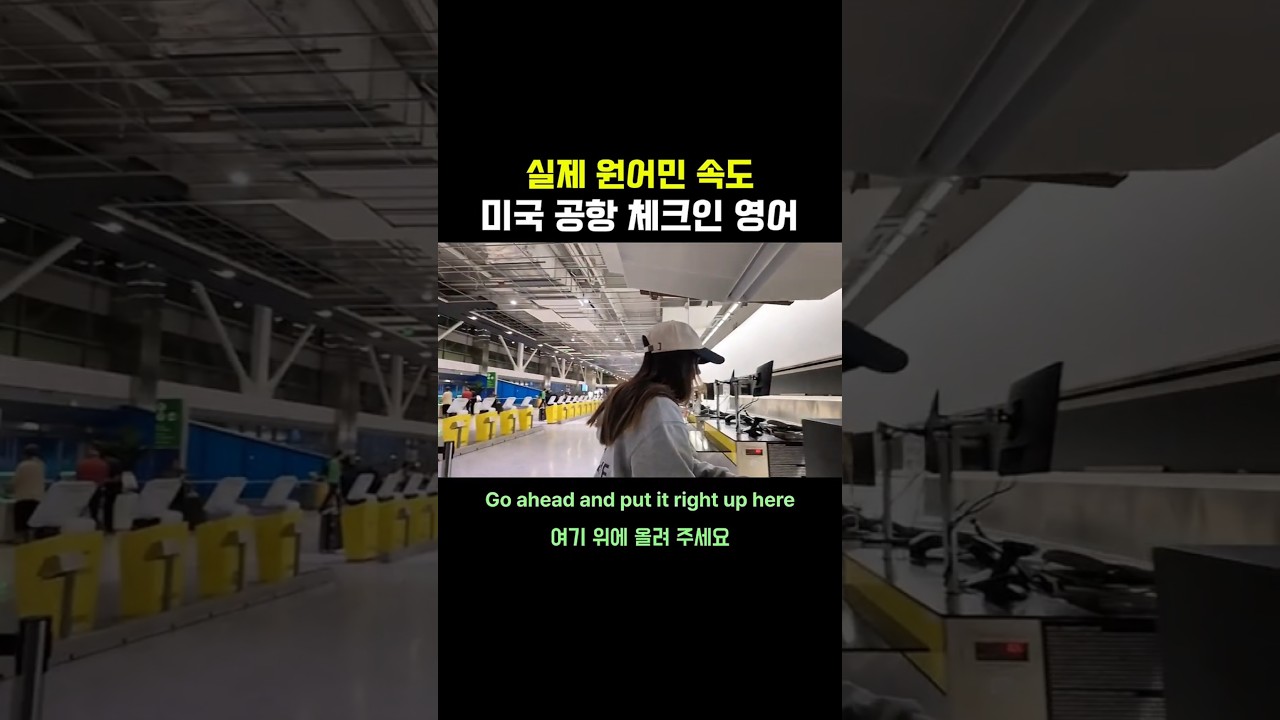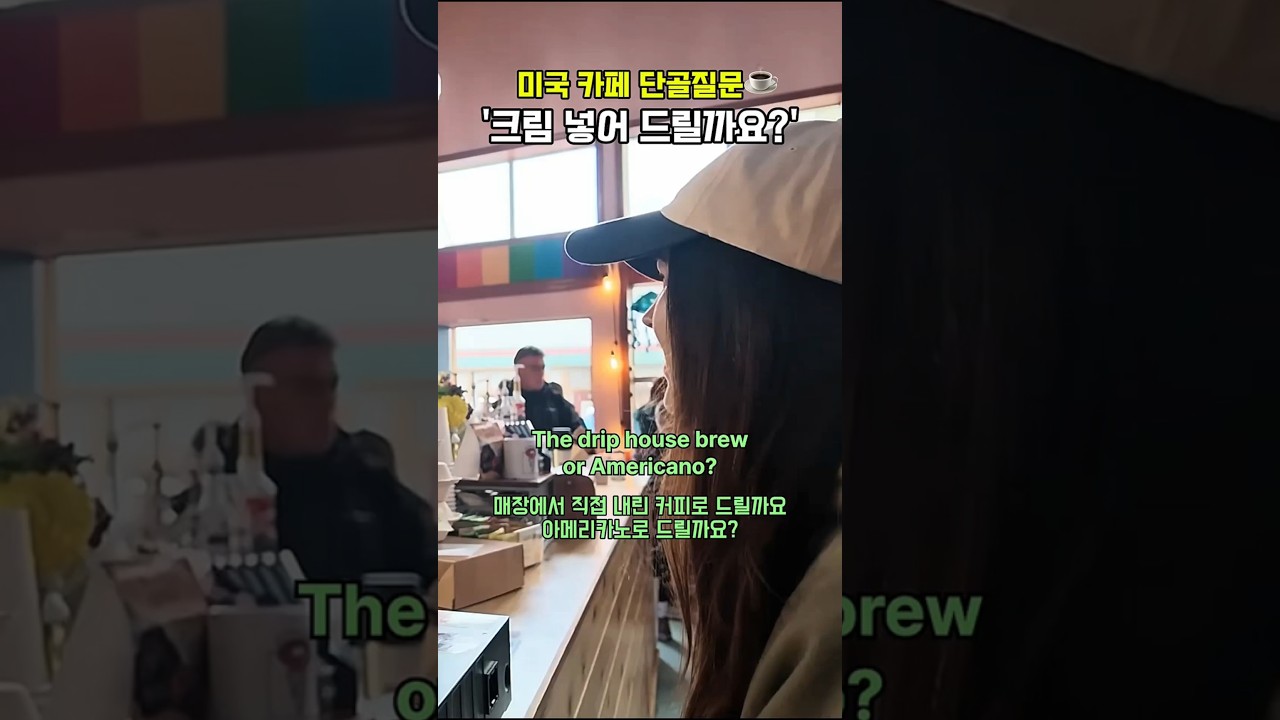
영어 귀 뚫기, 리스닝 실력 폭발적으로 늘어요 | 미국인이 밥 먹듯이 쓰는 생활 영어 표현 | 자기 전 틀어 놓으면 입에서 영어가 술술

Callie Anderson hosts conversations with Stefani, an Italian working at a Korean tech company; her grandfather building a log cabin in Michigan; and Sunny Lucas, a Chinese artist who speaks over a dozen languages. Hear about coordinating across time zones, hands-on learning, and language-learning strategies.
Chapters
If the kimchi is good, the food is gonna be good. Bibimbap or mulnaengmyeon or makguksu.
Hello everybody! Welcome to our very first episode of Lunch Hour English. I'm in Jeju-do right now and about to dig into the craziest looking seafood ramen I've ever seen in my life. But I've got some help here with me. Here is our first guest of the show. Can you please introduce yourself?
Hi, I am Lorena. I come from Spain and I work in Korea as a model and actress.
Mmm, very nice.
Thank you.
Thank you for coming here today.
Of course!
Have you ever eaten something like this before?
Not like this. This one is like very interesting because it's quite large and everything is together. I'm quite excited, to be honest.
So a little bit different than what you've tried before. Do you like Korean food?
I do.
Do you have a favorite Korean food?
It's really hard to kind of choose only one food. I really like jjolmyeon or bibimbap.
I also love kkkkodu.
Bibim naengmyeon or mul naengmyeon. Or makguksu. Really hard!
That's fair. That's a hard question. Oh, so, so cute! Let's see. You like this though, right? Have you tried it? Okay, okay, okay. It's okay. Not bad, not bad. The texture is very chewy, and I don't think it has too much flavor though.
Now what?
He's getting all the seafood ready, flipping it and making sure it's fully cooked, chopping the octopus now. Rest in peace, little friend. That's nice they make it into like bite-sized pieces for you though.
I feel like in Spain we like more like softer texture, whereas Koreans like really kind of like chewy textures.
Okay, this is what I get excited for, the noodles.
I love noodles. Are you a rice person or a noodle person?
Noodle person.
Same.
You too? Can't go wrong with noodles. Can't go wrong.
And the broth is so good.
The broth is super flavorful.
Spicy.
Do you like spicy food?
Yes. Yes! Mmm, I love spicy food. Spanish food is not spicy, but I lived in Germany with a Turkish flatmate, and that's where I started eating spicy food.
Ooh, wait, do Turkish people eat spicy food?
Yeah, very spicy.
Wow, I had no idea.
It's different spicy from Korean spicy.
Oh, okay, okay.
But that's how I started eating spicy food and got used to it and kind of like became addiction.
Mmm.
So how long have you been in Korea actually? I have been in Korea 7 years and a half. Wow, quite a long time.
Yeah, more than I expected actually.
What brought you to Korea in the first place?
When I first came to Korea, I had a job at a company, so I came for work. I had already been in other, many other countries, like in around Europe. I lived in Paris, I lived in Berlin, I lived in the States, and I have learned all the language. And then like I tried with Korea and I visited, I loved it, and I felt like the culture was a little bit similar with Spanish culture. It's similar. It's similar, very similar and very different. You also like stand up for like older people.
You respect the elders.
Yeah, you respect the elders. It's in a different way with Korea. Sometimes in Korea when somebody's elderly, you cannot really say something even if they did something wrong. In Spain, you could say something, but you need to say it respectfully.
Okay, you got to be careful.
You got to be careful, but you can say something. Okay, we also have like formal language. ¿Tú no er más? Yeah, we have tú no er más.
In Spanish? Yeah, yeah, yeah. Oh, I didn't know this.
But like the funny thing is like most people in Spain, they will tell you like, talk to me in informal.
Okay.
Because people feel feel old when you talk to them in formal language.
Speak to me like I'm young.
I'm still young. Yeah, yeah. Whereas in Korea, I feel like it's kind of the opposite sometimes.
It's kind of rude if you speak—
people will feel— yeah, with foreigners sometimes we get a free pass because they understand we don't speak super well.
We're not great at Korean. We're not totally fluent. I was saying like 안녕 to taxi drivers and I had no clue. I was just like 안녕, and then later I learned. I was like, oh, I feel bad.
It's really, really good.
I love kimchi too.
That's why, you know, like the restaurant is gonna be good. If the kimchi is good, the food is gonna be good.
Was there anything that was like so different or hard for you to adjust to here in Korea? Big culture shock or something?
Maybe not culture shock, but sometimes I still— it gets— still gets to me. Like, uh, in Spain, usually when you enter a place, you say hello to people. You will be like, oh, buenos días, ¿cómo estás?
People are like more talkative a little bit. Yeah, even to strangers.
Or like you acknowledge people more. Like, then, for example, in Korea, like when you go into the elevator, like even if it's your neighbors You don't really say hello.
That's true. It's silent in the elevator.
Yeah.
Sometimes I feel awkward. I'm like, do I say hi? Do I not say hi?
Especially if it's another foreigner.
Yeah, that's true. You kind of like awkwardly glance. Sometimes I'll do like the head nod.
I know, I know what you're thinking. That's a little bit awkward.
Yeah.
When I go back to Spain, it's kind of reverse culture shock because I have become a little bit rude in Spanish standards because I go to places and I don't remember that you are supposed to say hello looking at people.
The etiquette's different, right?
I kind of understand this since small talk is huge.
So common in the US. When I came to Korea and people weren't talking to each other on the bus or elevator or somewhere like this, I felt like I had to say something. Or like not saying bless you. I think that was another odd thing for me. When someone sneezes, like, I'm like, I gotta say bless you. But it's just not a thing here.
I still say it even at Hongdae subway. I'm by myself, someone sneezes, I'm like, bless you.
Bless you! Alright, I'm gonna switch things up here, and I want to ask you about your life in Korea as a model. So what are some of the pros and cons of being a model, and what's just been your experience there?
Pros, I would say, is not per se of like being a model only. I like the kind of like every day is different. I can bring creativity into my job because every day I'm a different person. Sometimes that allows you to explore like characters that maybe is not who you are. Like if you're a mean person on camera, you are allowed to be mean. So like you can experience how that person will feel. Uh, you get to meet a lot of people. I generally like to meet people, ask them questions, know about their life, what they do, what they like, how— because I feel like you can learn a lot, like, about hearing people's stories. So I love that about my job. I don't like that it's so uncertain. Last minute, it's not gonna be this day, it's gonna be this other one.
Oh, that's rough.
Yeah, so it's a little bit hard to make a life around it because you never really know what it's going to be like.
I can understand that, the uncertainty.
Yeah, so it's like good on one side and the bad uncertainty because you don't know who you're gonna meet, how it's gonna go, like if it's going to be fun or not. Also, there's a lot of waiting time. Sometimes I have been like shooting for 24 hours and you're shooting 1 hour or 2 hours and the rest is waiting. You get really tired by the end of it.
Is there anything like you feel like being a model in Korea versus being a model in Spain? Like, is there any difference, would you say?
I think when I did modeling in Spain, I was studying my master's degree, so it was only part-time. So I didn't do as much work as I did here. In Spain, the work that I did, it was mostly fashion work or like event work, whereas in Korea it's mostly commercial work more than modeling itself. Okay, so in Spain I did more like catwalk.
Wow, you did the runway?
Yeah, or event.
That's so cool!
I did that in Korea too, but like much less.
That's amazing!
Oh, I want to watch you. I'd make sure you see me waving.
Yeah, do it!
Wow, we're nearing the end of our soup here. We did good, we killed it. It's almost all gone. Oh, what was the best?
I love this one, shellfish. It's so good.
Oh, I enjoyed it very much.
Which one was your favorite?
I like the noodles, maybe the mussels because it was my first time.
The mussels?
Yeah, I liked it. Any of the shellfish.
Oh nice, I feel flattered that I'm your first guest though.
Thank you so much everybody for watching our very first episode of Lunch Hour English. Please stay tuned. Hello everybody and welcome Welcome to Lunch Hour English. This is going to be a super fun episode because as you can see, I've got some delicious looking food here and a beautiful guest. So this is Illy, and she also lives here in Korea. So Illy, can you introduce yourself?
Hi guys, my name is Illy. I come from Bulgaria and I've been in Korea for about 6 years now.
Woo! What do you do in Korea?
I do acting.
Acting and modeling. She's being very humble. She's an amazing actress and she is in so many advertisements here. I can't walk out of my house without seeing your face somewhere. Oh my god. So what was the recent job that you've done? Like one of the bigger jobs you've done recently?
A recent job that I'm kind of actually pretty happy about how it turned out is commercial for Hyundai car, Hyundai Genesis. Not sure if I should say that.
Did I sign an NDA? Was it in the contract?
But yeah, it was pretty cool.
So are you hungry today?
Are you ready to eat?
I am pretty hungry.
I am very ready to eat.
Okay. So I feel like so many times when we hang out, we always get jeon and makgeolli. Yeah, that's kind of our thing.
Yeah.
If it only was raining, it would be perfect, right? I know.
It is like the most like sunny and hot day today.
Right.
Well, never a bad day for jeon, right?
Of course, yeah. Very excited for this one.
Yeah, same. So this is like, um, dongju. I don't know if you can tell on the camera, but it's like a slushie. It's icy, so I think it's perfect for summertime. Let me pour you up.
Thank you.
I got you, girl. Oh, looks so good. Do you have anything like this in Bulgaria, like rice drinks, or was this very different for you?
This is very different. Okay, but I fell in love with makgeolli from the first try. It's so good, it's so refreshing, and I like that it's not too strong.
How do I say cheers in Bulgarian? Na zdorave! You gotta do the tongue roll, right? Na zdorave! Cheers! It's so good! It's like so refreshing on such a hot day.
I'll take this instead of ice cream any day.
Ooh, they should make a makgeolli ice cream. Is that a thing? I feel like I've seen like makgeolli shakes.
Cut this out, we are gonna have a new business. Makgeolli ice cream.
We're patenting this right now. Nobody steal our idea.
Should we try the food before we go?
Get into all the conversation. Alright, so we've got a huge assortment of pancakes. Actually, I haven't tried many of these. We've got tofu, kimchi, chili pepper.
This is gineep, I think.
Oh, gineep! Oh, I love gineep.
Gineep leaf, perilla leaf.
I'll start with this too. Okay, dip it in the soy sauce.
Actually, I grow my own perilla leaves at home.
Oh, you do?
Yeah.
Oh, that's so cool! On your rooftop?
Yeah, yeah.
Oh!
I have my own little garden there.
Nice. So she actually— you own a building.
Wow.
Like, humble brag. Humble. And you guys renovated this whole building.
Yeah.
And it's gorgeous. Like, her house is beautiful. So I'm just wondering about, like, how does housing here in Korea— how does it compare to housing in Bulgaria?
Honestly, I was really surprised. We actually first live in an apartment, and then because of the noise noise that we could always hear from the neighbors, we decided, oh, we want to live in a house.
That's rough.
Because you can hear everything from the neighbors.
You can hear them fart next door. Yeah.
So back home, I feel like compared to Korea, most people would love to have their own houses with like a yard and then a garden. Nowadays, a lot of people that live in the city, they're so like tired from all the busy city life.
Yeah.
So they would actually look into buy houses in the outskirts of big cities, and they would commute to work.
Like what you did. Yeah, basically what I did. I actually heard a term for this recently. It's called city fatigue.
City fatigue.
And I can relate to that. Living in the city, the hustle bustle, like, can be exhausting.
So I feel like in Bulgaria it's more doable because we're not that many people. Korea and Bulgaria have the same size of land. And we're like just 7 million and Korea is like what, 50 million? So imagine if 50 million people wanted to have their own house.
Like this is— yeah, the math isn't happening.
When I first came here and then I heard that a lot of people, like their dream would be to own an apartment.
That's a big difference.
I feel like in Bulgaria, once you buy a house, you would like live there for life. Like you would consider it more a home, whereas in Korea, people would be looking at it more of as an investment, so they will be moving out more often. I've been living here for 6 years and I moved 3 times. I would never thought that would happen back home.
When I first came to Korea and I heard of like 30-year-olds living with the family, it's very different from American culture where it's like, you know, you're 18 after high school and you're you're expected to pay your own rent, right? Get your own house, live on your own, and be completely independent. So to be completely honest, sometimes in the US when you're older and live at home, some people view it as you're mooching off of your family. Not saying this is true, but some people view it as that. I was really surprised. This is totally normal, totally acceptable. I think it's kind of nice in a way. I wouldn't mind living with my but was it shocking for you?
It's quite different from Bulgaria. Actually, I feel like in most of Europe, people would get independent at an earlier point in their life. So I feel like I had this type of prejudice maybe when I was in my early 20s. I would also think, "Ah, you're still living with your parents and you're in your 30s? Like, why?" But now that I'm in my 30s, I would love to live with my parents. That would be so nice.
Isn't it funny how your attitude changes?
No, no, no.
'Cause me too, when I'm 20, I was like, I never want to live with my parents again. Like, living alone is amazing. Now that I'm older and paying the bills, I'm like, I would love to live with my parents again.
Yeah, having someone to cook and wait for you at home.
Is it common for people to live together before marriage?
I really don't understand, like, people in Korea getting married and not having the experience of living together before that. So I feel like here, like, living together is a very— considered as a very big thing, whereas back in Europe it will be more nonchalant. Oh, let's just share rent, like we've been dating for a couple months, so let's just— so people would be doing it out like economical value.
Yeah, yeah, like makes sense for us financially.
Yeah. And here it's more like, oh, we're living together, okay, now next step is marriage for sure.
It seems a little more controversial here, something with the religion.
Buddhism? No, it's Confucianism.
No, I know what you're talking about. Yeah, Confucian. I think culturally in the US it's very acceptable.
Even I have a lot of friends, a lot of people would be living together, having kids without having marriage, for example.
Gotcha.
Whereas here in Korea, that's a no-no.
You learn a lot about a person by living with them.
Exactly. You should know what you're getting into in advance.
Was there any other thing when you when you first lived here in Korea, something even about the housing that kind of like shocked you?
Not interacting with your neighbors.
Oh, that's a good point.
In Bulgaria, you would know them like by name. You would like always talk to each other, having beer at night in the like, if you have a common space, right? You could always go and ask for sugar, for example. Whereas in Korea, you barely meet them. But I heard like there was an old tradition tradition back in the day, you would give rice cakes whenever you move into a new place. So the second time we moved in an apartment, I remember we gave some rice cakes to the neighbors. Oh, that's such a nice thing to do.
That's so sweet. I don't think I've ever seen my neighbors in Korea.
Maybe it's an apartment building thing. If you have kids, it's a different story. But if you live on your own or if it's a couple, Maybe it's harder.
When I was growing up, it was very common. I was very close with my neighbors. I lived on a dead-end street and we knew almost everyone on the streets. My dad would mow the neighbor's lawns and we'd help each other out.
Have barbecue together.
Yeah, sometimes. I feel like there's pros and cons because some days I'm like, oh, it would be like helpful. You can help each other out and it's kind of nice. Nice. And then on the other hand, we've also had neighbors that are like, don't really want to talk to. Yeah, I get it. So yeah, it can be good and bad. What about renting in Bulgaria? When I first came to Korea, I was really confused by the whole jeonse, wolsae system.
When I first heard about jeonse, I was like, how is it possible? Because like, like you give this big chunk of money that you could almost buy an apartment with and and this person uses them for their own good. The only thing that's binding you is like a contract, right? But then after your contract ends, if that person doesn't have that money to give it back to you, then what to do?
Yeah, you're out the money.
Can you still live in the apartment though? My husband had to explain it to me several times to understand how exactly it works.
It just seems shady a little bit.
It does seem a lot. Apparently it is becoming a big problem a big fraud in Korea. Even not only jeonse, but deposits in Korea are also quite expensive.
Very expensive.
In Bulgaria, when you do rent, your deposit would be like 1 or 2 months worth of rent. And here is like, what, 10 million? At least 15 million won. So if you live on your own, that would be like quite a large sum of money to have in advance. But when I lived back home in Bulgaria, it was quite cheap compared to what I've heard the prices are now here. Because I paid— but that was like, what, almost 10 years ago? Nobody knows our age right now, right? Yeah, no agents are looking at this. But I paid something about like $200, $300 per month for a studio apartment. Like, there was one bedroom and then like the living room with the kitchen. Kitchen and then one bathroom.
Wow, $200 a month, that's crazy.
But now it's like the prices, the minimum amount that you would pay would be at least double, at least $400 to $600. That's, I'm talking about like in, uh, the capital city.
So apart from renting in Bulgaria, how much does it cost to buy a home?
Well, it used to be quite cheaper compared to here in the US Yes, but nowadays like prices have gone up. I guess it's inflation everywhere, like worldwide. I don't want to give false information.
Fact check.
So according to latest information from Google, in the outskirts of Sofia, like the capital city, we call it 2-room apartment. Oh, it's about like 60 to 65 square meters. The minimum prices would be about, um, 80 $90,000 US, US dollars to buy the home.
Wow.
But then it can go up to $280,000 depending on the location.
Girl, is this cheap? I just went to like San Diego recently where a million dollar home USD is like minimum, minimum for like a one bedroom, two bedroom.
This is Bulgaria, come on.
So that's a good price. We're tempted to Go back. Yeah, and invest. Yeah, maybe for retirement. New business venture.
I told you I moved several times, so one thing that was quite a big shock was like how convenient it is to move in Korea. The moving companies, that's just a different level.
Like, I loved it so much.
Like, you don't even have to move a finger and they'll do everything for you. Not only they would move you out, but they will like put everything back in your new new home.
So I was also surprised by this, like when they take photos to see how you have it set up and then they replicate it in the new house. I was so shocked. Wow, it's crazy.
But I think the, the most thing that was like quite surprising for me was the sadaricha, the ladder car. Yes, that goes up to like what, 20 floors up there?
And I was like, this is crazy.
So I have like multiple videos of the car.
Me too. But I guess that's the only way you can do it if you have 20-story high building.
I think Korea is like, has it the most comfortable way of moving houses.
They've got a good system. How's the food?
Food is great. It's like my, one of my favorite Korean dishes, honestly.
So good.
Yeah.
Yeah.
Are you getting full? I'm a little full.
A little full, but I can still go more.
Well, let's enjoy the rest of this meal then. Thank you so much for joining us today. I learned so much about Bulgaria and it was really interesting comparing Bulgarian culture and Korean culture. Thank you so much for watching. If you like this video, make sure to subscribe to our channel, like the video, and comment below what you thought was the most shocking difference between Bulgaria and Korea. Thank you everybody, see you next time.
See you next time.
Hello everybody and welcome back to Lunch Hour English. I am at the Han River Park and we've got some jjimak and I am ready to eat. But before we do, I want to introduce you to our very special guest today.
Hi, I'm Taz. I'm from the UK and I'm a producer here in Seoul and a food content creator. Thanks for having me.
Of course, thanks for coming. Before we get too much into it, should we dig in?
Yes, I'd love to. That's so crunchy. Gyocheon is actually not my go-to, but I do like gyocheon.
Okay, what's your go-to?
Pura dak.
Fancy girl. We're having non-alcohol today. We're being health queens.
Health queens.
We're having fried chicken.
It's all about balance.
Exactly.
Cheers to good food, good friends, good life.
I will definitely cheers to that. So, Taz, can you tell me a little bit more about your work?
Yeah, I do kind of everything from content direction, production, videography, global marketing, those kind of things for Korean companies, basically helping them and working with them to become global. I used to do that in the UK, and now I started doing it here too. I had my own company in the UK, private chef company, and I got a TED Talk out of that as well. Yeah.
Wow, that's amazing. So can Influenlish hire you?
Yeah.
Can you make our videos?
Yeah.
Done.
Everyone, our new employee. You do a lot of food content. What initially made you interested in cooking content?
I was always surrounded by food. Yeah, food was just a really big center of my life, I guess. And naturally, I learned how to cook through my grandmother and my mother, and I just grew up with it.
Do you kind of do your own cooking show? I've seen episodes where you cook with people, and it seems like you kind of do fusion food. Do you have an all-time favorite Korean food?
Galbijjim.
Galbijjim. Wow, you answered that so quickly. Galbijjim. Yeah. Do you a food that you've tried here that just isn't to your taste?
You know the bugs?
Oh, bondegi.
Bondegi. Do not recommend. Not for me. It was the idea of them more than the flavor of them. I'd be very happy if I never had that again.
Fair enough. Do you have like a Korean bucket list food?
Oh my God. On my Naver Maps, there are so many restaurants and cafes that I want to try. So I have tons on my bucket list. But food-wise, something I haven't tried is, you know, the octopus, the live octopus.
Sannakji.
Is that the name? I just call it wiggly octopus.
I'm always scared of it like suctioning my throat.
Oh God, the thought of it is giving me shudders.
Is there a big difference between food from home and Korean food?
Yes, because of the history of British colonization and things like that, a lot of influence has come from other countries. Like the British national number one dish is chicken tikka masala, which is not British at all.
Yeah.
Growing up, I actually never missed out on foods from other countries. I had Korean food. So it's kind of lucky that the UK is a fusion pot in itself. Traditionally, British food is very much meat and potatoes. So it's a lot of meat pies, mashed potato, bangers and mash, beans on toast, all of which I love, by the way. It's just comfort food. Even though some people might find it bland, it is still comfort food and it means home to me too.
When I go to a lot of the restaurants here in Korea, they always ask me, "Oh, isn't it too spicy?
Do you get this?" I get it, and then I have to say to them, number one, I'm used to it. Number two, I'm South Asian. It's in my blood. There's a difference in spice as well. You know the numbing sensation you get from malatang? I don't like that. But I do like kimchi spice, the fragrant spice. Have you tried the stir-fried octopus? It's flavorful spicy. The gochujang spice, kimchi spice is good. When I go to restaurants, "Are you okay with that?" I was like, "Hit me with level 5!" Ah, yeah.
For me, the eating culture in Korea is very different from the US. For example, everyone shares meals here. I love it now, but when I first came, it was really strange for me because I'm used to everyone ordering their own.
In the UK, it is kind of similar, so everyone just orders their own dish and you just eat. But again, I feel like I have an advantage with my South Asian background, so when I came, it wasn't a surprise because I was already used to it from my own background. But I really love the culture here in terms of sharing stuff too. You get to try more things. I love going out with my foodie friends because we literally can order like 2, 3, 4 different things and we'll just share it and stuff ourselves. I love the sharing aspect and that's what food is. Food is community. It's such a representation of togetherness. Whether you cook together and eat together and you share stories and culture and it's just nice.
That's really sweet.
I love that.
I'm gonna cry. One of the things I love about eating out here is the refillable free banchan. When I go to the US, I'm so disappointed. I'm like, where's my free side dishes?
I visited the UK and I went to a Korean restaurant and I asked for more kimchi and they were like, oh, that's £2 extra. No! But because I love kimchi, I did order more, so I paid £2 for this much kimchi.
Is Korean food in the UK like super overpriced?
Yeah, because it's trending, that K-wave.
Like, we lived in New York week before coming here, and I hadn't been to Korea yet, and so I had no idea how much I was overpaying for stuff. Like, I think I bought a bottle of soju for like $15 USD or something crazy, and we had like a $25 bibimbap. Not that it wasn't delicious. I have never been to the UK before. I've heard the stereotype that British food is not the most delicious kind of food. Mm-hmm. Can you defend yourself here?
Modern British food is flavourful because it is seasonal. British food has evolved a lot. What dish comes to your mind if you think of British food?
Fish and chips.
It's one of the comfort foods I miss the most. It's so simple, it's literally fish and potato, but when you have it from a local fish and chip shop, you can smell fish and chips from a mile away, and it's the most inviting, gorgeous smell ever.
Oh my gosh, yeah, I'm sold. The rumour is false, guys. I've just heard that it's bland.
If you had something bland, they probably didn't use the right thing or they didn't cook it well.
You know, in Korea, I think the delivery food system here is unmatched. You can order anything any time of day, it comes within 10 minutes. I mean, we're at the park and they brought fried chicken to us. How is it in the UK?
Nothing like that at all. That's one of the things I love about Korea is the convenience. In the UK, it's quite expensive to order delivery food, so it's quite a rare treat. And on top of that, it takes a long time, so it's really not that convenient. But here, takeout food is actually a lot cheaper than groceries, so ordering delivery food is really easy. And they all deliver anywhere. They deliver it in the Han River, probably on a speedboat. It wouldn't surprise me.
They swim out to you. We did an RV trip and we were in a random parking lot. I don't even know where we were, and it was the middle of the night, and we ordered pizza. And they somehow found us in the parking lot with the pizza. Only in Korea could this happen.
I went to a hashik the other day and I wasn't drinking. I was just having like cola and stuff. And because I was like noona and unnie to all these people, and I've been here long enough now that I very much assimilated into Korean culture, I paid.
And you didn't even drink?
I didn't even drink.
Ah, you're a good noona.
I'm a good noona.
So I did a live recently and the viewers asked me to mimic a British accent. So I was wondering if you could help me out a little bit? Maybe teach me a sentence with the UK accent? Because we were saying how the UK accent sounds so posh and sophisticated and fancy.
My accent is kind of a weird hybrid of English and Welsh combined.
It's a beautiful hybrid.
Thank you! I go from what my friends call posh accent to like gangster.
Can you give us a sentence? I'll try and mimic you.
Try this. Focus.
Ready?
Harry Potter went to get some water.
Harry Potter went to get some water.
Harry. Harry. Potter.
Potter.
Went.
Went.
To get.
To get.
Some water.
Some water.
Harry Potter went to get some water.
Harry Potter went to get some water.
Not bad. It needs a little practice, but it's fine. How do you say tomato?
Tomato.
Tomato. You added D. Why'd you add a D? I'm really bad at the American accent.
Can you try? Try the same sentence but American. Harry Potter went to get some water.
Wow, you really don't pronounce your Ts. Harry Potter when you get some water.
Basil.
Basil.
Tomato.
Tomato.
Oregano.
Oregano.
Apricots.
Apricots.
Fillet.
Fillet.
Vitamin.
Vitamin.
Vitamins.
Aluminum.
Aluminium.
Herb.
Herb.
Caramel.
Caramel.
Speed round. You are going to answer food questions.
Okay.
So these are like controversial food opinions.
Oh, okay.
Yeah.
Ready.
Wings with bone or boneless wings?
Wings with bone.
Mint chocolate, yes or no?
Yes.
Cilantro, yes or no?
Yes.
Pineapple on pizza?
Yes.
Tangsooyook, pour it on or keep it on the side?
Keep it on the side.
Mulinengmyeon or bibimbap?
Bibimbap.
All right, nailed it! Yeah, Tess, thank you so much for joining me today.
Thank you for having me, it's been fun.
It was fun. Welcome back to Lunch Hour English. Today I am at a Chinese-Korean restaurant and we've got all kinds of delicious food in front of us here. Jajang, jjamppong, tangsoo, all of the Korean classics. I'm excited to dig But first, I will introduce you to my very special guest today. This is my friend Jem. So will you introduce yourself?
Hi there everybody, I'm Jem. I'm from Hawaii in the USA. I've been living in Korea over 10 years.
Yeah, a long time.
And I'm currently working as an English teacher also, and I'm running my own English academy in Sinchon.
You're a boss babe.
I'm a boss babe.
I try my best, but I'm a big fan of jjamppong here, so I got this one. But jajangmyeon, you know, tangsuyuk, all of them, I'm a big fan.
I don't think I've ever had Chinese food this early or this sober. So you ready to dig in? So you mentioned that you're running a hagwon in Hongdae.
Yeah.
Can you tell me a little bit more about that? It is a big accomplishment. So how was it like opening a business? Business in Korea, and what brought you to do that?
I have actually been running this academy for 10 years, as long as I've been here.
Yes, I didn't realize that. I mean, for me as a foreigner in Korea, like, thinking the prospect of opening your own business here, it's kind of scary in the beginning.
It's a lot of trial and error, and there were things that I didn't think of— interior design and space and the size of classroom and the distance between me and the student. There are a lot of little aspects that you really need to consider when you open the business or open a kind of study space.
That's amazing though.
Thanks. For me, you know, teaching has kind of always been my passion. Before, I was kind of doing here, there lessons, but I kind of wanted to teach with my own philosophy, which is kind of giving feedback to students. A lot of times people go to academies and they sit down with a book, but I think that's really not as helpful as actually engaging in conversations. So I like to do a lot of conversation and feedback-based activities. I just want to make sure that they have as much talking time as possible because a lot of people, they, they speak in English and they're afraid of making mistakes. And even if they make a mistake, nobody tells them, and then you might end up making making the same mistake again. So I just try to help them out, tell them gently, and after that they feel a little bit more confident. Because even if we study it all day with a book, when you come face to face—
hey—
it's so different, right?
You freeze up.
I think confidence is key actually when it comes to learning a new language, so that's really great.
Yeah, I actually also teach moms and kids together. Mom can also learn from ABCD.
It is totally okay. So actually, a lot of our viewers are in that kind of situation. So we have a lot of moms who are teaching their kids English. Maybe they're not totally fluent, but they want to help their kid learn English. So do you have any advice for parents out there? How can they help their kid get more fluent in English?
Yeah, two things really come to mind. The first thing is, even if if you, the mother, are not fluent in English and you're afraid that if I teach them the wrong thing, they're going to learn the wrong thing. Don't worry about that. Just introducing it into the environment, making it comfortable, is a really good idea. And I would say the second one is just acknowledge your own child's learning style. Not every kid can look at the book, write down 100 words. If your kid loves music, try introducing songs. If If your kid loves exercising, dancing, move your arms, anything like that. Just kind of recognize what is the way that your own child can kind of absorb this information the best.
That's really good advice because I agree everyone learns differently.
Totally.
So I love that it's a very like personalized approach. You're doing this on top of being a mom. Oh yes, I also have my own kids.
I have 3.
Wow!
How old are your kids?
So my oldest is, uh, I have a daughter, she is 8 years old, uh, international age, and she is in the 2nd grade of elementary school. And my youngest, my son, he's 5 and he is in kindergarten.
Aww, that's so sweet! Do they go to regular Korean school?
Yeah, they go to just regular Korean kindergarten, regular Korean elementary school.
How's their What was your experience with that?
For my daughter, at first she said she had a hard time with actually Korean letters. However, you know, after about 2 or 3 months, they really teach it a lot in school. She's very good at it now. And for my son too, getting along with his classmates. As a mother of multiracial kids, my husband is Korean, so my children are mixed. Mixed, I was worried, like, are they gonna fit in? Nobody really cares. Well, actually, Korea is also becoming more multicultural. She's not the only one. Yeah, so there are more. They blend pretty well. The kids play very well during class time.
That's good. They speak all Korean, right?
All Korean, all the time.
So I'm curious, do you speak English with them at home, or do you speak Korean with them?
You might have heard there's like a few techniques for how to raise bilingual children. Children, and we adapt one technique which is called One Parent One Language, where each parent chooses their native language to use to the child. So I only speak English and my husband only uses Korean. When we're together, it does sound funny, but the children will respond to me in English and respond to their father in Korean. And even funnier, Sometimes they will translate between us. We can understand, but they will actually translate between us.
That's so cute.
Some people do the environmental method, like all English at home, all Korean outside.
Wow, for them to be learning two languages at such a young age, that's such a big advantage for their future, I think.
It's amazing to see the actual process myself from being a baby up to this age, I can see that exactly right around 3.5 years old is where the languages start to blend and they get confused, but then they have this like burst of language and suddenly they can distinguish which one is English, which one is Korean.
It's really cool. That would be, yeah, really interesting, the progression.
Yes, yes.
I don't know if this is true, but I I've heard that bilingual kids are taking a little bit longer to start speaking more. Do you find that true?
I think you're totally right, and I was also panicking too because up to 18 months, right, I'm like, why are they not talking? But after 18 months, boom, suddenly they can speak two languages. So the development was slower, but then it came all at once. Can't stop talking, can suddenly use high-level words. Where did you hear that? That's for the moms too. If they're thinking, oh, my kid's not learning English fast enough, no, no, they're processing. They probably know it. They're just not showing you.
So your kids go to school here in Korea. Before sending them to school here in Korea, do you like have any concerns, or did you consider sending them to American schools?
Yeah, absolutely. I worried a lot about, you know, they're very strict here in Korea about the studying style is kind of repeat, memorize, repeat, memorize, do everything quickly, kind of about just getting the right answer, whereas in the US they tend to focus more on expressing your creativity. And if you answer the question logically, like if you can prove why you chose this answer, then then the teacher will give you a good score. So I think this was the huge difference I worried about.
Okay, do you see your kids staying in Korea through college even?
I think ultimately I'll give them the choice when they're old enough to make their own decision, but I'm— as a teacher, I'm not a huge fan of the cramming and test-taking culture because I do believe that some people can be very smart, but not everybody is good at taking a test. So I don't believe tests are the best way to judge somebody's intelligence. I do want them to be able to express themselves more. So, but in the end, I'm gonna let it be their decision.
Jenn, thank you so much for joining me today. I learned so much from you and your teaching method. I do have kids in the future. I know who I'll be sending them to.
That's so sweet.
Well, thank you so much for inviting me, and thank you. This was delicious, and I'm so full, and it's amazing lunch hour English with you, so thank you so much.
Hello everybody and welcome back to Lunch Hour English. As you can see, we are already enjoying some Korean barbecue and it is fantastic. And I have a very special guest with me here today. I'm with my friend Zae. Zae, can you introduce yourself a little bit?
Hey, my name is Zae. I'm from the States, originally Texas, grew up in South Carolina. I've been in Korea for about 6-7 years now. I teach, I do a little bit of modeling, sports coaching a little bit. I do a lot of running. I live by the motto or the mantra of an active life is a healthy life, and healthy life is a happy life. And so I try to spread that with all my friends and my community.
I love that motto. So I've got to ask you, since you're originally from Texas, Texas barbecue or Korean barbecue?
I'm actually part Korean. I'm a fourth Korean, so I grew up with the Texas barbecue from my grandpa. He'd grill out, do brisket and all that stuff, and my grandma would bring like galbi and stuff, and they'd like mix it up. So I'm a huge fan of galbi, but I do love good brisket. I think each culture has its own Really good.
Okay, skirted that question. Smart, smart. Wow, I didn't know that, that you're fourth generation Korean too. So the way I met Zae is he does like running events. He hosts events once a month.
Yeah.
Can you talk about that?
Um, I've been running consecutively for about a little over 3 years now, so I started planning kind of more social runs. I did a color run run, a costume run, just kind of runs more focused on community and kind of meeting people and stuff like that.
So I actually got to know about Tae on Instagram because at the time you were running from Seoul to Busan. I've never really heard of someone doing that before. It's unbelievable, really.
I believe the total ended up being like 456 kilometers, and it averaged to be about 50 or so a day. Oh my God, I started this run streak, and it was really just a run challenge at the time. I was in quarantine twice back to back for close contact through COVID, and so I'm in quarantine, and when you're stuck inside for 24 hours, 7 days a week, you know, you're like, "Dang, that's a lot of time in the day." I was like, "You know what, I'm gonna challenge myself to do a 5K for the month of March." So I did it. I started— I got out March 1st, I started March 2nd. As I'm running, I don't feel like I'm done. I feel like I could do more. Even though I accomplished the goal I set, if I stopped now, I feel like I would be limiting myself. So I was like, you know what, let's see what April's like. And after I got to April, same thing. Then I was like, you know what, 60 days—
you want to push yourself?
60 days is kind of close to 100 days, you know? Like, let's see what 100 feels like. So I get to day 365 of me running. I'm very intentional about the things that I say to myself because your body is always listening. Your body is taking a record whether you realize it or not. And if you say you're gonna do something enough times and you don't do it, your body's like, ah, he won't actually do it this time. And so your body will give out on you. But if your body knows that no matter how hard it is, your body's not going to give up on you because it's like, nah, he means it, we got to find a way to make it happen.
You're super inspiring. I'm like I'm getting all these thoughts in my head right now.
Then I was like, you know what, I'm gonna run Seoul to Busan. And then it came the process of like kind of planning it out and figuring out how to get it done.
It seems like a lot of logistics actually, like where are you gonna stay? How did— like did you run on the highway?
There were moments where I'm running on the highway, there are moments where I'm running on like country roads, um, getting chased by dogs early in the morning.
Oh my gosh.
But more importantly, getting attacked by bugs.
Oh no.
And it's like not even like the regular bugs that you think of. So like your bug spray that you got doesn't work. And so you've got like these big masks and stuff. I knew it was going to be really hot, but that was something I didn't plan for. Yeah, I was like 34, 35 degrees most days. And as we're running on this like country road, someone's honking at me and I was like, oh crap, who's honking at me? I look back and this random ajussi has a fresh ice cold bottle of and he's like, "Doshimae, doshimae," like, "Be careful," you know, and he's like gives it to me and I'm like, "Why?" And so we get to this coffee shop, we go in, she's like, "Oh yeah, yeah, I'm open," and I sit down on this table, order coffee, and I'm looking around trying to find something I can put my feet up on because the socks I was wearing at the time weren't compression socks, so they weren't really circulating the blood in my feet well toe nails, so there's a huge buildup of blood in my front two toenails.
I saw your stories.
Yeah, I've got a bunch of blood built up in my two toenails, and the only way to get it down was to like kind of prop my feet up and let the blood just go. She's like, "Why are you sitting like that?" I was like, "Piga isoyo down down down." She goes, comes back, has these two ice packs ice packs, and she puts them down on the ground. She's like, you know, step on them. I'm taking my shoes off, and I put my feet on ice packs. Like, okay, cool, cool. She gets down and starts barehand massaging my feet, trying to help circulate the blood. It was an amazing experience because, one, I felt so awkward.
Yeah, yeah.
Because like, I was so grateful for her kindness, but at the same time, my socks were soaked. I'm smelly, I'm stinky, and she's there bare hands massaging my feet. It was just— I was so moved by her kindness. The trip itself reminded me of a lot of things, but more importantly, it reminded me of how kind Korea is. Like, I think being in Seoul, you kind of forget that sometimes. Everyone's got their own agenda, and just because everything's moving so fast.
Yeah, it's incredible. Even for me, I watch the news and it's a lot of like bad things happening, and it's easy to get into your mindset like, oh, the world is, you know, such not ugly place and there's bad people, there is still so many like kind people and nice people.
From Gumi to Daegu, the worst bugs I've ever seen. Swarms of bugs, just like swarms of gnats, you know, and they're just trying to get in your ears, trying to get in your nose, trying to get in your eyes.
I can't run away fast enough.
When we were kind of prepping stuff, I mean, it's like, yo, do you think we need bug spray? I look at him like, bro, I'm fast. If they're gonna catch me, yeah. Man, they might catch you on the bike, they're gonna catch me because it's like country country, you know? But luckily he had bought like 3 like masks and they kind of like, they pull over here and without that you would have— I might have lost it. Mentally, I would have lost because you put your hand back, you feel a handful of them in your hands. Honestly, I would have much preferred if they were like mosquitoes.
So you've been going for roughly 1,300 Yeah, so today is day 1,310. Wow, 1,310 days straight of running outside.
Outside.
Cold, rain, blistering heat, all that jazz.
How long do you plan on continuing this, or is there a plan? I'm sure you get asked this a lot.
Yeah, I get asked that a lot, but I feel like every day is day zero, and I say that because no matter how hard yesterday was, no matter how much you did, no matter how hard you work or how successful you were, is that you have to do things that intrinsically move you, give you passion, that give you life, that give you energy, that help move you forward.
Yeah.
And one of my favorite quotes is like, we didn't come this far just to come this far.
Taking accountability.
Yeah, exactly. Taking accountability for your life.
I canceled on our last run.
I didn't mean to point at you, my bad.
I'm just shrinking a little. That was a good lesson though. We have a lot of people here watching that are like trying to learn a new language, which is not an easy task, right?
It's me too.
It's a journey and it's easy to give up. For people embarking on this journey of learning English, if you can just give like one practical tip for maintaining that discipline, because I think you're a very disciplined person.
Do it Do it as long as you think that you can do it, as much as you think you can do it, whether it's 2, 3 days, 4 days, 5 days a week, and then just do one day more. And you'll surprise yourself what doing one day more will do for you. People don't realize that goals and excuses can be just as limiting because I think a lot of times goals are often made based in your realm of comfort. A lot of times we set goals that that are just outside of our comfort level. But when you reach that goal, you can't let that be the limiting factor in your life. You have to train yourself of pushing to that limit and, and going a little bit further and seeing what you can do. I'm nowhere near perfect. There are some parts of my life where I really struggle, but at the same time, that's not going to make me quit.
Hello everybody and welcome back to Lunch Hour English. Today I am having street food at Namdaemun Market with my favorite street interviewer. If you're on social media, you probably recognize his face, so he doesn't need an introduction, but still, will you please introduce yourself?
Well, hi guys, my name is Jerry, the creator of K-Explorer, and thanks for having me at a lunch hour. I am from Nigeria and And, uh, I've been living in Korea for 7 years now. So I came to Korea back in 2017.
Wow.
How long have you been in Korea?
Since, well, 2015 actually. What was Korea back then? The city is always growing and evolving. Yeah, it's been really cool watching it grow actually.
It's beautiful.
I already got us started with some yachae hotteok.
Right, what is it made of? I have no idea what it is.
It's like a pancake stuffed with vegetable and glass noodles. Glass noodles.
Love it.
It is so popular here, so I had to go there early to line up because there was a long line already.
It's very greasy.
Is it healthy? Just don't think about that.
Okay, good. Okay, yeah, I'll just try. Yeah, this is my first time having a market food. Yeah, and it's like my first time having hotteok.
I'm so honored that it's your first time.
I mean, do I have a choice, Callie? Do I?
Dragged him here.
Good.
After you, though. After you.
Wow.
I love how crispy it is. It looks greasy but it doesn't taste greasy.
I have many questions to ask you today.
Please go easy on me, please.
Easy, easy peasy. Big fan of your K Explorer channel.
I appreciate you.
I always see it popping up and you've got some really interesting content. What was your inspiration for starting this channel? Why did you want to do street interviews?
I watched a lot of Asian Boss. Back when I watched Asian Boss, I was back in 17, 18. There was a lot of hype around like shooting videos, and K-pop was also like a thing, you know, in 2017 with BTS, BLACKPINK, all that stuff, you know, coming out. So I was like, how can I balance these two together? Because like nobody on the internet was doing it.
You need to put your own spin on it.
So that was how I actually got started with like K-Explorer.
Do you feel like you face rejection a lot? Are people willing to participate, or do a lot of people say no?
That is actually a very good question because I feel like lately a lot A lot of people like are just rejecting. There are a lot of more stringent reviews going on nowadays, or like just people don't have time, like they don't want to be on camera, you know, like all that stuff.
They're hesitant, like feel shy.
A lot of reasons, a lot of reasons.
When you're like out on the street, how do you scope out who you want to interview?
The internet loves beautiful people, or people that are just stylish, like people that are just creative, you know. Even if you have like a great topic, people might not necessarily resonate with what you're saying. Try to find that balance between interesting people versus, okay, like the topic and all that.
So yeah.
Wow, you consider many things. So I think this was a good start to our food crawl here in the market, but how about we go to our next stop?
Sure, let's do that.
All right.
Oh my God, like everybody and their grandmother is out now. I'm scared, I'm scared.
You go down all the little alleys and there's even like a noodle The market feels kind of local too. Yeah, that's what I like about it.
I need to stop eating fried food, honestly.
After today, after today.
Let me do the ordering.
Get out of here.
Doing the short interviews with Koreans in Korean helps a lot. I remember like when I first started and it was about K-pop.
I asked a simple question, he did not keep it simple.
He was using like a lot of big words. This was back in 2019 when my Korean was still bad.
Oh no.
Yeah, I went to Google Translate. Google Translate did not help as well.
For editing, that must be hard too. Because interviewing, you can just be like, "Oh, nee, nee." You can fake it. But editing, you're like, "Wait." Wait, what did he say?
I know, I just saw my earlier videos. I made a lot of mistakes.
That's cool though, you've grown so much and gotten better at it.
When are we gonna have this mango though?
Cheers!
Cheers!
Mmm, but I prefer the, you know, like, um, the food talk.
Me too, actually. I think that's why it's so famous. I don't know if we can beat that.
Probably not.
I did see you do an interview with Jay Park. Right?
So yeah, I got lucky with that.
How was that?
Awesome, honestly. When I started like just I was just creating content. I always wanted to like interview idols because like I was talking about K-pop. That was my end goal actually, and it never happened. Worked 4 years hard. I just switched, you know, like to what I'm doing right now, and you know, opportunity just came.
I'm grateful.
That's actually really inspiring because you had this goal in mind and you said you weren't getting there, but you switched gears and did something different and then it got you there. So sometimes you just need to go a different path.
So true, so true.
Now you're dabbling into celebrity interviews.
But J-pop honestly, like, you're acting like so random.
I see in person.
He is extremely chill. He is so down to earth. So like, there was no, you know, like, okay, I'm a celebrity, you're a fan type of thing.
I was so excited for you when I saw that. I was like, oh my gosh, Jerry! If you had the chance to interview anyone in the world, who would be like your dream interview?
Oh man, Cha Eun Woo. We're like, we're the same age.
It's beautiful. He is Beautiful. Hit him up in the DMs.
It doesn't work like that, Callie. It's not that easy, you know. It's because I watch a lot of Korean movies, dramas. Oh, please. So they had Busan Film Festival. If they had invited me, oh boy, I would have been grateful.
I've been gloating.
On the red carpet. I know. Come on, Busan Film Festival.
Exactly, please. I would invite me, please. Bye.
Here's your man.
I'll tell you, that's one of my goals, you know, like in the future.
You're on your way there for sure. Hopefully that happens. Mandu was good, but we've still got one more stop left. So how about we head out and see what else we can find in the market? Absolutely. In Nigeria, do they have local markets like this?
Like, it's not as well kept as this one.
Do a lot of locals go there?
Everybody and their grandmother.
So it must be packed too. But it's packed. Wow, it's popping now though.
Oh wow.
My first time trying this, actually.
Oh no, same here.
Oh, we're in this together then, right? This is really good. I'm kind of surprised because I'm kind of pickier with seafood, but this is nice.
I mean, I'm scared of the stick though. It seems like I'm eating like off of like a weapon. You're definitely gonna get me fat, Callie Anderson.
Our next interview can, um, be at the gym.
Do you go to the gym?
No, you don't.
Do you have any other like goals or visions for K-Explorer?
I mean, just being, I don't know, like the biggest street interview channel in Korea. And also, um, helping like people understand like the Koreans and also like the Korean culture better.
For sure.
Yeah.
I like your interviews a lot because they seem very like authentic, unscripted.
Oh, it is very unscripted. Like, I'm not necessarily like fishing for a certain type of answer or like none of that. Let's have a conversation.
That's cool.
What is your MBTI?
INFP.
What is that?
Introverted.
Well, I am introverted.
I wouldn't guess this though. You guess it because you talk to so many people, strangers. You're good at conversation.
I mean, it's part of the job. I'm very introverted. I'm not like doing street interviews. I won't be able to meet people.
You hear a lot of different stories. We have a lot of people learning English on our channels. Based on your experiences talking with so many people, learning Korean yourself, do you have any advice for people trying to learn a different language?
Surround yourself with just that language alone. Just listen to English always. Songs and movies and—
Callie's YouTube.
Oh yeah, yeah, Callie's YouTube. Yeah, for real.
Yeah, that is so true. This is the end of our market tour. I'm kind of sad. I had a lot of fun today.
No, same here, same here.
Did you have a favorite food that we ate?
Oh yeah, the first one, hotteok.
It's a no-brainer, right?
And you?
It's worth the line. I'm with you. So if you come to Nambae-mun, brave that hoddeok line.
It's worth it.
The other famous market?
Gwangjang Market.
Oh, Gwangjang Market.
Right, right.
How do you know all the markets?
I'm a market goer.
Thank you for taking me to like the Sijang.
Well, thank you so much for coming. Hello everybody and welcome back to Lunch Hour English. We are at the office today and on our lunch break, as you can see, and I've got a very special guest with me today. So why don't you introduce yourself? Hello everyone!
My real name is Stefania, but in Korea I'm doing YouTube and also TV things with the name Hanteri, which is the connection of Hangu and Italy.
Oh, that's why! Oh, that's cool! I like that!
Because I'm the person in the middle of these two countries, right?
Oh, that's clever!
I'm from Italy and I've been living in Korea for 10 years now.
Can you tell tell us about your work?
I'm working in the live operation team, so I'm taking care of everything that is connected to the live part. We take care of stream creators, so we are trying to find a good strategy to have more people interested and the people that are already using the app be more happy with the app.
Oh my gosh, that sounds a lot of work.
Yeah, especially because it's a global application, so we have so many people you work with.
You work with people from all over the world then? It's very global.
Yeah, yeah, it is.
Is that tricky with time differences?
Oh my God, we work also with people in the US. Someone is in Los Angeles, someone is in New York, and then we also have people in France. So trying to have one meeting with everyone is like impossible. And also our live is 24 hours, and if there is a problem with a creator or our app and like 11 PM, then sometimes you have to take care of that too.
What are your normal work hours?
The best part of this company is that you can choose when you want to start, you can choose when you want to stop. But for my team, since we have a lot of meetings thinking about what to do for this event, that event, so we usually start around at around 9 or 10 AM, and then what is it, like 11 PM? We should, we should end at around 7 PM, but most of the time can be also 8, 9.
That's a long day.
We can also work from home.
Oh, anytime you want?
Yep.
Are they hiring? Sign me up!
By the way, Italian drinking Americano, it happens when you work for a Korean company. This is water.
So this is not, not your drink of choice then?
When I'm in the company You need Americano to survive. Yeah, usually when I'm at home, I have espresso.
Italy, you worked for a Korean company?
Yeah, I worked for a Korean travel agency and we were taking care of groups coming from Korea. I work every day like using Korean, having to write things in Korean, everything in Korean.
That's actually really interesting. Do you think the work culture was more similar to Korea?
It was Korea. We would do hwajik almost every day.
Really? In Italy?
In Italy. And I would work also on weekends. I would do a lot of extra hours.
And that was your first job?
Yes.
Oh my gosh.
So I got trained so well that now everything is not shocking anymore. So actually, I started to study Korean when I was in high school because of Dongbang Jin Ki. I actually went yesterday to their concert. I finally fulfill my dream. When I went to university in Venice, I got into the Korean department, so I actually studied Korean before starting to work.
That's a great accomplishment though, like how cool that you can say you're able to work in a different country in a way different environment and make it.
I'm really thankful actually because it's not easy to have that kind of chance.
For sure. What does your normal day-to-day life look like at the office?
We have a lot of meetings, so most of my day is meetings. We have an event that is starting, then we take care of all the event page, the banners, event page, feed images, and take care of the, of the comments. And then I have to ask the translation team to translate everything in all the languages. And then if we are releasing a new product, then we are also working with the product team. It's just meetings and meetings. I don't have a specific schedule. Every single day is a bit of a big change. So in the morning I'm like, oh yeah, today I will probably do this and this. But most of the time I'm not able to do that. Most of the time something comes out every single time.
You have to be very flexible.
Yeah, exactly. But now I got used to it. Actually, I find that part really fun. It's not always the same boring tasks, and I also like to have so many meetings because it's a bit tiring. But on the other hand, you get to know different point of views. Especially for me, my background wasn't related to this job, so I'm lacking a lot of knowledge on that. And listening to other people's ideas, it's really inspiring.
That's a good attitude. I don't think many people would say like, oh, I'm so happy we have a lot of meetings. You're a very positive person.
As long as I learn, I'm really happy with that.
Your company is very lucky to have you.
Okay, I'm lucky to be in this team actually. Like, we support each other. Like, for example, if I make a mistake, my team leader is not like, "Ahahaha." Yeah, yeah. She's like, "Oh, okay, let's try to find a solution as fast as possible. Just remember to not do it the next time." But I'm sure you had a really hard time about this. I'm like, "Ugh." And I don't think that's easy to find, right?
Yeah, yeah.
I feel I'm really, really lucky.
That's good.
It's like a good environment.
Yeah.
I don't know too many people working in Korean companies, you know, foreigners working in Korea here, but I have heard some people complain that the culture difference is just too big for them to get used to. It's a huge adjustment and there can be some issues.
My first company was a Korean one.
One.
It was a tough one, so I already saw everything. When I first got into this company, they were like asking me if I were okay. You, you care about me?
Oh, I work extra hours and I get paid for extra hours?
Really? I get a contract?
Really?
I have vacation days?
I can use that? The hierarchy?
Oh, we don't have that. We just have neem, neem, neem, and we have just a team leader, and then all just 'nim.' But in, in the travel agency, that was 'hajanim,' 'kwajanim,' 'shiljanim.' That's a lot to remember. Yeah, it was. Our 'weshik' usually it's at lunchtime. We eat a buffet or like fancy things. That's 'weshik'? And alcohol and alcohol. And listening to all the chants of 'sajanim.' We have to do better, we can do this.
Yeah.
Now you're living the good life, Any culture from Italy, how they work?
They don't work.
They don't work.
We are famous globally for not working. And the communication between the two countries is so difficult because Koreans, when they ask you for something, they want the answer as soon as possible. So for example, by today or in 3 hours. And the Italian company is like, yeah, by today, okay. And then you have to call again and they're like, oh yeah, yeah, yeah, we'll send it to you. And then 3 days pass. Also, I was so shocked when we do a project here, we should add a new feature, for example. I'm like, okay, then that's gonna take a lot of time. No, you start today, the feature must be out in 1 month.
Wow, Bali, Bali, Bali!
That was Italy, that would take 1 year and a half most likely. But I feel that in Italian companies, they're more open about their own thoughts and they really care about your own situation, whereas in Korea is more the company has its own situation, you have to adapt to that. So if the company right now is in a crisis, if I were in Italy, I would be like, that's your problem, not mine, right? As long as you give me my wage, I'm fine. But in Korea is more the company has a problem, we all have to work together, we have to sacrifice for the company. I feel that's a big difference.
Do you have any goals for the future, like career-wise?
Actually, what I'm doing right now, I would have never thought I would be doing this. I didn't study anything connected to that, so it's really amazing how your life is not going the way you are planning. If I had a dream, maybe I would have worked hard for that dream, right? But since I don't have one, I just work hard on what I'm doing right now, and then if life is giving me another option, then I'm just gonna take it and see what I can learn from that. Yeah, I'm that kind of person.
I think that's a really good perspective though. Focus on what you're doing now, and I think it's totally fine not to have one dream. You can be happy doing what you do.
Exactly. Yeah, my husband is a chef, so he wants to open his own restaurant one day, and if he does, most likely I'm going to work with in the restaurant, and maybe we are going to open also a cafe, and then I will take care of the cafe. These are all the dream ideas we have that could be in Korea, that could be in Italy. We still haven't decided on that.
You can do it! You bring some good Italian espresso to Seoul, then we won't drink the iced Americano. Will you serve iced Americano at your cafe? Well, thank you so much for joining me today.
Thank you for having Thank you for having me.
Come back anytime. Hello everybody and welcome back to Lunch Hour English. Today I am at my family's cabin in the Upper Peninsula of Michigan and I am with the man that built this cabin, my grandpa. When did you build the cabin?
In 1994 after I retired.
How long did it take to build?
How long did it take you to build? Altogether, probably 5 years, because it's a log cabin and they build slow.
That's a long time.
And maybe I'm not done yet.
Oh, you're going to keep adding on, huh?
Well, there's always things to do. Like my electrician apprentice today, his name is Hong, and we put in a new light on the inside of the cabin today. Always projects at the cabin. Cabin. A lot of work, and tomorrow we got more work to do. We got to cut a tree down. You know why? Because my apprentice electrician lost his dorm in a tree, the very top of it, and we got to cut the tree down to get it out of there.
Wow, I hope that apprentice is very grateful.
Well, maybe we will have to charge them something for the tree. You know, trees are valuable. Able here. Yeah, we don't have many trees here, just millions of them.
So what was the hardest part of building the cabin?
The roof. Originally when we build it, with the first roof we put on, we put on a shingle roof, and that is very common in the Upper Peninsula. We get so much snow, sometimes up to 4 feet, and it don't come off the shingle The shingle holds it. So we decide we want to put a metal roof on. Now the snow slides right off.
That's nice. Was it scary? Because the ceiling's very high.
It was all right because I was a lot younger then. I was a young whippersnapper. I could run around on that roof. But I have a lot of help to put it on. So that made it nice.
What made you decide you decide to build the cabin in the first place?
Because we like the woods.
Mm-hmm.
We like to deer hunt and we like to vacation. And in the winter we would come up with snow machines with the family and with the little kids and the grandkids like you. We come up here for 4 or 5 days at a time and play out in the snow and make snowmen and go up and down the hills on the toboggans. You remember that?
Oh, I remember that.
Okay.
Lots of good memories.
Make big bonfires, roast hot dogs, marshmallows.
So that was kind of your vision for the cabin, a place for family.
It was strictly for family, not for profit, because I could sell this for lots of money.
Mm-hmm.
But it's more for family because we love family. If you don't have love and family and faith, you're in big trouble.
Do you have a favorite memory here?
I have so many favorite memories. Maybe when everybody surprised me for my 80th birthday.
Oh!
Oh, that was big because they fly in from all over the United States for this party. They make a big, big to-do out of it.
Were you really surprised?
Oh, I start crying, so happy.
It's a very remote place, but you have some good neighbors here.
Oh, we have excellent neighbors. They come all the time, just like the ones that are coming cut the tree down tomorrow to get Hong's airplane out of there.
You guys help each other out up here.
If you need help, all you have to do is mention it to somebody and they come. They come and help. And in the other respect, if they need help from us, we're there to help them too. Just like tomorrow we got to take you out 12 miles through the mud and rain and snow and hope we don't get stuck.
Fam is important, right?
You gonna bring your shovel?
I'll shovel us out. How did you decide on this location? Because I can imagine back in the '90s—
It's a lot different than today. I start coming up here to hunt the deer. That was in 1973. And we fall in love with the Upper Peninsula woods and we decide to buy this piece of land. Piece of property, and then we developed this piece of property into this camp, and we enjoy making it available for the family to come. Looking forward to having more family come.
Is that a hint hint? Before you even started the cabin and there was nothing, how do you start a project like this, building a whole cabin out of nothing?
First you have to buy the property. Then you have it surveyed to know where your property is for sure. So after you find the property, you find out where you want to build, then you have to have somebody come with a bulldozer, level everything off so that you can build there.
Mm-hmm.
Then before you start building, you got to have water. Then when you get the water, then you can start thinking about what you want to build, how big a How high of a cabin do I want? So now that you can have the cement people come and put a foundation in to bring it up where you want it, and then you start putting the wood together.
Wow.
When I came and did all that, that was in June, and then I start building the logs, and I stayed until December before I went home. All by myself.
By yourself?
Up in the woods. Mm-hmm. Weekends. My wife Shirley, she would come and she would help me for 2 days, and then she'd kiss me on the cheek and wave and go bye-bye. She'd go to Saginaw. And so then I'd be here by myself until the next weekend, and then she'd bring me more eating supplies so that I didn't starve up here.
No restaurants around here, right?
No restaurants around here. 75 miles away. The next thing you do, you put in the water and you put in a bathroom because you get tired of going to the outhouse. The outhouse gets cold in the wintertime.
Not pleasant.
Not pleasant at all. Then you start putting walls in and closing things off, and then you put doors on.
So it's all step by step.
And they're all baby steps because you do everything by yourself. And the reason that I was able to do most of this work by myself is because I did it prior to building this. I helped my, my dad build his house. I was an electrician at work, so I know how to do electrical work. Well, when you work around skilled trades, you see other skilled trades like plumbers doing their job. You watch, you keep your mouth shut, and you learn. You just watch and observe, and you can learn. You just pick it up.
That's pretty amazing.
You have mice come, they always come at night.
Don't tell me this.
That's when they—
oh no, no, I don't need to know this, Grandpa.
Well, you—
they'll wake you up when they run across your face.
Oh geez, I'm gonna be wide awake tonight. Sleep with one eye open. He said he saw 3 of them in the basement.
Yeah, we had them in the pail.
Oh my gosh. So you like going out hunting?
Yeah, we enjoy hunting. Grandma Callie, she likes to hunt. And she don't shoot the little guy. She waits for the big guy.
What other kind of activities do you do up there?
Well, we go on the four-wheelers now. Visit other camps, see a lot of partridge. Every once in a while you'll see a bear. And then you stop and watch him.
Not scary?
He doesn't bother you. One day, Grandma and I was out on a trail and And we hear the dogs barking and all of a sudden a bear charged out of the woods right straight at us.
No.
He didn't know that we were there. Do you know what your grandma did?
What?
She jumped up on top of the four-wheeler to get away from the bear. No, she was up there with the bears coming, the bears coming. But the bear, he sees us and then he turns and he runs in the other way, you know.
That's funny. She didn't start the ATV?
She was I don't know, too excited, too nervous, too what?
I don't know.
Frozen in fear. To be fair, I don't know how I would react either.
Oh well, but then we laugh at each other and make fun of each other. We get back home safe, so that's good. Yeah, we had fun that day.
So the people watching our video, any advice?
Well, I think you have to realize that You only have one life. You want to make the most of it, but enjoy your life as you go. Take time with the family because time goes on. It does not stop for anybody. When I was working, I worked 7 days a week. I didn't have time for my family. I was making money for my family, but I didn't have time to do anything with my family. At some point your life ends. Slow down. Don't try to think that you're gonna— if you work 24 hours a day, you're going to get ahead, because you're not. You're going to destroy your body. So just relax. Try to do the best you can, but enjoy your time with your family, because your family is most important.
Yes, that's a good reminder.
And take time and build yourself a cabin out in the woods.
There you No. How long have you guys been together, you and Graham?
66 years.
Can you give some relationship advice?
Two words: yes, dear. It always works. Yes, dear. But with relationships, you have to have trust in each other regardless what it is. You got to have trust in your partner in order to make it work.
Thanks so much for sharing the story about the cabin.
That was fun. I love you.
I love you too.
I'm glad that you took time to come to the woods, spend some time, you and Haw, with Grandma and Grandpa. And you're always welcome, and I hope I've given some people some advice, and hope to see you again maybe.
All right, goodbye everyone.
Bye!
Welcome back to Lunch Hour English, where you can improve your listening skills and hear inspiring stories from around the world. Today's guest is a musician from China who's living in Dubai, recently released a new single, and can speak more than 7 languages fluently. Please welcome Sunny Lucas!
Hello! Hi!
Thanks for having me! Thanks for joining me!
What's up guys, my name is Sunny Lucas. I am a Chinese pop R&B singer-songwriter and currently I have a new new single called Déjà Vu, which is out now.
It is like déjà vu when it comes to me and you. It's so good, guys. I listened to it. It's really nice.
Sing it!
How did you get started in music?
I started at a very young age, actually. I was forced to play the piano, just like every traditional household in China. I didn't really like it, but then I picked up the guitar at the age of 13, and then I was all self-taught, and I started doing a bunch of covers. And then I discovered Justin Bieber, and then he really, really made a huge impact on my career. It was kind of like my tool to impress, you know, the crush that I had at that time.
Serenading all your girlfriends? Serenading—
not girlfriends, no.
Potential girlfriends? Where did you study abroad?
So growing up in Hong Kong, I went to Canadian school, and then I actually studied a little bit out in Shrewsbury in the UK. And then after that, I went to high school in Taft in Connecticut, then Berklee College of Music.
Wow, so international! Did you study music, or what did you study at Berklee?
Berklee College of Music is a music school.
Cut that out. I meant to ask what was your specific discipline there.
Oh, got you.
Um, well, I studied music production and engineering.
Wow.
Wow, you're very talented. So tell me about your new single, Déjà Vu. How did that come about? Like, what was your inspiration for that?
Déjà Vu, it's French. It's a very, very like a touching story. I'm just really, really happy that it came together so perfectly, and then now it's finally out.
Congratulations, that's a big accomplishment. You said that Situationship was released prior to Déjà Vu. I like that song, it's so catchy.
我试着融合中文和英文一起,试着把它做超年2000年时的R&B。 I try to blend Mandarin and English together and try to make it super Y2K R&B-ish. That song actually I finished writing in like a week.
Wow! Knowing so many languages, does that affect you as a musician?
Honestly, I only write in English. My whole thought process is in English, but you know, whenever I I can, you know, incorporate like Mandarin or Cantonese into my songs, I would definitely do that. I'm also recently trying to like incorporate a lot of Spanish because I speak Spanish and I'm a huge fan of reggaeton music, so you know, why not?
That's cool, mix it up a little bit. Can you explain the meaning of situationship?
It's kind of like a gray area between friendship and relationship. It's kind of like an unconfirmed unofficial relationship which doesn't want to be yet like labeled. It's like, oh, we don't want to commit.
It sucks.
It would be cool if you're the one that's rejecting, you know? But if you're the one that's being rejected, it's kind of like, ooh. I catch feelings like instantly, honestly.
I do too. You wear your heart on your sleeve. Two sensitive souls here.
Are you Capricorn?
I'm a Virgo.
Oh, that's why.
You're Capricorn?
Actually, yeah.
So do you have any plans for shows coming up or or a tour or anything like that in the works?
For sure. Summer we do a bunch of like school tours in the States, and then we do a lot of music festivals in China.
So US and China?
Yeah, great relationship.
Nice!
Let's go!
What about Korea?
So Korea, I'm definitely gonna be doing a lot more, especially after this trip. I'll be back with a banger.
Awesome. What languages exactly do you speak?
Let's just go with like all the languages I know.
English, Mandarin, Cantonese, Spanish, French, German, Russian, Italian, Portuguese, Greek, Arabic, Farsi, Persian, Urdu, Hindi, Korean, Japanese, Thai, Indonesian.
I ran out of fingers already.
Like, I know all the Southeast Asia— Vietnam.
Wow.
Are they extremely different from each other?
I mean, Malaysian and Indonesian is kind of similar. Spanish and Italian is kind of like similar. And then Mandarin Cantonese is completely different.
How do you even begin getting to start learning these languages?
Honestly, I just have like a huge curiosity for like learning languages. It's like my passion. It's like what I do during free time. Like I would just go to the coffee shop and, "How do I ask for this in your language?" You're so proactive. I think you just got to be proactive. It's good to be open-minded. Just, just learn as much as you can.
We have a lot of people that are like studying English, and I feel like a lot A lot of people say that they're always so nervous to practice speaking. They don't want to make a mistake. Do you have any kind of like advice how to overcome that?
Honestly, I think just go for it. Some things might not be 100% accurate. I ask a lot of questions. I don't pretend to know everything. Don't be scared.
Fake it till you make it, right? You just gotta fake it.
And don't worry about the accent, honestly. Like, as long as you can speak the language, people understand you, that's what matters. It's not complicated at all.
Yeah, not hard at all. Just knowing like 15 languages, you feel like you can go and like order coffee comfortably.
It's so easy.
Can you talk politics?
For me, politics itself is a language, so it's a language that I don't want to learn. I prefer to learn love language and body language.
Check out the song Situationship. So what was the hardest language for you to learn?
I feel like I feel like the hardest language is definitely Russian. Vietnamese is also really, really difficult. Mandarin honestly is pretty hard too, I would say, in a very non-biased perspective.
So when you start learning a language, it can be really frustrating because it's so difficult. How do you kind of overcome that?
Time and patience and just hard work. It depends on how much you want to learn the language. You literally gotta like speak it every day. Whatever you're doing, just like Repeat to yourself. If you get a couple of phrases or words more than like 10 times, it's automatically ingrained. But you gotta like build that familiarity. So you just gotta keep repeating. It's like, how do you memorize a song, right? You just gotta repeat. Treat it like your favorite song. Put a melody to it, you know, for example, "Bop bop hey ju se yo." You know, "Bop bop hey ju se yo." That sounds like a real song. We got an album coming out soon, the end of this year. And I got a couple more singles. I'm gonna be featuring a lot of different artists around the world. We got a couple of Korean artists. Next time when I'm back, I'm gonna be speaking fluent Korean.
Nice!
Thank you. I really enjoyed our conversation. You had some really great insight.
Thank you.
Yeah, and I wish you all the best. I'm really looking forward to all your future music. I'll be watching closely. Hello everybody! I am with a special guest today, my dad. Oof, we are ready to eat today. He will be trying out different kinds of Korean food that we got from a market here, but actually he's already been to Korea. So do you really remember any of the Korean food that you've tried?
Korean barbecue, it was really, really good. And kimchi, I like kimchi.
Those are probably the two most popular Korean foods. Does any of this look familiar to you?
It's completely new to It all smells really good, I might say. It's got the whole kitchen smelling good.
We are going to start with this. This is called tteokbokki.
Tteokbokki.
Very good, that's perfect.
Tteokbokki.
If you were to just look at this, what would you guess that it is?
I would guess it's some type of noodles, cheese, and sauce. It looks good and it smells good.
Yeah, it looks like little gnocchi, kind of the little pasta. Yes, but it's actually rice cake. Usually it's super spicy. This one is cheese flavor, so it's a bit more mild. So we try?
Let's give it a whirl again. Good taste, good texture, yummy.
You like it?
I do.
Okay. Sometimes they'll have fish cakes inside, or I like it with ramen noodles. So they'll do different toppings, and they'll also do different kinds of sauces.
Can I have another one?
Of course, eat as much as you like.
It's really good, really, really good. I like the sauce, and it's got a little zip to it. Not bad though, not over the top. I like it. Mm-hmm, two thumbs up.
All right.
Yep.
So out of 10, what would you rate this?
A 10.
Oh, Bokkeefan.
Yeah, I like it because it's saucy, cheesy, chewy, gooey. Yummy.
Eat as much as you like.
All right then.
No, Jan's the true test because she's a little pickier than my dad is, so she's the true test.
A little chewy.
Mm-hmm.
Tastes pretty good.
Yeah, so I'd probably give it a maybe an 8.
Okay.
Hey, that's pretty good. So here we have Shin Ramen. We did about half of the spice packet, so it's not as spicy Let me see if I can remember how to do this. They make a special bowl out of the wrapper here, and then go ahead and try it if you like.
I need the bowl.
Use the bowl.
Wow.
There you go.
All right. You look Korean eating it like that.
Really?
Very Korean style.
Good.
That's the way to do it, like a shot.
Tastes good. It is spicy. It clears your sinuses out, all right.
This is very popular, like when people go camping, they'll have this in the morning for breakfast after drinking a lot of beers or soju the night before.
I don't know if I'd try it for breakfast. I'm more traditional bacon, eggs, eggs cereal, but it's got a good taste to it. It's spicy. It's got a little bite to it.
Yeah.
So if you can take a small piece of the kimchi, and then if you can get some noodles to eat it together with this. So kimchi is usually served as a side dish. So if you're eating noodles or rice, you'll eat it together. Perfect.
It's good.
Down the hatch.
I love the kimchi. I like the vinegary, pickly, and the texture. I can see why you'd eat it together.
Kimchi is like the national dish of Korea.
I like kimchi.
Yeah?
Oh yeah. No, I'm the guy that'll drink pickle juice right out of the jar, and this resembles that a little bit.
Wow, I can see where I get it from. I also drink pickle juice.
Oh yeah.
Like father, like daughter. What do you rate the Shin Ramen out of 10?
I mean, me personally, I'm not a huge noodle guy. I'd go about an 8 on it.
How about the kimchi?
11. Oh, I love this. I do this. I, I could make a meal out of this.
This is, um, black bean, black bean noodle. It's called, uh, Chapagetti.
Chapagetti. Chapagetti.
Does it remind you of anything, the flavor?
Um, I gotta have one more bite to make sure, just to make sure. It's got its own unique taste. I'm trying to associate it with something that I'm used to, but nothing's coming to mind. It's good. It's a mild, mellow—
Which do you prefer, do you think, the Shin Ramen or the Chapagetti, if you had to choose?
If I had to choose, I'd say the Shin Ramen.
I'm a Shin girl too.
Yeah?
Yeah.
Only because I think that has more spices, where this is a little more not so spicy, I guess.
I agree, this is more flavorful.
Yeah.
Yep, this is kind of bland in a way. Sorry to say that.
I better try another piece of kimchi with it.
There you go. Mmm, you dig the kimchi, huh? All right, so what would you rate the chapagetti?
I'm gonna say 6, only because I guess I'm more of a spicy eater.
Yep.
So this is called Haetban.
Say it again.
Haetban.
Haetban.
Yep, Haetban. And this is just a microwave rice, but what's kind of unique about Korean rice is that it's very sticky. You can do a meal where it's rice and then kimchi and a lot of other small side dishes in stew.
You guys took me to a restaurant and that sounds a lot like what we had that night was rice, kimchi, and that lady brought up different little sides.
Yeah, and usually the good thing about the sides is you get free refills. Oh yeah, so if you like the side dish, you can say, "Keep it coming." I thought she just liked me.
That's like that for everybody. She did.
It was only for you.
I'd have to have some of this with it.
You know, they'll have some kind of soup or stew, and they'll take a spoonful of the rice and some broth.
I would have to have something with that, right? Otherwise it's kind of plain by itself, and that's usually how it's eaten.
Most people won't eat this just plain.
Okay, you feel like it's thoroughly cooked, but it's not undercooked. It's not crunchy, right? You know, and it's not soggy, right? It's right there in the middle. I'd probably give it an 8 because of the way it breaks apart so nicely and evenly.
Mm-hmm.
Um, I'd give it a 10 if I could mix it with this or that.
Then I'll say you give it a 10 because that's usually how you eat it.
Okay. I like the texture of it.
I feel like this is a very beloved Korean food, especially among Americans and other foreigners. So this is mandu, and mandu is just a dumpling. So there is meat meat and vegetables inside of here.
Oh, all right.
I like it. It's got a crispy little shell, moist inside, flavorful. What did you say is inside this particular one?
Beef and vegetables, all kind of ground up. Yep. You can have them steamed so it's not crispy but it's soft on the outside, and you can get them fried Usually it's served with some kind of dipping sauce similar to soy sauce.
You can have kimchi with it. Yeah, I see the greens in there for the vegetables.
We're eating healthy.
I see you dip yours in.
Yes, it's good.
Yep, because that sauce is really good. It's yummy, and the kimchi is too. Did I mention that?
I don't think you said that. Probably my go-to million foods. If I can't decide what to eat or if nothing sounds good, dumpling always does the trick.
I see why.
Yep. What would you rate these out of 10? 10. Oh yeah, a quick and easy 10.
Yep. I could eat those for a meal or an hors d'oeuvre. She likes that stuff.
There you go.
I like the mandu, and you can have them with kimchi.
Kimchi goes with everything. We always got to finish with a dessert.
One of my favorite times.
So this is a traditional Korean street food called bungapang.
Bungapang. And it's a dessert?
It's a dessert. In Korea, they have sugar mixed with the red bean, and they use it for a lot of desserts. But you can also get it filled with cream, but this is the traditional one.
Okay.
And we call the red bean pat.
Pat.
So pat means red bean.
So red bean.
Cheers!
Who would have ever thought red bean would be a dessert?
I know, very different than American dessert.
Tastes really sweet. I like it because it is red bean. It's not like gelatin jelly stuffed in there. It seems more natural.
When you think of this versus traditional American dessert, what kind of differences would you notice or think of.
I like this because you almost feel like you're eating a pastry, a warm hot pastry.
Would you say it's as sweet as most American desserts, or—
it depends on what. Americans are nuts with sweets, like a brownie or cookies, right? Some cookies are sweeter, but this is like the perfect level of sweetness.
I think this is very popular in the wintertime. It's a winter street food snack.
Would eating 12 of them be not good? I feel like I'd want to grab, you know, 6, 8, 10 of them or something.
Usually they are this big, so it's full pastry size. These ones are mini ones.
I could see me knocking off a half dozen to a dozen of those with a little bit of chocolate milk and then a coffee or something.
How about your rating for this?
I'd say a 10. Yeah, everything I've tried here today was But maybe it's because it's all new to me, but it all tastes good.
So you're a fan of Korean food then?
Yeah.
You get this mental thing in your head, Korean food, we're going to eat rice and that's it. This is creative Korean food and it's tasty.
I think Korea has so many dishes. Even I haven't tried half of them probably.
Everything I've tried here is phenomenal.
Do you think I should open a tteokbokki shop or a bungeoppang stand in Saginaw?
I think it might do all right.
All right, next business venture.
I think so.
So out of everything, I know it's hard, but if you could only choose one food, what would you say was your favorite? No hesitation.
Well, I definitely like the kimchi, but I really like this. I really like mandu. I really like this. I like everything I've tried so far.
But kimchi's top.
Absolutely.
Kimchi takes the gold.
I appreciate you having me taste test all this. We got any more?
This was a lot of instant food, but next time we'll cook some real Korean dinner.
I appreciate you doing this today.
So that's the end of our Korean mukbang today. Seems my dad enjoyed the food. If you want to take your English to the next level, check out our membership option. See you next time, guys.
Bye!
Kamsahamnida!