미드 백날 들어도 영어 리스닝 안늘어요! 이 3가지 방법이면 영어 고민 끝!
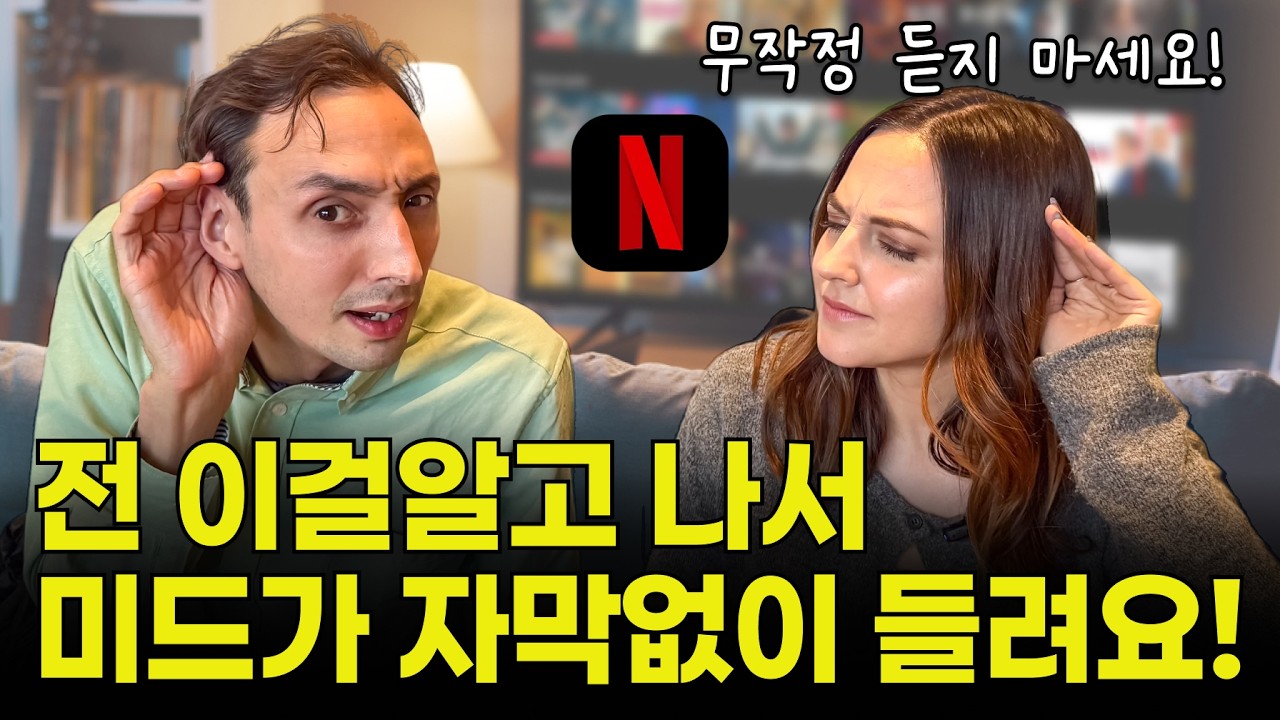
English teacher Sean, who's taught in South Korea for 11 years, explains why Korean learners struggle with listening: the gap between textbook English and how native speakers actually talk. He recommends three steps: learn common connected-speech phrases like "gonna" for "going to," analyze short drama clips line-by-line, and expand your vocabulary to include natural spoken alternatives.
Chapters
I just wanted to be like you. That's really hard, but all the words are really easy. I think a lot of listening is developing a good skill with guessing. It's not because you don't understand enough words. I would say one mistake would be—
Hello and welcome back to Lunch Hour English. Today I have a very special guest. I think you might already know who he is, but I will let you introduce yourself.
Hey guys, how's it going? I'm Sean, Sean Teacher, or Sean Pablo. I'm from Philadelphia, Pennsylvania in the United States. I'm in Busan now. Woohoo!
Welcome!
And I'm excited. We're gonna try some of this taejigukbap, which is famous in Busan, right?
It is. Have you tried it before?
I think so, but I gotta be honest. When I tried it, I was not a huge fan. Oh really? Because when it comes out, I try to sip it and my mouth burns. I need your help. What is the best way to enjoy this?
Of course you have to eat with kimchi.
Do a little bit of this, a little bit of that. Mmm, that's really good.
We have a winner. So how did you get into teaching?
Actually, my mother was a teacher growing up, and I've always been interested in languages. I would go to my mom's classes and watch her teach her students. Growing up, I was good at languages. I studied a lot of Spanish. My father is actually a native Spanish speaker, but he's also a native English speaker. He's Puerto Rican. A lot of Puerto Ricans are kind of bilingual in that way. So after I graduated from university, I wanted to experience life in Asia. I had lived in Europe, I had traveled a lot, but I've never been to Asia. I was like, okay, I studied liberal arts, I'm familiar with teaching, I like languages. So I took an English teaching course, and I was like, I want to teach for at least just 1 year in South Korea. That's how I got started.
Yeah, that's always how it starts, right? 1 year in Korea, and then now it's been how many years?
Over 11 years.
Okay, what do you really like What do you focus on when you teach? What's your specialty?
I've taught a lot of English now, kids to adults to company workers. I hear this a lot. I can understand it when I read it. When people speak slowly to me, I can understand it. But it's like, what's the real goal? Shouldn't the goal be to understand fast native English? So I'm like, okay, what's the disconnect? The disconnect is written English and spoken English are different. It's different because English has a lot of connected speech. English is often said differently than it's spelled. Well, Korean has it too. You can say something like "다린데 가부자," right? But Koreans often say "단데 가부자," right? It becomes "단데." There's so many words like this in Korean, but English is even worse. Think about, for example, "going to," right? No one says "going to." They say "gonna." And even more than that, "I'm gonna go." We don't even say that that much. "I'm gonna." "I'm gonna go to the store." On paper, "I'm going to go to the store." It sounds so robotic. I was doing a lot of research, and the reason for this is because humans speak in the easiest way possible. Vowel, consonant, vowel, consonant, vowel, consonant. It's like a sandwich. Bread, meat, bread. Native speakers say "I'm gonna." Another example is like in Spider-Man. We see Peter Parker. He's talking to Iron Man, and he says really fast, "I just wanted to be like you." I just wanted to be like you. Guys, can you hear what I'm saying? Listen one more time. I just wanted to be like you. That's really hard, but all the words are really easy. I just wanted to be like you. But when you hear it in the Marvel movies, I just wanted to be like you. My whole goal now is to help people to make the connection. I know these words. How can I connect that with what's actually being pronounced? A lot of Koreans learn English from a very young age. Everybody watching this video knows the following words: dog, cat, go, come. So you understand many, many words. So the fact that you can't understand English is not because you don't understand enough words, it's because the rhythm is different.
How do you actually go about teaching that?
So I do that in 3 ways. First thing, I have just a list of the most common connected speech phrases, sentences. For example, like "going to" would switch to gonna. Have to would switch to hafta. And so in my YouTube videos and in my course, I just go through the most common connected speech things, and I give you several examples. Then I show actually drama clips. You can see it here in the Spider-Man movie or whatever. The next thing is analyzing actual clips from dramas and series, just going through line by line. This is what it means. Okay, let's listen again. Notice that they're actually saying, did you have lunch yet? Right? Not did you. Did you? And the last thing is vocabulary. Now, vocabulary isn't something we can ignore completely. We have to still continue to upgrade our vocabulary because there's a difference between textbook vocabulary and real spoken vocabulary. For example, when you say bye to someone— goodbye— native speakers actually do say goodbye, but we also say have a good one, take care, talk soon. "catch you later," and these are all natural, but you don't learn them all in the textbook, right? So sometimes it is necessary to become familiar with all the ways that native speakers will say simple stuff. These 3 ways I go about helping people to understand fast native English.
What's the biggest mistake that learners make with listening practice?
I would say one mistake would be going into content that too difficult too early. Let's just say, for example, a late-night talk show interview, because a lot of people really like, you know, Conan O'Brien, and they want to like listen to it. The problem with that is for beginners, I think it's needlessly difficult. Listen to easier content that's like one topic. When I was studying Korean, maybe you know this website Talk to Me in Korean. I'm sure you do. They have this fantastic series called the iyagi series.
I love iyagi series.
Isn't it great? Yeah, they just would have 10 to 15 minute little audio revolving around one topic. And because it's one topic, even if you can't understand everything, you know the topic, so you can continue to follow along and guess and fill in the blanks.
I think that's an excellent point. Then you know the context better, you can pick out a few words and make connections. So I completely agree with you.
The next thing would be to start really paying attention to connected speech, the difference between written and spoken language. So how you can do that is take small clips from dramas, and you can find all this stuff on YouTube. Anything you like. The Devil Wears Prada is really good. SpongeBob is really good. The Pursuit of Happiness is really good. These are really good beginner dramas. And start to notice the difference between like, "did you" and "did you." "Did you." It's like a J sound. I think a lot of listening is developing a good skill with guessing. You can watch a series called Love is Blind.
I personally love that show.
These kind of series, dating shows, anything where people are getting to know each other for the first time. You're introducing yourself 10, 15, 20 times. You're getting to know someone. What's your favorite blank? Where are you from? What did you major in? These are all really useful phrases and patterns for language learning.
And I think it's good because there's tons of small talk, real conversations.
Another really good one that I like is Architectural Digest, where people, celebrities, invite people into their houses and show them around. This is the kitchen, this is the refrigerator. Getting that visual and the listening, two for one. Channels like yours where you're like showing people your daily routine, they get that visual and that listening component. So those three things I would say you can do today, and they're going to really help you to improve your English.
So do you have any future goals or projects that you're working on?
Yeah, so I'm currently, uh, doing a project on wadis, 미구게는 저는 세민, 워너미는 바레니요. And it's all about exactly what we were talking about in this whole video, which is how to understand fast native English. So that's what I'm working on. If you're interested, I guess Callie will put a link down below. You can check it out. Yeah, I just want to say thank you so much for inviting me on your channel. Again, I love your channel. I've recommended your channel on my channel to all my followers. I think you're helping a lot of people. So everybody, Woohoo! You got this, you can do it.
You got this. Thank you so much, I had so much fun talking to you.
It was a blast, yeah.
Come back anytime.
Right on.
Bye!