Cam Wiese - The World’s Fair
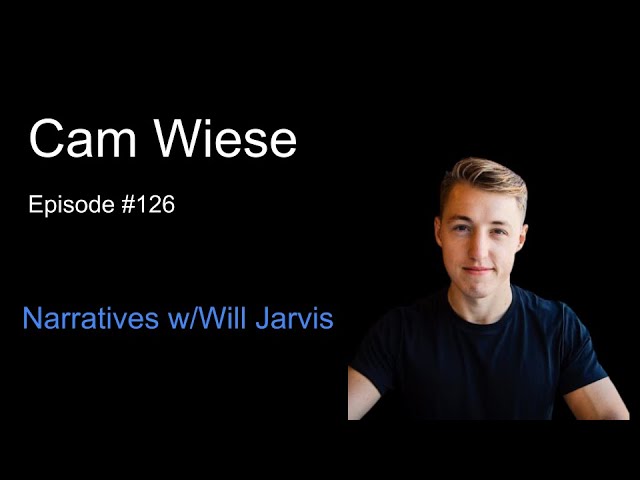
In this episode of the Narratives podcast, host Will Jarvis interviews Cameron Wiese, the founder of WorldsFair.co, about his singular mission to revive and re‑imagine the World’s Fair for the 21st century. Wiese begins by defining the World’s Fair as a mega‑event distinct from the Olympics or World Cup—a multi‑month, multi‑acre showcase of technology, culture, and civic ambition that historically served as an economic engine and a source of collective hope. He traces the Fair’s golden era (e.g., 1915 San Francisco, 1933 Chicago’s Century of Progress) and its decline after the 1960s, citing three key factors: competition from Disney’s EPCOT, the financial collapse of the 1984 New Orleans Expo, and a broader cultural malaise that left few compelling narratives about the future. Wiese draws lessons from the privately‑funded, broadcast‑rights‑driven model of the 1984 Los Angeles Olympics, arguing that a modern Fair must be run as a profit‑oriented business rather than a municipal burden. He outlines a “hope framework” consisting of clear goals, pathways, and agency, and describes a concrete rollout plan: an 18‑24‑month immersive activation featuring futuristic pavilion experiences set 30‑40 years ahead, targeting roughly 100,000 visitors and serving as a proof‑of‑concept for larger phases. Funding and team building emerge as the biggest current constraints; Wiese emphasizes the need for capital, a values‑aligned founding team, and a coalition of creators, technologists, and civic leaders. He also discusses legacy planning for post‑event site use, the role of new‑city movements, and the power of grassroots civic action (e.g., fixing potholes) as complementary pathways to cultural renewal. The conversation closes with a call to action for listeners to join the effort via Twitter, the WorldsFair.co website, and local events, and a candid discussion of the challenges ahead.
Chapters
Hey folks, welcome to Narratives. Narratives is a podcast exploring the ways in which the world is better than in the past, the ways it is worse, and the paths towards a better, more definite vision of the future. I'm your host, Will Jarvis, and I want to thank you for taking the time out of your day to listen to this episode. I hope you enjoy it. You can find show notes, transcripts, and videos at narrativespodcast.com.
Well, Cam, how are you doing this afternoon?
I'm great. This is rad. This is a cool setup.
It's cool. Thank you.
I haven't been— well, first, I haven't been in the Commons before, and then two, uh, it's pretty cool recording a podcast in this fashion is Fantastic. I'm all about it.
IRL, you know, I love it. I love it. Um, well, Cam, thanks so much for taking the time to come on the show. Do you mind giving us a brief bio and some of the big ideas you're interested in?
Yeah, so, uh, my name's Cameron Wiese and bios are always interesting. I'm so just like obsessed with this one single idea, this one single project, which is the revival and the reimagining of the World's Fair. We used to host these grand events that captured the nation or captured the world's imagination through story and experience, and we haven't had one, haven't had a great one since '64, and I think it's a shame. And we need, as a culture, to regain this sort of hope for the future and remember kind of the sort of great things we're capable of, and a World's Fair might just demonstrate that.
I love that. Can you talk a little bit about the history of the World's Fair, what it is, what it was, and you know, why it went away, or do you have any sense of why it went away?
Yeah, the why it went away is like the most kind of interesting question because you still have these events known as the World Expo. Actually, before I go into the history, let me start with kind of what the World's Fair is because a lot of people aren't familiar. You have the World Cup and you have the Olympics, which are mega events that people know today. And the World's Fair is a type of mega event.
Yeah.
It was a physical event, ran for often 6+ months on hundreds, if not thousands of acres of land.
Gotcha.
And served as a way to kind of showcase the latest and greatest in technology and innovation ideas.
Very cool.
And they were, you know, and some of them were used as economic development engines for cities like Spokane, Washington, New Orleans, San Antonio.
Right.
But there's this class of fairs that I consider like the great fairs.
Yeah.
So you have the ones that really were focused not on economic development, but on the revitalization and kind of the sort of vision for something bigger for a specific city.
Gotcha.
Particularly, you know, 1915 here in San Francisco was built as a way to kind of get the city back up and running after the Great Fire.
Gotcha.
In Chicago in 1933, you had Century of Progress Exposition, which was kind of this light amidst the darkness of the Great Depression. And I can go on and on, but we had these events and they ran really again up until the '60s. And there were some in the '70s, some in the '80s. The last one in the US was in 1984. And a lot of people ask like, what happened to these? Like, why don't we run these anymore?
Yeah.
And there are really kind of 3 things. One is the competition from Disney's EPCOT.
Gotcha.
So EPCOT opened in '82 and it was designed— well, originally designed to be a city, which is a whole other topic I'm happy to riff on. But the one that they ended up kind of creating was intended to be a permanent World's Fair. You had the Country Showcase and you had the pavilions, and that was kind of the thing that people went to if they wanted to see the future.
Yep.
But you also had the kind of contrasting Economic development engine, like mega events with the Olympics and the World's Fair.
Gotcha.
Um, in '84.
Got it.
So you had Peter Ueberroth who ran the Olympics in Los Angeles. Um, he kind of, he, he kind of came in and, uh, you want me to go into this?
Yeah.
Okay. I, I, I could, if you, you can pull me out if you want.
Okay.
I'm happy to, happy to. Um, you had Peter Ueberroth who, was hired to run the Los Angeles Olympics Committee.
Yeah.
And at the time everyone was like, the Olympics are done.
Yeah.
Right. The previous ones hadn't done well. There was a bunch of national conflicts. And what Peter Huberoff did, being a savvy businessman rather than a politician or a bureaucrat, came in and said, you know, this thing just needs a new business model.
Yeah.
So instead of, you know, trying to get the city to pay for it, they had entirely privately funded.
Yeah.
And they did it by selling the broadcasting rights of the Olympics to a I believe it was ABC for 3— uh, I'll need to fact-check this, but it was like $200 to $300 million.
Gotcha.
And that made the Los Angeles Olympics like the most profitable Olympics in history.
Right.
And all that money has continued to fund Los Angeles like sports programming for the last, you know, 50 years.
Right.
Um, and cities saw that and they're like, whoa, the Olympics?
Yeah.
We want an Olympics.
Exactly, exactly.
Because they also had the contrast of the '84 World's Fair in New Orleans.
Right.
That ended in bankruptcy. There was a lien on the event like halfway through. There's some organized crime, corruption. It was a very, very sketchy sort of set of circumstances. And, you know, then, you know, you didn't have good marketing back then. So people heard like, oh, this thing isn't going to— isn't going, I'm not going to go. So they ended up like not hitting their numbers, which were also based on faulty fraudulent data. Um, and, and then, you know, the kind of World's Fair there, like kind of fell off. It was like Olympics over the fairs. And then the last piece is just like the, you know, there's a lot of talk in at least the tech circles around kind of stagnation and progress and, you know, what the, what the, what the fuck happened in 1971 sort of thing. And so you had this, this cultural malaise that I think is, is an interesting layer on top.
Yeah.
And with all the innovation and all the developments of new technologies being funneled into the world of software, right, there wasn't a lot to showcase at the fairs. Or at least there would have been, but it required a little bit more imagination because it wasn't as easy as saying like, hey, Henry Ford, why don't you bring the Model T and set up an assembly line?
Right, right.
Or, you know, there are countless other examples, but there wasn't as much concrete stuff to show off.
Right.
And so it just was like a harder lift for people, especially people in cities who weren't like on the frontier of technology, if you will.
Right, that makes sense, that makes sense. Um, I'm curious, what does it take to make one of these events successful today? You know, you mentioned like, uh, broadcasting rights powering, you know, the LA Olympics and, and that leading to a lot of success. It seems like a real challenge today in that how do you create something that is self-funding in some sense, um, that is a mega event? Uh, you know, most Olympics now it seems like they barely make any money or they lose a lot of money, especially for the cities them together. Um, how do you think about making these kind of events kind of successful?
Yeah, I think the, the Olympics serve as a really good example for this sort of like this problem, right? Because people don't think mega events can be profitable. They don't think they can be run, you know, efficiently, right? And part of the problem though is that like, just to, just to kind of sidestep into like a quick tangent on Olympic— on the Olympic Games, like the way the Olympics is set up is you have the International Olympic Committee which manages all of the— like, they're the ones after, after LA was successful in '84, they're like, you know what, we actually want that money.
Gotcha.
Los Angeles got it in '84, but no other Olympics did because the IOC was like, right, oh, oh, we want this, right? So all the sponsorships, all the broadcasting rights, yes, flow up to the IOC. Um, and then the IOC like then has a bidding process for cities, and the way they dole out the bids is pretty much based on like who gives them the most money, who puts on the most extravagant show. And like the incentives are really skewed because the IOC has no vested interest in the continued success of the infrastructure that's put in place for the Olympics. It's like, who's going to spend the most? We don't care what you're going to do with it after, right? Like, exactly. Yada yada. We want to put on a good game.
Yeah.
And I think there's, there's like things that you, that we can draw on from the way the Olympics, the problems of the Olympics to think about how we would do a World's Fair today.
Yeah.
Um, would you not want to start with a city? 'Cause if you start with a city, you're immediately pigeonholed to the politics and the, the budgets.
Right.
And if you take any money from any tax-collecting entity, then like it quickly becomes political and bureaucratic and like, right, it doesn't get off the ground.
Exactly.
We've seen this. There have been several attempts since '84 to, to do a World's Fair.
Right.
And they've all fallen victim to the same issue. Um, the other is how do we have a legacy plan in place?
Yeah.
For the site after the fair's hosted.
Gotcha.
So there's some cool opportunities. There's a lot of new, this new cities movement that's taking place.
Yeah.
And there's a possibility— how might we use a World's Fair to subsidize the economy or streamline the economic development of one of these new city projects? Or, you know, how do we do something with land taxes?
Right, exactly. Yep, yep.
Which we can get into. Um, and then obviously we have the internet.
Yeah.
Right?
We have this incredible, you know, uh, means of distribution and communication that really could unlock all sorts of new opportunities on Both the media and the kind of virtual fronts for something like the Faire. And so you pair the land, you pair the sort of like— there's also this other component of this which is like, how do you actually just run the event like a business?
Right.
Not like an economic development project.
Yes.
And if you do that, you sell the pavilion spaces to companies and they pay for it.
Yes.
You know, you sell tickets. You kind of do all the standard things. But like, if you look at like, this isn't the best comparison, but you compare this like Disneyland, Disney World, like they're exceptionally profitable endeavors. Right. And like, you know, it can be done. Yes. Tens of millions of people go every year.
Right.
And I think like you could do something similar for that. It just requires like new innovative thinking on the business model.
Yes. Makes sense. Makes sense. So you just got to be a little bit more creative and there are some good Yeah, like, there's no playbook for this, right?
Like, actually, there is. There's an old planning guide from one of the past fairs that kind of outlines the process for how they funded it, how they developed it. And it's like really fascinating because it's a very similar time to the one we're in right now, economically, culturally, like geopolitically. And like, this is what we did, this is what worked.
Right.
And like, they set up some principles that I think would-be fair organizers, of which there don't appear to be any other than, you know, me, uh, would benefit from learning from.
That's great. That's great. What do you think it would cost to, to set up like a modern World's Fair equivalent?
I mean, this depends on like which costs you want to factor in.
Yeah, right.
If we're talking total cost of development of like land, land acquisition, um, taking a greenfield site and like converting into something usable roads, water infrastructure, all the buildings, like the total like money in is probably— I would compare it to Disneyland Shanghai, which was about a $6 billion project.
Gotcha.
But obviously like that is not all like cost, right? It's not, it's not all like, you know, money being sunk into a pit, right? You have the development of the land, you have some of the buildings that have permanent infrastructure, etc. So I know that's, that's kind of what I based on, but like This is a big project. Yeah, obviously I'd like, you know, I would like to find someone who has done big projects like this to build out the financial models. But yeah, it's not a, you know, $100K, you know, do it in the Golden Gate Park sort of thing.
Exactly. How do you think about bootstrapping something like this from nothing into like an actual World's Fair?
This is the This is, this is the question, right? Because, you know, the vision's great, you know, end of the decade, like, we'll, we'll like open the gates, but how do you actually get the resource you need to like start and then kind of iterate? Like, iterate's not the right term. Like, MVP isn't the right frame to think about this either. It's like, you know, how do we just— it's more about how do, how do you build a team that can demonstrate like capacity, right? It's not about like, is this thing possible to do? Like, it's very— it's not a hard thing to— we build real estate projects, we build theme parks, we operate these things.
Exactly.
You have people who creatively tell stories through physical spaces and through films. Like, there's nothing new about like any of this.
Yeah.
The challenge is like, you know, you have to pair the, like, the fund— you have to find the funders.
Yes. Right?
Find the people who have a tall— who like want to see this sort of thing exist in the world.
Right.
And who are willing to be like, you know what, like, let's take, let's take like milestone-based bets.
Yes.
To like see this thing develop. And so the way I think about it is like, You know, again, in line with demonstrating capacities, like, okay, we have this big thing that we want to do, right? So what is like— actually, like, the thread here, the through line is actually slightly different. It's like the thing that— jumping back to the beginning, the thing that made some of those— I mentioned like there's certain fairs that were really great.
Yes.
And the thing that made them great was not their size, not their location, not Not the things that they showed off necessarily, but they were all focused on creating a feeling for people.
Gotcha.
It was this feeling of hope and wonder and awe.
Makes sense.
And so that is the thing that separates like the fairs that people remember nostalgically.
Yes.
And the ones that like people like don't know about.
Right.
And so when I think about this and how we break it down.
Yes.
It's like, Ultimately, like, at the end of the day, like, the fair is just like an anchor.
Yes.
Right? The big mega event is an anchor that is communicating and expressing, like, celebrating this feeling or giving people this feeling at the largest possible scale.
Right.
And so to get there, we just have to take that feeling and figure out how do we deliver that in, like, ways today.
Yeah.
And then next month and next year that both, like, captures that feeling for people.
Right.
And it kind of develops the capacity of the team to like go execute on larger and larger credit projects.
Definitely.
Because like the last thing on this is like, again, all this is doable, but like it requires like a team that has like trust with each other and have good relationships and like can like work well. And you don't go run a $5+ billion infrastructure project with like a team that hasn't like worked together before.
Exactly.
How do you like, but what are the different jumps you have to take?
Right. So exactly, exactly.
And it's a complicated thing.
Absolutely. And what's the kind of smallest wedge you're starting with in the beginning?
So the, uh, really the way that we've broken the fair down, like the grand event is based on this framework of hope. And again, it's an academic framework.
Yes.
Uh, but I think it's useful to think about, like you have In order to have hope, you have to have 3 things. You have to have goals.
Yeah.
What's the top of the mountain? Where do you want to go?
Yeah.
You have to have pathways. How do we go from where we are today up the mountain to reach that goal?
Yeah.
And 3, you have to have agency. It's like, do you believe that you have the agency to take the pathway to reach the goal?
Right.
And so when we're thinking about like, what does like end to end of the, you know, Decade Fair look like? It's based on that sort of thing. So we have the pavilions. and these realms that some folks— we did a poster campaign. We released art that represents each of these core themes. And those represent the work being done today to build the world of tomorrow. But then what we want— but that's only the pathways piece, right? And then we want to give people that hope. So what we're doing is designing this immersive— like a set of immersive worlds.
Gotcha.
They're set in this fictional aspirational future where all the technology that people saw at the fair are like played out, you know.
Very cool.
30 to 40 years into the future to see like, oh, here's how amazing and how vibrant and beautiful our world could be as a result of these technologies. These things are not going to destroy humanity. They're not going to be like— they're going to change things, but like ultimately just like every other sort of like all the other progress in the past, like the world is ultimately going to be better as a result. And so what we want to do is take one of those worlds and develop kind of an immersive activation I want to open 18 to 24 months from now. Yeah, um, it's November 2022. Yeah, so I did like 18 to 24 months, and this will like give guests, 100,000 people or so, over, over the course of a few weeks or a few months, um, the opportunity to step into this world and experience what life could be like in that, in that world.
Very cool.
Um, but then obviously like that's still a big piece, so we're working on how do we design like pavilion concept that will show people some of the pathways through an immersive experience in the next year or so. And then we're also working on kind of cooking up a couple things on the media front, the experience front, to just, again, demonstrate capacity on the day-to-day so that we can stack up to doing a larger event and then a larger experience and then a larger experience and then go from there.
Very cool.
Yeah.
How did you come to the World's Fair originally?
I mean, so, I mean, I'm from Seattle.
Yeah.
And I remember like I moved around a lot as like as kids, like because my dad was doing the kind of corporate thing.
Yeah.
And but we'd always fly back to visit my grandparents.
Yeah.
And I always remember flying into Seattle Airport, getting in the car, and it was often raining in the Pacific Northwest as it does, and driving up I-5 and Yeah. And looking out the window and seeing the Space Needle. Yeah. And it just like, to me, it was the coolest piece of architecture I'd ever seen. I'm like, wow. Like, what? Like, and I, I was a kid, I didn't know what that was, but it was like, it's a really cool symbol. Exactly. And I'm like, I like this. And, you know, so as I grew up and I realized, I'm like, oh wait, like, what was this? And I started asking questions like, what was this for?
Right.
Like, we built this, like, why? Oh, this is for, for a World's Fair.
Yeah.
Oh, what, what are the World's Fairs, etc.? Um, so it was like always in the back of my mind.
Yeah.
But the kind of inception point was, it was probably 2 years ago at this point, just like the idea inception point was like sitting in, in the airport with one of my friends. We were talking about how all the science fiction in our world today is very— a lot of, not all, a lot of it is very dystopian.
Yes.
Right? The popular science fiction, the movies are painting a vision for the future future is not exciting or not compelling.
Right.
Um, they make for good movies.
Yes.
But they don't accurately represent the sort of world I think we all want to live in.
Yeah.
And so I kind of got up on my soapbox, as I, as I often do, and found myself just on this rave. I'm like, why are all these movies dystopian?
Exactly.
This is ridiculous. What if we got all these science fiction authors in one room and we made them design the coolest possible future? What would that book look like? What would that movie look like? Wait, What if, what if we turned that thing into a place that you could actually go? You could step into this world and you could see how awesome things could be.
Definitely.
What would that look like? Wait a minute. Didn't we do this? Wasn't this like the World's Fairs? What was this? And then like, it was that sort of moment where I'm like, oh, World's Fairs. What happened to those? And, you know, put it off for a while but have become kind of an amateur World's Fair historian. And I realized, like, again, like, these events served a huge, huge purpose in, like, getting people excited about the future, especially during really dark and depressing times.
Yeah.
And it just seems to me to be, like, so blatantly obvious that, like, the thing we need now culturally is, like, is this hope for the future, as I've said.
Right.
And, like, we've done this before. Like, this seems to be a pretty obvious path, like, to move forward.
Yes. Right.
And no one was working on it. Like—
Right.
This needs to be done.
Yeah.
So here we are.
I love it. I love it. Do you, uh, do you think something like this is enough, uh, to put defibrillator paddles in the West, so to speak, and, and get things back on the— That's morbid.
Yeah.
Yeah. And I, and I, and I do love that. I, I do love the effort. Like I think it is a, it's a really good idea. Um, uh, do you think it's enough on its own or is there some other key piece that needs to happen as well to kind of, you know, restart progress?
It's a great question. I certainly don't think it's, it's like the only thing. I think, yeah, like really it's gonna take kind of a more of a cultural movement.
Yeah.
Right. That I'm hoping to just like play, I, and like with the fair, I'm just hoping to play like a, like a small part of that. But more broadly, we, we definitely need more stories being told about the future that are exciting.
Right.
We need more people choosing to build rather than to like—
Definitely.
Petition.
Yes.
I need to think of a more catchy way to say that, but just like there's far too much like, oh, everything's broken. Oh, I'm so frustrated with the system, the status quo. Like the system's not working for us. Like we live in the most incredible time.
Yes.
Like nobody in their right mind would even like consider jumping into a time machine and going back, you know, 100 years. Like the world was not great back then.
Yeah.
And like today you have All this technology, you have all this infrastructure, you have all these cert— like, the world's great for everybody, um, like, in comparison to what it was. And like, oh, we needed— I lost my thread. Um, uh, we could do, uh, we could do like checklists. Is this sufficient? It's necessary. Okay, the fair is necessary, not sufficient. Um, broader cultural movement. Um, yeah, like, it's like there's just like a lot of things that we need to do. Yeah, like as a culture to like, right, really appreciate like where we're at now and where we're going. And again, the fair is like a piece of that, but again, like we need, we need more. So I think this is okay. This is the piece we need people to like not complain and to go build, like go Go be entrepreneurs. Go start, like, go solve problems. Go do the hard work of figuring out what is not working, whether it's like, I mean, it can be software, but a lot of the stuff that needs work is like not glorious. It's not sexy. It's like, go run for local politics. That is an extremely high point of leverage for actually affecting positive change. And very few people are taking that seriously. As I was telling you before, I think one of my takes is that like the most courageous thing you can do now, like in the world today, is to go into politics, go into the machine, and like you may get eaten alive by it.
Yeah.
But if you don't, like you may just be able to like do something important.
Yeah, exactly. Especially at the state and local government level, I think it's a very high leverage point to do a lot of good today. Just in comparison to, yeah, I think it's much less competitive. There's a lot of So, you know, you can, you can have a much— if you're a talented person, the delta between you and the next person who would be in that spot is often much higher.
Yeah. And I think, like, again, as I was talking offline, like, people now have the tools and the resources to go do this. Like, if you're not in one of the major cities, like, you could still— like, probably can work remote. Yeah, right. You have obviously means. And like, yes, to your point, the delta between, like, you and the next person is probably, like, pretty large. Yes. Like, If you just choose to take, like, to be courageous and to step up and take responsibility for, like, building something great in your local community, like, you can. And, like, you should. Actually, not you should, you must. If you have the capacity to do these things, like, you have almost a moral imperative to do them because, like, if not you, then who?
Right, right, right.
And it's like, this is sort of the attitude, like, culturally that I think that I believe is necessary. It's like, how do we get more people broadly being like, you know what? I'm gonna go do something about this, whether it's— okay, there's a tangent here.
Yes, absolutely.
It's kind of related, but I think it's a hilarious example. It's like you have over in Oakland, there's like thousands of potholes that like need to be filled.
Yes.
And everyone is complaining about how shitty it is to drive over there, and it's like, it's not fun.
Yeah.
And they've gone to the city like, hey, can you please do something else? Can you please fix this?
Yeah.
And The city, you know, of course, like, like, oh, it's a backlog. We're not— we'll get to it. We'll get to it. Like, we're tired of this. So you have this vigilante group of citizens who like rented a box truck and a cement mixer, and they're literally going around pouring like concrete or asphalt into these potholes to fix them because the city won't.
Yeah.
And there's this clip, I don't know, it was on the news or probably made its way around Twitter or somewhere on the internet where it's like some interview where like they're all masked up. They're like, no one's trying to— it's like, it's not about us, it's about the movement.
Yeah.
And it's like, that's a phenomenal example of people who saw a problem and like, this needs to be fixed. No one is like, no one else is going to come do this. Like, we have to take responsibility for it. And I'm just like, it's that sort of granular, like local level, like in your neighborhood, on your block, like pick up the trash after yourself. Like, don't just let— don't like, no one else is going to do it, right? No one's going to pick up your trash. No one's going to go like, you know, clean up your city. No one's going to go, you know, solve the problem you care most about in the world. Like, you have to do it. Yep.
I love that message. I think it's really important. Do you think there's something perhaps like in our culture where we've gotten, you know, perhaps American elites or something have gotten quite wealthy, they're doing better than they ever have before in economic terms, and things are pretty comfortable, and so there's like just less incentive to go out and solve the problems? You just, maybe you move to your gated community, you know.
Yeah.
You move up here to the nice place in Haze Valley and yeah, yeah, the, the, the problems don't come up the hill or something like that. Yeah. So you, you don't worry about it.
I, I, I definitely think there's something to that. I mean, Ross, uh, Douthat. Douthat. Yeah. With his, uh, the Decadent Society. I think this is his thesis, isn't it? It's like, have you read the, have you read his book? Yeah. I think, I think this is his point. It's like everyone just gets comfortable. Yep. Um, and then, you know, people with the means, with the capital, like they, they can like isolate themselves from the problems. Like, oh, Cory, we're not crying. Like, well, I'm just, you know, I have money, so I'm gonna go hire private security, right? Oh, I'm just gonna move. And it's like, yeah, this— yeah, I definitely think there's, there's something to that. But the people who are in those positions, like, they're no longer— like, they're not the ones who are on the ground doing the building. Yeah, they have some, some sway and influence politically and maybe perhaps culturally, but, you know, at the end of the day, like, that doesn't change the sort of circumstances for, like, you and I and all of our friends and, you know, people who are like just starting out in their careers, like, don't— like, are just able to be scrappy to be like, hey, like, they're the ones who can go solve these problems. Like, yeah, kind of passing it up or like, like delegating the sort of responsibility to like those who have like money or power or influence, like, yeah, is, is almost a cop-out, right? Like, yes, it's a problem, but that doesn't mean that, yeah, a lot of us can't do anything about it, you know?
Gotcha, gotcha. Makes sense, it makes sense.
Uh, I know, what do you think? What do you think? Can I, can I ask you questions on this podcast?
Yeah, no, absolutely you can, you can. I, I do think there's something weird where the capable people. This weird thing happened where, you know, so one of my old friends, we worked at a startup together, he, you know, his grandfather did the SAT and, you know, this is a really good thing. We slurped up all the smart people from all the rural places and put them in university and then we conglomerate them together and you get all these economic gains. But then it pulls all the talent out of like all the rural places and then like, you know, there's just these societies start to break down and we wonder what's going on. I don't know. I, I think there's something about elite responsibility and, um, perhaps why elite, I mean, cultural elites.
Yeah, totally.
And, and not necessarily like, uh, I, I, and I do think this is separate from income, like completely in wealth. Uh, this, these are 2 completely different vectors.
Totally.
Yeah.
And then like the, even like the, the cultural, it's like the value system that they're, they're propagating is not one that's like really beneficial for, for anyone but themselves.
Yes.
I think it's like, and then everyone's detached from the consequences, like Right. If you're like on the coast, you're like, oh yeah, this policy is a great idea. Yeah, sure. It's like, yeah, for— you have no, like, no concept. Yeah, you have no concept what's going on. The consequences of like this policy, this behavior, like, don't actually affect you.
Yes.
But you like are on your— up in your high tower, if you will, like up on your hill. And, and, you know, yeah, what's the hill in San Francisco? Why am I blanking on this? Like, you're up on like, um, you're up in Pac Heights, like, exactly, up on your tower, and you're like Oh yeah, we should do this. And like, it never seeps up to you.
Right.
And so like, you can virtue signal and you can grandstand and you can kind of talk about these things and, you know, feel kind of virtuous about it. But like, at the end of the day, like, we need to— like, there needs to be some sort of thing to like actually get people— like, the elites need to stop like meddling in like the everyday people problems.
Right.
think about themselves less as like the gatekeepers or the like, you know, hey, I know what's best for everybody. And like, I don't know, I don't—
this—
I'm delving too far out of my like area of expertise, but yeah.
Yeah, because it's interesting. Um, yeah, I'm curious, I'm curious. Um, do you ever worry at all that, uh, you go, you put together the World's Fair and there's just not enough good technology to showcase or something like that?
Hmm.
No. No, you think it'll be there?
I think it'll be there. I mean, because it's not, you know, I think a lot of people think about like the World's Fair or something. It's like there's just misperception. It's like, oh, is this like CES? It's like there's gonna be a bunch of booths. It's like, no, no, no, no. Like there's no booths.
Right.
It's, you know, giant pavilions, but the pavilions are not like showcasing like one individual technology.
Yeah.
They're focused on telling the stories of these technologies. And this is the fundamental difference is like nobody cares about like Boom supersonic jet or the tunnels or the Tesla, right? They care about like what it does for them and their lives and their families. Nobody cares about gene editing except for when it's like, hey, this can cure you of this like incurable disease. This can help your loved one, like your child who is sick from like leukemia, like get better. Like, this is like, these things don't matter in the abstract. And this is what people don't understand. It's like, it's the technology is cool. Yeah, you can watch on YouTube. But like, the story isn't there. Like, how does this connect? How does this resonate? How does this like change your life for the better?
Yeah.
And like, this is part of the adversarial relationship with like technology and, you know, like the rest of the world, at least. Well, now we know it's partially a result of, you know, Salzberger, you know, telling all of his journalists to not report positively on technology.
Exactly.
And we'll see how that, how that changes the narrative. But like, You, you just like, you can't just put a thing out there and be like, oh hey, look, this is great, like, right, you all should want this.
Exactly.
You have to do what Steve Jobs did, where it's like, hey, 1,000 songs in your pocket, like, yeah, you know, we're doing this thing now, and like, you know, and Elon with like, hey, this is gonna convert the world to electric cars, right? Like, I mean, it's unfortunate, like, those are the two like most prominent examples that everyone can connect with. Like, those are the role models that, that people have is for like how you go build the Exactly. I think like that's a different kind of vector of change I think is necessary, like making role models more accessible. But the point is that like the individual technology, like so much positive stuff happening in the world right now. There's so many great people working on solving like our toughest problems.
Right.
And, you know, we may have to tell like the story of the future of flight maybe a bit more like abstract, or— but like a place, a thing like, you know, the future of energy. Like, I don't know, there's like a lot of room to play, right? Especially when we think about this from like a— we're gonna tell stories about the various technologies based on what's being done today, right? Rather than like, okay, what companies are like commercially on the market? What are public companies? Because there's like all this work being done in research labs and DARPA, like in private institutions that like, yeah, are very, very, very well funded and run by very competent people, especially like the private institutions that are now kind of starting to emerge. Like There's lots of stuff that's gonna be coming out of those places too, so I'm not too worried about it.
Very cool, very cool. So as we come up to the end of the episode here, I want to ask you, what— can you go over like, what's your biggest challenge right now? Is there anything the audience can do to fix it? And then let's talk about like the next 10 years and what you plan to accomplish.
Amazing. Yeah, so I mean, really the biggest constraint right now is capital.
Yeah.
And, you know, there's a very clear vision, kind of a good breakdown plan of like, hey, how do we go about doing this? But it's finding the right people who are values aligned, who are very pro-human, pro-progress, pro-abundance to say, you know what, like, yeah, World's Fair, like, this would be a great thing. Like, let's go work towards it.
Yeah.
And so it's kind of, you know, both capital and like founding team.
Gotcha.
It's also like, this is going to take more than just, you know, a couple of people over Zoom. It's like, how do we build kind of a coalition of people? like truly, truly believe that the future can be better than the— like the future can be better than the present. And then like want to take the World's Fair as a vehicle through which like I could go help manifest that.
Absolutely.
Um, and then let's see. And then, uh, yeah, so I mean, it's Kaplan, then like obviously team. Like, again, I do lots— like I'm under no delusion that this is a massive project, right? And like requires lots of help. So, you know, if anyone is listening and they're excited about like the fair, you know, maybe if you got laid off from, you know, your startup or whatever, not Meta, sorry.
Yikes.
You know, come chat. We're gonna be doing like events here in San Francisco to start to like capture the feeling of the future and the feeling of the fair. And so that's a really good way to kind of get involved and start to see like, oh, this thing is— there's some promise here then.
Definitely. That's great. That's great. Well, Cam, where can people find you? Where should we send them?
So I'm on Twitter @CamWiese. So C-A-M-W-I-E-S-E. It's I-C-U-C-Wiese, although I feel like Weiss. And then, you know, follow the World's Fair @WorldsFairCo on Twitter and then the website worldsfair.co. We have a mailing list and, you know, we're spinning up more of the content arm, but Gotcha. If you're a content creator and you care about the future, like, hit me up.
Good place to be.
Yeah, yeah. Yeah, so that's kind of where we're at right now. Awesome.
Good deal.
Awesome. Well, Cam, thanks so much for taking the time to come on the show.
Well, I appreciate you, man.
Yeah, thanks.
Excellent.
Take care.
Cool.
Thanks for listening. We'll be back next week with a new episode of Narratives.
