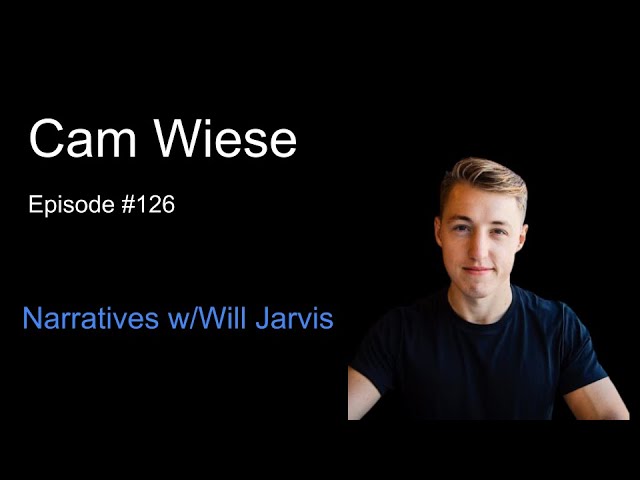
How to Get People Excited About California's Future w/Cam Wiese

Cameron Wiese, founder of the World's Fair Company, argues California needs hope built on concrete wins, not abstract abundance talk. He points to the HOPE framework (Goal, Pathway, Agency) and cites grassroots groups like Grow SF proving that common-sense reforms rebuild confidence. Wiese calls for modern World's Fairs to align public imagination with tangible projects: cheaper rent, better infrastructure, faster permitting.
Chapters
Excited to talk to you, Cam. You know, you are the reason I'm doing these conversations. I've been writing about Future California, thinking about it, and then you were so encouraging to just have conversations. You talked about your own positive experiences talking to other people. And when I think about positively thinking about the future, getting excited about what the future can bring, you are one of the people that pops into mind. So as we get into it more, just to start off, just wanted to say I'm grateful and excited for this.
Dude, I'm glad you're doing it. It's fun to see ideas grow from a conversation to action. And then we'll be talking about this in 3 years when I got this top secret World's Fair project up and running and you'll be crushing on the podcast front and we'll be celebrating. We'll have a celebratory, I don't know, what's the trendy thing now?
Yeah, I don't know, kombucha something. Yeah, something. Yeah. I'm still drinking beer to celebrate. Yeah. But excited to talk about your work and then also just have some conversations about You know, what California means to you and your hopes for the future of it. But before we dive in, if anyone's not familiar with you, who are you and what do you do?
Yeah, I'm here because, well, a good friend invited me onto his podcast that he's starting. But no, my name's Cameron Wiese and I run the— I started and founded the World's Fair Company, which is an organization devoted to, one, championing the legacy of the once great World's Fair, two, sort of Through media events and experiences championing the, like, the ideas and the values that sort of formed the, the great World's Fairs. And then 3, the, you know, shaping the, the future, which is sort of planning the revival and the reimagining of the World's Fairs here in the United States and eventually around the world. All of my sort of, sort of life is sort of focused on like this one, one mega event that we used to host that everyone's forgotten about. And it boggles my mind that we're not doing these anymore.
Yeah. No, and people should read your, you know, like founding essay, things like that, that talk about the importance of the World's Fair. One that stands out to me, and one of the things I wanted to talk to you about, is the way that the World's Fair created these environments to get people excited about the future and what the future could bring, and to get them to expand their horizon and their imagination of what the future could hold, not only in a strictly technological sense, but also socially. Um, and so I'd love to talk about that. And you've been focused on this for a few years now. To start off, what does it take to get people excited about the future? And what are some of the challenges to getting people excited about the future?
Yeah, it's a good question. The way I think about it, there's this, okay, this is a somewhat academic framework, right? It's a little silly. And then being a startup guy, I'm like, oh, academia, no, stay over there. But it's called the HOPE framework, right? In order for an individual to have hope, right? Hope for the future. There's 3 necessary ingredients. There's the goal. So it's like, okay, Top of the mountain, where do we want to go? What's the vision? 2 is the pathway. So how do you actually get from where you are today, point A to point B, which is the top of the mountain? Sort of like, what's the path to take? And then part 3, 3rd ingredient is agency. So you have to believe that you, Jared, me, Cameron can take that pathway to get up to the top of the mountain. And it's the HOPE framework, but it's also, I think it applies to inspiration. Because in order to be inspired, like, you have to have some vision of like where you want to go. And on a personal level, this could be something as trivial as like, hey, I want to be more in shape. And so it's like, you can sort of imagine what, you know, your life might look like if you're in shape, or you want to move to a new city. You can sort of like imagine, okay, like I want to move to San Francisco, or you'd be like, you know, I want to cure this disease, or I want to go, you know, explore space, or I want to go explore the oceans, or I want to build this new technology. And you have to have some reference, like, what does that even mean? And once you have that reference, then you can sort of work backwards, like, okay, well, what is it going to take to do that? And then can I be the person to do it? But more maybe broadly, this is the role of science fiction, and this is the role of stories and even art, right? So, okay, so I have this, like, This may not be the most important right now, but I have it on the chart. So these are 2 pieces of art from the 1915— oh, it's blurry— the 1915 World's Fair in San Francisco. They were sort of advertising posters, but one of them is the 13th task of Hercules where he's opening the Panama Canal. And it's just like, man, that's inspiring. Humans are able to do this. We opened the Panama Canal. Or the other one is there's this California bear over the city that was destroyed and it says, Undaunted. Because we're likely not be defeated. And so they're just like these things that sort of give you this sense of like, oh yeah, like I should be thinking about the certain way I should be. What if we did have that? And then you can sort of like come up with plans to get there.
No, no, it's great. And so much of that, it makes perfect sense that that's how people get excited about the future. And that first piece of it, of seeing a path forward, so much of that is constrained by what You feel is possible, what you think is possible. And in an era when many people correctly have pointed out that we struggle to build things, that we have a lot of policies and rules and regulations and a system that favors the status quo, that makes it hard to imagine what the future could be like because you don't feel like it's real. When people promise high-speed rail and it doesn't deliver, you don't think that the next thing— when they promise new homes and then they don't get built, it shortens your horizons. It makes it harder to imagine that. So, you know, you mentioned science fiction. Are there any other areas in life, like kind of content that you consume or things that you think about that expand your horizon of what's possible?
Yeah, I mean, I think there's always movies, right? And I want to like, you know, just toss this example in here because I think it's, you know, an obvious one is like everyone talks about like the Brasidio and Star Trek. It's like, oh, that's where Starfleet Academy is. And you have that awesome scene from the 2009, I believe, Chris Pine like Star Trek movie. And I'm sure it's in the other Star Trek TV shows, but You have this scene where it's like, oh, you have the Golden Gate Bridge and then you're like, oh, I know where this is.
Right?
And then you have this like beautiful campus. That's super cool. Right? I've been there. What if we built a Starfleet Space Academy there? It just, it's a tangible thing.
But besides like— To go off that, I think about the movie Her and it gets talked about obviously now because of different reasons, AI chatbots, all that stuff. But the way that it was set in the future, yet at the same time it was familiar, it felt like LA. So it was distant enough that it was new, but it was also familiar enough that It wasn't a crazy leap to imagine that being the future of the city. That's one example I think of familiar enough that you can wrap your minds around it, but it still is— it gets you excited or at least exploring what the future could look like.
Yeah, well, I think that at the core, like, that's what it takes, right? It's like, okay, if you, you know, there's a gas station down the block from me here in San Francisco and this thing has been like waiting to be developed and it's been held up in the red tape and the bureaucracy, like no one knows what to do with it. And I think part of the reason is because people can see it. They're like, this is an old car wash. Okay, well, we don't want a car wash here, but what is going to go here? And how's that going to change the character of the neighborhood? Is it going to cause issues? And it's really easy to say no to things because you're uncertain. You know it exists, you know what the status quo is. And I don't think people appreciate enough the importance of meeting people where they're at, which is like A lot of people don't, like, imagination is a skill. A lot of people don't have it. And helping them visualize like, oh, this is what can be here. And it's not even like, oh, we're going to go to space or we're going to solve this giant cultural society problem or we're going to build high-speed rail. It's just like, this is what we're going to put these houses here and this is what they're going to look like. And here's what's going to happen in the neighborhood. And oh, here's some of the shops and here's what we're thinking. And like, what do you think? And it's like, it changes the conversation because then you're talking about the same definite thing.
Right.
Versus like, I don't know, man, if you have 20 people looking at a plot of like a little square block, like, they're like, what do you think is going to go here? People make up stories in their heads. They're like, oh, I don't, it's going to be this and I don't want that. Again, just like, it's really important to get people like having a conversation with the same thing. But you asked me about media, right? So like, what are their inputs? I think that there's not a lot of great content about the future in the sort of sense that we're talking about it. There's far out sci-fi, which is cool and stimulating. But the stuff that like, what is happening today? I find there's a couple blogs. Packy McCormick writes a really good blog. Casey Hanmer has his blog where he talks about California and solar and California, Nevada. Freethink Media does a really good job of doing interviews with the companies that are building a lot of this stuff. Jason, Carmen, and the Story Company. Actually, Vance, you know, the former Bloomberg author, is now doing like podcasts and, you know, interviews. I think it's a really good start. I would love to see more like experiential things, which obviously is where I'm sort of biased because there's only so much you can do with content, right? There's so much content out there. And the trick is like, how actually can you and I have the same conversation about something? And our information feeds are probably somewhat overlapped, at least enough for us to have To have met and to, you know, have context and be able to talk about these things. But I think a lot of people, like, they're living these sort of algorithmically driven feeds and they're not getting the same access to information that, you know, you and I might be. That gets me excited. I think that gets you excited.
Yeah. And before we turn to talking about California specifically, there's a quote that you had in one of your essays that I love, and it touches on what you were just talking about. It's, the digital dominance of the 21st century has sorted us into our own tailored versions of online reality. We drown in ads and information. It's overwhelming, noisy, and ephemeral. It's hard to have a simple conversation, let alone align the globe on a future worth building. So how does the World's Fair solve this? How does large-scale events, things like that where we're envisioning the future, solve that problem of distorted, shattered realities?
Yeah. Also, I love that just like, oh, like we're already talking about the thing. I get the quote ready to go. That's fantastic. To me, the World's Fair, it's almost like this horseshoe thing, because the World's Fair, when it really took off in the 1850s and all the way through 1964, sort of the great fairs era, these were places where people from around the country and around the world would show up to see things, to try new foods, to see different cultures, to see technology, to see inventions. One of my favorite anecdotes is 1893, Chicago hosts their first World's Fair. 27.5 million people, which is a third of the US at the time, go to Chicago. 27 million people commuting, moving from place to place when there are no cars, there are no planes, people on trains and wagons and stuff.
Yeah.
It was really impressive. And they went there and they saw this grand, beautiful architectural showcase. Something akin to what they might've seen, you know, like the Vatican. And they saw it illuminated by electricity for the very first time. And so you had all these people who may have heard about electricity, but like they'd never seen it. And they had to step into this like pop-up city where there are light bulbs everywhere. And it's like, it's just like wonderful and inspiring. I believe that now as a result of us living mostly online, we're no longer able to sort of get on the same page about a lot of things, especially when it comes to innovations and technologies and like problems that we need to solve. And like the nuance gets lost online. We have to get people back together in person so we're able to have a conversation about the same thing. There was an attraction at the 1939 World's Fair called Futurama, which was sponsored by GM. But it was like this, this trapped ride where you sit in this, like, you'd sit on this platform and it would like give you a tour around this like model city of the future. And it was all about what does the world look like as a result of, you know, the the car and how do our cities— what does it look like for our cities to be connected? This is 1939. Like, the International Highway Project was like, you know, another like 20, 30 years.
Yeah, yeah, yeah.
There's like not— like, people were like, whoa, oh, the car means I could go from New York to Los Angeles and I could go see my friends. I could go— I could move out to California. Like, oh my goodness. It's like made a lot more things sort of possible for people. At least it got their imagination stirring. Well, now we have another conversation like how we want to transport from A to B, but like, That was a really cool pipeline of did not exist, idea was shown to tens of millions of people at the fair, people talked about it, and then that laid the groundwork for it to happen. Today, if you propose anything like that, it's really hard to be sure that people are talking about the same thing versus in 1939 in New York, the millions of people who went on that attraction, they could all talk about the same thing. They heard the same story, the same narrative, they listened to the same music, and they had the same experience. So the fair was almost just like response to the cyclical nature of information, where if you have too much information, so we're going to have a fair to bring people together and have shared conversation.
No, I love that story about Chicago. Yeah, I didn't realize a third of the country. That's crazy at the time. And there is something so unique about the spectacle of what the future can bring that gets people excited. I was thinking about how, I think it was like 93%, something like that, people watched the moon landing when it happened. The thought of anyone watching If half the country watching anything is crazy, let alone that percentage. And when it's novel and it's new and it's pushing the boundaries of what is considered feasible, it just brings people together in a unique way.
Yeah. And like, you see it a little bit today. Like, people will rally and watch the SpaceX launches and they'll like watch the live streams. But there's something fundamentally human about having that shared experience. And it's like thousands, tens of thousands of people who like go to Florida or go to Boca Chica to watch rockets take off. I'm like, why do people do that? It's not just because it's exciting. I think it speaks to something more integral of the human spirit, which is like, that is an example, a testament of what humanity is capable of. It's like a concretization of an abstract idea, which is like, humans are capable of incredible things.
Yeah.
The future is exciting because you have all this stuff being done in energy, transportation, food, space, cities, et cetera, et cetera. Here's the real work that's being done. You have to like see it, experience it, like get to hear from people who are building it. It's not this like crazy pipe dream where we're getting promises and that like, is it ever gonna happen? Like, no, no, like here's the vision, but also here's all the work that's going on to like make it real. I'm like, not all these things are gonna succeed, but like, that's okay. We should be excited just by the fact that people are trying. And hopefully that will inspire more people to try and be more supportive of these things because that's how stuff gets done.
Yeah. Well, let's talk about that and let's start Turning the conversation towards California, because my writing, my passion is, is getting, trying to get people to not only articulate a positive vision about what the state could be, but also to get people excited about it, to share that vision. There's 2 realities in California. There's the excitement that you see in tech. There's all the companies, like the world's most creative, innovative designers, engineers, content creators. They're all out here and they're doing, they're pushing the envelope of what's capable. We have People like, you know, the team at, what is it, Boom, that's developing the— bringing back supersonic jets.
Boom, yeah.
Obviously SpaceX and others like across the country, but California plays a critical role there. Yet at the same time, housing continues to get more and more unaffordable. The state's politics continue to be dysfunctional. The state is shrinking for the first time. People are fleeing for cost of living concerns, things like that. So there's kind of this like dual reality that I think exists in California where In the private sector, we see all this excitement. In the public sector, people are probably as down on California's governance as they have been in recent years. So, you know, let's just start talking through some of those and like, how would you get people excited about the future of California at a time when there's very strongly mixed feelings?
The system is clearly broken and we need radical change to, to like fix anything there. I mean, I think there's almost this like learned helplessness in California where like, Oh, our governance and our sort of like the political system here is just like, it is what it is. And, you know, I'm not going to, I can't do anything about it. One, it's like the wrong attitude to have. And 2, I think like in San Francisco, for example, we're seeing like that was the attitude for a while. And then you had, you know, a group like Grow SF that, you know, it's like, hey, we want to live here. We want the city to be beautiful. We don't want to have all these problems. And so like, what are the root causes and how do we fix them? It's like, okay, like we need to do these things and like, great. And so they've done, they started and they've been relatively successful and they're going to continue to be successful because at the end of the day, like people want to live in nice places. They don't want to deal with like homelessness or drunks on the street or like crime or like any of this stuff. And they want small, small, their small businesses to thrive and they want the economy to be good. They want people to be happy and like safe. I just don't think anyone knows that like that's, that's a possibility. And so we want, it's like, it's nice to start to see, like, to move in that direction where people are like, oh no, this is possible. This is what we should be sort of demanding. And hey, are you actually going to do things that make life better or not? And it's like, okay, well, what are those things? And this is where, you know, the role of art and experiences and media sort of come into play. It's like, cool, what does a sort of reimagined, you know, thriving San Francisco or Los Angeles look like? There's, you know, I've seen, there's this really cool short story. By Charlie Jane Anders called Skins, I believe. And it's this like really fun parable about this character who, you know, wears, it's like, is in San Francisco wearing AR glasses. And there's sort of this AR overlay on the very like dystopic physical world. And everyone's like, okay, this is nice. But then like you take your glasses off, you're like, oh man, everything's not good. And people start like Redesigning parts of the city in AR, and so you walk down the street and like instead of it being like broken up concrete and trash, it's like a beautiful like water fountain, right? And your your your your viewers are seeing that like the fountain things go and jump and like and there's music and all that. And there's just the turning points like people actually start building this stuff because the visualization of what should be in this place like we should build it for real. And then they just sort of. They do. And then that inspires more people to take action, do things. You don't need anyone's permission. Usually if you're like, I want to plant a tree, you're like, plant a tree there. And it's actually, it's kind of funny because some places are so dysfunctional. If you plant a tree, someone's going to show up at your door and be like, sorry, sir, you can't plant this tree here. You need to pay a $150 fine to remove it. And that is a different problem that I don't quite have the solution for.
But I don't know how familiar you are with the group Streets for All in Los Angeles. They're like a biking pedestrian advocacy group, very urbanist types, you know, like kind of the YIMBY transport types are very much into it. And they passed a ballot measure this last election in L.A. for the city to enact its own plan about making all these improvements and upgrades to the streets. And because the city was not acting on its own plan that L.A. had put together, here's our bike network that we're going to create and make the streets safer for everyone. And they just weren't doing it. But they had to run a full campaign to convince the city to implement their own plan. You see people do that, and then, uh, when you see other people succeed, you then realize that you can do it as well. Um, and I think Grow SF is a perfect example of that. And I think part of the brilliance of what they're doing— I was actually speaking with the Grow SF team yesterday, uh, on something unrelated, but I was telling them, like, what part of what makes their voter guide and their movement, I think, so brilliant is that it's focused on common sense reforms.
Yep.
And it's super pragmatic. The things they're asking for are not— they're not asking for the sun, the moon, and the stars. They just have basic functional governance. And it's also super tactical, especially with their voter guide, right? On this election, check these boxes and we can guarantee that we're going to start pushing towards the path of reform. So hopefully their success spurs similar movements across the state.
Yeah, they do a great job. I think it's— I think there's like, where are we at right now? It's like we kind of need a little bit more common sense. Start in your city. It's like, okay, like You can run for district supervisor in San Francisco or like in Los Angeles. You can actually do something and change stuff. It's kind of wild that we're at the point where common sense is what we need to like advocate for. And the bold visions of like, hey, what can we do to sort of revitalize the state are only going to come once we've gotten common sense taken care of and we sort of have shifted the political culture statewide to be one of like delivering results and efficacy rather than like empty promises. And so stuff like high-speed rail, like, I would love high-speed rail and I would love, you know, new cities to be built. I would love San Francisco to look like, you know, San Fransokyo from Big Hero 6, where just like, it's clean, it's thriving, it's popping. Like, San Francisco should have like 3 million people living here, you know? There's no reason we shouldn't be thriving. Like, we're the— California, I think, is the 3rd largest, maybe 3rd or 5th largest.
I think 5th, yeah.
5th largest economy in the world, which is wild. And yet we have all these problems. And so it's like, we have this blessing of abundance and we're squandering it. And there's a huge opportunity for the state to be like, you know what? Or for people in the state, for individuals in the state to say, hey, I'm tired of it. I'm not going to take it anymore. This is what we have to do. It's like, what do you want it fixed? And go take responsibility for building the state and the country and the world that you want to live in. It's like a generational problem that we get to be part of.
Yeah. Talk about it. Yeah. Tell me about your vision of the California dream. I know you're someone who moved to California. What does California represent to you? And when California's at its best, what do you think it represents to the rest of the world? Yeah.
I grew up moving all over the place, but the one place I always wanted to go was California. California, California, California. I'm like, why? Because that's where things were happening. When I was in middle school, I was super into film and doing YouTube and It's like, I want to go to LA. I want to be a film producer. I want to do films because that was what was really exciting to me. California represented the opportunity to go build and create something, innovate because it wasn't happening anywhere else. And then as I got a little older, I was like, okay, I actually really love the world of technology and where's that happening? Okay, it's in Silicon Valley. Go to where the action is happening. California to me always represented the action. It was where things were happening. It wasn't where things had happened and where status was derived from like, oh, how long you've been around, like New York. New York's a very sort of like old money, like old world place. It's like, it exists as its own sort of hierarchy. On the West Coast, it's like, get out here. It's like the wild, it's like the frontier. It's like the whole frontier mentality of like, stuff is new, stuff like things are possible and you can be a part of it. And we've lost that. And California is the place where things stagnate and where You pay a lot in taxes and you don't get a lot of results and things don't seem to work. And I think there's this very easy narrative to tap into. It's like, let's restore the California dream because the California dream is the last bastion of the American dream, right? Because the American dream is like, you come to America and you can make something for yourself.
It's the famous quote, California is America, only more so, right? It's the American opportunity, the American dream. in a concentrated dose. I want to talk about how you make a positive future about California more tangible and real to people. And this stems from a conversation this was— I was having with someone on the team at CalYIMBY. I was having a dinner with them a few weeks ago, and we were talking about how there's this new— the Abundance book is coming out from Ezra Klein and Derek Thompson.
Yes.
It's going to be kind of the big Democratic talking point, I think, for a while now of people talking about abundance and building in California and elsewhere. He was sharing how, in his view, It's easier to get people excited about housing and YIMBYism because it's tangible and because you can explain the concept in a very simple, concrete way. Your rent's too expensive, your home's too expensive. We need to build more homes. The basic law of supply and demand clicks with most people and most people get it. Most people, yeah. Yeah, most people, not always. Yeah. But he was talking about the general idea of abundance. He feels like as a movement, he's not sure, he's hopeful, but he's not sure how well that it's going to catch on. Because it's pretty abstract. It resonates with the think tank crowd, but he's not sure in like a basic conversation talking to the average Californian that the concept of abundance makes sense. So I'm curious your thoughts, A, if you agree with that, and then B, like if you were tasked with being the person to put on like the abundance fair and we're going to get people excited about an abundant California, how would you go about thinking about that and trying to plan that?
I'd probably— I'm inclined to agree. Spent You know, over the last, you know, couple years, when I talk to people about the World's Fair, some people, their like eyes light up because their grandmother told them about, you know, when she was a little girl, she went to the fair in New York and had the Belgian waffle and this. And they're like, I've heard stories, like I always wanted to go. Yeah, we should do this, right? Other people, they're like, what was a— what is a World's Fair? And they start to explain and people's eyes kind of gloss over. So like, I don't like, it's too much information, right? I think with abundance, it's kind of somewhere where it's like, you can talk about the benefits, like your dollar goes farther, right? Your rent isn't as expensive. Your food isn't as expensive. You can get better, higher quality food. You can get better, higher quality living. Like everything in your life will get better and it will cost less. And the trick is like, we have to invest in building these things. and creating more of them. So I think like the intellectualization of abundance is, it's good for, you know, again, for policy and for DC and for the think tank crowd. At the end of the day, like every American, every Californian wants to like, how is my day-to-day lived experience going to get better? Like if we have abundance and I walk outside and my sidewalks are cracked and trash isn't taken out and like the cafe down the block has, you know, boarded up because, you know, the owner couldn't afford to operate, that doesn't feel like abundance. Abundance to me is like, okay, how do we make it easier for people to like Go make the things that they think other people want and then sort of like test that out.
I like that idea of tapping into entrepreneurial creativity. I think it's always easier to get people excited about making what they currently have better. Yeah, right. For YIMBYism, you all— we all live in a home, we all either own or rent someplace. So wouldn't you like that but cheaper? Right. Is a very compelling pitch. I think similarly, the catchphrase of energy too cheap to meter. Yeah, we all pay energy bills. We all understand that. It clicks. And so to the extent that it's a movement that's focused, at least in the communications aspect, focused on explaining to people that, hey, what you have, you can have cheaper and better and more of it, I think makes sense. But I also like that thread of, of human creativity, human expression, um, and that abundance and innovation unlocks that. So yeah, let's talk more like what else comes to mind when you think about restoring the California dream? We talk about cost of living.
Yeah.
We talk about governance. I want to talk specifically about like the builder community, which, you know, you're in and around. I think that's one of the communities that expresses the most frustration in California. They see what's capable for startups who are performing mind-bending acts that were thought impossible, right? No one thought that you could catch a rocket with chopsticks.
Yeah, yeah, it's impressive.
And so they see what people are doing in that world and then they get all the more frustrated at what's being done elsewhere. What do you think the California dream looks like within like the builder community and how do you, how would you make that real?
So I think it's important to differentiate. There's like the world of software, Or like the world of bits, which is software, and the world of atoms, which is sort of like physical hardware, physical goods. And like the world of atoms applies to like, you know, our lived experience. And a lot of the focus is on building in the world of bits because there's no, there are very few restrictions. You can go build software that allows you to do any number of things or the VR, the AR example I mentioned earlier, like someone could go do that like right now. The world that we want to change, the world that abundance should affect, and the world that we want to live in, or the future of California, is not just a digital economy. We need to really be focused on the world of atoms. What are things going to affect our lived experience? And this is the builder community in that realm. They're trying to build in San Francisco, trying to build in LA, but it's so expensive and so prohibitive. They have to pay more in salaries because cost of living is way higher. They have to spend a lot of money on bureaucracy and regulatory stuff because they have to hire lobbyists. And it's just like, there's this entire industry that has to exist to support people getting anything done. Whereas they're like, hmm, if I just move to Mississippi or Minnesota or Austin or Florida, I can build things. We should sort of bring, sort of reinvigorate that spirit of experimentation and trial and error and build things and like see what works rather than hamstring everybody to like making them jump through hoops to get anything done. Yeah.
Now I was at an event earlier today at Valor Atomics who they're trying to build nuclear reactors to create hydrocarbons and produce abundant energy. It's interesting talking about some of these themes, you know, my background being in politics and policy that naturally comes up when people ask, so what do you do? And one of the people was saying how within the hard tech or deep tech community, however you define it, the people who are building with Atoms, not bits. They're so much more aware of policy requirements, of regulatory red tape, of the different burdens created because like what you were just saying, they run into those issues so much faster and so much more frequently, or especially in the case of categories like nuclear, the entire sector has been dominated or stalled in many ways because of different prescriptive regulations. So the more and more you get into that world, the more politically aware, painfully aware founders are of the constraints.
And the thing that bothers me the most is this is the lifeblood of the American economy. The reason that everyone's life is decent today is because innovators and inventors were allowed to do their thing. We're 500 miles apart or whatever, and we're able to have this conversation in damn near real time. The tools we're using, even the buildings that we're living in, people had to build these things. It wasn't designed by policy. It's like someone decided that they were going to build the house that you're living in. And they went through the process to do it. And the more friction there is to do it, the fewer people are doing these things. And if we can lower the barrier to entry and be like, hey, you have an idea, you want to go build something, whether it's a house or a company or technology you want to invent, go, because you are the person who is going to make my life better. It gets lost that the most important thing we can do is enable people who are committing themselves to a cause and wanting to build or invent something because Those things they create benefit everyone else.
This tugs on a thread of something I've been thinking about a lot is how do you restore public confidence and faith that the things being built, particularly in the startup tech world, have public benefit? Because I think we're in an era when bashing on big tech has bipartisan support. There's a lot of mistrust. We're in economically polarized times of tech billionaires. Certainly right now with Elon's involvement in the federal government, I'm thinking about that a lot in relation to how California California views, tech bro culture, you know, tech billionaires. It's only going to get more, uh, adversarial. And part of what I think is brilliant about the World's Fairs in the past is that, you know, things are sponsored by GM or a private company, but it also has the sense of a public grand event with positive spillover effects for everyone. And so that's one thing I've been thinking about is, is how do you recapture that spirit? And maybe it's— maybe those structural forces that I described earlier, it just It's a hard time to do that, and it's going to be challenging to make that possible. But do you have any thoughts there of how you reinvigorate that or recapture that spirit?
Yeah, I mean, this is exactly what happened in 1933 in Chicago with the World's Fair. It's like after the Great Depression, the economic collapse, trust in industry was at an all-time low. And the organizers were like, this is the lifeblood of the American economy. You have to be able to manufacture steel and grow food and distribute It's real easy to make business the bad guy, especially in the world today. Business is sort of like an economic engine for innovation. And ideally, we don't want rent-seeking behavior, but like, hey, go build things, innovate, make things cheaper, make things better. Again, that's what really enables the world we live in and sort of like the high quality of living that we have. And in 1933, they're like, okay, we're going to recontextualize business and industry in light of like, how does this make your life better? Not how is this like, you know, abstract idea in a lab going to make a bunch of money? It's like, no, no, people don't like people in there. What's in it for me? Like, how's my life going to get better? And we can, you know, create forums to tell those stories and like full-scale fairs or other, you know, similar sort of events and experiences that are in that context, I think are a really important key to this, which is, hey, how do you tell the story of AI that is not this, like everyone thinks of Her or like I, Robot or You know, VR with Ready Player One. It's like, those are great examples of what we should avoid, but what could your life look like positively as a result? Like, maybe VR is what is used to like help visualize how your city can be transformed. And then you can come up with like creative new ideas for projects you want to start or like things you want to do because you saw it was possible in VR and you're like, oh, I want to go make that exist in the real world. Like, oh, I AI could actually be the best teacher and tool for me to learn and level up because the high school I went to, I didn't really pay attention in math. And so I didn't really learn that skill and then I had to memorize everything. And now I'm not good at math. If we can get you a tool that teaches you, that progresses you through the learning of all these things, we have way more people who have way more cognitive capacity and then they're able to do things and sort of create this positive feedback loop.
Yeah. Well, let's jam more on AI because I think that that's something that is top of mind for a lot of people. My call right before this was actually talking to someone who talks to a lot of state regulators. They're just explaining how Terminator comes up in a lot of their conversations. So if we were designing an AI World's Fair, I mean, you mentioned democratizing access to education. I think translation services is a cool one that gets people excited. I think there's so much in healthcare, not only new breakthroughs and enabling new breakthroughs, but also, I mean, Neuralink on its own, which isn't exclusively AI, but it's like— these newfound capacities. But are there any other tangible examples that get you excited about AI that you think if you were tasked with being in charge of branding AI that you would focus on?
I think we're going to see this sort of like, oh, the digital world, the world of atoms or the world of bits is actually like less interesting and there's not as much work for me to do there. So I'm going to go focus my attention on the world of atoms because like that's lived experience. And like, I think we may get a lot of really capable people who otherwise would be stuck in the world of like doing stuff in the digital economy, shifting their focus to the physical one. And like, that's not really enough of an impact of AI, like a use case, but it's a consequence of like a lot of this stuff getting faster, cheaper, easier, and more automated. But like, to specifically answer your question, health stuff is interesting. Like new discovery, new like mineral discovery, or like, how do you get New types of plastics, or how do you repurpose materials? And like any sort of stuff in the material science realm, I think is really interesting because like if you change the building blocks of how the physical world works, things then get cheaper, they get faster. So all of my interest is actually like, I don't, it's, I like to talk about, oh yeah, the AI sort of helping people do things that stay sort of the digital economy. But like, I'm very excited in all the stuff that AI is going to enable like in the atom space. economy, like materials, health, better imaging technology, helping scientists sort of do more with their work to lead to new breakthroughs. Because that's where stuff gets really interesting. Because we're living in a world that's very much the same as it was in 1970, as people in the Silicon Valley world like to say. It's like, if you take away the screens, how do you know what year you're in?
Yeah. And you don't.
And that's because All the material science, all the innovations in the atoms world have sort of, all the energy and attention has gone to the digital economy. And I'm excited for the return to the physical. And people are going to be like, we actually have to clear out the bureaucracy and we have to remove this red tape because otherwise we're not getting this stuff done. And there'll be more people focusing on it who are well-resourced and intentional and wanting to do good things that it's going to force the conversation. And force the change.
And that makes sense. In the same way that computers unlocked new realms of discovery by saving people from having to punch all the numbers into calculators or do addition and multiplication manually, hopefully we'll see similar returns in the near future for discovery due to AI reducing some of the cognitive load.
Yeah.
This is what we discovered with our computers, the bicycle for the mind. How much more so will we discover With a motorcycle for the mind or, you know.
Yes, exactly.
Yeah, yeah.
The motorcycle for the mind. That's great.
Well, you know, as we wrap up, I'd love to just kind of— if you had one dream for California, a thing in your lifetime that you'd like to see solved, if you're feeling good, it's— let's imagine it's like a Friday afternoon. You're at a happy hour drinking kombucha or beer, whatever you prefer. And, you know, you're just feeling good about life, staring off into the sunset over San Francisco. What's something that you dream about in your lifetime seeing come to reality in California? It can be big, it can be small, but what's something that comes to mind?
Well, the number one thing, and I'm really excited about like O'Neill cylinders and space habitats, which are like—
Tell me more. Pretend I know nothing. Yeah.
Space habitats, there's a lot of talk like, oh, what does it look like for humans to live in space? Like, I'm not really keen to go live on Mars, you know, but like there's this concept like you can build a a space station that creates its own gravity and you can more or less have cities and mountains. Like you can recreate Earth habitats in these space stations and you can have loads of them.
And is this like in Interstellar, the big circling donut that's like going around the end and it has its own gravity? Okay.
And like, I don't say this is like from like Earth escapism, but like that, you could imagine, this is sort of Bezos's vision for space. Like you offload all of the industry on planet to off planet. So you have these space habitats where all the manufacturing is being done. Anything that's sort of like polluted, pollutive is happening off planet. And so like Earth just becomes like thriving because all that's like all this sort of stuff that lowers the quality of living is happening elsewhere and then being imported in. And so I would love to be sitting there and like look up in the sky and see a space station where there are like a million people living, but not in a way where like Earth has been, you know, vacated because it hasn't been taken care of, but because like— These things are additive and, you know, a future of abundance does not just happen in space. Like there's sort of a bidirectional relationship between exploring space and creating new technologies and what happens on Earth. But more specifically for California, in my lifetime, I'd love to feel the feeling that I imagine the people in 1933 in San Francisco had when they began the construction of the Golden Gate Bridge. Where you had this thing that did not exist, that people said was impossible. Yet, well, you know, a couple people were like, nope, this is really important. I'm going to make this happen. And then, you know, sure enough, sure enough, it did. And, you know, fast too. I mean, there was like decades of like planning and politicking for it. But when they began construction, it was 4 years. And today, you know, this is trite, but the suicide nets on the Golden Gate Bridge, took as long to put up as the bridge took to be constructed. And I would love to be living in a world where like we have these ambitious ideas, these bold visions for high-speed rail or a new bridge or even like a desalination plant or, you know, space stations in the sky. Space stations in the sky or Starfleet Academy in San Francisco or like, you name it. And we just have a culture for like, yeah, let's do it. Like, yeah, let's Let's try something new. And if it doesn't work, we'll just do something else. And it's not like a specific— I want that culture. I want to live in that culture where people believe in the future, they're excited about it, and they feel like they have a role to play a part.
Well, I can't think of a better note to end on. How can people follow what you're doing and what you're up to?
Yeah, just, I'm on X @camwiese, and my DMs are generally open. So if you want to chat about the World's Fair, about future of California, future of the US, or building any of this stuff that we talked about, feel free to hit me up.
Thank you so much.
Yeah, Jared, you bet. Thanks for having me on.