10 Years, 500 Episodes & ZERO BS: The Truth About Winning Partnerships | (Podcast 500)
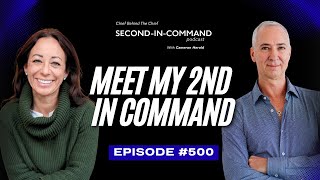
Cameron Herold and Meredith Kuba reflect on nine years working together, from her start as executive assistant to VP of Operations and head of sales. They discuss building the COO Alliance from 2016 onward, what works in CEO-COO partnerships, and why in-person events matter more than online ones for member engagement.
Questions this video answers
500
About nine and a half years
2016
About 190 active members
62 attendees per in-person event (cap)
Chapters
It's funny, like in the early days, I would show up at one of our in person events and all the members came over to talk to me. And now I can walk into a room with 60 of our members on the first night. I'm like, hey, does anybody want to talk to me? Because they're all talking to each other because they're so excited to see each other. It's like, oh, shit. All of our members have friends now and I'm not their friend as much I want to get to know them. All right, I've got such a special episode today. I have my second in command, Meredith Kuba. Meredith has been with me for nine and a half years, starting as my executive assistant, moving into operations manager. Now she's my vice president of operations and the head of sales. She's been at every single COO alliance event that we've had over nine years. She's been at every online event we've had for the CEO alliance and she's been there growing my business with the invest in your leaders, training my coaching program, managing all my books, managing my crazy life, building out the team with us, and frankly, breaking all the records too. So you're going to learn a lot from my second in command over the last nine years and how she's been able to work with somebody who is so entrepreneurial. Me being the add, bipolar, you know, scattered, often frustrated entrepreneurial CEO with a gazillion ideas. You'll learn a lot about the episode. I recommend you watch this one on our Second in Command podcast YouTube channel. It'll be a fun one to watch. We'll see you on the inside. So, Meredith, welcome to the Second in Command podcast in episode 500.
Thanks. I'm excited to be here.
Yeah. This is crazy. Do you remember when we started the podcast?
Oh my gosh.
It wasn't before you, right? It was after you.
Oh, no, it was way after. There wasn't much before me. It was. There was you.
That was before you joined me. I was only coaching. I think I was only coaching. I'd probably written my first, maybe my second book. So. Yeah, let's speak to that just for a second. So you've been my second in command for nine years, Almost nine and a half years now. You started as an executive assistant, you moved into more operations. Now you're handling all the, like managing people and doing sales. What was it that got you to join back in the early days?
Honestly, it was such a crazy connection. You know, we'd met at Competitive Cheer. You were Looking for a new assistant. We had a quick, you know, 10 minute call and you're like, excellent. I'm gonna let go of the one I have. You start on January 1st. And I had been looking for something to do. I had little kids at home. I said, this sounds great. This sounds fun. You know, I'm organized. I can totally do this. And I just fell in love with it. I loved being your executive assistant. I loved planning your travel and making reservations and getting to know your clients. And then when you started the COO alliance, it's just gotten so much better every year.
That's pretty crazy, actually. Since we, we started the CO alliance, has it been nine years now or eight years? Eight years.
Nine. 2016.
Crazy. It's no wonder people know the name now and they know that the idea and the brand. I remember when, when just after you'd started working with me, we were at a lunch with a bunch of the cheer parents and all these kids and you're like, okay, you're family. One, you're family. Two, you're. I'm like, how did you just do this? You had the, the whole thing of like 40 people all like completely organized. I'm like, hey, you're going to be fine. You're gonna be able to handle this business. So. So I'm gonna keep this kind of podcast interview a little bit like a tennis match. We're gonna go back and forth, talk a little bit about what it's like being my second in command, and talk a little bit about what you've seen in the evolution of the COO alliance, because we have really the only network of its kind in the world for the coo. And you've been there right from the very beginning. So why don't you tell me what it was that you saw in the very beginning? The first two events that we had, we held off site at a mansion that was 10 bedrooms. We had 10 attendees. Not a ton of organization coming in. I guess it was a little bit. It's like we still had the, the notes that I was reading off of and a little bit of an agenda. But what do you think happened at those first two events that had the attendees decide that they wanted to be a part of something and build something bigger? Because it really wasn't intended to be a forever thing. It was more just pull some coos together. What do you think happened?
I think those coos realized what an isolated space they were in and to be able to connect with a group of people who got it and understood, you know, the value they got from one another was just incredible. The rate we had of members who said or of attendees, because we didn't even have members at that point. It was people who showed up, the rate of them that were like, no, I want to keep doing this. I think it was 18 out of those 20. It was insane. It just became so clear that it was a need for CEOs, you know.
I think we need to bring some of that back into our model. Just. And this is even a bit of a side note for the episode we're doing, but we're organizing an event at MIT's Endicott House in September for the third time, bringing 62 cos there. Can you and I, when we meet offline after this, I think I want to bring some of that model back in where all of the members do presentations and where all the members help unstick each other. I think the real value that we got back in those early days was all 10 of the members presented and all 10 of the members were helped by the other members. And I think that was really a powerful part of it. But you said something about you didn't realize, or we didn't realize how lonely they all were. Have members talked to you about that stuff? Do you think they opened up to you about that? Maybe more than even me back in the early days.
Some. Now that I get to talk to everybody before they join, I hear it all the time. It's such a unique role in the company and most COOs don't know other COOs, and so they don't have somebody to go and bounce ideas off of. They don't have anybody that understands what they're doing in their personal life or their professional life. And so for them to find a space is really amazing.
So if you're working and as my second in command, who are you leaning on for help and advice? Or is it just by osmosis because you're around so many that you're picking it up? But do you have people that you can turn to?
I pick it up and I talk to our members. I have sat at airports next to our members and talked about, you know, where that's, you know, where I'm stuck and what I need to do and gotten their feedback and, you know, had them tell me, okay, and I'm going to call you on Monday and make sure you actually did this. And then they follow up. So I absolutely get all of the benefits of membership.
Yeah, that's funny. I never really. I never really understood how lonely coos Were. I knew entrepreneurs were often lonely and felt by themselves, but then they had groups like YPO and Vistage and EO and Genius Network and there are all these amazing groups for entrepreneurs. But I didn't realize the COO was as lonely and felt as scared. I knew they felt like imposters and we worked, worked really hard with them around that. But yeah, that was a really big side benefit. So you've also been to every event that we've ever had for the CO alliance. You came to every single in person event we've had probably 40ish. Do you think how many in persons? Probably Right. I. Well you actually have a scorecard, a number.
No, I, I have a Lego.
Oh.
22 is what's on yours. That's so.
No, but we also had the early years where we had all the. Oh, I don't know, that's a lot. But you. So you've been missing a couple.
It's definitely.
Yeah, we missing a couple because there's a lot of the years where we did five at the Royal Palms every year because the early model was five in person events and people picked three of them to come to. That was for the first bunch of years. And then what do you think has been the biggest benefit of the online versus the in person? How are members benefiting from that?
I think the biggest benefit is that we have so many more members. You know, pre Covid back when we were in person we had 30 members and we would usually see about 20. And it was an amazing event. Like it was great. We couldn't have imagined having almost 200, but with 200 minds, more problems get solved every day just based on a.
Little more critical mass. Right?
Yeah.
So you just finished doing your executive mba and I know that was a big goal that you had for yourself and I'm really proud of you for doing it. And it was a ton of work and there was a lot of learning. Like you've got to give yourself credit for, for the learning that you, you got in it. But can you speak to. You've said a couple times that, you know, I told you be. Well, I'll let you say it just. But talk to me about the learning you got from an MBA and maybe the learning you've gotten from being around the CEO alliance.
Yeah. So I'm a super nerd. I love school. And so I came to you and I said, hey Cameron, I'm going to go get an executive mba. You told me it was the dumbest idea I'd ever had and the really great part was at the end I had to go back and tell you that you were right. It was great in that I learned a lot about other parts of business that I don't want to have a part in. I came to you with things and I'd be like, am I ever going to be looking at this report? And you'd tell me, not unless you want to be a cfo. And I'm like, yeah, absolutely not. I have no desire to be a cfo. That is not where I belong. But I didn't learn anything new. Like there was. I don't think there was ever once where I came back and was like, I just heard the greatest thing that we need to try or implement or bring into the business. And I feel like I get those from our speaker videos and from listening to members. I didn't get anything new from except some more letters after my name.
Well, I just. More letters which I don't have. I just interviewed one of our CLO alliance members, Thor, the other day and he never finished high school. He actually never, never went to college, never finished high school, started working in early days. He said he was an artist in high school and started doing art at an engineering company and learned the skills of being an engineer and an architect while basically apprenticing. And I think there's a huge. I think that's where a lot of business people learn the skills, is by actually doing right, by actually being in the business. So in being in the business with me over the nine years, what's changed with the way that you've worked with me over the nine year period? What have you or how have you had to adapt?
I think one of the big ones was learning to delegate. When we first started, you delegated to me and I did all the things and it was something that I was used to. That's a regular situation for me, you know, people saying, hey, can you do this? And me saying, yeah, absolutely. So when we continued to grow and now I have two assistants that I delegate to, that was a challenge. Learning how to appropriately delegate and to follow up and to ensure that things were being done, to make sure that I was delegating to them in the way that was most productive for them to get things done. Not just in a me dumping things. So that was a big one, you know, learning, growth, being more than just a payer or a partnership, but actually having people, you know, beneath me.
Well, and Dan Martell talks about that. Delegate and elevate. Right. Our job is to get more off our plate. So that we can elevate the stuff that we're working on and work on bigger picture, more important, more impactful areas. So as you've learned the skill of delegation, delegation is actually one of the 12 core skills in our invest in your leaders training people. Go to invest in your leaders dot com. It's one of the 12 modules. What do you think you've learned in delegating that you were doing wrong? Delegating that you now do better? You know, in that act of delegating, you learn from doing it yourself. Where have you gotten better at delegating?
For me, it's in the follow up. Because you and I have this great relationship. If you send things to me, I know that you don't want me to respond. Done, done. You know, because that's just crazy on our inbox. But for my assistants, they need to say that they need to let me know. And initially, and I didn't realize, I think that's a little bit of a cultural difference because my EAs are both from overseas, but also especially as it's newer relationship, I just trusted them to do it right and it wasn't always getting done. And though that was a big one, learning how to manage the follow up, you know, I asked, what do you mean you didn't do it?
Yeah, there's a little bit of inspect what we expect, right? That if we expect something's going to be done, kind of digging in and looking at it. The other one though is to put systems in place around delegation because I know you're starting to use ClickUp with your team or using. Is there any way that you're doing that more? Instead of having to follow up to find out if the project's getting done, you can just see the tasks are getting crossed off as completed. So you don't have to ask on stuff. Or are you in the middle of those still working?
Because I was using ClickUp and I thought I was using it. Great. Only to find out that my previous assistant was just marking things off. She's no longer with us. That was a whole different thing.
Inspect what we expect then.
Yep. So I'm still inspecting closer.
All right. So if I go back, I was just thinking about the first two events we did for the CEO alliance with the Royal Arcadia Hacienda. And we had these 10 coos coming to that. What do you think we have to bring back into our COO alliance. That really worked and we're doing great now. We got high renewals, probably the highest renewals in history. You're breaking all the sales records right now as our head of sales, which has been amazing to watch. But what do you think we can take from those earliest events and bring into our current model today to make it even better again?
I think it all comes back to those connections because, you know, whether it was those first two events where we had 10 people at each one, or you know, our pre Covid events where we typically had about 20, it's a lot easier to make deeper connections when there are only 20 of you. Our events are three times that size now, and it's still one of the things members say they love the most are the connections that they make with other members. But I feel like a lot of times we just have speaker videos and peer presentations and we have so many things going on that we need to bring back time to just connect. Let's go sit and chat.
So maybe more. Maybe bringing the breakouts back into our monthly calls. Maybe do breakouts once a quarter even if we can bring those back in. Yeah, I agree. It's been really interesting watching the members who come to the in person events that we hold twice a year and seeing those relationships, that's really what they come back for. And it's funny, like in the early days, I would show up at one of our in person events and all the members came over to talk to me. And now I can walk into a room with 60 of our members on the first night. I'm like, hey, does anybody want to talk to me? Because they're all talking to each other because they're so excited to see each other. It's like, oh shit. All of our members have friends now and I'm not their friend as much I want to get to know them. So yeah, I agree. We have to bring that back in. Anything else you think about?
I think that's the big one. I try to be really intentional about still getting to know our members. You know, at those first events when we were much smaller, it was so much easier to know, oh, you know, Mitch Dodd's daughter sells Canadian girl Scout cookies. And, you know, we could swap or, you know, Guy Barry's got little kids. But to have beyond the surface conversations with our members and to just really get to know them. And I try and be intentional on that and to get to know, you know, their drinks preferences. Granted, these days I'm not the bartender pouring those drinks anymore, but to know what, what they like and who still people.
You still off drinking as well?
I am.
How long has it been for you?
A Year and a half.
Good for you, Mar. Congratulations. That's amazing. I'm just over 2 years congr. I'm really proud of you. Good job. That's amazing. It's. It's easy now, right?
There are still days where I'm like, I could drink a bottle of champagne right now.
Yeah.
But I know that no part of my life is going to be better once I do.
No. Yeah. Good for you. Congratulations.
Yeah.
So nine years of working with me as my second in command, my kind of right hand. Can you tell other COOs based on your nine years? What have you learned from working with me that you can pass on to other second in commands? What kind of advice could you give people based on what you've learned of working with me?
Oh, my gosh. There's so much because I didn't come from a business background. So all of my business knowledge and skills and the importance of setting agendas for meetings and having a vivid vision. Everything I know about business has come from you and the COO alliance. So I could give a ton. In terms of being a second in command. I think the big one is you. You know, it's like a marriage. You have to find that CEO that you complement, that you work well together. You know, there's no way to be that perfect COO for every CEO or every company.
You know, it's something I think that is really the big one is find the CEO that you really compliment. Right. And for the CEOs listening, find that CEO. So you really have to like the person and want to hang out with the other person to make the hard times easier. So I, I'm sure that the nine years has been super easy. Working with me. Right? No stress, no hard moments whatsoever. I'm kidding. Clearly, I'm, I'm a bit of a. I get stressed pretty easily. I'm a bit of a quick start. I've got massive attention deficit disorder. I'm pretty random and I can be pretty blunt with, with stuff. How have you learned to, to deal with that, to adapt with that?
Yeah. So I'm a fact finder. We are totally opposite there. And so when you quick start and throw ideas my way, nine years, I've kind of learned to jot them down because sometimes you just throw them out. And I know if they come out again, that's definitely one that I need to prioritize and move forward. But if I never hear about it again, I usually circle back a little bit later and be like, hey, we were talking about this. Is that something you still want to do. And a lot of times you're like, no. So just to kind of know your quick start personality, you know, if I hear it more than once, get, get moving. I don't think you're super random. I feel like a lot of it. You know, you've got a really clear vision and a strategy. You know, you're very consistent in what you send over. Hey, check out these sales tips. Check out this podcast.
How about with the stress part? How about where I, where I can be can be blunt or can be hard or can be. Because sometimes I don't even notice it. I'm like, why the did we do that? Or what's wrong with that? Or why didn't you get this done? Like, how do you handle that kind of stuff? You seem to just let it roll off your back or do you just turn around and go, wow, that guy's been a dick to me today?
No, I don't think I've ever said that you've been a dick to me. I do let most things roll off my back. I am pretty much that way in life. I think everybody is out there doing the best that they can and very few people set out with the intention to be a dick. I think some people do, but I don't think you're one of them. And generally I know what's causing it, whether it, you know, a vehicle accident or something with the business or, you know, whatever it is. But I think over these nine years, you are in such a much better place now in taking care of your body. You don't have those stressed periods as much as you used to.
Interesting. I'm handling a little bit better. Yeah, it's interesting. I noticed that with you in the earliest days that you were so good at managing kids and the stress around kids and all that random and the chaos, that you were going to be pretty good working with me. And I think it was something that we just observed with you as a, as a mom, as a house mom, as a cheer mom. Like you were doing all this stuff around the crazies that it seemed like you're gonna be able to work with me. Well, one thing I wanna mention again that I do and am serious about wanting to finish. You and I are working on a book together. We're working on this grandmotherism's book. Oh, you got it right there. Grandma's business secrets. So all I really wanna finish off with this is I want the font to be bigger and the layout of every page just to look and feel bigger, more Professional, like fill out the page and then I think we need to clean up the COVID a little bit. It just feels a little bit. I don't know. I don't know what it is. The cover's not quite there, but I think you're real close. So, yes, I'm serious about wanting to get it done. I'm glad it's on your desk. Just so everybody else. Meredith and I are launching a book together that we co authored together with all of the things that grandma told us that we know to be true and how those apply to business as an example of like, don't put all your eggs in one basket and keep your nose to the grindstone. Well, how do those sayings that all of our grandmothers used to say to us, how do they apply? And we're co authoring that together. So yeah, I'm serious about let's getting it done. Let's just get the inside design stuff done and let's get that sucker launched.
Okay, I'm excited.
Okay, cool. All right. So I want to ask about the members and why members get value from the Seal Alliance. Why do you think some of our members get more value than others? What is it that they're doing that gets them to extract more value from the same amount of money? It's such a low value. Right. They're paying $5,900 a year to be a member, but some of them get $5 million in value, others get $500,000 in value, others get 50,000. What's making the difference?
I think the big one is the members who get the most value. They show up. And they don't just show up to the monthly calls with their laptop open and doing emails and listening, but they commit those two hours to being present and to intentionally looking for what am I going to take back? What can I implement from today's call that's going to grow my company? They came with the purpose of getting value and they're getting the value. Those are the same members that come to events and they come to the events with that same intention. I'm going to get value. I'm going to make connections. This event's going to be huge. And that's why some members leave with $15 million in value from an in person event, because that's what they came for. They came ready to receive that value and they're taking it with them.
Yeah, I've noticed that there's a bunch of our members, especially the longer term members, like three year, four year, five year members, they tend to be the ones who come to an in person event, not even caring what the agenda is, just knowing if I'm coming and spending two and a half days with 62 other COOs, I'm going to learn a bunch of really great stuff that I can bring back to grow me and grow my company. Whereas others are like, what are we learning? What's the speaker? And they're kind of making a very myopic decision around it. So, yeah, I think there's something definitely there. You've broken all of our sales records in. Since you've taken over sales, what, 18 months ago, you've broken all the sales records in every category. From renewals and from new members in a month and from recurring numbers and like you've literally broken them all. What do you think it is that you're doing in sales? So, well, considering you've never done any professional sales before, you never worked in sales really?
It's definitely not the sales that I'm doing. I think it just comes across that I love the COO alliance as our second in command. As someone who's been at every event and call that we've had for more than nine years, I absolutely know the value of it. And so it doesn't come across as selling someone on it. It's me telling them about something that I genuinely love. I always joke, I got fired from the Baby Gap when I was in college. I couldn't sell clothes, baby clothes, to pregnant women in Scottsdale. Like there were no objections there. You know, they had the money, they needed the clothes. I could not sell them because I didn't love kids at that time. But I love the COO alliance and I think that's the biggest thing. People don't feel pressured to make the commitment. They feel excited to be part of a group that I so clearly love. I'm able to tell them all about. I, I go into our sales calls as a fact finder and I tell people, hey, I'm a fact finder. So I'm going to give you everything that I, as our second in command would want to know about the COO alliance before making a decision. And so, and I give it to them all. And then when I ask, hey, what questions do you have? Very frequently they tell me, I think you covered it all. And I tell them, well, that's my goal. Like, I, I want you to feel like you know about the COO alliance and that you're excited to join.
Yeah, I guess that we have the most members we've ever had Right now we have 190 active members, which is amazing. We get 62 people coming to each of our in person events, which is what we cap it at. What objections do you hear from potential members when you do a sales call? I'm sure there's a couple of classic objections. What are they?
I hear cost, which is crazy because at this point it's really a rounding error. Like it not huge. I heard a couple people tell me I'm just, I'm real introverted. And I'm like, that's okay. Come and listen. Like, you don't have to talk. You, you can type your question in the chat. You know, it's okay. We're not going to push you out of your comfort zone. I hear people tell us, I'm just too busy. And I'm like, it's two hours. I'm never going to give you homework. I'm never going to send you, you know, a book and be like, I need you to be prepared to discuss this, especially the ver. You know, the last line. It's crazy. It's two hours a month. You know, there aren't really any great objections.
Well, it's interesting. I just did a video yesterday. I was golfing middle of the week, and I'm in Australia right now. And I was thinking, if a COO doesn't have time in the middle of the week to go play golf or to take time away from the business, they're not running the business, the business is running them. Right. Again, to your point, two hours a month to attend a monthly call. If you work 160 hours a month, which is only 40 hours a week, that's only 1.8% of your time. You still have 98.2% of your time to be busy. So it's not a time commitment. That's a bit of a false objection. And then, yeah, the money, $5,900 sounds, oh, that's a lot of money. But not for the benefit that you're going to get. If you're, if you're learning how to be more confident, become a better leader, how to delegate more, how to fire better, how to get better outsourcing, how to have all these different referral partners you get introduced to. I think the upside is just so great. We just, you know, we need to keep explaining that value to them. I guess that's what you're doing, but you're probably also doing it without being kind of a salesy. You're just doing it more, matter of fact, because you've Been there and you've been around it all, which is great. The introverted one is interesting to me. How are these leaders who are introverted showing up as coos in their company? Are they introverted in their own company? Do you ever ask them that?
I haven't, but I have brought up an example guy, Barry, who was one of our very first members. I think he was member number 19 when he first started. He was very, very quiet. Even in a small group, it was hard to get him to open up and to share. Um, he was just so clearly uncomfortable. And he was a member for seven years. At the end of those seven years, he's given peer presentations and making connections and one of the most outgoing people in the room. Um, one of the things, he walks.
With this confidence now too. He came into an event that we were holding about a year or so ago and the guy, he just, I remember watching him walk in like, who the fuck are you? Like, dude, you got this confidence and swagger you're walking to. But I do know that he was not as introverted inside of his company Redirect Health when he was introverted showing up with us. So I think we have to remind potential members that you might think you're introverted coming to this event, but if you can walk into your company meetings, your team meetings, your leadership team meetings with confidence and with some swagger there, you're going to, we're going to help you bring that out in the rest of the business world too. So we can't let them kind of lean on that crutch too much. All right, another couple of questions before we wrap up with working with the CEOs of some of our members. So we have the COO alliance where we have this large network of second in commands. Some are a vice President of operations, some are coo, some are presidents, different titles. But you often have to talk to the CEO, to their, whoever they report to, in either bringing them on board or getting some of the CEOs on group coaching calls with me. What have you Learned from the CEOs of members when you're talking to them about the CEO COO relationship? And then what have you learned from our members about the CEO COO relationship? Can you speak to both sides of that?
Yeah, for sure. So Talking to the CEOs, one thing that frequently surprises me is how many of them don't want to know what we're doing. And it's crazy. I feel like they're missing on such a huge opportunity to have conversations with their coo about the things that their COO is learning here in the COO alliance. And I feel like they're missing out on this huge part of their business. They're just kind of like, eh, that's something my COO can implement and do. But they really aren't as vested in their COO as. As I feel they should be. But on the flip side, we have some amazing CEOs.
Let me just speak to that really quickly. So I just read something the other day that the CEO and COO are almost like two wings of a duck. And if only one wing is focused and working, if only the COO wing is focused and working, the duck's flying around in circles. The CEO has to know what the COO is learning. They have to know. They have to stay in sync so they can fly better. Right. It's like the CEO has to know about where the company is going. The CEO has to know and care about how we're going to get there. So yeah, we somehow have to get that information across to CEOs that they need to have a bit more of a vested interest not to show up at the events, but they need to care and support their COO and some of that growth. That's really interesting. Tell me about.
But then we have some amazing CEOs, correct?
Yeah, of course. Now tell me what you're learning from the coos. What are you learning from them about the relationship with their CEO?
I think a lot of our members are fact finders working for Quick Starts and it's one of the things that they share. We've had a ton of COOs recently from the Genius Network that I've talked to, and I Think Genius Network CEOs are extra quick start. I think they have something in common because all of them have been like, I just get so many ideas and so many things and I'm not sure where to prioritize, but I think all of our CEOs, they really genuinely like their CEOs. It's not like a kind of relationship. It's more of like a, A loving. Okay. And they're so excited to be part of that vision and that, that goal. I, I can't remember if it was your sister or her COO who had said it was. It's kind of like walking a dragon on a leash.
Yeah. We need to be the leash to the dragon but not choke them. Or we need to be the brake to their gas, but not the parking brake.
Yeah.
All right. I want you to go back to the younger Meredith Kuba the 21 year old want you to give yourself some advice, Meredith. For anybody who's only listening and not watching on our YouTube channel. She just laughed and rolled her eyes. I think she's worried about the 21 year old. What? What advice would you give the 21 year old younger you that you know to be true today, but you wish you knew when you were 21, number.
One would be stop drinking. Stop drinking. Then that would have been number one. Life goals told me this yesterday. If you're not living a fuck yeah kind of life, it's the wrong life. Anything that doesn't make you feel that way is not what you need to be doing. So don't do those things. Find the things that you're passionate about in the workplace and your personal life and your hobbies and do those things. And don't do the things that just make you say, okay. Don't find a job. Find a career that you love. You know that it's not a hassle to go to work every day, you know.
Well, I'm glad nine and a half years ago you said a full body fuck yes to coming and working with me at the CEO alliance and scaling this or even before we had the CO alliance. I'm glad you decided to come in and join me. I've told you a number of times that with you as my second in command, this has been fun and easy in scaling it. But I said the day that you ever leave, I'm shutting her down. So thank you for being there for me as my right hand, as my second in command. I really appreciate the time and really appreciate the last nine and a half years.
Me too.
More from Cameron

Flutterwave Former Global Head of Operations Awa Kone | When Growth Outruns Operations (Podcast 611)







Optomi Professional Services COO Nick Murphy | The COO Can’t Know Everything (Podcast 607)


