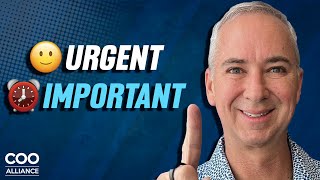
Cameron Herold shares email and meeting tips: keep messages to five sentences or less, use bullet points, and add emoji to subject lines for higher open rates. For meetings, set a clear agenda, start on time, and ban phones.
Questions this video answers
17% more open rates.
Five sentences or less.
February 6, 2018.
Say "I only want you to spend 20 minutes" even if it could take two hours.
Chapters
824 welcome back. Thursday morning right here on DT. If you're going to work and you're gonna sit in front of the computer and might be sending an email, well, Cameron Herald is here to help. Here's the book. We're also gonna talk meetings in a quick second. Meetings suck until you hear Cameron's advice. But Cameron, thanks for coming on. And this notion of emails, it's not going away anytime soon with social media. But what are the words we want to avoid when sending emails?
I think the big words we want to avoid are anything that we're doing kind of in all. But it's even more important to worry about the directives that we're telling people. So what I always try to teach people is if you're going to delegate a project to somebody, instead of telling them how long it's going to take, tell them how long you would like them to take. You know, we only have three resources, people, time and money. So when you're delegating a project, say I only want you to spend 20 minutes. I know it could take two hours, but I'd only like you to spend 20 minutes. Only spend $200 on it. And that'll actually let people know where to be spending their time.
Do you have a rule of thumb with all of the clients you work with with the length of the email of what is the best thing to stick to? And do you do bullet points? Do you keep it in paragraph writing? What is the best way to digest the message?
Yeah, I absolutely only do it in bullet points. I tell people five sentences or less. I love bulleting out so that people can read it really quickly. The reality is we all skim everything. So if you're going to be skimming it, you want to lead the person's eyes through it. And the more you write, the more chance there is for actually miscommunication.
Subject line that can make or break your message. What do you suggest to capture somebody's attention?
So I do two things. One, I'll either put at the very beginning a little icon of an alarm clock. You can actually grab an emoji of an alarm clock and put it before the words. And that's actually been proven to get 17% more open rates. The second thing is I'll put a little smiley face or put the words urgent or important and put that in all caps in the subject line.
Now you mentioned the smiley face and the emoticons because context is so important when we're communicating. When is it okay to use emoticons and all the exclamation marks that everybody's putting in there.
I think it's important to do it all the time. And what's happening now is almost our language is changing. It's okay to even use short forms, it's okay to talk in, you know, whatever we're calling the shortened words or the Twitter kind of words. Dropping emojis, dropping smiley faces in all the time is huge for me, especially because I'm very serious and very to the point. And I've just found that if I put a couple smiley faces in all my emails, regardless of who I'm sending it to, it makes a huge difference.
Even if it's upper level management or someone you have no relationship with.
Totally. I've coached the second in command and the CEO at Sprint and just dealing with Marcelo Claure, who's the CEO of Sprint. I'll put a couple smiley faces in and say, hope you're having an awesome day. Say hi to your wife, Jordan. That goes a long way because it humanizes everything. And at the end of the day, we're all people who, we're all kind of 16 year olds trapped in adult bodies. And the more you can actually humanize and connect, it's better when you finish an email going respectfully or warmly, it sounds like crap. And everybody knows it sounds like crap.
Do you want to bring the human experience? Okay. You also like to humanize the experience of meetings because some people like to avoid them altogether. You do have some great tips of making them productive and efficient. And I love this. No agenda, no attenda, do tell.
Yeah. So at the end of the day, we always invite people to meetings and they'll say yes, they're coming because of who's asking them to, but they don't really know why they're showing up. So what? I allow people to say no agenda, no attenda. If I don't know what we're covering, in what order we're covering it, how many minutes we're spending on each item. I'll simply reply tentative or I might come, but let me know what the agenda is. And then you teach people who are setting up the meetings to do that in advance.
Okay, timing, how important is it to start on time and end early with the meetings?
So I treat every meeting like an Olympic swim race. If I was an Olympian showing up for my 9 o' clock swimming race, I would be there five minutes earlier. I'm late. I'm not going to come running out onto the pool deck going, sorry, I'M late. And I also teach people when you say, sorry I'm late, what you're really saying is f you I'm disrespectful. My time's more important than yours. The reason we start, sorry, stop 5 minutes early is that allows us to walk down the hall, talk to our assistant, grab a cup of coffee and show up exactly on time.
Distractions in the meeting. If people are walking in with their smartphones, do you just have them check them at the door?
Yeah. When you walk in the meeting, you actually check the cell phone at the door and you treat it just like a first date. You would never sit on a first date with somebody that you're interested in and look at your cell phone constantly. So you obviously have something more important. If you have to look at your phone, just don't come to the meeting. That's cool. We know that everybody's got important things to do day to day in business. Choose one. As an Olympian swimmer, you're not going to be out swimming checking your cell phone. You're not going to be running the marathon checking your phone. Pick one thing, same as in meetings.
And have the right people in the room, which is on the tip board right there. Cameron. Herald.com is the website Meeting Suck is the book Real talk as you just heard it on the couch. He's helping you get more efficient with connection. Cameron, thank you.