Being a CEO and Dealing With The Highs & Lows Emotional Roller Coaster
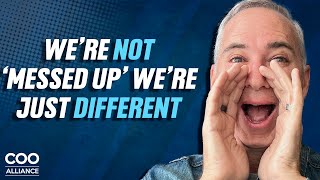
Cameron Herold maps the emotional swings of running a company to a four-stage roller coaster: uninformed optimism, informed pessimism, crisis of meaning, then informed optimism again. He links 11 entrepreneurial traits to bipolar disorder symptoms, argues it's temperament not disease, and advises against major decisions during emotional extremes. Use the highs for sales and recruiting, not spending.
Questions this video answers
Chapters 1, 2, 4, 6, and 12.
Uninformed optimism → Informed pessimism → Crisis of meaning → Informed optimism (with a risk of crash-and-burn).
October 2000; he said the company was sold for $64 million (then effectively worth $3.2M due to a market crash, per his account).
150 points → ~50% chance of a heart attack; 250 points → ~90% chance; he reported scoring 435 points during his crisis.
Over 28 countries.
Chapters
How would you feel if after you've spoken to a group, a member of the audience came up to you and said, you saved my marriage?
Would that make you feel something?
How would you feel? You probably feel pretty darn good. How would you feel if another person came up and said, you saved my life? I was suicidal, but no, I know I'm an entrepreneur. Those two statements were actually said to our next speaker, my friend Cameron Herold. Cameron has shared his message in over 28 countries and has personally coached.
One.
On one 497 CEOs. His message for us is the highs and lows of a CEO. Welcome best selling author of Double Double Cameron Harrell.
Thank you everybody. I started with this slide because I wanted to share something with you that I'm one of you. We are the crazy ones. We've seen that video. We're all the same. I'm gonna walk us through some of our strengths, some of what our weaknesses are, but I'm gonna walk us through this emotional rollercoaster of the highs and lows of CEOs. Before I do, I have one ask of the audience. I am on a mission to get people to realize that we need to stop medicating our children and stop fucking them up in the school system by saying there's something wrong with them. I'd love for you to share my TED Talk. We are the influencers. We're the connectors. I don't make any money off this. It's actually not even what I talk about publicly. I've never done any paid speaking events other than that TED Talk once. All my other ones are on my business stuff, so it's not even related. But I just want to stop fucking up these children. So if you could share the TED Talk for me, I'll send you the link. Please share it with your communities. It'll mean the world to them as well as to me. I want to start off this talk by doing a little quiz. I'm going to read to you traits of entrepreneurs. I'm going to read a list of 11 traits and as soon as you hear five traits that describe you, I'd like you to put your hand up or stand up. One guy gets to put his hand up, the rest of us have to stand up. As soon as you hear five traits that describe you. Are you often filled with energy? Are you often flooded with ideas? Are you driven? Are you restless? Are you unable to keep still? That's five. Are you often working on little sleep? Do you get euphoric? Do you get Easily irritated by minor obstacles. Do you burn out periodically? Stand up if you got it. Only one guy was allowed to put his hand up. That's John. Do you act out sexually, which is flirting? Yeah, we got him at number five. And do you feel persecuted by those who do not accept your vision? So take a look around the room really quickly because you actually did stand up to a list of traits that describe entrepreneurs, but those are actually the clinical diagnosed traits for bipolar disorder. Sit down. So those are actually the 11 diagnosed traits for clinical diagnosis of bipolar or manic depression. So if you stand up to five of the 11, you're there. If you're at nine, 10, or 11 traits, you literally are clinically diagnosed and would probably be medicated for. Bipolar disorder. Bipolar disorder is nicknamed by the medical community as the CEO disease. So what I want to do is talk to you about why it's not actually a disease. It's just who we are. You've all got a copy of my book, Double Double. I don't want you to read it. It's not a novel. You don't read it like 50 Shades of Grey from front to back or four times like I did. You read only five. Just read the five core chapters for us, which is chapters one, two, four, six, and those are the chapters I want you to read. The rest you can read if they apply to you, but you have to read chapters 1, 2, 4, 6, and 12. Now let me dive into the content. What does this look like to us? Please don't say a sine curve. What does it look like? My bank account. My bank account. How about a roller coaster? Right, the roller coaster. So this is what a typical roller coaster might be looking like if you asked a child to draw a roller coaster. Well, the roller coaster of entrepreneurship or bipolar disorder is something that Almost all famous CEOs have or have experienced. Steve Jobs was clinically diagnosed as hypomanic. It had been said that he was unable to see the box because he was always so far outside of the box. Do you know that two of the three founders of Netscape, Jim Clark and Jim Barksdale, were both bipolar? Do you know that Richard Branson has ADHD and dyslexia? Most entrepreneurs are clinically diagnosed to be on the spectrum of Tourette's, which is thinking out loud. So we're not messed up, we're just different. What I'm going to talk about today, though, is the bipolar disorder and how we can actually ride this roller coaster that we're on. Because unlike the theme park, we can't get off this roller coaster. We're on this roller coaster and our spouses, our friends, our kids, our employees are actually strapped to our backs and they're riding it with us. And they didn't sign up for the ride. So what I want to do is give you the tools. I have these tools in videos and in my book for you to share with your peers. But I want to give you the tools so that everyone understands and we understand how to ride the roller coaster and how if they're strapped to our backs, we understand how to ride this as well. There's different stages of the roller coaster and I want to give us all a little bit of dialogue that we can have with each other or some clear phrases that we can use to describe how we're feeling or where we are on, on the roller coaster. This first stage is one that we call uninformed optimism. So at this stage of a physical roller coaster, what are you feeling if you're on a real roller coaster? Anticipation. What else? Excitement. Right. Nervousness, Excitement, energy, enthusiasm. That general rush, that uninformed optimism of, oh, this is going to be exciting. You've got all these emotions that are kind of going through you. Most of them are exciting. Well, in the business world, you know, you're at uninformed optimism when you don't need coffee, you don't need any energy drinks because your enthusiasm and energy is what's propelling you every single day. You're completely and absolutely passionate about every aspect of your business. You actually are seeing things and doing things that are fun, but other people might think is a little bit crazy. You'll see danger in front of you and you actually won't see it as dangerous. You'll see it as an opportunity. Like as an entrepreneur, we'd see this and want to sell tickets. Whereas a teacher might think it's dangerous. Stay away. You know, you're at uninformed optimism when you're doing things that the general population see as crazy. But you've thought through enough to go, this is actually pretty sound. But then something changes, something clicks because you have to continue to ride the roller coaster. So all of a sudden you go over the top of the roller coaster and you're at this stage called informed pessimism. Now, if you're at informed pessimism on a real roller coaster, what are you thinking at that point? What's the two word phrase that we all say? Oh, shit. In 28 countries, everyone has the same. Even in Saudi Arabia, they all go, oh, shit, this oh, shit. Moment is when you know that you're kind of running out of time. You feel something is changing. You're starting to pull your hair out. You actually are getting really stressed. You look around the room and you go, why the fuck is everybody so happy? That feeling like, why are people so happy? You start worrying you might even start to cry for no real reason. The tears just come and you have these feelings that are kind of coming out. You might think you made a mistake and you're starting to second guess yourself. You absolutely need coffee in the mornings because the natural energy isn't running through you. That informed pessimism has kicked in. And you continue down that curve and you get to this next stage called crisis of meaning. Crisis of meaning is that Tuesday when you call into the office and you say, just tell the team I'm off with the lawyers or I'm out at a sales call. And the reality is you're in bed at home and you have the duvet pulled up over your head. Who's done that? Put your hand up. If you've actually called in and lied at work, right? Yeah, almost all of us, Almost all of us at some point have called into the office and lied because we just can't face it. We're just too stressed or too overwhelmed or too scared or just frazzled. My moment of crisis and meaning. And we have them on days or weeks or months or longer periods. My biggest one was in October of 2000. I was running a big company. We had 900 employees. We were phenomenally successful by a lot of measures. We just sold the company for 64 million. I was tapped on the shoulder by one of my VPs and he said, are you okay? And I turned around to say yes and I collapsed on the floor of the elevator and started to cry. I started to literally shake and sob like a little 12 year old shaking. And about a week later, I went into the doctor's office and the doctor said, what's up? I'm like, nothing much, little stressed. I've got this metallic taste at the back of my neck. Anybody ever tasted like the metallic taste at the back of your neck? It tastes like you're chewing on aluminum foil. See a show of hands, if you've had that taste about half the room. So he said, well, what's going on? I said, nothing, just this weird metallic taste. I'm just here for my normal routine physical though. He goes, well, tell me about your life. I go, well, got married about four months ago. My wife conceived about six weeks later. The company that we sold for 64 million is actually worth 3.2 as of the day of transaction because the stock market crashed. This was October 2000, remember, the $64 million was worth 33.2 and we actually got it out. So we lost virtually everything. I quit my job, I'm moving back to Canada. Sold our house in Seattle and I just bought one in Vancouver. And my mom's clinically stage four with cancer, she's terminal. But everything's pretty good. Like I'm just a little. This weird metallic taste, but everything's pretty good. There were a couple other things. He gave me this test. I don't remember what it's called. It's two names you write down. You have this list of things happening in your life and if you get. What's it called? That one. Holmes, Ray. So you do this test. If you end up with 150 points, you have a 50% chance of a heart attack. If you get 250 points, you have a 90% chance of a heart attack. I had 435 points. I was clinically redlining. I was literally clinically redlining. I did this interview with Alex about a month ago and after, or actually during our interview, I actually did the test again because I'm down at like 40 points. I was clinically redlining. And that metallic taste at the back of my neck was a chemical secretion being caused by. By stress. So if you've had that taste in the back of your neck, it's your body saying, slow down. See, as entrepreneurs, we try to push through it, but when you're at crisis of meaning, you start screaming at staff for no reason at all. You start pointing fingers at people and blaming the name game. I actually had a CEO one time who was so stressed running his 200 seat restaurant in about November of 2008, and he was blaming the global financial crisis. Are you freaking kidding? You have a 200 seat restaurant. This isn't the world we're running here. Get off your butt, get out of your office and tell people about your great food. But you're so stressed that you can't do much. You look around, excuse me, and all you can see is danger everywhere. When you're at crisis of meaning, you actually think you want to sell the company. Not because you want to as an opportunity, because you see no other path. So I can tell you for sure that you're not thinking clearly when you're on this roller coaster and when you're at crisis and meaning. When I go into the doctor's office, and I have a chemical secretion telling me to slow down. And I'm saying everything's going well. Everything's not going well. I'm going to show you a video of a guy riding a roller coaster. The roller coaster that this kid is on, he's actually given the answer to 10 questions. And then during the roller coaster, he's asked the 10 questions and he has to try to answer them. Well, watch how successful he is at answering the questions that he already knows the answers to.
Okay. Can you hear me?
Yeah.
Here's the story again.
Okay?
According to ESPN baseball team, the Los Angeles Dodgers played the San Francisco giants in their 2009 home opening game.
Okay.
In the game, Dodgers second baseman Orlando Hudson hit for the cycle. That means Hudson hit a home run, a triple, a double, and a single all in one game.
Right?
The final score of the game was Dodgers 11, the Giants one.
Okay.
Go louder.
Go louder. Mike.
How many runs did the Dodgers score in the game?
19.
What team did the Los Angeles Dodgers play?
Oh, my God. I can't even hear anything. Oh, my God. Holy crap. Oh, my God.
Oh, my God.
Okay, repeat. Repeat the last one. Repeat the last one. Okay, kk, ask me a question. Holy. Oh, my God.
What team did the Los Angeles Giants. What's it called when you hit a home run, a triple, a double, and a single?
Like an overall something.
Wow. Wow. What?
Holy God.
Can't hear you.
This is nuts. Oh, my God.
Are we done? Right? No, we're not done. But the reality is you're not thinking clearly when you're at crisis of meaning. And as entrepreneurs, we always try to push through it. We try to battle through it. And the reality is you can't battle through it because you can't think clearly. You can't perform when you're in a crisis of meaning. See, why do we as entrepreneurs feel bad about relaxing and feel bad about taking a vacation and feel bad about playing golf for four hours without taking our damn iPhone? We can plug our phone in at night. We don't feel bad about recharging our phone. But why do we feel bad about recharging ourselves? What's wrong with actually unplugging? We need to get way better at that. So if you're at crash and burn, I'm not going to talk about this stage, because who cares if we fall off the bottom of this roller coaster ride? The key to not crash and burn, to not blow up your marriage or your business or yourself, is to actually get through this bottom and getting support. Two years after my crisis of meaning and hitting that doctor, I was then written up in the Globe and Mail, a full page article in Canada's biggest newspaper at having overcome this stress and having been one of four supernovas. Two years before, I was written up in the Wall Street Journal as having crashed with stress. Two years later, I was written up as having recovered from stress. The way I recovered was this. I got people to listen. I just talked and shared and got vulnerable and started to open up with everything and realized that there was a whole bunch of people out there that were just as crazy or just as stressed or just as overwhelmed as I was. I wasn't as alone. I got ideas from people, I got ideas from books and from groups and from no longer trying to be the smart person in the room, trying to show up and be the dumb person in a room of really smart people. I got coaching. I actually turned to experts and mentors who had been there before so that I could actually learn from them and try to battle through it on my own. And I realized the school system had messed me up so much that I actually didn't have to be the smart guy. I could be the dumb guy and turn to everybody else for the way to actually move forward. I looked to get a kick in the ass. And when you're at this crisis and meaning stage, sometimes we need a kick in the ass. Sometimes we also need a mirror to look into and we need someone to hold up the mirror and make us see that maybe we're the problem and it isn't everyone else around us that we keep blaming. But you need to get through this crisis and meaning stage. If you don't get through crisis and meaning, you will fall off the curve. When you do get through it, you get over to this stage called informed optimism. Informed optimism is a good spot to be, but again, it doesn't last because you keep going up the curve. And lo and behold, you're back to uninformed optimism again. The key when you're at this stage of informed optimism here is to not celebrate too early. You don't want to actually feel like you're okay all of a sudden. Good analogy is, let's say a husband and wife decide to go in for therapy. Going to a counselor, marriage counselor. Marriage counselor says to both of you as you're sitting together, so what's wrong with her? Well, she's a bitch. They ask female what's wrong with him? Well, he's a jerk. He's an asshole. Okay, so at Least you two are on the same page. And you do, like your hour and a half with your therapy. You walk out of the counselor, you know, you know we're okay now. No, you've had one session with the marriage counselor. You're not okay yet. You have to keep going to the marriage counselor until you both hate the marriage counselor more than you ever hated each other, and then you're okay. Well, same thing as a crisis of meaning if you're at that stage where you're completely paralyzed and stressed and pulling the covers up over your head. I used to have an area underneath my desk where I would lie down so that no one could see me, and my assistant would actually lie to people and say that I was out of the office. I was literally sleeping under my desk when we had 248 people at the head office. You need to know that you're okay. It's not okay to say, I think I can, I think I can, or I think I'm going to be okay. You have to get to the stage where you know that you're okay. And unlike the normal roller coaster, we can't get off of it. And there's all these little mini curves along the way as well. So you can be at a very high point. Something low is going to bring you back down. What I want everyone to remember with this is that we're on a roller coaster and our stress is magnified. So you'll have people around you all the time will say, oh, yeah, my life is stressful. I have ups and downs, too. I'm not talking about everyone. I'm not talking about the average person. I'm talking about entrepreneurs. And we either work with them or we are one. And our stress is magnified because of a bunch of key points. We have everything on the line. We don't have a job. We don't have a guaranteed income. Often we go through long stretches where we don't take money out so that we can pay everybody else. We're worried that everyone who we got to quit their great jobs and come and follow our dreams aren't necessarily going to have a job a week later. So we're scared with that. We're worried that everything we've said to the media is going to be found out that maybe we don't really know. We're worried about making payroll. We're worried about our customers and our expectations. We've got our brand attached to our backs. That's huge amounts of extra stress that magnify the whiplash that we're in. So what we need as entrepreneurs is to understand where we are and to be able to communicate where we are. Now, who thinks that first stage, that uninformed optimism, who thinks that is a good stage to be at in the business? Put your hand up if you think it's a good stage. Put your hand up if you think uninformed optimism is a bad stage. Put your hand up if you think it's just a stage or you're not thinking. How about crisis of meaning? Who thinks that's a bad stage to be at? Who thinks it's a good stage to be at? Okay, here's the point. It's just a stage, a physical roller coaster. There's not a good part or a bad part. It's the same roller coaster. It's just part of the roller coaster. The key is to know, what do I do at this stage and what do I not do at this stage? So if you're at uninformed optimism, it can be good and bad. So if you're at this crazy, fun energy stage where you're optimistic and passionate, what parts of your business do you work on at that point? What could you do to leverage that stage? Convince other people, right? So outward facing marketing, sales, a pep rally. Talk to the media, talk to the press, idea generation, rally the troops, right? Anytime you've got that crazy energy, shift that energy, transfer that energy. Now, what don't you want to do when you're at uninformed optimism? You don't want to make buying decisions. You don't want to hire people. You don't want to make big advertising buys. That's why it's very dangerous to be at events like this as we get all so excited that we go out and we're going to take over the world. We buy everything. But then we wake up two days later and we go, oh, my God. Buyer's remorse. Buyer's remorse is a real thing. So when you're at uninformed optimism, you transfer your energy in a good way, but you don't make any decisions. When you're at informed pessimism, then you can do your planning, but you don't want to talk to the media. If you're at crisis of meaning, you need to unplug and be okay with unplugging so that you can get back to that stage where your energy is high again. My energy is high right now. I'm wired right now. I feel like I've been doing rails for an hour and a half. But the good thing is I can transfer that energy in a good way. But I'll tell you in two hours. I don't want to talk to any of you because I'm depressed or stressed.
More from Cameron

Flutterwave Former Global Head of Operations Awa Kone | When Growth Outruns Operations (Podcast 611)







Optomi Professional Services COO Nick Murphy | The COO Can’t Know Everything (Podcast 607)


