Contractor Foreman: From Owner to COO and Scaling with AI | Marcus Hantla (Podcast 567)
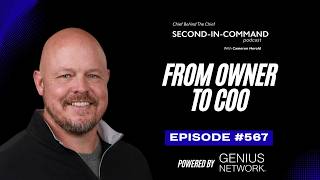
Marcus Hantla, COO of Contractor Foreman, spent 25 years building electrical-MEP businesses before moving into software. He explains how construction experience shapes product decisions, including AI-powered search and sales tools, and shares what he learned transitioning from owner to operator.
Chapters
I hate to break the news to anybody who's in a SaaS company out there that the world is changing and UI/UX is no longer really moving forward going to be all that important when you have the ability to just put a search bar in there. Think about Google. Do they have a beautiful user interface? It is a search bar. Type your garbage into our box and we will give you back what you want. That's where, where it's going.
Today's guest brings more than 25 years of senior leadership across sales, operations, and international expansion, and he has a track record of driving growth, building high-performing teams, and helping companies dominate their markets. He's currently the COO of Contractor Foreman, a fast-growing construction project management platform where he's leading the operational product and people engines behind the company's next stage of scale. Before stepping into this role, he spent years transforming sales and revenue operations including closing enterprise deals at Insere, such as a Fortune 100 win in his first 7 months, and driving a 120% sales surge as Director of Revenue Operations at JD Knowledge. His background also spans global team leadership across South Africa and Argentina, multiple President's Club level awards, and 2 successful exits of his own companies, giving him the rare dual lens of both founder and operator. In today's conversation, we get into the AI tool that's completely changing the game for his sales team. Why appreciation and truly seeing your employees matters more than ever in remote environments, and the no-nonsense advice he has for CEOs after decades of building, scaling, and selling companies. Let's dive in.
All right, if you're an entrepreneur, you've gotta go check out the Genius Network. The Genius Network is for ambitious, giving entrepreneurs who wanna be part of the highest level connection group, and it's not just another mastermind. In fact, I have been a Genius Network member for 8 years. Genius Network helps build a better entrepreneur by focusing on health, wealth and making your business and life more ELF, which stands for easy, lucrative, and fun. Don't apply if you're just a taker, but do apply if you're a giving entrepreneur and you earn at least $1 million or more in revenue. And to see if you qualify, go check out geniusnetwork.com/apply. Again, that's geniusnetwork.com/apply.
We are live with Marcus. Welcome to the show.
No, thank you very much for having me.
Of course. Well, let's just go ahead and kick things off. Tell us about Contractor Foreman. What do you do and who are you guys serving?
Absolutely. We are a, uh, construction software management platform, uh, primarily focused on the SMB market. And, uh, our ICP, I would say, is probably like $0 to $20 million. Um, You know, it, it could be multifamily general contractors. We do have a large contingent of subcontractors as well inside of our network. But that's, that's mainly who we target right now is the residential construction home builder, whether that's single family run office or a larger scope track builder organization that is fully built out.
Awesome. How did you get involved with this company?
That's a great question. So I've spent 25+ years now in the construction space. I've owned a couple of companies, primarily focused around the electrical side, but, you know, full MEPs. So the mechanical, electrical, and plumbing side of the business and built up two companies, sold those off, and I've continued to work in a space, uh, while simultaneously being on the technology side. Uh, and the way I kind of achieved that was the first company that I built was a low voltage wiring business. So anything that, uh, wouldn't electrocute you if you touch the wires as you were pulling Got it. But that means it was systems. And so through doing systems, we had a large number of, you know, primarily home automation and audio systems, CCTV, access control, security, those type of things, and built an annual recurring revenue model based off of subscriptions to the security monitoring, to ongoing maintenance contracts for the higher-end systems. Things along those lines, really where we focused. And so I've been on the technology side as well as construction side, and all of that lended itself really nicely and dovetailed into what I'm doing at Contractor Foreman today.
Did you apply for the role or were you friends with someone? How'd you get—
Yeah, no, actually, I— so it's an interesting thing that a lot of people don't talk about. Retire, early retirement. Uh, I've, I've, you know, as you're working day in and day out, you know, hair on fire, obviously I've gone through all of mine at this point, 7 days a week, 365 days a year, 24 hours a day getting phone calls and things like that. Um, I, I've got plenty of stories, you know, hiking with my family in Colorado and getting a phone call about one of the employees, you know, do we need to fire him? What do we need to do? Management, you know, going crazy. And I'm like, I'm on vacation, you know? But yeah, what's not talked about a lot of times is when you sell and you're actually achieving what you think the ideal is in life of, you know, early retirement and things like that. It was literally one of the most uncomfortable experiences for me ever. I, I got done, I stepped back, and I was like, wow, this is like jumping out of an airplane with no parachute. It was really, really uncomfortable to not have anything to do. And so I immediately started jumping back into the market, trying to find, uh, places to go and things, uh, that I could do with my time. Reached out initially to a former customer of mine who owned his own software company, and, uh, he brought me on as his revenue officer, uh, head of sales to build out his inbound and outbound, uh, sales team for a couple of products he had developed. And did that for a number of years and then switched over and, um, did an ergonomic SaaS company where we use machine learning and AI to go through and take a live video recording of people doing various tasks and jobs, uh, and the system would automatically calculate the, the angles of, you know, their body within 33 millimeters of resolution from the radius of any joint. And I know I'm getting way off in the weeds here, that's about an inch and a half. So if you think about like an inch and a half of movement, uh, for an ergonomic assessment, it's a rapid way to go through and do that without of without somebody having to stand there, you know, with a protractor or something and measure those angles as they're sitting at a desk or doing any type of factory work that, you know, so many times people are injured in. And did that for a good while and then switched into— I actually reached out to the CEO of Contractor Foreman just because of my experience in construction and we hit it off and here we are today.
So is this someone that you already knew about? Like, had you heard of the company and you were like, that's something I would like to be a part of? Because I imagine going from— sounds like you're retired.
So I actually— that's, it's a really funny question and you'll see why here in a second is I'd mentioned MEPs and you know, I'm still involved. I actually have a company that does both commercial and residential disaster recovery. And in that, came across an electrician and a plumber who were both using Contractor Foreman here in the town that I live in. And I actually had one of them come up and do some service work at my house. And I just asked him, stand on the front door when he was done. You know, he's like, oh, give me a second. I'm gonna, I'm gonna key in your information here and, uh, it should fire off the invoice and then we can pay right here on the phone. And I was like, that was cool. What software are you using? It was Contractorform.
That's it.
At that point I was like, I need to give these guys a call and find out a little bit more about this. And so that was my first exposure to it, uh, was from somebody standing on my own front porch and, uh, just kind of working backwards. It's, it's the luxury of being able to go and find what you actually want to do in life versus, you know, something you have to do out of necessity.
So, mm-hmm. Yeah. I mean, for anyone who's listening that might be thinking about leaving their current role or they're looking for their next role, what's your thoughts on going into a space that maybe is a little outside of your lane, but to learn something new versus just staying on the same path? It sounds like you've kind of been in some ways the same industry, but in other ways you've played very different roles. What's your thoughts on that?
Yeah, I don't shy away from a challenge. That is not my personality type, but I know that the bulk— my wife, other family members, you know, that's, that's very uncomfortable. And I think that's a lot about what sets apart COO, CEO type of executive level functions is that you can't be unwilling to try something new. And I view those as growth opportunities. I get into a new opportunity that approaches or I see on the horizon, and I welcome it with open arms. And I'm like, let's go, let's see what we can make happen here. Uh, in very much in terms of investments, uh, I think one of the biggest advantages that I've had is my— the bulk of my investments have been in myself and betting on myself and knowing that I'm not going to let something fail because ultimately I am where everything boils down at the end of the day. If something's going wrong, it ultimately is going to end up on me to fix it. And I've gotten really good at being a fireman, I guess.
I just, I, so with those new challenges, have you experienced stepping into those and feeling any sort of imposter syndrome or like, man, can I really do this?
So, uh, I'm imposter syndrome. That's a great one. I, I've seen a lot reading through LinkedIn and things like that, how to deal with imposter syndrome and things like that. And I mean, it, the The truth of the matter is everybody is an imposter until you do it, you know, and, um, I, I don't let that be any kind of stumbling block for me approaching something new. You just acknowledge it, you see it for what it is, and then you just move on past it as if, you know, it's not even there. Because if, if you get stuck in that realm, you're in analysis paralysis and you're like, you know, well, the chips could fall. You've got to understand that that absolutely is everything in life. That the, you know, I could walk out to go check my mailbox and I live in a cul-de-sac and get run over by a vehicle. Yeah, there's all kinds of catastrophic stuff that can occur at any given moment, any day. And you can't live your life like that. So if somebody is in that mode, my advice would be just don't get hung up on that and move. You know, the best way What the old adage, a waterfall starts with a single drop of water. Just take the next step. I mean, that's, that's really all you can do because, uh, there's ultimately no other— you can only control what you can control in life and in work situations.
So it sounds like you owned both of your, the last companies that you were working in and you sold those and now you're COO. Has it been difficult transitioning from owner to operator?
So, uh, well, there, there were a couple companies in between, um, where I cut my teeth. And at first, yes, because I very much had, uh, carte blanche in my own businesses where I could make a decision and that was the decision and we didn't talk about it anymore. It was just done, you know. Uh, there's much more finessing and selling that goes into being a COO on why this is actually a good idea, why this is the direction we need to go, uh, using KPIs to your advantage and making an informed— I, I don't want to say decision, it's, uh, making an informed recommendation to the CEO, uh, because you know, I— you have to be willing to walk in somebody else's shoes and you've got to understand from their perspective, you know, that's, that's their baby. Just like my companies were my baby, this is their baby. And so now I can't just go off and, you know, execute. And I still do have days where, where I, I do make decisions and execute. And then I'm like, oh, I probably should have checked first before I did that. And then kind of unwind a little bit of what I've done. But it hasn't presented to be too big of a problem because again, making those decisions, I mean, when I do make a decision and just execute, it's something I've seen before and is a known quantity. I'm not just shooting off into the wind. I do get much more consultative with the leadership team, uh, board, whatever, uh, that I'm answering to when it gets to the larger decisions. But on things that I, I've dealt with in the past and are known quantities, I definitely just do automatically kind of answer on that front.
You mentioned stepping into each other's shoes. I'm curious, as being an owner and then being an operator, do you have a lens or any kind of lessons that you could share for anyone that hasn't been an owner where you're like, hey, if you're a COO, COO, this is what you need to realize about working with a CEO or owner who is actually in charge of all of the weight and responsibility of what actually happens versus, I think we feel sometimes as COOs, you know, we may have a piece, but it's, it's, it's a different game that you're playing when you have all that responsibility on your shoulders entirely. What advice or lessons have you learned from being in both positions that a COO could take now?
Yeah. And I would say empathy. It does give you the ability to walk in their shoes because you've been there, right? I mean, you've done that. You know the pressures of, you know, meeting payroll at the end of the week. I mean, when you're signing the other side of a check, it gets real in a hurry. And so, being able to separate a lot of times what I may emotionally want versus what the CEO is walking through mentally in a process as far as making a decision from his perspective, her perspective. It's given me patience, I guess. Like I said, empathy, where I have the ability to get in there and really kind of remove my own biases from the equation and, and really let the process work its way out naturally. You know, that I think would be the best fit there for what you were asking.
You said use the KPIs to your advantage, kind of in the finesse. What does that mean?
I don't wanna give away all the secrets here on how I'm selling all of my ideas to my current CEO. No.
If you're listening, CEO, I know it's all yours now.
And it's something he's used to by this point where you do have to— it's a little bit— I don't want to say justifying your existence, but justifying your position. And I think it's a good exercise. Even when I was CEO, I would have to justify that to myself. I just did it a lot faster because I was the one going through the data. Now I'm actually having to go through and put together an executive summary. And, you know, this is, this is what other companies are doing. This is what I suggest we do. This is why I think we should do it. And using the metrics, you know, that are being tracked internally through the marketing team to the sales team, to the customer success team, to the training team, to our, to my advantage for a given item. And then, and then being able to present that in a cohesive, well-thought-out format that makes good sense. And you don't win every time. That, that's another side of the equation. I mean, it's just reality. Um, this one, it's a little close to home, um, because it's been a thing. And if the CEO of my current company ever gets around to listening to this, he will laugh to himself because I did bring an idea. I mean, you know, and it to do, we've got integrations with various accounting software platforms and things like that. And I'm like, well, we should just build out our own ledger. And he was like, I mean, I went through every kind of scenario under the sun to make that work. And he goes, it's just not exciting to me. I do not want to do that. And I'm like, okay, fair enough. I'm done. I'm out. You know, it's—
Yeah.
Sometimes you're just not going to win. And yeah, gotta be okay with that. So, mm-hmm. Yeah. It's, uh, I don't, I don't lose often though.
I was, I was, what is, what's something I tried to not ask example questions on the spot, but I'm curious on the flip side, what's been something that you've brought to him and you guys both were like, yes, this feels exciting and you were able to run with it and saw big results from?
Yeah. Um, and there've been, There have been a lot of positives in that regard, honestly. And we've got a lot of initiatives. The market is changing. Most recently, the things that come to mind, we are doing AI SDR and BDR outreach. Originally, there's a number of different tools out there that will call a phone and go straight to voicemail and leave a voicemail. That's great. We actually were able to identify an artificial intelligence platform that will also talk to people if they pick up. And I'm like, why just settle for leaving a voicemail when you could actually have a coherent question with trained responses that sounds fully human? And we have the ability— they get dumped into our CRM. and we have the ability to go back and listen to every phone call. And I mean, it, it, it's amazing to me in comparison to some of my salespeople how good it is.
And I'm not, I'm not, I'll also put it in your ear.
I'm not on your sales team, but I'm like going, guys, listen to this over here. Yeah. This is how you need to answer that question because a lot of the times, it just, you know, computers very much garbage in, garbage out. We did a very— and it was not overnight. We did a very concerted effort to feed the correct responses into the system, make sure that it had accurate access to our knowledge base and things like that for reference. But once you get a large language model set up and trained, I mean, it's beautiful.
What, what tool is that?
So, uh, we use a company called SetDigit, uh, just C-E-T-D-I-G-I-T, uh, and they do a really good job. Uh, it did, it did take some time to get set up, but, uh, we've seen a lot of success from that. And I think that was something we both thought was really cool initially. Uh, we have another AI offering that's actually built into our software, you know, being contractor foreman. Uh, we've got an Ask the Foreman button where you can click in there, and all of that is loaded in, uh, as an LLM, and they can actually live query the database using natural language. So if you think about how humans interact with software and software companies, uh, traditionally it's been about the, the name of the game has been your user interface or your user experience. That's changing. I, I mean, I hate to break the news to anybody who's in a SaaS company out there that, uh, you know, the world is changing and UI/UX is no longer really, uh, moving forward going to be all that important when you have the ability to just put a search bar in there. Think about Google. Think about Google. Do they have a beautiful user interface? It is a search bar.
Yeah, that's all it is.
Type your garbage into our box and we will give you back what you want. That's where our software is going. And so we, in a sense, we call it Ask the Foreman, but in a sense, we put in that Google search bar where if you want to query the system and ask it how many, uh, invoices you have or how many past due payments are out there and what the total is, it will query the database without you ever clicking through anything. There's no clicking from one field to the next in the user experience and making sure that people are fully trained on how to use all that. And, you know, the world is changing in the sense that you never got trained or a user manual. Think about how important user manuals used to be. You never got a user manual from your iPhone or from Samsung. You just opened it up and started flipping around with your thumb. That's the expectation nowadays. And so for software companies, how do you, how do you put those, how do you put the cookies on a lower shelf and let a kid be able to access the data that they need? They don't want to take, they don't have time to go through your training. Go through your learning management system. And we've got all of that, you know, we've got a beautiful LMS platform. So yeah, we have people go through it, but at the end of the day, these are all professionals doing their own— they, they don't, they don't come into work learning or expecting to learn how to use my software. They go into work expecting to install a, you know, HVAC system or electrical or whatever they do for a living. They're not looking to spend a day or a month or week training themselves on how to use my software. And so I've got to meet them where they're at. And we're really starting to see things change and flip around on that paradigm regarding the user interface, user experience. And, uh, softwares.
So very cool. Yeah, this is also applicable to internal teams as well. I recently interviewed the COO of, can't remember the name of the company off the top of my head, which I feel bad, but, uh, it's been around for a long time and they sell like all sorts of gourmet foods and everything's like in cartoon, uh, graphics on their website. I was like, is this even a real company? And they're like, yes. This is a real company and they do really, really well, but most of their sales come around Christmas. And so they go from, I think he said 50 employees through the year, and then they have to hire 800. Oh wow. In 6 weeks. And he is like, so I don't have 6 weeks to ramp someone up and educate them on all of my product knowledge. I've gotta get them being able to know everything about the products and be able to properly package it and label it within 30 minutes of me onboarding them, and they gotta be good to go.
Yeah.
And I asked them like, well, how do you do that? And they basically built their own Google for every product and just built this internal database of all of the information with different search functions. And this was, you know, it sounded like a decade ago or so, um, they were doing this. And so I'm excited to see how AI can make that so much easier for people to implement for their teams and for their clients. And I know at the, before we started this, it sounds like you have some maybe polarizing or just different thoughts around AI and what that means. Everyone's got a different take, but what is your take outside of this specific scenario? What do you think about AI?
Yeah, I mean, great question. Uh, and It is. Yeah, to me, AI is a modern-day calculator. And, you know, obviously you can run mathematical problems through it, but I would consider it to be a word problem calculator. So, you know, everybody went through, had like the SAT and ACT where it was asking you all kinds of word problems and things like that. That's where large language models excel. They get grammar, they understand flow, they understand, you know, all of the breakdowns needed to arrive at the correct answer. And they have access to all knowledge where they've been fed. And when I say all knowledge, I heard yesterday, here's how you shut off ChatGPT from crawling through your Gmail account. Like, if you've got Gmail, please go through and shut off these privacy settings because they're crawling your attachments, your emails, your everything. I mean, when I say everything, Reddit, you know, all of these different things that have just given access to the large language models to go in and train on, um, which is a little concerning if you think about some of the sources Yeah, like, are we really doing the best for humanity crawling Facebook? Is that really the best we can come up with? But, but that's what they're doing. And so you do have access to the book, book libraries and things like that through, you know, all of time, I guess. But you've got some weird social media influences jumping in there as well. And there's some really unique things coming to light. And if you take a step back and look at really what is going on with AI and extrapolate it out 5, 10, 15 years, you know, where will we be? We're going to have, you know, we're going to have a lot more consensus as to what the truth— truth, truthiness. I love the phrase, the word truthiness, if you're old enough to remember the reference. But yeah, I think we'll have a lot more consensus on where things stand. But is that actually going to be good for humanity? You know, because a lot of what we do is sometimes we make mistakes which lead to the greatest discoveries. A human thinking about something the wrong way can actually leapfrog us forward as a society better than everybody agreeing on what the truth is and not challenging it. And one of the great, you know, obvious examples is penicillin. Why in the world would you inject mold into your vein, you crazy person? You're already sick and dying. You've got a massive infection. Yeah, go ahead and inject mold in there, idiot. Like, no, completely goes against everything that we know. And, you know, nobody would do that in their right mind, including the scientists who are studying better ways to come up with new antibiotics. However, one of the greatest discoveries of mankind was directly a result of that very thing happening. So just because we can agree does not mean we're in a better place. So I, I look at AI and I go, you know, it's still very much is a mirror what you are prompting AI to do is highly determinant on the results you will be given back. And it is, it is reflecting you in a sense, you know, and so it is going to be as smart as you are or in a lot of cases as dumb as you are, where you can do a lot of dumb stuff with AI and we see it and I laugh at it. A lot of it. I mean, I see the memes and the videos, and like, there's really wild stuff out there that we are— I'm not sitting around, make a video of a guy jumping in a big Jell-O vat or whatever, you know, his backyard. But there's people doing that, and I think it's funny. Um, but that is a very much— that is a reflection of them and and I laugh at it and it gets clicks and all of the things that they're going for. But I like to think my, my searches are a little bit more, you know, complex and thought out. And I'm looking for very targeted metrics or formulas or calculations and things like that. And when I'm spending my time working with a large language model.
Yeah, well, that's so true. The point that you made about the reflection like a mirror that's— it's allowing people to reflect things much bigger and much faster. Uh, you know, content, especially content creators. I mean, wow, the ability to produce content at lightning speed. It's, it's wild the power that that has. And also I'm curious to see what, in terms of the information space, what happens with it just becoming so saturated and Like, I mean, I've seen videos that look so real, or like the data, the way that it's describing some scientific finding sounds so legit, and I'm like, wow, I cannot believe this is true. Like, if this could be true. And then I start scrolling the comments and there'll be like real scientists and other people coming in and they're like, hey, you're misusing this piece. You know, this has already been happening with like news and media misconstruing things, but it's happening so much more now, at least in my little tiny blip of reality on my socials. But I like that idea of the, I don't know if I like it as much as it's just an observation of the reflection.
And you know, they actually have, I don't think they're calling them counseling apps, but the voice mode on ChatGPT, you know, somebody having a bad day, they having a friend, having an online buddy even the romantic side where it's like your AI girlfriend or something along those lines. Oh, you know, he or she will do anything you want to do. Because again, it's a reflection of you. You're not actually talking to another entity, you're talking to yourself. And you're immediately getting the response that you are prompting, because the system is just giving you what you are asking it for. That's why she's the perfect woman or he's the perfect guy is because you're literally, I mean, literally reflecting your own desires back in your face going, oh yeah, you know, and so you're, you're not interacting with another being or another entity, but it's highly misleading and there's no love like self-love, right?
So Yeah, I mean, I think more than— I was having conversation with one of my mentors yesterday about, we believe that there's gonna be this increasing need for, especially in business, there to be like chief energy officers, people that are really able to just like bring us back to our bodies and our hearts and our humanity. And it'll be really interesting to see how all of this starts to shift us even more. I mean, we're so isolated and disconnected. The health issues and obesity, it, I mean, it's just insane. But anyway, we, we could probably talk about this for hours. I wanted to, I wanna ask you specifically around what have been some of the harder parts, and I'm asking you specifically this because you, you seem like a tough guy. You're, you're in the contractor space. I mean, maybe you say how's the background for anyone that is not on, is not on YouTube. He's got a, like a house being built behind him. But I imagine you, like, you could also probably hammer and build a house too. What, what have been some of those, like, vulnerable, hard moments as a COO for you?
Oh, um, I mean, you've always got, you've always got the obvious one, which is, you know, having to part ways, um, having to release employees back into the wild. You've always got that one, so I don't want to give that answer. But there have been some, you know, it very much is a, you know, the Game of Thrones reference, the Hand of the King, right? Where you're the counselor, you know, you're not going to be able to carve out the CEO's time a lot of times to get on a call. Uh, we're, we're going through the process right now of scheduling our end of the year Zoom session where we're going to have everybody throughout the world log in. And I was actually— this was something I came up with as part of organization building, and the CEO was like, I've actually never talked to some of these people on a Zoom meeting ever before. You know, we're fully remote office, and so when you have that realization, like you were saying earlier, the human aspect, um, you know, meeting people where they're at and things like that, uh, imagine working out of your bedroom and never seeing anybody else from your company as a, you know, 7-year-long employee, let alone having never spoken a word directly to the CEO of the company. And so that's what we're, we're putting together, a big Zoom session and everybody's gonna jump on, you know, give out awards, gift cards, make everybody feel good, have, you know, happy holidays, Merry Christmas, all that good stuff. And, you know, really just meeting their needs, where they're at, understanding what makes customer, or not customers, but employees tick, it's a huge responsibility and a lot of pressure. you know, in larger organizations and it can be daunting, you know, when you start getting teams upwards, you know, 80 to 100 people and beyond, you go, okay, the average family is 2.5 people, 3 people is a family unit. Well, now you're responsible for feeding 300 people, you know, 600 people, 1,000, whatever. Like that can be, that can be a lot of pressure. If not acknowledged and dealt with in the right way. And so taking time to get to know people on an individual level, assure them that they're doing a good job, not just— the biggest metric that is sobering in my world is the, you know, it takes 20 compliments to undo one critique or criticism.
Wow, I've never heard that.
And you think about the math on that. Like, the only time anybody ever really wants to reach out is when they're, you know, whapping somebody's hand across with a ruler for doing something wrong. You know, how much concerted effort from the executive level branch is coming and thanking employees for the work that they're doing and giving them, hey, good job, good this, you know, and that has created this really awkward haves and have-not attitude in, you know, business throughout the world where, you know, oh, I'm just working for the man and he's making money off of my back and everything like that. And I think the large reason for that is that we just don't take time to appreciate people and give them a voice. You know, speak up and say something is, you know, people can have a bad day. It's real.
Yeah.
I love that. Not so much. It's a reflection of you. No.
Yes. I love that you're sharing this though, because it's so true. And in a time when we're mostly remote, being able to feel connected and seen and appreciated is so important. And I know I've heard that, um, even in terms of coaching, being able to acknowledge the things that someone's doing well, they will step into that so much more than telling them what they're not doing and telling them to step it up. It's— people respond better to positive feedback. And I, um, I got this from one of the videos when I joined Cameron's COO Alliance, was, uh, like creating a form when your employees onboard where you ask them very simple things like, what are your favorite hobbies? What do you like to do with your family? Um, what are your favorite candies? And then there's one question that says like, if you, something like, if you could only have one indulgence for the rest of your life that was under $20, what would it be? I started using that for every new person that came on. And what we would do is I would tie that into our core values. So every month we had a channel with core values in Slack and everyone was required to do at least one shoutout for someone else on the team who did something in alignment with the core value. And what we would do is we would take all of those, which is 'cause it'd be so much easier with, um, ChatGPT now than like back in the day we had to manually count them. But whoever, like if you got one vote, you got one ticket of entry. If you had 5 shoutouts, you get 5 tickets of entry. And we did a drawing and we would go and gift that someone something. And whoever was in charge of gifting on my team, they would go and look at those forms and send them something so personalized, which, uh, there's a book by John Ruhland called Giftology, which is all about how to use gifting in a way that is the most meaningful to people. And it's not just sending a Christmas gift, you know, at the time that people are expecting it in a broad one that you're sending to everybody, but really being custom and focused on what that person needs and what their life is and allowing them to feel really seen and special. It was so cool hearing the feedback from different people on the team when they would get their gifts and things. So that's what that made me think of. But this has been so amazing. I would love to just ask to kind of tie us in here, what are you most excited about? It sounds like there's a lot of cool things happening in the company with some of the AI rollouts. Is there anything specific you are really looking forward to in the next 6 months?
I'm actually speaking at the International Builders Show They, they brought us in. They've got a new AI and innovation booth. I'm not— I don't know, booth. I'm not sure what they're actually calling it. It's not a booth, but it's a training series or session there. This year it's in Orlando. That is a really big expo. Lots of attendees, super excited about some of our future rollouts and things that we'll be doing there. Always a good time. Talking about me personally, I very much grew up shaking hands, kissing babies, doing sales, you know, cold calling, the whole thing. Never shied away from that. And I consider myself a very outgoing, gregarious personality type. And my CEO, you work out of a home office. How do you avoid going crazy? I said, it's the trade shows.
That's a pool. That's all the extroversion you need for a while.
Yeah.
Yeah.
I get a good fill. Just got back from Las Vegas at the Association of General Contractors out there. Construction Financial Management Association. Say that 5 times fast. And that was, that was a super great experience. Learned about how much I just don't know about being a CFO. In construction. So it's always humbling. But yeah, spending, spending time at trade shows and being excited about the product and being able— as humans, we sense other humans' excitement and that feeds into positive things which ultimately turn into business. I think it's an important piece that I try to never neglect. There is very much the human aspect still in buying decisions. And I mean, especially when you're making something, uh, a decision as important as what construction software platform you're going to be using for your business. I mean, we stop working, guess what? They stop working because they can't invoice people, they can't create estimates, they can't do any of the daily tasks including their calendar. So it's important for them to make a good informed decision. And, um, I do, I do feel like being there in front of people a lot of the times is really the best for making that come across.
Yeah, so fun. I love going to events and meeting people, and like you said, kissing babies. It's fun. I enjoy that. Um, I, I meant to ask you— this will actually be my last question, it'll be a little bit of a different ending, but You have a weekly calibration exercise. I meant to ask about that earlier. What is your weekly calibration exercise?
So yeah, I, uh, on Monday I go through and I put together the things I've gotta do for that week. And I, I, you know, before I can jump into stuff on Monday morning, uh, I, prioritizing my entire day and then it gets shorter, right? You prioritize, you prioritize what you're going to do for the week. And then on Tuesday, okay, what was it I was going to do today to make sure? And then you have things that happen like today where you launch two-factor authentication and all of your perfect plans get blown into the stratosphere. And all you're doing is making sure employees can log in to use our software. So. The best planning sometimes does not do anything for you, but, uh, yeah, that is, that is something I, I am very, uh, concerted about making sure that I've lined out my week correctly and then each day going through and ticking off the boxes as to, uh, what those important items are on any given day.
Well, do you pick like a top 3 each day?
Yeah. Yes. Um, and they're typically the ones I least want to do. Because I get— I always do the least fun activities first because then the rest of the day is just great. If you get those, if you get all the garbage out of the way, then you're just enjoying yourself doing your work, you know? So I definitely do prioritize broken down by that. Yeah.
Amazing. Well, awesome. Thank you, Marcus. This was so awesome. If anyone wants to reach out to you, where's the best place for them to do that?
So yeah, LinkedIn is obvious choice. It's just slash Marcus Hantla is my name and love to connect with people there. I, I've kind of abandoned all other social media at this point. Not, you know, it's good for some people, but, you know, if I'm connecting, I do like the LinkedIn platform for the professional aspect of it, it still keeps me in the realm of work without, uh, having to go off into these silly AI-generated videos. We haven't reached that yet on the LinkedIn channel. I'm sure they're coming, but, uh, really appreciate you being here. Likewise. Thank you. Have a great one.
More from Cameron

Flutterwave Former Global Head of Operations Awa Kone | When Growth Outruns Operations (Podcast 611)







Optomi Professional Services COO Nick Murphy | The COO Can’t Know Everything (Podcast 607)


