Critical Control: How to Manage Operations During a Crisis | Claudine Ripert (Podcast 579)
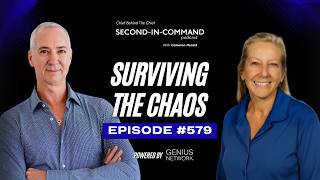
Claudine Rippert, COO of Critical Control Restoration, a disaster-recovery firm, talks about running operations during crises and managing her son Zach, the CEO. She shifted from controlling every detail to delegating, uses monthly clearing sessions to manage emotions, and hires for coachability and self-accountability over credentials.
Chapters
When there are national catastrophes, I think one of the things people don't understand is like you walk in, if you haven't been in a war zone, it is exactly like walking into a war zone. There is nothing, no services, even water is really hard to find. Obviously shelter and hotels are way out there. So basically you're rebuilding everything and creating a core again and again and again as perils start.
Is that good work for you to land as a company, or is it a distraction from your core business, or is it a bit of both?
That's a really good question.
I've All right. Our guest today is a COO Alliance member and a woman that I have coached over the last 12 months. It is Claudine Rippert, who is the COO of a great company based in Northern California called Critical Control Restoration. They focus on catastrophe response to natural disasters. It's, um, and she's actually been building the company with her 3 now adult children. Her CEO is actually her son. She moved her, her son into that CEO role about 2 and a half years ago. She's gonna talk about working inside of a family enterprise. Working in a male-dominated industry, working in an industry that has operations in multiple parts of the states and often does work all over North America. You'll love this episode. We will see you on the inside. Thanks for joining us at the Second Command Podcast. All right, if you're an entrepreneur, you've got to go check out the Genius Network. The Genius Network is for ambitious, giving entrepreneurs who want to be part of the highest level connection group, and it's not just another mastermind. In fact, I have been a Genius Network member for 8 years. Genius Network helps build a better entrepreneur by focusing on health, wealth, and making your business and life more ELF, which stands for easy, lucrative, and fun. Don't apply if you're just a taker, but do apply if you're a giving entrepreneur and you earn at least $1 million or more in revenue. And to see if you qualify, go check out geniusnetwork.com/apply. Again, that's geniusnetwork.com/apply. So Claudine, welcome to the Second in Command Podcast.
Cameron, thank you so much for having me. It's so fun to have you on the other side. Used to seeing you at the Alliance, and of course, you know, you coach me, so I, it's fun to see you on this side of it.
Thank you. I'm looking forward to it for the same reasons. Yeah, I've been able to coach you over the last 12 months and then having you as a CEO Alliance member, I've been able to see you growing as a leader and also seeing your business from a different lens. So I've already had that benefit. Why don't you tell our listeners and viewers, because we have a lot of people watching us on our YouTube channel, why don't you tell us about what Critical Control does as a company, kind of what your focus is. I know that you guys focus mostly in the NorCal area, but you also have a presence in the LA and San Diego areas. But why don't you walk us through what the business does at the core, and then we'll dive in from there.
Yeah, absolutely. Yeah, thank you. So we are, on a day-to-day, we do emergency services. So everything, you know, water, fire, glamorous stuff like sewer backups, you know, biohazard, things like that in the commercial space. And then on disaster recovery, we respond when there are national catastrophes, and that can take us, you know, into various parts of the United States.
So when you're doing the work that you're doing and the restoration work and the disaster work in the markets that you focus on, so like in NorCal and Southern California, you typically have all the subtrades lined up. You've got your workers, your project managers. Curious, how do you respond to that when it's a, when it's a national disaster or something you're being called in on when you're not in those markets? How do you respond to that? How do you control that kind of the unknowns and the chaos and the planning when you're not around that day to day?
Yeah, it's almost— I liken it to starting up a business again because basically you have to have your center brain like decide exactly where it is that you're going to be, uh, setting up shop and what's the safe zone and where is the highest concentration of, uh, damage. And then we are aligning with labor, and usually when there are issues like that, there's an abundance of labor because everything's shut down for a long time. It's economic disruption. And then we're calling in vendors typically from all over the United States. Uh, when there are national catastrophes, I think one of the things people don't understand is like you walk in and if you haven't been in a war zone, it is exactly like walking into a war zone. There is nothing, uh, no services. Even water is really hard to find. Obviously shelter and hotels are way out there. So basically you're rebuilding everything and, and creating accord again and again and again as, as perils start and, um, and yeah.
Is that, is that good work for you to land as a company or is it a distraction from your core business or is it a bit of both?
Yeah, that's a really good question. Uh, I've seen it be both. I've seen it be that, uh, we straddle both when we've been really busy at home. California keeps us pretty busy. And then there'll be something, say, in Texas, the Texas freezes, the ice storms, and, and we'll want to do both. And I think that that's what is really difficult in my position is just really, I've got to anchor the company in stability. And sometimes that means we have to forego additional revenue.
Well, it feels, it's almost like when Jim Collins talks about the concept of the flywheel. That when you focus on something and put all of your energy and all of your effort and all of your focus into that thing, that flywheel starts to kick off. And if Critical Control puts all the focus and energy on NorCal, San Diego, L.A., and really drives it, really, you build up better supplier relationships, better contractor relationships, better word of mouth, better brand. All the systems are really going in the energy. But then if you get super distracted and you're off to some disaster in Texas, you put a bunch of energy and time in there, but the flywheel back in your core market starts to slow down again. So how do you straddle that? How do you, or is it just part of the nature of the beast that, you know, you do that, you take those big wins when they come in and then you, you get back and as grandma said, get back and stick to the knitting.
Right, exactly. Yeah, absolutely. That question reminds me of like when you've told me before about concentric circles. And when you've like built out your businesses, um, I, there are times where we have a surplus and so it's okay for us to go out to say Florida and, you know, handle a dozen buildings. And there are times where we are already stretched thin and of course the, that opportunity is beckoning, but it's kind of grounding my CEO and saying, listen, just this time we have to pass. I think it's anchored in reality. If we stretch our people to the point of breaking or our clients to the point of breaking where we're neglecting one to go chase another or to, you know, undress Peter to dress Paul, then yeah, then we just have essentially just been stat quo. That year we'll have a bleep, but then the following year we'll have paid for what we didn't tend to. In our own garden.
Yeah. Yeah. That, that it's, so there's a great op—
it's really being realistic.
Does the team understand that? Like, is that part of your rationale and reasoning on stuff as well? Like, did the team realize like, oh, this is gonna be good and bad at the same time?
Yeah. We really bring them in. Um, I usually have my, my idea on where I want this, where I wanna land on this, but we usually bring them in. Um, and tie them to being a stakeholder in this decision. It's like, listen, also they're going to have opinions that I don't necessarily see. I'm just not as boots on the ground as they are. So I want them to weigh in. I want them to tie into that decision and be realistic. And sometimes they're— I always think that they're not going to be as overly ambitious, but sometimes they really are. They're like, no, let's go do this. We think we can handle it. We can— this is a solution that I can do for my position. So it's kind of interesting to bring your—
well, when you're letting them be a part of the decision, they're also then part of the planning, right? When they make the decision to go for it, it's easier to delegate because they're already part of it. They're already feeling empowered. You mentioned something about, you know, talking to your CEO. The CEO of your company is your son. You've been running the business. You've been there 13 years building it all. How long has your son Zach been with the organization? And how long has he been in the CEO role?
Yeah, he has been with the organization since the beginning. Started it with me and really started as a family. And yeah, so been there for 13 years. Like, he was doing this in high school. As far as the CEO role, we switched about 2 and a half years ago. I think that he just has an amazing vision. He is just incredibly smart. And also he's that generation where, I don't know, I feel like they just catch on so quickly to things. So, yeah, he's been in that CEO role for probably the last 2 and a half years.
So I want, I want you to speak to something here, which is I grew up in a family business. And up in Canada, there's an organization called CAFE, which is the Canadian Association of Family Enterprise. And one of the things I learned, I spoke at the CAFE event. They brought me in as one of their keynote speakers a few years ago, and I realized that family-run enterprises have both an upside and a downside. There's pros and cons. I won't even tell you what the pros and cons are. I'm sure you're living it day to day. What are some of the pros of working with family and what are some of the cons of working with family? And then I'm going to get you to speak to kind of some of the lessons from both?
Yes, I, I think the pros, definitely the pros. This has been my dream to work with my kids. I, I have wanted to do this my whole entire life, and, um, we always started with little businesses, things like French camps and, you know, lavender production businesses. Um, so a little bit of everything. So I think the pros is Giving them responsibility and seeing them take it on and just, uh, flourish with it and just growing into accountable, responsible adults, uh, that like, or where I weigh in less and less on decisions because they've got this. It's, um, that part has just been absolutely beautiful to see. It's, uh, It's absolutely incredible. And then the very thing that's a pro is also a con. Sometimes there's a lack of understanding and accountability to situations that arise, maybe from an emotional standpoint, not just having that perspective on things. And just getting, you know, really emotionally tied to a situation. And it's very hard for me to come in because then I do, I sound like mom. I sound like, it's always the default is they see me as mom first and their boss or their CEO, their COO late, you know, a second or third or maybe even like more than way down the line. So I've got to run through those filters first. Um, it kind of shortened that, shortened that vision of that tunnel. So it's like, no, we're just talking about the business here. This is, this is not about anything else. Um, one of my favorite sayings that you say is, you know, your 15-year-old self, and that just puts everything in perspective. Like, well, I, I behave like my 15-year-old self sometimes. Um, it's like, oh, she's still there. Um, and so. I don't know. I think it's, it's working through that because, um, yeah, I think we just have this natural tendency to default back to that when things get a little bit, there's a little friction.
Of course, when they get pissed off, they're getting pissed off at mom. And when you're getting pissed off, you're getting pissed off at your teenage son. So how do you draw that boundary? And, and at the same time, I mean, there's so much upside and trust because you are family, but you absolutely know that. You care about each other and love each other, and, and you know you can fight and then still love each other. So, so I know you can lean on that as part of a relationship, but how do you, how do you avoid the whole, you know, frustration? Oh, it's just Mom being Mom, or, you know, that's just so-and-so being the same as he was when he was a kid. Like, how do you, how do you remove your, remove that from the situation? Or can you?
Yeah, we recently started this monthly clearing exercise that is super helpful in taking emotions out of things. And the monthly clearing is about listening, paraphrasing back, and just talking about, I feel. And that has been a huge shift. I didn't grow up that way, and frankly, they didn't grow up that way either, but it's something that was learned very recently and we started employing that. And then what happened with that is that it became this unspoken rule that when we have a disagreement, that becomes our default. Now, this is the new way that we speak to each other most of the time.
Yeah.
Um, but I really love that. It's, it's elevated us, um, emotionally, right? Because when we're defaulting and I'm mom and they're my 15-year-old kid and I'm losing it with them. Um, that's, that's, it's just so destructive. And now that we know that there's this other way of behaving, uh, it, it, the contrast sometimes is so, if I start going down that path or they start going down that path, that contrast is so big. I mean, we know that this, this reality exists. So, um, I think it, it. Props us back into healthy boundaries and healthy ways of speaking to each other, frankly.
Have you heard the statement, yes, and?
So, yes, that from improv.
Yeah, it's exactly from improv. So the situation would be, you know, hey, Zach, you know, you're my son and you know, I'll always love you and we're always going to be family. And what you did last week pissed me off, and this is how it made me feel. But it's kind of like starting the conversation every once in a while and reminding each other that, hey, Mom, you're Mom, you'll always be Mom, you'll— I always love you as Mom, and God, you pissed me off the other day when you did X. Um, do you ever use that, or do you need to? Is it already just so implied that you don't need to remind each other of that?
You know, that's so funny, as I used that when I was what I was taking improv and doing improv for a while. And, um, and Zach uses that sometimes too. But you're right, that's, that's probably something we need to bring back in because yes and is so beautiful because you are not just adding or saying but, which is so negating and, you know, lack of acknowledging. And that's all we want is to be acknowledged. But Saying yes, and is so taking in of everything that that person just said. And then after you've taken that in, then you're giving your opinion or whatever that is. So I really love that. That's a great reminder, actually. Yeah.
I only recently learned that. I was on a CEO trip and I learned it from somebody and she does it very cognizantly and I started catching it. I was like, oh, interesting. I'm allowed to be frustrated with someone on my team as long as they understand that they're safe. And I think it goes back to Maslow's hierarchy of needs, that, that safety and security is the second layer is so important. And if we can underscore a discussion or a frustration we're having with somebody and let them know that still it has to change, but they're still safe and secure. It's what, it's what they did that frustrated us or that isn't working. It's not them as a human, right?
Yeah, I really, really like that. It's a really great reminder. I'm, I'm definitely gonna be using that. Yeah, I, I love it.
Okay, let's go back to the business that you're in. You're operating in an industry that's actually also typically a male industry. You're, you're in the construction industry. It's a bunch of guys throwing hammers and talking dirty. And, um, how do you work in, in an industry there where you're a woman in that industry? Or is that, is that something that, is it a bias that I have from the past that's changed a lot now?
I don't think it's changed a lot. Um, I also just don't let it trip me up. Um, I, I think like everything, like we can see ourselves as outsiders or we can see ourselves as victims and, and such. I think that I acknowledge sometimes where literally though I will be the decision maker in the room and Maybe they won't look at me for, you know, several minutes, but I know it's coming. It's just whatever's going on in the story that they're telling themselves, it just needs to play. It needs to play through. And I feel like they're still hearing me, you know, they still need to happen the way that I probably said it needs to happen. So, um, I definitely don't hold on to it like I did in my 20s in college.
I think it's, I think it also is 2026 now. It's not 1990 anymore, right? Like, we, we really, we've really kind of jumped that shark now where I think it's just more, and it's funny because I thought about, about it and I actually know two women that own construction-related businesses that work in the industry and I don't even think twice about it anymore where maybe 30 years ago I might have, might have seen it differently. I, I certainly don't now. So in building out a, a bus, in building out the business that you've been in and scaling the organization that you've been, what have been some of the challenges that you've had along the way? What are some of the areas that you've had to, um, to really work on or grow from?
Yeah, I would start with me. Uh, I've had to really grow and, and work on me and, um, and really be super honest on my shortcomings. Uh, I think I didn't do that at first. The, the first few years I was so focused on growth and focused on sales. I was selling billing, doing the work, you know, and rinse and repeat. And I forgot to look up and, and say, hey, wait a minute, I— there are things I really need to work on. I think one of my biggest faults at the very beginning is being an enabler. I grew up in a family that was super enabling, and that was definitely my default and go-to. And so I'd hired quite a bit of people that I believed in them more than they believed in themselves. And I was like, it reminded me of foie gras and I was just force-feeding them, you know, you do want this, you can do this. I see your potential. You, you, you can be a leader. And it just, it just wasn't the truth. Um, that was really hard to reconcile. And then if they failed, I totally took it personally and was like, what happened? Like, didn't you see? It's just, um, yeah. So I think I had to fight against that. Um, of course, you know, the fight's not over. It's, uh, I'm way more aware of it and, and I'm really like cognizant of it. But I think that that was number one.
Do you look for something different when you're interviewing now? Is there something, a behavioral trait that you look for or?
Yeah, like, not— definitely, I understand you have to grow somebody, but it's like, how far back do you have to go? What is that gap? So I'm very cognizant, or I'm really looking for, let's just call it, I guess, a shorter gap. Are they a self-starter? Are they coachable? If I say something or if I push back a little bit, are they going to self-sabotage, or do they Yeah. So, you know what I've learned?
I like hiring people that blame themselves for something going wrong first so that that makes them more coachable, right? But if people are always blaming the outside environment, blaming their boss, blaming the economy, blaming a supplier, blaming other employees, they tend to not be as coachable. It's everyone else's fault. And I'm not sure where that trauma comes from, but I love it when people are like, oh, I didn't study enough. I didn't apply myself. I was too distracted. I had too many hobbies. You know, then it's like, if you can, if you can help them and show them that you care about them, they will tend to work on themselves is one thing I kind of look for. Is that, is that stuff that you find in interviews when you're hiring as well?
Completely is like if they start blaming anything on the outside, like, and I'll dig deep on this is one thing that I will double-click, double, triple-click on this. And if I keep hearing it and I see that they're not even getting what I'm talking about. Like, so what was your part in it? Or what did you— lessons learned? I love that question. That actually comes from Who, that Who interviewing style is, um, you know, and so what did you learn from that? Like, what were your lessons learned? And if there's— some people actually literally tell me that there are no lessons that they've learned. And it's like, how am I going to be able to have a discussion with you? Um, because that you mess up, that's, that's going to happen. That is absolutely literal. It's going to happen multiple times. It's going to happen. And if we talk about it and you're accepting responsibility, we've got a starting point. There's no starting point with somebody that's saying, you know what, it was all out here. It's just like, where do I go with that? There's really not a conversation to be had.
So, um, I love that you referenced the book Who by Jeff Smart. Uh, he's one of our prior speakers for our CEO Alliance. If you haven't watched his speaking event, by the way, it's in the Member Circle community. It's a great, great event by Jeff Smart on all of the areas that he talked about and who I learned that whole kind of section of interviewing from when I was at College Pro Painters and they only wanted franchisees who blamed themselves for going— something going wrong because we would dig in harder and be more tenacious and work harder. But if a franchisee was blaming other things, they were almost destined to fail, right? It was the franchisees that blamed themselves and they could turn to the franchisor for help and support. But those were the ones that were more tenacious and would dig in a little bit. What about your growth as a leader? How have you had to grow? What have you worked on to get stronger in your leadership skills and your journey?
Yeah, number one, I think, is less frustration. Like, I'm, I'm over— I'm so, so optimistic all the time. And so when things don't work exactly well, I'm optimistic and I'm a control freak. So it's It's a little bit— those are two hard combinations. But when things don't work exactly as planned, being able to let go and understand that it's not about all the details and how I just controlling the whole entire journey and just letting go and letting it be. We're still going to get there. It's still going to happen. And letting somebody have a different way of, of doing things. Um, so one of the ways that I, I started letting go, because that became very obvious to me, it was like, wow, I am really a pain in the butt here. Um, and, and I've got to let people grow and let them feel empowered and not ask for all the details. But I just, I realized that what I needed was self— like, I just needed some assurance. This was my baby. I started this. And letting go was doubly hard. So I would just ask people, so, okay, so we're going to get to this. We're all agreeing that this is the outcome. Um, okay. And we're all agreeing that this is the reason why and the purpose and them having just a basic plan that I just knew I needed to know that they have thought it out and that they could actually carry the water. Okay. So you're going to, you're going to be able to carry this up the hill. Okay, I got it. And little by little, I started unwinding, uh, on, on that. I was so extremely caught up in all the, the very minutious details, which is super helpful when you're first starting, right? Like, okay, I want the uniforms crisp. I want, you know, the pants like pleated. I want the, uh, you know, the trucks clean and, um, everybody showing up with a smile and saying hello. Like all of that is great. It's in place. And then I need to let somebody else handle some of those details.
Well, and some of the details are important and some of the details are critical. And I think it's about looking for which are the critical few details to worry about and let the important many take care of themselves. I remember years ago I had a franchisee at 1-800-GOT-JUNK? say to me, Cameron, you major in the minors. And I said, what do you mean? He said, you're so obsessed about all the tiny little details that you're missing the big picture. And I said, okay, I need an example. He said, you're so focused on the email signature being correct. But he said, do you know that you've got 100 franchisees right now and none of them have a marketing calendar? None of them have a marketing plan. None of them have a marketing budget in place. If you would focus on that, you'd get way more revenue than making sure our email signature is correct. And I was like, fuck, you're so right. Like sometimes those critical few things aren't the important many that I tend to get focused on obsessing about. And you're right that the pleats in the pants, probably not as important as are they in a uniform and are the trucks clean? Those are probably two, you know what I mean? There's little things that are less important and there's some that are critically important, like did they show up on time and do they wow the customer and do they handle objections well and do they treat each other nicely? Do they clean up the job sites? The rest of it, the rest of it was kind of like important, but not that critical.
Right. Exactly. You're right. And it's just like, like, how do I get up just a few rungs higher? And also just be able to like keep an eye on where the hell are we headed? You know? Yeah.
Now you're building a business where your employees are people that you don't see every day. And some of your employees you rarely see because they're on job sites or they're you know, in different cities. How do you manage, you know, teams like that that are so remote and are so distributed? How do you ensure that things like core values are being delivered on and that promises to customers are being delivered on? And then how do you make sure that these employees who are remote feel connected to a company where, you know, the head office is in a different part of the state?
Right. Yeah, that's such a good question. So I am like, you know, a few couple rungs away from boots on the ground for sure. But I do end up picking up the phone for, you know, little things. As a matter of fact, I did this today with 3 or 4 employees. I definitely let their direct reports know that I'm going to be calling them. But I want to weigh in on a couple of— I want them to weigh in on a couple of things. I just want to get an update. I love taking the tempo on somebody and just feeling the temperature and just thinking like, okay, where are they in their headspace? And, you know, do they need a cheerleader? I'm a pretty good cheerleader. Still have my pom-poms. But you— yeah, I just— I love that interaction. That's the part of the job really that makes me feel good is when I'm picking up the phone and I know for a fact that My person in Kansas, uh, just closed, you know, 3 jobs over the weekend that we got for emergency services. And she's awesome. We're thanking her for— she made a bunch of jams for me and I'm thanking her for her jams. Or I take pictures of, of eating her jam at breakfast. Hey, I'm having breakfast with Brandy today. Uh, your jam's awesome. I, um, I, I love that part of it. It's that, that feels really. Really good to me.
I want to ask you about all the sub-trades that you work with. You as an organization, Critical Control, you have to hire electricians and plumbers and roofers and like all different trades. They don't work full-time for you. A lot of these people are subcontractors that you have to hire companies to then deliver on that part of the work. How do you interview and hire, or how do you select subcontractors Do you follow the systems from WHO? Have you created similar systems that, that you use for that? Or do you just hire somebody that's got a lot of Google reviews? Like how, what's your process for that?
Yeah, so totally. I definitely, we use the, the same WHO process that we do for, um, hiring. To us, it's an extension. Are they gonna make the job easier for us or harder? And also, are they gonna, you know, represent us, you know, and, and, and our reputation? Um, where in the past I learned this the hard way where I did not I let, I hired a paint, we hired a painter and we did not interview him and his skills and his team. And, um, I don't even think we set eyes on them and they were wandering through one of the 5-star hotels that we handle and knocking on doors to find the room that they were supposed to be painting. And it was just like, um, yeah, I mean, that was a hard lesson. We, We got our, yeah, we, we, we got our hands slapped big time on that. And I thought, oh my God, what the hell? What are we doing? This isn't about speed all the time. It's about making sure that whoever shows up represents us through and through. So now, yeah, we sit across from them. We go to their office. We want to know who gives us updates and then who's the backup to that. It's almost like there has to be even more overlap. Than the people that, you know, that are part of our team where we have a little bit more, maybe sometimes it's a semblance of control, but there we're removed really at arm's length or sometimes it's state length. So I think it becomes even more important.
Well, I think that's true for, you know, any company that's hiring subcontractors, whether you're hiring a marketing agency or an email marketing company or a law firm or an accounting firm, it's really important to get those subcontractors or freelancers or fractional people to understand your core values and your core purpose and your vivid vision and really to kind of indoctrinate them in part of your culture because they are that arm's length extension of you with the customer, right? They're the ones, and at the end of the day, the customer doesn't care if they're a subtrader or not. They hired you. They're going to paint you with the good or the bad brush, right?
Yeah, completely. And, and, you know, uh, part of that is elevating them as like, I remember sharing a vivid vision with, um, it was a, uh, industrial hygienist company, uh, cause we've got a test for, for after we're done. And, um, I remember him sitting across from me and he was like, oh my God, like how, what did you, how did you put this vivid vision thing together? What is that about? And he was so into it. We were like, we've also had people that are like, wait, what? I'm completely disconnected. I have no idea where you're going with this, but, um, this guy was just like so into it and he was just like, oh my gosh, this is amazing. I have total clarity on, on, on everything that you're doing and what you're about. And, uh, I think there was something tangible there for him to embody. And, um, like it was totally like, like a really amazing overlap of, of handling, handing the baton.
Well, they realize they're not just, they're not just doing their XYZ or, or being a customer for the money. Like there's, they're part of a greater your purpose. They're part of, you know, yeah, you know, Apple, Apple doesn't just make an iPhone and a MacBook. They create these insanely great products that challenge the status quo and change the human race. So like people that are doing something like that's their, their kind of ethos of why they do what they do, right? So I think there's something, there's certainly something in there for that as well. What are you focusing on now? You guys are in a back into another growth year or rebuild year in many ways.
Yep. We're in, uh, this is definitely a growth year. So, um, again, opened up in Southern California and, um, just growing that, that market as well. There's a lot of, um, symbiotic relationships between Northern California and Southern California, especially in like assisted living, nonprofit housing spaces. Um, also REITs groups. So everything institutional real estate, a lot of times they'll They'll own the whole segment from Northern California to Southern California. So we thought it would be really cool to, to tag team both of those.
What percentage of your, what percentage of your work is paid by the customer and what percent is paid by insurance companies?
Yeah, that's such a tricky question because really it's, it, the contract, it's whoever signs the contract is our customer. So any issues, any kind of legal matters that goes to the, you know, to actually end the end user, the customer, the real estate company, and whatever that is. However, and I would say, and there's depending on the size of the claim. So when insurance, not insurance doesn't always get involved. If they get involved, still the check comes from you know, the customer.
Okay.
But we're relaying pretty much daily with the insurance adjuster who is then relaying with the carrier.
Do you get work? Do you get work from the insurance adjusters, insurance agencies directly, or do you get most of the work, you know, most of the work from the clients?
Most of the work from the clients. Yeah. There are program works that I— we really feel like that's a conflict of interest, so we don't do that. We want to keep ourselves just a little bit of, you know, have a little bit of space between ourselves and the carrier. So, everything we get—
Is program work meaning that you're on some insurance carrier's program and they will direct? That's similar to when we were in the auto body industry, when we were building out what's now called Gerber Auto Collision in the US, it was Boyd Auto Body in Canada. We were on what was called direct repair programs and the insurance company would tell the customer to get their car repaired at our shop and then we gave the insurance company a discounted rate and better treatment. It wasn't often great work we were getting because we were having to give away some of our gross margin right away. We often would have rather had customers coming to us directly. So, it was a— we didn't feel as much of a conflict of interest, but we just, we didn't think it was that profitable. Does the insurance industry do the same thing to you and your industry?
Completely. We tried that for about 5 weeks. So we, it took us 4 months to get on the program, set ourselves up because there was systems and processes and ways to show documentation. And then when we were looking at the bills and we're like, wait a minute, where is this going? Nowhere fast. So we stopped it immediately. Yeah, it was exactly the same situation.
We've seen a lot of that. We actually got better work from the tow truck drivers than we did from the insurance company. Because the tow truck drivers, the tow truck drivers would see the car accident and they would say, hey, we've got a good relationship with this auto body shop. And the customer's like, that sounds great, take me there. But they'd heard about us on radio and seen us in, you know, in our ads. But yeah, the tow truck driver was a good referral source. And then we would just slip the driver, you know, a few hundred bucks for every car that they dropped off. And the driver would think that was better.
So that's awesome. That's super creative marketing. I love that.
Where do you get, where do you get your referrals from? Are there people in industries that you get yours from as well?
Yeah, we'll get referrals from brokers. So insurance brokers that will sign up the client and eventually if there is a claim, a lot of times they, if they've got a really good relationship with their broker, they'll actually call their broker before they call the carrier for, you know, to report a claim. Because if they, if they go directly to the carrier, the carrier oftentimes wants to push somebody who's on program work. And so, and the broker wants repeat business and knows that, you know, 30% of claims that go wrong equal a non-renewal for them. So they will, they'll give us a call and say, hey, you know, get Critical Control on there and let me introduce you.
What about the subtrades? Like, do your electricians and plumbers and stuff come to you? Oh, hey, we found a big restoration job. Like, make sure we do the plumbing. Like, do you get work from them at all, or is— or do they even bump into it?
We don't— a little bit. We've gotten a little bit from plumbers. But I think that in our market, it's been very— that's super tapped.
Yeah.
It's, it's been really, really saturated.
Well, and they're so focused on growing their own business, they're not gonna be out there marketing for yours. So—
Yeah. Right. Completely.
Last thing I wanna ask about is taking care of your employees. I've always believed that the number one metric inside of every company is our employee net promoter score. Or it's how happy are my employees. How do you make sure that you take care of your people that are out in the field? Do you have any systems or processes to make sure that your home office employees are taken care of, but also the people out in the field? And then do you do anything with your employees of sub-trades to make them feel loved and part of the organization?
Yeah, we, um, we definitely did a Net Promoter Score for our employees. I think it was starting a year before last. And because we really wanted to see, we got some feedback. Some people are super happy and some people not so happy. And that's a pill to swallow. And so we looked at it, but we were dedicated to making things good all around for everybody.
So that may be a system we can talk about next time or at our next CEO Alliance event as well as I think there's a huge opportunity to make it a big strategic focus on, especially when you're dealing with employees of sub-trades, is how do we make them feel loved and cared for and a part of the brand so that we're all kind of in this? Because then that positive momentum creates momentum.
Yes, completely. Absolutely. It's definitely something like that part with the sub-trades is something that we, we, yeah, we don't have, it's not tight. Like, of course we know them or whatever, like we haven't, we're having conversations, but we should really be soliciting their input. We, we really should.
Um, so I want you to go back to the 22-year-old Claudine. You're just packing away your pom-poms. You're getting ready to start on your business career. What advice would you give the, the younger Claudine that you know to be true today, but you wish you'd known when you were younger?
I would say let, just letting go a little bit, just letting go a little bit. Um, reinstalling trust that, that everything's okay. You don't have to carry everything. I, I feel like that's really what that equals, is, uh, this control is just feeling like there's just— there's a lack of trust that if I don't do it, it can't get done. Well, it's just so not true. Um, so I probably just sit her down and just say, hey, listen, um, just surround yourself with the right people. You know who the right people are. And, uh, just you can, you can trust them to carry that, carry the water for you.
I learned that when I was at a, a dude ranch about 10 years ago riding horses. And I, the instructor told me to let go of the reins a little bit. Like I was, I was holding the rein. They're like, you basically have the parking brake on the horse. Like let it go. Like let it be nice and loose so the horse knows it can run if you, and then if you need to, you can pull back a little bit, but just loosen up a little bit, let go a little bit and they'll go faster. I was like, all right, good lesson.
I love that. Yeah. Sometimes you're stopping. I've definitely been in positions where I've stopped myself from achieving the very thing that I've had my eye on and I'm trying to get to. And I, yeah, getting caught up in all these little things and controlling all these little balls.
Well, you're doing, you're doing a great job. We've had, uh, Claudine Ruppert, who's the COO and co-founder of Critical Control Restoration. Claudine, thanks so much for sharing with us on the Second Command Podcast.
Thank you so much, Cameron Herold. Such an honor to be here. I really appreciate it.
Yeah, I appreciate the time today. Thank you.
More from Cameron

Flutterwave Former Global Head of Operations Awa Kone | When Growth Outruns Operations (Podcast 611)







Optomi Professional Services COO Nick Murphy | The COO Can’t Know Everything (Podcast 607)


