Disrupting the $500B Home Services Industry | Christopher Ager, COO TaskRabbit (Podcast 434)
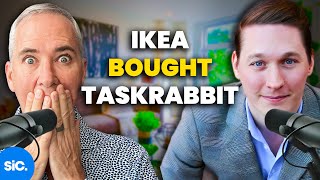
Christopher Ager, TaskRabbit's Chief Commercial Officer, discusses how the marketplace grew from a Craigslist-like platform into a structured service network across 55 categories in eight countries. The IKEA acquisition in 2018 brought SKU-level pricing integration, while the company now focuses on supply density, European expansion, and a shift from remote-first to hybrid offices in London, San Francisco, and Philadelphia.
Chapters
The first that I'm working on is being a better prioritizer of work. I think like, like many operators, I try to be really ambitious and I have an issue seeing things that are not done right. A second one for me that I'm always working on is consistency and then I would say the third, which is a personal thing, is just managing work life integration.
All right. Our guest today is TaskRabbit's chief commercial officer, Christopher Egger. I have known of TaskRabbit and been enamored with his brand for years. Christopher brings the commercial teams at TaskRabbit across marketing operations and partnerships. All together, he brings in 15 years of deep technology and marketplace experience as well as a passion for the home services industry. TaskRabbit's teams are spread over eight different countries and Christopher is going to talk about how he approaches managing such a complex organization, which is really kind of a two sided marketplace as well, having to deal with the customer side and also making sure they have enough suppliers on their platform. Christopher's a seasoned leader in complex marketplaces and brings together data oriented teams to scale businesses while maintaining operational excellence. You're going to love this conversation. You can also watch this conversation on our second in command podcast YouTube channel. We'll see you on the inside. So Christopher, welcome to the Second in Command podcast.
Brilliant. Thank you. Thank you for having me.
Yeah, looking forward to this. I have been a fan of TaskRabbit for years and I've been curious about the inside workings of the company. So love to be able to learn a little bit from you about how you're running the organization, what the organization is like. So why don't you just start us off by even telling people what TaskRabbit is?
TaskRabbit is a business that has been around for some time, but when I describe the business, I really describe it as a two sided marketplace for home services. We cover sort of the set of categories that you would think about as sort of handy person. Activities ranging from things like mounting furniture, assembly, painting, cleaning, etc. But operate in 55 categories and a few hundred markets in eight countries. And our focus is really sort of connecting skilled taskers, the people that do the work on the platform with our clients to solve problems they have at home. Right. And it's been a business that has been around for a while. It was started in 2008, I want to say as one of the first gig economy marketplaces, but it's really sort of only in the last few years that I think one we've really started running it as a marketplace and really spending a lot of time on matching and pricing and trying to sort of do a better job of connecting both sides of our marketplace. And really that we've honed in on sort of home services as the set of categories that we really want to play and do really well in.
Interesting. Now, what do you mean that you've kind of decided now that it's a marketplace, what would it have been before?
Yeah. So when. When I describe sort of, let's call it TaskRabbit version one to people, I sort of describe it as like Craigslist with faces. Right. You would. You would come in, you would search for a set of problems you had, and you would be met with this, like, long list of people. They'd each have a picture of them and a description of their skillset, but then you would do most of the negotiating individually with that person. And so what that meant is, as a client, it was often quite difficult to find the specific set of skills or tools that you were looking for. And over the past few years, what we've really invested our time and our technology in is really starting to make that a lot easier for our clients and our taskers. And so what that means is we've stepped quite a bit more into sort of scoping jobs for clients, really getting into the depth of trying to provide influence and guidance to our taskers on pricing levels. And we've started to build a set of more structured booking flows that we can do things like pull price certainty up front in the transaction rather than have that be something that happens fully at the back end.
That's interesting. I remember kind of going back even 10 years before TaskRabbit started. I was living in Seattle at the time, and it was kind of the height of the dot com era. And I was using a company called MyLacky.com and it was basically an errand service. Go and pick up my dry cleaning and can you take my car into the car dealership and get a windshield wiper blade changed? Was that kind of the genesis of TaskRabbit as well? And did you migrate from tasks into, I guess, kind of, as you're mentioning, more of the stuff around the home, more of the. The repair work and renovation work?
Yeah. So I would say that the genesis of TaskRabbit was very much around sort of like, errands. Right. That was the start of the business. And I think a lot of the awareness we have in some of our markets is like, what TaskRabbit really was doing 10 years ago, which was you, you hired somebody to wait in line for you for a new iPhone release. And while those types of activities still happen on the platform, one of the great things about the platform is we have a lot of interesting tasks that happen I would say more and more of our focus has, has sort of oriented around tasks around the home. Right. Task force helping out with pretty common home service needs. Right. Like we, we do not spend a lot of time on, let's call it multi day license services like replacing your H vac system. But given that this is the thing that people tend to come back to TaskRabbit for frequently it's been an area that's gotten more and more investment over time.
What would a couple be around the home? What would a couple examples of tasks be? Would it be like coming to rake the lawn and clean the gutters or would it be inside the place, clean up the home before. Like I don't imagine you're doing cleaning. Like do you get into the services that there's I guess product niche services already? Like if there's a maid service, you probably don't do that.
Yeah. So I would say what we try to do is the umbrella of sort of handy person services around the home. And so like we operate in cleaning. We don't have. It's not our biggest category but we really sort of specialize and I think a lot of like the cleaning bookings for example that happen on our platform are like end of tenancy cleaning. Right. Somebody's moving out, they one time clean. They're looking for somebody with a little bit more specialized skill set. And we'll start apply to that. But to give you a few examples, like the last few things that I've used TaskRabbit for are I had a new TV mounted on my wall. Right. Tasker recommended a TV. Map it all up. I've had a few cleaning tasks. I had a tasker to come and sort of spread mulch in all of my flower beds. I had a tasker come to remove. I have these old fence poles in the back of my yard and found somebody in our yard work category that could do that and sort of take them to the dump.
Yeah.
And so it's a pretty broad range. You know we're in, we're in 55 categories but we've really started to try to build density of skill sets in, in those areas around the home.
But you're not getting into like paint my fence kind of stuff or are you, does it venture into that Area as well. Certainly, certainly skilled surface.
Yeah. Our set of taskers, we, we aren't focused on let's say licensed services. Okay. We are focused on skilled taskers. And what we, we do is we allow our taskers to create sort of a profile to show off all of their skill sets, photos and then all the reviews that they've had. And so as an example, I found a really great painter on, on TaskRabbit to paint my, my son's room. We painted it about nine months ago and he did an amazing job. Right. And it's, it's a place where people really go to be able to like find people with those more niche skill sets. But we try to build density around the areas where there's the greatest frequency.
And it's interesting, I understand the whole necessity for having some price certainty as well. I was the CEO of a company called 1-800-got- Junk. And we scaled that organization across multiple cities, states, countries. And that was something the customer was really looking for was how much is it going to cost to get all this taken away? We're like, well, we can't even see it. Like, I don't know how much junk you've got. But if you can estimate how much of our truck it would be, we can give you a range based on what it might be. Right. You mentioned it's a two sided marketplace. So what's the second side? So the first side is clearly finding all of those. I guess the second side is finding the clients for them, Right?
Yeah, indeed. So we think about sort of the two sides of our marketplaces. One, our taskers. Our taskers are certainly the side of the marketplace where we see the highest retention. Right. Many of our taskers have been with us for years and, and do hundreds of hundreds of tasks a year on the platform. Then the second side is really how we aggregate demand for our clients on the platform, which we predominantly do through two ways. One is most of the business today is direct to consumer. So we spend time acquiring consumers who have different problems around the home. And then quite a lot of our business is driven by repeat usage clients that have used us before. The vast majority of our bookings come from people that have used TaskRabbit before. And then we also have, though it's newer to the business, a partnership side where we work with partners that have clients that might have home services needs. The biggest, of course, is ikea, the business that owns us, where we help them with all their furniture assembly needs in the country we operate in. When did that acquisition Happen it was in 2018.
Okay, is that kind of like a Best Buy geek squad relationship where you're still very much standalone brand? And it. Was it a strategic partnership for them because all their stuff comes in a box and no one knows how to set it up. It's like alt Lego.
Yeah, yeah. So it is like that. We. So we operate fully independently though we spend a decent amount of time with our friends from Ikea. I would say that the reason for the acquisition on the IKEA side I think about is twofold. So the first was it solved a very specific need for them, which is they have this problem called furniture assembly, which is all of their furniture packed. And it turns out that some people don't want to spend the time building that furniture. And they had struggled with furniture assembly for years and had been working with TaskRabbit and a few smaller Geos. And we're finding that like, hey, we had experts who are doing a great job at doing this, helping customers buy more furniture. Can we actually like purchase that capability? So it's been the basis of our partnership is we've sort of scaled with them to do furniture assembly in a fully integrated experience, which has been really amazing. And then I'd like to say, I think the second reason is that when you talk to the folks at Ikea, I really think that they believe that their next phase of growth is sort of services around the home, not only selling furnishings. And so for that, that means things like solar and financing, but also home services. And we've been able to work together and sort of think about what that looks like over the next many years.
Interesting. All right, so in terms of the two sided marketplace, I remember chatting with one of the founders of Uber in the early days and he was saying that one of the things that they did was they paid limo drivers, I think it was $300 a day to literally sit in their car eight hours a day just in case someone wanted to book them so that there was like availability. Like, wow, there's actually a limo. Like, that's amazing. So they lost money on all these cars just sitting there. Do you do something similar or has TaskRabbit done something similar situationally or city by city to have maybe market a certain service and have the supply side ready. Do you do anything like that or is there a necessity?
Yeah, so I mean, certainly we don't have the incentives budget that that Uber had. I think about this all the time. Right. Our, our business is a local services marketplace and to consumers it's only as Valuable as the quality of our taskers within what's called a 10 mile radius of where you live. And, and so that means when we expand, whether it's to new GEOs and countries we already serve or to new countries, a lot of our early focus is in getting the right depth and quality of taskers in those markets. And so I'll give you an example. We have expanded, we operate in six countries in Europe and we launched their Ikea first. Right. We launched with our Ikea assembly service and I think the thinking at the time was we'll build up supply with Ikea taskers, demand will follow, the rest of the business will just come along and largely that's turned out not to be true. Right. You actually need to build density for people to be able to want to use your service. And so about a year ago we really sort of retrenched our operations there and took a more focused view on where we wanted to build density in our general marketplace in some of the biggest capitals in continental Europe. And what that's really meant is building a GM type organizational structure in Europe really sort of focused on like local expertise. And then we've spent a ton of time and money building out a deep tasker supply so that when we do do marketing and we do acquire customers, we have the conversion that really makes sense for the business. The business all starts with having the right depth of tasker quality and supply.
Where do you find them? Like is it cold calling people off of Home Depot? Is it like recruiting like job ads where you're recruiting kind of freelance people and saying hey we, we kind of want to hire you, but not really. We just want you to be like how do you go about it?
Yeah. So I, I would say in our early stage markets there's definitely those sort of tactics. Right. The way I talk to the team about it is if you think about any one of our categories, let's take painting as an example. In order for our business to be really viable, we don't need a thousand painters, we need 15 really amazing ones. And so you can go and find those people off job boards. You can find them in, in many different areas I would say as the business starts to scale. And you think about as an example where we are in North America, we have an amazing depth of demand to join the platform, which is amazing. We get so much organic traffic for people looking to sort of earn in creative and flexible ways that we mostly don't have to do sort of outbound acquisition in our more mature markets. A lot of Our effort then is really sort of figuring out, okay, how do we make sure that we're bringing on the quality taskers with the right skill sets such that they're able to find really compelling sort of work opportunities on the platform.
And I haven't admittedly been on the site in a few years since I was back living in the US years ago. And a two sided marketplace where a consumer is posting kind of a job like, hey, I need somebody to come and get this furniture done. And then somebody's going to see that. Is that how it's working now as well?
Yeah. So basically have two models in the platform. So our traditional model, which we call our general marketplace, a client will come in, describe a job that they want and enter a category. They'll see a list of taskers with skill sets and they'll get to reach out individually to the tasker they want to work with and sort of that tasker can say, hey, yes, I have the skill sets, I'm available, I can do this. Or they can say no, in which case we'll sort of route them to second or a third choice so that they can find someone to work with that is still most of the business in some of our partnership. And more structured categories. We're moving towards a world in that like we're asking somebody to answer a few more questions about the job they're looking to get done, such that we can automatically match them with the right tasker for them. So we're sort of stepping in and playing more of a role in matching such that it removes some of the cognitive overload of trying to decide from a list of 25 people that might or might not have the right skillset?
Yeah, you're making a little bit easier. And is the algorithm doing that or is this like throwing bodies at it and offshoring labor at it?
No, no, that we, that is all, all algorithms doing it that we're constantly working on to improve. But the best example of this is if you sort of look at our business with Ikea now we have different pricing for every single sku. So every item that they have. So you can see no matter what piece of furniture you're picking out, it can be $32 or $85. You can go through, build a cart, exactly what you'll pay, and then we'll go through and do the work to like work around the schedule you're looking for and invite the right tasker to that job.
Are they willing to lose money on some of these services because they know they're going to make it on the lifetime value of the customer.
Yeah. So what I would say is we're on pricing. We're always sort of working with each of our customers on pricing. The thing that has been really true is that we've shown, particularly as we've been able to integrate with the Ikea business, that offering assembly allows them to sell more furniture. Basket sizes go up pretty dramatically. And so the ROI for them and sort of providing a really integrated and seamless experience is pretty compelling, which gives us latitudes and how we can think about doing pricing. And one of the things we're investing in this year is building a more robust external partner platform to go and sort of work with a whole different set of partners. And that's sort of the basis of a lot of our conversations with them is that it isn't just about offering services to your customers. It's really thinking about what are the things you can offer to your customers that are going to make it easier for them to make the purchase. Right. You don't have to assembly if you don't have to deal with mounting to buy. And in many cases the answer is yes.
I was just thinking about Airbnb and VRBO in terms of even leveraging both sides of their marketplace. I've stayed in, my wife and I have been nomads for the last 39 months. We stayed in about 120 Airbnbs in the last three years. And every Airbnb, I'm sure there's something that not everyone, but quite frequently if there's no ironing board or something breaks or and the Airbnb host has to somehow get something to us and then the flip side is we get there, but we need somewhere to store bags or we need someone who can find us a couple of places. Do you do kind of that like concierge services at all, like helping people find things or is it more tasky where you're more hands on task?
I am assuming that customers use the platform in that way. That's one of the nice things about having really broad set of categories. I would say a market that we really think is interesting is sort of short term rentals. In really thinking about how we help Airbnb owners, as an example, find skill sets for help around the home. Right. If you, you own a short term rental, every time something goes wrong, if a shower stops working or something breaks like you are losing real revenue. And we've seen a lot of those people use the TaskRabber platform pretty intensively to find somebody on short notice to help fix those things.
Right.
Because it means unblocking bookings for them. And so that happens to be like a decent size of our sort of consumer focused business. But it's not one that we've really sort of structured a formal program against as of yet.
Interesting talk about the multiple countries you said. I think you said you're operating in six countries outside of North America or outside of the US and Canada. What's it like doing business in those countries? What have you learned doing business globally?
Yeah, so we operate in the U.S. canada, the U.K. and five continental European markets. I would say we're always learning. There's something new every day. I think we learn about operating what is truly a global business. If I had to summarize, there are a couple of things that would stand out to me. The first is I think in thinking about how to do well in operating a global business, you really have to think about everything you build through a global lens. Over the last couple years, we've really started to spend a lot more energy across our product, our marketing, our operations functions, thinking about how we don't just launch something with a US lens on it and then export it to our other countries, because for the most part that's not going to work. We really have to think about like, what is the common denominator across our global marketplaces, how do we build to that and then build in the ability to have a little bit more flexibility in how our product works, in how our brand is perceived, such that we can give more autonomy to the local teams to really do the localization work required to do really good. So that's like a big change in how we operate. And I think one of the most important things, we're still not great at it, but it's been, it's been an important evolution for the business. And then the second thing I would say is really sort of leaning on the local teams to make most of the operating decisions in how the business works. Just because the way our customers on both sides think about home services in our different countries is pretty dramatically different. If you look at, I'll give you a quick example, German customers versus Spanish customers related to home services. Expectations are wildly different. Right. Germany is a market where there's a strong DIY ethos. Trust is everything. Price is important, but not nearly as much as some of the other things. Whereas in Spain, I would say there's much more of a culture around bringing in people for help around the home. Price becomes way more important. Frequency is much higher. And so when you start to think about how those things change the way the marketplace is operating, you have to be able to empower your local leaders to be making changes to how the business operates, how you talk about the brand, because otherwise you're going to come in with this message that just isn't going to resonate at all. And so we've really tried to like push more and more decision making down to the local leaders, which is something we're always sort of calibrating around.
Interesting. Yeah, you got to show up on time in Germany too. What about the marketing and sales side? Is the marketing done centrally or is the marketing done in each region under the general manager? Like do you have marketing teams for Germany, etc. That are based there or that are kind of German centric?
The way we're structured today is we have a global marketing team, right? Yeah. I think about them as working on a lot of like the pipes. Right. How do we think about our different channels? How do we think about our brand voice? And then we increasingly are building local marketing teams that do a lot of sort of the local execution. So in Germany and France, we have local marketing experts that are working on what are the right channels for this market, what's the right brand message, what's the right way to go and actually go to market, such that they're using some of the toolkits that we're building globally, but have a lot of autonomy to go and execute in their own sort of localized way. That has been a big change over the last couple years and I think we're still working on getting it perfect if that is a thing you can ever get to in a business. But that's been a really helpful evolution in sort of how we think about empowerment for the teams while keeping some degree of umbrella around things like our brand image and how we talk about the brand brand.
Interesting. My guess is that 80 or 85% of your customers would be women in terms of like taking care of the house, household chores. Is that a, a 1980s mentality versus the the truth or where, where do you lie in terms of percentage or do you know about that?
We're constantly doing work on segments and like, what are the right segments to go out and target, both based on how the business operates today and then how we want it to operate. It is true that the customers on the platform skew slightly female, but not nearly 80%. Right. It's just over half. You know, we actually, we have a pretty broad range. I would say our, our biggest core Segment would be sort of urban, busy consumers that are really looking to turn to home services to sort of give them time back.
Yeah, right.
That's time that they could spend. Many of the services we do, you could probably do yourself with the right amount of watching YouTube and going and buying tools. But it's people that are really looking to sort of trade some of that work for more time with their family, with their career, and thinking about how they prioritize the life they're. They're looking to build.
Yeah, I guess my, my data points are going back 20 to 17 years and then even going back further. I was with an organization called College Pro Painters back in the 80s and early 90s and that was absolutely was 80% of the of it was women. The guy thought he was making a decision. But. But again, that was 30 years ago. Right. So it was a different, different landscape in terms of taking care of the home. And then even 1, 800 got junk was really 17 to 24 years ago that I was there. I started in October 2000. So.
Okay.
Yeah, Again, very different landscape.
Right.
In terms of who's taking care of the home or taking care of her parents homes. Talk to me about you. Kind of. I think you came into the business just as Covid was ending or was it. Where was Covid? Kind of already over and doors were open.
So I, I came into the business in sort of mid-2022. And so I think Covid was, was over, but I think there was still some Covid hangover.
What some of the hangover, what some of the issues were that the company had to deal with during COVID What.
I would say is Covid was an interesting time in home services because initially Covid was really challenging for taxrabit. And most home service businesses in, you know, the early part of 2020 effectively ground to a halt. Right. People were very nervous about having people in their homes. And so the business really, really pulled back. Now, in let's call 2021, 2022, we actually saw the opposite of that as people got more and more confident that they could have people in their home. And as you think about our business, we are really indexed at a macro level to moves. Right. The more people move, the more they need things around the home. If you're comfortable in your setup and everything's working well, you're going to need less home services than somebody that's moving to a new apartment or a new house. And so a combination of sort of the high rate of moving in the late Covid period and Low interest rates meant that we were busier than ever. We saw a ton of growth in that period because people were really looking for good ways to get things done, particularly when the rest of sort of, let's call it more traditional home services were overwhelmed and super busy as well. The other thing that I think was really helpful for the business and in sort of the late Covid period is we saw, particularly in the US Market, a lot of people move from big dense urban centers like New York and San Francisco and L A really, where I would say TaskRabbit does exceptionally well to a lot of smaller North American metros. Yeah, Charlotte, your Tampa. And as a result, both our taskers and our clients move to those new markets. And we saw actually a lot of newer markets really start to shoot up for us as we started to sort of pollinate those. Those markets with people that had used the business before. The tailwinds of that are still happening where if you look at the business today from a geographical footprint, we're much more dispersed than we were pre Covid, where we are still pretty majorly to the big North American cities.
What's TaskRabbit's policy or thoughts currently around the work from home versus in office? What are you. Where are you guys drawing the line? Or how are you starting to approach that now? As I guess things are changing. You're hearing reading in the news about it.
So today and during COVID TaskRabbit went fully remote. And so today I want to say we have people in 36 states in the US and some people in Canada and then all of our European markets. And for the last basically three to four years, we haven't had an office at all and have operated fully remote. We have just made the decision and started talking about how we are going to have offices again. And the way that we sort of approach that is we. We still want to maintain our remote first culture. There's a ton of things about it that have served the business really well. But as we're thinking about hiring for the next phase of the business's growth, we are going to concentrate hiring in a few markets where we want to build an office. And we're going to build an office in San Francisco and in Philadelphia. And we actually just opened an office in London where most of our European team live. And the goal of that is really to have a place that people can come in a couple of days a week, do the really sort of intense collaboration work. But the intention is not for people to come back to the office. Five Days a week. We really want more of sort of like a cultural meeting point for the stuff that I have found tends to be a little bit more difficult to do fully remotely. Things like creative problem solving. It's just difficult to get the right juices flowing with groups of people.
Well, I mean, I did a call with my team yesterday and I got off the call and realized, like, there's a guy who's on the call that I won't see again until next Monday. Like, I literally see him for like the 45 minutes a week and just seems weird. He's been with me for seven years and I just. 45 minutes a week, I don't get to bump into him, I don't get to go for coffee. There's no lunch discussion. It just feels like something's missing. How do you know whether the stuff that's missing is critical? And how are you. Is that kind of why you're thinking maybe coming back to a bit of a hybrid approach?
Yeah, yeah. It's difficult to fully know what's critical and what's not critical. That's the hard thing about running a business, right, is there's probably 50% of the stuff you're doing you can just stop doing. Right. The key is figuring out what that 50% is.
Right.
You know, we have this interesting data point right now that we. We opened an office early this year in, in London that our EU team is getting together and they're. They're encouraged to come in two days a week. It's. It's a really beautiful space in Soho. I was, I was just there a few weeks ago and one of the things that I was reflecting on that trip was the level of really sort of minute conversations that are happening more organically. Felt like a really big upside to me.
I think so, too.
You think about these things where it's like, I'm not going to call a meeting and get a bunch of people together to talk about this small issue, Right. So it just stays on your small issue list for weeks and months and quarters. And the thing that I really saw from that team is one, those things were happening live, right? You pull somebody aside, you talk through it, you come to a resolution, a decision within minutes rather than weeks. And then two, there is just like this really interesting set of alignment where the more time people are around each other to talk about things casually, strategy tends to sort of flow through the teams in a way that I've found has just been more difficult. Not impossible, but more difficult in a fully remote environment. And so those are the things what we're really trying to get more of. We're obviously not going to be all in the same place every day. So the key for us is like, how do we make this investment in our people, in our spaces, such that we get a higher portion of those things while still giving the people the flexibility to predominantly work from home. Right. My, my Fridays, where I try to like, dial down meetings and get work done, are like some of the best days, you know, I have.
Well, and I was thinking about two parts of that. One is again, thinking back to the days that one, 800, got junk. We had no private offices, everybody worked out on the floor with everybody else. And there was a lot of the discussion would be happening and somebody would be like, overhearing it. They'd be like, hey, what do you think about that? That's pretty cool. Or that's kind of irritating. I didn't need, like, didn't need you on the conversation. But there was something cool about that flow that I think we definitely miss. Right. And I think to your point, you're finding that or feeling that the other part is what you just said is those Fridays when I work from home, like, I'm in, in Dubai, I've been running my own company for 17 years. I kind of cranked super hard for four hours. And then I was like, realized I was almost taking the rest of the day off. I intuitively understand that employees do that. Right. It's impossible. But then I also thought, like, does it matter? Like, does it really matter? Like, do I need them working eight hours a day, five days a week? Or do I need them, like, hardcore cranking when they're inspired and having a bit of a life when they need one, so that when they're inspired, they crank again as long as they work on projects? So is that what you look at? Do you look at deliverables? Do you look at what's on their activity? Like, how do you know whether you're getting the value for time and for money?
And yeah, I would say, I mean, certainly with my team, I really spend time on outcomes. Right. And however we get to those outcomes, I'm happy with. Right. And if we can have an employee that figures out a way to do that with less time, that's the best thing in the world. Right? Like, we should encourage that. I think the, I think the broader point that we, we hear from our team and, and certainly as a, as a father of a year and a half here, I, I realize is that having flexibility in work Schedules is really paramount. The ability for me to go and take care of my kid in the morning and drop them off at daycare, but then work later at night. For me, that works from my personal schedule, and it's far different from the things that work for my team schedule. And the ability for us all sort of piece that together, I think is a really strong thing that as we. As we try to drive a bit more connection, I don't want to lose, because that empowers, I think, our really good people to want to stay and continue working with the business if they can fit this concept of all the work they have to do around their life versus the opposite.
Right. Yeah, I agree. It does kind of fit in pretty, pretty nicely. I want you to speak to how many employees are at TaskRabbit overall, right around 500 mark. Okay. So when. When you join the organization already mature company, like 15 years in business, approximately, or 13, whatever it was, you're coming into a mature company, mature team, into a very senior role. What was that like? What were the first 90 days like for you? And what did you focus on and how did you navigate that successfully? Because you're still there.
Yeah. I really think in joining an organization, particularly an organization that's been running successfully, is that you just have to spend a lot of time listening. Right. TaskRabbit is not unique in that there are a ton of things that are broken that don't work as well as we would like from a business or a process perspective. And I think my second nature as an operator is, like, go in and, like, fix things. Right? Like, you just gotta start chuck things off the list. And in my onboarding at TaskRabbit, I really tried to spend some time listening to people and understanding how the business really, really worked. I am really fortunate in that my direct team has all been with me since I started at TaskRabbit. My. My VP of Operations is amazing. She's been with the business 11 years. Our head of business development has been with the business for five years and was actually at IKEA before that. And so the amount of sort of like, knowledge embedded in the team was really big, and the team was quite stable. And so I had sort of this luxury of trying to spend the time to really understand these things that seem broken or unoptimized on the surface. Why are they operating that way? And I think spending the time listening and really getting into the heart of it with people was really important because it gave me more confidence in making the bigger decisions in the things that we needed to change coming out of that 90 day period. And so I think it's all about listening. And the second thing that I ended up spending quite a bit of time on in my first 90 days was really starting to dig into the business strategy. It's not that we didn't have one in place, we certainly did. But as part of sort of that listening tour, I spent quite a bit of time with our CEO on like are we doing the right long term things not only to operate the business and for what our monthly numbers need to be next month, but to get us in a place where two or three or four years from now we're going to be happy with the opportunities we're starting to be able to like pluck off and so spent quite a bit of time there reflecting on it. I would have liked to spend more time with our customers in my first 90 days. I signed up as a tasker before I started. I'd certainly use TaskRabbit plenty in my personal life, but I try to prioritize a lot of time with our customers, either taskers or being on CS calls now and like more time with that early on only would have helped make better decisions. I learned something every time and I. I almost wish I could have spent two months working as a tasker fully independently before I started because I think I would have had a much better understanding of like the real issues that are hard to really solve for. Yeah.
It's always amazed me that companies will spend so long recruiting and interviewing and hiring somebody and then so little time allowing them to onboard successfully and truly, truly understand the business and the landscape and the strategy and the team and the people. Like there's so many moving parts, especially when you're remote. How did you learn all of that when you were remote? Was it just like zoom calls constantly?
Yeah. I mean I'm fortunate in that our leadership team really prioritizes trying to get together. So I spent plenty of time in person with our leadership team. We try to get that group together 8ish times a year, which is taxing, but I think valuable time but then really just like one on one spending time with people and using. I oftentimes what I try to learn about a business or learn about a team, I really try to learn about it through the lens of a problem which is pick something that seems off or like an opportunity area and use that as an opportunity to really dig in with somebody because you then get context on the business is operating, but also how that person and how that team thinks about that problem, which to me is a really important lens to sort of figure out. Like, okay, where is there an opportunity? Where's there meat on the bone we can go after versus like this is probably not something we should prioritize in the short term.
Is that how you do your one on ones with your direct reports as well is kind of just based on what they're working on and what the focus is? Or do you do it with a tighter agenda? Walk me through your one on one process.
What I would say is everybody's different. I try to like change my one on ones for the people rather than standard. That works for just me. And then of course everybody into it. But the way that I really try to orient it around is everybody on my team has quarterly and annual goals. Things that we are trying to achieve. And we have really worked to be really transparent with each other and with the full broad team on what those are. So those to me are always at the start of our one on one list, which is are we really making progress against the longer term things we said would be important in any business? Certainly true for ours. There's like tons of weekly distractions, numbers are up, numbers are down, something is on fire. But really rooting it in those slightly longer term goals, I find is a really helpful way to like always be working on prioritization with people and also be really calibrating the things that are probably at risk because we're not giving enough resourcing, enough attention to. And so that's what drives, I think, the cadence of my one on ones. And then I mostly try to spend time with people on the things they're blocked on. Like what are the things they need more support from me, more guidance or more resources to solve. Because otherwise it's just a status update and I can read it. You don't need to talk about it and go through it.
Yeah. So it's more situational leadership that you're using based on whatever they need to work on versus. Exactly. Versus the status updates. Curious. What about yourself? What are you working on? Where are you growing?
Yeah, so probably a few things. The first that I'm working on is being a better prioritizer of work. I think like, like many operators, I try to be really ambitious and I have an issue seeing things that are not done right. Right. When you see trash on the ground, all you want to do is pick it up. And at times that pushes me to do too much and push the team to do too much and we spread ourselves too thin. And so I am really working on having a really tight prioritization list that I write down and that I send to people so that they can hold me accountable. And if it isn't on that list, we don't touch it. Right. We let that thing burn. And until we prioritize it, it's going to be where it is. This is a constant thing for me because I, you know, and you know, my CEO will ping me like, what about this thing? What about this thing? And they're all important, right? But you can't do all of them at once. And so that's a big one for me. A second one for me that I'm always working on is consistency. Uh, I think about this in two ways. The first is sort of consistency of how I show up and make sure I have the right energy every day. Right. Like in a lot of ways that this is a game of making steady forward progress. And if you can do that a little bit every day, you're going to be in a much better place. But then also consistency for the team. Something that's really important to me is that my team knows how I show up every day and that I'm not adding chaos to a world that is pretty chaotic, but I'm, I'm adding calm and consistency. And so that's like a big area for me. And then I would say the third, which is a personal thing, is just managing work life integration, let's call it. I'm a year and a half into having a kid at home and that's a whole new experience for me because earlier in my career, most problems I could solve by just working longer and just brute forcing it. And having a kid at home has really sort of forced a bit of prioritization and that, like, I don't want to do that. I want to go spend time with him in the few hours I get to every day. And so that's really pushed me to think about, okay, how do I think about what things I need to do now that are truly urgent versus the things that are nice to have that we sort of just push into the future and really starting to draw lines with sort of my team and the rest of the business. And like, these are the times that are family times to me and I'm going to prioritize that.
Great. That was a really interesting shift for me too. I remember I was the very first member of the leadership team to have a kid and it was about six months after I started and all of a sudden I was like, no, I can't go out every night at 5 o' clock for beer and no, I don't want to come at 7 o' clock in the morning for a team meeting. I actually want to try and have a life and then sooner or later everybody on the team had a kid and they all of a sudden like, oh, yeah, I get it, I can understand.
Yeah, I'm fortunate that I'm the opposite. I think I'm the last member of the leadership team to have a child at home. And so I have a really supportive group of elites around me who have managed what are pretty compelling careers around that.
It's great. All right, Christopher, I want you to go back and give yourself some advice. If you were to go back to the younger you, the 21, 22 year old starting out in your career, what advice would you give to the younger you that could be true today?
I think the biggest one would be focus on problems that interest you and working with interesting people and everything else will come together right. At times early in my career I was uncertain whether I was working on the right things. I friends in fancy high powered jobs and was thinking about whether I was going to have a career that offered a compelling enough return from an interest and a monetary point of view. And so early in my career I definitely made some decisions to go do things that weren't the right fit for me. And reflecting back on it, I'm very fortunate in my career and particularly over the last 10 years to have just worked on a really interesting set of problems that deeply interest me with people I really respect. And I really think the thing I would tell myself is like, do that, focus your time and your energy on that and everything else will work out. That's, that's for me, the big one.
I love that. I just, I was just laughing about something, thinking about TaskRabbit as a company. It must be really hard when your entire business is around like, hey, let's get that thing done. To not want to get everything done that you see because you could just be like delegating all of it, but some of it is. There's not like an ROI and stuff on it. How do you decide that? How do you decide where there's an ROI on things and what things to say not now or no to, I guess around the prioritization.
It's something we're calibrating around. We're trying to get a whole lot more structured around, like what are our processes for this as a, as a business? How do we, in every part of our business from our product managers to our marketing leaders be making consistent sort of return on investment decisions and where we want to prioritize our time. When I do it personally, I basically have two lenses. The first lens is, if we prioritize this thing, what is the impact it's going to have to our customers? The great thing about a marketplace is that things aren't either good or bad. There's this big shade of gray in between them. And so I spend a lot of time thinking about what is the end impact going to be to customers. Because in the long term, if we do better by our customers, we're going to get repaid for that in better retention and better affinity. And then the second lens I really use is the thing going to move us meaningfully closer to our longer term vision for the business. There's a lot of things that we need to do that won't have a direct short term payoff in our financials, et cetera. And we really need to be thinking about how do we make space for enough of those things for making the longer term investments so that in 15 years we can still be talking about TaskRabbit and how it's doing more and more in the home services space.
I would say probably one of the biggest challenges for myself is his name is on the door, but I'm the one making the decision. And so that's a challenge. And it's a challenge for the team, I think as well, especially the ones that have been here for a while. Because you go from someone reporting to.
More from Cameron

Flutterwave Former Global Head of Operations Awa Kone | When Growth Outruns Operations (Podcast 611)







Optomi Professional Services COO Nick Murphy | The COO Can’t Know Everything (Podcast 607)


