Ebert Glober - Scaling Ruby Digital Globally | (Podcast 521)
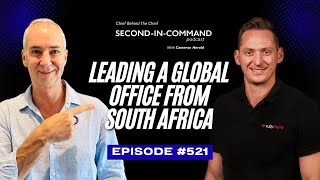
Ebert Grobler, COO of Ruby Digital, a South African performance marketing firm, explains how the company scales globally through virtual hubs and strategic partnerships. Ruby Digital runs 40 full-time staff with unusually high retention, using weekly scorecards and six-monthly reviews to track performance and growth.
Questions this video answers
About 40 full-time employees.
Retained 100% of senior management for more than three years; retained more than 95% of mid-to-senior staff for more than five years (contrasted with ~40% average US retention).
A program called 'Step up' with advancement reviews at least every six months.
About 15%.
At least about 1,000 organic leads annually.
Chapters
Scaling up EOs. You know, there's this, this, there's a hundred, if not a thousand books on how to improve every facet of business. And I, to the frustration of my CEO, I don't think I've ever read one of them. I in fact, to be quite honest, this is probably the next book that I'll read, the first book that I'll read in a very long time. And honestly, because I'm really just diving deep into the the COO alliance universe and I'm just really passionate about what you guys are doing and being part of it.
All right, buckle up for today's episode with Ebert Grobler. He's the COO and co founder of Ruby Digital, a South African based company. He's also a COO alliance member flying all the way from South Africa to Boston to attend one of our in person COO Connect events. He's the co founder and group COO of Ruby Digital. Ebert's all about shaking up the 9 to 5 grind. Using tech to supercharge how we work and live. With his wife and kids as his rock, he's led global performance marketing powerhouses across the USA, the UK and South Africa. With 20 years of epic growth and innovation under his belt, he's also delivered jaw dropping results like 10x revenue spikes and award winning exits. Since joining Ruby Digital in 2021, he's fueled the rise to global fame, snagging titles like Specialist Internet Marketing Agency of the Year and South Africa's Top Agency Rank. He's also a culture champ and the co host of The Smart Marketing 2.0 podcast, dishing out smart game changing businesses. Also, they run one of the top companies to work for in South Africa. You're going to love this episode. You can watch all of our episodes on our Second in Command podcast YouTube channel. Make sure you subscribe and share this episode with your friends and coworkers. We'll see you on the inside. So Ebert, welcome to the Second In Command podcast.
Thanks for having me Cameron.
Looking forward to this. It's funny, just before we went live, I kind of grabbed your accent right away. That South African, I don't even know if that was in your bio and I probably missed it if I if I'd read it earlier. But the fact that you're in South Africa, I was just there back in in April and May. Is your whole company Ruby Digital based in South Africa? Are most of your employees there or is it just you that's there?
Most of our employees, but we're a multinational. We're registered in South Africa, uk and we're currently wrapping up our international structure and then we'll be registering our LLC in the US but we're already operating out of two virtual hubs out of Atlanta in New York.
Interesting. All right, and how many total employees do you have?
So we are 40 full time, and there is a very deliberate reason for that number because there's a big part of our staff that's actually part time, and that just speaks into our growth model.
I'm going to ask you a little bit about that for sure, but I don't see a lot of companies that are South African that are expanding and going global. You hear a lot more about global companies that are moving and US Companies that are moving, going. I'm Canadian, worked with a bunch of different South Africans. What's the lure of going into the US Market for you guys? Because I know that's where you're going versus maybe more European markets, Australian markets, and other markets.
So about four years ago, we started looking at, well, what's the next step or, you know, next evolution of the company. Looking deeper into South Africa and further Africa, we just found there was a bit of a saturation of our market. And then we went into exploring the uk, Same saturation that we experienced. And then looking into the U.S. we, we kind of realized that the market is pretty much still wide open. And the thing that really unlocks it for us is the realization that what we were offering was unique in terms of a certain standard of quality. So we then soon realized, actually we can offer equal types of services, but at a better quality, better delivery into the US and there was a pretty big appetite for that. So, you know, I sometimes say we've managed to develop a delivery engine that plugs into the US and just, you know, turns it into a Ferrari, really. So. So, yeah, the expansion opportunity in the US is just. It's just much more, you know, inviting. And then I think there was a part of us, you know, we're three co founders, you know, you. You operate in South Africa, you do relatively well, and then you just start asking yourself on a personal level, how good are we really? And, you know, what, you know, what better stage to go and test what you're made of, you know, than in.
The U.S. okay, so you said something, and I kind of listened to it, and I'm curious whether my intuition was correct on this or not, but saying that South Africa was already saturated and much of Europe was already saturated, but then the US wasn't, is it because of a labor arbitrage opportunity that it's not as saturated, that because you're hiring all these people in South Africa, which is really about a 60% discount to what you have to pay in the US that you can actually offer very high quality, strong English into a market that can pay a little bit more. Is that why it's not as saturated? Because your cost base is so much lower? Or are you just saying that your service and products just don't exist in the US as much?
So. So at the foundation, yes, everything you just said was giving us a unique opportunity. And I guess what is almost a catalytic factor for us in comparison to other companies trying to do what we're doing is we legitimately just offer premium service and something that we've experienced. And there might be a few of the listeners that have a different opinion on it, but in the three years that we've been expanding into the U.S. something that's really stood out for us is that premium offerings are actually very rare to come by. It seems like, especially in the marketing space, it's about specialization or differentiation in terms of what market or industry you're in. And as soon as you've unlocked a very specific niche, it seems like all the companies in that industry gravitate to you being the niche or industry, which be H Vac or, you know, financial service or whatever that might be. And then what we soon realized is that there's actually just a challenge around the quality of the delivery. And a lot of that, we suspect, has to do with it's very hard to retain top talent in the US Within US Companies, especially in the marketing space where, you know, it's almost like a mercenary mindset. And, you know, the second part is, is we can't retain your top people. How can you ensure consistent delivery? And that's actually kind of where we find ourselves in, is that space is becoming a strategic partner for either agencies or other fractional firms looking for a reliable delivery service. And so that's kind of where the analogy of the engine that's plugging into to other vehicles into the U.S. is coming from. So we, we actually had three growth objectives that we've put in place, one of which being that we've become the strategic partner that just delivers premium instead of like a specialization service.
Okay, so, so then my intuition then on the labor arbitrage component was accurate because you, you're correct. Digital marketing agencies in the United States are losing talent, losing their people every six months to 18 months. That that's literally how fast they're flipping out. And I know some friends that own some, some pretty big agencies, some 3, 400 people. One a client that I used to coach, actually one of the founding members of the CEO alliance, it's called Tinuity. They've got about 2,400 employees in Tinuity as a digital marketing agency, but they're able to hold onto talent for a little longer because they're one of these best of breed businesses. But yeah, when you're turning them over that quickly, you can't offer any good service to your clients. Your clients are constantly having to train the people and you don't have any good consistency. Is that really where you can offer more than.
Yeah, and I think that's really where, where our focus has come in. So 40% retention rate in the US on average. That's what the stats suggest. On the contrast, we have been able to retain 100% of our senior management for more than three years. Yeah, we have retained more than 95% of our mid to senior staff for, for more than five years. Yeah. And that kind of continuity just allows you to build a culture of excellence.
Those, those are numbers that were consistent in the mid-90s when people were hiring Gen X. Right. The baby boomers, they were, they were staying for five to, to 10 years. But that's literally unheard of in digital agencies in the usa. So that makes a lot of sense.
And I must say that is definitely something that we've been very deliberate in how we designed this, this model. And I think it's the unique model offering that we have that is, yep. Making it very rewarding for our people to stay on and be committed.
What do you mean about the model? Because I was going to ask you. It can't just be because you can pay them a tiny little bit more. You must be running a really good company. You must have a good company culture as well, otherwise people are going to leave.
Yeah, well, you know, we, we were voted one of the top 20 companies, not agencies, but companies to work for in South Africa by the UK Sunday Times. And that really comes from a place of us having built a operating system built on trust. And this operating system is called the Ruby Way. And essentially what it comes down to is that what has changed in the last two decades is that the new employee is looking to be an entrepreneur. They've seen their parents commit their entire careers to one job only to see how the retirement goes. And I think the question that this younger generation is asking is how is what I'm going to do matter how am I spending my time? And I think what we've been able to unlock, at least so far is a employment offering that enables each individual to be an entrepreneur. Which is essentially to say we're a high performance, high growth environment. We're looking for people that wants to grow at the same rate. In other words, come and be an entrepreneur with us with a lot of the, you know, a lot of the benefits of being self employed, with a lot of the lower risks of being self employed. And essentially we as the senior management, we're accountable for generating the opportunity for them to keep growing. And then we have a reward program or a career growth program that we refer to as Step up that we've implemented, which essentially allows any person in the company to see an advancement at least every six months.
Okay, so there's so many things I wanted to kind of go back and ask about here. I want you to talk about the advancement every six months, but I want you to talk about also they want to be entrepreneurs. How are they being entrepreneurs or entrepreneurial inside of the organization? Can you speak to both of those?
So the way that we've built a system is that for every division in the company, we've been very clear in terms of what their function is, the output, desired output. But more so we've actually been able to tie it to a revenue value that they need to manage within that division. And so we've actually then allocated portions in relevant degree of their seniority and responsibility of that revenue to each individual. So effectively we're saying if you're doing your job correctly and you're excelling at it, you should be able to maintain this amount of revenue to your portfolio. Well, we refer to it as their portfolio. So your portfolio, you should be managing that amount of, of revenue. And I think a quick way of just flipping it on its head so that you can maybe see it from a different perspective is what we've done is we have applied the asset management or financial management model to the marketing environment. So you know, your financial advisor, in a way they're all, you know, entrepreneurial self starters, you know, where they are responsible for developing their own portfolio and then looking after that. Yes, they might be part of a larger organization, but ultimately they build their own client book. And so in a way what we've done is, is that we have created a model where we can distribute the responsibility of the revenue into different divisions, into different tiers. And essentially with that we're saying, here's a list of KPIs. These are your lead metrics. If you achieve all of these, your lag metric is that you're actually being a custodian of this amount of portfolio. And if you achieve that, every six months we do a review and you're either on track to reach a adjustment or promotion in 12 months time, or, or you have the opportunity of actually coming into a bit of a Dragon's Den environment and convincing us that you've actually not just met, but potentially excelled. And therefore you believe you have the opportunity to bring your reward forward. Which then also means that there is an opportunity for you to put the challenge to us, to say, I want to earn more. So if I have achieved this, then tell me what my next step looks like so that I can get to that milestone.
I love this. All right, this is very similar to 40 years ago, which is crazy. It was 40 years ago. Was it 40? Hang on, do the math. No, 30 years ago. What was 93? 93 to today? Yeah, 30 years ago. Yeah, it was.
93 today. 31.
93 to today.
32.
32 years ago. So 32 years ago, I hired Kimbal Musk, Elon's younger brother, to work for me at a company called College Pro Painters. And it was a. We, we paid all of these 8,000 painters that worked for us. Kimball was a franchisee. We paid them piece rate. And if they were able to paint faster and paint with good quality, they could make more. You're basically doing that inside of a digital agency. Then you're creating this little entrepreneurial environment which keeps the retention up, keeps them more motivated. Are there any downsides to it?
I think the highest risk that we have is if you are being given that much rope, the opportunity can quickly come where you hang yourself, so you take on too much than you should or you burn out. And so to counter that, we've actually developed a scorecard model where we, through being a virtual system and having quite a lot of technology implemented, we can actually track an individual's input. So interestingly enough, we actually have a weekly scorecard program where we measure a person's average hours worked per week. And we have a compulsory KPI in that step up model where it's not allowed to be more than an average of 9.5 hours, days. So we're essentially part of their KPI is to say you must do this within a healthy work, life, balance environment. And then we have the entire balance wheel, you know, part of it, which I can unpack for you. But the point is we're very strict on Making sure that a, we align on what their personal objectives are. Like we're in the balance wheel of their career or their life is work. Right now we have people that subscribe and others that unsubscribe to the model. So it's not, you know, obligatory. When you join the company, you can decide what part of your life you're in, what stage you're in, you know, and how important money or advancement is. And so you can switch that on or off as much as you want to. But the key is, is that once you're switched on, there is no point in you being able to reach a milestone only to burn out three months after you receive the promotion. And so for us, about sustainability is key. So the downside is creating a high performance environment where everybody is so geared towards succeeding that you can feel maybe even a bit embarrassed to put up your hand to say, guys, I've taken on too much or I'm struggling. So to maintain that. Over the last two years in particular, we've put in quite a lot of processes to ensure that we safeguard against that. We actually created our own internal organizational health check, which we call our Ruby Satisfaction Scorecard. And that includes like 13 metrics, which includes is somebody nominating other people for shout outs? You know, are people participating in company initiatives? Are people completing surveys, like, just really gauging. We even run a question like, how do you feel on a Sunday night before starting work? Right. So we do all of these regular checks with a very strong leadership team that we've developed to try and safeguard on that burnout side as much as possible.
Yeah. The fact that you care so much about their employees, and I love that you're even using a balance wheel. I actually have 60 COOs filling out a balance wheel next week at an event I'm hosting at MIT for our CO alliance where we look at eight different areas of their life and try to get them to. I say it's like an elephant on a teeter totter that you can never be perfectly balanced. You kind of. You kind of go back and forth a little bit in some one quarter. You got to focus on a couple areas, let a couple areas slide, and next focus you got to. You kind of, but you got to keep an eye on all of the eight. The fact that you as a company care about your employees like this, it does speak very well why you can have the premium offering because you're attracting people, you're keeping people, they care about your customers more. It also sounds like you really care about your employees more than you care about your customers, which then has your employees caring more about your customers. Is that partially true, do you think?
In short, I can answer that by saying we've got an internal mantra which is grow people, grow global, grow profit in that order of priority.
Yeah. So that consistently lines up. You've said three or four different terms. And I'm curious if, if you guys, you, you mentioned the catalytic factor or catalytic mechanism. You talked about scorecards and KPIs, the balance wheel. Are you guys a part of Vern Harnish's like scaling up organization or did you come out of the entrepreneur's organization in some way or so?
What's interesting about that is I have a CEO and we have a fantastic dynamic. We're really each other's yin yang.
Yeah.
You know, we, we come from a, he comes from a place of being an EO member and, and he has been an active EO member, sits on the board for the Cape Town chapter, actively involved in, in east coast chapters. And you know, he has, when, when we, when we partnered, the first thing he did was give me the scale up. And I said to him, look, I appreciate this, but I'm probably not going to read it. And, and that started a whole journey of me being a very stubbor. If you're going to, my theory is if you're going to try and do something different, then I like the idea of first trying to do something on my own to determine the original idea and then test it against what, you know, has worked, or especially if you're failing, then go and look at the source material available and see, you know, where you could have gone Right now, scaling up eos, you know, there's a hundred, if not a thousand books on how to improve every facet of business. And I, to the frustration of my CEO, I don't think I've ever read one of them. In fact, to be quite honest, this is probably the next book that I'll read, the first that I'll read in a very long time. And honestly, because I'm really just diving deep into the COO alliance universe and I'm just really passionate about what you guys are doing and being part of it. But the point I'm making is that there is a very deep purpose for me in reading your book to better understand what it is that you've built so that I can better navigate myself in this environment. Right. But coming back to your, your question around, you know, where, where do we draw from? You spoke about 32 years ago, right. What worked 32 years ago works now because that's a first principle. Right. And I'm such a big believer of first principle. So my CEO asked me back in the days, like, so, like, what do you build this on? Like, where does the confidence come from or the certainty to make certain decision? I said, well, ultimately we're humans. We're all in the business of communication. And if you want to understand how to best communicate, especially persuasive communication, which is business, then you got to start with the philosophies, the psychologies and the, you know, sociologies of it all. And that's kind of where my background comes from. That's really where I studied. I studied communication science and those who will all, you know, fields or majors that I had. And coming from that, I just asked myself, well, if you're going to be operating in a human environment, how are you going to apply those human rules and guidelines to build a business? And so, you know, I often refer to myself as a human systems engineer, which is where my tools come with the humanities or the human sciences. And having used that to then say, okay, how can this work best in terms of how people work best with each other? So that is the first principle. And then around that we've built the systems and then coincidentally, there has been so many overlaps. And so to create a little bit of, let's call it uniformity or give people a little bit of a better handle on what we're talking about, we would borrow terms from, you know, these, let's call it industry standardized systems. But, but I would go as far as to say 80 to 90% of the time, if you're going to come and look at what we do under that term, it's not the same thing.
Yeah, which makes sense. The, the term catalytic mechanism actually came from, I think it was from Jim Collins book. Good to great. Vern just happens to talk about it. Verne Harness was the founder of the Entrepreneurs Organization. I know, Justin, your CEO that was a member of, as you mentioned, was a member of eo. I think that we may have even crossed paths years ago at Endicott House. Was he, did he ever go to the entrepreneurial master's program, emp?
Do you know, may have been. He's been a very active participant. Look, I mean, he recommended CEO alliance for me, to be quite honest. I mean he was like Cameron, Cameron comes from eo. I backed him all the way.
Well, I'm going to back him on reading the book, Scaling up. And I think anyone listening should read the book too. It's very well done. It's a little more advanced than companies in the 40 plus plus freelance needs, but I think it meshes very nicely with the EOS world with Gina Wickman's book Traction. And I think there's some really good systems and mindsets and tools. And I'm glad you're reading the book the Second Command. But I think what you also mentioned was really the underpinnings, which is we are all human and a lot of the lessons that we need to grow business are the lessons that we need to be humans. And then the next book that I'm working on is all the Grandmotherisms I call it. It's all the sayings that our grandmothers told us about life that are very applicable to business. And I think you guys seem to be doing a really, really good job with that. Can you walk us through what Ruby Digital is? Give us kind of the core products and services as to who you are as a company?
We are a performance marketing company specializing in B2B companies. And in a nutshell, you know, as part of the group where we also have a web development company called Ruby Web, we're really focused at giving an end to end ROI service. In other words, starting from understanding what gets your client to convert online, in other words, what type of website through to how do we engage with them, build relations and continue building them to become evangelists. Right. And I think that's really where our strength has come in with why fractional CMOs or CROs have brought us on as their strategic partner to come and execute is because we've had this many times where clients would come to us after we presented our solution proposal and they would actually ask us, are you guys searching? You want to work with us? And we're like, but why do you say that?
It's like, well, it really sounds like.
You'Re trying to scare us away. And the reason for that is because we are so strict on our expectation management from the outset. We just don't make any commitments in terms of what we guarantee. There's no guarantees. First and foremost, we're in the business of risk management. If we were able to determine exactly how to convert clients, how to manipulate markets, then we would be more effective than the stock market. So the point is we're really in the business of risk management. So the better we understand what your client wants to achieve, the better we're able to best apply your money towards converting them into your customers. And there's always risk. So it's just the amount of work that goes into preparing strategy and then accurate execution that minimizes the risk. So we're risk managers. And in order to be an effective risk manager, you really need to manage your customer's expectation. And for us, you know, we, we really focus on the long term relationships, which is why it's B2B. And so yes, we do offer, let's say the traditional push strategy marketing like paid campaigns and so on, but really for us it's about the organic longevity. So you know, how's your SEO doing? How's your email? And I'm not talking called outreach, I'm talking about real account based marketing, relational email marketing. How's that doing? How are you building return customers or those that become evangelists that refer others to you? And I think that's really where, especially in the times we're heading into, that's where the true success of B2B firms, whether you're accounting, legal or any other professional services, I think that's where success is going to lie is true. Deeper relationship with your client base.
That makes sense. What's your typical client or your ideal client size?
So for us at the moment we're looking at anything between 40, 30 million to 100 million. And within that it can, it really depends on the size of the organization. It's, it's, let's say it's relative in terms of what they charge for their services. So really the organization so much doesn't make matter to us. But what I actually want to say to you in terms of that our client base is actually can be anywhere as long as the client is what we refer to as the smc. Sophisticated mature client. Sophisticated in that they understand that they need an expert to come and help them grow in a certain avenue of their organization. Mature in that they have the operational infrastructure or systems to actually convert the opportunity that we're creating. And if they have that, then part of the sophistication also comes in the understanding that you must, for the growth of your organization have a percentage of your revenue dedicated to your marketing budget. And that, you know, you have this idea that owners spend profit and marketers spend budget. Right. But you need to have a executive team that buys into the idea that marketing while applied is part of the operational system that needs to grow the company. And so that is also a big part of us qualifying the right type of clients. Because if we want to look after our people, we got to bring in the right type of clients.
Yeah, that makes sense. So it sounds like your Typical client size is probably in the 10 to 100 million size. A mid sized client you mentioned, you know, having a percentage to spend. It's always astounded me how so many companies don't understand the cost of acquisition, they don't understand the lifetime value of the client and they don't understand the cash conversion cycle of it. Do you have a target percentage or a return on ad spend that they're supposed to be getting? And do you measure return on ad spend as revenue or gross margin return on ad spend?
So I'm going to answer the question by just explaining how we do not go down that avenue at all. We don't touch that, that metric because what we do is we first try and understand what the client's business objective is and within that why they believe that is even achievable. So often you have clients coming to a marketing agency and then they're actually looking for the marketing agency to tell them what's happening in their. A marketing agency is not a management consulting firm or a market research firm where they first understand and go deep dive and understand what are your, you know, your achievable market.
Right.
Businesses need to have a sales team or a business development individual first understand is the market size there? Can we actually grow in a specific area? Now we help clients through various of ways which I'm not going to unpack now, but we help them get to that answer. And it's only when we know that answer do we actually then develop a roadmap to say how do we need to invest in which channels to eventually get you there. And part of our expectation management is to say depending on which avenue, whether it be push marketing or pull marketing, we're going to take either three months to just gather data based on this working theory that we've collaboratively developed or, or six months if it needs to be more organic. And only from there, when we have some baseline and some real KPIs, then we start making commitments to say, okay, based on what we've done, this X amount of investment should get us towards certain roi.
You, you mentioned earlier that you're a performance marketing agency. Do you. But you do all that. You do all different areas of digital too. Like you mentioned, you do SEO, you do paid search. Do you focus on the affiliate side of things which is typically performance based or was that just a term that you're using to kind of.
So interesting enough, we originated in the I gaming industry 12 years ago, right. And subsequent to that we've really just gotten to a place where everything we do is data driven towards actual roi. You know, we have clients that will come to us and you know, globally there is economic challenges and they'll just come to us and they say, well, we just cannot afford marketing anymore. Then we have a very easy conversation to show them. In the last 12 months, this is how much actual revenue you've generated from your investment, which then makes a very difficult decision to switch off that revenue if you're trying to switch off. So in terms of being able to be a true performance marketing company, I think that's what defines it, is how does your actions directly impact the performance of the company and you know, in terms of affiliations and so on. You know, we have a lot of referral partners, strategic referral partners, and we've built an ecosystem. So much so that, you know, our pursuit into the US and our expansion actually has very little to do with our own organic growth. We're not actively pursuing any clients directly within the U.S. yes, wonderful. If the opportunity presents itself, we're always there to offer our services. But working with strategic partners and creating a degree of an affiliate program, that's kind of where we're, we're seeing the most of our success.
When you talked about companies having a dedicated percentage, you know, allocated for marketing, a percentage of ads or. Yeah. Percentage of their budget for ad spend, what percentage do you typically try to get them to think about? Is it the kind of 8 to 10 legacy number that we've heard about? Is it more and does that include salaries or how do you try to advise them?
The way we take that approach is once we understand that business objective, which is really well defined based on the data, then we actually develop the plan. We then give them the budget and then we educate them to say this is merely a X percentage of your budget. And interestingly enough, it is companies doing. We have clients that have come to us with anything between 5 and 10. Right. So they're, they're in the growth space, but then if you look at what they have been spending, it's been less than 1%.
Right, right.
And then you need to, then you try to educate them that they need to be more in the 5%, but to, to then see that value that they need to invest, it sometimes is actually quite intimidating for them. So what we're trying to do is instead of setting the expectation of what they should be investing, we rather first determine what value needs to be and how much that is of their, their revenue percentage. What I can say, when it comes to B2B services. You know, I always work with rule of thumb, 5 to 10% if you're looking to grow and 2.5 to 4% if you're looking to sustain. Right. So, so that, that's always been a safe ballpark and in 15 years of, of being in performance marketing, I, I'm yet to be proven that that is not a healthy ratio to work with.
So there was a, I don't remember when the survey was, I think it was about 30 years ago. And they, they looked at the top advertising agencies in the United States and they said, you know, what percentage of your revenue do you spend on advertising? And they were all between 1 and 2% and they were all telling their clients to spend 8 to 10.
Yeah.
Where do you spend your advertising and marketing dollars for Ruby Digital? And, and I'm not going to ask you your rough percentage just in case.
No, I'm going to be very transparent. We're actually on 15%.
Okay.
And, and I think a big part that I don't know, you know, to that statistic, I don't know if the caveat was what they spend in actual hard cost or external costs like Google Ad spend and so on, but something that, you know, advertising agency is often in that beneficial position where what is a hard cost to and to a client is a soft cost because you have the resources and the talent. And so we really have very fair bolt, our own in house marketing team. So we have three dedicated people that looks after our marketing as, as in other words their job title in the company is either marketing manager, head of marketing or marketing coordinator or marketing analyst. You know, so, so we have, and then we have their dedicated budget and they run their own budget. And we as, as, as the agency, as, as the management team, we're actually clients and we are managed in that.
That way by them.
And so that has worked really well. And to be quite honest, we've seen, we've seen the fruits of our investment. You know we like to say and we actually, whenever we, we present our solutions to clients and you know how, you know, companies would always, this is the clients that we've serviced. We're, our logo is second next to one of our bigger clients and we say well everything we do for you, we do for ourselves. Okay. And we actually, we actually back ourselves. I mean just to give you one stat, we generate for ourselves at least a thousand organic leads annually through our own website. So you know, you can't be championing yourself as a B2B performance SEO company if you can't be doing that for yourself.
Can I ask about that? Just a quick question before we wrap. I'm curious. If a company can generate that many leads, you could likely convert, you know, a huge percentage of those if you wanted to, like even 10 or 15%, which is way more clients than you even need. What do you do with those clients? With those clients that you can't service? Do you farm them out? Do you sell those leads? Do you spin off a division and let one of your entrepreneurial employees spin off a division that they can run to capture them? Or do you just let them go by the wayside and say, I know we had you as a lead, but you can shop somewhere else?
We're very fortunate that we have a revenue line item which is just referred to as referral revenue, which is where we actually then disqualify and refer clients to an entire library of referral partners based on where we think the best partner would or best service provider would be for them. And yes, we have those, those high volume of opportunities. But the key to the success of the system is the clean fuel that needs to come in. The better the quality of the client, the better the system runs. And so if, if we just take it all, yes, we'll be able to probably, and I don't exaggerate, we'll probably be able to double our revenue, but we'll, we'll burn our people and we'll probably like destroy our culture. It is because we're bringing in that clean fuel quality clients that our people are happy to service those clients because they're the right type of clients for the right, you know, for the solutions that, that we offer. And so our people are really passionate about.
But are you monetizing those leads that you are then selling or sending off to other clients to handle for you? Are you getting a percentage?
Oh, yeah, absolutely. That's. So that's what, you know, so we have the referral revenue streaming that, that actually is part of it.
Yeah, yeah, it's huge. I mean, so many companies just miss on that opportunity. We, we were, when we were building one, 800, got junk. Years ago, we contacted a company called Waste Management and they were saying that around 7 to 10% of their calls were for stuff that they couldn't do. And they were just saying, sorry, hanging up the phone. We're like, send them to us. Like, we'll do junk removal. Like, we'll give you 10% of our revenue. And now we do millions of dollars a year of business from stuff that they were just saying, sorry, hang up the phone. It just seems silly. All right, I want you to go Back to the 21 year old Ebert and give yourself some advice. What advice would you give to the younger you that you know to be true today?
That would probably be trust is earned, not given. I think a big part of my early decisions in business, I was declared bankrupt at 26 with my first company. And a lot of it comes from a place of just wanting to trust the world and needed to realize that you actually need to build insistence that people can prove that they're trustworthy. As much as you want to give people the benefit of the doubt, ultimately, you know, you don't have to trust them when you can believe in a system. And I think that's. That was one of the hardest lessons I Learned through my 20s. And you know, fortunately I've had a few more years since then, actually a couple of decades to really implement and, yeah, improve just on that trust model, that trust system.
I love it. Well, Ebert, thank you so much for sharing with us. We have Ebert Grobler, who's the chief operating officer and co founder of Ruby Digital based in South Africa. Thanks for sharing with us on the Second Command podcast. Really appreciate it and glad you're also part of the CEO alliance.
My pleasure. Thanks, Cameron. And I'll see you next week in Boston. Mit.
Enoch, I'm excited. It's going to be a great event. We'll see you then. Thank you.
More from Cameron

Flutterwave Former Global Head of Operations Awa Kone | When Growth Outruns Operations (Podcast 611)







Optomi Professional Services COO Nick Murphy | The COO Can’t Know Everything (Podcast 607)


