From Amazon to Bulletproof: Scaling a Unicorn with Anna Collins | (Podcast 525)
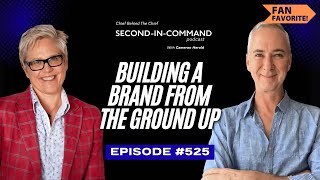
Anna Collins, former head of Amazon Prime Membership, joined Bulletproof in 2017 and cut SKU count in half in her first year. She brought Amazon systems like narrative docs and weekly business reviews to scale the company, and emphasizes that leadership means choosing what not to do.
Chapters
How do you start making these strategic choices and to do that? What's the vision that you have? And then what are the goals that support that vision and then what are the strategies to get there? And then you, how do you execute that? And then tying and linking strategy to execution and then executing entails linking those strategy. So the building blocks of execution which are people, product process, customer systems and enabling tools, those building blocks. And so then you start looking at those things and say and how do you make choices around those?
So Anna, welcome to the Second in Command podcast. I'm really, really glad to have you on the show.
Hi Karen, great to be here.
You were the head, former head of Amazon prime, is that right?
I was the former head of Amazon prime membership globally.
Why would you leave such an amazing organization for? I mean yes at Group Coffee is an amazing organization but like totally different in terms of scope and like what did you see? What were you, what were you thinking? Walk us through that.
I have in my career what I've done is I've gone back and forth between doing growing, building and growing enterprises in solar businesses and startups and large companies like Amazon and Microsoft. So that's sort of normal for me to, to go back and forth across and I had never earned a Bulletproof. I got this recruiting call and in 20 plus years of working I'd also never gone to a next opportunity based on a cold call kind of recruit. It's always been through my network getting referred in and sort of pulled in. So it was really unique and and I wasn't looking to leave Amazon happy. Prime was my third job at Amazon and a lot of Amazon lots of wonderful things. The opportunity to join Bulletproof I looked at when I learned about Bulletproof and started talking with Dave. I really saw Bulletproof as a uniform in the better for you consumer product goods space. And I started by trying some of the products Bulletproof Coffee the brand octane oil and I'm a high performance individual and always knew coffee was a performance enhancing substance for myself and being spirit using other spiritual and practices like meditation and other athletic fitness kinds of things I could tell what changes and works for my body. And so when I started doing their bulletproof coffee and brain octane oil it I could feel the difference and so I like huh, there's this is real, it's not a fad. And so I got intrigued and then second the size of the opportunity to really make an impact on the world the mission driven nature. So bullet bulletproof mission to create products and provide information that Radically can prove life. And Dave taking his really hero's journey and applying that to and making it accessible for the masses. I was very jazzed about that. And then third, it really hit the sweet spot, which is I'm a builder. What I do is help tape a product market fit and then help scale it up and build teams and businesses. So this really fit my personal passion and my mission driven nature. And then from a role perspective, from a partnership perspective, Dade, as the genius entrepreneur and creative that he is, wanted a business partner to help the business leader, if you will, to help grow and scale the company while he continued his genius creation in both content product and his visionary biohacking. No leadership that he continues to do in the world with.
With Dave being one of those very entrepreneurial founders, how did you get him to start releasing from, from parts of the organization and what parts did he keep and what parts do you now run that maybe were harder for him to let go of?
And he's a, not just an entrepreneur, but he's actually a genius in how he can come up with a. And what I mean by that is he comes up with a hundred ideas and ninety of those, a hundred ideas are actually good. And so, you know, stepping into bulletproof, there were many projects going on and they were all good. But a company can't stand and grow by doing everything is one of my favorite quotes on strategy is the essence of strategy is choosing what not to do. And so where I started by saying, hey, how do we make trade offs in sequence? So it's not, no, but not now, and not this, but that. Because how do you start making these strategic choices and to do that? What's the vision? And then what is, what are the goals that support that vision? And then what are the strategies to get there? And then you, how do you execute that? And then tying and linking strategy to execution and then executing entails linking those strategy. So the building blocks of execution, which are people, product, the process, customer systems and enabling tools, those building blocks, right. And so then you start looking at those things and say, and how do you make choices around those? And so the second thing was you wanted to go faster on some things, like we all do. And it was how do we take data and scale it out. So I brought mechanisms from other places like tenants from Amazon. They help you get alignment at the start on how to run a program or how to build products or do innovation and then you agree and they could have the input with the team. Do you agree on those things? And you say, okay, we're going to use these. These tenets or these principles unless you know better ones. Right. And that really helped. That was an example one mechanism that we started to use that helped the team scale and did that allow Dave.
To then move out when he started to see that there were some systems and processes that were going to allow you to scale faster but didn't need him to be involved. Is that part of why he could step back?
Types of mechanisms allowed him. Allowed me and the and the team to earn trust with him. Right. In these different areas and to see what was working. And it gave him more freedom continue to pursue and put his best energy in other. In other areas.
You killed off or not you but the company off a couple of products pretty early on in your tenure, like in the first year or so.
So I joined in January 2017 and in 2016 the bulletproof had opened up international e commerce in a couple markets including Canada and the UK and Japan. And so one of the things I did was I shut those down in my first study days. I also cut the SKU count in half my first year. And really that first 90 days as made that decision as I was retooling, revising our operating plan. And part of that were the international SKUs and to help focus, to help focus and reduce the inventory as well as the complexity that we had. We weren't selling on Amazon and we worked on those in 2017 and started to build and recruited the right folks and started to build an Amazon business which is today quite substantial. Two years later and continuing to grow very fast.
I didn't understand how he could have such a strong brand and really not. He didn't have much going on Amazon at all. Was that a cognizant early stage decision to not be there or did they just not have the depth and the expertise to go after it?
I think it was more about the latter than the former. It's just hard.
How do you get Dave And Dave's a spectacular entrepreneur like you said he has a hundred ideas are good. How do you get someone like that to not want to start all of their ideas? What's the system you do? There's a grab the ideas, track the ideas, not kill their spirit. How do you keep him excited and having those ideas without killing it off and then. And without having to start them all.
One part is where can we take an idea? If it's not now then let's say it's high frame to revisit. So for example I created a series called what the CEO needs to know. And I said we're going to do every month we're going to do product innovation reviews with you and we spent 90 minutes on product innovation so that you're not wondering where these things are in the innovation pipeline. When we take a trade off and we say we're going to do this, not that we're going to sequence this over here and we're going to have these streams that match up to different consumer segments. We're going to then have a cadence of your. It's not going to just disappear. Right. And so this is a way to continue to have visibility but at the right level and with the right framework. So it's not a free form brainstorming idea of just here are all the things you want to go do. Let's put in context where we're actually talking about implications and trade offs that we will make on the business and on customers. So it's not a free form. Hey, it's just out here which is the entrepreneurial way to do it. Hey, let's just say everything has all 99 ideas there. Yeah. Great. Now let's bring it down to the reality of business and customers and what the implications are in reality for me, Cameron is what's true today, what's the State of the Union for all facts on the ground. How many SKUs do we have, how many customers do we have? What are our segments, who are we serving, what is our cash position? Everything of the reality of what's true today, what's the team capability? So when I walked to the door I did that. What's the reality of today? Right, that was the first name did and then I said here's my State of the Union report. The other part of defining reality is the opportunity, the vision, the possibility which is what I was talking about. Okay, here's the big vision and then what's the roadmap and strategy and goals that are going to take us there and both, you know, on this multi year and so that setting that reality up, both what's true and the possibility is that frame that I'm operating from with Dave and the and the team.
How far out do you plan versus how far out do you allow yourself to think with Dave and vision?
So we're doing the big vision. When again when I walked in the door it was and when I was interviewing with the company it was clear that there was a strong mission and a strong vision. But actually talking to end values like gratitude. If you asked different folks on the team when I walked in the door. I did. And they would give you 10 different answers for what the vision is, 10 different answers for the mission. They would all say, gratitude is one of the values, but you get other answers. And so again, in the first 90 days, I went through a process with Dave and the team using employee customer input and a facilitator. And then we actually defined definitively what our values and the vision mission to be able to say it. And everyone would say the same thing. And then we use that frame to start doing performance reviews, to do the hiring interview, and baking them into the process to help us scale. And so that's another example of creating a common reality and context for the team and us all to operate and practice businesses.
When you left Amazon and took you to Bulletproof, what skills did you bring with you from Amazon that you still use today? Or what styles of leadership did you bring in?
So what I'd say is, and when I bring all of that like, and Amazon ruined me, ruined me forever with, for example, PowerPoint. Because at Amazon, you can't do PowerPoint. You can only write narratives. It's only written word. And every meeting starts with a document, and nobody talks until everyone reads the document and the document has data in it. And so therefore you do that for any number of years and any other meeting is crap compared to that. So what I did a lot of do when I walked into Bulletproof is crush this very entrepreneurial company that didn't ever write anything down like a narrative, right? And so what I did was I started sprinkling in and demonstrating some practice of the document or narrative form. And I, like I said, I brought some other mechanisms in data. You know, increase in the Capab data and analytics capability and creating a weekly business review. So I didn't start the first year doing weekly business review, but by the second year we have implemented with the business review. But what I did the first year was create a data analytics capability.
You talk about the data analytics. I'm curious. I was talking to a client this morning that I coach and they were measuring everything and he was showing me all the metrics. I'm like, dude, there's no way you can ever look at all this data. Like, you have so much data, it's almost like plugging your Porsche into car dealership and looking at the 75,000 things they measure. How did you decide what to measure and how to look at it? And who is look at it depends.
On which areas of the business you're talking about and what the framework are the input Outputs. So you know, some companies and practices look at outputs like revenue is an output. But what are the inputs, the number of customers and on a, on an E commerce business you have customers average order value ahead of and what are the inputs to the number of customers have to do with new customers and return customers. And then for an E commerce site you have traffic coming in, right. So how many visitors are visiting? What's their conversion? I'm just giving an example on an E commerce business how you would start looking and saying well what matters or those are all metrics that matter inputs and outputs for the, for the daily business. Then you, you can drive and say, well what impacts conversion on a website, on a product detail page? And then you start talking about okay, load time, speed of the page, usability, what information or content is on the page, where it's positioned on the page. It depends on, you know what area you're talking about that's different than supply chain or retail distribution.
Can you walk us through your weekly business review and how that meeting runs? What the kind of pulse or the agenda?
They're defined metrics by team that are driven by the goals for that team. Again, you talk about the key inputs and outputs that matter for those goals and then the trend, the last weeks, the last eight weeks you can see and against. And then you do the trend to prior weeks and prior year, comparing that for the metric and then against the goal. And then you talk about variances that are out of bounds, that controls it. And so it's an exception based conversation. And then the presenting owner of that metric slide is reporting to me and the other extended leadership team that's reviewing this. Right. And explaining their variance from the exception.
And how long are they presenting for? Is it 5, 10 minutes per business.
Area or you know again, on average it wouldn't be. Depending on the owner it could be two minutes or it could be five minutes.
Is it a stressful but good stress kind of meeting?
Yeah, absolutely. That's exactly right. Yeah.
Do you have the core things that you focus on or obsess over?
I think about my time as sort of the stakeholder. The stakeholder buckets more than the to do list, if you will. One of the big stakeholder buckets are customers, the other one is team. So I spend time on the people the hire and develop. And so early this week I wrote a launch plan for my new CFO that's going to get announced so it won't steal the funder coming up here. But I finished her launch plan that you know here are her goals, priorities that give her the start here. Why one should start with here the team and another call. I'm recruiting WP of marketing. We missed you know, interview loop. I've got that rescheduled. Spend some time. I'm so giving you an example that would help that. And then the other is the daily operations and running the business with how are we meeting and driving whether it's new customer launches, product innovation and how are we progressing along our plans. Whether it's financial, operational, so it could be forecasting. Then there's marketing so there's PR and usually have some amount of PR stuff going on. So I have some of that to respond to in other marketing. So it's really the thing I love about my role as it really spans. There is no it just bucket. Just a bucket, right?
You guys are starting to execute so much better than the company was before you got there two years ago and Dave was running a good company. But holy shit, you guys are on fire right now.
The demand is continuing to, to grow because as people taste this they're like oh my God, they tasted, they're good for you and you know, no sugar. So anyway those are the products and the, so the team. The business continues to grow and, and then day continues to create a genius only content and help us with the product and continue to guide us as you know, overall strategy and business. But we're really focused on the growth and the customers and what's going to meet their needs and how do we create more and more access for the masses.
Where do you struggle on a day to day? I mean at the end of the day this is, I think we're all still trying to figure this out, right? Where do you struggle?
Take the time out and bring everyone along is the thing that I struggle with. And so really part of that is slowing down and making more of an effort to engage. As I'm going like a bat out of hell after stuff, it can be intimidating and really overbearing. And I think that's the thing. It's not a new thing. That's the thing I've been working on for you know, 20 plus years. But in an environment where there's so much to do, it's super stressful. You know, those are the points that will create friction for me. And up, down and around.
I had something similar. I'm. I'm 6 foot 4 and so when I come in with that batter to hell feeling around people, they feel like I'm kind of running at them when I'M just walking into the room quick and I was told to just physically slow down as I was approaching people because I scared the shit out of them. If your team was to describe you right now, I mean we've certainly got a huge glimpse of it. But what do you think? How would your people describe you?
Direct and demanding and like Stata. The other thing, it would be connected and caring. I think my leadership, if you say what my leadership style is, what people would say distinguishes my style is I'd say caricature, competence and caring. And the character is, you know, high integrity, high, high intention that shows up like. And also down. The competence part is a strong basic capability. And also don't suffer fools. Right. Like very quickly have a strong point of view. And then the caring part that I do care about each individual and I care about them professionally and as a person. And so what that means is I've invested in their success as well and work to be the leader. That is not only helping to provide clarity on the reality, but also a servant in helping to en bloc and be of service. What can I do about with them and the team?
It'd be good to have that kind of one final word of advice, not for our listener, but for yourself. If you were to, to give your 21 year old self a bit of leadership advice, what would you wish you had known at 21 that you all know to be true?
Number one thing would be don't. Don't take myself so seriously. Right? Yeah. And I still struggle with that one because I, I overdo it, I think on the serious part of my responsibility. Back to one of my opportunities.
That's awesome. Yeah, I, I've been trying to go with that as well. That whole don't take ourselves so often seriously. I went out for Valentine's last night and my girlfriend and I wore heart onesies and we went to a super nice restaurant and we walked in with these pink and purple onesie outfits and everybody in the restaurant's like, what? And we owned it, man. We were like, we walked in like we were wearing tuxedos and ball gowns. We owned the.
All right, guys. Son.
Anna Collins, President for Bulletproof Coffee, thank you so much for sharing on the Second in Command podcast. Really glad you were able to share with us today.
Thanks, Cameron.
Appreciate it.
To be a really good CEO, you have to be good at operations. You have to be good at basic company systems. Right? That's the exact thing you don't want to do as a CEO. What I would suggest for anyone who wants to have the seat is to say, can you give up the control of being the one who decides how things are done and just start saying, here's what I want to happen?
More from Cameron

Flutterwave Former Global Head of Operations Awa Kone | When Growth Outruns Operations (Podcast 611)







Optomi Professional Services COO Nick Murphy | The COO Can’t Know Everything (Podcast 607)


