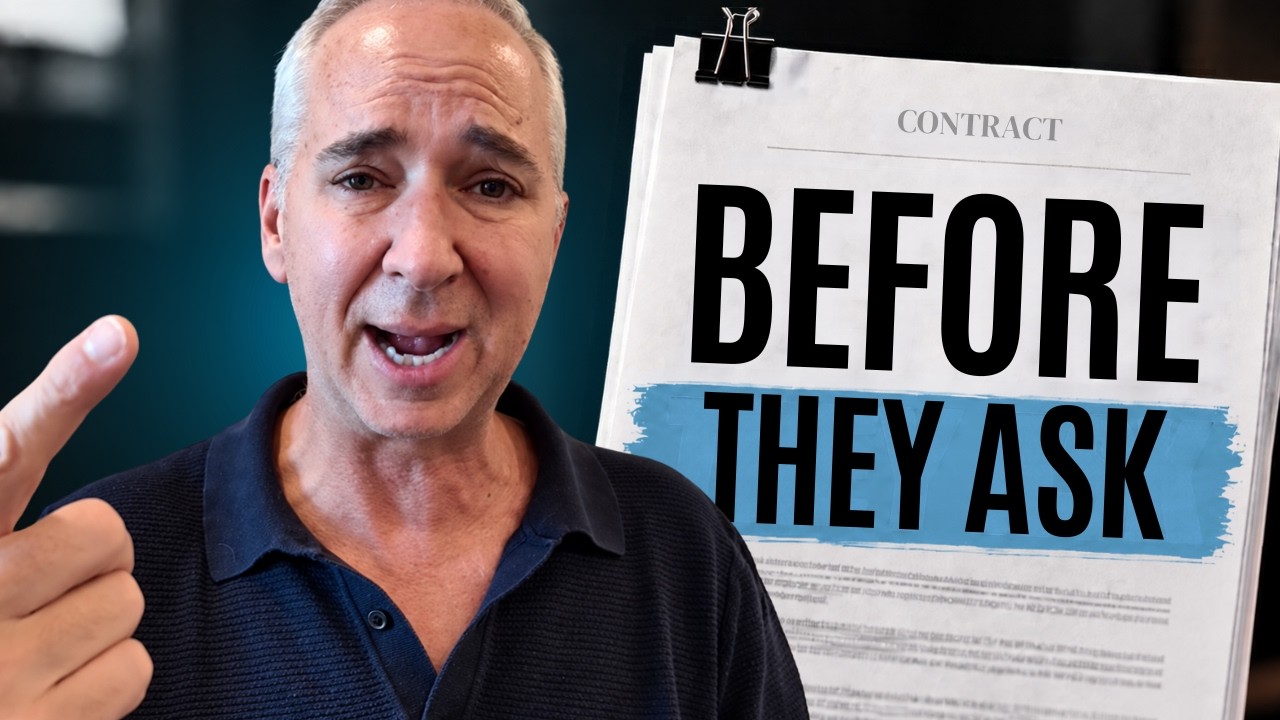
Cameron Herold learned a negotiation trick 40 years ago at College Pro Painters: when sending a 65-page franchise contract, include a Q&A packet answering the ten most common objections before prospects think to ask them. This pre-emptive move arms prospects against their lawyers' concerns and lets the franchisor control the narrative, dramatically speeding up deal closings.
Chapters
One of the really impactful lessons that I learned when negotiating contracts or putting legal agreements in front of somebody, I learned 40 years ago at College Pro Painters. So I'm Cameron Herold. I'm the founder of the COO Alliance. I've been coaching entrepreneurs now for almost 35 years, and I've built a bunch of businesses in the franchising space. But this lesson around legal agreements was a very, very impactful one. The reality is anytime you put a legal agreement in front of someone, They're going to have questions. Naturally, they're going to have questions. Back at College Pro, we would put a 65-page franchise agreement in front of these students who were inevitably going to take that franchise agreement home to their parents. Their parents were going to get nervous. Their parents were going to send it off to some lawyer who'd never looked at a franchise agreement before, and the lawyer was going to give their feedback and advice and inevitably tear the agreement apart. So what we did was we realized that pretty much everyone looking at the franchise agreement had the normal 10 questions. So when we sent the agreement to them, we said, hey, before you read the agreement, here are the 10 big questions you're going to have. You're going to ask, why is the agreement one-sided, or as one-sided as it is? And then we would answer, it's like good fences making good neighbors. We need a really one-sided agreement to protect the brand, and you only want to buy a franchise that's a part of a brand like that. So basically, we gave them the questions that we knew that they were going to ask, and then we gave them the answers. to those legal questions that they were probably going to have. So when they inevitably went and talked to a lawyer and the lawyer gave them some other answer or part of an answer, they were already armed with our response. The really important part of this is you're showing the person the objections they're going to have, and you're bringing up the objections before they have them, and then you're helping them answer those objections before they even have them. It's like my friend Joe Polish says, you want to enter the conversation that the person is already having in their own mind. This is what we would do, we'd send out the contract with the answers, and that's exactly how we, I guess, would short circuit and sign a lot more agreements than we had ever thought we would.