How a Navy Pilot Became COO at JID Investments | John Rubino
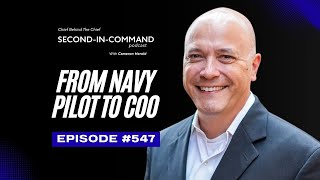
John Rubino left a 20-year Navy aviation career to build JID Investments, a real-estate syndication firm now managing roughly 18 active deals. He discusses the shift from military to business, the systems that let him scale, and how he balances investor relations across a national operation.
Questions this video answers
20 years
April 2013
2017
Over $45 million (John's figure) — the intro also states 'more than $40 million' across 40 projects.
35 real estate investments (John's on‑tape figure)
Chapters
With so many people in your family being entrepreneurs, what was it for you that had you choose to go into the military?
To be honest, Top Gun. When Doc Ben came out, Erica, 1984, 85, I was like, that's what I want to do. I went to a military high school. I just loved the military. My dad served the marine Corps in 1952-1958. I'm looking at a shadow box which is basically all of his, you know, distinguished awards. You know, he served in Korea, he had, he received the Bond star, he was awarded the Purple Heart. And so I always saw the military as like this unbelievable opportunity and just bringing people together. And I just, I just kind of just gelled with it. I really wanted to do it.
Our guest today is John Rubino, the COO, founder and co managing partner of JID Investments, with more than 20 years of experience in real estate investing. In over a decade as a business owner, John has raised more than 40 million in capital across 40 different real estate projects, consistently delivering returns to over 250 investors. Before stepping into business leadership, John served as a US naval aviator for 20 years, an experience that deeply shaped his discipline, resilience, and approach to leading teams. Today, he applies those lessons in the private equity and real estate space. He also serves as director of KW United wealth, helping real estate and financial professionals build wealth through relationships and strategic planning. In this conversation, we dig into how John's military background translates into business leadership, his systems for staying on top of countless moving parts, and why he believes relationships are the most valuable currency in both life and business. Let's dive in. We are live with John. Welcome to the show.
Hey, thanks for having me. I appreciate it.
Absolutely. And if anyone's watching on YouTube, you can see this, but if you're listening on Spotify or Apple, you can't see his background. But you have a lot of things on the wall behind you. And that was where I wanted to start. Can you share about the importance behind the things that are behind you?
Well, I'm, I'm 50 years old now and this is the first time in my, my life that I have my own office, which is pretty cool. I was a navy pilot for 20 years and so I have a lot of my memorabilia and stuff from the squadrons and the tours that I was, that I served at. So we've got, you know, Italy on my left hand side there, Mount Vesuvius in the background on the right side is Corpus Christi, Texas, where I was an instructor pilot. And then on the top is the aircraft I flew in the military, in the Navy. It was a P3 Orion, the bigger aircraft. And then the two smaller ones were two training CRA aircraft I flew. And of course I have my Lord and Savior Jesus Christ always with me, always watching over me. So I have a picture of him in the background. So that's. Yeah, that's my. One of my many walls in here that I have some. Some good stuff to share, I bet.
Yeah, the pictures look really, really cool and not above you. You said the plane that you flew.
Yeah, this is the plane I flew in the Navy. Yeah, it's a. It's a four engine turboprop aircraft that was really designed to hunt Soviet Union and nuclear submarines. And then it became a surveillance platform during the Iraq war in Afghanistan. And yeah, had some great experiences flying that and overseas and in Florida and Jacksonville, Orange Station in Maryland. So I had a lot of fun flying that aircraft.
Very cool. And so we're going to get into a bit of your story. I am curious, maybe this is kind of where we can start off. What was the transition like between the military and going into business? Like, had you been studying anything about business while you were in the military? Or was that just like a completely cold switch for you?
Yeah, so, I mean, I came from a pretty big family on my mom's side. She had seven brothers and five sisters and every one of my uncles, including my grandfather. Her dad was a business owner. And then my dad was also a business owner. He owned a construction company in New York. So, I mean, I had that entrepreneurial spirit in my blood and always, you know, was attracted to it. I think that when I started to look at taking over this company and running this company, I made sure I had the right people around me. And the most important was our cfo, our chief financial officer, who at the time was my tax accountant. And I grew in a relationship with over the years. And when I decided, hey, I want to. I want to launch this, I feel pretty good about it. I think it's going to be a fantastic opportunity for. For us and for others. I need to have him. Because of his experience as a business owner. He had 30 years plus he owned an accounting firm. He was able to do the things that were strengths for him and his kind of area of expertise, like taxes and financials. So it was really important to bring him on just so that way we have that aspect of the business solidified and moving in the right direction. I was still on the Navy when we started the business back in April of 2013. So I was kind of doing the business part time. And so it gave me a good four years to see how the business was moving. How were we having success? Was it really hitting the areas of where I thought it would be? And it blew it away. So I, I pretty much knew that when I was going to transition out of 2017, retiring, that I wanted to do this full time because we were so successful with me doing it part time that I felt if I gave it everything I had and spend, you know, my full time work on it, that it would be, it would be great. And at that point I was in my local area here, right outside of Washington D.C. for about four or five, six years. So I started meeting great people, building great relationships, making good connections people kind of saw me do. I was in the industry that knew what I did. And you know, fast forward now, you know, we've been here for, gosh, 14 years and, and that's only been magnified, it's only been multiplied and it's only been kind of, you know, just built even better to being a strong foundational.
Business with so many people in your family being entrepreneurs. What was it for you that had you choose to go into the military?
To be honest, Top Gun when Doc Ben came out, Erica 1984, 85, I was like, that's what I want to do. I went to a military high school. I just loved the military. My dad served the marine Corps in 1952-1958. I'm looking at how to shadow box, which is basically all of his, you know, distinguished awards. You know, he served in Korea, he had brought, he received the Bond Star, he was awarded the Purple Heart. And so I always saw the military as like this unbelievable opportunity and just bringing people together and I just, I just kind of just gelled with it. I really wanted to do it. I enjoyed it. So I went through high school and in the military and then I went into a military college. And graduating from college way back in 1997, I got, I received a commission and the Navy and that's when I selected aviation and went through the aviation pipeline and learned how to fly an aircraft after never doing it before, which was amazing and crazy hard. But at the end of the day, took two years. I got my wings of gold, which is our Navy wings. And yeah, we, I was able to do a 20 year career which took me to Jacksonville, Florida, Southern Maryland, Naples, Italy. For three years we were stationed here with my wife and my kids, back to Texas and Corpus Christi and then to D.C. for my last five, six years. So just being able to see the world, literally deploying to some really deep places, being in harm's way, but also being responsible and accountable for a multi million dollar aircraft as well as the lives of, you know, 10 to 15 to 20 other people, it's just accelerated. And for a guy in his 20s to be able to do that, experience that and look back and say, wow, that was just an amazing adventure.
Truly incredible. And the adventures that you've had, I'm sure there's so many wild stories that I would love to sometime. Yeah. Well, why don't you kind of move into that transition to full time into business. Now you have this company called JD Investments, you're the CEO, but you're also 50, 50 business owner of that company, is that correct?
That's correct.
Okay, so a little bit of a unique position. I would say maybe 5 to 10% of our guests are same like they own the company and their coo. Most times they're not though. So you're definitely got a little bit of a unique perspective. And then you also are the coach at Keller Williams and their, their program is called United Wealth, I believe. So why don't you just give us a rundown, what do you do day to day, what are you working in, who are you serving? Catch us up on that.
Sure. Well, let me first start with why I wanted to be a business owner and what was the idea that got it started. And I think that as you know, prospective COOs, business owners, executives, it starts with an idea, it starts with something that you think you have that is going to be of value to others and yourself and I think others first because you want to make sure that it's attractive to them, it appeals to them. And so I started investing in real estate back in 2004, 2005. I did some active projects where I built some homes with some local area builders and had some really great success doing that. And then also the appreciation of my home at the time, over three years being stationed in Southern Maryland was unbelievable. So I took a good chunk of that money and I invested it with some of my friends who were getting into this thing called passive investing that they were actually going out and buying stuff and they were doing the work on it. And I was basically the sound partner. And for 10 years or seven years, I was getting a 10% per year return on my $200,000 and I was getting an education and learning about how to invest into real estate projects. Anywhere from the markets, the demographics, the asset classes, how the money's put Together how that all works. And I was learning this and getting a 10% return on my, on my money. So that was, you know, like I said, 2006 to 2013. And around 2012, I said to myself, you know, this would be a cool business to start where I can bring these types of projects that I'm investing in to friends and family to start and have that as an opportunity for them to enjoy and learn and grow their wealth, their passive income, whatever you want to call that, you know, their, their resources by investing in these types of project projects. But they just don't have the time to sit down and do the research or they don't have the time to, you know, go through and reach out to these quality businesses to build a relationship. So that's where we came in, where I said, hey, I can do that. I can make these connections. I can find these business owners that we can invest with. I can do all the due diligence. I can learn from them. I could speak to the executives, and then I can go out to investors that join us in our business and bring them a great project that they can invest in, where hopefully we're bringing it to a Marsova Potter. 90% of the work's done, and then they can decide whether or not it's a good fit for them as, and then as their representative, ask the questions, go see the project, visit with us, give us good information to get answered questions from the folks we partner with who are actually out doing the work. So that's the idea that was the, the strategy, and we built that into a amazing business. We've raised over $45 million to date on 35 real estate investments. We have over 200 investors. So I mean, it just started as a little idea that slowly built with friends and family learning, getting beat up, but still coming out of it, growing real well part time. And then that transition, you said, you know, we really put our heart into it for the first four years, which really was, for me, a litmus test to say, do I want to do this full time? And after the four years from 2013 to 2017, when I, when I retired, transitioned out of the Navy, again, we were just blowing them out of the water. So it was like, wow, I'm stepping into a business that's already been operating for four years successfully, has a great track record as proof, as proof of concept, this is going to work well. I've been doing it part time now I could do this full time. And it's, and it's continued to. It's actually magnified, multiplied even better to being a really, really successful business. And obviously, you know, everybody took a shot to the jaw during COVID but I think it's the businesses that were able to get through it. The businesses that had the vision to say, okay, what are alternative paths given what's going on and just coming through and persevering. So I think that was really big as far as our culture, what we learned and how we succeeded as a business.
What was that like for you guys during COVID What did you do?
It was. So the immediate impacts weren't felt. I think it's. We're still feeling it now, if you ask me. I mean, I just think it was the after effects and what happened with the economy and. And how everything just changed from, you know, it always was easier to find the money for a deal than the deal that totally was flipped upside down. Where it was, hey, we've got the deals, but we just don't have the money. And the money changed because the money became very protective. The money became harder to get, and the money became, you know, different, because now you had to look at deals differently than you did before COVID where you looked at numbers differently, you looked at percentages differently, you looked at what that property had to produce and had to accomplish in order for it to be successful after Covid. So that all was kind of the strategic level stuff that we had to look at. And projects were changing from different types of asset classes that we originally went into and to new asset classes. So as a business owner, you're constantly kind of learning, adjusting, adapting, and then executing. And I think that's so important as a business owner. And I think that a lot of that was due to my exposure and my experiences in the military, hands down. I mean, from being a leader to being a subordinate and working for a leader, to working with my peers. You know, when 911 happens, it happens. And, you know, you don't know, holy cow, like, all right, this happened. We all shopped. But now how do we. How do we react? We're operational readiness. Where will poor fighters, friends of mine that I seen running into their squadron hangars to take off to go to the carrier to be launched to the Persian Gulf in 24 hours. Those guys weren't planning on that before those two planes hit the towers or those planes hit the Pentagon. I mean, that was not a thought. But now it's like, hey, this is what we train for, this is what we are, and this is the adjustments we make so that real world Experience where lives were on the line has made the transition into business much more rewarding, but at the same time gives me the, the, the mindset and it's given me the, you know, the exposure to understand how to do this in a way that, you know, I feel is a huge advantage. And my tolerance too. I mean, the tolerance for seeing things. But yeah, you know, I think everyone experiences challenges. I definitely had some challenges mentally to get through things, but we persevere, most importantly through our faith and then our family and our friends and our relationships. And that really got me through some of the really, really hard times during COVID and what it did to the business, but also what it did to me as a person and how it's changed me for the battle.
Yeah, I think the, the idea of doing hard things even if you're not in the military is like finding the areas in your life outside of business, the stakes aren't as high. Like for me, it's the gym. You know, can I go to the gym and push myself through discomfort, through pain? Can I go when I don't want to and build that muscle of resilience and tenacity and just my mental strength and fortitude that then transfers into the work that I do? Because I'm probably not going to go into the military, but I could certainly see how everything that you mentioned would certainly transfer. What are the day to day responsibilities? Being that you're the owner and coo? I'm curious, what does that breakdown look like?
Yeah, I'll tell you that in a second. One of the things I just wanted to comment on, what you just said, which is so, so true, is that everybody's afraid to find fail. They're, they're afraid to do the hard things. But when you have success, go back and see what you did to get to that point. Everybody looks at when you get to success. But what's all, what's the road to get there? Napoleon Hill talks about it and think and grow rich. I mean, there's so many wonderful books out there, but look at what you did to get through that. Take a deep breath every once in a while, sit down and look at what you've accomplished and what it took to get there. Because I, I can guarantee that if you have that confidence, you're going to be looking for the problems. You're going to be looking for the hard stuff because everybody else is running from it. And so I think that that's kind of a motivator to not be afraid because you've done it. You've got through it and you can do it. So my day to day operations is really, you know, checking emails, making sure that I'm staying ahead of things that are going on at the kind of, you know, the lower levels as far as, hey, am I we getting back to folks, Are we in an active race for the, for a project right now? Where are we at with raising capital? How are things going with our projects? That's probably my biggest role, is just overseeing our investment portfolio and just knowing where we're at. For every project that we have right now, we have 18 active deals. And of those 18 active deals, where are we at each one? Because I could get a call from an investor and he may have or she may have questions and I want to be on my game and I also want to be someone that pushes out information, not someone that has to get a call, who doesn't answer the phone, who's not transparent, who's not willing to share. We're an open book in our business. That's our culture. We communicate, we're transparent and we're honest. We're going to tell you what it is that's important. I'd say that's 50 to 60% of the battle. But we're also going to be a company that shows you that we can get through it and that you can have confidence in us and that we have proof of concept and we went through this before. So that's kind of the investor relations side of the business. But also maintaining relationships with active businesses. We're working with, talking about what's on the horizon over the next six to 12 months, talking with new businesses to build relationships, keeping my finger on the pulse of all of our deals and making sure I understand. Because a lot of these projects, they have the road that you're going down, but you know that it's going to veer off sometimes a lot. So if it veers off enough, where we've got to get on a different road, what does that look like? How do I capture that intellectually, knowledgeably, understand it, reflect on it, meditate or discern on it and then be able to put that information out to my investors, which sometimes it's bad news, you know, nobody expected, you know, a 525 basis point interest rate increase or you know, 12 months. I mean that blew the markets up. And so that's, that's the questions that you get and you gotta be ready to answer those. So and so that's my kind of day to day and I, I try to Spend each morning. Well, I do spend each morning. I at least a half hour to an hour in prayer and just grounding myself and thanking God for everything I have and just spending time in prayer, just, just meditating, reading scripture. Cause I think that that. Well, no, that that grounds me. It keeps me in the mindset that hey, God's got this. Yeah, there's going to be bad days, there's going to be good days, there's just going to be days. And so that first hour that I have with the ward is just unbelievable. I love it. And it just guides my day. And so everything at that point is just coming from that foundation. And so that's usually about an hour and then I'm right in it. I'm jumping into my list. You know, I'm a post it note guy. I still keep on my list. I handle my calendars, events. I tried to balance the in house at the office and out meeting people, which you know, we lost quite a bit during COVID But that intimacy and that contact between people, talking to them, shaking hands, laughing, feeling the emotion. We need that as people and I strive on that. I love that my, my mom's side mentioned she had 12 siblings. I've got almost over 100 cousins and that was my family and we were Italian, so it was hogging, kissing, eating, laughing, dancing. And so when you have that, my mom used to walk up to people she didn't know on the street and start having a conversation. And my dad would be like, there she goes again. So we used to love doing that. Or we would be at the airport, she'd start, kept talking to people and she just strike up a conversation. It was like, oh my goodness, like she's amazing. So I love that about her and I feel that that's something they passed down. It's been such a gift to be able to do that, being not only, you know, concerned with success, but also more importantly success for others. You're looking at people and saying, hey, how can I help that person again? Go into Dale Carnegie's how to inferrens and influence people. It's so true. Just treating people with respect, picking up the phone and talking to a customer service representative with respect and treating everyone the same. That's so important. We need that a lot more nowadays.
What do you think is the, the, the benefit of looking at relationships in that way and just in general in at life? Because there's also a lot of businesses that are not operating that way. It's very. Protect what's ours. Me, me Me. And there's not honesty and transparency. It's how do we frame this to protect this? And I'm just curious. Yeah. What is that benefit been for you and how have you seen that, you know, come back tenfold in your company and your life by having that perspective?
Yeah. I mean, spiritually, it's so fulfilling to be able to see someone's face when you're helping them with something. You know, from a business standpoint, every business, the lifeline of a business is relationships. You have to have relationships. You have to have people that you meet or you go out and you engage with, you know, people that don't do that and are still able to have success, which I would think is. Is pretty small percentage that that culture is. Is not healthy because it's all about them and it's all about, you know, our growth and it's all about us first. And that type of mentality is not really sustaining. And again, it just. I think it creates a difficult working environment for employees. And it's a different culture. Different. A difficult culture. When you have relationships, you're opening yourself up. You're. You're willing to share with others, you're willing to help others, whether it's direct business or indirect business. Because I've got people in my network that I may connect with, someone I meet that it doesn't do anything for me. And other than having a great conversation, learning more about someone. And when I say it doesn't do anything for me, I mean just from a business standpoint, but from a personable standpoint and a connection standpoint and relationship standpoint, I love it because I'm able to put two people in touch that could really do some great things together. And again, it's going to be paid forward, whether it's with those people or God's going to open another door because he sees that I am going out or we're going out and doing things in a way that we strive for, for a better, better working environment, better place for folks to come together and help each other. So relationships, it's one of my favorite words, actually. I don't know, I still have it on my desk, but I have a little domino that one of my friends, he ran a really great mastermind. And on the back of the domino he says, write one word that you feel epitomizes your life and what you need. And it was relationships. It's one of my key works, relationships. And so it's really important that that happens, because if you don't have relationships again, it's going to be harder. It's not impossible, but it's going to be a lot harder. And just think of the joy you have when you help other people. That doesn't light you up. I don't know what does.
Yeah. Earlier you were talking about, you know, looking back at the things that have made you successful thus far. And that's actually been a really key or like, top of mind thing that I've been thinking about because I've noticed when I was younger, between the ages of like 16 and 22, I was wild in my action. Like, I just did the craziest things. I was sharing with my partner the other day about a story of me flying to New York to volunteer for a conference when after booking the ticket, I had $27 in my bank account. I had no idea where I was going to stay. And I ended up three days later in Estee Lauder's penthouse.
Wow.
Looking Central park and all from investing in relationships in a very short period of time at this event and how so many of the dominoes that got sacked and then eventually fell to leading to some of my successes. And now looking back in the last couple years, like, what worked well, what didn't, and recognizing being really honest with myself, that some of those ways of being just being really bold and courageous and putting myself out there and calling all of my new connections, following up after I met somebody and connecting this person to this person and being top of mind on so many people's minds, I have kind of lost some of that in the last few years. Just you get kind of sucked into what you're doing and maybe you've got some success and you just ride that wave. And then, you know, when you're in this transition, it's. It's almost like when you're in a really. I mean, it sounds like you've been in a relationship for a long time, but maybe you can remember back to the days when you. I got into a relationship and then you get out of it and you recognize that, like, man, I've kind of. I haven't put a lot of attention into my friendships, and now I need them. And that's like, for me, like, really, how can I go back to the things that worked before? And one of those has been relationships, really starting to back into them. So everything that you said just totally aligned with kind of my. My thinking. You also mentioned a mastermind that you were in. I'm curious, what, what role have masterminds played in your journey thus far?
I tell you the greatest book. Well, one of the best books I've read in a long time, I'll put it up on screen is Tribe of Millionaires book. Go Bondin. Such a great book. I mean the guys that are Dave Osborne and Pat Aban, they just knock it out of the park. I actually use that book quite a bit in my mastermind groups just because that's what it's all about is being in a community of people with a community of people that is just. We're doing everything from like you said, you know, health, faith, family, relationships, business, everything. And these are people that are like, you know, you're close knit roof, right? These people are people that you've either you know, fought with or you've, you go to church with or they're just best friends and to be able to leverage. I think we're always afraid to talk to our close friends about like money and faith and, and the most important things. We just want to have fun with them. But there's, there's such a way to get together with folks. So we started a program back about two years this December called KW United wealth which brings small know real estate agents inside of our brokerage at KW here in Northern Virginia to, to learn more about how to invest in real estate but also grow relationships, grow business, referral systems, contacts and we've also opened it up to the community so we have non agents coming in and learning from us. So the beauty of that is we get to be in a community of like minded individuals who are, are interested in success and growing wealth and being financially free but also doing it in a way that fulfills their purpose or fulfills the things that they want to achieve in life. So I've started up these little masterminds that being the biggest one. But even with like four of my closest buddies, we have a brotherhood where we meet once every month on Virtually and we talk about scripture, we talk about our families, we talk about our businesses, we talk about where we can help each other. We go out and you know, smoke a cigar and drink a glass of bourbon at one of their houses or my house and it's just, it just reinforces those important people in your life. So yeah, I want to do more of that. And we're also looking at the potential of launching our national syndication program over the next month or two. So we're really excited about that where we could take a lot of the skill sets that we've taken as both business owners and investors and bring that to people all over the country. Where we can, we can meet and talk about topics that are just going to be exciting. They're going to be, you know, just insightful learning objectives, stuff like that, where they could take that and yeah, go out and make some great money but also do it inside of a community that really cares about.
Hmm, cool. I'm wondering if you know Mike McCarthy name sounds familiar. We believe using gobundance but I've been to a gobundance. They did like a, a one day event or two day event here in Austin and it was really cool. And being in that room, you see the people that it attracts and the level of minds and hearts that like all come with this common alignment. So for anyone that my thing is on the like they've been thinking about joining a mastermind or they're looking for like, you know, when, when you said you were meeting with these guys, someone that's listening might be like, wow, I wish I had that level of support and. But they don't know where to start or if it's really for them. What advice would you give to that person?
Yeah, read the Tribe of Millionaires because it's going to really give you a fantastic game plan on how to find those people, how to identify them and how to bring them into your circle and how to, you know, work, work together on ideas. I have three boys and a daughter. My oldest son is in college. He wants to be in business. He loves what I do and he's like, dad, what can I do now? And I'm like, buddy, talk to your college friends. He plays football on the football team. I'm like, talk to your college friends, get them together. Start a real estate group, start a business group, start an entrepreneur. Start it now. You know, if you got kids, get the kids started with a Roth ira. Get them working. And if they don't know what to do, go to chat GPT and ask them what are some things that a teenage kid could do. And it's going to give you 100 different things and they can grow from there. So I'm really about being proponent of helping people and the best way to do that is really looking inside their community. I'll mention another fantastic mentor and he's coaching my wife and I, Mark King and his wonderful wife Kristen King. They were a great, great organization called welcome to the Cause and I've known Mark since May of this past year. And Mark is another gentleman that is just knocking it out of the park, bringing people together and growing something really special. So I would totally recommend to your listeners that just from a personable standpoint, to meet good people, to learn about what's out there to grow. Read the charter millionaires and hook up on the welcome to the Cause website with Mark and Kristin King. I promise you, you won't be disappointed. They're fantastic people. And then reach out to me because I'd love to talk to people. I love to share with what we have and what we're doing and even if it's not something we can work on together, I love to just help people in any way I can with what they're working on.
Beautiful. Thanks for sharing that. And that might be looking for COO specific alignment to Cameron Scott, a program called COO alliance, which I have been in for two years and I've done two events and it was absolutely the most impactful thing that I could have done in my COO role. Just getting around people that know way more than I do and can help shorten the gap. It's like no, no way. No reason to recreate the, the wheel if someone else has already done it.
Love that. Love that saying love it. Yep.
Earlier you were talking about, you know, 18 projects at one time right now. And then you're, you know, you're also saying, you know, reach out to me if I could support and you're in this mastermind just sounds like. And then you got kids. Sounds like you got a lot going on. You showed the post it note. But I'm curious, do you have any other processes or day to day planning that you do that works really well for you and managing and overseeing all of that without dropping balls?
Yeah. I love the Calendly link. I sign up for calendly, it's $10, 10 bucks a month. I mean that's my, that's my executive assistant that, that gets all my schedules going and when I'm coaching or I'm running events or I need to block time, people can go on there. It's very kind of descriptive on the types of times I have available, which is great. That's been such a great help from a business perspective. We signed on to an investment portal about three years ago called Juniper Square that has made my life so much easier. Embedded Customer Resource Management system CRM. It has post all my deals there. Investors can go there and check their portfolios. So you want to look for systems that can make your life easier from an automation standpoint first because usually those are probably the most cost efficient. And then just getting into areas where if you can't use automation, maybe it's an outsourced resource or maybe if you're a company and you've got some revenue, it's time to hire somebody. We hired a director of investor relations four years ago and he's been knocking it out of a park and he loves working with us, we working with him. He sees that we're a team mindset culture. He's not an employee, he's a team member and he just loves what he does. And he's bringing on new investors, he communicates with our investors, he does all the paperwork with our investors. So he does a lot of that tactical level stuff. But if you spend time on AI or just in your own time, just pencil and paper, just thinking about ways that you can automate things, it's so important. But yes, I stay disciplined. I'm all up at, you know, six o', clock, I'm working by 7:30. Seven, 7:30. I say good morning to my family, my boys before they leave for high school, give my wife a kiss and a hop before she goes to work. I work in the morning, I take a break at 10:30, I go for a walk, I get that one mile walk in in the morning, I pray a little bit, back into the office to lunch, eat lunch, another walk and then I'm back in the office and then about five o' clock I'm done. You know, I'm not starting anything new unless it's an emergency, which you know, or unless somebody calls and it's an investor, I'm off the clock, I'm with my family, I'm doing the things I want to do and it's important because you know, you got people out work till 10 o' clock if they could. But it's not easy doing that. You burn out and it's not an enjoyable process. I wake up every morning and thank God on my hands and knees at night, on my hands and knees. Thank you so much that I get to get wake up every day and do this because to me this is my dream job. I, I couldn't think of anything else I want to do right now.
The whole idea of working until like really late hours resonates with me a lot because that was, that was me for many years and I love Alex and Layla Hermozi's content. But one of the things seemed like it served me at the time and it did like it. Me working a lot and putting a lot of effort in grinding in a really high, fast paced startup was necessary in some ways and in others ended up burning me out. And a lot of Issues came from it. But one of the things that I heard from their videos was, you know, if you like working at 4:00am and you like working, you know, 16 hour days, then just, you know, do you, and like, you don't need these breaks and walks and morning rituals. And I really took that and I was like, okay, yeah, like I'm just gonna keep working. And I found this, you know, finding myself in the crossroads of people on my team being like, you need to take a break, you need to, you know, delegate more. And then also this idea that, well, I love working and this is fun, but you know, it did over a very quick period of time and relatively fairly short period of time really took a toll on my body. And I've been, the last two and a half years have done some fractional work and you know, the podcast, but I have not been able to get back into that full steam ahead type of work because of just how much of an effect it took on my body. So I think for anyone that's listening, you know, if, if, if you're burning the candle at both ends, maybe blow out one of the ends and, and create that space. And like you said, learn. What can I automate, what can I delegate? A really amazing thing that happened to me almost a year ago now was doing a fractional role where I, I did it with an hourly chunk of time. So I was only doing 10 hours a week. And that really required me to go from this, you know, when I was full time COO, working 70, 80 hours a week and just filling up anything that I needed to do into that time to now only having 10 hours and having someone that's paying me to get them results. It eliminated all of the fluff and eliminated out fluff. And I was like, wow, okay, how can I just, you know, especially after meetings, I think there's like three hours of project time. So it's like, what are the most valuable high impact things that I can do in those three hours and what systems do I need to put into place? What do I need to communicate to the team to make sure that I can do that? And it was really amazing process that I kind of took myself through for 90 days on that project. I will forever help the way that I operate in the future.
Absolutely, I agree. And just quickly, I know we're coming up on time. What you said is so important. The worst emotion, the worst feeling is being overwhelmed because that just creates anxiety and stress and you don't need that. So again, I do the post it notes because it keeps me in check and I make sure that I could check those things off. But I'm not going to do this all in one day. Right. I mean, it's going to take time. And Gary Keller wrote a great book. He and Jay Patterson called the One Thing and it's another fantastic book. Yeah. And I remember it because you said the dominoes falling. Gary talks about that and, and Gary says, what's the one thing that if I do now will make everything else in my life easier? Right. And so that's something I look at. It might be something in the health world, on the finance world and the business world, on the personal world, but it really grounds you and it gives you the, the, the hope to say, okay, this is my focus. I would say every person in business or someone that's starting out or someone that's doing work at a W2 and wants to stop wherever, everyone should be taking at least one hour a day to time block where they sit down and they focus on them. All right, that could be as little as, hey, I've got to go through my budget. Hey, I've got to go through and see where I could save some money on my credit card bills. Hey, I need to kind of see where my investments are doing. You know, just time for you, time for you to sit down. And it's not time off, it's time working on yourself and trying to achieve that one thing in those different areas. So that's really important. I can't stress that enough. A lot of people don't do that, especially in the military. I've had people who have done, I know that at the 20, 30, 40 years of the military and like the day of them retiring, they're still working as if it was the first day they were in the military and they took no time for themselves. And so it's, it's, it's a valuable, valuable resource. You gotta time walk. Right. I think that's so important.
I love that. Thanks for sharing that. And as we get up on time here, I always ask, what is the thing that you're most excited about in the next six months? It could both be in personal life or professionally. What does that.
Yeah, I've got a senior in high school graduating a little bit more than six months here next, next June. And then I've got a daughter graduating from college. College. So I'm really excited about that for them as they get their lives moving and yeah, you know, for the business and me personally, I'm just excited. What's on the horizon with the economy and what we're seeing and just how people are embracing confidence and excitement. So we've got a lot going on with the business, which is awesome. We're meeting new businesses, we're seeing new projects to invest on. So now it's just. It's so exciting to see what's on the horizon in the next six months. So, yeah, really looking forward to it.
Awesome. Well, I'm excited about that for you. Thank you so much for your time and sharing. I'll be your.
Yeah, you're welcome. I appreciate it. This was awesome. Thank you so much for having me.
More from Cameron

Flutterwave Former Global Head of Operations Awa Kone | When Growth Outruns Operations (Podcast 611)







Optomi Professional Services COO Nick Murphy | The COO Can’t Know Everything (Podcast 607)


