How Extend is Building a Leadership Team That Scales | Guillaume Bouvard (Podcast 560)
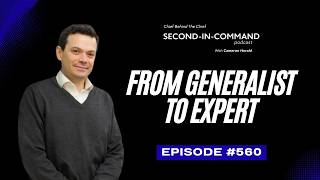
Guillaume Bouvard, COO and CMO of Extend, a fintech that works with banks on virtual cards and expense management, has built the company to $7 billion in run-rate with 8,000 customers including Fortune 50 firms. He prioritizes hiring deep specialists over generalists, uses weekly all-hands meetings and OKRs to align the team, and celebrates wins with rituals like ringing a boat bell for paid conversions.
Chapters
The board members don't want to be surprised. There might be best practice around making sure that you break the ice as early as possible, that you break the news. If there's bad news, don't surprise people. Yeah, and there's many mechanisms to make that happen. Now, one-on-one conversation can happen way before. Don't surprise people with things that actually are especially negative news. Tell them when it happened and work with them.
Our guest today is Guillaume, the co-founder, CEO, and CMO of Extend, a VC-funded digital credit card distribution and spend management platform that's redefining how credit cards are issued, distributed, and used. With more than 20 years of global leadership experience spanning American Express and executive roles across New York, Paris, Hong Kong, Tokyo, and Mexico. Guillaume brings a rare blend of corporate discipline and startup agility. At Extend, he leads business operations, product, and marketing with a vision to make digital payments seamless and secure for banks, fintechs, and businesses alike. In this episode, we dive into what he's learned from working closely with the board, his unique approach to hiring top-level talent, and why specialists can sometimes outperform generalists. Guillaume also shares how his team at Extend celebrates people intentionally and the frameworks he uses to keep everyone focused on what truly matters as the company scales. Get ready for a conversation packed with insight, structure, and heart from one of the leading minds in fintech operations. Let's dive in. We are live with Guillaume. Welcome to the show.
Uh, thank you for having me. I'm very glad to be here.
Of course. We were just talking about a really cool event that you were at recently in New York, and I can tell already so quickly that there is just so much kindness and actual curiosity and passion that just comes through so quickly, and I'm really excited to hear more about your story today.
Thank you. I'm excited to talk about it too.
So beautiful. Well, let's talk about it. Let's go ahead and start. Tell us about Xtend. What do you guys do and who do you serve?
Great. Um, well, Xtend is a fi— fi— uh, a fintech platform. I can't make even like the first sentence. It's gonna be great. Uh, so Xtend is a fintech platform that actually partner with banks and card networks to really enable all the businesses out there with modern spend and expense management solutions. I think we do that so that the banks can actually increase the value of their solutions and prevent businesses to actually having to leave the banks to access these solutions. And that's been a problem to date, and so again, we're trying to fix that. And then, and then if I just take maybe a little bit of a step back, I think we started from a pretty simple insight that we had, which was if you look at businesses out there, they actually are looking for a flexible platform. They're looking for a control over their money, how money is being spent in their companies, and you probably know that very, very well yourself. And, but they don't want to do that if they also have to leave their banks. Actually, they have a tension here, yeah? It's like, I want modern platform, but I don't want to use my bank. And so that was a challenge that we observed on the marketplace. And then when we also looked a little bit deeper, what we noticed, and obviously I actually experienced that firsthand because I was at American Express for so many years, is that a lot of the banks actually could not offer these modern solutions to their clients. And so they were struggling. If you are a product owner in any company, you want to delight your customers. There's absolutely no doubt about that. And you're challenged when you feel that you are unable to do that because of the legacy infrastructure that you have in your company, because of the means that your company has and the constraint that they may have from a process or a financial standpoint. And so, we actually took on us to actually partner with these banks to actually enable them with these modern solutions. And so that we thought that we would actually do two things at once, yeah? We would basically access an existing customer base through a trusted partner, which actually has a lot of asset, you know, again, the trust, the compliance environment if you want, all the underwriting capabilities and obviously their customer base and would marry that with what a fintech can offer today, which is an incredible UI, a really fast innovation, and just like being very close to the customers day in, day out.
Sounds like this must have been quite complex to build.
Yes. And for sure, Rome was not built in one day. There's absolutely no doubt about that. And so yes, it took us some time and we are excited to be where we are today. So we have about 8,000 customers, business customers I'm talking about, everything from the very small company to the much larger one, including Fortune 50, even bigger than that. And then we process about, on a run rate basis, about $7 billion on the platform. So, you know, small company, but certainly having a very large impact. And, you know, I think about the impact both from a volume that actually goes through our platform and number of customers, as I mentioned to you, but also through how much value we deliver to our bank partners.
Wow, it's gotta be quite the journey 'cause it sounds like you're at American Express and then you started this as your own company with some other founders and then you moved into the COO position. How did you become the person that was anointed as COO of this amazing company?
Yeah, it's a, there, there's no hidden story. It's a little bit of an organic development here. And so if I take a little bit of a step back and without going into too much detail, 'cause otherwise I'm gonna bore you to death. But, uh, we were 3 co-founders. One, uh, Andrew is the CEO today. Was very much of a product-driven, partner-driven person. He has that in his DNA. Danny, who is the second co-founder, is a developer and a designer. And so him basically automatically became the, you know, he was initially the CTO and the one building basically. And we looked around and there was a couple more things that needed to be done in the company. And that included marketing and everything that we call operations, finance, HR, legal and compliance, analytics, et cetera. And so, I was the only one who had marketing experience, 'cause I used to run marketing in a number of places before, and I used to run also operations when I was at American Express in a couple of businesses. And so, it became the de facto area of focus for me. It's also, I think, what is in my DNA. You know, I was trained in in strategy. I was trained in optimizing businesses. I have run businesses myself, so I have the full picture. And so that became, again, became a very easy and obvious division of labor, if you want. The one area where the three of us actually overlapped a little bit was product. The three of us actually had a product expertise and experience. Again, I was at Amex running some products. Andrew was at doing that too. And then he obviously, as the CTO and the designer, was very, very embedded into the product. And today, you know, he's truly our product evangelist, if you want. So again, that's the only place, but otherwise all the other functions, they were easily allocated to each of us.
Sure. What does your day-to-day look like? Now?
Oh my goodness, that's a hard question because there is not a day-to-day. Day-to-day changes for— I think it's true for any founder, especially at the beginning, but even years later, and it's very true probably for our CEO. The day-to-day changes massively every day, and it goes from the most strategic questions that you may have to solve, to answer, You know, what is the market? How is the market evolving? You know, what do we do with these new entrants? You know, how do we think about our board relationship, etc.? So very strategic questions all the way to the nitty-gritty of running a marketing campaign. You know, what do we have on this blog? How do we position ourselves in this material, etc.? So I wish I had an answer for you about my day-to-day, like, oh, I do that in the morning and I do that after. Actually, that's not that simple. I think it changes truly every single day. But again, if I just take a step back, I think I would just say it's a mix of, you know, very operational tactical behaviors and activities, again, to get the machine running and to make sure that it truly supports the business. and then way more high-level strategic conversation. Some of them are strategic for today and some of them are, you know, have way longer-term implications. Um, uh, and you know, it's a little bit like, why don't we talk about agentic payment as an example? All right, well, that's an interesting topic, but it's a much longer term. Yeah.
So it sounds like you have a lot of different things spinning, different things you're involved with or seeing. So there's, quite a bit of complexity. What is the process that you have for knowing what to focus on each day? Do you have like a Sunday ritual where you plan out your entire week? Do you do that in the day? What does that look like?
So, like everyone else, I love to do a list of activities, and I do have a number of lists of activities I need to deliver on. And that I run that on my computer and now there's a way to check the ones that are done and the ones that are most pressing and so I have my little technique if you want and what I do is I arrive before everyone else at the office so that I have time for myself and my, maybe one of the activities I do every day is actually to make sure that I understand what is really pressing for today, for the week, for the months. I mean, a very simple example, we have our board meeting coming up in a couple weeks. I have to think about that. Yeah, we have to prepare the material for that because it's, you know, it takes, it doesn't take 5 minutes to prepare these conversations. So anyway, just a, you know, a way to prioritize based on the impact that it's going to have, how critical it is just on the business overall. And the timing.
When you are presenting to the board and you're having those types of conversations, what are the things that they're asking about typically, or they want to know?
Yeah, so we have a very, I'm going to say cadenced board, and it's a very structured one, and maybe it comes from them guiding us through that when we created the company. I mean them, our investors, to I think myself being somewhat organized and rigorous in the way I do my work. And so the way we organize our board is it's almost always the same. We have, you know, the good and the bad to start with a very early view, not an early view, but a quick view of all the financials and the key metrics that the board needs to be aware of. It's almost like, let's give them the full big picture. Yeah, that's very important. At the very end of the board, we have a little bit of the administrative, you know, any other business as we call that activity or conversation that we need to have. And then in the middle, we have usually we have 3 topics that we are going to go deep on. And so these topics could be anything from a partnership that we want to discuss with the board for whatever reason, funding, obviously they are investors, you know, new entrants in the market and how we're gonna respond to that. And so there are usually fairly strategic discussions that we have with, with the board, but again, it's always organized that way and it has worked quite well, I would have to say, over the years.
Is there anything that you have learned from having those meetings where you have realized, oh, these are the really important things for me as a COO to be on top of in my day-to-day so that when these come around, I'm like, it's clear that I've got this. What have been those lessons or those points of focus that—
Yeah, it's, um, um, I think when you are a COO, you need to have a view that is very comprehensive of what's happening. And the expectation is almost that you're the, you have the single source of truth on a lot of information. And so it's a little bit of a hard one. Yeah, because you can't know everything. It's not possible. But what you can do is to be prepared with the typical question or at least have You know, double down on the areas that, you know, there will be questions about. Uh, financials is always an easy one, but again, same thing with financial. I cannot know everything all the way to the, you know, deep, all the details, not just, not feasible. And so it's, it's, uh, uh, you know, and it come with time, by the way, cuz you, I think you learn a lot by having these conversations again and again. It's, you know, get to know your numbers. I think that's a, you know, that's a very easy one. You know, the expectation when I show up in the boardroom is that any question at the high level about the financials, I can answer. That's a, again, that's an easy one, but it's true across all the different function. Yeah. So having that broad view becomes quite, quite important. Another thing I've learned honestly is that you don't want to Well, at least the board members don't want to be surprised. And so there is a little bit of a, there might be best practice around making sure that you break the ice as early as possible, that you break the news. If there's bad news, don't surprise people. Yeah. And there's many mechanisms to make that happen. Obviously you can say that at the very beginning of the board meeting, but it's probably too late at this point. But there are one-on-one conversations can happen way before. And so again, don't surprise people with things that actually are especially negative news. Just tell them when it happens and work with them. Board members have been, on our end, have been phenomenal with us. They've been truly partners from day one and they are never trying to undermine us. They are trying to help, you know, and I love it when one of our board members when we speak about our business and when he or she speaks about our business, actually say we. Doesn't say I, doesn't say you, he say we. And it actually tells me a lot. It tells me that they actually, they feel that they're part of the conversation, they're part of the solution as well as the problem. And so they're not trying to hide, oh my goodness, what have you done? You know, what is a problem that you have? You have not fixed that problem. It's like, okay, how do we fix it? How can we work together on this? And so I, you know, As I speak, I, you know, I think about conversation I've had with our board members where truly they are here to, I mean, we're somewhat aligned. Yeah, we all want the success of the company at the end of the day. And so that's, you know, again, another learning.
Yeah. What's been one of those recent hard points or things that you brought to the board or even just in your team? What's been one of those hard problems or challenges that you guys have been trying to solve recently?
I mean, you're always, you know, as an entrepreneur, there are always hard problems to solve. Seems that every day there's another one. You know, you just need to balance the hard one with the bad one with the good ones. I think the hard one for me, you know, that comes to my mind is Sometimes we work with bank partners and they are, the bank partner itself is very excited about working with us, truly. I mean, that's why the conversation start and that's why we obviously continue the conversation. And so based on that, you may expect, you share expectation of time to market and you know, everything related to that partnership and you do that, you share that information with the board as an example. But what you quickly realize is when it comes to third party, especially when the third party is very large and there is a lot of cooks in the kitchen, the timing is not necessarily something even they control. And they, I'm talking about the partners you're working with. And, you know, I'm thinking of one of our partners, they want, as I mentioned, they wanted to work with us and As the months passed by or the weeks passed by, like there were org changes on their end. And so the person that we had, you know, convinced and they were convinced even before, 'cause they reached out to us about working with us, then it was not in their role anymore. And then it was someone else. And then quickly later it was like delegated to someone and it was someone else again. And it a little bit felt like Groundhog Day. Where every time you have to go back to square one and re-explain the story. So, and then, and then you have to explain that not only to the bank partner and then the person you're talking to there. And, and again, they, they also want to launch a partnership and they're excited usually. But then you have to go back to your board and explain why something did not happen the way you wanted. And it's always, it's never fun to have to do that. 'Cause again, it's not that we failed at something truly, it's out of our control. Um, and so again, just learning from that and, and moving forward. Yeah, that's what's important.
What is your philosophy? Maybe, maybe philosophy's not the right word, or maybe it's just ritual or way of thinking, way of being that allows you to stay so calm, positive, even when you joined the, the Zoom room. I'm sure you have a million things going on. and you just show up so focused. I really felt your presence and that you were locked in and you were here with me now. What allows you to stay in that space of calm and positivity despite all of these new challenges in the Groundhog Day, as you mentioned?
Well, hopefully that does not happen that often, but that it has happened. Um, well, first of all, I'm, I, I stay calm because I'm in a booth at the very end of the office, so that actually helps quite, quite a bit. Um, no, I think the, the reality is, uh, first of all, we have a business that is, um, a great business. So, uh, that's one thing. Yeah. Um, uh, but if I take a step back, at the end of the day, we as, as founders over the years have hired truly exceptional people. And I wish you were in the office. I could introduce you to people and I'm sure you'd be like, oh my goodness, I want to work with them. Uh, they, And we tend to hire experts in their field. Yeah, I think a couple years ago, you know, the idea was to hire generalists who can help you in many different things. And I have personally evolved to, I need also, actually mostly need experts in their field. I need to bring that expertise day one into the house. Because, you know, the sum of expertise is that diversity in some ways, yeah, and that well-roundedness. It's, I don't need to have 50 people who are well-rounded and no one knows what they're doing just because they've touched 12 topics. I actually need to have 12 people who actually know very, very well their topic and can bring that to the company every day. And so again, going back to your question, to me, that is what keeps me calm is, you know, we just hired a CFO who used to be one of the, the, he was the CFO of one of the 3 business lines of PayPal. I don't have to, I don't have to pose and ask myself like, you know, are things going to happen? They will. And he's obviously excellent. He knows his function extremely well. And he has that work ethic to actually deliver, yeah, and his, you know, years of experience, and it's beautiful. And we do that at all levels. It doesn't have to be just the senior people. We take people who are passionate, who are curious, who are willing to roll up their sleeve and truly have that work ethic to actually deliver what they commit they had committed to deliver. So that's what's kept me, you know, calm.
You've got, you got people out there fighting some of the battles. Yeah. Is your whole team in office?
So we have about, uh, uh, half of the team is in New York and a little bit less than half in New York City in the office. Uh, and the other half is distributed mostly in the United States. And then we have half a dozen people in Canada. So that's across Canada, Toronto, a little bit of Vancouver, a little bit here and there.
Okay. I want to dig into a little bit of this hiring piece, especially around like the thing generalist versus specialist, because this is when I told you earlier that I left the company that I helped build in hindsight, one of, and when I left, it's like burnout. Health issues. And I just, I, there were some key hires that I should have made 6, 7 months before that could have helped me when I was, you know, just scrambling with like trying to fight, like water hose down all of these fires that were coming way faster than I had the team capacity and expertise to really support with. And my lesson in hindsight was generalists were fine up until a point, and then I should have hired people instead of trying to make everyone managers and teach them how to be leaders as fast as I did. I should have just hired people that already knew how to lead and manage, and, uh, that would've made a huge difference for me. So at what point did you guys find that that generalist, generalist vibe of hiring didn't, didn't work anymore and that you needed to become more focus on hiring experts.
Yeah. Well, and you brought up also another dimension, which is, you talked about management. Yeah. So there is, I mean, there are many different lenses, but there is one lens for sure, which is a functional lens. You know, how people have expert as, I don't know, are they, you know, expert in finance, in legal, in development, in engineering, et cetera, et cetera. There's another lens, which is Management expertise, you know, can people lead a team? Leading a team and being a people manager is actually a skill set and some people are good at it. Some people are bad at it. Some people learn how to be good and become really excellent over time, but it took, you know, there's a learning curve. No one, I don't think that people are born like immediately excellent people manager. I think I don't know anyone who's still not learning about that. Even people who have 5,000, 10,000 people reporting to them at the end or more still learn how to be a people manager. And there are, you know, new ways of managing that, you know, business schools around the world actually are developing and they are very efficient. And so I think we're all learning on that lens. But going back to your question around when, I think it was fairly early on, to be honest. And, you know, You know that saying that says it's good to be poor? When you are poor, you do not have the luxury of bringing people who are too much of a generalist. You can't do that. You have to bring people who are immediately going to have an impact. At the end of the day, a lot of what we do is not rocket science, truly not. You know, it's not that complicated and everyone can learn it. The problem is if it takes a year and a half for people to learn how to be very good at their job, or longer, by the way, then I've wasted all this time and I can't afford it. I truly cannot afford it. And so when, I know, we co-founded the company, the three of us, we immediately brought in people who were excellent in their field, and I think that helped us quite a bit. Yeah.
Do you guys have a full-time recruiter on staff?
No, we do not. We do not.
Are you in charge of that or who's, are you outsourced that to an agency?
No, we have also an HR extraordinaire leader. Her name is Seven and, you know, she took that on. Hopefully we do not have to recruit tons of people. And so, you know, it's not a full-time role, but, you know, at some point we had a full-time recruiter and she was also great. And I think it's a question of, it's like every role. At some point it's a question of quantity. And so if you need to hire a lot of people and have, you know, a throughput that is really high, then yeah, you absolutely need to have an expert in-house who does that. For that specific function. She happened to be very good at that too, so I don't, I don't have a problem.
Amazing. I'm curious, with all of these really exceptional people on your team, what do you guys do as founders to support them, but also give them enough autonomy that they can just do their own thing? What's the kind of cultural support or ways of building culture that you guys have implemented as founders?
Yeah, I mean, culture, I think in the company, and it's probably true in every company, is truly fundamental to how the company is gonna develop organically over time, yeah. And I think from day one, I remember so vividly at the very beginning of Extend, you know, the three of us sat down and decided or put down on paper what we thought would be truly the foundational trait that we were looking for in our company around, again, I talked about some of them, curiosity being one. We think it's fundamental, especially today, by the way, when you look at the tools around AI, et cetera. I mean, if you don't have the curiosity, oh my, you're going, you are failing to see absolutely incredible tools, yeah? And so you need to have people who have that mindset to actually look outside of their tracks, if you want, and be curious to look under the hood, how it works, and search the internet for new tools and what could make their job better, and just being curious to learn about someone who's in front of them on this screen, for instance, or next door, yeah? And so curiosity was one, but anyway, we looked at all these traits, which we thought were very, very fundamental. And they are the ones who actually guide us today in supporting our team members. Yeah, we do a lot to actually empower people. We, you know, we have put in place a number of mechanisms to communicate, as an example, to make sure that people are empowered with information. Because very often, that's, you know, one of the the element that breaks down the fastest, it's transparency and understanding of what's happening on the other side of the business or on the other side of the department even. And so we have put in place these mechanisms and, you know, it's as simple as we have every Monday at 1 o'clock, we have an all-hand meeting with the entire company where we actually go through all the business metrics so that everyone has complete transparency of where we are, what's working, what's not working. We review a number of topics across every single team. Obviously, we rotate, it's not everyone every week, but we probably 4 or 5 teams every week are going to talk about, okay, here's what's happening, here's what we're working on, etc. And we do that fairly efficiently, I think. We have, obviously, we work in, through OKRs that actually enable people to feel truly empowered to actually take the decisions to actually deliver, needed to deliver on their key results and obviously in the end achieve the objective that the company had put forward for them. And so again, we have all these mechanisms that I think over time have helped us empower people because I don't believe in micromanagement. I think it's very nice when you have like a very junior person. I think it's absolutely important to be able to guide them. I think it's very important when you have a new hire to be able to guide them, but very quickly, what you want is people who are independent in their action, not knocking on your door every 5 minutes because they're afraid that they're gonna do a step in the wrong direction. They actually, You want them to feel the trust that we have in them to move forward. And again, there are some guardrails. Yeah, we're not going to ask someone to do something stupid, but we leave, I think, tons of freedom for people to move forward.
How do you make sure that the team is focused on the right things when you're giving them so much autonomy and you can't be in the weeds micromanaging everything? How do you make sure they stay in alignment with the vision?
Yeah, well, I think that goes back to this OKR process that we have. You know, we have a quarterly process where we set goals for the quarter and very clear KR that are set by the OKR leader. And the OKR leader assembles their team and puts a plan together and start, you know, with numbers, with a number of tactics and metrics they're trying to achieve. And then they are, I'm not gonna say they're on their own, that's not true, but they're fairly independent, but within the framework of, you know, the business and the company objective. This is not like chaos, everyone does whatever they want, not at all. It's, you know, the objective is to do, to deliver X, Y, and Z this quarter. This is a team, Here's the 7 tactics, the 15 tactics, whatever they want to do in order to deliver on their key results. And then we have monthly check-in on each of these OKRs to understand how well they're progressing, what are the roadblocks at the company level. So that's an example of what we put in place.
What do you guys do to celebrate wins?
So we, we booked. So we just launched on, at the end of, actually at the end of June, early July actually, we launched a new subscription product and that was the first time. Until then, our product was fully funded, it was free to businesses and fully funded by the banks, our bank partners. In early July, we launched a set of advanced feature which, you know, for businesses now there is a fee for them. And obviously there is tons of value and so businesses are, I mean, if they see value, they're willing to pay for it. And so we went through this and it's a pretty big evolution for us. Yeah, we need to adjust a lot of our processes, communication, et cetera, but we wanted to celebrate wins. And so we actually attached or I ordered a small, like almost like a a boat bell with a rope under. Fun. And so whenever someone was at the beginning, they don't do it anymore, but they were feeling like converting a client to a paid tier, again, just for the fun of it. And it's still attached on one of the walls. People are like, ding, ding, ding, ding. That's so fun. It's actually really nice. But we do a number of things to celebrate wins. I mean, obviously, like many companies, we use Slack internally and we have the number of ways we can celebrate wins inside of Slack, because especially when you have a team that is remote, you need to find a way to communicate across, you know, above and beyond the office itself. Yeah, the bell actually works in the office, which is great, but what about everyone else? And so again, Slack becomes a very important communication channel and a really important way to communicate wins quickly and broadly. Now, we also do that, obviously, and I mentioned the whole end on Mondays and our team meetings, et cetera, et cetera. So we have other forums where we can do this, but yeah, but again, we, I think we're very aware of the need to recognize the successes of individuals, and I think it's too easily forgotten. Yeah. And it's not just like, because very often what is being recognized is the figurehead, but you tend to forget that behind a figurehead, there's usually a team of hardworking people who put many, many hours and evenings and lots of, you know, conversation to actually, and effort to actually bring a success to to the market. And so we, we, we need to, to celebrate these people too. And, um, yeah, I think we, we don't forget that. I think that's very, very important for us.
It's so true. There's always usually some crazy highly, you know, people who have been working so hard behind the scenes to make the manager look really good in the project that they're delivering. And I love when you can build systems where everyone really gets recognized like that.
And you actually see, which is always fun for me, you actually see that by doing that, I think everyone feels more empowered to actually roll up their sleeve and do something extraordinary. And I'm thinking of, so one of our team members on the BD side found out a couple weeks ago that the US immigration organization, governmental organization, USCIS, was actually changing the rule regarding payments. So when you're a law firm, the way you make a payment for a visa, as an example, and it was a one-page document published on the USCIS website, like, okay, not a lot of people would have seen it, but it has actually a very large impact on law firms. And that person found out about it through a conversation with a client and basically brought it to the forefront and said, we have an opportunity here and this opportunity is burning hot and we need to do it right now. And, you know, everyone rallied around him. We created some content like a blog, we created some ads, we reached out to people, we actually were included in the newsletters, we leveraged our lawyers to actually go above and beyond and leverage own network, et cetera. And the phone has been ringing up the wall nonstop since, but it's just one person who actually felt empowered to say, hey, there's something really great here. We need to grab that. And so I'm, you know, I'm so excited when I see this. And this person definitely deserves, you know, lots of praise for having done that. But what you realize is it's not just him. It's also the marketing, you know, the marketing expert behind him who actually thought about, you know, how to, you know, get the blog out, how to target the right people, et cetera, et cetera. It's the content writer who wrote the blog. It is the et cetera, et cetera. Like everyone rallied around and at the end of the day, you need to make sure that you recognize, yes, the leader who did all the work, but also all the other people who raised their hand and said, I'm coming, I'm doing that with you.
I love that. And speaking of who wins, this is a perfect transition into my last question. What are you most excited about in the next 6 months, both personally or professionally?
Personally, I hope I'm able to go to Japan. I have, I'm married to a Japanese-American woman, so I hope I will have the opportunity to go back to a country I love, but, you know, above and beyond that on the professional front, We have, I think extending is a truly an exciting position right now. As I mentioned at the beginning, you know, we help businesses truly capture efficiencies if you want and control through the platform that we give them and we allow them to do that by keeping the card they already have. And I take a step back and I look at the, if you have ever seen an innovation curve, yeah, innovation curve is like an S-curve and we are at the beginning of that journey. We're at the beginning of the journey where the companies out there that actually decided to buy in these modern expense management solution and spend and expense management solution, there are obviously a good number of them, but it's still, we're at the very beginning of that journey. There are hundreds of thousands of companies that are in front of us that have yet, and they are more traditional companies for the most part, yeah, and they have yet to adopt these and they are eager to do that. And so I'm truly, I look at where we are, we just launched the SaaS subscription product around expense management. We are expert in the virtual card and spend management. So now we take kind of the layer on top of that and we are going to market with this, you know, AI-powered solution that actually is delivering true value to our business clients and the banks behind them and the network and the processors behind them. And I can only be excited about, you know, the potential that we have. Now, obviously there's a difference between potential and realization, and I'm very clear about that, but You know, for the moment, the early signals are excellent and I truly want to, um, you know, see how far we can push this. It's, it should be phenomenal.
That's amazing. It sounds like you guys have a lot of momentum and a lot of great people behind you, so I have no doubt that you guys are gonna see sky is the limit.
Yeah, sky is, is, uh, definitely the limit here. And again, crossing fingers and working hard. I, I used to work for Ken Chenault, the CEO of American Express, who always used to say like, you know, prepare for the worst and hope for the best. I, you know, I think we do that very much here.
Beautiful. Well, thank you so much for coming and sharing your wisdom today out of your busy schedule and all the big things that you guys are working on to come and teach your wisdom to our listeners.
That's— Siobhan, that was really super nice meeting with you, speaking with you. I hope I answered some questions in a way that actually will be helpful and interesting to your audience. And again, happy to meet again when you come to New York City or if I come to Austin.
I would love that. Okay. Thanks, Guillaume.
Thank you so much. Bye-bye.
More from Cameron

Flutterwave Former Global Head of Operations Awa Kone | When Growth Outruns Operations (Podcast 611)







Optomi Professional Services COO Nick Murphy | The COO Can’t Know Everything (Podcast 607)


