How They Became a 210 Person Legal Empire | COO Michael Morse, P.C.John Nachazel (Podcast 431)
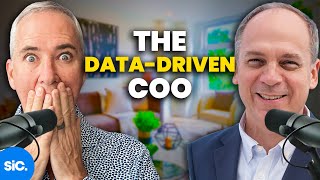
John Nachazel, COO of Mike Morse's personal injury law firm, scaled the operation from 27 employees to 210 by obsessing over data. He tracks cost-per-case acquisition at 19.5-20.5% annually, shifted marketing spend from 80% TV in 2011 to 45% today, and tied attorney pay to profit per caseload to align incentives.
Questions this video answers
210
Employee #27 (joined ~16 years ago)
About 19.5%–20.5% of case value annually
June 2011
About 45% (down from ~80% in 2011)
Chapters
The exact piece of paper that Michael handed me the first time I ever met him. He said, this is what you have to do. Can you do these things? And I looked at him and I'm like, yeah, that's right in my wheelhouse. And. And he's like, because I'm going to do these eight things. That's my sweet spot. And I'm amazing at it and fills me with energy. I'm like, great, because I hate that stuff. So sounds. Sounds great. And then. So it was just kind of classic that Michael went out and found his polar opposite by design, with Gino's help.
All right, our guest today is John Nachzell, who is a fantastic COO for the Michael Morse personal injury law firm out of Michigan. It's a company that he's helped grow from 24 to 210 employees. John's got his Bachelor's in Finance and his MBA. He joined the Mike Morse law firm as Chief Operating officer back in 2008. And after 20 years of sales, marketing, and data analytics, including six years of Ford Ford Motor Company, he's brought all of that expertise into the Mike Morris law firm. And you can really see the results of that. John is a wickedly smart but really approachable leader. He truly gets leadership, and he has everyone in the firm focused on the data, and it's been a huge reason for their growth, which you'll get into in this episode. He also drives to be the second best in each area of the company. He's going to kind of expand on that concept for us, and he's found ways to turn traditional expense areas into. Into huge revenue streams for the company, which is really a unique concept, and they do it really well there. They're also big fans of eos, which is the entrepreneurial operating system, and they're personally coached by Gina Wickman, who's the author of Traction and the founder of eos. You're going to love this episode. So, John, welcome to the Second In Command podcast.
It's truly an honor. Cameron, I'm thrilled to meet you and be on your show.
Yeah, I was looking forward to this before we went live because I've been following and doing a lot of work behind the scenes with a bunch of people on the personal injury law space. And I've. I've known of Mike Morse and kind of followed some of his work. And to get to talk to a second in command of a personal injury law firm, even though I've. I've worked again behind the scenes coaching a few. I'm really interested to hear your perspective and to gain that. And then you also gave me a couple other sound bites that we'll talk about in a little bit that I'm also excited to talk about. One is related to Gino Weckman and eos, but why don't you walk me through kind of a little bit about your growth trajectory to get to the role that you're in now. You're, you're the second in command for a personal injury law firm, quite a large one that's based in Michigan. Kind of walk us through how you got there.
All right, so background quickly is that educationally I was a finance major in undergrad. I went at Miami of Ohio, then MBA at University of Michigan. Spent the first 20 years of my career in the auto industry, six of it with Ford Motor Company in sales and marketing positions. And then I spent 13 plus years working for RL Polk where we sold data to the auto industry. And so that's where I was attracted to Polk because I love data and that's where I enhanced my skills with data. And from there I decided I wanted to go a different path, abandon the auto industry, and was lucky enough to land with a very young, up and coming rising star called Mike Morse. He hired me a little over 16 years ago and we were a modest size firm. I was employee 27 and Mike and I have been able to grow the firm together to where we're now the largest PI firm in the Midwest. So it's been an awesome journey.
Quite.
All right.
How many employees in the firm now?
210.
210. Okay, so just, and that's just for like a perspective on, on the scale. What I love about your resume is it's really nicely well rounded. And one of the weird things about being a COO that you, you know and I know we've talk wrote about it in my book. The second command is we kind of need to be conversationally fluent in all business areas. You know, we need to understand finance, we need to understand sales, we need to understand marketing, to understand operations, we need to understand data and mis. Whereas if you're the head of marketing, you pretty much just have to be great at marketing. Of all of the areas that you've worked in, do you find that one of them gives you a leg up more than others? And I'm going to talk to you about all of them, but which one would give you kind of the stronger leg up, you think? Yeah.
So I mean data, that's my lane. That's what I'm Known for. I have 11 direct reports on our leadership team and what I like to say. And I hung on to the data position, the data lead until this past May. That was the last one I finally let go of. And but what I, what I strive to be is the second best person in our firm at every position that my direct reports have. So I, I was the media buyer for marketing, the leader of marketing until it was taking too much time and we needed somebody better. And, and so I hired Trudy, who is one of our salespeople selling to me and she's way better than me. Hopefully I'm the second best. Too much accounting volume was killing me. So we hired Justin to come in and be the cfo. He's way better than me. I'm probably the second best in the firm. So that was my mentality, filling all of the different positions.
I love that mindset. I've never heard anyone say it. I've never heard anyone say that nor say it better. But being the second best in all the roles is a perfect way to say it. It's interesting. I was going to say that it was either going to be finance or data because I think the data gives you the analytics and allows us to be the counterbalance to that entrepreneurial CEO, especially in the early stages of building a company. And data really dovetails into finance. But you could be great in finance and not good at data. Can you distinguish the difference between the two? So people who are thinking about this for the first time understand the difference and why they're different?
Sure. I would say that from a financial perspective, it's largely based on balance sheet and it's going to be more so the net income statement. So it's the profitability of the firm and it's the results that you're trying to achieve. It's setting a budget and establishing a forecast and then managing. Establishing a budget that aligns with the forecast and then delivering against the budget to achieve your desired profitability. Whereas the way I look at data is, is those are the leading activities that drive the lag results. What are those things? The activities and events that are occurring within your firm that you can count that are going to be influential in driving the results that you're trying to accomplish. And that's. I'm. I'm very dexterous with large amounts of data, very comfortable with it and it allows me to be an ally to my leaders where I am giving them a perspective and helping them see their situation. I rarely solve a problem for them. Instead, what I do is I help them articulate the problem and I help them see what's actually happening in their world. And once I properly scoped and sized the problem and stated it for them, they're jumping forward with the answers. So I rarely solve a problem and give an answer. I just help them understand and see what is happening in their world.
I love that. You know, I rarely hear people talk about leading indicators and lagging indicators. Can you, can you walk us through from your definition what the, the two differences would be and how, how do you use a leading indicator in a business and how do you use lagging indicators?
Yeah, so I would say that leading indicators are, are going to drive the lag results. The, the lag indicator. So in our firm, a leading indicator could be how many new calls did we get for an auto accident case? That's what we're trying to get. So it might be neat that we got a hundred calls today. You get more than that, but I'll just use easy math. Okay, well, of the hundred, that's neat. But what's even more interesting is how many of those were auto calls, which is the type of calls that we want. Perhaps there's 60 of the 60. How many had criteria, met criteria where we actually wanted to sign the case? Let's say it's 30. Of the 30. How many did we sign up? Hopefully it's 28, 29, 30 of them. And we're getting above a 95% benchmark. If we do that, then we know once we've signed the case, we know what our average value is of a case. We know we have a normalized bell shaped curve that predicts the timing at which the, the money's going to come in. And then we simply have to count how many cases that we sign up are going to result in money. I put it in the model and I'll know what my lagged result is going to be three years from now. Based on the cases that we're signing up today. That's one. But we have lots of different leading indicators. How many lawsuits have we filed? Because once we file a lawsuit, a clock is ticking and we're able to drive the case to ultimate resolution. And the earlier we can get that lawsuit filed, if we can file it in 180 days after the case has been signed up, instead of 210, then if we can shave 30 days off of it, ultimately what we're going to do is bill for 13 months revenue in a 12 month period. An example of something that we're trying to do Right now, these are the.
Kind of metrics and numbers that, you know, most companies don't look at. And I'm curious, how do you decide which metrics should roll up to the leadership team and which measure metrics should be measured by a business area. You know, like marketing might have 50 metrics that they should be measuring and looking at on a daily, weekly, monthly basis. But you don't want all 50 of those to rise up to the leadership team. How do you decide which ones are the critical few to rise up to the leadership team Dashboard.
Yeah, I mean, it's interesting. I've got them all addicted to the data, so they have patience with me and they'll indulge me. And so we spend more time on data in our meetings than most firms would. But with that said, we have summary level data that's available. We call them jumbotrons. So we deliver Jumbotrons through Power Bi. And all of the managers, all the leaders in our firm have access to this data. So what I'm always trying to do is at a high level, make sure that they understand what's going on in the organization as a whole. Then each one of them has for their area. Here's all of your KPIs and here's all of the leading activities that you are responsible for. We'll talk with the team at the highest level, number for each leader. And then if we need to peel back the onion and say, hey, Trudy, what's going on there? She'll know because she has access to her activity report and she'll have already been analyzing that on with her. She's a little crazy. She does it every hour. I feel like she, I gotta pull her back. Pull her back a bit. Yeah.
Well, it's, it's interesting cause some metrics you want to look at hourly, some you want to look at daily, some are weekly, some are monthly, and some are like, you know, only if the indicator shows up red, right?
That's right. And that's exactly what we do, is we have it green. Yellow. Red. Yeah, yeah.
If it's, if it's green, I don't even want to talk about it. Like, let's not worry. It's like, I don't, I don't need to look at the gas. If the gas tank is full, I'm not going to keep looking at it every five minutes on my car. But if it shows up red, then I know I need to do something. Can you talk to me? Just. This is just a weird idea that I Just had. I'm curious, in terms of a strange leading indicator for your industry, first off, what percentage approximately of your business would be from auto accidents? Would it be 70? 80% would be 97.3. 97.3. Of course, you're a data guy, so you know exactly what it is. So I talked to the founder of Gerber Auto Collision, because I was a minority partner in that company 25 years ago, and said, you know, for the collision repair industry, the amount of autonomous vehicles coming onto the road is a massive leading indicator for our revenue dropping. And because there's just not going to be as many accidents, it's going to be 80% less oxidants. Do you think about that for your industry at all in terms of what's going to happen in 10 years, 5 years?
Yes, yes, I do.
Yes.
It was really put onto my radar, frankly, by John Morgan. He was all about the train is retired, the horse and carriage. You need to evolve. And so it was about 2013, I was at a conference and he said, you, you know, we're going to have to evolve as an industry because at some point, thank goodness, the vehicles are going to cause fewer accidents and we're going to need something else to do. So one is, I think that we, we didn't overreact then. We've been paying attention to it.
Yep.
And. But it's going to take a very long time for that really to happen. So there are vehicles that are on the, on the road that are being sold now that are not autonomous, and they're going to last for 20, 25, 30 years, still going to be on the roads. And I think it's going to take place in increments. So neat that one vehicle is autonomous. Even better when it can communicate with another autonomous vehicle. Even better when it can communicate with the traffic signal. So it's going to take steps and iterations. It's not going to be overnight, abracadabra. We wake up. And I would say this, that our, our, the muscles that we have from litigating the cases, there will always and forever be a market for that. We may need to evolve our subject matter. But if we are the best at litigating for our clients, then there will forever be a need for that service.
Yeah, you're right there. Because it's not like we're going from VHS tapes to digital overnight. Like, Blockbuster just went from I went to a store to like, where are the stores? I remember my kids all of a sudden like daddy, where the stores go. That really wasn't overnight. You know, you're right. This will take a long time because the other cars are staying on the road. Curious as well about your industry. You know the Yellow Pages, you know, that used to be 20 years ago. We had to be full page, you know, white backgrounds, bold, in as many books as you could be. Those are gone. TV was big for the personal injury loss space. Is TV now the digital Yellow Pages. Have you moved all online? Are you 50% online or can you, do you, do you talk about where you were there as a mix?
Well, I'm happy, happy to share. We talk about this on stages, so I'm comfortable sharing. TV is still our number one spend. So TV is dead. We all know it's dead, except for it keeps producing new leads that are very good. So yes, viewership's going down and all of that is happening. And where TV. We went on TV beginning in 2011, June of 2011. And back then it was 80 plus percent of our marketing budget. Now it's about 45% of our marketing budget. And what's happened is digital and Billboard has replaced that though it's, it's evening and, and digital is about to pass tv, but it hasn't yet. And so we try to use them in concert. We'll use TV because it's wonderful for building a brand for sure. And we'll use digital to hook them and pull them in.
Okay.
And, and go ahead.
No, but that's interesting. So, so your split has gone from 80 down to about 45. So you are definitely dropping that down. You do still. TV's giving you a large percentage, but it's not because you're still spending 80%. It just is still working. And then do you measure your cost of acquisition? Do you measure brand awareness? You measure them?
We measure the ultimate. Is cost per case signed. That's ultimate. What we care about. But absolutely, we're looking at the cost per lead. And then if it's a lead, we're also looking at cost per wanted lead. But ultimately the measure is cost per case signed. And, and I do want to say that for Michael, part of why we do so much TV is one is that's how we started and that's how people got to know Michael. And Michael's got it all. We don't have to hide him. He's relatively young. He's charming, he's handsome, he's got great hair. It. He's a. We're able to show him off and all of his dimensions on tv. We don't have to Hide anything. And so I think that that really helps build the brand for him specifically because he can shine there.
Okay. And I mean that does transfer over to things like YouTube, pre roll ads and.
Sure.
Yes. Oh yeah, okay. So interesting there. Do you, in the digital marketing world, they look at things like cost of acquisition and the lifetime value of a client, the cash conversion cycle. Do you look at that in your business as well, at all? Do you look at your cost to acquire a client and what the value of the case is going to be and then how long that payout is going to be, or do you worry about that?
Yeah, oh, very much. I mean, we have, we're all about the cost per case acquisition. So that's number one. We're able to keep it at about 20%. 19.5. 20.5% on an annual basis is what we spend to originate a case. And that's against the industry average of closer to 25 or 30. So that's, that's about where we are. And then we very much know how the, our money happens to come in over a five year period. It comes in in a very spiked way, beginning our, our bell shaped curve really starts to slope up in quarter seven. So at the 18 month mark, we start harvesting and we harvest until month 12. So 18 months to three years, everything's great. And then, yes, some money comes in after that, but that's where the bulk of it comes. And so for instance, a short story of how it matters is, you know, Michael was very concerned because we were six weeks into Covid and he said there's less traffic, calls are down, signups are down 50%. So we're going to have a terrible year. And this was in May of 2020. And I said, no, we're not. He's like, well, sure we are. I'm like, no, we're not. And he's like, this year, he's like, because of the, the curve. I said yes. I said 18 months from now it's going to be terrible and tough.
Right.
But this year it's great.
Right, because you're getting the payouts from 18 months ago. But so the cash conversion of the payout cycle really does matter for you. I heard a weird, a weird comment the other day. I'd love you to talk about it for a second. It's. It was a digital marketing agency that talked about the fact that they can actually afford to not worry about how little they pay to acquire a client, but how much they're willing to pay to acquire a client to generate that lifetime value, the client's worth. And if they're willing to pay more than all of their competitors, they can buy up all of the leads. It's kind of like if I spend a thousand to earn 10,000, why am I trying to get the cost of acquisition down to 800 when I could spend 4,000 to generate the 10,000 I could buy everybody. Do you think about it that way at all? Do you think about what you could pay versus what you want to pay? We haven't.
But I'll say this, we're in a mastermind group, a best practices group with some of the biggest players in the industry. They all are doing more than a billion dollars or more in firm history. So these are some of the biggest players. And there was a mindset that was shared with us of these cases are so incredibly valuable, I want them all. And so. And we weren't about that. We're like, okay, well, if we're inching up our incremental cost to acquire the case, and it was, hey, dumb, dumb, it's so much better that extra money. If you're going to spend an extra million dollars this year in your marketing budget and it's going to return less for you than the first many millions.
And why do it? Yep.
Why do it? Was our mentality. His mentality was, because it's so much better than anything else you could possibly invest in. What are you going to do with that million of million dollars that's going to outperform that? And we're like, nothing that's actually really smart.
So are you kind of balancing around that then?
Yeah, yeah. We have more of a tolerance. We're still a little bit frugal, and we get a little bit freaked out if the cost per case acquisition goes up.
But the mindset that I got on it was this. If you and I got a call today from our friend Steve Wynn, which neither of us know, but if we knew Steve Wynn and Steve, hey, come to Las Vegas. For every thousand dollars you spend tomorrow, I guarantee you I'll give you a ten grand payout for one day only. Just for you and John, for nobody else except you two, you will put it in writing. How much money would we bring to Vegas?
Everything. I'd empty all of it.
All of it, Right? Yes. We bring all of the money. Now, if Steve Wynn said, oh, but I'm not going to pay you that $10,000 for 14 years, we'd be like, wait, I need to do some analysis. I need to get John involved in the data I need to know my cash conversion cycle.
Yes.
So that's kind of the balancing act, isn't it? Is how much money can I spend to get that value over what period of time?
Well, that's exactly right. And what I see with a lot of the firms that we coach is they're all growth oriented, they all want to grow, grow, grow, grow. So awesome. Well, grows really awesome until you are spending a fortune marketing and all of a sudden the money's not going to come in for a year and a half and you still have to meet payroll and feed a lot of people.
So that's, that's why you have to be so good at the number side of the business and the finance side, which is your strength. How do you attract all of these really smart lawyers and paralegals and people in your industry and, and how do you keep them?
So I would say that we treat them great. We have a great culture. We're very different than a normal firm. Most of that is credited to our leader, Mike Morse. I think part of our retention strategy with our high end lawyers is that we, to my knowledge, we're the first and we've coached some of our clients to adopt this approach too. But we pay our attorneys based on the profit that they generate rather than the revenue that they generate. So we're able to be wildly aggressive on upside because once they cover their cost, the accelerator kicks in massively. And so they are enjoying a much bigger percentage share. And so they're able to take home huge paychecks. And we're thrilled about it because our interests are aligned. I want them to be wildly profitable and get a huge bonus.
So it's really, it's on the gross margin that they're generating, not on the profit of the firm. Correct. It's on the gross margin of their caseload that they control.
So I want the, they're going to say, well, there's 23 pods. How could I possibly influence the whole firm? But no, it's. What do you control as long as you and your team?
It does.
And I wonder.
I wonder. So I've always said that my, I was never the smart guy. I would have never been able to get an mba. I would have never been able to do finance. I have a form of dyslexia where I flip all my numbers around. It's called dyscalpia. So I was a classic 64% student at a B university in Ottawa. Um, so yeah, so I was never going to be that guy. My, so my R and D always Stood for rip off and duplicate. I always looked for the best systems in the best places and how do I bring that into my business? Have you found other industries that are paying their people in a similar way? Like do dental chains do that because they struggle with keeping their people Do, I don't know, like do agencies like what? Or did you just kind of come up with that model on your own?
Yeah. Truth is, is I don't know what the other industries do. What happened was it was December of 2014 and we had been paying our attorneys based on discretion at the end of the year, for the year in a row. The attorneys were all disappointed and felt that they should have gotten more and Michael felt that they should have been grateful for what they got and said this is the last time, we're never doing this again. Come up with a formula. So weekend I went home and we weren't at that time involved in, we hadn't written a book, we weren't coaching anybody, we weren't on in a best practices group. So I didn't know any better. Literally what I did was I said okay, if I, if I'm an MBA and I'm supposed to care about maximizing my shareholders wealth, I can't get them to care about Michael's wealth. But if I can get them to care about their wealth that they generate and then I run around with a bucket to each person and say let me collect up all your wealth that you generated, then I had in essence accomplished the goal and that was what inspired it. And then I took three years of net income statements and I figured out how much do I need to attribute to case origination, how much is overhead, how much is direct team? I allocated every single expense to a bucket.
Makes sense. Yeah. And then it works perfectly. So we did virtually the same thing at 1, 800, got junk and at college pro painters at 1, 800 got junk. We had the guys in the truck and we gave them a percentage of that truck's daily gross margin. If they did the work quickly, their labor cost was down. If they found a couple of extra side jobs, they could cold call and land a hundred dollars job, $200 job, great. If they could upsell the customer, great. If they could drop some stuff off at a recycling place and cut their dump cough off, great. So we turned them on to these little micro entrepreneurs and at College Pro Painters, same way we paid them a fixed amount of hours to paint a house and if they painted it faster, they got all the money. If they painted slower, they lost some Money.
So I didn't work at College Pro Painters. The company I kind of worked for was College Pro Pool Installers. So I installed swimming pools as my summertime job. And I swear to you, that was an inspiration for when I was creating this because my partner and I worked our butts off. We worked tons of hours, we worked fast, and we were making so much more money than the other crews who were showing up late taking a lunch.
Shouldn't her. Yeah. And why. And why do. Why do most companies pay them all the same? It doesn't make any sense.
It's. It's. It's. It's insane.
All right, so. So you got into. I want to talk about. I'm going to go into EOs and stuff about your book Fireproof, and some of the coaching you're doing, too. But I want to ask a little bit about the mastermind that you're in first. And then we'll. We'll go into those next, too. Getting into a mastermind community, a best practices group. The first time I'd ever heard about it was, you know, the Ford and Carnegie and Mellon days back like, you know, 100 years ago. But the second time were the. The car dealership, the dealer 20 groups. Right. Where they. They got all the dealers together from different territories and they kind of shared ideas. And so you were around that industry. Is that what allowed you to say, yes, let's get together with a bunch of other law firms and share trade secrets? Because normally most entrepreneurs would never get together with similar businesses in other regions for fear that they're going to come into my territory. How do you set up that mastermind where you're not going to compete or where you're not worried about competition? You know, the upside is greater than the risk.
Yeah. So I wish I could tell you that three of my six years at Ford were with Lincoln Mercury, which they were where I was working out in the field, and I would have a zone. I was a zone manager, and I know all about 20 groups and best practices. I mean, you were speaking my language. I get it. It was not my idea. Michael had gotten INV to join a mastermind group which I didn't know existed for our industry. So we went to one and absolutely loved it. It was fantastic. Then eventually we picked the best of the best and we went and formed our own mastermind. Nine of the largest firms are in this cohort. And then Michael and I are so fascinated by it that actually we're partnering with Bill Biggs and Kelly Williford and We've already announced that we're going to fireproof masterminds January 26, the day before the National Child Lawyer Summit in Miami. So we're in the process right now of setting up our own mastermind cohorts because we believe in the process so much.
And will those be masterminds just for law firms or will you have businesses from other industries?
Yeah, those will be for law firms. And we're going to do our very best. I'm sure we'll be able to get enough personal injury firms. We're going to try to keep it pure to the practice area. But we're also trying to generate enough interest from family law firms, from criminal defense firms, whatever it is, so that we can get, if we have enough support for it, then we'll facilitate it and organize it. Our strength, our subject matter expertise is going to be in PI. But it's still, it's very replicable.
Yes. Well let's, let's get a bunch of your members to get their second in command to join the COO alliance because we've got a huge community for them and we cross pollinate, I call it ideas having sex. You get a bunch of people from one industry with a bunch of people from a whole bunch of industries and from multiple countries. We have members from 17 countries. So we get this crazy cross pollination. One of my very, very, very first coaching clients right after I left 1-800-got junks. This was 2007 was a group out of Calgary, Canada called Fairway Divorce. And it was a family law firm who was going to franchise and they did a great job with franchising the, the family law industry in Canada. So that's another great industry with again high caseload, high, high value caseload I guess. Right?
Yep, yep, absolutely.
It's interesting though that no one has really done with that industry what they did with personal injury law firms. Why is that?
I mean the margins in PI are yeah there. So that might be part of it.
Maybe it's not as, maybe it's a little bit more dinner table friendly than divorce law.
Yeah, I, I think, I mean they all lend itself, you know, contingency based practices. You're taking on more risk so you tend to get more reward than when it's, you know, you're, you're, you're selling hours. But I, I, there's a need for it and we've had firms that are from different practice areas benefit. But, but yeah, PI is just for whatever reason they're out there leading the charge and we're trying to drag the other practice areas along and say, you know, share. Share your ideas with people that you're not competing against. Why?
Well, I want to ask about that. I want to ask about some of the ideas you got on scaling the Mike Morris law firm because you guys have been getting coached by Gino Wickman, the traction, the founder of the eos, the entrepreneurial operating system and the book Rocket Fuel. Gino and I have been in a couple masterminds community. We sat together at Strategic coach a bunch of times into the Genius network a bunch of times at abundance360. A few times you've been getting coached by the master and the guy who wrote the book on it. What did Gino bring to the table that helped you guys scale and, and how do you continue to grow with a system that is known for being more for the smaller firm when you're a, you know, a 210 person company? Right. So.
So forever grateful to Gino. Gino is still our coach. Gino was with Michael before I ever met Michael and was leading him. And in fact it was Gino that introduced the word integrator to Michael. And he had Michael do a delegate and elevate exercise and created the integrator wish list. What, what things do you hate doing or you're not good at? And he created an integrator wish list. And that integrate that specific integrator wish list is in Gino's book Rocket Fuel. So the, the exact piece of paper that Michael handed me the first time I ever met him, he said, this is what you have to do. Can you do these things? And I looked at them and I'm like, yeah, that's right in my wheelhouse. And. And he's like, because I'm going to do these eight things. That's my sweet spot. And I'm amazing at it. And fills me with energy. I'm like, great, because I hate that stuff. So sounds, sounds great. And then so it was just kind of classic that Michael went out and found his polar opposite by design with Gino's help. So I think that that was probably the most important thing. And Gino has helped Michael let go and let go. And my intrinsic motivator is autonomy. That's what fills me up with energy, is if Michael wants to tell me how to accomplish things, it'll drive me crazy. It'll shut down my energy and cause me to const and drive me away, frankly. And instead he creates a void for me. He tells me what result he wants accomplished and I'LL tell him. With Gino's intervention, once was. Look, don't tell me how to do it. I'm really comfortable being held accountable for the results. If I fail, I'll take it. But I don't have your tools, Michael. You have a completely different set of tools than me. So you telling me how I should accomplish it with tools that you have is of no use to me. He's emotion, I'm logic, and he's hyper creative, and I'm more systematic, and I'll get there. It's just not going to be a way that makes sense to you, and that's okay.
That seems to be one of the critical things for every CEO or the visionary to find when they're looking for their integrator or their second command is to find that person who's great at the stuff that they suck at, who. Who loves to work on the stuff that drains them of energy and kind of work through those differences. There's also the stuff around communication that are different. It's kind of like the book Men are from Mars, Women are from Venus. Right? Men are not very versions of women. And COOs are not incapable CEOs or less extroverted CEOs.
We're just different.
We see the world differently. We see the business differently. How do you and Mike continue to stay on the same page after all these years? How do you work through the. It's gotta be like a marriage. I mean, it can't be like every day. It's beautiful. There's gotta be the occasional disagreement, battles and all that. How do you work through that stuff?
So for some reason, we have stayed very respectful of each other despite looking through every single problem through completely different lenses. There's been an underlying respect for each other and knowing that even when things get a little intense and feisty, that. That we. We truly respect the other person. So that. That's part of it. The other is. Is. I'll use data to help illustrate what's going on. He's outstanding at consuming the information that I'm presenting. And then part of it is us meeting each other. And I mean, one of Gino's marriage interventions with us was, you know, he's like. He's like, michael, when John's talking to you, you have to please pay attention and listen for as long as you possibly can. And then he looks at me and he's like, john, you have got to say it in so many fewer words because he's not interested in hearing your long version of it. And so I think we're both just hyper aware of it and fighting our instincts to try to keep it going well.
And it's like, it's like the husband needs to like open the basket and let the wife throw all of her comments and ideas and color into the basket. Right. The CEO sometimes needs to let the COO speak and that the COO sometimes needs to give to the CEO just the summary. Just give me the. Yes. The bottom line. Right. So it's learning to speak with each other and, and, but I love the. Gino has been there as your coach to help you have that marriage intervention. Like, I've worked with marriage coaches to actually help CEOs and COOs because, well, it's kind of the same thing. Oh yeah. Well, I have a very, a very high powered marriage coach. Her name is Dr. Patty Ann Tublin. I got her into the Genius network for that purpose. But she's worked with Wall street power executives and major hedge fund owners and their spouses. I'm like, that's like a CEO and CEO. She's like, I never thought about it. So she started doing stuff. Yeah. Just on the side. It's been great. Can you tell me where? Every system doesn't break down, but we need to make it our own. You can't take the worksheet and absolutely use it. Like you have to iterate and, and tweak those systems. How does Gino allow you to, to tweak the system and iterate the system? And how does he push back and say, no, the system has to be followed. Like when or how have you guys decided to do that as an organization? Yeah.
And you're talking about specifically his EOS system.
Yeah, yeah. Like any. If there's a worksheet, like, and you guys, you guys have to tweak it a little bit. Like the L10 meeting is perfect, except when you want to add these two things or whatever. How do you do that without breaking it? Yep.
We just had our L10 meeting this, this morning, our 90 minute meeting that went for 120 minutes by design. And part of it is sometimes we don't tell him. Although that one, we did tell him. You know, he knows we go for two hours and he's like, well, but you're a bigger organization and you're, you have a 12 person leadership team. So yeah, that doesn't shock me. So he's, he's okay with it. And what we, and I would say that that's one of the differences. Forever be grateful to everything, Gino and everything EOs. And we still run our firm on Eos.
You know, make.
Make no mistake. And when we're with Gino, we are pure. He. He'll throw us out of the room if we're not pure. We follow his rules and we defer. But then when we're out there coaching firms on Fireproof, which has a lot of the similar principles instilled in it, will be a little bit more flexible. We'll say instead of a to do must be seven days. We'll say, when does this need to get done by? Well, give me a couple of weeks. And we'll just say, okay or. And that's. No, you can't do that. And so we, we tried to be. Allow a little bit more latitude as we work with our clients, but we honor and respect Gino so much that we're gonna.
There's loyal to it. Yeah, yeah, exactly. So you and Mike have started this, this organization to do some coaching of people in the space. You've got a book now called Fireproof. You're starting a mastermind in this space.
Yes.
The CEO of Boston Markets once said, George Nadoff said that a person can only sit on one toilet at a time. When you try to sit on more than one toilet, it gets kind of messy, which Aston Beck, it's amazing. How are you going to build these businesses without letting the personal injury law firms. Is it because you've kind of delegated and elevated, you kind of got the right people and the right team and the right plan and the right budgets and now you can let them run it? Was that first?
That was first. So what happened was true story is January of 2019. I went to Michael and I said, okay, here's how the year ended in 2018. Here's how we finished up, and here's the plan for 2019. So here's what's going to unfold. And we had decided at that point that we wanted to raise our bar and we wanted to accept fewer cases and refer more cases out. It was a strategic decision and we'd use the referral fees to pay for the marketing that we were spending. And it was easy. And so what I told him. And we ended up going through a process of going from 155 team members down to 118. And so we weren't hiring anybody. No one was new. Everybody was good at their job. I had all the right people and the right seats. I had all the numbers dialed in. And I. What I told him was, I'm like, this is kind of easy. And so I need a challenge. Do you want to buy a company? I'm looking for a project. He said, why don't you help me write a book? So we just started writing Fireproof for reasons that neither of us knew. And we were just writing it. And then when Covid happened, he's like, you got nowhere to go. Why don't you just finish it? Just bang it out. And so we banged it out and launched it in June of 2020, thinking that there would be a possibility to turn it into a coaching business. And sure enough, that happened. Now we have 54 coaching clients. But at the same time, what happened is because it's different stages at different points in time, was. Now Michael has gotten hungry as of a couple years ago and wanting to keep more cases and invest more in the marketing of Mike Morse law firm. So I'm in the process of coming back to the firm. I'm almost completely back. And now my daughter is running the coaching and she's way more talented than me. And so part of it was me recognizing that and saying, get the hell out of her way and let her do her thing. And so we're there to support her. But also part of it is Dan Sullivan, who not how I believe in having benevolent dictators that are responsible for driving the action of a bucket of responsibility. So Kate's in charge of Fireproof coaching. Bill Biggs we've partnered with, and he's the benevolent dictator in charge of fireproof masterminds. Kyle is the benevolent dictator of Fireproof jumbotrons that we build our clients. John G's the benevolent dictator of fireproof strategic technologies. And then I'm the integrator of the whole organization, but I've got just a whole nother set of leaders that are driving activity. They're not standing there waiting for me to tell them what to do. If they're waiting for me to tell them what to do, then they're going to be replaced as a leader.
You just said something that was really intriguing. And it's, it's. You guys have actually turned a couple of your expense areas like your jumbotrons that you build into revenue generating ideas. Because you're taking. You're building this internally, but now you're like, hey, let's build it for ourselves, but let's charge all these 55 other people to build it for them.
Yes. And so what we do is we have the best IT person in our industry, bar none.
So.
And you're generating a profit. So not only is he free to us. He's generating a profit. Same with Kyle.
Right. Business. You got a tech business for your people. You got a marketing. Yeah, this is great.
And they're all free.
Yeah, this is great. And you've turned into the. This is brilliant. It's really good. I've only ever seen that done a couple of times before, but it's almost like vertically integrating your business. All right, I want, I want to go back to the 21, 22 year old. John, you're just graduating from maybe 24. You're graduating from your MBA. You need to give yourself some advice. What advice would you give to the younger you that you know to be true? Today?
I would say I was a worrier. Stop worrying. Stop being so cautious. Take a chance. Go. Go for it. I was with a safe organization, big multinational forward and thousand person Polk. And then I went to this small little professional services company and I would just say throw caution to the wind and just go for it. For goodness sakes.
Yeah. John, fsl, I cannot see you working for Ford Motor Company at this stage of your life. You have definitely, definitely found your sweet spot. Mike Morse has definitely found a fantastic integrator. John, thanks for sharing with us on the Second Clan podcast.
I would say probably one of the biggest challenges for myself is his name is on the door, but I'm the one making the decision. And so that's a challenge. And it's a challenge for the team, I think as well, especially the ones that have been here for a while because you go from someone reporting to.
More from Cameron

Flutterwave Former Global Head of Operations Awa Kone | When Growth Outruns Operations (Podcast 611)







Optomi Professional Services COO Nick Murphy | The COO Can’t Know Everything (Podcast 607)


