How To Solve Your Cashflow Problems | Settle COO, Olivia Micallef (Podcast 326)
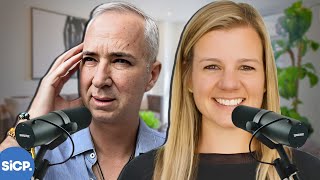
Olivia Micallef, COO of fintech startup Settle, explains how the company helps consumer brands solve cash-flow problems through invoice-based lending and bill-pay. Settle's fixed repayment model differs from revenue-based financing, and the company has secured debt warehouse facilities with Citi and SVB to fuel growth.
Questions this video answers
2015–2022
Started back in 2019 (founder: Alec)
About 100 (Olivia says she was around employee #101)
About 400 customers
Citi and SVB (Silicon Valley Bank)
Chapters
What I found, and I think this is really an interesting point, is if you're the founder of a consumer goods company, your skill set is likely not in the finance operations side. You can't expect the CEO or the founder to be all things for all the functions that are necessary for building a company. You also can't expect them to be able to afford to bring all that expertise on hand. And that's where we want to help step in, is like provide those insights that help them make better decisions. You probably heard the statistic that 80% of small businesses fail because of problems they have with cash flow. And so we were very much designed to help solve that problem for small business owners and help them understand if you're a business that's in this vertical that looks like this is at this stage of growth, what should your cash conversion cycle look like, how much inventory should you have on hand at any one time and what's the data that helps them understand what that what good looks like and then what they might need to be doing differently in terms of negotiating terms with their suppliers to get to a better place.
Wow. I am super excited about this episode. This week We've got Olivia McAllef who is the COO for Settle, an incredible fintech company. You're going to love what she gets into today. Talking about how they assist consumer brands with cash flow and financing. Talking about her insights on what's happening with the current kind of recession and slowdown, how they've even received financing and funding from Silicon Valley bank. Talking a lot about consumer brands consumer demand. She also gets into stuff around being customer focused, how her experience of having been with PayPal for seven years has now helped her in going into a much smaller company. She's at almost a reverse trajectory, starting off with Barclays with 30 or 150,000 employees, going down to seven years at PayPal and pretty senior leadership team roles there with 30,000 employees and having to help them through the COVID turnaround. And then joining now as the CEO at Settle, 100 person organization that's on a massive trajectory. You're going to love listening to her insights, her leadership wisdom. I think you're really going to enjoy the episode. This is definitely one to check out on our second in command YouTube channel as well. So check us out there and please share this episode too. We'll see you on the inside. So Olivia, welcome to the Second in Command podcast.
Thank you. Great to be here.
Yeah, looking forward to chatting with you. I know that just before we hopped on we were Both chatting a little bit about our experiences of having both been to Iceland. So I'm curious if you've been able to build some travel into some of your COO role or COO life or operations life. But we can get there as well. I'd love for you to start us off and just explain to us the company itself, what is Settle, what do you do, what's kind of the sweet spot of the organization. And then we're going to dive in and go into lots of areas from there.
Settle is a company that was designed to help small businesses with that perennial problem of cash flow. You probably heard the statistic that 80% of small businesses fail because of problems with they have with cashflow. And so we were very much designed to help solve that problem for small business owners and very much in the space of consumer brands, folks that are selling either through direct to consumer through E commerce or wholesale through retailers. The CEO and founder Alec actually has a background, he came from a firm and prior to that Capone and he is very, very much grounded in that like consumer brand. How do you help these small emerging businesses grow? And so wanted to create a business that was design around that mission of solving cash flow problems for them. And how can we, and how we can do that? And started out in the lending side. Obviously working capital is the number one thing that helps a company grow. So how can we, how can we provide working capital solutions for those businesses as they are thinking about all of the pain that goes with purchasing inventory when you're a consumer based brand. And then we have built out a platform that is on the bill pay side. So how do you pay your vendors? How can you make sure that all of those B2B payments that you're making are working for you and for the cash flow cycles that you have as a business so that you can be very flexible in the way that you take care of your accounts payable. And we just recently, last week in fact launched a purchasing suite. So really solving some of those back office and workflow pain points that customers have when it comes to dealing with the POs that they receive from their retailers, the invoices and the, the receipts. So really starting to dig into like solving these pain points that consumer founders and consumer brands have. It's incredibly complex and it's an incredibly tough world out there and we just want to take some of that pain away from those business so that they can actually get on with what they do best.
I'm so surprised at how few businesses that are in the B2C space. And in the space that requires inventory, how they don't, they don't understand inventory and cash flow and they don't understand, you know, inventory turns. I was just speaking with the CEO of a company an hour and a half ago about how they manage their inventory, and he goes, yeah, I still kind of just do it like from my gut. I'm like, that's a scary way to manage inventory when you're a $50 million business from your gut. So have you heard of what's called the 240 number? I don't know if I. Maybe I've invented it. But it's, it's basically you take your gross margin multiplied by your number of inventory turns and it has to equal 2, 40 or greater. So if you have like a, you know, 30% gross margin, you need to turn your inventory eight times. If you have an 80% gross margin, three times. He was like, whoa, that's such a cool little ratio. Do you guys have ratios like that that you help companies understand or are you merely just kind of bridging the gap and helping to loan the money and, you know, giving them working capital for inventory? Are you helping them become better business people as well?
Oh, it's such a great question. And it's something that we actually think about all the time. It is. Where we are thinking about expanding from a product perspective is how can you give a business owner those insights that are going to help them make better decisions about what they do? So where you can pull data from, whether it be from their suppliers, whether it be from third party data providers, and then help them understand, if you're a business that's in this vertical that looks like this is at this stage of growth, what should your cash conversion cycle look like? How much inventory should you have on hand at any one time, and what's the data that helps them understand what that what good looks like and then what they might need to be doing differently in terms of negotiating terms with their suppliers to get to a better place. But what I found, and I think this is really an interesting point, is if you're the founder of a consumer goods company, your skillset is likely not in the finance operations side. And so that's why it's so interesting that we talk about the second in command thing, but you can't expect the CEO or the founder to be all things for all the functions that are necessary for building a company. But you also can't expect them to be able to afford to bring all that expertise on hand and that's where we want to help step in is like provide those insights that help them make better decisions. What I have found is those founder CEOs are so strong on the product side, so strong on the marketing side and we want to help them with all those back office items that help them, that help them build a really sustainable and profitable business.
Well, and it's not even the small founder led entrepreneurs that are often having struggles as well. I mean you, you've noticed it. I've noticed it. Almost anyone listening has been to a store where you walk into one store and they have, you know, one small, one medium, one large. Everything's kind of perfect. Skus, you're like, oh, the inventory is kind of perfectly optimized. Then you go into another store and they have like seven mediums, no large, 12 extra large. Like is managing your inventory like doesn't make any sense. So these are big brands, some of them, right? Like these, these are like well known household names. Why is it that some companies just don't understand that? Do they just get sloppy with inventory or do they not truly understand or do they just have too much cash? Because I've always looked at cash like your oxygen, that if you run out of oxygen, you're dead.
I think like from an inventory management perspective, like consumer demand is really, really hard to predict. And I would actually say over the last three, four years, particularly since COVID it's been really difficult to perfectly plan your inventory because I think consumers have been irrational in some circumstances and certainly like what I have seen is incredibly hard to forecast when that irrationality is being, is sort of taking place in the marketplace. Now. I'm hopeful that you know, some of the economic signs that we're seeing through the sort of, as we look towards the end of this year, hopefully the economy has this soft landing that we are looking for. Hopefully things start to check back up towards the end of the year and moving forwards and you start to see a bit more rational consumer behavior which would help you plan inventory a little bit more easily. But I think that a big driver of that is, is consumer demand. That's not to say that like there are many consumer brands out there that just have not done perfectly with their inventory planning. It's an incredibly tough thing to do. It's very much combination of art and science. And there's also, you know, we see a lot of customers who have very personal desires for the kind of excuse that they want, they think their customers want and then they up, you know, with a whole heap of Inventory they haven't been able to sell. And then trying to figure out how to get rid of that is a tough ask. So we do see that and, and try and help our customers think through how to, how to get rid of some of those, those colors that they may not have been quite as fashionable as they thought they would be.
You guys are going to be a key company for a lot of these brands because hope isn't a strategy, right? We can't sit down and say we hope it's going to turn because if we're wrong, then it's like, oh shit. Are you noticing any signs from the B2C companies out there right now? Are you seeing any indications of what's happening with consumers?
I would say three, four, five months ago, I think people were more on pause and I've started to see an uptick in purchasing inventory and being more confident around the ability to sell that inventory through. So I would say even in the last six months, we've seen a change. I would say, you know, Q2 of this year there was a lot of like, let's wait and see. And now I'm starting to see a lot more bullish attitudes going into second half of the year.
What about the, what happened with Silicon Valley bank and kind of what's happening with, you know, borrowing rates are up 5 points versus year ago. What are companies that are in the B2C space feeling and what are you hearing from them?
Silicon Valley was a curveball for sure. I think from a borrowing rate perspective, we see customers that are shopping around like, working capital is interesting, but that market has diversified an awful lot over the course of the last several years. We have a lot of competitors and it's quite a hot marketplace. So we see a lot of customers that are just shopping around for rates and trying to get the most affordable rate that they can when it comes to funding their working capital. And we really specialize in that life stage of a company where they don't typically get bank funding or they don't qualify for it, or their banks are just not willing to lend it to them at a rate that's acceptable. And so they're much more likely to come to alternative financial providers like us who can give them something that is, that's going to work well for their financials. So I would say, like we see it, we, we still see a healthy demand coming in for working capital. We obviously have really stringent rules in place from a risk perspective. So we're very careful about how we, about how we lend out but like from a pricing perspective, I think we are very keen to make sure that we are very competitive and that we can offer our customers something that they can afford. So that long term health of a business and their ability to be able to repay us is incredibly important to us. Like we want them to be with us for the long term.
There's a company based in Toronto and I can't remember what the heck it's called. Off Clay.
Yeah.
Are they, are they kind of in around your space as well?
Yeah.
So is it a similar model? My understanding is that, that you loan money based on, for inventory as a primary reason and then you kind of collect money based on the revenue based on sales. Is that a similar model or are you. We.
That's not our model. And actually Clearco recently launched some new products where it's closer to our model. We don't take the repayments based on revenue. So that's more like a revenue based financing. Ours is invoice based financing. So you're right, inventory is usually the primary purpose. But anything that you would, you know, want to finance with an invoice we can help fund and then repayments for us are fixed. So it's basically when we agree, we agree with a customer that you would have like 60, 90, 120 day terms. You pay a fixed amount for the amount you borrow for every 30 days that you extend that payment and it never changes. So the big difference between us and a revenue based financing company is that your repayments are absolutely fixed, very transparent and very clear. Whereas it can change dramatically if you're just pulling a percentage of your repayments from your revenue and can tend to overly penalize those whose revenue growth is very high. So we, we really like our model. I actually see it coming from Alec, our CEO came from a firm that's all about honest upfront pricing, no hidden fees, being very transparent and very straightforward on what it's going to cost. And we pulled that ethos into settle because we want our customers to have absolute certainty over their outgoings. And so that's why that's how we've built the product the way that we have.
Is a recession good for your business? Is it bad? Is it all over the board? Like, I would think that if it's a tougher time that it's, you know, there's going to be a lot of companies that are looking for models like yours for financing and for help around inventory and cash flow. Or does it make it hard because there's borrowing costs and you guys have to. Actually, you're kind of an arbitrage where you're borrowing money to then loan as well.
It's both, right? I mean, like. Yeah, it's both. We, we need to see healthy businesses coming to us for financing and they need to be experiencing growth and have felt healthy financials for us be able to lend to them. That's very much dependent on the state of the economy. And also our funding costs are dependent on what's happening from an interest rate perspective and what the Fed's charging. So it's a fine balance because. Yes, you do. Like, I mean, I, I might. I started my career in banking. You do see a lot of people coming to you for financing when the economy takes a downturn. But you've also got to be really careful about how you deploy your capital.
They're not necessarily the right ones at that time too. Where are you guys financed? Where does Cell get its money?
We have two debt warehouse facilities, so the first ones with Citi and the second one is with svb.
Wow.
Yeah, we, we just announced it a few weeks ago. There was a moment when we thought that that might not happen, obviously a few months ago. But we managed to, we managed to pull it through with them and they've been great, very supportive of Settle, which is awesome.
Who acquired svb?
I've forgotten the Net, their new name.
So some, some bridge that they were provided or some way to kind of save it.
Yeah, the FDIC stepped in to, to back them up.
Yeah, it was a. It's a weird. It was a weird situation for sure. What are some of the. The kind of core. I mean, you're in Fintech right now, which has been a very trendy space for the last five, seven years. What do you think have been some of the keys to the success of the company? And what are you focusing on as a CEO?
Settle has been on a quite an exciting ride. I mean, it was started back in 2019 by Alex, so it's very young company. And what was interesting for me when I joined was that they had essentially grown organically to customers really fast. What that says to me is really good product, market fit and a great product that is interesting and appealing to the customers. So when you start to feel that pull from the market, it says to you that there's something interesting going on there. I've been in finance and payments my whole career and I think that there's such a strong demand from, from consumers and from SMBs in particular for Fintech because they just want that ease of use and that like that relationship layer that technology can add in to make your life easier and more understandable than what traditional financial services organizations have been able to provide. And that's where settle, I think plays a really nice role in being able to solve that, like that workflow, being able to solve your cash conversion cycle issues, being able to help you in your back office tasks that like, you wouldn't necessarily see any traditional financial institution solving all of those problems for you. Whereas technology can like play that, play that role. What I really love about it is that from an, from an SMB perspective, this is such an underserved segment of society. Like I really fundamentally believe in that fintech can play a really important role in powering like the SMB economy. And I really strongly believe in that as like the bread and butter of our, of a really healthy economy in general. So like SMB payments and the SMB space in particular has always been of interest to me in terms of my role from a CEO perspective. Like obviously COO is a, is a role that can look really different from company to company. The primary job that I was brought in to do was to build out, go to market. So like I mentioned, we had, we'd grown organically to about 400 customers. What we really wanted to do was then like supercharge that growth. So it was like, how do we build out a go to market strategy and a go to market team that can really help us from a, you know, deliver on our revenue ambitions, deliver on the ambitions that the investors in our company have and really start to like to grow our customer numbers as well, both on the lending side, but also on this like SaaS platform that we've built out from a PO and payments perspective. So my job ostensibly was to do that and that's what I've been doing since I joined in the very end of last year.
So yeah, it's interesting you talked about, you know, the COO can play a very different role. We've been running the COO alliance now for six years. We've got members that are all second command from 17 countries. And I've had the second command podcast where I've interviewed over 300 COO's. And I was a COO a couple times too. I was a COO for 1, 800, got junk and I took them from 2 million to 106 million in six years. I would have been a horrible COO for your company. I don't know Fintech, I'm probably not great in that space and it is such A completely different role. So how did they decide to choose you? And what do you think makes you good for this role? And then how long do you think your season is in this role? Because I think there's also a season again. I was the perfect COO for 1,800, got junk from that 2 to 106 million. Their next COO was there for a year. She was a former president of Starbucks and only lasted a year. And then they've had somebody now who's been there for 10 years, who I've known for 30. He would have been horrible for the first six years, but he's been amazing. To go from 100 million to 450 million, do you think there's. Are you an entrepreneurial CEO? Are you kind of a mid size?
I'm a builder and I'm a grower. And someone, someone once said to me back when I was at PayPal, he was like, you're never going to be interested in like steady state roles. So I think like, for me it's how do I get settled onto a growth trajectory that feels really great. How do I build something that is then operating like a humming machine and we just have like perfected every single go to market motion. Once that's in place, that's probably when my tenure is at an end because my skill set is the building and growing. It's not like steady state management.
What years were you at PayPal?
2015-2022.
So it was a pretty big company though.
Yeah, I joined three months before we separated from ebay, so I was part of that whole journey, which was really fun.
It's funny, I had somebody the other day on social media said, and I think when Elon Soul, like, people have no idea. Like, he didn't start it, Peter did. But anyway, so I think he sold for like 20 million. I'm like, I think it sold for 1.5 billion. Like, people have no idea. So if you're a builder, were you running like a big division inside of PayPal? How did you stay kind of entrepreneurial inside of that big organization or because subtle is a completely different culture too.
Oh, completely. It's so funny you say that. I mean, look, like my career trajectory goes from being a Barclays, which is a British bank of 150,000 people, I think at the time, to PayPal to then settle. So, like, I've definitely like taken a downward step from number of employees perspective from each of those three roles. I really, I honestly loved my time at PayPal. Like, I really had a Wonderful experience from a career perspective. I think what was interesting when we separated from ebay was that it was like a giant startup, and there was an awful lot of process and structure and functions that had to be built. As we separated out from ebay and then started to operate as an independent company, I can't probably overstate just how much that did not exist back in 2015. So a lot of the roles that I took on were more about how do you build the company to operate in a way that, like, feels grown up and that, you know, justifies the market cap that we had. And so I did. I did a number of different roles. I would say, like, some of them, you could probably qualify as kind of a COO role. But like, I worked as the head of biz ops for the chief commercial officer at the time, who was basically bringing together what was a very distributed regional organization into one global sales and marketing organization. And what, you know, what does that look like? How does it work? How do we measure success? How do we give the CEO the information that he needs in order to run the company? It was. It was like. And then how should we structure the organization? What does a customer success manager role look like? It was like the whole gamut. That was super interesting. And then by the end, I did a number of different roles, but by the end, I was running a part of Venmo, so I was the GM for Venmo Commerce, which was all of our B2B products there. That obviously gave me a ton of ton of great experience in the P and L management side of things, product management, and just like shaping and forming the strategy for that part of the business. And that was in growth mode too. So very interesting from a learning perspective.
It was a really interesting stage for PayPal as well. Like, I remember when 2015, 16, all of a sudden, PayPal became cool again. Like there had been a stage for so long. Kimball Elon's brother worked for me back in 93, and I started using PayPal in 99, where I could beam money from my 3X Palm Pilot to somebody else's in a bar. Like, this is cool. And it was like, PayPal was the coolest thing in the world until around 2003. And then it was just like, it seemed like it went off a cliff whenever it was that it sold to ebay. I don't know what era that was maybe a little later. But then it did start to become cool again. It was almost like a big startup. So you were there at a really interesting stage. What was it that attracted you to Subtle, then why would you like. Because that is a very different business. And how many employees were at Subtle when you joined?
About a hundred. I think I was somewhere around Employee 101, something like that. So, yeah, it's radically different because I think PayPal by the time I left was about 30,000. So quite a difference. It's interesting because I was looking at lots of different career opportunities, including going to larger companies where I would have a much narrower set of responsibilities. And for me, I wanted broad and I wanted to have wide impact in an organization, and I wanted that experience being in a smaller company where you can truly say, like, you have four and one for the growth that you've achieved. And I'll say, like, one of the big sort of learnings for me, and I've had friends that have shared this with me previously in their careers is, you know, you go from being a. Being in a company which has a household name and where growth is much, frankly, much easier to come by, to going to a small business where no one has heard of you and you have to fight for every single customer, every single dollar of growth that you achieve. And that has been so wonderful from a, like, a learning and from a career development perspective that I just. I wanted to have that experience as well as, like, how do you build a culture? How do you get everyone lined up? Like, some of what was frustrating by the time I left PayPal was it felt like stuff was slow to get done. And here, you know, we discovered a customer pain point. We built a product, we had it in beta. Two months later, I was like, I just. It would not happen in a company size of PayPal. The tech stack is too complex.
You know what's funny, though, is, like, at subtle, you're right. Nobody knows the name Subtle, but inside the company, everybody knows the name Olivia. Yeah, at PayPal, everybody knew the name PayPal. But inside of PayPal, there's 29,000 people that didn't know Olivia. Right?
Yeah, that's right. Well, I think about 20,000 did, but. Yeah, but.
But, you know, like, it's such a different experience, right, where you can you ride up the elevator and you actually know the people that you're hanging out with. It's a really. It's a fun stage, I think. I like. I love that stage.
Anyway, I am enjoying it so much. Like, the speed of being able to get things done, feeling like everyone's pulling in the same direction. Like, the other thing. The other big thing for me was, like, the stresses are Completely different. Going from a large company to a small company. Like in a large company, like the stresses are the honestly the politics. Like do I have the right relationships to get what I need to done and do people think that I'm achieving impact and am I adding value and have I got the right relationships across the organization? That is, that takes up a lot of time and a lot of stress when you look for work for a large company that does not exist in a company with a hundred people, not in any shape or form. But your concerns are different. They're more about like funding and Runway and you know, how are we gonna, how are we gonna win over this partner? Like, it's much more real, much more visceral and I really enjoy that.
Yeah, I've never had to deal with that. The big company. My wife did, she was with Ticketmaster and Salesforce and she hated the politics because you'd be working so hard on stuff, only get blocked by stuff that didn't even make any sense. Like it wasn't for the good of the company. So how do you manage some of the day to day stresses and some of the business stresses?
I'll tell you when, when it first happened, I like when, when I first joined the company, I was like, wow, this is completely different. And it took me, it took me a beat to like just figure out like where do I need to be very concerned and where do I just need to like watch and wait or where do I need more information. So like I've learned a lot. Like when I'm at PayPal, I was never really thinking about the funding of the company and you know, the viability of the company. I've been able to spend a lot of time now like really digging into what the financials of the business, the assumptions we need to make in our go forward modeling like how to really think about the next six months, how to think about the next 12 months, really deeply understand like the time horizons that are important to us as a company and really understand the levers that you have to pull in order to be successful. And like that has all been stuff that I didn't even think once about when I was at PayPal and I just had to learn it here and really sort of like just roll up my sleeves and dig in. You know, like our finance guy sent me a spreadsheet with a ton of tabs and I've just had to make my way around that and try and figure out like what's in, what's going to be important and where are the levers and how do I, and how do I affect them as the coo? So that's been, that's been a hu. Learning for me and like, what an incredible opportunity to learn that at this stage of my career. So it's been great.
Now, I mean, culturally I can see why they picked you and you've got a great energy. I would have been concerned that you were too corporate coming in, you know, coming from Barclays, coming from PayPal and that were 100 person startup ish. What did they see in you and, and what did they see in you culturally that made them know that you were going to fit?
I think that was, you've hit the nail on the head in terms of like, that was my concern and that was their concern going in because it was such a new thing for me. I think what I've been able to demonstrate over my time, particularly at PayPal, is just a massive willingness to roll up my sleeves and get involved at a huge amount of detail and at any, any level. So like, for example, I remember when I was interviewing for the job, like giving the example of during COVID we were preparing our response, you know, for our customers. As we were in the very early stages of COVID a lot of customers were hurting badly and we wanted to put together like a package of support, you know, whether it was like payment breaks on fees or you know, products that we could make available that would help customers through that time. And I remember like sitting at midnight writing Q and A for our customer success team should customers call in to do it. And I think it's that like, that ability and desire and energy that I have of like, just understanding the business from top to bottom, being able to help and just willing to roll up my sleeves and get involved and not, not worrying about, oh, someone else should be doing this, or, you know, this is someone else's job. I'm like, let's just like, I'm very outcome oriented as a person and I just want to make sure that we have the right outcomes in place and, and I genuinely care about doing the right thing for customers. And I think some of those things came through and that's why they chose me.
That was precisely what killed the CEO who replaced me. She was a former president of Starbucks USA. She walked into 1-800-got- junk and nothing was her job. Everything was a hire, a consultant, or, you know, it was, she treated everything like a bigger business. And within a year it was like, you gotta be gone, like just a bit.
Well, it's interesting because I've seen PayPal is just one of those companies where if you're a VP or whether you're a manager or an IC in that company, like you do have to be able to operate at multiple levels and do, and do a lot of that work yourself. And I know there are other companies where that's not the case. And like we saw there were, there were other folks that came in from other, let's call them more established financial services organizations and they really struggled to fit into the culture there because they were more like, you know, I'm just going to flick this email over to somebody else whose job it is to do. And it's not my job to understand it or to understand the impact it has on you. Like those pieces I think are really important if you're going to be successful at this stage. Particularly.
I hired a VP of marketing one time and his first question to me, literally first question on first day was, who fills out the FedEx slip? So I'm like, what have I done?
We've got a problem here.
Yeah, really, I really hired the wrong person. If he can't fill out a FedEx slip. This is ridiculous. Covid. You just mentioned Covid. I, like, I almost forget that it existed. That must have been a whack in the side of the head as a 30,000 person company and all working pretty much out of offices back in the day. Like, how did you, how did the company get through that in the first 90 days? Like, what were some of the big lessons from that?
Oh, the first 90 days I think were just incredibly tough. Like, but I like, I'll talk about my personal experience being I am just an extrovert. I was always that person that was in the office Monday through Friday. Like there were a lot of people that worked from home on Fridays and I was not one of them. I was someone who got my job done through, you know, corridor conversations and like suddenly going from that to being in back to back meetings, frankly from something like seven in the morning till at least six at night, that was really tough and there was no break. So personally, like I got very burned in those first few months. But then you start to get into a routine from a company perspective. I think PayPal did, actually did an incredible job of providing the hardware, the support, the resources for employees that were needed to like get everyone set up. Because when you think about a 30,000 person organization, you might forget that like a good majority of that is actually folks that are in customer service that literally come into a call center every Day and getting those set up from home was done very quickly and actually very impressively by our IT department. And I think I was, I was blown away by what they were able to do to just make remote work possible. And then what they've been able to do to sustain that remote work since is really great. It's been interesting to me because Settle is a remote first company. I mean, it was born during the pandemic, so we do have a couple of offices in New York and San Francisco, but for the most part we all work remotely. And that presents its own challenges in terms of building those relationships with people that you work with. And I'm very much a relational person. And so that has been quite hard. But at the same time, it provides just a huge degree of flexibility for you to be able to do your job. And I, you know, I have a two year old son, I have a Covid baby. So it's actually been great for me being able to manage my life in that way. So I, I feel like it has as many pluses as it does minuses. The one thing that I would say as a woman, and actually when I was at PayPal, it was particularly remarkable for me is that working remotely where you have one face per screen, becomes much more democratic. So when you're in meetings with multiple people, you don't have like someone who's sitting in a different country zoomed into a meeting room where they just can't get themselves heard. And I also found like one face per screen meant that there was a lot more opportunity for people who may not contribute in meetings to actually have their say. And I really loved that about it. And I would hope that some of that culture continues as people are returning to office.
Really interesting. You're right. You do tend to give people more space to speak because you see the four or six people all as equal. You don't. They're not tucked off in the corner at the boardroom table somewhere.
That's right.
I'm super impressed with, with all companies, frankly, at how we got through Covid. I mean, I think companies in general need a big standing ovation for how they pulled this thing off, because that was not in the playbook. And you know, you had companies with 800 employees that were like, no, we are absolutely in the office to a week later, we are all at home, like, like, how did you do that? Like, that doesn't even make any sense. Right. So, yeah, I think companies in general, somebody needs to say well done, because they really did. They really did a Good job. Like it was tough for all of us to get through. How do you build relationships then when it's all over Zoom now what are you doing specifically to do that?
Our company operates on Slack, which again has been another learning for me. Coming from large company to small company, like email is just does not exist really except if I'm dealing with external people. And Slack has this really great feature where it's, that can set you up with random coffee meetings with people in your business. And I love it because it gives me the opportunity to meet people who I would never normally talk to. So it might be an engineer and we have an engineering team that's in Ukraine. So I might be talking to an engineer in Ukraine one week. I might be talking to someone who is working in product. But it also gives me because it's completely random in the way that it does the matchups. Sometimes I have catch ups with people that are on my team, but it's just that opportunity to have that less structured time together and just get to know people as individuals. Like, like one of my direct reports came up on my, on my Slack donut this week and she said to me like, do you want to cancel it? And I was like, no, let's just catch up for fun and let's just, you know, chat about stuff that's not in our day to day. And I love that because like for me building those relationships and understanding what makes people tick is just such a great part of the job and also really helpful for running an organization with any number of people.
I think it also democratize. Not democratizes, but it also. So it prevents us from playing favorites a little bit too when we use those systems. We initiated it about three or four months ago for our COO alliance members and we got the same thing, these one to one meetings, random kind of connections happening and they're really enjoying it. I'm like, oh, that's cool. Like I didn't, I didn't know if people would want to just talk to somebody at random for a half hour, but they really do. Like they actually want to get to know each other. All right, I want to go Back to the 2122 year old Olivia and I'd like you to give yourself some advice. What would you give the 21 year old that you know to be true today?
I think the, the main thing I would say to her is just be bloody patient because it will come. I was so ambitious and so eager to be successful. I think I like was I focused on that more than Just the enjoyment of whatever experience I was having at the time. And it may sound a little cliche, but, like, this idea of just choose experiences that you're going to really enjoy is going to add up to a really great career over the long run because you're going to ultimately be doing jobs that help you, that help you learn and that help you grow as an individual. And so rather than just constant focus on corporate ladder climbing, I would say, like, really focus on building out those experiences to round out your career and to deeply understand what, where your strengths are and what you're really good at. You know, like, I've always been a generalist. And when they do those personality profiles, like, you know, where you're meant to have a spike, I don't really have one. Like, you know, I've just always been someone who's been okay, everything that I've done. And so I never really knew, like, where to start my career. And you know what, what would be a great sort of jumping off point because I knew that I wanted to be in leadership and management because I love making decisions, love being in charge. And so I would probably just say to her, be patient. It will come. You've got the goods. And I have that confidence that you've got the goods. But don't rush it.
It. I love it. Thank you so much for giving yourself. I'm excited to watch what you and what settle does. I think you guys are going to be one of the brands to watch in the next few years, so thank you. Lydia Mallef, thank you so much for sharing with us on the Second Command podcast. Looked around and said, look, this is clearly a growing trend across the world. This will not stop at the borders of the uae. We need to move quickly, move ahead and create something that's homegrown that will also lead the way and challenge the existing players in the landscape here to also start to move in that same direction. Directions.
More from Cameron

Flutterwave Former Global Head of Operations Awa Kone | When Growth Outruns Operations (Podcast 611)







Optomi Professional Services COO Nick Murphy | The COO Can’t Know Everything (Podcast 607)


