Inside ICSB: How to Earn Trust and Manage the Visionary | Skye Blanks (Podcast 577)
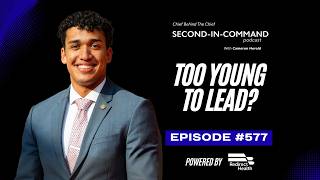
Skye Blanks, COO of the International Council for Small Business, shares how he built trust and systems managing a global organization. He uses a conference blueprint to standardize ICSB's annual World Congress, blocks his calendar to avoid busy work, and relies on written expectations and transparent task boards to prevent gaps. His hardest challenge: people management and difficult terminations.
Chapters
The CEOs are gonna hate this, but you're in a role where you're still a human, like you're not a robot. You need to be able to take care of yourself. And if you're in a position where the job's making you sick or you're not feeling well, like that's a bad sign. Like you need to get help. You might need executive assistant, break up some of your tasks. Like you might need to hire a VP, or if you're, you know, a smaller organization, you're the CEO, CFO, CTO, all effectively rolled into one. Maybe we need to like actually get proper CFO. Maybe we actually needed to invest in that.
Today's guest is Sky Blanks, the Chief Operating Officer of the International Council for Small Business, where he helps scale global operations that support small and medium-sized enterprises across countries, cultures, and systems. Sky is also the founder of Primo Cannabis and serves in advisory and board-level roles, bringing a rare blend of institutional leadership and true operator experience. In this conversation, we dig into what it really means to be an effective second in command. We talk about how to coach teams to hold each other accountable instead of relying on top-down enforcement, why writing things down is one of the most underrated leadership tools, and how to build systems that allow your organization to thrive without you constantly being in the office. We also explore the unique advantages and the challenges of being a young leader operating at a high level and how to earn trust, credibility, and influence early in your career. If you're a COO, operator, or emerging leader focused on execution, governance, and building teams at scale, this is a conversation you'll want to listen to closely. Let's dive in.
Before we continue, today's episode is supported by our trusted gold partner, Redirect Health. If you've ever felt like you're overspending on healthcare and your employees can't even afford to use it, then listen up. Redirect Health offers healthcare benefits that finally make health insurance optional. It's a 24-hour online primary care and Rx membership that protects your business by guiding employees before problems happen. That means you're not overpaying for coverage that you don't need. It's like your mom is your doctor. You'll always know the healthcare you need, where to get it, and when it makes sense to use the insurance so that you can pay the least. Redirect Health: protection for business and guidance for people. Go check out redirectcoo.com. That's redirectcoo.com. And if you're talking to them, let them know that Cameron at the COO Alliance recommended you go there as well.
We are live with Sky. Welcome to the Second in Command podcast.
Thank you for having me.
Of course. Well, we were just talking about your hand being in a few different pots. You are a founder, you also have a consulting business, as well as you are the COO for International Council for Small Business. So describe to me a little bit about your path into operations and the COO seat.
Yeah, I think, funny enough, I think it started by, by birth, to be honest. I'm the oldest of 3. And so being the oldest in your family, a lot of times you're this effective CEO for your parents. And I think growing up in that and having those expectations of kind of being able to problem solve quickly, be that person to bring people together and execute on initiatives, translate to my college career. I went to George Washington University in DC, but looking at studying international affairs and and economics and business, and I was trying to figure out how can I like branch all these things together. And a lot of it just translates to one, my passion is bringing people together, having, you know, mission-aligned systems that we can, you know, execute on, and also just being very organized and clear about our goals. And so having a visionary leader like the president and CEO of ICSB, Dr. Amin Al-Turabishi, I often have to be the person to steer him in the right direction. Like, this is what's possible, it's not possible. And I actually started as a student. So I was in his entrepreneurship class and was really interested about how he really described his work outside of being a professor and wanted to learn more. Interned with him over the summer, worked my way up from project management roles to COO. And that's kind of how it got me into that position and being able to kind of ground it and bring it to reality of like, this is what we can do, what we can't do, and now not being afraid to speak my mind. And I guess he respected that and was able to elevate me to that position once I finished my MBA and went back to school and everything like that.
Other than being able to speak your mind, what else about yourself do you think stood out to him amongst all the other students, everybody else that may have been coming into his field, that had you be the person that he was like, I want that guy to be my COO?
I think it's, you know, for me it's, I don't think I've talked to us about this, it's like one important thing is being reliable, having that loyalty, um, having building that confidence with, with a leader like, um, like him where he kind of just brainstorms the idea and, and I find a way to carry it out and I think that tenacity of of saying, you know, not being so super negative to say this is not possible because you want to bring together, do something that we haven't done before, being open to that because I think a lot of people come in to say, hey, like, this is super risky. Why? We're a nonprofit. We don't have the resources for this. Like, why are we thinking about this, bringing together these governments and these organizations and bidding on this against, you know, a big consulting firm like Deloitte? Well, let's throw our hat in, let's see, let's figure it out. And so always being able to encourage that creativity and that focus. And for me, I get excited. I'm like, that's a challenge. I'm not afraid to back— I don't back down from a challenge. I want to make sure that we are able to execute that and also speak that, be honest and say, hey, we only have this amount of resources. What can we do with with this vision. And I think for me, it's like, maybe as a fault of myself is I often don't say no until it's absolutely necessary to say no. I think I push through and say, okay, let's work through it and see where the problems may lie and overcome them. And maybe the end goal looks a little bit different, but we still are able to carry out the majority of the mission or the majority of the idea and it'll manifest a certain way.
That role and the balance there is so important of being able to hold the vision and see the possibility and, yeah, play in the realm of this could very well be possible, let's go for it. And also being the person that makes sure that stuff doesn't fall through the cracks and that the team is taken care of. I say it's sometimes like my best and worst trait that I'm thinking about worst case scenario because the, the negative of that is sometimes I hold myself back from going for it or pulling back the visionary a little bit on speed. But the greatest strength of that is without me there, the visionary is sometimes gonna miss all of the pieces that they, they're not thinking about. Yeah. What's gonna happen if we do run this, this fast or we play this big? All the pieces and the context that we need to bring together as a COO. Is a really important middle ground to find. What do you guys do at ICSB? Who do you serve?
Essentially, we bring together policymakers, practitioners, and professors. So I like to say the 3 Ps. A lot of our work is really research-focused where we have published in Taylor Francis. We have 2— well, we have now 3 academic journals. A lot of that translates from our university network that are looking at research on how to support small businesses. So what we, the, I guess, term by the UN is now Micro, Small, and Medium-sized Enterprises, so MSMEs. We co-founded that day, MSME Day 2016 at the UN. It's like a name day, like Women's Day. And that's really to bring awareness to nations to say, hey, this is what small businesses really are the lifeblood of economies. How can we create policies to support them? And so ICSP, um, was founded in 1955, is really looking at how can we, um, develop and bring these companies, have the resources, the, um, education and training that they can be able to be successful in any market. So, um, we started out with academic like academic foundation. Now we're doing more with the multilateral organizations like the World Bank and the UN to help translate that to implement training for the entrepreneurs, so the practitioners we like to talk to. And that brings us to our current form where we have world congresses where we bring together all these different stakeholders. They come to a room, we have discussions, we have workshops, we have showcases of their of their businesses and startups. And it's a really great time to think about small business globally, because I think a lot of small businesses focus just in the domestic market. But how can we learn from each other from— if I'm in Argentina and I want to learn from someone in Australia, we can do that and we can have this knowledge sharing exchange. And so a lot of the day-to-day work of ICSP is bridging that gap to make the world a little bit smaller in terms of learning from each other.
Oh, I love that mission. What does your day look like? You just mentioned it a little bit, but I would love a deeper insight. Day to day, what are kind of some of the routine things that you're doing and what's maybe shifting throughout the month?
Yeah, for sure. I mean, every day is a little bit different. Depending on our strategic partnerships. So a lot of what I do in my role as COO is strategic partnerships, making sure that our Knowledge Hub system, which is a network of different organizations, universities, are all being tapped in and aware of what's, you know, upcoming with ICSP and what can they're doing that we can share with the rest of the network. And so, you know, I have meetings next week with Singapore, our members there, and How can they maybe host our World Forum, which is focused more on the local economy, and what initiatives are they doing with their, you know, trade and things like that. So a lot of that is a lot of phone calls, a lot of Zoom calls, a lot of staying up late because we're in different time zones. So my schedule is definitely, I'm up at 7 AM taking a call in Korea, or I'm up till 11 PM, you know, taking a call. Somewhere else in Australia. So it, it depends on the, the week, but, uh, a lot of it is doing that part with the people, and then it's implementing their ideas and applying that for our larger forums and things like that. So right now we're planning the World Congress in Washington, D.C., um, and that's in July. So a lot of that is coordinating with the local organizers bringing our different teams together, working on different deliverables. And so a lot of it is, hey, let's have a standup call with my, you know, project managers and my event planners and let's see what they are checking in on, what's their week look like. And just, I guess, toeing the line and making sure everyone's doing what they're supposed to be doing.
One of the things that you touched on is just that Variety of responsibility where you've got some things that are super people-focused on partnerships, you're on calls, and then you're also translating certain things around initiatives and the different pieces that get put together for the events and, and the, what the team needs. What is your method for switching hats and managing all those different pieces? Do you batch your days? Do you have an assistant that's helping you with that? Do you have any like energetic transitional, like for me, I need certain energy transitions if I'm going from people to like, okay, now I gotta type a 12-page document for something. What's your method for switching hats?
No, for sure. It's helpful to try to block, um, you know, certain times. So on my calendar, so I do have an assistant and, and she helps me Uh, say, okay, in the mornings I'm really just sitting down doing all the— so I know myself and I know I'm very productive in the morning. So all the boring stuff I try to get out of the way, like responding to emails while I'm looking, you know, talking to her, we're having our, um, you know, outline of the week or the rest of the day. And then we're going to build out, you know, um, some of the action items, all the busy work, spreadsheets, going through everything. Financials, doing that checklist in the morning. And then usually in that late morning, afternoon, even the evening sometimes, that's where I do the phone calls with the more bigger picture stuff. Because then those are things that I can look forward to for the next day and say, okay, we're going to execute on your things. We're going to, you know, I'll put this in my document that I have and these are the actions we need to carry out for the next day and have that summary. So it helps me to say, okay, busy work from maybe the previous day and like current day. Get that done in the morning. In the afternoon, we're talking about the initiatives, we're talking about partnerships, and then I can, you know, again, rinse and repeat. Breaking up, like you said, like going for a walk, having the— Escalade outside helps me. I think I get cooped up in the office. I'm like, I need to like just transition and talk to people and also try and interact with people in person. you know, some days we do a lot of travel and, you know, for ICSP I was, and that's also hard to have the routine and be able to do everything. And so you're relying on your team back in DC or in New York, um, to carry out your day-to-day tasks. And then, okay, I'm, I was in Cairo in December. I was in Bangkok in January, going to Paris in April. So it's like, now I need to plan my year. I remember I was talking to my friends. Who aren't in the space and they're like, man, you're different. I'm like, I have to sit down and write out my whole calendar year the Saturday because it's just too much going on. We need to, I need to be able to focus and know what to look forward to and have those breaks and be able to plan because you have to be the one thinking, you know, 10 steps ahead. You can't always be in the moment. It's important to be in the moment, but having that that structure, uh, is the only way you can be as efficient and effective as possible.
I resisted planning ahead for so long. It was actually a, a point of tension between me and the owner of the company, 'cause he's like, part of your stress and anxiety is coming from your reactionary in the mornings. Like you come into your day and you've got so much going on and you're trying to figure out where to begin. But you're already in an anxious state versus if you plan on Sunday when you're coming off of, you know, a weekend, you're relaxed, you're not worried about what you're doing today, and you can really think through strategically what you need, things are going to change for you. I resisted that for a long time, and as soon as I was like, okay, I'll try your method, I'll put my own ego aside and the way that I think I should do it, the way that it's better, and really plan out my week, it has been an absolute game changer. I have done that now for 5, 6 years, uh, and it's, it's, it's able to give you that structure and the predictability where you get to show up in your day and I don't have to think through what I'm doing because I already have that block. Kind of like what you said, your assistant schedules for you. You have the block and you already know, bang, bang, bang. I don't have to think about anything. This is what I'm on mission for, and, and staying focused really helps in that. And one of the things I would be curious about is you mentioned you're doing all this traveling, you're holding the vision for the company and for also making sure that it gets executed back home with your team. When you are out of routine and you're kind of scattered and you're maybe not as present as you could be if you were at office every single day, What systems or accountability structure do you have in place to stay connected to your team, continue having that relationship and the trust and the safety with them while also making sure they're getting done not just work in a, a quick way, but also the right types of work?
Yeah, I think a lot of it It comes down to a little bit of the systems, right? So having Notion, um, to organize tasks and things. I try to have, you know, standup meetings, um, you know, at the top of the week, but if I'm in a weird time zone, it's, it's kind of challenging. So a lot of it I'll do is, you know, write out some of the key items we need to accomplish this week, or these are the things that, um, or, you know, sometimes they hate this because obviously it's, you know, morning for me, but it's the evening for them, I'm, you know, sending those messages or adding it to the Notion of, you know, tasks and then they know what to do when they wake up and making sure, hey, following up and checking in, spending an hour set aside on my calendar and say, okay, let me just check in and see this was taken care of, this was done. All right. You know, I need to reach out to Tammy about this thing or I have to talk to Emmanuel about that. And making sure even sometimes I have to take a call and it's a weird time for me, I'm going to make sure I make time for that. And that's just part of the job. But for the most part, it's having that trust with your team that they're going to follow through and, you know, they're being held accountable and having them hold each other accountable because, hey, Tammy, you're back in San Diego and Manuel, you're in DC because our teams are already, already across different places all the time normally. So they're already coordinating a 3-hour time difference and They are known, okay, I need you to make sure you get this done in time so that Emmanuel, you know, doesn't have to stay up late to finish it. And they already have this communication. I'm just there to make sure I'm the facilitator to make sure nothing falls through the cracks, hold them accountable. And there's no strife or, I guess, conflict when the leaders are gone and at this forum and They're still able to operate. So I think a lot of it is having things written out just for everyone to see, like, this is what, you know, Tammy was responsible for this thing. We had the deadline here. You guys all, you know, are agreed to this. Make sure you get it done. I'm away, you know, this week. And when I asked, hey, why wasn't it done? There's no room for them to argue because it was written clearly. It's on our board. Um, and so just having that transparency too is like, there's not, there's no room for misinterpretation. I think that's, that's key.
How do you go about facilitating what you mentioned? You said they hold each other accountable. I have stepped into teams where it's the opposite, where no one's holding anybody accountable. It's more of this, culture of you kind of do your thing, I'll do my thing. If you drop the ball, it's not my fault. Like, at least I did my part. And then I've also been a part of— and this is, I love culture— creating that internal piece. What is your method around teaching them why it's important to hold each other accountable and how to do that when maybe they don't see themselves in a position of maybe direct leadership yet?
I think a lot of it is showing them how important they are and how meaningful their work is. What's helpful for us as, you know, a nonprofit is that we do have our mission. We have a clear, you know, mission statement, values. And sometimes there is, you know, questions of like clarity of like, what's the impact of this and what's this actually doing? Because it's long-term, it's a lot of policy. It takes time for it to actually manifest. But the short-term part piece that people see that actually is tangible is our community power, the conferences, the events. They understand that these deadlines have to happen and it's hard, I admit, like, it's different cultures, right? I'm working for the event we had in Egypt. Their culture is very much slower than the American culture where we're very quick and like ready to go and they're not reporting directly to me because it's our auxiliary team that's local. That's reporting to one of our board members. They'll coordinate with me, but it's hard for me to hold them accountable. So there is a breakdown there and it gets frustrating for our team in the States who are like, hey, you guys are supposed to give us these speakers, you guys are supposed to give us this breakdown of the agenda on time, and there's different moving parts. But in the end, it comes down to Understanding you're very important. This is a reflection of you. I'm a reflection of— you're a reflection of me, I'm a reflection of you. We don't want to tarnish our name. We want to make sure that we're all working towards this bigger picture, this bigger idea. And clearly writing those expectations, having guardrails in place to say, this person disappears and They're not doing their job. Okay, who's going to step up? And oftentimes that person that's going to be forced to step up is going to make sure that person does their work because they don't want to take on more of their work. So it's a lot of understanding the clear roles and what if the scenario, this person disappears, this problem happens, who's going to be able to fill the gap? So either it gets done in that sense scenario of like that person stepped up or that person's making sure that other person's stepping up because, hey, I'm not trying to take on your work. And so everyone's visible. And I think the more visibility there is of understanding who's doing what and what clarity of like, this is the expectations we have of you, the better it is. So there isn't this corporate, what they call the corporate fog of people just sitting in the back and just, hey, they'll check in on me or they check in on me. I'm going to do my thing or not. And we're nimble. ICSB isn't a super large, you know, organization. Our teams are very per project. So we have, you know, the core team and we have people that are coming in and coming out. So it's a lot of training, a lot of things. It all comes down to the SOPs and the foundational documents we work with to make sure that they're all up to speed. And so I think that's really the crux of it. And it's not perfect. People are always dealing with people. There's a little bit of a—
We're always doing people.
Yes. Yeah. Sup? It's not perfect, but it's the best we got.
Cool. How do you decide, you know, you're mentioning SOPs and certain structure. How do you decide what, what pieces need to be formalized into a system that's followed every single time the same way versus what things need to be left open and flexible?
Yeah, that's a great question. I think I like to say the things that we do every day, it's always good to have foundational document or structure in place because there's no room for people to say, I don't know how to do this. Like these are the, like I said, the constitution of the organization. These are our core functions. This is what, you know, our key things if someone, you know, decides to leave or we need to replace. I don't need to sit down with them for, you know, 3 days to train them. They have content and systems that are understood that they will be able to pick up and do exactly what the other person was doing. The things that are more flexible are more of our abstract initiatives where, hey, we're working on this partner, they have a certain vision. It doesn't have to be so rigid. We have some ideas of what we want to do, but we can work with you guys on what you guys want to engage in. And so it's a sense of, I would say, the foundational floor that we build to make sure that we're always running, everything's going to always be there. And then the more one-off events and initiatives or tech, like sometimes we do a declaration or a policy note for a certain country, these things are obviously going to have variables in them. But it always comes down to who's leading the initiative. That person is someone that's, you know, been with the organization for a while. They are able to bring that core knowledge of what the DNA of ICSP is to that program or a project, um, and have the support of the international office to, to carry it out. So yeah, I would say the day-to-day stuff, always have something that's in place. The more abstract one-offs, we can always be flexible with.
Awesome. Would love to hear one system that you're most proud of putting into place.
Yeah. I think for us, it's every year we're in a different country depending on the initiatives and the World Congress, the biggest event we have. It brings together 500 people from different countries and that event takes a lot and we've been doing it for 70 years. It was our 70th anniversary this past year and it's changed a lot of different forms. Before, right before my time, I'm not 70 years old, thank goodness. But I have had the pleasure for the past, you know, 6 years with ICSP to help shape what it looks like now. And we have this, I guess we say the blueprint for conferences of ICSP. And it's a roadmap of a combination of SOPs, different like expectations. It's kind of like a working document that we use every year that we kind of adapt depending on the function. And— where's my hand? And it goes from country to country. So we have one for Washington, D.C. from 2022, or Washington, D.C. So I'm able to take that document that we know our partners, our key programming that we did that year, the different Runner Show events, the— we went to the U.S. Congress. And so I can take those initiatives I can bring it to my team and say, okay, this is what worked well from this conference in this, you know, city we did it already in. We're bringing it back to Washington, D.C. How can we improve on this? So a lot of it is looking at the prior foundation and using this blueprint translator to say, let's cut that fat. That didn't work well. We're only going to do, you know, the marketplace, which is our startup-like ecosystem. We're going to do our academy for student entrepreneurs to learn about the Sustainable Development Goals. We're gonna do the woman initiative. Now it's called Woman CEO, focus on executive women, executives that actually have businesses that are tangible, that are doing programming. So that's what we're— was a change because before it was just open to all women entrepreneurs and it's always still open to that, but this is a specific program now made for training. And so these are the, some of the tweaks we see from our foundation, foundational documents that we have and say, okay, let's mix and match. Maybe we don't want this initiative. in this certain market because these people won't show up for that. And so there's a lot of that. Um, and our, you know, one of our event managers, she's really great at, um, putting all the, um, all the, the, the stuff we brainstorm and put all together from that document. Um, and then I make the phone calls and say, hey, let's talk to our partners. Let's bring these people together. And so it's really a guideline that I can bring it to Baku, Azerbaijan, and we can adapt it there. We can bring it to Sydney, Australia, and we'll adapt it there. And so what we've done, you know, year over year, and it's every, you know, every year it's different people we're working with, different partners, but they all can look at this and say, okay, this makes sense. This is what we need to follow. This is our constitution, if you will.
Awesome. Love that. Speaking of other things that you're proud of, what have been some of the biggest highs in your position?
Yeah, I think one was I was able to speak at the UN about youth entrepreneurship and the power of that and how a lot of voices in academia is really focused on older scholarships and old scholars. And I think a lot of it, young people like myself who, you know, probably on the younger side of being a COO, are able to bring a new perspective to older organizations and say, this is what we need to do. This is what we see the youth, you know, being empowered to carry out in the space of entrepreneurship. And so that was a very like, high moment for me and a lot of our partners came together and said, I feel like let's actually follow through with these initiatives and let's build something. And so we were able to draft a part of the Global MSME Report, which is published every year. We had a section on youth entrepreneurship and some initiatives that have been adapted in, you know, countries like Azerbaijan and Seoul in Korea, South Korea. Australia, Argentina. So it's being able to see, hey, let's— things that we've talked about at this, you know, at the UN or at the forum where we— I was able to personally have input, able to carry that out into policy, and that's been implemented and see training, have people come to our events and say, hey, like, I read your, you know, policy note, and then this was, you know, actually impactful. We applied this to our startup center, and, you know, it's actually had an impact. And that's, you know, what I get excited about is you know, things that we observed and talked about for, you know, a couple years actually manifest into something that's impacting people all across the world.
Hmm. So cool. What about the flip side? What have been some of the hardest parts of your role?
Yeah, I think it always comes down to the people. Managing people is not easy. I think that's the hardest job in any industry, any organization. It's How can we manage people, manage relationships, invest in their— like, you're with someone for 6 years and then they just, you know, you just see the kind of the spark of their initiative or their enthusiasm window and you're like, okay, now we have to have a hard conversation. You're not doing what you're supposed to be doing. You're not going to be able to stay with us. And so, yeah, getting rid of people, firing people. It's never fun. I mean, that's always a moment where it's difficult, but, and even partnerships, like we've, I think that's also something that's been disappointing as the CEO is like, hey, we bring this great partnership, they talk a big game and then they don't bring their, they don't carry their weight, right? It's, it has to be mutual. I think a lot of people in the space want to benefit from our name, but don't want to carry their weight to help make ICSP better. And so that's always unfortunate. So, you know, determining those relationships, how to navigate those awkward situations where you see someone that you're like, hey, like, you're supposed to— you're used to be involved and now you disappear. Now you show up and you emailed me asking for something. Like, it's always those moments you're like, ugh. And so I'm still figuring that out. I'm still figuring out how to be a little bit more protective of my peace, I would say. And I entertain, you know, waste our time and knowing when to rip the bandaid off and say, hey, we're not, it's not working. The relationship's not working. Let's move on from that.
I was thinking while you were sharing that about my first time ever needing to fire someone. and I was freaking out. I mean, how do you have that conversation? You know, I, in, I'm in my early 20s. I had also never been, I guess I had kind of been fired once before, but it was a weird situation. I had never even really truly experienced like what that's like on the reciprocal end. So I'm like, how do I, how do I handle this conversation? I'm telling the owner of the company I'm with at the time, like, okay, I gotta do this. Like, 'What do you recommend I say?' And, uh, have you seen the movie? I think it's called Moneyball. Yeah, he just sends me a YouTube clip of him kicking this guy off the team.
Yeah.
And he's just like, 'You don't have to give him all these explanations. You just make it direct and to the point.' And, you know, I would not do it— I don't do it the same way as I did back then, but it did really help me. Like, I, I still brought in like my own heart to it. But what I, I think what he knew to be true about me is that I can get so lost in the, I'm so sorry about this, like I really care about you, and make it some bigger thing. Uh, but yeah, I remember watching this 3-minute Moneyball clip where he's like, I gotta let you go. And he's just like so direct and to the point. Uh, that was my first experience firing someone, and I can say my Method has definitely gotten better since then, but it was a, it was a place to start, which kind of leads me to the, uh, a question I had around you mentioning being a young leader, bringing in fresh ideas, new ways of doing things, and then older leaders who've already been, been there, done that, and maybe are the type that are gonna say, hey, let's, let's fire based on this Moneyball scene. Or however their method is. What is your approach to being able to bring in your own ideas, recreate the wheel while also still learning from your peers and your elders about the pieces that you don't need to reinvent that are already proven? Or yeah, just methods, ways of thinking, ways of operating that have worked before. Uh, are you in any programs yourself? Are you in any mentorship circles? How do you find that? Yeah, where are you sourcing your education from while also bringing in your fresh ideas?
Yeah, for sure. I mean, there's a concept that, luckily I made it in a space where it's like academia, so I do a lot of reading and a lot of it is like management focused. You know, all of our journals, the Journal of Small Business Management, and I'm also around a lot of people that are way smarter than me, professors, researchers, you know, like you said, these people that have been in the industry forever. Um, there's a concept that, uh, one of the professors, uh, Dr. Ki-Shy Kim, uh, coined this called humane entrepreneurship. And it's something that is, uh, I guess a phenomenon highlighted in Korea and how they, um, found a lot of those big companies is, you know, human-centered, focused on, you know, the community and, and building up people first. And, and I think that translates to being an empathetic leader. So a lot of those teachings of understanding, not taking away your ego, and being able to understand where someone might be coming from, why they think a certain way. I always like to dissect and understand somebody for who they are. Like, anyone I meet in leadership or get to know and have a deep relationship, like, I want to know where you grew up. I want to know your background. I want to know how many parents, like, your parents' situation and your, your sibling situation. Like, get to know them as an individual, because then you know the psyche of like why they're maybe making a decision or have this bias. And we're inherently biased as people. And if you can understand that, then you can know how to have a conversation with them and maybe hear them out and understand, okay, maybe they're a little bit more skewed to this idea because of their background. And this is, you know, something that hit home for them. So let me approach it with a little bit more sensitivity, but steer them in the right direction. And so that's a lot of times how I take the approach. And, you know, I've been lucky to have, you know, mentors and within my own family, my father is an entrepreneur. I have a venture with him and we have, you know, partners in that. And then some of the board members from ICSB, you know, were in government and are executives and are able to talk to them about certain solutions. Questions. And, you know, my consulting firm I have, we have a network of other, you know, business strategists that we check in with every— we have a check-in every day. Sometimes I make it, sometimes I don't. But I have, you know, those networks of people to ask those hard questions and say, hey, I had a difficult situation, how do I navigate that? And so I like to say, as a CEO, you can't be I guess tied down to just one thing. You have to do the work outside of work to be a better leader. And so a lot of that comes from, hey, let me read this article. Let me talk to these people about this issue. Let me learn more about the people I'm interacting with. Doing your research, always be a curious leader. And that's kind of my philosophy that has helped me carry and be able to have those tough conversations, be able to make a point for myself as a young leader to understand like, hey, I'm not just doing this out of impulse. I did my research. This is what my evidence is, is my facts. Always have the background behind you where you go to make your argument.
I love when you said always be a curious leader. It's so important to remain curious and in so many different areas. Like even I remember one of the first kind of uh-oh moments I had as a leader was someone didn't do something and I just started giving them coaching in Slack. Like, you know, this isn't how it's supposed to be done, blah, blah, blah, blah. Making an assumption instead of being curious of like, hey, curious why you made this decision, or curious why did you not go over here? And then getting a response back which was like, made me look like an idiot because I was just missing out on information, losing my curiosity, thinking that I knew how it the reason why something had happened. And then how that translates over to mentorship abroad, like you said, outside of work, having those people that you can go to. I think it's so cool that you, you're, you and your dad get to have that relationship together. I also share a similar relationship with my dad. I'm so grateful for it and all the other mentors that have come into my life. And for anyone that's listening in, if you find yourself in a CEO position and you might feel like you're kind of on an island by yourself and you're looking for places that you can be curious outside of your current company. Uh, we would love to have a conversation with you about the CEO Alliance and see if it might be a good fit for you to be around other people that can shorten the gap and lend support, which is super important when sometimes we're running and building really fast, which leads me to, Sky, I wanted to ask, Sounds like you're traveling and doing a lot of different types of things that could also wear out your body, and then you're involved in very high-level conversations and then also working with your team. How are you personally carrying the operational weight while not burning yourself out? What's your practice for self-care?
Yeah, that, that's something I'm still working through. Um, it's Definitely making sure you have boundaries, setting, you know, when I was away, I went to a friend's wedding during the, you know, winter holiday and I'm in Bangkok and I told my, you know, the CEO, I'm like, hey, like I'm gone this time. Like, I do something like crazy, like something's blowing up, like call me, but please give me my time. And he respected that. Like, He had sent me a WhatsApp message like, "Hey, like, you still out there?" I'm like, "Yeah." He's like, "Okay, I'll message you later." So, you know, it's being able to set that boundary in that relationship and say, "Hey, like, please don't disturb my peace because I won't disturb yours when it's your time to go on, you know, break." And, you know, also just being strategic about like, you know, that time worked out for me because it's like our, you know, it's a holiday or we're already away, so I was able to kind of build on to that, that leaf. But it's a lot of the day-to-day stuff is getting outside, not being stuck inside all day. You know, I wrote my goals for 2026 of like understanding some of the habits I had last year. I think last year was the most I've traveled. I traveled like, uh, oh my goodness, it was maybe 12 countries I went to. It was ridiculous. Like every, every month, every, every 2 weeks you're, you're You're hopping around doing things and maybe not 12 countries, but 12, you know, long flights. And so it was kind of too much. I'm like, I need a break. Maybe I can't, I shouldn't travel these, you know, this first half of the year or just do smaller local things or some, someone else like building those boundaries, understanding what's on your plate personally, family. And saying, hey, like, just be full transparent with your leadership and say, these are what I can do and put on my plate. This is what I'm expected. And these are the big things that are on my calendar, like, where I need to navigate around because I can't just find non-negotiables. You got to have your non-negotiables when you're doing these things and say, understand, like, in the end, you're being— and the CEOs are going to hate this, but, uh, You're in a role where you're still a human, like you're not a robot. You need to be able to take care of yourself. And if you're in a position where the job's making you sick or you're not feeling well, like take, that's a bad sign. Like you need to get help. You might need, you know, executive assistant. Um, you know, that was something that was very helpful at the end of the year. I was able to, um, get with the company and help me manage a lot of the extraneous things, or you might need to break up some of your tasks. Like, we might need to hire a VP, or if you're, you know, a small organization, you, you're the CEO, CFO, CTO, all effectively rolled into one. Maybe we need to like actually get proper CFO. Maybe we actually needed to invest in that. Um, that's something that has to be, you know, understood. And as we said, for like maybe you're, you're the people under you writing those clear responsibilities, SOPs, those need to be written for you. You need to understand what is called upon you, what is your scope of work, because I think as a CEO, you get pulled into everything, which, you know, is expected as a C-suite executive, but you have to have some clear expectations and clear things that you can go to say, hey, this is outside my scope, you should be paying me more, or should be, like, give me more of my time off because I've done a lot over my pay grade.
It sounds like last year was a huge year for you. What are you most excited about this year?
Yeah, I'm super excited for a couple things. One is we're building, we're doing the World Congress in DC. You know, that's where I spend a lot of my time. That's where our headquarters are. It's super exciting because that's our home court. We were in Cairo last year and Australia, and it's definitely a lot easier to do things in the States because you have your team here. You're not reciprocating that. So that's gonna be exciting 'cause before that we're going to the UN, the MSME Day. So June 27th every year, it's MSME Day, Micro, Small, and Midsize Enterprise Day. We're gonna have a big event in New York at the headquarters, bring together ambassadors, people worldwide. It's our 10-year anniversary of that day of founding. And so super excited to bring all these people together, go to DC and celebrate the World Congress. I think it's going to be something that's going to be super memorable. And then for me personally, I think it's going to be exciting to see how we can build more relationships outside ICSP to elevate entrepreneurs, startups. And personally, I want to grow some of the advisory work I do. Where we have, you know, some of those executives that go through the ICSP pipeline that we can help take to the next level and be more hands-on with them that maybe ICSP can't do. So a lot of it's business growth strategy and hoping that everyone in my network is able to stay connected and grow.
Awesome. Well, those all sound amazing and best wishes to you. Take care of yourself. Make sure you carve out some downtime in between all those huge trips.
Yeah.
How, how cool that you get to see the world in the job that you have. I mean, that's really amazing.
Yeah, no, it's been really, um, help— like helpful as a person. I think, uh, it's something I always recommend to everyone, especially those still in, you know, um, you know, early in their, their career is, hey, fight for, for that travel. Get out of your comfort zone. Go somewhere you've never been before. Um, because learning about the world and being in those places, help shrink the world a little bit for you and understand that we're very similar. A lot of us can learn from each other and implement those things in your local, you know, home. So that's something that's, I think it's been super impactful for me as a leader. It's made me more worldly and understanding that we can always figure out a solution. We always can problem solve because someone else is doing that, you know, somewhere else.
Yeah. Amazing. Well, thank you, Sky, so much for coming on and sharing your wisdom with all of us.
Thank you. I appreciate it. Talk to you.
More from Cameron

Flutterwave Former Global Head of Operations Awa Kone | When Growth Outruns Operations (Podcast 611)







Optomi Professional Services COO Nick Murphy | The COO Can’t Know Everything (Podcast 607)


