Inside Reel Axis: Leadership, Content Strategy & the 95–5 Rule | Nick Dinsmoor (Podcast 534)
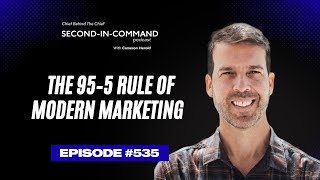
Nick Dinsmoor, COO of Real Access, explains the 95-5 rule: spend most of your content effort on the 95% of your market not actively buying, not just the 5% ready to purchase. He covers how newsletters still work for B2B tech, why AI is changing what agencies need to deliver, and how his company uses radical transparency and side hustles to build culture.
Questions this video answers
Over 150 issues.
Approximately 5% (the other ~95% are not in the buying cycle).
Chapters
Don't bullshit yourself. You know, don't, don't try to hide what's going on. There's good, there's bad, there's ugly. If we do screw up, we're very honest with our clients and we tell them what happened. We don't try to hide it. I think a lot of businesses over time have. They're scared of that. It's the, you know, fear of messing up. Our mantra is really the total opposite, because if you hide it, and I think this is true in life and especially in a CEO in a leadership position, if you try to hide it, it will ultimately bite you in the ass.
Today on the Second In Command podcast, we are joined by Nick Dinsmore, the COO of Real Access, a fast growing B2B marketing company, helping clients harness buyer intent data and anonymous visitor identification technology. With a background that bridges finance and strategic marketing, Nick brings a deeply analytical approach to operational leadership. He's also a podcast host himself. So we found ourselves absolutely free flowing and deeply energized by this conversation. We talk about the unexpected value of employees with side hustles, the 95.5rule that's reshaping how marketers approach content, and how leaders can stay tapped into other departments even when it's outside their zone of genius. Nick also shares why newsletters still pack a punch, which was news to me, and how giving back plays a central role in the culture at Real Access. If you're curious about how to blend innovation, empathy and execution, this conversation is going to be right up your alley. We are live with Nick. Welcome to the show.
Thank you, thank you, thank you. Excited to be here?
Yeah, I'm excited for this conversation. We were just talking about this concept of giving back because I was asking why you said yes to doing this and you said that's one of the key kind of mantras in your company. So I'm excited to kind of hear a little bit more about that. But first, why don't you give us a little overview of Real Access. What do you guys do and who do you serve?
Sure. Well, again, thanks for having me on. So Real Access, so is a. We're a marketing agency primarily focused in the B2B space. And I would say what we started as eight years ago and versus what we are today is probably pretty different. But I'd say what we do today is really we create and distribute content for primarily, again, B2B technology companies and we help those people that are unable to do that and unable to have the marketing staff or the resources understand the technology or frankly just too damn busy to do it. We help them do that. And, you know, it's the cheesy comment of being the easy button, but I think in a lot of ways know we are that to a lot of our clients that we have today and we've had for years.
Has that really changed a lot over eight years? Because I would imagine with AI that probably impacts content quite a bit. How has that kind of evolved for you?
That's a great question. And I think the evolution is when we first started, we, myself and the president, we, we would, we would, would be constantly looking for the most outrageous and crazy stuff to try and come up with to solve the client's problems. That's obviously, as a business, not very scalable, let's just put it that way. So it's fun, it's fun. It is not scalable. And I think to your question, around where AI is now, we've the evolution as it's become easier and easier to create things. So what do you have to do to make that different? Well, you have to add in your thought, the strategy, your knowledge of the business, your knowledge of what's worked and not worked in the past. And so I think the expectations, rightfully so, are businesses should expect more from an agency like us now with AI, because yeah, we still come with the same knowledge and that niche expertise, but we should be giving more choices. And I think that's probably the biggest thing that's changed over the last eight years is we. Our ability to create multiple choices has drastically increased, which is great. And more fun, frankly.
Yeah, we love fun.
Ah, yeah, for sure.
It's one of Cameron's core values at his company is have some effing fun. And when I went to the, I think my second event, he got animal onesies for everybody, which is just like a really funny thing to think about. A bunch of COOs, some of them with like absolutely huge companies coming in and everybody played full out, which is like a wheelbarrow contest. And he's like, you gotta keep it.
Fun, you gotta keep it fun. Yeah. And I think one of our core values is keep it real, keep it real access. So. And I think that's the key element of don't bullshit yourself. You know, don't, don't try to hide what's going on. There's good, there's bad, there's ugly. And I think when we, One of the things that we've really held to is if we do screw up, we're very honest with our clients. And we tell them what happened. We don't try to hide it. And a lot of, I think a lot of businesses over time have. They're scared of that. It's the, you know, fear of messing up our, our, our mantra is really the total opposite because if you hide it, and I think this is true in life and especially in a coo, in a leadership position, if you try to hide it, it will ultimately bite you in the ass.
Yeah, I love the, the keep it real. The radical transparency is the way that we, that was our core value at Closers was rad currency which eventually turned to radical candor because we saw that, I mean we had a sales recruiting company and there was this like energy of I'm just going to tell it to you like it is. And sometimes it was a little like little abrasive. Abrasive. Yeah. And so we were like let's change to radical candor. So I think that's their core value. Now the content that you guys do is this across like all scopes. Email, Instagram, YouTube or what is the specific content you're focusing on?
That's a great question. So we, and again it's evolved, you know from what it, what it was was and in the beginning where we pretty much do everything and our model is a little, is, is. I wouldn't say it's unique. It's. We have clients that are. Where they're little more literal marketing department so they're on retainer. We act as their, their marketing department. And so we do a lot of different things whether that be social media, that be you know, development of case studies and content distribution of email, event planning. All the things you do as an, as a marketing department we do that. And then we have project based business which is a lot of times that is more centered around. We do newsletters. We're really big in the newsletter space so it's creating that, that awareness. And then we do case studies, social media, anything to do. But we, we primarily don't do things in the B2C space. So we're not really on Instagram. Our primary platforms are YouTube, LinkedIn, cold email, warm email nurturers, all that. So that's where we really play obviously with the technology that's changed over time. Video has become way more easy to do, especially short form videos. We do a lot of that just because I mean like this podcast, right. I mean we do podcasting back in editing and development for people because this is a medium that people want, right? Whether they watch this episode with you guys either listening to it or watching it, it doesn't really matter as long as the content's getting out there. And that's where really we're really focused on the distribution. Right. Anybody can create content. Not everybody can distribute content in the right way.
Totally true. And I'm just curious for my own, My own curiosity. When I hear the word newsletter, I personally think, like, I'm not reading it and it's outdated. However, I've recently heard that this is actually kind of like making a comeback. My roommate, who runs a YouTube channel, he's working on a newsletter. Cause he's got other people that just been blowing up with building their audience from that. So I'm curious on just like the newsletter piece. What exactly is that? Why is it beneficial for a company?
All right, well, so I'm going to start off with saying, you've heard of. Have you heard of the company Beehive?
Beehive? No.
Yeah. Okay. So Beehive is a company that basically was founded by multiple founders, intact. They have blown up. They. Their whole model was based on newsletters. So the newsletters of old. You're right. Like when you first think of the word newsletter, and this has been a challenge for us even as a business, when we pitch it, it's like, what. It just seems old. But the reality is, I mean, I subscribed and I kid you not, probably over a hundred newsletters. And I have one email. My trick is I have one email box that goes to all the newsletters. And then I can have AI summarize the high points if I don't want to read everything. The newsletters of today, though, are really geared upon two things. One, there's the monetization factor. So like, Beehive is a platform that's being used where there's a lot of like, like Morning Brew or any of these other ones, like big, big newsletters are going out that are. They want to monetize it, so they're running ads in it. So, like, one of the good AI ones I really like is the Neuron. It's AI focused newsletter. They do a lot of advertising, and so they're. They're making money that way, but they're also sharing information. The newsletter. The other angle of a newsletter for us is especially in our. For our clients, they're not focused on monetization at all. They're focused on staying in front of their clients and prospects. So imagine, have you heard it? There's a. We, we, we. When we try to educate our audience and educate just people There's a. There's something called the 95.5rule. So the 95.5rule is for the audience doesn't know is at any given point in time, only 5% of people are in the buying cycle. The other 95% are not. Most people focus on trying to get that 5%. We say, like, go after the 95%. So if that 95% is constantly getting a newsletter from you, then when they are ready to get into that 5% and they're ready to buy, they've heard of you. So let's just say you're like, hey, I've never heard of the COO alliance, but now I'm not ready for it yet. I'm not ready for it. I'm not ready for it yet. But all of a sudden, like, you've been getting emails constantly from you getting the newsletter. I have a COO problem. Oh, you know what? I need to call Cameron. Right? Yeah. Like, that's the pitch, right? That's the hook, is staying in front of it. So that's why newsletters are so valuable today, because it's give back, give back, give back, give back. Until it's time you want. Until it's time to make that buying decision.
That makes a lot of sense. There's a marketer in the online education space named Scott oldford who like 10 years ago started using the term omnipresent. Yeah, if you can be everywhere and be top of mind. It was kind of like when I was telling you about how I even joined the CEO alliance myself when I found myself in a CEO position and I didn't know what the heck I was supposed to do and it was very lonely and I didn't know where to go for questions. I knew about Cameron because I had been following him on Facebook and following him on Instagram and email. And so as soon as I found myself in the position, there's only one person that came to mind when I was thinking about co alliance, because he was out there. He was out there. I mean, that's one of the things that you said too, is he's really stayed relevant for so long. And it's because he does a lot of content.
And I think that's the key is. And if you think about newsletters. So let's look at LinkedIn. Right, so LinkedIn today, if you just go down the left side, right now, most companies have newsletters for their companies. And so the great thing about content is it used to be like, I'm going to produce it just for one Thing. Well now obviously content is gets created for dozens of different platforms. So you can create one newsletter, but that newsletter goes out on an email. You can put it on, you can put it on LinkedIn, you could do a LinkedIn Live talking about the newsletter. You can put it on YouTube, you can have a podcast about it. You can do all these things with the same content. And that's, I think that's the message. Right. So it's not this. But to your point, it's a hard thing for people to digest because it's such frankly the name. So this, the terminology is so old in some ways it's like you literally think of this written know newsletter you get in school or something.
Right.
It just. But that's definitely change and I think if you just have to, you have to understand what's the goal that do you want a monetization and try to make profit from ads or you really doing it for more brand awareness, education, giving back and ultimately being that thought leader? I think those are the two angles.
Well, I think you did a great job explaining it. And just speaking of things that changed a lot. I know you had mentioned earlier that the CEO role has changed quite a lot. It sounds like you were. Did you originally start this company with the other founder?
No. It's funny. So yeah, so Chris is the founder of Real Access. He, he actually started the company and I came on board probably a month or two into it, relatively soon on when he first started it. And I mean the joke between him and I was he's like he needed another adult in the room. And I mean and to be fair to the company at the time, it was definitely a small company. He, we had both been in tech and you know, we had a very young team. Right. We had a very young team of people. And the reality is when you, when you have, when you're starting a business, you do need some structure and you need some organization and you definitely need some adults in the room. So. And that doesn't mean, and I say that, I mean somewhat tongue in cheek is a lot of people say like, oh well it's you know, they need. Are they a certain age or this experience, whatever? No, I think it's just like it. Does the person have the wisdom or the knowledge to be able to be the adult in the room? Doesn't mean it doesn't matter how old they are or what they do or what the background. It just, that's the key and I think the role. So when we start, when we first started, he was Basically leading it. And then I came in to help try to drive some structure and accountability into the organization. And this is pre eos and we can, we can talk about that later. But this is pre before we had any structure. So it was a bit of the wild west. As we were trying to get started. We were hiring a bunch of people trying to win business at the same time. And I think what at the time, the role, the COO role for me was he's, I mean he, he is a visionary and he has, he's, he's a lot of big ideas and a lot of creative ideas. And I think the challenge is without a COO that can quickly derail into chaos, as you, as you well know from being a CEO yourself. So I think that's from what it is. So that's what it was. And I think the, the evolution to what a COO role is now is there. And I think there was more division back in the day of like this is, this is what you do. This is what I do. I think now a CEO in today's world in my view is, I mean it's always been a little bit of the Jack of all things, but I think the CEO role now has a much more critical position because not only does it have to still thrive in organizational knowledge and structure, but it also to me has to be the key player in driving curiosity and education and understanding what's new to bring that into the organization and not be the, the roadblock. Right. And so I think before it became, it was such a, such a more rigid role and now I think there's more agility in the role, which I think is a great thing, in my opinion.
Yeah. What are some of those things? We think about new things like continued education. Is there an example? And I, I try not to ask for examples and put you on the spot, but that's okay.
Yeah, let's, let's, yeah, let's talk about, I mean it's obviously top of mind with AI today. Yeah, I think AI is a great example of, in an old school world and this. And obviously, you know, we're not, you know, we're not a, you know, a 500 person company or anything like that. We're, we're a small agency and we work, but we work with a lot of Fortune 50, Fortune 100 companies. We work with big, large companies and we work with medium sized and small companies. So we understand the dynamics of each of these. The old way is, you know, we're just basically focused on structure. Don't break anything, keep it running, make sure that we're profitable, make sure we're, we're. We're operationally, you know, we're just. The wheels are not going to come off. I think in today's world, with technology, it is the on the onus is on a COO to really be the chief cheerleader for pushing the team. Hey, have you. Have you watched this YouTube video? Have you tried this? Have we done it? Have we set up an environment where we can sandbox something ourselves internally and just screw it up and it's okay and you're not going to, you know, go off in the corner, start crying like, that's like. We. The role is. It's. It's being that cheerleader and advocate and especially using AI as the example, to really, like, push hard and push hard to the point where it probably is very uncomfortable for some people. And if it gets to that uncomfortable stage, that's okay. The flip side of the role is pulling them back on the, like, if they're on the cliff and making sure that as much as we're trying to do that and drive change and drive this, we still have to run a business, and we can't totally fall off the cliff and then tumble down and then get in the ravine. So.
Right.
That's my, my analogy for the day.
That's great. No ravines.
What.
What is like, the best way to support team? I mean, even myself, it's just I feel so overwhelmed by all the stuff that's happening with AI And I was interviewing a woman earlier this morning where she was giving some updates on what's happening with Slack and Loom. And I was like, man, I've still been like, haven't you? Didn't even realize they'd made these updates. And this would have saved me hours just in the last few weeks alone. So the, the. The hesitancy and the overwhelm that might be coming from team or even yourself. What recommendations do you have or how do you support your team in kind of getting over the hump?
Yeah, that's a great question, I think. And I am overwhelmed. I think. I think. I think if you are in a COO role and you're not overwhelmed, you're not doing it right. But I mean, I say that somewhat tongue in cheek, but I think the reality is it takes a certain personality. The personality is somebody who is extremely curious and is just has a lot of grit and somebody who wants to be able to constantly be figuring shit out. And that's, I think, the way in which to help not overwhelm people. Because I think that it's very easy and I've done this and I'll take full responsibility. I have pushed too hard and thrown too much at my team where. To the point where, like, it's noise. And I. Because in my mind, like, I'm. I'm. I'm spinning this fast and I'm. I'm like, I'm already there. I'm already there. They're back here. I'm here and. But I'm just basically dump trucking them, like, all this information because I think it's cool and because I see, I can see 10 steps ahead of like, the value in this. But then that's when you have to take a hard look at yourself and say, okay, Nick, that's just. They're not here. And like, we need to really just dial it back and say, what's one thing, one thing we can try. And so that's my advice is if you try to keep up with every AI change and every tech or anything, any technology change that it's in the. That would affect your business and your bottom line, you will go insane. You can't. So I think my strategy is I pick about. There's about five different, you know, sources of either newsletters or places I kind of keep track of that are publishing out updates and news. And I try to take every week, okay, here's the one or two things I'm going to dig into myself, myself. And then I'm going to look at it and see, all right, well, I think there's value here. I'm going to make a suggestion to the team. Try this. And I think the key is try and do it something where it's not gonna affect the client. Try to do it on your own. Try to. And especially with some of the tools today. I mean, we, we literally sandbox dozens of different tools, but we don't sandbox it on clients. We'll literally tell the team, hey, go try to plan your vacation or go create a video for your, your anniversary or birthday, your kids, something like, do something using the tools just for yourself. Go create a side hustle. Like, we are a huge believer in people that our best employees have had side hustles and our best employees have had side hustles. Because the people that have that mentality are always trying to learn. And as a coo, like you want employees that are always trying to learn. And so again, a side hustle doesn't mean that they're spending 50 hours a week on it. But like, even if it's just like they're a solopreneur. Solopreneur. And they're just trying to do something on the side. Great. Don't, don't squash that, encourage that, because that's, you know, that they're going to take whatever they've learned over here and they're going to bring it right back into real access. They're going to bring it right back into the business.
That is so good and polarizing from some people's view. I've actually been at a company where, like, there was a rule that you were not allowed to have side hustles.
Yeah. It's a rule with bigger companies too, that I have. I mean, I, I won't say who, but don't incriminate people. But I have a. Somebody close that like, they have a policy like they have to get approval. If they're going to do a side business, they have to get it signed off on by like, layers and layers above. I'm like, that's. That's insane.
Yeah, because people are people. We want it all. We like, we want all of their attention and we don't. You know, what if they leave? And I just think, like you said, it's like your controlling. It's. It's like just I want people at the company that genuinely want to be there and for as long as it actually serves them and their life. And like you said, the curiosity, I've never really thought about that. But the transfer of skills where you're not having to like, push them to do it, but they're doing it on their own. That's a really nice to have.
And I think the cure, I mean, if, and this is maybe another controversial, like, if somebody's ready to go and they've reached the plateau for where they can be, help them move on. Like we've had. And I'm actually. We've had it. We've had several people that like, they've outgrown real access. They've got to a point where they've. They're great people and they have progressed. They're with us for years. They reached a point where, like, you know what, for this role and what we can offer you, you're plateaued. There's not really. We don't have a place to go. So like hell, let's help you get to that next role outside the business. Because I think that's the other fallacy. People believe, like, well, if they leave, it's bad. I'm like, no, if they leave and they talk about you as what a great employer or what a great leader or. I learned this then there's no downside. Like I think there's just too much. People have too much fear about that and try to keep control. It's just silly. It's just silly.
100%. I. I've had pretty much the majority of my experiences of when I've thought about leaving or something. Wasn't hitting the mark for me. Having leadership that I felt would try to like really push me or persuade me to stay. And at those years I was actually very willing to do that and pretty easily convincable. But it did like create this fear in me and this mistrust that like leaders were truly after my best interest. And luckily in the last couple years I've had some amazing people that I've worked with. And one specific scenario that stands out to me is I had a 90 day. We were doing like a trial where I was doing some functional work and then we were going to revisit with like equity and things. But I just did a base amount 90 days, let's see how it goes. And I was pretty integrated in the company at the end of 90 days. And I was sharing on the call about like some of the things that just weren't feeling as aligned for me. And there was this fear in me of like, man, if I share this and like how hard am I going to get pushed to stay here? And the reaction was so far removed from like a bias. And it was truly just like, I want what's best for you. If that means you're here, awesome. If it means you're somewhere else, like, I will help you. I've got connections for this and this. Like, what do you want to do? What would that look like? And I remember leaving that call and just sitting with dad and I sent them a message later. A just huge thank you. Because it actually made me want to stay even more with the company. Because finding leadership like that is so rare that it. That genuine desire for what's best for your people, that in itself is going to create more loyalty and retention.
Yeah, we call it the. It's. Do they have gas? Do they have the give a shit factor?
Ooh, we need to add a heart of. That's, you know, to be.
So that's. It's. You gotta have like, hey, it's. You can obviously apply. I mean it's hey, when we're marketing, right? Like it's yeah, I want gas all the time. But in this case, you do want some gas? Right? You want the employee to have gas.
And a little bit of a side topic. One of the things that we had mentioned in terms of marketing, you also have some work as a cmo. I think you said you're doing that fractionally for like 80 person company and your COO with real access. How do you do both? Because man, I really struggle to have my attention diverted between multiple companies. I've tried. It's difficult.
Yeah, I think it's a good question and I don't know how if I'm always successful at it to you know, to be self aware. But I think you know, when I mentioned about the whole, the side hustles I, I firmly believe and I've started, I started my career actually at AT&T and at the point where it was a 90,000 person company. So I've gone to the largest companies to down to, you know, the smaller companies and everywhere in between. I think, I think I wouldn't do well. I think having multiple, being able to think differently and critically about different topics and different functions actually allows me to be a better, a better leader and a better contributor and have a different perspective than others. And I think yeah. Is it hard to keep, to keep focused? For sure. And I think now with using, I mean again I'm a big lead believer in using technology to help keep myself organized. And so whether it be, you know, using Notion or Teams or Slack or any of these tools that are out there, like part of it is you have to, you have to be very self aware and I think this is for any, any CEO role. Be very self aware of what you're good at, be very self aware of what you suck at and then also be very aware of like not everything is the most important thing. And I think a lot of times the why people could lose and are unable to do things with you know, multiple things with time is because they get stuck in like the minutiae of like it's just as I had a, had a guy tell me one time about changes he said or the things he's like only the things, the sounds a dog could hear. You know his dogs can only hear certain the high pitched sounds. Like that's when it comes to things that are just, it's just noise and I think you have to be very, very clear with yourself. I'm just flat out going to ignore this and not in a bad way but I'm just not going to do it because it's not the most important thing. And I think at our level if you're at a leadership level, whether it be a coo, a CMO or CEO, whatever, whatever C level you are, you, you have to be able to be sometimes be callous and, and say I, I know you, this is, this is asked for and I know this is a task but I'm not going to do it. And I think that's an unpopular opinion sometimes. But I also think some of the most successful people in business, if they got stuck in doing every tick mark on their task list, they would never be producing the, the insights and the wisdom that they do today.
Totally. I was just re listening to Traction this morning and I don't remember the first time but yeah, he was delegate and elevate.
Yep.
And I loved that because it was like if you really think about if I delegate this I get to be elevated into something I likely enjoy more or is higher revenue generating. It's a little bit easier to let go of things.
Gino is a smart guy. Yeah, he's a smart guy delegate. So we've obviously real access is in the US we follow the US methodology and the other companies, we have several clients that follow eos which has been great. And then actually I mean the companies I've worked for in the past have also been Eos or Rockefeller habits companies. So they very much in the structure which obviously people in our role is like I think the, the key though when it comes to delegating and elevating is again being very honest with yourself. And there's the EOS has this matrix you can fill out where it's. I can't really. It's like you're good at and like good at. Don't like suck at but good at and suck at like don't like. It's like even if, if we've done that as a exercise within relax us every year for all of our employees and we make them fill this out. And it's very telling because it's helpful to say try to focus on their strengths. And you know, as a coo like part of your job is to try to draw out the best out of people. And a lot of times when you realize if you ask the hard question, if they admit that they suck at it then why do we. Why try to keep trying to make them better at it? I think that's a fallacy too is like well they can just get better. No they can't. If they, well if they really suck at it and they don't like it like try to find another way. Is there Another way to have a tool solve that problem? Is there another way to have another resource solve that problem? Is there somebody who likes to do that and get them to do it right? I mean, that's the. And I think that's also how the CEO role has changed for us over time, where I was literally trying to figure out how to do everything, and now I'm like, you know, know what? I suck at these things. I suck at this, and I suck at this, but I'm really great at this. Okay, great. Well, then that's what I'm gonna focus on.
What. In terms of marketing. And this is more of a specific question. Cause I actually have someone in my life right now that this conversation was coming up with. They don't know anything about marketing, they don't know anything about finance, but they're still in a sort of CEO position. And like you said, the CEO position can be very kind of customized based on what you're good at. But he's gotten feedback from the owner that he wants him to know more about all of these different things. And I'm like, well, when you hear. Learn more about marketing, do you feel expansive or do you feel this massive contraction? Because that is just not something that you want to learn. You don't enjoy it. And it's a really contraptive piece for him. And so we were just exploring, like, where's the balance of integrating you in where you're still able to add value and you're aware of what's going on, but you're not spending a bunch of time trying to get good at something that you don't enjoy and you suck at. And you could definitely, like, hire outside of that for. And there is a level of awareness that you need to have so that you can hire the right person and make sure they're hitting the right benchmarks. And so kind of specifically with marketing, I'm sure there's this. Your feedback will probably work in other departments too, but what is the best way of being in a co role and knowing those key metrics? Or like, to what level should someone learn that department, even if it's not the thing that they enjoy, are good at?
I think, yeah, that's a good question. I think it also comes down to zoom, zoom up one level, though. I'll answer this in two parts. At a. At a CEO level, you should. My belief is you should always have a scorecard. And the scorecard is not 50 metrics. The scorecard is probably three to four metrics, maybe five if you want to get crazy. It's five metrics that are thinking about the business operationally. And so even though the COO role we're accountable and it depends on the size of company. Is there a cfo, is there a cmo, what other roles are in the company. But if it's a smaller or even middle sized company, to me, the COO, especially if you think about EOs, there's the visionary and integrator and typically the integrator is the coo. That's how it typically works in the EOS model. So in that regard the scorecard should be very clear on, you know, revenue, profitability, churn, you know, it depends on how you're doing. If like, if it's hours, if it's, if it's hours worked like, if it's like you're billed by the hour versus projects, I mean it's a project, it's a project, some kind of number based upon that of efficiency. So you have to understand at a high level what's going on in the business, each department. Let's go down to your question about marketing. So you really don't need to be a master of marketing to know whether marketing is working. Now as a marketer, I would also tell you it's, it's obviously a COO for a marketing agency and a marketer. Most people don't, most people have of, I think not a clear understanding of what marketing really is. And most people think marketing is and it depends on who you ask. Some people think, well, it's all about cheesy branding and it's just spending a bunch of money to get brand out there. Some people think it's all about demand generation and some people think it's about, oh just it's, it's, I'm just going to talk about my product, product, product, product, it's all of those. And I think the way the world of marketing has shifted is you do have to be everywhere. You have to be omnipresent, so to speak. You have to be, have a lot of touches but I don't think you have to be an expert in it. And I think again, some of these tools that you can ask ChatGPT or Claude or whatever, they are smart and they are and you can do deep research and ask questions and learn yourself without having to be an expert. But at the end of the day I'd say the key thing is you still have to be metric driven. So what are the three to four metrics in marketing that you really think are the most pertinent for the company. So depending on your friend's doing, like if it's a, if it's a services business versus it's a, you know, E commerce business, like, it depends on what it is. You have to pick what that key few metrics are and just laser focus on that. And then when you're interviewing somebody, you can ask them, like, what do you think of these metrics? Tell me why you think they're important. Or if it's, if it's not interviewing somebody, if it's, you already have somebody on staff and you're trying, you're the COO and you're trying to learn or you're trying to ask them for progress, similar thing. Tell me why, tell me the story behind these metrics and what do they mean? Because numbers without a story are just numbers anybody can make up. Numbers I've been around long enough to know I can make. I mean, you can make any dashboard scorecard, you can make any number you want look good. And I think one other thing that's probably been hilariously done over the years with all these big systems from HubSpot, Salesforce and any other ones, because in marketing, people have set it up in a certain way. Even if the metric, even if the, even if the goal line is shifted, they're scared to change the metric and change how it's reported because automatically it'll look worse. So as an example on E. I'll just give a very real example on email. In the old days, like any, an open rate would be an open rate and that would be pretty accurate because that's what it was in today's environment with cybersecurity and endpoint protection and all the different things that are out there. A lot of computers, a lot of systems automatically open emails and the person never sees them, but it shows up as opened. So if you get an inflated open rate, that's not really real. Same thing for clicks. Some software actually clicks on it to make sure if the link has got a virus or something's wrong with it, it's not really real. So you get inflated information. So this is where it's important and this is where I think CEO is important to go the layer deeper and to ask the questions. Because at the end of the day, that's our job really is asking the right questions based on our experience and based upon an angle that we, we're thinking about maybe that somebody else isn't.
Something that I had mentioned to him is something I learned from Layla Hermosi. Oh yeah, yeah. She had A great video on hiring for roles that you don't have experience in, where she'll actually interview like for what she can tell the best people that she can find. And she'll ask them basically the questions that if they were hiring someone that they would want to know. And so then she collects all of that data. And if she's like, what should the main KPIs be? She asks these really high level people, you know, what is your KPI currently out at your company right now? What are you hitting? What do you think you could be hitting? And then she compiles all of this data and then that gives her basically what she makes her real scorecard out of. And I thought that was really brilliant. And it's very like you just mentioned.
Yeah. Know that you don't know everything. And if one of our employees and she, she, she said this saying years ago and I always, I just think it's great. And she always says, steal like an artist. Right. And that's that, like steal like an artist, meaning you're gonna like steal the idea that's already out there, that you don't have to have an original idea to be successful. You can steal a great idea that somebody's already done and that's okay. It's like it doesn't. Put your ego aside. Steal the good idea. Use it. Like she's, like she's using great information to create a scorecard to be successful.
Yeah, I agree. On the flip side of stealing, there's giving, which is something that you had mentioned earlier, is a kind of key mantra for you guys. Curious to hear more about how that's integrated into your company and culture and why that is something so present that it came up so quickly for you.
Sure. I mean, giving back. And this is, it's ironic the way I'm just thinking about it. Like a lot of our company, a lot of our customers do this too. But we have a philosophy that we don't try to hide how we do things for the most part. And when it comes to marketing, we really do believe there's, there's plenty of business for everybody. And so we, we produce multiple newsletters. So one of our newsletters that we produce is called Marketing Qualified. And we've done it. I think we're over like 150 issues or something. Like we've done it for a little while now and we do it every week. And the idea behind it originally was we want to give back. We want to give back to the community. That's been very good to Us. So the marketers, the technology companies, the businesses out there that have been so helpful for us over the last. The time we've been in business, and we produce that because we do feel like if we're educating people and we're giving them tips and tricks and tools, then ultimately, if they're better off, we'll be better off. And if they're better off, their employees are better off. And so that's part of. And I would say that that's just one way we do it. We. We produce a couple different newsletters as well. They're all free. We don't try to monetize it. But the. The other piece of giving back that we have has been a bit of a bedrock for our business, is that when we do talk to our clients, if our clients are successful, we're successful. And I know that sounds cheesy, and that's, you know, a lot of people can say that, but, like, it's the best thing in the world. Like, if you work with. Especially in some of the bigger companies, if you work with somebody and through your work on the campaign, they get promoted or they move up, man, that's the best. Like, that is the best. Because they've. Or they've jumped. Like, I went from manager now ultimately a couple years, I'm the director. I'm a vp. Like, that's great because they've learned from us. And I can say with full transparency, too, that, like, we have CEOs that have told me flat out, like, hey, I learned this from you. I learned this. I learned this. Like, if we're educating our clients, even if they don't stay our clients forever, that's great because it's. It's. We're passing on knowledge. And I don't know about you, but, like, I. At the end of the day, like, we're not saving the babies. We're not fighting fires. Like, we're busy. Like, that's at least some things that are making a difference, making some good in the world.
Yeah, The. The person that's coming to mind is Layla's husband, Alex. I'm sure, you know, Alex, too. And, I mean, he really changed, I think, like, the online education space from trying to pull money from every which way to just giving away so much value and truly being in service. And, you know, I think that the. Like you said, there's so much fulfillment that comes from that piece of just truly serving others. And the way that that comes back, I mean, for me in my career, my. I dropped out of college And I went as like my alternative education route. I went and volunteered at conferences, which is ultimately how I found out about Cameron, because I met this young kid at a conference and he told me that his mentor was Cameron. And all the things that have really happened in my career are from showing up at these events and just giving and being in service and really not trying to get anything. But it's been so cool to see over time how I think it's like the Steve Jobs quote of, you can't connect the dots looking forward, only backwards. And so it's just like extending your time horizon for what you're gonna get back and not even expecting it to come back from this person or this business, but just knowing that like that energy in the universe at some point in the future will come back to support you is such as. It's a more fun way of living life.
I think it is. This is something I did a couple years ago and I should do it more often. But if you want to. And I encourage anybody who's been in the professional world a while. I went back and. Because I'm again been around for over 25 years and professionally. So I went back and I started thinking about all the people that have affected my life. And so I sent them messages. Actually when I turned 50, I sent them all a message about thanks for, you know, your contribution to what I've done and over my career. And there's just. In a way it's more fun to think about just like how one little act of one person changed the trajectory of my career. My. Or maybe think a different way. And I think you don't have to wait till you're 50. I think you can do that, you know, every year and you think about just the people in your life that have affected you. And if you take a pause, it's like, wow, that one little action like, I mean, Cameron for you. Or like if any small thing like that has such a huge impact. And if you can. If you can just do that once, hey, that's. Everything else is gravy.
Well, thank you so much for coming on and being in service, giving so much honors, so many awesome golden nuggets in this episode. I've loved this. I always love to kind of wrap up with asking more on a personal basis. What are you most excited about in the next six months?
Oh, man. So many things. I guess probably personally and professionally, I. I love learning. So I think learning about more where AI is going, I think it's going to be amazing. I think you know, where the evolution of marketing agencies go, I think is going to be a very interesting dynamic because I think it will fundamentally change this. The business model will change over the next 12 to 24 months. And then, I mean, what I didn't mention, the other third business that I actually work on is for my wife's business. So she does she works. And I, I working with senior, senior dogs. And so, like, I really love, you know, advocating and working, building that up as a, as another business. So to me, I think just I'm excited about the opportunity to have great tools and be able to keep growing, growing these businesses and talking to fun people. I could.
Amazing. Well, that sounds amazing. And I really appreciate your time. Thank you so much for being here.
Thank you.
More from Cameron

Flutterwave Former Global Head of Operations Awa Kone | When Growth Outruns Operations (Podcast 611)







Optomi Professional Services COO Nick Murphy | The COO Can’t Know Everything (Podcast 607)


