Inside WEBTOON: Scaling Global Tech & Teams | David Lee (Podcast 573)
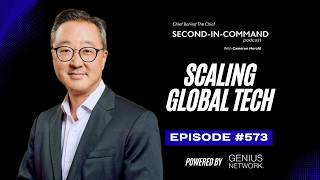
David Lee, Global COO and CFO of Webtoon Entertainment, discusses scaling a platform with 155 million monthly active users and 24 million creators. He shares his career path from McKinsey and Zynga to Webtoon, explains how founder Jung-Kook Kim's integrity shapes the company's mission to democratize storytelling, and describes his "golden nugget" framework for testing audacious goals.
Chapters
Well, there's a brutal reality in having public company investors to be held accountable to every quarter. The rigor of being public enables you to raise capital from any investor in the world, whereas when you're private, you aren't under the spotlight or glare, but you're also not being held accountable to the same level of rigor by board members, by investors, by your own executive team. I think it's great for companies that have an ability to transcend the limits of being private and benefit from the transparency of being public. But it certainly is a transition for every company that goes through this IPO process.
Today on the Second in Command podcast, I'm joined by someone whose career reads like a masterclass in modern leadership and operational range, David J. Lee, the Global COO and CFO of Webtoon Entertainment and a board member for both Webtoon and Zebio. David has spent over 25 years leading at the highest levels of consumer and tech, from transforming Zynga into a mobile powerhouse to scaling Impossible Foods and launching the Impossible Burger nationwide, to advising public companies and founding his own venture, Inevitable Tech. He's held senior roles at Del Monte and Best Buy and even started his career in advertising and strategy at Leo Burnett and McKinsey. In this conversation, David breaks down exactly why serving on a board is one of the most valuable experiences for any executive and how it sharpens the difference between operating and advising. We talk about why being a generalist can actually be a superpower, what he believes truly defines integrity in founders, and the deeper question every leader should ask: is the mission exciting enough that you are willing to endure the challenges required to achieve it? It's a thoughtful, very grounded conversation with a leader who has been in almost every seat at the table. It's a really good one. Let's dive in.
All right.
If you're an entrepreneur, you've gotta go check out the Genius Network. The Genius Network is for ambitious, giving entrepreneurs who wanna be part of the highest level connection group. And it's not just another mastermind. In fact, I have been a Genius Network member for 8 years. Genius Network helps build a better entrepreneur by focusing on health, wealth and making your business and life more ELF, which stands for easy, lucrative, and fun. Don't apply if you're just a taker, but do apply if you're a giving entrepreneur and you earn at least $1 million or more in revenue. And to see if you qualify, go check out geniusnetwork.com/apply. Again, that's geniusnetwork.com/apply.
We are live with David. Welcome to the show.
Thank you so much for having me.
Of course. Well, I personally have never heard of Webtoon before knowing that we were going to talk, and I started looking into it and I realized this is a really, really big thing. So kick us off for anyone who's listening that also doesn't know. Tell us a little bit about Webtoon. What do you guys do and who do you serve?
Well, I'm not surprised you may not have heard about us. In fact, 2 years ago when I was looking at the company, I hadn't either, but my Gen Z daughter certainly had. Um, what's amazing about Webtoon is we're a global storytelling hub. On one side, we have 24 million creators who are powering 120,000 stories that arrive every day to our platform. And on the other side, we have these 155 million monthly active users all throughout the world. And in the palm of their hand, uh, right on their app, they can flick a finger and see where one of these great stories is going, or they can spend an average actually of 30 to 60 minutes reading from inspiring creators from all over the world. I bet that you and your readers and listeners may have actually seen a movie or two as we've powered 100, you know, what we call rich film adaptations. So these are movies on the big and the small screen, or the great anime or animations. And we'd like to think that we're empowering creators globally to have a voice and tell their stories.
Hmm. Very cool. And so who is the kind of ideal client or avatar for who's using your guys' company?
Well, here in the US, uh, we call our target consumer Maddie. Um, Maddie is between 18 to 25 on average. Let's say she's 24. Um, and she has a full-time job like everyone, and she enjoys many of the other platforms available to her. But the thing is, Maddie tells us that what's unique about Webtoon is she can't find the stories she finds on our platform anywhere else. So we find that this format, you know, it's called a webcomic, but for this generation of app-native consumers, they've never seen a paper-based anything, right? So for them, it's how can they find a a cool story that they feel like they discovered, uh, they're native digitally, right? So they're interested in something they can find on their phone. Um, and increasingly as Maddie finishes one story or another, she gets more confident she'll find the next. 'Cause we have every genre that 24 million creators can imagine. And the amount of human merchandising for stories is kind of limited 'cause we use technology and market signal. To empower the next generation of stars as creators on our platform.
So cool. I'm curious to know a little bit about the throughline for you because from my understanding of your background, you have quite a diverse path from like advertising, gaming. I think you were behind also the launch of the Impossible Burger and now storytelling kind of tech. What is the throughline that connects all of those career moves for you?
You know, I'd love to characterize my career as extremely well thought through, you know, with a carefully crafted through line from the beginning. I think the truth of the matter is I've really enjoyed partnering with brilliant founders who oftentimes have a technology or a vision that the world hasn't seen yet. And when you can find a great founder and a great technology, and you can reimagine what the consumer is willing to pay for. That reimagine what the consumer really wants before they tell you directly, to me, those are the best jobs I've ever had. Functionally, I've always wanted to be on the bus and grab whatever seat is most useful. So you're right, you know, I started advertising marketing, spent probably as much time in marketing and ops as I have in strategy and finance. But here at Webtoon, since we went public about a year and a half ago, Uh, the, the role was really important to help our founder, Joon-Koo Kim, adjust to the, the big leagues, so to speak, of being listed here in the US and operating as a global public company. Um, I've always, um, also benefited from mentors that allowed me to be generalists, you know, uh, being able to look at a problem on a first principle basis has oftentimes served many of these, uh, roles I've been in well. Um, like whether it's launching Impossible Burger or turning around Zynga or, or Best Buy or creating this rocket ship, uh, I've always been interested in how does a great technology enable a different vision of the future. Hmm.
What do you think is the benefit of kind of taking that generalist approach versus just staying in one lane and being as expert as you can in just one?
Area? Well, I think it's a, it's a question of personal taste and risk-reward. So to be clear, um, when you're running into transformations, you know, it can feel like you are running to the most intense, either hypergrowth startup or big company turnaround, or a little bit of a combination of both. And so the benefit of being a generalist is that you can walk in the shoes of a lot of your colleagues and you can help a founder that's looking for everything. You know, in hypergrowth, there's never one function only that is in desperate need. There are multiple functions. I think that I'm not built for extremely large steady eddy companies. You know, I'm built for companies that are trying to change the future. And being a generalist helps. I think the cost of being a generalist is that you are betting on your ability to become an expert faster than your experience has allowed in a variety of functions or situations. And, and that is not always an, an easy thing to do. Um, so there's definitely a benefit, but, but there's also a cost.
Hmm. What did you learn from all of those prior roles, especially in different areas that you are using today at Webtoon?
I think I use a little bit of everything. I've tried to learn in the past at Webtoon. I think first as a marketer and as an advertiser, you know, you always have to ask yourself, what does Maddie want? You know, what does she want next? And if you have an unconstrained view, if you start with what will a consumer reward and what will the creator be empowered to create. If you start on a first principle basis about reimagining what the consumer wants, then enabling it with ops and governance and finance and profitability, all these things, if they come second, uh, then I, I think you're, you're starting, uh, the problem solving in the right way. Um, for me at, at Webtoon, um, I really value the fact that We are empowering creators using tech, but we're fundamentally a storytelling company. Um, and allowing, uh, these creators to have their own free will to determine the story they want to tell and trusting the f— what we call the flywheel to reveal to the world, uh, stories that I never expected, uh, to be a hit is, has been really gratifying. Uh, so I think a little bit of everything, uh, I've ever done here at Webtoon.
I love that idea of consistently asking, what does Maddie want? Because I think oftentimes it can be so easy once you already have something going, you've got clients, to just keep fulfilling on that same problem. And one of the things that I learned from one of my old mentors was before they even know what their next problem is, we're trying to solve it. So that when that problem comes up, we already have the solution. So you keep them loyal over time and you get to expand out with what you're able to provide to that ideal client avatar, which I think is a really great just question of asking what do they really want? What, speaking of what they really want, what was it about you that they really wanted when you stepped into COO? Like why did they choose David Lee to come in to be COO at Webtoon?
Well, I can only partially guess. Um, but I would say, I think we both wanted the mission of the founder. We have a founder named Jungkook Kim who created over 20 years ago, uh, this company where his idea was never to be parochial or local or regional. Like he really thought that the world deserved a global storytelling platform to enable creators like himself actually. To have a voice and that technology, its time had come and could power this. I mean, he was very visionary. Uh, and so I think what, what the company needed from me and others was the ability to take that vision and turn it into a plan that could be achieved. A big part of it was being, uh, on the global stage, you know, being listed as a public company on NASDAQ. Wasn't because we desperately needed to raise public company funds. It was because we wanted to be able to get exposure for our creators and, and increasingly serve more global consumers, these great stories. And so looking for someone who had been around the block as a public company person who had been on public company boards and maybe, um, who believed in the power of a vision enabled by hardcore business management, um, is, was that I think what Webtoon was looking for. Uh, and so a number of us that have joined in the last few years, I think are enabling that. Not just me, you know, having great, 3 great new independent board members join us as we went public, having the rigor of being public, uh, enable us to be more disciplined. I think all of that has contributed to, to trying to enable JK's vision.
And so when you say going public has enabled us to be more disciplined, what do you mean by that?
Well, there's a brutal reality in having public company investors to be held accountable to every quarter. Mm-hmm. There is a transparency that's required when one is public. In some ways, I like to think of the rigor of being public enables you to raise capital from any investor in the world, whereas when you're private, And I've loved and enjoyed being with companies, startups like Impossible Foods as a private organization. There are pros and cons, but when you're private, you aren't under the spotlight or glare, but you're also not being held accountable to the same level of rigor by board members, by investors, by your own executive team. So I think it's great for companies that have a ability to transcend the limits of being private and benefit from the transparency of being public. But it certainly is a transition for every company that goes through this IPO process.
Is there a lesson that you would share to anyone who is running a private company that isn't planning on going public anytime soon, but might benefit from some of those principles or learnings where you would say, this is absolutely something I've learned from going public, that if every company focused on this, no matter the size, you would be in a much better place. What would that be?
I don't know if it's a lesson, but there's one frame of thought I'd love for private company executives to think about is going public isn't about one IPO. It's about imagining that you're IPOing every quarter. Forever, because after that debut as a public company, every quarter anew, you are filing a Q. Every year you're filing a K if you're listed here in the US. The level of transparency, the level of thought and care, uh, is like IPOing every quarter after that initial debut. Now, the good news is once you have the team, the skillset, the rigor to be listed as a public company, hopefully you've kept that and you can continue to exercise it and get better and better at it. But this isn't an event to be considered. It's an ongoing series of radical transparency to your investors that I think you need to think of as a complete change for a long period of time. not just a single event to prepare for.
Hmm. That's great. You mentioned, I think you guys call him JK, the owner of the company.
Yeah. Uh, JK, we, we call him JK. His name's Jungkook Kim. Uh, he's our founder and CEO.
Great. So JK, he seems to be very focused on the mission and he's been dedicated to this for over 20 years, which I find incredible. What is that relationship like between you and him? As CEO and owner?
It's interesting, you know, I think like all, um, relationships, it changes and, uh, enhances over time. You know, when you're first meeting a founder and you're joining a new team, there's the wonderful part of the relationship where you're just coming up to speed. It, it's like a holiday every day as you discover all the great things that have been built. In this case by JK. And then over time, after you have a sense of where the business is, there's a part of the relationship which is to really understand where the founder and the CEO want to go. What is good enough? What is absolutely not? And then the, in sequence, the third part is to figure out, well, how can you uniquely make it happen? Reduce the risks. But also create a path. I think for, for particularly visionary founders who have a mission that will be bigger than any of us at any moment at the company, you know, when you feel like you're part of something that, that the world needs and in multiple generations will benefit from, it elongates time in the relationship and you begin to realize that, you become more grateful about the amount of time that you can spend as part of this relationship with the founder and his vision. You know, JK and I talk a lot about this, this, this thing that we've created at Webtoon, we hope is bigger than any of us, including him. You know, he's a very selfless, high-integrity founder that's trying to enable creators globally to have a voice. Uh, and, and I think that if you frame the relationship with your founder in terms of, uh, the, the vision and the intent of the mission, it helps get you through the normal, uh, challenges we all face in any relationship day to day, week to week.
You mentioned he has super high integrity. I think even in your answers, you mentioned one of the highest of anyone that you've worked with. I'm curious, how does that show up and like what specifically brings him to be like the top of mind for someone with integrity?
I think how it shows up is in the consistency of behavior every day. Like big moments, um, are wonderful, but everyday consistent interactions I think are the basis of trust. Um, and you know, integrity's a big word, but it's, it's the notion that you feel that the person you're in a relationship with is honest with themselves and with you, uh, up the good and the bad and always tries to do the right thing. I, I think that characterizes J.K. very well. Um, it is unusual to have a founder who has had this much success stay true to that notion of being honest with him or herself and always trying to do the right thing. I think it's very easy to get distracted with or become obsessed with, as many founders I've worked with have, with the things that come with the success of reaching kind of the fruition of your dreams. And what I find remarkable about J.K. is He's laser-focused still on what is the long-term mission for creators and consumers of great stories globally. And that's what I mean by integrity. And it shows up, it shows up in everyday actions and, you know, in meetings that happen frequently versus, you know, big moments are great. But I think integrity is something you have to sense every day. Uh, and JK definitely has it.
I love to hear that. It, it really, what it sounds like to me is the focus on, like you said, the mission so that even when you hit these certain milestones where it sounds like other people get distracted or blown away by, uh, maybe even ego or status, if you're really connected to what you're here to do, it doesn't really matter what Any of those are, as long as we're still working towards the ultimate grand mission.
Yeah, that's right. And I think when, when the mission is particularly large, like when it's about, I mean, I happen to think human storytelling, um, has always been a fundamental need, but I could make the argument that today in particular and in the future we need it more than ever. Um, when, when the mission is that big, you and you, and you feel like your job is to enable a founder to achieve it. It can be extremely difficult if you feel you're on that path alone. And, and so one of the things about being a, a number 2, a second in command as COO is, you know, trust in the relationship you have with the founder, I think, is the limiting and the enabling factor. It, it, it, when you have a mission as large as the one we're on, here at Webtoon.
What advice would you have for any CEO that might be listening where they hear that and they're like, wow, that would be so amazing to work with someone with that level of integrity, but maybe their CEO, they don't experience that same level. Would you recommend people stay in those positions until the kind of, or, or what is, what is the point of which? It makes sense to leave. If this, if this is a common thing that as CEOs gain more success, that, that can often come with distractions or a loss of integrity. What advice would you give that COO that might be experiencing that with a founder?
Well, first I think most number two, second in commands by definition of the relationship are gonna go through highs and lows. Um, I think the, the, the first piece of advice I give is go back to that first principles concept. You know, why did you take this role? Why did you want to be part of this team? Why are you choosing? Why did you choose in the beginning to be part of the mission that you're on? And the reason why I think number twos benefit from picking missions that are bigger than the personality of a founder or a CEO is it frames that decision against something bigger than, than any single week or day or month of challenges. But it also is a pretty strong litmus test because if the day-to-day ups and downs are fundamentally inconsistent with why you chose to take the job, fundamentally, for whatever your reason may be, because for me, in my case, it's mostly around mission, but I've talked to many COOs, uh, and CEOs who, who join companies, uh, for something very specific, personal development, or to achieve a certain level of leadership outcome or a financial outcome. But if for whatever reason you've picked at the beginning is out of reach and, and never will be, that's a pretty clear indication, uh, to find another mission. Um, the other thing I would say is framing relationships as the outcome is really dangerous when you are the COO, because there are ups and downs, uh, with every relationship. And so to me, it's, it's less about how great am I feeling about how I'm interacting with a single person or group of people at the company. It's much more about, um, do I still believe that the reason why I joined, in my case, I joined Webtoon to be part of an enormous mission. Enable storytellers globally. Are we on that path? Can I uniquely help us on that path? And if the answer remains yes, it helps me take a breath and get past the day-to-day, uh, limits that we all face, uh, when we're making tough decisions at work.
Hmm. Great. That was really well said. I'm curious about your energy. I have noticed that some of the biggest companies that I've interviewed, their CEO, they're so calm. And there is a certain difference, like I've noticed from smaller companies where there just seems to be more like nerves or like intensity or like fast talking. Even in myself, I find this. What do you, is that something that has just been ingrained in you from Like, is, is that a personality thing or is this something that you've worked on over time? 'Cause I imagine when you are running a company the size that you are and you've got such a big mission, there's gotta be a lot of chaos that comes with that also. How have you developed that ability to stay grounded and calm despite all the changes?
That's a really hard question to answer. I think, um, When I think about what others observe in me, who I've known for a long time throughout, you know, the 30-plus years I've been working, I would say that there is a part of it which starts with your personality. You know, there is fundamentally a part of it, which is, can you find clarity in moments of greater chaos? Like, can you find within you the ability Sometimes I liken it to, it's not literally taking a breath, but it's being able to kind of let go of the immediate reaction and focus a little bit more in a crisis. I don't think that has to be your personality, but it certainly helps if you had that before you started your journey as a professional. But absolutely, I think the vast majority of anyone who is faced with multiple crises is, it's just experience. When you're used to walking into a room where I used to say that there are some days in different places where I'd walk in and it was like a crazy circus tune was going off in my head, like, you know, in a good way, like amazing things were popping out from the left and the right developments I didn't expect. But then there are some times where quickly that circus tune goes minor in key and it's like the worst horror film that I'm stuck in. You, when you experience that and you choose to voluntarily, um, pick those kind of roles because you like transformations like I do, where you, you really want to be parts of missions that are risky by definition, but have huge ability to potentially change the world. Uh, you, you've, you've just developed through, um, history and time the ability to walk into a crisis and, and not be overly swayed. But one thing I would tell you though, is, um, there's a risk in, in being a trauma surgeon, so to speak. Like it is, there are times when oversteering, not letting the silence remain, jumping in because you feel like you've seen this problem before, uh, becomes a risk, uh, where there are times when you need to let things play out, even though you may have seen, you know, 17 other emergencies that feel really similar to the one that you think you just walked in on. So there isn't a single answer. I think it's just one of those things where you have to like being in the fray to be, I think, in a crisis-oriented transformational situation. It's what I enjoy to my heart's content. To my discredit or credit, you know, I, I like the situations where leadership has a premium where, you know, there's an acknowledgement that we better be better operators because the situation is fundamentally volatile. But it's not for everybody.
When you mentioned sometimes you just have to let things play out, what do you mean by that?
I use the term sometimes oversteering. You know, when you are growing up as a leader, the amount of hands on the wheel steering that you're rewarded for is really high. Like, you know, when you're starting out, when you're individual contributor, or even when you're managing a smaller team, jumping on that metaphorical grenade when you see it, right? Taking the hill, right? You can use whatever tortured cliché metaphor you want, uh, individual action can turn the day. I think later, um, when there are more types of teams, more cultures, more global parts to a company, the ability to personally determine an outcome is far, far less valuable than the ability to enable a team to overcome a problem. This is, I think, one of the best lessons for being a COO is to be on a board. 'Cause you know, when you're on a public or private board, I think this is true in both cases in my experience. You know, your job as a board member is not to be the management team, is not to actually solve the crisis. And you may actually think, you know, as an advisor or a board member more than the management team you're trying to serve. There's something akin as one grows up, I think as an executive, where your individual ability to determine an outcome is oftentimes much smaller than your ability to help a team determine an outcome. That's what I mean by not oversteering. Maybe focusing, excuse me, on the team more than individual action is what I meant by that.
I don't know too much about the concept of being on a board. And so when you say CEOs should look at potentially doing that, can you talk a little bit about what does that, what does that really mean and what would that look like for anyone that's listening? That's like, ooh, that sounds interesting to me.
Well, for me, um, being on boards was a remarkable shift in mindset. You know, we serve so many boards as members of management. I don't know how many board decks I've written. That feeling of walking into, it almost feels like you're walking into a stadium as a, as a gladiator when you're an executive and you're presenting to either a private equity board or a public company board, as I've experienced both. You can imagine what it's like to be on the other side because you're preparing for them to hopefully understand the business situation you're describing as management, but it's very different when you're actually on the other side. And in fact, I think one of the harder transitions when you go from being a member of management to being on a board is exactly what we just were talking about. You want to oversteer, you know, you desperately want to help that CEO founder. You've been in the shoes of the CFO. You've, you're listening carefully to a management team and you really, and usually when you join a board for the first time, you're desperate to demonstrate you should be on the board, right? You know, you really want out of your own ego. To say, hey, I can really help here. And that's great. But over time you realize that the relationship you have with management means you're working through several colleagues on the board. And the board's role, for example, at a public company board is really about ensuring that public company investors have great governance, helping thinking through CEO succession. But it certainly isn't helping on what you think to be the operational issue minutely at any given time. I think that what it helps is it helps you calibrate, um, being an advisor versus being, uh, an executive. And I think as COOs or number twos, you have to be able to do both. You have to personally lead through a team, but you also have to be a coach and advisor oftentimes to a founder or CEO. If you're in tech and being able to develop a little bit of that comfort with both ends of that, uh, relationship, I think is the reason why I think boards are really useful, uh, if you choose to still engage as a member of management.
Thanks for sharing all of that. Yeah, that makes a lot of sense to me. When it comes to global teams, which you had mentioned, how do you take care of your people? How do you make sure that they are still engaged and online and feeling excited about what they're doing when there's things like Zoom fatigue and these remote environments that we're now navigating? How do you make sure that you're in that role where, like you said, you're not getting super deep in the weeds anymore, but staying high level but still taking care of your team? How do you do that in today's age?
Well, that's a great question. I don't have, like, I wish I had the secret recipe for solving this problem. I actually think the first principle I'd approach it with is to not apply the same playbook every time you're in a situation. I find even within a company, a global company in particular, the subcultures, you know, what's rewarded around here, so to speak. And, and I, the language, and here I don't mean just literally the language. I mean the way people interact, the way people manage conflict and surface conflict. I, I, I find culture to be extremely diverse, even within a single company, depending upon the type of the geography, the country, but also as well, like the function. And so when you're in the number 2 position, a COO, or if you're the CEO, I think the first thing is to recognize that it's heterogeneous. It is not homogene— like, you know, we all think about culture as the common thing that everyone, you know, what's rewarded around here is usually the definition of culture for many of us, but it's different. Even if there are, there's glue, if there's a common notion of mission, for example, or common values, the way it shows up day to day, if you're at a large global company, is really diverse. And so having a common set of values, but enough flexibility in business management to be able to accommodate within a culture differences, I think is one of the hardest things. Lessons on that I'm still learning every day. We are very global at Web2. You know, we have this emerging growth business here in North America where the number one consumer app, including mobile games in Japan. You know, we started in Korea. And so, you know, I was just in Toronto and I frequently fly between Toronto, LA, uh, Seoul, Korea, and Tokyo. So we, we're really global. I, I think the founder having established this mission gives us that glue, though we're extremely different in the way in which we operate. In different pockets, we all know why we signed up for our jobs. And so I think hearkening back across diversity to what matters, why Webtoon in this case, uh, I think is the second principle. Recognize the diversity. And the second is remember the glue. Um, in our case, we're a very mission-oriented company. We're, we're trying to serve global storytelling for creators. We're trying to democratize storytelling, uh, access to consumers in this area. That helps. And then I think it also helps, uh, to physically, uh, actually spend time in, in, in reality, not just virtually. Like, I, I'm a, a big proponent of flexibility. Um, but deliberately putting people together for culture, even if it's infrequent, and for a reward or even a simple meal makes a huge difference. Breaking bread, it turns out, transcends a lot of cultural and language differences if you make the time to do it. That's hard to do when you're the CEO or the COO because, you know, you have a lot of meals you could be at. But I think prioritizing that in whatever way you can, I would also recommend.
With a golden nugget, this is one of the questions that I asked in the preform and you submitted, start with what you would have to believe. It was like an approach to dreaming big. I'm curious to hear more about why is that your golden nugget?
I, um, as you know, I tend to be drawn to missions where there's something brand new being created. You know, or at least something that the consumer hadn't experienced in the same way. And one of the great limits I've learned is when you frame something narrowly as high probability outcomes, you know, here's where we are and here's what I think we can achieve. And then let's start with that and then determine what do I have to do in order to achieve that high probability outcome. I find it incredibly limiting if you're interested in how technology can change future outcomes because you, you're framing the problem, uh, in terms of what is high probability today. When I talk about this golden nugget of start with what do you have to believe, it's not meant for steady eddy situations where you really aren't being asked or want to break through. This is about when you're at a company or in a business situation where there's a lot of unknowns and volatility. So for example, if you start with what, um, you'd have to believe to deliver an outrageously ambitious outcome, but you don't just leave it there, you keep on double-clicking on it. Well, if that were true, what else would have to be true? You end up getting to some really impossible, really operational problems, right? In order to deliver that outcome, the most important thing today is to do X, and X, it does— usually it doesn't seem possible. This is, by the way, not my practice. Apparently, I've been told by business schools that this is the practice that NASA used to get to the moon, or how many tech companies have progressed to launch something breakthrough for which there was no protocol or empirical example. I like it because I think it frames a level of ambition. Even if you're in a mundane situation, it makes you realize that your preconceived notions or just the act of questioning your preconceived notions focuses you on the possibilities. And then it's very pragmatic. Like, what do you have to believe? And then you ask yourself, like, well, can I deliver? Like, can that actually become true? Like, what would make that true is a pretty strong test of whether that believability is ever going to happen or whether you believe it's ever going to happen. So I oftentimes think that in particular folks in finance or operations need to apply this the most. I mean, as marketers, we constantly do this, right? As marketers, we always think about what the, you know, we vision board what the consumer might love one day, but we don't really do it operationally. And it's hard to do financially, but I stand by the advice. I think it's important. to expand possibilities and then brutally assess what must be true to deliver them, to determine a path.
Love that. And what I, what I really specifically, really specifically, those are two clarifying words. What I specifically like about that is it can also be used just in day-to-day life. Like you can use that in business, but even personally, I've had mentors of mine ask me that question many years ago. Of what would need to be true in order for you to have XYZ. So, you know, giving the example of, I want to find my dream partner, and this is what that man looks like and what our life would be like, how he— with the values that he has. Well, what would need to be true in order for me to attract that level of person? And then it kind of cuts away all of the things that we can loop around in our mind trying to think of you know, different actions that we might be taking to just clarifying this is like the one core thing, like the one domino that might help in that. So I love that. I love your golden nugget.
That's great.
Talking about the next 6 months, kind of where we're going. Uh, I think a lot of people are really interested to see what's gonna be evolving in 2026. I feel most probably more excited and anticipatory about 2026 than most years that I've had, uh, just with so many different things that are happening. What are you most excited about both with Webtoon and then also personally?
Well, with Webtoon in the next 6 months, I would love to cross that 2-year anniversary as a public company and have our team feel like they know what the reality is like to be globally listed on NASDAQ, to to have a place as a public company where they feel like we're just getting going, but they know exactly what to do every quarter. And, you know, we're still young. I like to tell our team we're an infant as a publicly listed company, but I think 2 years old is a bit of a milestone for me with my children and my puppies and my companies too. I think it's a big step. Personally, I am really eager over the next 6 months to see signs where human creativity is at the forefront of having us hope again. You know, everything I read today is about the destruction of humanity in some form that I define it. And we all have different values politically. We all have different views on AI. I'm a big believer in human creativity. Webtoon is too, by the way. You know, we use our technology, I think, to defend and enhance our human storytellers, protect them from piracy, enable their productivity, et cetera. I'd love to see in the next 6 months that story become more of a headline. There are already examples. There are so many examples, even at Webtoon, where, you know, I know of amateur creators I've worked with or met. That emerged out of nowhere with a full-time job and a dream to be a storyteller. And I'd love to see that become a headline for our world, personally. And that's why I'm at Webtoon, but beyond Webtoon, it would be great where human creativity is defended and it's brought to the forefront and becomes an example of hope versus what I read and see today.
Hmm. I love that. Is that kind of your personal excitement too, or do you have something specific?
Uh, well, listen, I have a daughter that, um, I have two daughters, uh, but one daughter just entered, um, college at, uh, the Rhode Island School of Design. And if you don't know this college, it's where they, they focus on creativity and the arts. Um, and, and I think my personal interest in human creativity is also reflected in my hope that as a young freshman, she finds her footing over the next 6 months in her first year. I think that, and you know, I think as a parent, there's another milestone, not even every 6 months, it feels like every week there's something we hope and pray for. But that's definitely top of mind for me.
Oh, exciting. Well, David, thank you so much for your time and your wisdom. It was really enjoyable having this conversation and I'm excited to keep seeing Webtoon grow and develop and sharing your mission. I love that I now know about Webtoon, and, uh, getting to meet you was a pleasure. So thank you so much for being here.
Thank you so much.
Take care.
More from Cameron

Flutterwave Former Global Head of Operations Awa Kone | When Growth Outruns Operations (Podcast 611)







Optomi Professional Services COO Nick Murphy | The COO Can’t Know Everything (Podcast 607)


