MAPS COO on Leading Through Psychedelics, Trauma & Crisis | Steven Huang (Podcast 530)
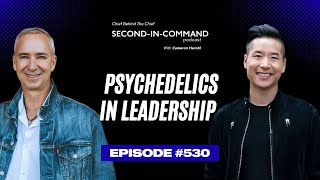
Stephen Huang, COO of MAPS, discusses the organization's work on MDMA-assisted therapy for PTSD and the recent FDA setback that delayed their treatment approval. He shares how psychedelics shaped his own leadership and how MAPS balances scientific innovation with regulatory compliance while funding operations almost entirely through donations.
Chapters
99% of people use psychedelics outside of that medical clinical context and they're using it for personal growth, professional leadership development, all sorts of ways. And because there's different psychedelics, there's almost like a, almost an infinite number of combinations of psychedelics for different purposes.
All right, I'm super excited. Today you are going to get to listen to Rick Doblin's second in command from maps. And our guest today is Stephen Huang who is the second in command and the director of finance, people, IT and community for maps, which stands for the Multidisciplinary association for Psychedelic Studies. They are the forefront of the industry on psychedelic research and psychedelic therapy, including MDMA therapy for people that struggle with PTSD and anxiety, et cetera. Steven leads a team that enables MAPS to advocate for safer, legal and equitable access to psychedelics for healing and personal growth. He brings critical analysis and systems level thinking to the role. He also has a decade of grinding in Silicon Valley at organizations like Facebook when it was still pre IPO off working with a company called Square that we've all heard about. He also finally acknowledged that psychedelics had profoundly changed the way that he wanted to have an impact in the world and in business and as himself. He's got a passion for healing and justice. Guided his journey to the second in command at the world's premier psychedelic organization. Going to love this episode. Lots to learn, lots of great insights and I'm excited to be able to share this with you. You can also watch this and all of our podcasts on our second in command podcast channel on YouTube. We'll see you on the inside. Make sure you share this episode and like and subscribe for all future ones too. So Stephen, welcome to the Second in Command podcast.
Thank you for having me, Cameron.
Of course. This is an episode I have been looking forward to for a long time. I first got to meet your CEO and I think the founder of maps, Rick Doblin. Gosh, probably eight or nine years ago I was at a main the five day TED conference and I got invited to a after, not a party, it was like an after hours speaking event speakeasy where Rick was speaking and a couple of other members in the psychedelic community were speaking and there was about 120 of us from Ted. We got to this penthouse room at the building. We had to all put our phones at the door and I remember looking around the room, I'm like whoa, these are like some serious people in this room. I'm not going to name their names but there's some really big names in this community that either are very interested in the psychedelic space are either just like to party or they're using it for growth. But it really kind of opened my eyes up to A, what was happening in the space and B, what people were using psychedelics for. So I think with that, can we start off by telling people what MAPS is, what kind of the purpose of the Org is and then we, we're going to go on a few different kind of rabbit holes.
Yeah, let's do that. And I have my own meeting. Rick Goblin for the first time story that I can share. So for the listeners, MAPS is an acronym. It stands for the Multidisciplinary association for Psychedelic Studies. It's a non profit. It's been around longer than me. It's been around almost 40 years. And in that time MAPS has really led the psychedelic movement with evidence based approaches to changing policies, advancing research, shaping the culture around psychedelics. Yeah, like I said, we've been at it for 40 years and we know that all of those things, policy change, science, education, public health, they all need to go hand in hand to change the existing paradigm.
It feels like when cannabis started to get legalized around 10 years ago, maybe eight years ago, I was living up in British Columbia, which was pretty early stage with cannabis, you know, right along with maybe Colorado, Oregon probably was pretty early. But when cannabis started to get legalized, it felt like that was the time when it was okay to talk about psychedelics. And it almost happened at the same time as I think ayahuasca started to become a popular way for people to examine themselves and to grow. Does that feel like a time that maybe MAPS started to become. Was it not easier? But yeah. Was that an inflection point at all for the org and for the space?
I think so. I think about 10 years, you know, and MAPS definitely worked on cannabis drug policy as well. And about, I mean I would say a lot of movement, a lot of press around maps's flagship project, which is around making MDMA or MALI into a medicine for ptsd also really picked up probably around that time. Starting to do like human trials. Ayahuasca was making its splashy entrance. There are other psychedelics that are also now gaining popularity that, you know, I hadn't heard of 10 years ago.
Yeah, I mean I've done a lot of work with psilocybin, I've done a lot of work with ketamine, I've done some MDMA and. But it feels like it was okay to start talking about it then, like I remember going to. I've been going to business events with CEOs for 30 years and there is zero chance, less than a zero chance that I would have ever brought up psychedelics around all these other entrepreneurs until about 10 years ago. Gosh, I even remember I started going to burning man in 2007. So 18 years ago, I went to my first big burn and I really downplayed the use of psychedelics in any kind of a party environment, let alone was anyone ever talking about it for growth. So it feels like. But now if I go to any business event in the world, like I've gone to the main ted, Intelligent Change, Genius Network, War Room, Baby Bathwater psychedelics. Somebody is there talking about psychedelic therapy and the use of it for. For growth. And all the good that it's done is. Is that starting to weave its way into the governments. Starting to be more okay with looking at this, or can you talk us through some of the journey of maps overall?
Yeah, I love that. And I love hearing that. Because, you know, a few years ago, I'm. Maybe about five years ago, I wrote a LinkedIn post around my psychedelic use. And half the messages I got were like, stephen, you. You work in hr. You gotta take that down. Like, this is career suicide. And then the other half were like, hell yeah, keep it up. Keep advocating. This is what we need to hear. This is the content I want. And then just last year, I think Sam Altman was on the podcast, the. That seven songs podcast where you write about your life in seven songs. And he just spoke openly about psychedelics. And I'm like, okay, the CEO of OpenAI is talking about psychedelics. And I don't think it made the news. Like, I don't think like anyone really cared to write about it or was particularly surprised.
Yeah, well, Tim Harris has been talking about it. Joe Rogan's been talking about it. There's like so many business thought leaders have openly discussed it. I think there's also something happening where people are more and more okay with talking about trauma, talking about the vulnerability that we have as humans. And there's almost been a movement away from the traditional religion into this spirituality and the fact that we're all connected. And I think that's maybe opening up some stuff for the space again. Like, I honestly don't think that I've ever been to any business event until about seven or eight years ago where you could go and talk about psychedelics and psychedelic therapy. So walk us through why stuff like MDMA therapy is so powerful around ptsd. And then are there any, any areas of trauma that they're not good for, or there are any kind of psychological areas that people might struggle with that some of these modalities might not be good for?
Okay, well, I can answer part of that question. Okay. Because MDMA is in the FDA pipeline, there are a lot of things that can be perceived as pre approval marketing. So I guess what I will say is, you know, we need new approaches to solving the mental health crisis that we're in. And the fact that trauma is so much in our personal and professional zeitgeist shows that there's a real opportunity for treatments that you know, can be effective for some people who have tried other treatments and haven't found anything that works. So psychedelic assisted therapy, whether it's MDMA therapy, which is not let yet legal above ground, or psilocybin therapy, which is legal in some states, or ketamine therapy, which is legal in all 50 states. There's this really interesting discussion happening in the boardroom, you know, around the water cooler, around what is the potential for psychedelics to make us happier, healthier humans, but also more effective workers? Which I think is really an interesting cross section that we're in.
Yeah, I want to ask you about that in terms of our effectiveness and our leadership growth and I'll speak to some of where mine has come to. I'm curious, why are some of these drugs or medicines legalized versus like why is ketamine allowed? Is it just not a Schedule 1 drug?
Ketamine is not a Schedule 1 drug. I blog. It's a Schedule 3 drug.
Interesting.
Legal since I believe 1970, 71 in its current anesthetic use. It's an anesthetic.
Right.
Prescribed off label for mental health. So that one is, you know, legal for, for quite a while. And you know, you talked earlier about cannabis and it's interesting because cannabis went from this like state by state.
Yep.
Way of saying, okay, this is from state said this is for medical use. It's exempted from. Right. Federal regulation in that sense. The way that a lot of psychedelic assisted therapies are being approached at the state level is kind of a different, maybe overlapping paradigm where it's not. This is exempt from federal regulation. It's saying we're introducing this new scientific protocol where you go to a center, it's prescribed, there's a label like that's kind of getting for. So there, there's, there's parallels, but there's also really interesting differences.
Well, and that's what I actually like about it. So as an example, I've done three medical assisted ketamine sessions with a physician and in the physician's office with ketamine being dosed via intravenous. And it was a profound experience for me in terms of my feeling of connection and my feeling of joy and beauty and my feeling of letting go of worry. I've done some MDMA with some shamans. I'm going down to Costa Rica at the end of this month to do a seven day ayahuasca ceremony in Costa Rica at a place called Rythmia. I've really found some benefits with this stuff, so I know that there's some benefits there. How do you feel? I don't want this to be a marketing piece as much, but where do we feel the government is with stuff like this now? Are they coming along? Is it. Is that. Are we cautiously optimistic? Are we. Do you know where we are?
I can opine. First of all, thank you for sharing your experiences. I think that does a lot to tackle the stigma and we could spend hours. I want to like, ask all these questions around what intentions you said and what you learned, but I'll stick to answering your question. I'm optimistic that I. That government is coming along. At our conference a few months ago, the MAP Psychedelic Science Conference, you know, it was opened by Governor Polis of Colorado, Governor Rick Perry, ex Governor Rick Perry also spoke and there are other government officials. We had sitting, you know, congressmen and ex senators there as well.
And you. And you have something like 20,000 people at it too, didn't you?
This one we had about eight and a half thousand.
Okay, that's a lot of people At a conference.
It's a lot of people. It's not our biggest one, um, but it was. It's a lot of people. The government is, you know, it's coming along. RFK is a big fan of psychedelics. We're not super thrilled. I mean, we. You get a lot of different perspectives at maps. We are a multidisciplinary group, so there's definitely a lot of conversation around working with the government. We have a policy department. We definitely do a lot of state and federal policy analysis. I think generally speaking, things are moving in the right direction, but we want to move at the right pace.
With an org like maps, you've got to walk that, that balance between we have a business to run, we got to hire really smart people, we've got to do lots of things. How are you funded? Are you funded from running conferences? Are you Funding from sponsorships? Are you funded from benefactors and donations, or is it kind of a yes to everything?
Donations, mostly. I will say. Yeah, our, our major gifts and, you know, our, our as a nonprofit, our disclosures are all online. The, the conferences and the other things are investments that we make in the psychedelic ecosystem. They are not money drivers for us. They are, you know, the, the public market wouldn't support a conference of that size yet. So that's something that we really subsidize as an investment into the psychedelic ecosystem, where gather people and share ideas and create working groups.
Go ahead. Sorry.
Oh, I was just gonna say it's donations that mostly fund us.
Okay. I know you've mentioned MDMA a couple of times as being kind of the core of MAPS research. Is it solely what maps? Or is MAPS more on the rest? Because MAPS is the, the of psychedelic research. So are you working on, on other forms of psychedelic therapy? Or is MDMA the core for clinical trials?
MDMA is our core. We seeded our own Public Benefit Corp. That we've spun off. We still have a minority control on that. It was called Lycos Therapeutics. They've recently rebranded to Resilient Pharmaceuticals. So we still have a very minority stake in that, but it's really a separate organization now with its own governance, its own board, its own investors. We seeded that. Um, but that's really the only clinical drug development we do now. We also focus, and primarily focus, I would say, on our drug policy, drug advocacy, drug reform, knowing that the science has to go hand in hand, which are absolutely, you know, that our conference is called Psychedelic Science. But the science, the policy, the public health all have to go hand in hand. Otherwise you have a Timothy Leary situation where, you know, one gets out of, out of.
Yeah, I, I, I noticed in the last, probably year to 18 months in Vancouver, Canada, where I used to have my home, there's now a number of psilocybin mushroom dispensaries where you can actually go in and purchase magic mushrooms that are, you know, in capsules and in edibles and in different chocolates and, and all kinds of different forms like psilocybin was. Or was. Or sorry, like THC and cannabis was being pa. So they've started to open that up. Now, is, is that happening more in the US Too? Or is, is British Columbia just a bit of an outlier or a leader in that space?
I'm not too familiar with the progress in Canada, so I, it's hard for me to equate, to say one's moving Faster than the other. But there are religious freedom laws that are being used in America for psilocybin churches to have sacrament. And that is something that we're seeing. It's a bit of a interesting situation. Just like everything in the psychedelic ecosystem, there's people that are really about individual liberty and equitable access. And are, you say, exploiting some of these laws and then there are others that are, you know, really focused on how do we make this psychedelic church authentic and equal.
That feels like pushing a gray zone to me a little bit, but it's just my opinion. But yeah, in British Columbia, I have a feeling it's because B.C. was very early on with the legalization of cannabis, and then now British Columbia has decriminalized all drugs where there's personal use limits for everything. So it feels like it might just be the province starting to be more and more okay. But no, this is like literally a store with a branded sign. You walk in, everything's packaged beautifully. And I guess the perspective is that it doesn't feel like it's being used for medical use so much as maybe for recreational use. But I think it's at least opening up the discussion for it.
Have you walked in the store?
Have you? I have, yeah.
How did it feel like to you? I'm really curious because, you know, we talk about, you know, a world or a future, a post prohibition future where you walk into a drugstore, like you walk into a market and you just. You have choices, you have selection, you have much Spokane vibe.
It felt like I was walking into a small boutique wine store, you know, that would sell different types of wine. It was merchandised. It was beautiful. Packaging, again, felt very clean, very safe. There was a nice young lady working at the counter. It certainly didn't feel seedy at all. It felt like I was. Felt like I was in a really nice, beautiful, branded, organic health store with. With beautiful. Yeah, like a. Like a. Like a pharmacy or like a. Yeah, it was. It was great. And I could. You could buy. And they needed your id, like the early stage of the cannabis space. And. But they process credit cards and so, yeah, I would buy, you know, microdosing capsules of psilocybin that I would use for work. So let's talk about where people are using psychedelics in the, I guess, the personal growth space. How are they benefiting from it? I mean, as part of your trials, what's the hypothesis? I guess that we're working towards?
Well, in our maps and resilient pharmaceuticals trials, it really was for moderate to severe ptsd, that was the indication that people were really using it for. And again, even in all the aggregation of those trials, we're talking, I think, about 300 people, maybe even less. 99% of people use psychedelics outside of that medical, clinical context, and they're using it for personal growth, professional leadership development, all sorts of ways. And because there's different psychedelics, there's almost like a. Almost an infinite number of combinations of psychedelics for different purposes.
I talked to my son, has struggled with clinical anxiety, clinical depression. At one point had a bipolar 2 diagnosis that they've since removed. But his. His depression and anxiety and even some OCD was so severe that he failed out of university because of it. It was. It was crippling. At one point, he actually was hospitalized for about eight days. And we've had a couple of different physicians have said that MDMA therapy would be huge for him, as would potentially ketamine therapy. But they were. They were worried about psilocybin therapy, that it could possibly trigger something. So it's interesting to understand how these different modalities can serve, you know, different purposes, for sure. Can. Can you speak to.
Lots of research is being. Go ahead.
No, no, yeah, The. The. The research is being done.
Right? Yeah. And, you know, unfortunately, or maybe fortunately, depending on your approach, a lot of people with. With conditions like bipolar or generalized anxiety disorder are being kind of removed from these initial trials. It's like, let's just test it out on what they call, you know, healthy normals to make sure we have favorable results, which I can see why you'd want to do that. I also am wondering how, you know, people are using psychedelics in real life, and not everyone is a. Is a healthy normal right now. So.
So what the normal, right?
Say I'm not a healthy normal. Don't be in that.
But I wonder whether that's when some people do have, you know, the bad trips, right. When they're using a psychedelic that doesn't necessarily mix with them, which I think is why it's so important to have the testing and to have what MAPS is doing where you're. You're actually working with these modalities and documenting it and researching it and really understanding, because I think it's very dangerous in some ways. Like, I didn't necessarily agree with legalizing all of the drugs or decriminalizing all the drugs like they've done in British Columbia. And in many ways, I think even legalizing cannabis like they did so quickly was really the government saying, let's take the taxes. You know, I don't think they really thought through it in any way other than there was $8 billion a year in cannabis being produced in British Columbia. And they said, wow, if we can get 10% of that, that's 800 million into our coffers, let's say yes. I don't think, like, they wanted taxes from alcohol and cigarettes. So I think it's dangerous to just say in a sweeping generalization that this stuff is great for everybody. But you certainly don't see people out there on MDMA hurting people. You know, there's no violent mdma. You don't get the angry drunk. Right? Like, what do you get the. If you're on mma, you just hug everybody and love everybody more. Like, they talked about that even back in the. In the 80s, back in the theater and rave culture in New York City, that, you know, at Limelight and Palladium, at the big, big discos, back in the rave cultures, back in the 80s, all these street kids were coming in from Jersey and doing mdma, and all they were doing was hugging everybody all night. Like, that's not. That's not a bad thing. And even back, I guess in the 70s, when it was created, it was done as a. A drug that couples would use for marriage counseling, you know, for. For green handling with each other.
That is one of the studies that we are pushing for right now, which is MDMA for therapy. Yeah. I mean, there are definitely a different set of risks associated with each. With each psychedelic. The. The risk profile for each psychedelic is a little bit different. And that's why I think each one understood and approached with its own reverence. Like, if you're thinking about doing a psychedelic experience, it's not something that you want to just necessarily jump into. You got to do a lot of research. You got to talk to people. There's a lot. There's a lot of information online. There's a lot of resources that you can reach out to to learn how you want to do this. And I think there's certainly a lot of excitement around psychedelics, as there should be. But there also needs to be an appropriate amount of. Of understanding the risks and approaching with care.
Yeah, I think it needs to be a lot more work around the use of. Of these psychedelics for a purpose, whether it's for anxiety or PTSD or reconnecting with your spouse or, you know, discovering, you know, God versus just, I'm going to go do drugs with my friends on the beach, you know.
Yeah. You know, there is A. I think doing drugs on the beach can be incredibly healing and restorative, if that's my intention. Right. I think every intention is valid.
And I guess, yeah, in many ways, no different than going and. And drinking alcohol on the beach with my friends at a bonfire, which is what we did when we were teenagers too. Right.
Yeah. A lot of my healing comes on the dance floor.
So talk to me about some of your experiences and growth as the leader and some of the lessons that you've pulled and maybe from your work with psychedelics.
Yeah, absolutely. Well, one story I'll share is I actually started my career as a life insurance actuary. That's.
Oh, gosh, I'm sorry.
Hi. Thank you. It was 2009. It was a dark time. That's the job that I could get. And I was on an acid trip, and I realized I don't want to calculate when people die, but maybe I can calculate when people will leave companies. Like, people leave companies more often than they die. And maybe I can use the same mathematical principles to build models that predict attrition. And I pitched that to Facebook when they were pre IPO company, and they're like, that's crazy. You're hired. Wow. And that was kind of the first glimpse into, like, wait, maybe I can use psychedelics for innovation and creativity. And psychedelics have always played a huge part in my career and career development. I was at a rave in 2015 on a cocktail of psychedelics, and I had this epiphany of, like, the world needs to feel like this. And that was my foray into being the head of diversity and inclusion at a number of organizations. And then, you know, I got to a point in my life early Covid, when I was like, psychedelics have been so instrumental on power for me, and I see all the hurdles that queer people and people of color have to accessing psychedelics. So on another psych experience, like, I need to work in psychedelics. And that's how Maps found me. And he said, help us diversify our clinical trials. Help us raise money to train black and brown and queer therapists. And so just, I've kind of been letting psychedelics guide my career. And, you know, it brought me to Maps. Everyone has a different career journey, and I think psychedelics can really help people get intentional with what they want to do in their short period of time. Personally, I think MDMA is great for that. But depending on what your, you know, challenge or roadblock is to living a meaningful and authentic life, there could be, again, you need to understand the risk profiles. There could be a psychedelic that can really help you embrace a challenge or be resilient in the face of adversity, help you become a more inclusive leader, help you imagine a new solution. You know, the potential for psychedelic led trauma. Informed leadership development is a real big lived experience and passion of mine.
I remember back in 2008 I took Tim Ferriss to his very first burn. And Tim and I had been friends for a couple years and he has been very kind of outspoken on the use of psychedelics. But my first MDMA experience was the year prior 2007 at Burning Man. I remember waking up in the morning going everyone needs to do this. Like everyone needs to do this one. Like it's. It was so beautiful and so connected and so heart opening and so overwhelmingly different than what I'd commit. I had been going through a very tough time in a marriage, felt very lonely and very sad and very disconnected from everything. And that one experience just really opened my eyes up to we are all one and we are all connected. And I think it probably fundamentally changed me in the business world too. Okay, you just kind of odgy shucked over the, you know, got involved with Facebook pre ipo. Can you just talk us through some of what your experience and learning was at working with a brand like that in those earlier days and kind of what some of your lessons are that you pulled good and bad.
Oh, without violating non disclosure agreements.
Yeah.
It was great. I was young, you know, I was 24 to 27, put in charge of analyzing all of people data. It was a great experience. It's so easy to, to drink the kool Aid when you're that age.
Yeah.
You know, and again this was, this was 2011 to 2014. So this is before Russia had subverted, subverted democracy and before we knew definitively that Instagram was ruining teenage girls self esteem. Right. It was a good time. But you know, one thing that I noticed there was growth at all costs.
Yeah.
And I worked at Square after Facebook pre ipo growth at all costs. And I loved how transparent it was. And I think that's a really important part of, of building a culture is be transparent with who you are. Let people opt in or opt out of that.
I want to ask about that because you, you said something around the Facebook part that spoke to culture. And I think I was interviewed on a podcast about two years ago called A Little Bit Culty and I talked about when company culture can go too far and when you can really indoctrinate people into drinking The Kool Aid. And some of that is really good. Right? Some of that is a great culture where we're working hard and we have a common purpose and we're driving towards stuff. And it's better than going to a blue collar manufacturing job where you hate your boss and you hate each other and there's no purpose us. When does culture go too far? When does the growth at all costs start to harm people? Can you speak to some of the. And this doesn't have to be about Square or about Facebook in general, but from being in the Bay Area and being around these companies, when do you think culture goes too far?
Oh, I think there's probably a few thresholds you can cross. There's a few red flags. To me, culture should always be transparent and truthful. I've been in an organization where, like they say the culture is one way, but the actual culture, the way things get done is another way. To me, that's a red flag. Like I will say it Maps truthfully, transparently. I don't think we have a performance culture. And for a long time we said we did or we wanted to. And after being here for four years, I'm like, we don't. Let's all stop lying to each other. We have a compassionate culture. We have a disruptive culture. No, we don't often fire people for performance. We are in this for the long haul. We've been at it for 40 years. We're thinking about the next 40 years. We're not planning for the next quarter.
Right.
Or the quarter after that. And there's not this performance culture. It's so weird to be in an organ where I can say that out loud, but that's the reality. And I think whatever organization you are, are in, probably not like maps. Maybe you are, but just actually think about how the work gets done. That's the culture. You can't really create a culture and a 40 year old organization. It exists.
It exists. It does feel. It feels like Maps is a bit of a kumbaya group hug culture. Right? Like where it's all caring about each other culture. Yeah, I wouldn't say that. It feels like a. It must be very hard also to drive an organization that is in many ways at the mercy, not the mercy of, but really has government oversight. I'm not sure of my wording, but like you can't go at all costs when the government's saying no, you can't grow.
Right.
Is that part, Is that part of maybe what hurts the growth?
Yes, this is, you know, My first nonprofit that I've been in. And in a for profit org, the ones I've been in, you have a strategy and you execute sure maps. By the nature of being in a drug policy organization where the government can say yes or no to things, you have to be quite reactive. You have to be really adaptable. You can have the best five year plan out there, but six months later you're like, well, I guess we're pivoting. And that happens a lot here. It's definitely challenging. It creates challenging, you know, organizational pressures. And that's really where Rick, as our leader, kind of helps set the tone. When we had a big setback last year, he's like, oh, that wasn't as bad as 1998 when this happened, or 2000 when this happened, or the big setback of 2013, you know, you're just like, oh, we're, we're in this. Well, this is.
How did, how did the org. And what was the leadership kind of narrative or dialogue or internal communications that you guys had to happen within the last. Over the last 12 months? Something negative happened where one of the, I think it was a stage 4 clinical trial got shut down or something got delayed or what was it that happened again? And how did you guys communicate and work through that internally? Where it's like, oh, shoot, we've got, we got this roadblock again.
Yeah, it was a big roadblock. We maps and the pharma company that we seeded, Lycos Therapeutics at the time, finished all the clinical trials for MDMA assisted therapy for moderate to severe ptsd. We submitted our new drug application to the fda. The data was really solid. There were some concerns that, you know, this is the drug in combination with therapy, which the FDA had never approved before. And the FDA did not approve our new drug application. You can read why online. It's not over. We still think it's going to happen. Just going to take more time. But that was a big shift for us because we had already set up for an approval. We had hired so many people to make this happen that overnight. I mean, the decision came on Friday from the fda. By Monday, we had to announce layoffs. I was an individual contributor on the people team before that day, and our finance team was gone, our HR leader was gone, our head of market leads gone, our general counsel was gone. And I became a reluctant COO overnight.
How, how do, how does the company navigate through that? From a comms, from an interim? Like, what do you tell the employees when it's not. It's not like the company did anything wrong. It's not like we, like. It's literally pushing an issue for the good of everybody. It's not like the government saying no to maps. It's saying no to something you're working towards. How do you guys navigate that? What do you say?
It was really difficult. Not gonna lie. And thankfully we have an incredible culture with incredible leaders like Rick and our new executive directors, Izzy and Betty, who both have communications background. I think when you're in a drug policy organization and the people that work in this organization are used to this kind of thing, there was a common understanding of like, this was always a possibility that this could happen. And it doesn't change the fact that people are using psychedelics to achieve growth and healing every day. That hasn't changed. The stories that we know to be true of people experiencing profound joy and healing, those stories are true. And we just inherently believe the truth will prevail. And while unfortunately some people need to depart the organization at this time, everyone is still on board with the mission and supporting from the sidelines.
Yeah, I think it's going to happen. I think it's going to happen sooner than later as well. I don't think it's a 20 year thing. I think it's more like a two to three year because I think there's such a. Again, I've noticed it now at every single. I went to 13 different business events over the last 12 months and at all 13, there were speakers on psychedelics. There was a general curiosity around it and the growth it was. It was as much as kind of the. Back around the late 80s, early 90s, it was, you know, the loud, proud gay community had to. Now it's like everybody's gay. Like nobody gives a. Like it's. It's been so. Like nobody has to worry about it anymore. But like being in a Pride parade 30 years ago was a big thing. Now it's like, yeah, we've all been to them, we've all been in them, whatever, right. I think that's, I think that's coming now as well because cannabis led the way. Cannabis is a gateway drug, but I think cannabis also was a gateway discussion. I want to ask about working with someone like Rick for a second. You know, incredible thought leader, very passionate, been around the space forever. You know, everybody looks at Rick as being, you know, the CEO of Maps, but he's not really there in the day to day running the business. He's more of a thought leader and a, a government spokesperson and a connector Is that correct?
Yeah. Visionary for sure.
Yeah. What's it like being there when he's getting not the credit, but when he's being the visionary and then the team is there building it? Does he do a good job or do you guys do a good job with making sure that everybody internally knows that we're all part of the big picture?
I'll share my Rick story.
Yeah.
Meeting Rick for the first time to kick off this answer. I was a consultant on the HR team and Rick happened to be in town in San Francisco. There was a small gathering and I was like, all right, Stephen, I get to meet Rick Doblin. We've met on Zoom. I'm going to show up as a consummate HR professional. I remember walking in the room, I think he's rolling a joint next to an intern or something. I'm like, oh, this is going to be a different kind of work experience working with Rick. You know, some people say, never work for your hero. He's a, he's a wily one. He's tricky because to understand Rick, you have to know the way that he built this organization. All of his success is built through disruption. And part of my job is to keep the company compliant.
Right.
And his job is to break all the rules. It's, it's a healthy tension. We have a lot of respect for each other, but it's definitely a challenging organization. When a situation, when you're brilliant founder and leader who you want to do nothing but support and you know and understand that my job was created because of him following his vision.
Sure.
There's this, a nice healthy tension between us.
I love that. All right, last question. I've got. If you were to give yourself some advice, if you were going to go back to the younger Stephen Wong and give yourself some advice as the, the younger you, what advice would you give the 21 or 22 year old Stephen, starting out in your career that you know to be true today?
What would I tell my younger self? Just believe in yourself. Believe in yourself. I mean, I have been put into so many situations in my career where I didn't know what the hell I was doing. I would say that was the case a year ago. But if you just believe in yourself, obviously have the right mentors, have the right support structures around you, but people can tell your organization, especially when you're in the C suite and people are looking to you for, can I trust this person? Can I trust this organization? They can tell whether or not you believe in yourself. And if you show up vulnerably and not inauthentic, but like confident, authentically confident. You'll go far.
I love it. Steven Wong, the director of finance, People, IT and community for maps, which is the multidisciplinary association of Psychedelic Studies. Thank you so much for sharing with us on the Second Command podcast.
Thank you so much. Cameron, great chatting with you.
Appreciate it. That was amazing.
More from Cameron

Flutterwave Former Global Head of Operations Awa Kone | When Growth Outruns Operations (Podcast 611)







Optomi Professional Services COO Nick Murphy | The COO Can’t Know Everything (Podcast 607)


