Scaling Back to Scale Up: The COO Playbook for Fintech Growth | Fundbox (Podcast 494)
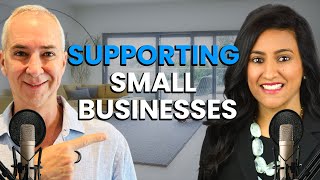
Reena Jarawala, COO of Fundbox, talks with Cameron Herold about scaling a fintech company without burning out. She covers operational strategy, company culture, and how she balances leadership with family life.
I think that who you work for and the leaders that help shape you can be the most critical thing in your success as an individual. Right. And so I think that it is so important that leaders get the right training to then be able to train their teams and help them be successful to create the world class organizations that have a thriving culture, that are growing, that are strategically thinking about what's next. But it starts with that really sound leadership and getting that ground, that solid foundation.
All right. Our guest today is a firecracker. She is the COO of Fundbox, an incredible financing company based in the US Expanding globally. Reena Jarawala is the COO of Fundbox. She oversees a broad portfolio including partner and customer operations, sales support, collections and revenue functions. She also serves as the manager of the company's Dallas office. She's a small business owner herself and she combines deep operational expertise with a strong sense of empathy for Fundbox's customers. And you're also going to get a huge sense of that empathy she has for employees and delivering solutions that are both scalable and customer centric. She's currently finishing her MBA with a focus on coaching and leadership. It's going to be really interesting to see what she does with that. She's got over 20 years of experience in financial services and a proven track record of leading high impact initiatives that improve service quality, optimal internal processes and drive growth. You're going to gain some really great insights into how to scale as a leader, how to build a great organization, and how to operate as a coo. This is one you'll want to watch and you can also share this episode with your friends. Share this with your leadership team and you can watch all of our Second in Command podcasts on our YouTube channel. See you on the inside. So hey Reena, thanks very much for joining us on the Second in Command podcast.
I'm so excited to be here. Cameron, huge fan of yours. I'm looking forward to the conversation today.
Thank you very much. I appreciate it. I want to ask you something really briefly and it's one just because when we were talking before, kind of coming into the call, you mentioned you've got two kids, one middle school, one's in kind of high school. It feels like women have certainly broken through the glass ceiling. They're in every C suite. Sheryl Sandberg was kind of the queen bee coo, you know, the one that we all have aspired to be. But women still tend to have that predominant role in the family of caring about the kids, caring for the kids, trying to have the balance. How have you been able to balance all that and build such a successful career for yourself too? How have you done that crazy dance of being everything?
Oh my gosh, Cameron, I love that we're starting the conversation with this because at the end of the day my family, my kids are my everything, right? And why I show up every day to do what I do. I um. The secret I think to my success is I have an amazing partner in crime and the two of us just figure out how to make it work. We complement each other in so many different ways. Where I'm the organized one, I'm the one who makes the schedule, the list, who needs to be where, who needs to do what, and then he helps execute on the other side, which just makes things so much easier. My, my husband is self employed so I think it's allowed us to have that balance in our marriage, you know, going on 24 years and, and really I think that he's allowed or he's able to really help take care of the kids when they need, when they need certain activities. Driving in places now my son's driving so it makes life so much easier, but it also allows me to spend time on, on so many of the different things that I connect with my kids on. For example, summer, my son's out in B in Baltimore doing a summer internship and I'm spending the summer here with him, which just a one summer with my son is incredible. The flexibility that I get with working while also balancing with an amazing partner.
Yeah, that's amazing. So one of the things that's always driven me crazy in the last 10 years, ish on social media has always been the young influencer who's like, here's how to have the perfect day. You go for a walk, you do your breath work, you do your grounding, I go to yoga, I have coffee. I'm like, you don't have any fucking kids like Jesus like that. Of course that's a perfect day. But you throw two kids into that and then your dream boss bitch career thing like, do you think having kids has made you a stronger executive? Do you think that that has the ability to. Can you speak to that?
Hands down, my kids, I tell you, Cameron, my kids have taught me so much about life. I feel like God gave me my daughter who is a carbon copy of me almost. I say that I look at her every day and I'm like, oh are the things I do want to do. And these are the things we're not going to be doing in Life, you know, so my kids have really helped me stay grounded. They show me a different perspective, which really balances things out. I think it also allows me to have empathy. Right. Like whether you're caring for elderly parents, you have children, you're taking care of a friend, whatever it might be. We all have people that mean something to us in our life. And for me, my kids have just given me that. That sense of purpose and helps me be relatable to others as I'm working with them, talking to them, navigating things, through it with others, love.
That makes sense. I want you to speak to the empathy part. It's something else that I've been thinking a lot about recently, and I think I've always intuitively known. It's like John Gray wrote the famous book Men are from Mars, Women are from Venus. Right. And men are not hairy versions of women. Right. We see the world differently, perceive the world differently. I feel like women show up in the business as much more empathetic, caring leaders. I think they just give a shit about their people more, and I think it serves them much better than the men do, who are just. I feel like we're always drive, drive, dive, not necessarily chewing our way over top of people, but we don't stop and take pause. Do you feel that there's some. Some truth to that at all?
You know, I think that it is. Women can be both. We can execute, we can deliver, we can see results. But I definitely think that, like, the way that I lead is generally with care and with purpose. Like, I want to get to know the team that I'm working with. I want to connect with them on a personal level. And when I have a strong relationship with them, when I understand what motivates them and drives them. For one person, it could be, you know, a rise in their career. For others, it's having the flexibility to work. Just knowing those things that, that. That motivate and take each individual has really helped me surround myself with amazing individuals around me. And that empathy is genuinely what I lead with. I think that there are a lot of people in this world that have really high iq. They are geniuses when it comes to, like, you know, just the IQ side of things. But I think the EQ is where things are sometimes missing. And you want to lead if you want to motivate, if you want to grow, if you want to march in a direction, and you need a team of people to do that. I think that EQ is what's so critical to rally the masses and get them going in the direction you need them to go in.
Yeah. And I think. I think it's. It's that. That women can have that drive and that leadership skills and the empathy. It's not a. It's not a. It's not a. It's not a one or. It's not a. Yeah, but. Right. Whereas. I just don't think men do. I think we're. I think we've really missed that as I see my sister as a very driven, very successful, very focused entrepreneur. And she cares about all these people, which I think is almost her superpower.
Yeah.
And it's. I don't know, I just. I've been. Been really watching it carefully recently. I think there's something there that. I don't know. I'm just intrigued with it. So tell me about Funbox. You're the COO of a really great brand. I wanted to talk about the brand a little bit, and then we're going to. About where you're going and how you're building it.
I'd love to. So thanks for the opportunity. So let me start by telling Funbox is really the pioneer of embedded working capital for small businesses. What does that really mean? Small businesses are the heartbeat of the American fabric system of our country. And these small businesses need working capital. They need money to be able to start up, to grow, to, you know, to. To thrive in this environment. And so we at Fundbox are really offer fast, simple access to that capital, to that working capital. And really our mission is to embed into the ecosystems that these small businesses already do business in and become that partner that can integrate and provide access to working capital. We've been around since 2013. We've helped over 150,000 small business owners. We've unlocked over 6 billion in working capital since our inception, which is huge. A small business owner, I know how critical it is to meet payroll and to be able to grow and to expand. And it's the working capital that FundBox offers to SMBs that has. We, you know, that has helped us as we've grown throughout our businesses. So we're really that embedded financial partner in the ecosystem where our small businesses live and work every single day and offer access to different working capital products.
Interesting. I'm not sure if my understanding of the space is going to transfer because I studied law in Canada and in the banking law, would you be regulated as a bank in the United States? Do you operate as a bank or are you just in and around the fintech space, but operating as some Other kind of a financial tech company or.
Awesome question, awesome question. So we actually work with two bank partners here at Fundbox that we are able to originate our loans out of. We do have our own license in California and originate on our own, but we do partner with banks to be able to do our originations of, of our products and services.
So you'd be more like a mortgage broker versus a, like a bank that would, would underwrite the mortgages. If I'm to try to pick an industry of similarity.
Yeah. So I would actually say that we're originating in the bank's name, but then we're buying that loan over and, and, and putting it against our assets and that type of thing. Yeah. So we're really the one that's ultimately doing the underwriting, making the lending decision, distributing the money to the SMBs, collecting the money back from the SMBs and growing with them as they, as their SMBs, their businesses prosper.
Wow. Interesting. All right, so I came across a company in Canada about seven years ago called Clearco. Is that similar space to what you're in? And what I understood about Clearco was they loaned, I think expressly in Canada, but also mostly to technology companies that were, I think they were almost like capitalizing against revenue. It was almost like a. What was rev financing called?
Like revenue based financing.
Yeah, revenue based financing is what they were doing, right?
Yeah, yeah. So very similar. Let's imagine a small business owner who is looking for access to working capital. If they went to their bank, they'd have to give their tax returns, their paycheck stubs, maybe a sample of their blood in their firstborn kid's name. Right. Like, it's a very long process. It can take months of cycling back and forth only to potentially get denied. Right. Because the banks just don't service this area here at Unbox. What happens is because we are embedded in the different ecosystems that small businesses do their work in. Maybe they're accounting books. Like we're embedded into the Intuit ecosystem. Right. We are getting all that access to data around that small business upfront. We're seeing their cash flows, their inflows, their outflows and everything like that. We are able to underwrite them and all offered them that working capital. And it's very little friction, it's very fast. Our underwriting decisions are done within minutes and they're getting access to that capital as quickly as same day with our real time payments. So it's just fast, quick funding.
And is that because you know the space or you Understand entrepreneurs or are they. How are you able to know? Or is it just an arbitrage thing where you're, you're spreading the risk out over so many investments that you just have an idea?
You know, Cameron, it's really all of the above. We have been doing this, like I said, since 2013. We have built all these data sets on SMB so we understand how businesses run, we understand industry types, we understand lumpiness of cash flows. And so all of our models, all of our algorithms have been able to synthesize all this information. So when an SMB comes over and they're sending their data over to us, we're very easily able to underwrite them and provide that decision.
And are you, are you mostly underwriting small medium sized tech companies? Are you underwriting small mom and pop restaurants in Virginia, like, you know, Wisconsin? What's, what's the industries that you don't go after or is it just you're after all of it?
We go after all of it. As long as they're not a prohibited business that we're not allowed to lend into. We're able to service all industries and all verticals. And, and we are right now primarily in the US but we are expanding internationally, so we're taking our product abroad as well.
Interesting. I know that there have been some funding options for companies. A lot of the people that were running courses and masterminds were doing it where they were able to put financing mechanisms in place for their customers to buy the product. Are you on that side of the business at all or are you predominantly on the loaning to the businesses themselves, not the customers were financing?
Yeah. So we're not doing consumer lending per se. We're really doing the commercial lending to the small businesses. But there might be a small business that is selling from one small business to another small business. Right. Like maybe they're buying. A small business is buying inventory from a bigger company and we're able to provide financing, financing or working capital to either side of that transaction.
Interesting. And you guys partner with some pretty big brands as well for your growth. What's the kind of the flywheel that you're focusing on now for growth? I know you're going through a rebrand. Can you talk about where you're focusing now for your growth and then even what do you focus on that's got the flywheel going?
Yeah, really the most critical thing that is helping our growth is finding those platform and those distribution partners that serve a multitude of SMBs. Think in the 50,000 plus SMBs on their platform where those platforms have access to data on that SMB, where they're, you know, if you're an accounting software firm, you see the cash flows, the ins, the outs, you're seeing all of that information. If you're a partner that offers, you know, home contracting services, we're seeing all the data on all the jobs that that SMB is receiving, how much they're getting paid for all of those. So any ecosystem or any platform that has access to the different types of data that helps us really understand that small business is the platforms we're going after. And that's really created this flywheel for us. Right. Like this word of mouth has started. Oh, I got my funding, you know, from Fundbox and they offer a multitude of products where, you know, that opens doors to another conversation. Some of our biggest partners are actually the ones that are like to introducing us to that next big platform partner because of what they've received from us. You know, we're, we're, we, I, I work with such a brilliant team of people that we can walk into the room, talk to a partner, understand their needs, hear what they need, propose solutions. It might not be our, you know, cookie cutter product, but we are able to hear what they need, synthesize and then deliver the right product for them, which has been critical.
I know you're partners with things like QuickBooks and with FreshBooks. I've been fine with FreshBooks and know the founder forever in a day. Another great Canadian company. When you're partnering with these companies, is there revenue share that you're putting in place with these businesses? Is it just partnering? Because if you keep everybody in the ecosystem growing and happy, they'll stay. What's the upside for them?
Absolutely. So you hit the nail right on the head. Yes, there's a rough share component. Every, you know, part, every SMB that takes access to working capital does definitely that, that company benefits, you know, through a rev share agreement. But really what these partners that we have worked with have learned is that there's a lot of stickiness when you've got a customer using your product but also using working capital through your platform. And it's all integrated and seamlessly working together. It's retaining that SMB in your ecosystem. You know, we can do white labeled offering of our working capital so it actually can come across as if it's a product being issued by that plat which just keeps that, that customer recognizes that brand, recognizes that company, recognizes, you know, how to interact with that, that platform and, and behind the scenes we're providing that working capital.
Yeah, it's interesting. It's very similar to our COO alliance. I have a lot of member or partners for the CO alliance and the members, these COOs from 17 countries that have joined a mastermind together. Love all the introductions I make to them and whether I make a percentage or not, they just like that this community knows all the who's, they don't, they don't have to. And there's that trusted kind of information flow. I used to coach a company called Media Temple and they got 15% of their clients from WordPress because they partnered with WordPress back in the early days when, when you're a hundred million dollar company getting 15% of your revenue from, from one source, there's a lot of gross margin that drops to the bottom line when you don't have to deal with the salespeople and the marketing costs even though you're paying that affiliate fee or that percentage fee. Can you speak to some of the growth you're going through with the organization? I know you're also fund. How many rounds of funding has Fundbox had?
Yeah, so we've completed our series d back in 2021, so we've gone through four rounds of funding. We have some incredible investors who have really helped you shape the company that we are today and our growth in the last couple of years. Let me kind of take a step back and tell you a little bit about, you know, how we got to where we are today. It's going to take you back to 2022 because that's where this journey really started. I joined Fundbox in 2021, really came in to help lead our sales and operations team. In the middle of 2022, we started to really enter a point of transformation here at funbox. Like many fintechs back in 2022, we were rapidly growing. I remember every week our key metrics would come out and it was like Blockbuster week and, and you know, couldn't have hit better numbers. And we're just, you know, on this rocket ship growth. Right. That was, that was really, that was really taking off. But what we found was that that year, like many fintechs as we were growing so fast, it was starting to expose some of our pressure points in the business model. Right. We found that investors started to really shift that mentality from growth at all cost to really focusing on profitability and making sure that this company can be profitable and sustainable on, on its own. So during a very critical time in 2022, we had to really narrow in on our focus, to narrow in on our strategy, we started streamlining our operations. We got to extremely tight execution with that laser focus. With that vision in mind, we started to really double down on where we were going to spend our time and energy, which was really in this embedded platform partner space. I'm excited to share. Three years later we have really turned this around. Right. We had our first profitable quarter back in Q3 of 24, which was huge for us. We have over 10 years of Runway now on our books just because of how well we're doing as a company. Right. We've got strong margins and so this has really helped us as a company direct our time and our energy and invest in those partners that can really help us with that scale and that distribution.
So it's interesting, you guys have raised money. Your series D raised money at a $1.1 billion valuation. I just pulled you up on Angellist to see if there's deals flowing where you can buy on secondary, which I'm sure there will be when a company starts returning to profitability and driving, which I'm so glad is more of the trend that also messes up two things. It messes up the opportunity for the early stage investors to get an exit because there's no reason to bring follow on capital. There's no necessarily reason to go public. So has the strategy for growth started to change or is it just build a better company and then at some point if and when we want to go public, we will? I don't know if you can speak to that. And then secondly, internally it has to create a bit of a cultural shift, probably in a good way where build it, build at all cost and build or bust is this really crazy frenetic stage, but it doesn't necessarily build a better company. So can you speak to what it was like to get everybody in the organization to now start to care about okrs that we never talked about before?
Absolutely. You know Cameron, it almost feels.
It almost feels like we're a meat eating family till we're vegan. It's like, wait, what?
Well, I am a proud vegetarian, so that makes me happy that. So let me tell you, 2022 was tough for the team, right? Because we here at Funbox. Look, I've worked in Corporate America over 20 years and I have never worked for a company like Fundbox. I truly feel like we are family. I am surrounded by the most brilliant people and I come in every day and it is all about how do we solve this mission of unlocking working capital. And I mean, I don't worry about, like, backbiting or any, like, no drama. Like that stuff just doesn't happen here. It's like we literally all come in, roll up our sleeves, CEO all the way to our frontline teams, rolling up our sleeves to really solve this mission every single day. And so in 2022, when we went through this inflection point and really had to streamline our team, that was hard on everybody. Right. Because it's like you're breaking up with a family. And we had to rebuild trust with the organization where because we had been flying for so long and everything was going so good, all of a sudden, to have this seismic shift in our organ, I mean, it created a lot of, like, tension and fear and anxiety. All the normal things that anyone would experience if they're going through such big change. Yeah, Cameron, what we did as a leadership team, and I've actually shared this with a couple of other executives that I, that I've talked to in other industries who have asked for guidance and help, is we as a leadership team, the exec team, came up with what I would call some really key critical milestones and okrs that we said are the only way we can turn this company around. You know, our originations number needs to be here, our delinquency number needs to be here. We want this much cash in the bank, very crisp, clear key metrics. And we shared that with the entire company and we said, company, these are the things we're looking at and we are transparently going to share these with you every single month in our all hands meeting. We're going to take where are we and where are we heading? And then you can make the decision on your own. Is this the ride, the wave that you want to ride or is this one that you don't want to be on? You make the choice. I don't want to give you a whole bunch of hot air. I don't want to tell you something you don't want to hear. I want you to be in control of this. And I really think that's how we've been able to keep the culture through this entire transformation. You know, I've sat in organizations where I watch attrition numbers and I have a. I have a key performance metric. Keep attrition under this number. I don't even look at attrition here because it just doesn't happen. Very few opportunities. People have moved on and I love them for that because it's growth in their career. But for the most part, we're in it every single day, creating this culture, creating this company, because we all believe and know what it can bring to the world.
Yeah, I, I completely, a thousand percent agree. I. One of my. Well, probably my bestselling book of all time is called Vivid Vision. And it's, it's writing down a four or five page description of what your company looks like, acts like and feels like in the future. And I like writing in a very polarizing way to push half the world away from it. I don't want everybody to want to work with me. I don't. I want everybody to be a customer. But the ones that do, I want them to be zealots. I want them to be vibrating in their seats. I want them to be. To see the twinkle in their eyes because they're so excited about what we're building. And yeah, you don't want to find out six months in a year in that, oh, this isn't really the right company. You should have known that before you applied. Right. Like, just you guys really get. And that is where that cultural, you know, iconic, almost cult like vibe happens is when people are all joining for the right reason and they're all completely excited about where they're building. What were the tough parts around going to profitability? What were the real tough parts and what lessons did you learn from it?
So many. How much time do we have? Let me, let me focus in on a couple. I think in my role as a coo, one of my hardest points has been really managing the emotional load of the leadership team. Right. So what I mean by that is I am always, how am I showing up to meetings, how am I responding, how am I conveying a message to the team? I have had to learn how to stay calm, how to stay steady, how not to be emotionally charged through all of these highs and lows and really convey a message of transparency and being authentic to my team while also navigating this ride that we've been on. As I think about our transformation, really there's been two areas that I'll focus in on. The first is that I see my role as that, that orchestrator behind the scenes. I had once had a boss tell me, you're Rena. You're like the puppet master who's just helping everybody bring things, make things happen and make things, you know, come together. And that's really what I think has. Has really helped me stay grounded. As we've gone through this, as we've gone through this transformation is really that space. I Also think that like when you, your question was actually around what was the hardest part? The hard.
Yeah, the hard parts. And what did you learn from the hard part?
Yeah, one, I'd say what the probably the hardest part for me is the context switching that happens to me all day long. I can start my day talking about capital for international expansion. Then the next hour I'm talking about, you know, how are we going to negotiate a rev share for our partner. The next hour is going to be about what product are we bringing to market and what is the feature that's missing. And like constantly being able to navigate the 10, the 15 to 20 different threads that are going out any given time. That is probably, I would say the hardest part that I have, you know, that, that I, that I experience.
Yeah, I think, I think COOs are almost like a working Wikipedia where we just, we do some work, we click on the link, we do some work, we click on a link, we do some work. But all those tabs stay open too. Older, completed and done. The ability to multitask and stay on top of projects and stuff is huge. Over your career, you know you've had to evolve, right? When you were 10 years old, you were Rena. When you were 20 year Arena, 30 year Rena, you know, now you're still.
Reena and mid 40 year old Rena.
There you go. So you're still, you're still growing as a leader, but you're still the same person. I'm curious what you have really worked on over the years to get into this role of a coo. What are some of those core skills that you've worked on?
By far the biggest thing is execution. I think that so many individuals are really good at talking and strategizing and pontificating, but the folks who actually turn it into execution and get the job done right are the ones that, that doors will open up for. I, throughout my career have not shied away from the hardest of hardest problems. My favorite, Cameron, I kid you not, is to walk. Because I'm an operator. My favorite is to walk into an organization with a bleeding red scorecard. Give me an entire red scorecard because that is the place where I can start to make changes. We can start to collaborate as a team, figure out what's broken, fix processes, and when that red turns to green, it is that, that it just like it gives me chills right now. Those are the moments when you know that you're making the biggest impact and the biggest difference. And I think that has been critical for my, my Career is not shying away from the hard things. Look, I'm not going to get it right, but what I'll tell you is that how much worse can it get if it's a bleeding red scorecard?
I love that. I love walking into companies that have a really good proof of concept, but they don't know how to grow it. They don't know where to go. I'm like, I got it. Just show me the vision. I got it. Here's what we need to do. Like kind of give them the plan and the people and the skills and go and then get the heck out of their way. So what are you working on now as a leader? Do you have a skill or an area or a blind spot or a shadow that you're working on currently? Because at the end of the day, it's like Ray Kroc from McDonald's said, when we're green, we're growing. When we're ripe, we're rotting. I imagine you're working on something.
Yeah. So two years ago, I took a vacation and it was the first time I was away for like 10 days from the office, completely unplugged. And it gave me a lot of time to really think from this company or forever from this company that like I had taken 10 day period away. And I was. Now we were, we were on water and it was just, it was great. Right? And so I had a lot of time to think and something Cameron, that had been on my list for a very long time that I wanted to do was go back and get my master's. And in particular I really wanted to focus on the executive coaching side of things. And that's because I've been in the boardroom, I've been in the C suite. I understand how it operates and how it works. And going back to what I told you earlier, I think there are a lot of brilliant leaders and executives around there that have the iq. But that EQ is where there's an opportunity to really make a difference. Difference. So I came back and I decided to submit my application and I enrolled in my master's program.
Amazing.
And this August, I am two months shy of graduating with my Ms. In Leadership and Organizational Development with an emphasis in Executive coaching.
So amazing.
In addition to working, I do go to school at night, write papers, take tests, do the whole nine yards. And really, that is. Is like learning every single day is so important to me. Finding ways to grow, finding ways to learn from others, whether it's listening to a podcast, reading an article, meeting someone New how can I take information, synthesize it and adapt it and grow from it? That's just part of who I am in my DNA.
I love it. I love the self driven learner. I just dropped into the chat a link to an online training that I wrote and launched three years ago. It's called Invest in your leaders. I'm going to give you free access to it. Normally I charge everybody. I mean we have hundreds of thousands of people going through the course but I'm going to give you access to it for free. There's six modules of the 12 that are tied to coaching. So there's one on situational leadership that I've done some adaptation for the entrepreneurial world. One on coaching, there's one on, one on one coaching, one on delegation, one on managing conflict and one on time management, all of which are kind of linked in that. So one in classroom teaching. So there's seven of the 12 modules are related to coaching. I would love to get your feedback on what I put together in there vis a vis what you're seeing from the kind of executive side of things because yeah, coaching is a skill that most leaders sadly have had no training in. You know, you think about most managers and leaders have no idea how to adapt their leadership style, let alone like you've, you've bumped into I'm sure a lot of situational leadership stuff right daily. Most managers well and like the skill by Dr. Paul Hersey and Paul Blanchard or Ken Blanchard who wrote the one minute manager. Like these are really, really deep skills that some of the best companies on the, on the planet train on at Starbucks. They train the management team on situational leadership alone every quarter and then yet most mid sized companies have managers out there that have never been trained on how to run on one on one and they run them every week, right or they're coaching people all the time, they don't know how to coach. Like it's, it's a really scary thing to me that you know, let alone if you have the EQ or the iq, most people just don't even know.
How to be a leader, which that's so true. And, and I think that if I look back on my career, I think one of the things that I feel so blessed by is the leaders that I've been surrounded by who have like shown me the way and given me opportunities, believed in me when I didn't believe in myself. Cameron, I think that who you work for and the leaders that help shape you can be the most critical thing in Your success as an individual. Right. And so I think that it is so important that leaders get the right training to then be able to train their teams and help them be successful to create the world class organizations that have a thriving culture, that are growing, that are strategically thinking about what's next. Next. But it starts with that really sound leadership and getting that ground, that solid foundation.
Well, and maybe this is some of the golden thread that we started with talking about women in leadership roles and you even being a mom. And the golden thread that I've just kind of realized is my gut is that most women are better at coaching and developing people because they've been coaching and developing their kids, especially the women's that are moms. I'm not talking about the gen Y, doing yoga with my hippie, oat, milk, froth, whatever. But you, you don't know shit. You're still a teenager like the rest of us trapped in adult bodies. But I think women that have kids have understood how to grow people and praise people and care about them and give them feedback and micromanage when you need to. But then, you know, like we micromanage our kid when they're two at teaching them how to pour orange juice. And then when they like you're not praising your kid in Baltimore on how great he did pouring orange juice, you'd be like, mom, you've lost your mind. Right. But that's not situational. Leadership is the ability to adapt styles. I just don't think guys are good at it.
So, so I have a, I have a funny story. I'll tell you really quickly. I think it, it's relatable. So two parts. I'll tell you that when I took this coaching program, Cameron, it definitely, definitely made me realize that coaching is not what I thought coaching was. I thought coaching was. Somebody comes to me, here's a situation, help me and tell me what to do. But that I learned through this entire coaching.
That's mentoring.
That's mentoring. And if I were to tell them what to do, that's my ego speaking out and saying, here's what you need to do. Because I've treaded the path.
Coaching is the Socratic method.
Yeah. And it's about asking the hows and the what's and really getting curious about the situation and allowing the person on the other side to do that deep reflection to figure out how they're going to solve because they're very capable at the end of the day. So I sit out in the open at home, here, anywhere. I don't put on AirPods. My family is going in and out of the house, and they hear me every call I take, every coaching session I do, even my night classes. I do it all through my speaker or whatever. And so there have been times where I'll start talking to my daughter and I'll try to get curious about a situation. And she's like, are you coaching me right now? And so, you know, I think it is. It has made me. This program has made me a better mother, a better leader, a better partner, because it's opened my eyes to a different way of doing things. It's not about telling people what to do, but it is about getting curious and getting, you know, like, just in. Innately, in the other person's shoes to be able to get to where we want to get to.
I love that. Yeah, it's. It really is huge. Years ago, we had Simon Sinek on our board of advisors four years before he wrote the book Start with why. And we're having lunch one day, and we were talking about leadership, and he said that when somebody comes into your door and says, you know, do you have a. Have a minute? He used to say, no, I have a minute tomorrow in my half hour. You know, open office hours. Come back then. And the person would come back in that half hour period and they'd say, like, you know, can I just ask you how to do this? And say, well, what do you think we should do? And they'd be like, I don't know. Well, then go away and think about it. It and come back and tell me what you think. And then they'd come back and they'd tell him what he'd think, and he'd say, then go do that. Like, he literally just didn't give them the answers. I'm like, it's almost. You get to become the lazy executive by forcing them to do their own thinking. And then if they're really hitting the roadblocks, then you can transition from coaching to mentoring 100%.
100%. And think of how empowering that is for the individual. When they finally figure it out on their own, the next time around, they'll try to use those skills to figure out the next obstacle because they start to trust themselves. So often it's the trust within that they don't have and why they want to lean on somebody else to ask for that help. But when they have that confidence, when they feel safe, when they feel like they can try something that is. That is maybe controversial or different than what has always been done it starts to build their, their, you know, their stock. And I believe in me and I can do this more. Their confidence more than anything.
Well, yeah. I mean, at the end of the day, our job as leaders is to grow people. Yes. And it's, it's to grow their skills, their confidence and their connections. Our job is to. And if we can grow their skills, confidence and connections, then we can delegate more to them. Like art. Anyway, we get it. So I want you to go Back to the 21 year old Reena and give yourself some advice. What advice would you give the younger you that you know to be true today?
Everything's gonna work out and be just fine.
Like, definitely, definitely. Marry the guy like you're.
Marry the right one, Marry the right guy. Everything's going to work out. It's okay if you make mistakes. I really think that my entire 20s and 30s was led by fear because it was fear of failure. I had such a big fear of failure that I was gonna make a wrong mistake, that I was gonna fail and that I was gonna fall and stumble and never get a chance again. That, that drove me. I'm now in my mid-40s and I'm at a place where I lead with so much more confidence because I'm like, it's gonna be okay. We're. It's going to work itself out. And in time. It may not be when I want it to happen, but in time, things, the puzzle pieces will fall where they're going to fall. Opportunities will open when they're meant to open. Doors will close when they're supposed to close. And just like kind of really being able to embrace that process and has been huge for me. Huge for me.
Love it. Reena Jarawala, the COO for Funbox. Thanks very much for sharing with us on the Second in Command podcast.
Thank you. It was such a pleasure. And that went by so fast.
That was great. Really appreciate it.
Likewise.
More from Cameron

Flutterwave Former Global Head of Operations Awa Kone | When Growth Outruns Operations (Podcast 611)







Optomi Professional Services COO Nick Murphy | The COO Can’t Know Everything (Podcast 607)


