Stop Accepting Bad Systems: The Redirect Health Playbook | David Berg
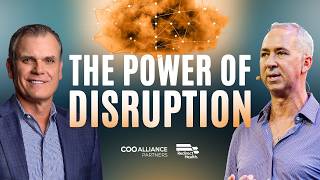
David Berg founded Redirect Health to fix broken employee health plans. His membership model decouples insurance from care, uses AI and clinicians to guide decisions, and claims 50% cost reductions. Pricing starts at $164 per employee per month, with no insurance required.
Chapters
If we help the insurance companies not waste money, they're not going to have to raise charges so much next year. Our increases for a dozen years now have been four and a half percent per year. So you can probably imagine when everybody else is going up 10%, 20% and we're at four and a half, the gap between us and them in price. That's why I said it's an easy 50% savings today. It used to be a hard 20% savings. Now it's an easy 50.
All right, Dave Berg, founder and CEO of Redirect Health, thanks very much for joining. I want to kind of dig in and do a deep dive around Redirect and why, why you guys exist. So maybe start that off. What was the purpose of starting off Redirect Health? And when did you start?
Oh, gosh. So my, my wife and I, we own some medical centers and surgery centers here in Phoenix. And back in 1997, we started that. But we recognized we couldn't make it affordable healthcare affordable for our own employees, though we could make good business out of the healthcare business. So I would say we first started is about 2007, 2008, this strategy, and then we turned it into a business in 2013.
Okay, so you started this off over 10 years ago and you said something, I want to be kind of really hone in on that. We couldn't make healthcare affordable for employees. So this is a U.S. business, U.S. clients. You don't do work outside of the U.S. correct?
We do now, but we didn't back then.
Okay. So let's keep the focus as US audience for now and maybe we can, we'll touch later on outside. But for US companies who are providing healthcare for their employees, how did, how did you at Redirect Health make that better for them, make that more affordable? What's that mean?
Well, let's just start my own employees. It was really based on an observation that I saw in my business, but also my wife's a physician also. And we noticed that how we took care of our own family and our friends families and our neighbors families from our house, our living room or the telephone was tremendously different than how we had to take care of them in the exam room. In an exam room in our clinics. We were, we had to manage the logistics and rules of the insurance companies, Medicare, Medicaid, the law, the regulation. And that meant that we had very little time left over to even really consider the healthcare. But healthcare is definitely took a backseat to the logistics and rules of getting paid and coding and the regulation. But in our living room, I noticed that we spent all our time on what people needed and then the logistics of getting that and the payment piece was the last thing we considered. Though it was still important, it was not the first thing. And we had a lot more freedom over the telephone dealing with friends, families and their families and their families. And I just had this crazy idea in 2007 that in 2008 I'm going to deploy the same mental model for my own employees. And I had no intent to ever commercialize it or do anything else with it. But we only have 54 employees that time and families. And I saw my, my wife and I taking care of hundreds of people very efficiently. So I didn't think it would be that big a deal to add them. There's some legal things that we had to figure out, but we figured them out. But what, what happened was that by decoupling the doctor's decisions and activity from the exam room, it gave a lot of freedom. But it also led to a cost reduction that was incredible. That time was around 20, 30%. Today it's an easy 50%.
Okay, 50% cost reduction. So you, what does a company pay approximately to have an employee or 10 or 100 employees going through your redirect health and to get proper healthcare through you? What's that costing them approximately? And then. Yeah. How does that 50% factor in?
Yeah, so normally for a individual it's going to cost somewhere around $800 a month. And that's all in maybe $1,000 a month now, depending what part of the country. And that includes out of pockets, plus what your employer might pay, plus weight and weight what you might have to pay monthly, let's just call it even thousand dollars per person. So our lowest cost is $164 a month. And then we have solutions that go up to $600 a month. We don't have anything higher than that at this point. We just don't need to. I mean we, everybody gets the care they need, regardless of what plan they're on. But the, the big switch here is that question is more about health insurance. We talk about health care first. Health care is not that expensive. It's the insurance piece we add to it. So I gave you the all in cost of the health care and the health insurance, but the majority of that cost, that even that I gave you was the insurance piece. So if I take, if I buy less insurance or I add less insurance to the health care and then that frees up money for more health Care, the cost will be a little bit less. If I put more insurance in place, it'll be a little bit more. But.
And the health, what, what does the health care coverage get the employee?
So you're talking about a frame that's a little different than what we're talking about. So let me just change frame a little bit for you, please. Let's talk about healthcare first. So let's, let's not talk about the coverage. That's about the, who's going to pay for it. So we created a coverage optional and insurance optional health care membership. So for a business that costs less than $100 per family per month, it's closer to $70. It gets a little bit less the bigger you get. So there's a health care membership that goes with the business. The business has the membership, not the employees. There's, it's totally decoupled from insurance law, insurance regulation, the Affordable Care Act. It just, we haven't dealt with that yet. It's the company gets a membership, they give it to all their employees, all their families and the company's in charge of who they give it to. Now every one of those employees now has the ability optionally to buy insurance. And we really don't care what they buy. We'll make it work or to buy none. And that's the key. Many people, if they can't afford, they don't have the money to buy insurance. Let's at least make sure they have all the health care they're going to need. And that means we have to be able to go pay for it with alternative of means. And there are many ways to pay for health care in America. Insurance is one way. It's a very good way, but it should be the last way we think about it. But let me give you a quick example, Cameron. With your, your car insurance, right? If you ding up your, your bumper, well, you just ignore it. And that's a form of paying for it, is you ignore it. You could duct tape it back together. That's a form of ignoring it, but also doing something. You could go ask a friend to weld it back together for you. Probably do it for free. But you could go to a professional shop and self pay, that's an option of paying for it. Or you could use your insurance. But we all know that insurance is the last option. And when we use it, it's because the math works. But we all know what's going to happen next year if we use it. Make sense?
Our fees go up.
Yep, exactly. So what we've done with the insurance is we made it optional to buy and optional to use, but it's too complicated for the normal person to do it. I can't even do it myself without using my process. But if we have a, the company's on a membership and they do have the coverage, part of the membership is a medical center that's all online, open 24 hours a day, every day of the year with all the pertinent relevant data in front of us so that we can help make decisions. Because a big part of making healthcare work, the coverage work, whatever insurance you buy or no insurance, is to make sure that you've got the guidance, the decision guidance that you're going to need around care. What care do you need? Logistics, where and when and how urgent is it? But trusted guidance, not just any guidance, but trusted guidance, but also guidance around decisions around money. Like with the bumper, should I use my insurance or should I not? That's a pretty important decision if you want to keep health care costs down. And we started by talking about how to keep it 50% and it make an easy 50% savings. You already kind of start seeing it when you go, well, if I don't use my insurance all the time, only when it's useful, of course the cost of the insurance is going to go down. So that decision support and guidance around care and navigation, logistics and payment is very, very critical to making our online medical center work. And when we do it really well, there's so much stuff we can do proactive because we have the data. We are likely to know when you're going to run out of your insulin, your, your asthma inhaler before you do. And we're able to note that you might only have two inhalers and gosh, why not have five for every person, every glove compartment, teacher's desk. So we can get in front of the clinical, potential clinical need of going through the emergency room for your child or get in front of the financial exposure or get in front of the fear based decisions that happen when we're, when we're doing a fire drill because a child can't breathe or we can't find the insulin for our spouse, right? There's fire drills that happen and as human beings we don't do as well. So we want to be that trusted guidance and a big way we do it, Cameron, is we have to decouple the health care from the payment of it. I mean, just like Costco did, right? Costco does not with its membership. That's how it Makes money. It doesn't care how much Money, how many TVs you buy. Just like we don't care how many prescriptions you buy. We don't make any money on the things we recommend. And that's a really big decoupling that makes us able to be that trusted guide. And without a trusted guide today, I don't know that anyone could really navigate the system adequately so that they don't spend more than they should. I don't even talk about savings, I just talk about spending what you should.
Well, I know for, for me, when I was a redirect healthcare client, one of the benefits I got in membership was that one of the medications that I was getting, I was normally paying, I think it was around $300 a quarter. No, maybe it was about $600 per quarter. And I was able to get it for about 40 bucks. And I had no idea where to go or what the generic was. And the doctor wasn't telling me that. I went in asking for something, Dr. Gave me a prescription and then ready right towel said no, you don't actually need that. You can actually get it for here. And the out of pocket was so low that you just pay it instead of trying to submit that to your health insurance and then getting denied later for other claims. So it sounds like that's something you are working with the customers of the companies that sign up for their employees, is that right?
Yes. So as that trusted guide, it's really important that not only would it help people understand the decision on the care they need, but also the cost of that care. And that cost of the care is going to be largely dictated by logistics, like where you go when you go. Right. So if you need to get lisinopril, high blood pressure medication, very typical one, you need to go to 11 o' clock at night. And it's got to be a capsule because you can't swallow it easily. You're going to go to a pharmacy that's going to charge you about $300 a month, $3,600 a year. But if you'll let me guide you to a better logistical answer, meaning not a capsule, but a tablet. If you have trouble swallowing it, grind it up, putting your orange juice, we'll solve that problem. And let's not go to that major store in the middle of night pharmacy. Let's go through the grocery store the next morning. And now that drug is a $71. So we take it from 3,600 a year to $20 a year bucks just with Changing logistics. We didn't change the medication, we didn't change the disease, we didn't change anything. We just changed logistics. A lot of people don't know this, and I didn't know this either. I was in the business for 15 years before I discovered this. The cost of health care is less related to how sick you are and the treatment you need, and much more related to the logistics of when you need it, where you need it. The cost of health care is logistics, administration. And there's a lot of unnecessary waste in that mix. And there's some necessary waste, but there's some unnecessary waste, too, that drives up the cost. And it's not uncommon to see 100x changes in the cost of care based on logistics. That's not uncommon at all.
And are they. Are the redirect health clients and members, are they getting these doctor visits? These or over the phone or over. How do they get them? Is it over the phone? Is it over video, Is it over text? What kind of the support that they're getting? Is it doctor, is it clinical nurses? Who's giving the guidance?
Yeah, you know the analogy that we used, you asked two questions there. How do they do it and who is it? The two questions. So the analogy we use all the time, so we get that question internally, even from our team members wondering how we deal with something. But we always go back to us, hey, if you were talking to your mom and she was in her living room and she was a medical doctor, what's the answer to that question? Yes, you would text, you would leave messages, she'd call you back, you'd do it on the phone, you'd pull up a zoom call. Like all those options are in play. There's no rules. So the same thing applies here. Now, you asked about, who would you talk to? Well, you talk to whoever you need to. Meaning that the way people interact with us is there's an app that we've got all the data behind the scenes, too. Remember now we're a full medical center. Ability to data from all over the world from you, from the electronic medical records system in America. So we've got the data and if we don't outreach to you first and anticipate something and you reach into us the way our members do it, the most effective way they can call us, that's probably least effective. The most effective is go on our app, tell us what's going on, what their question is. Just basic and AI is, you know, going to go the next level with this as you can Imagine. And then what we will do is we'll go pull the information from our system to help us be a little smarter. But one of the things we want our members to do is to tell us the time. Exact time, not approximate time. Not like the cable guy, between 4 and 8. No, the exact time. You want us to call you back because that's when you're going to be between your jobs. You'll be on in the subway, you'll be at a place where you know you'll be available. And then we will have the appropriate person call you back. The appropriate person. It might be our medical director. It might be a medical doctor, it might be a nurse practitioner. It might be a medical, it might be a billing expert. We don't, we don't, we don't want to guess. We don't want.
Makes sense. You don't need to talk to a doctor if you've got a cut in your finger and you just need a band aid.
Right.
You don't. So I'm, I'm not. That makes sense. In some cases, you're not going to need to talk to the highest level person in the chain.
Yeah, that would slow you down.
And, and it's more expensive. Why are we paying for something we don't need?
Right. And the, the nurse practitioner or medical assistant is much more knowledgeable because they've done it tens of thousands of times to know what kind of doctor and what level of license you need right now. And if they're wrong and they elevate you to one level, that next level knows, hey, I need to get you another level. And sending you all over the system, which is highly inefficient. If your mom had a medical degree in her living room, she wouldn't send you to the orthopedic surgeon. She would not do it ever. She would call the orthopedic surgeon and say, hey, my son is having this issue with his knee. I got the mri. I'd like you to take a look at it and tell me your advice. Does he need an appointment? Does he need surgery? Does he need a different mri? So there's a lot of advice gathering that happens between licensed professional and licensed professional without you in the room. Way more efficient way to deal with. And that's what every medical doctor already does in our own family. We never send people to other doctors ever. We always talk to the other doctor on their behalf. So we've retro engineered that online medical center with that, with the background of. Okay, what would my wife, who's a family doctor do from her living room? What would she do from the car on the phone? Like, what are the constraints she has and how do we remove that? And people do need to go into brick and mortar. Let's not confuse that sometimes.
No, no, I get it, I get it. But one of the things that's beautiful about your model is you're helping companies reduce the cost so that they can give more to their employees and their employees aren't wasting money, so they're able to get more for their money and for their time. So, because yeah, normally we, it's like we'll tell our friends we're going to the dentist, but we never even see the dentist. We have a hygienist that does all the cleaning. We should be saying, I'm going to my dental hygienist because we never see the dentist in the first place. So, yeah, if we want really good medical, there's a group of people that can give us that. But the way to get better medical care is to get it from the right person who costs the less. Right. Can give us the best information and best place to get the drug might be the best drug or a different drug for, for the least amount of money. And then, then we don't need to then trigger the health insurance.
The best bet is when you don't need something. I mean, there's, I mean, if you, if an MRI is an option at the emergency room, might be 2,000, $3,000. Yeah, I can get it across the street for 300 all day long.
But you don't need it at all.
But maybe you don't need it. Maybe what you really need is an X ray tomorrow morning, which costs about 25, $30. Let's look at the X ray and then let's see if the MRI is needed. And by just that one little shift. That's all logistics. What I said, by the way. But you need a guide. You need somebody to trust to guide you through that, those decisions. But that one little like algorithm right there or pathway is going to take it from. You're going to do a tenth as many MRIs, and you're not going to do any of them at $2,000?
No, not at all.
You're going to do, you're going to do nine MRI. You're into 10x rays and maybe one MRI with that mix. And that's better care. Actually, quality goes up when you don't overdo things.
Yeah. Are you, are you dealing with companies now in all states as well? Where are you covered? What's your coverage in, in the United states?
Yes. Since 2018 we've been in all 50 states and Washington, D.C. are, we have different products for individuals. Those tend to be people who can't afford their employers normal insurance. But then we have products for 2 to 19 employees, 20 to 49 employees, 50 to 300 employees and then 300 and above. Our largest clients, just under 1200 people. I'd say most of them are well under. Probably under 50 is the most common.
So my guess, like thousands of customers. How many, how many customers can you give away that. Do you talk about that data publicly or.
We have just under 25,000 right now.
Amazing.
Yeah. This thing scales when you go online and you draw up the cost this low, it scales. And we're using a lot of AI, a lot of automation. We have a. If you were to look at our org chart, you go, dang, you guys are a technology company. We've got about 40 people total between the innovation that we create and managing the care pass for People and the ERP, the NetSuite ERP to help manage the money. We also are in control of the money for the various insurance companies that we work with to make sure that we have access to it quickly and that the right amount gets spent. Because we know that if we help the insurance companies not waste money, they're not going to have to raise charges so much next year. And our increases for a dozen years now have been four and a half percent per year. So you can probably imagine when everybody else is going up 10%, 20% and we're at four and a half the gap between us and them and price. It's. That's why I said it's an easy 50% savings. Today it'd be a hard 20% savings. Now it's an easy 50. I don't like using the word savings though, because I'd rather, I'd rather always start at zero and say, how much do I have to spend? Okay, what's the right amount to spend? Not I have to spend 100. Can I say 40? Well, maybe the 40. You don't need the 40.
Maybe the sign. So it's clear now that they're getting the health care and they're getting better providers and better, better costs on some of the things they're going to need. When a company signs up and they've got a group of their employees covered with you or getting healthcare with you, do you have a program where they can also sign up for health insurance somehow? Like, do they buy, can they Buy health insurance through you.
Yeah. So very important part of it. So they sign up for the healthcare first and then there's the insurance is optional, coverage is optional, but it's available to them now. We'll guide them in those decisions too. We'll guide them and we have the licensing that is required for us to guide them. What's important though is we don't make money on that. That's the part with the trusted guides. We do not want to make money in our recommendations for insurance, our recommendations for care, where they go for service. We don't want to make money on that because it's. It takes away the trust that it's needed to manage this system as well as we manage it and our mission, we are true to it. There are four parts to it and everything we do has to check all four boxes. Number one, it's simple. Number two, it's truly affordable. So affordable is different. Different people. Right. Number three, it's health care, not health insurance. Number four, it's for everyone in the community. The company, the association, the family. So simple, truly affordable health care for everyone. That's our mission. And those four, those are really four checkboxes. And so when we do something, they have to check all four boxes. And we've been doing that now for, since 2013. So you can probably imagine we're ahead of the game with that mission because it hasn't changed.
Okay. I love this with the health insurance that they might be able to get through you or that you can recommend where they're going to go. Again, you're not making money off it, which is great. Are they getting better pricing at all?
So some of them, yes. So there's some insurances. There's hundreds of them in America. Okay. Most typical type of insurance that people will be familiar with. They don't have a business model that allows them to give credit for this superior upfront health care and decision making. So what we have is we have 1, 2, 3, 4, 5, 6 partners right now that we tend to recommend people go towards though any insurance will work or no insurance will work. But the six that I'm mentioning that we will recommend will be because they give credit for our platform, they give credit for the membership, they give credit for this decision support.
Well, they. So they know that they can give a better deal because the people are getting. They're not going to use the insurance as much because they're using health care and.
Exactly. And because we have so many. We. We. I say mandate. That's a strong word. But we highly influence that there are no increases above four and a half percent. Wow. Okay, somebody. I've, I've been asked that question a few times and one time in a weaker moment when I, I didn't really have an answer to it. The real answer was I made it up. This is a dozen years ago. And my answer, Cameron was because 5%'s evil. And so that's how I picked four and a half. And it's as a business owner, I think I'd got an increase of like 12% and my broker is like bragging about how he got it down to 5%. But I knew everybody, we didn't even use the services. I knew how well we ran it. So I was angry at the time and frustrated and I go, I don't want to pay 5% as traditional. A long time ago and truthfully when we said four and a half percent every single year, we didn't know we can maintain it. Now a dozen years later, we're very confident in our 4%.
Of course. Well, yeah, it works well for the customer, it works well for the company. It gives people predictability. Um, last question. I've got around this and, and it's been interesting. So I've been asking a lot of these questions blind. I mean I, I didn't know what the. Whether you could get insurance. I am so I'm more intrigued with your program so I want to be able to share it with my audience and with my clients. Who's the best Are, are. Give me a couple of different avatars of the best types of companies that, that your model works really well with that it's almost irresponsible of them not to check it out. I believe in the early days you, you said restaurants would work really well in something like this because they could provide it or companies that had lots of minimum wage or frontline staff kind of employees. Is that still the case? And maybe give me a few avatars of what your great companies, this is a no brainer for them to check into. And who should check into this? Who, who should contact Redirect Health to look at this for their employees.
Let me say this. I was wrong when I told you that that's what I believed at the time. I don't believe that anymore. Like I'm so off of that that there's a type of company or an avatar for a company for this because the real problem we're solving is complexity and cost. Period. That's it. And the, the worst companies are where I've got A leader that says my HR manager and broker do that. That's the most expensive healthcare business way model and thinking that you can have. Is my HR manager and my broker do that for you? I don't do anything. The CEO, the CEO, the senior leadership. My belief today, my thinking today is healthcare is now a very strategic senior leadership role. It's too expensive and there's too much complexity. It is a strategic senior leadership role. That doesn't mean it can't be an HR manager. That would tend to be a much larger company than what we deal with. So it's going to be the coo, maybe even the CEO, but it's somebody who might even be a CFO if a company's got it. But it's strategic senior leadership. And start with, they got to start with being bothered with healthcare being too expensive. They got it. If there's not somebody who's bothered with the cost of healthcare for the company, there won't be a payoff. And they're going to be. That's who we're looking for. We're looking for senior leadership that's very strategic. They're bothered by it. They want to pay off. That's why the insurance optional health care resonates with them. Because the concept of not having to pay for insurance their employees will never use and not being forced to pay for it is alluring to them. That's not necessarily a broker or HR's typical mental model about this topic. Love it.
It makes tons of sense. All right, David Berg, Founder, CEO, Redirect Health. Thanks very much for the insights, the ideas. It's exciting because I definitely get to share this with all of my clients and all of my followers. So I'm glad they're all going to get some benefits from this. Thanks for sharing.
Oh, my pleasure. And it's been so helpful to me too, having my coos over the years. I think it's probably a dozen years now since you started CO Alliance. It's been wonderful for us too.
It's great having with us. Thanks, Dave. Appreciate it.
More from Cameron

Flutterwave Former Global Head of Operations Awa Kone | When Growth Outruns Operations (Podcast 611)







Optomi Professional Services COO Nick Murphy | The COO Can’t Know Everything (Podcast 607)


