The Key Lessons That Built a Billion-Dollar Empire
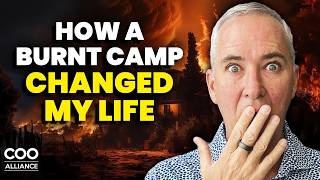
Cameron Herold scaled 1-800-GOT-JUNK from $2M to $106M by hiring the right people and documenting systems simple enough to fit on a post-it note. He broke goals into concrete metrics: leads, estimates, close rate, average job size. A 1988 island job that burned two buildings taught him early lessons about systems.
Questions this video answers
Summer of 1988
278-hour paint job
Earn $10,000
About 8,800 painters
From $2 million to $106 million (in ~6 years)
Chapters
The summer of 1988, I send five guys out to an island in Killarney to paint a 278 hour paint job. I go out on the Wednesday, everything's going great. I go out on the Friday with the owner to go to the job out on the island. We're waiting for the little boat, my brother's standing there and he goes, I need to talk to you. He pulls me aside, I'm like, what happened? He goes, we burned the camp down. I'm like, f off. You didn't burn the camp down. And my brother grabs me by the shoulder and he goes, I'm not lying. We burned down the camp. I'm like, what are you talking about? He goes, there was a fire in the sauna. We were painting the outside of the sauna and the fumes came in and it exploded. And we were out on the guy's water ski boat coming back in and we saw that we burned down the sauna and one other building of the eight buildings. Two buildings were destroyed. And I'm showing up with the homeowner a week before his friends are showing up. I'm like, and this is the way I'm ending my third year as a franchisee. I'm like, this is. No, this is not okay. I was groomed as an entrepreneur. I grew up in an entrepreneurial family. My dad ran a company, both sets of grandparents ran a company. So I had all these little business ventures until I was about 16, 17, 18 years old in second year university in Ottawa, Canada. I was walking through the campus and I saw a flyer on the ground and I picked it up to throw it out. And the Flyer said, Earn $10,000 and run your own business. And I remember I could show you within feet where I was standing. And I stopped and, and I read the flyer and I'm like, I at least want to find out what this is all about. I filled it. Oh, and I didn't even fill out the application. And somebody called me about two weeks later and said, hey, you came to a presentation. We didn't get your application. You should fill one out and at least practice an interview. So I thought, you know what? I'll practice an interview. I filled out the application. I used some management books to help me answer some questions. And then I went to the interview and I was hooked. But had they not called me and got me into the interview, I don't think I would have at least gotten into the program. When I was offered the franchise in Sudbury, I was the first franchisee in Sudbury. That's actually not true. I was a franchisee in 1986. There had been one in 1981. For one summer he failed and closed. So then five years later I reopened. So I started in 86 and I remember signing the franchise agreement. It was like a 65 page agreement. I was scared and my dad said, there's no better time in your life to go bankrupt. He said, give it a shot. If you succeed, great. If you lose, you don't have anything to lose anyway. So I did it. And I was so scared of failing that I memorized the manual. And I mean, if they said yellow keychains, I did yellow keychains. Like I just trusted that the best possible systems would be in the manual. And I was so scared. That was kind of my starting and how I got into it. Well, there's a funny story that just came back to hit me about three months ago. I was at an event in Turkey. I go to these entrepreneur conferences all over the world. My wife and I are nomads now. We've been to 54 countries in the last three years. I was over in Turkey at a conference and it was this, the last night of the conference and this guy walks up to me and he's bald and he's got a beard. And he goes, is your name Cam Harold? And I said, yeah, but nobody called me cam for 30 years. Like everyone's been Cameron since, since 1989. People called me Cameron. And I said, yeah. And he goes, we work together at College Pro Painters. I said, I'm sorry, I don't remember your name. And I'm looking at him going, I have no idea who a bald guy with a beard was that I would work with a college pro. And he said, it's Peter Rive. And I'm like, oh my gosh. Peter Rive was a franchisee that I hired in 1993 who ran part of Toronto. He really struggled. He was not a successful franchisee. He later went on with his brother to, to co found and build SolarCity. They were the founders of SolarCity. And Peter Ribe is a franchisee of mine. And the reason I hired Peter was about two weeks before I hired his cousin. His cousin did go on to be hyper successful. I hired Kimbal Musk out of Queens University, Elon's younger brother. So Kimball and Peter both were franchisees. But what Peter said to me that night was, it was a really hard summer for me. It was a really tough summer for me. I was the wrong person in the right program, but I Appreciated you trying and trying to make me successful. And I realized I felt sad that night for somebody that 30 years later remembered it was emotionally hard when his cousin was absolutely the right pick. But it kind of reinforced to me that you can't put square pegs and round holes. You gotta hire the right people and interview the right people, and you can't make someone successful. You've gotta coach the right people who already have the right DNA. You know, we had a couple of groups of people in the program. One were the very entrepreneurial students that we hired that we would develop. I was one of those that they would develop. And the key with that for me was a, make sure that they learn the manual, but B, make sure that we give them the technical competence to actually paint a house. So they actually appointed someone to come and move to Sudbury for two weeks and train my nine painters for me because I didn't have the skill set to do it. But had they not done that, I never would have succeeded because I had the business skills but no technical confidence to learn it and do it. The second kind of franchisee that was successful was the internal hires. And we would go and find the best painters who were just great at leading teams. They were super keen. They loved alkyd. You know, they just were all into painting. And we're like, okay, we can make you successful because you're part of the cult. You know, if they were in the game and those ones were good because they didn't screw it up. They maybe didn't grow as fast, but they knew how to at least get the base work done. So I think if I go back to the skill development that I had, I'll start with the franchise level, and then I'll go to kind of working at the corporate level. At the franchise level, it was learning. There were some base systems that were very easy to document. Like, you could take every system and document it on a post it note. You know, how to interview someone, I could put on, how to hire someone, how to train someone, how to coach them, how to manage my time, how to block, manage my day. Every little system I was trained in at college pro, how to sell to a customer, I could document on a post it note. That was a valuable skill for me. Two parts. One, all of those skills became very transferable in running real companies. Later in life, right when I built Boyd auto body or built 1-800-got junk, they became very transferable skills. But second, I learned I didn't need to be the smartest person in the room. To create systems to scale a company. Because I wasn't the smart student, I really struggled in university. So for me, if I could document something so simply on a post, it note, that elegant, tiny little system could work for anybody. It could work for really smart people like MBAs, or it could work for the most junior level employee. That was a really valuable skill to get at the franchise level. And then third was it wasn't about painting houses. You know, I shouldn't say very little, but it really wasn't about painting houses. It was about hiring the right people. It was about connecting with the housewife because she was deciding who was coming onto the property. It was about delivering on your promises. It was about setting proper expectations. It was about customer engagement. It was about, you know, under promising and over delivering. And we happened to paint some houses and that was very popular. You know, it was about marketing and branding and selling yourself. So I learned so many systems that were very relevant to every single business afterwards. And that was just being a franchisee for three summers. Every single thing that we did at student painters at collegepro, we had a goal and we reverse engineered that goal to figure out how to make it come true. Now there's something very, very important here that 99% of businesses don't do today. Most businesses look at where they are and they try to forecast where they're going to be. At College pro at student Painters. I remember my first summer, my general manager saying to me, how much profit would you like to make this summer? Yes. I said, I'd like to make $10,000 because it's on the flyer. He said, well, Everybody will make 10,000. How much would you like to make? And me and my cocky little self said, I'd like to make 15,000. He said, do you know how much revenue you need to do to make 15,000? I said, no. He showed me. I'm like, okay, let's do that much revenue. He goes, do you know how to get to that much revenue? I go, no. He goes, let me show you. So he literally tricked me by making me raise my goal and then helping me reverse every single goal and coming up with a very simple plan to execute and then putting a couple of key metrics like the number of leads, the number of estimates, the number closing ratio, the average job size, the contribution margin, like a very dialed simple formula to make that number come true. That's how Brian and I took 1,800-got junk to 106 million. I can tell that story later. It's how to this day I decide how much profit I need to have a life and what kind of a business I recreate. And when someone gives you their goal, breaking it down for them. And okay, if this is going to take you an hour, when in your week are you doing this? When in the week you're doing this? I'm like. Because I'm blown away to this day that businesses don't run that way. I knew that for me to hit my goals, I'd have to do on average 15 estimates a week and land eight of those 15 estimates. And then I knew to do 15 estimates I could do two on Monday, two on Tuesday. Right all the way through. I knew that the best week I could ever have was 27 estimates. That was three a week during weekday, six on Saturday, six on Sunday. I still remember these numbers 20, 30 years later. That's what makes businesses successful. Businesses is not about having the best product. It's about reverse engineering your success and executing on your success and having proper time management systems. Yeah. The student painting industry was a real world MBA. In 2004 when we were building one, 800 got junk. I was the chief operating officer there. We were meeting with one of the writers from Fortune magazine. His name was Justin Martin. And Justin at the time was very interested in writing a story for Fortune magazine about all of the people that had come out of College Pro Painters. But I think to really make a good story today, you could go after anybody that came out of that house painting industry. Make it about your business. But get the story of Kimball Musk, right? Get the story of Eric Dibley, get the story of Peter Ribe, get the stories from your situations. Boy, you tell some of those stories about people that are like. And show that this MBA was more valuable than a real mba. And we got paid for learning it instead of having to pay some university for the privilege. And you didn't have to sit in a boring classroom. So I got into College Pro. I was a franchisee for three years. I worked really hard at being a great franchisee. I ranked in amongst the top five or so in Canada. I remember we got the awards one year and it was Scott Mossip who went on to run with Charlie Chase, Certapro Painters. Tony Valli who went on to become President CEO of CollegePro and myself were the top three franchisees in Canada that summer. We definitely had a great crew. The three of us ended up getting hired to go and work at the head office. Our offices was right beside each other. I remember coming into my first day at work and I brought a laptop in, and my CEO, Steve Rogers, was my boss. Steve said, why do you need a laptop? Scott has one. You can share them. So that was my starting point. So then I was a general manager who would, you know, go out and recruit, hire, and train franchisees. And I did that for two summers, and then I decided to quit. That was the end of 19, summer of 1990. GST was being put in place, A recession was coming, and I'm like, you know what? Peace out. I've been working my tail off for five years. I'm gonna go travel around the world and go backpacking. So I did that for a year. Loved it. Went to 18 countries, sold my house that I owned when I was 22 years old, and, you know, had already paid off all my school debt because I was running a franchise and came back from backpacking, and I got a job selling software. And my boss was a former college pro guy, a guy named Mike Smythe. So I worked for Mike Smythe, this software company. I was like, you know what? I hate selling software. I really, really miss college pro. I went and met with my boss, Kevin Carter, and Kevin decided to give. I said, I'll come back, but I want the largest territory in North America. I want to have more franchisees reporting to me than anyone in North America. I want to literally knock the COVID off the ball and take over. And so they did. So they gave me from Yonge street to Mississauga, plus Kingston, Port Hope, Coburg, Cornwall, like, that whole region. And that summer, I managed 32 franchisees. And I completely did a very bipolar summer. I hired Kimball Musk and Peter Ribe. I did very, very successful in some areas. I developed a kind of a sub GM program called Field Advisors. And then I also failed spectacularly and had a bunch of franchisees fail. And we realized that they'd given me too much. I didn't have the skill set. I had the confidence. But they also knew that I'd done some amazing stuff. And they let me develop a territory, and they moved me out to Washington State, and I opened up Washington and Oregon for college draw. I was only supposed to open Washington, but I saw the Oregon area was so beautiful, and I hired, I think 12 or 14 franchisees down there as well, and we just blew that up. And that became the most successful territory in North America. I was the most successful general manager in North America. Hit all of the metrics and numbers. And that was when I moved from there to what became Boyd Auto Body in Canada and Gerber Auto Collision in the United States. We grew that from seven locations to 65. Took the company public. It's now the largest collision repair chain in the world. It's about $2 billion in system wide revenue. Publicly traded company, hundreds and hundreds and hundreds of auto body locations. And then I was hired as the president of a private currency company. So we built out similar to what Bitcoin is doing. We had 30,000 companies buying and selling using our digital currency instead of the US Dollar. We worked with the Olympics and Starwood Hotels and Bose Stereo, a bunch of different businesses accepting our digital currency. Built that company up, sold it to a public company. And then I got really scared. I didn't know what skills I had. Even though I'd been doing all of that. I got very kind of imposter syndrome really crept in. And I was in a forum in the entrepreneurs organization. So I realized that if I could turn to these other entrepreneurs that knew me, they could help point me in the right direction. And they said, you should coach people. And I'm like, I don't know anything about coaching. And they're like, no, you coached 120 franchisees at college Pro alone. You coached another hundred. I'm like, okay, I guess I know coaching. And they said, you really know business. So they really helped build my confidence by showing me all my skills. I thought all I knew was private currency, auto body and college pro. What they showed me was I actually knew business. And then Brian said, why don't you coach some franchisors? And I said, I don't know anything about franchising. He said, dude, you built college pro on the west coast. You built Boydah. You knew everything about franchising. So I had to get my friends to show me my skills because I started to forget what they were, even though I'd been successful. And then I joined Brian at 1-800-got junk. He had 12 franchises sold. I joined him as his COO and we built the company from 12 locations to 330 in six and a half years, from 2 million in revenue to 106 million in revenue in six years. And then we landed 5200 stories about us in the press. We ranked as the number two company in Canada to work for. All that kind of happened. I was taught at CollegePro Painters something called personal selling. And it was how to take a person's goal and attach your solution, like running a franchise, to their goal. It's like, oh, if you want to go traveling around the world, running a college pro franchise will give you enough Money to have a great trip around the world. Or if you want to get a job in banking, working college pro franchise will get you into banking. What I realized was my goal was to be very successful in business. And I could either try to get a bunch of money from Brian and use that money to be successful, or I could grow my brand and my name. And I decided that if I was going to help him grow the business, I wanted to take as much money out of the company as he did. And I wanted to be equally as well known for growing the company as he was. So I wanted to do speaking events, I wanted to talk to the media, I wanted to be a thought leader, I wanted to be a very outward facing coo. And he wanted me to do that because I had the credibility of having built two franchises already. People don't know this story. This is a weird one. I walked into in the summer of two summer of 1999, I walked into the college pro painter's office in Vancouver with Tim Clark, the guy who'd been given my job 20ft away. I closed the office door and I was standing talking to the general manager in Vancouver. His name was Paul Guy. And I said to Paul Guy, it's time for you to quit college Pro. You should go work for Brian. He's starting a student franchise this summer. You could run it and he'll pay you $42,000 this summer to run the business or $42,000 a year to run it. Paul quit his job two weeks later and joined Brian and he became the first franchisee. He's now the largest franchisee in the system. He owns all of Toronto, all of New York, all of Australia. And he's a college pro guy. So yeah, there's a big college pro tie in there too. Brian was my best man at my wedding. Six and a half years into the business, he pulls me aside. We're having our leadership team meeting at 8. He goes, let's get together for breakfast at 7, which he and I almost always did. And so at 7 o', clock, the waiter comes into this little private room and I said, I'll have my eggs Benedict, which was my traditional breakfast back in the day. And Brian would usually order the eggs Benedict too. And Brian said, I'll have a grapefruit. I started laughing. I'm like, you've never ordered a grapefruit in your life. You've been my best friend for 10 years. We eat grapefruit and I go, you're firing me? And he goes, I'm sorry, it's over. And we both started to cry. And the reasoning was I done nothing wrong. The reasoning was I was the right guy to get us from 2 million to 106 million. I was the wrong guy to go from 106 million to a billion. And he was right. And it was devastating. It was so hard on me that he made me take a taxi home instead of driving. And he drove my car home later that day because I was in cape of driving. Funny story, that again is a College Pro tie. So it took them 12 months. They found my replacement. She was the former president of Starbucks usa. They hired Lonnie to come in and run. That's when the global financial crisis hit. She actually was not a great hire. He fired her. A year later, the company went from 106 million down to 75 million. They did another year looking for an interim COO and they hired a guy who had worked for College Pro Painters, a guy that I recruited, a guy that he and I started a fraternity together in Ottawa, Canada in 1989. Eric Church and I. So Eric and I had started a fraternity. I was president in the first year of the fraternity. He was president the second year. I recruited him. And he's a franchisee for College Pro under James Jones out in like Scarborough in I think the summer of 89. And then later he joins 1H under got junk too. It's kind of like saying you graduated from Harvard Law School together or Harvard wherever together. Yeah. There was a fraternity of people who definitely knew each other and progressed through the world. I still get email messages from people that worked with me or for me at College Pro every couple weeks, really, from all over North America. I'm really impressed with what student painters and student works, you know, and what CollegePro did in the area of safety. Considering, you know, in the summer that I left CollegePro had 8,800 painters all over North America painting houses. That's a lot of potential accidents out there, you know, over the course of my summer and your summer, to think that, you know, like triple extension, 20 foot ladders, like, what the heck are we doing here? And 40 foot ladders and driving paint vans down highways with like 12 ladders on the roof. And we did a really good job with making sure our people were safe. And I think that there were probably a few accidents over the years. And I know that there was one death in college pro, but, you know, over 40 years, maybe two, that's a really good safety record over the course of a tough industry. And I'm proud of Both organizations for caring about that. The summer of 1988, I send five guys out to an island in Killarney to paint a 278 hour paint job. I go out on the Wednesday, everything's going great. I go out on the Friday with the owner to go to the job out on the island. We're waiting for the little boat. My brother's standing there and he goes, I need to talk to you. He pulls me aside. I'm like, what happened? He goes, we burned the camp down. I'm like, f off. You didn't burn the camp down. You know how our painters always were tricking us about pretending something went wrong? And my brother grabs me by the shoulder and he goes, I'm not lying. We burned down the camp. I'm like, what are you talking about? He goes, there was a fire in the sauna. We were painting the outside of the sauna and the fumes came in and it exploded. And we were out on the guy's water ski boat coming back in and we saw that we burned down the sauna and one other building of the eight buildings. Two buildings were destroyed. And I'm showing up with the homeowner a week before his friends are showing up like, and this is the way I'm ending my third year as a franchisee. I'm like, this is. No, this is not okay. Yeah, I burned down. We burned down a sauna. That story was pretty famous through the 90s. I think the biggest thing was I started to get recognized from doing a lot of speaking events that I really knew how to run businesses and I knew the systems that would make most businesses succeed. So I was asked to write books. In fact, the speaking event that you saw me speak at to EO at that movie theater in Toronto at Avenue in Eglinton, was the head of a speaker's bureau in Toronto. He came to see me speak and he was so blown away that he asked me to represent me and get me on more stages. But he said, if you can write a book, I can raise your speaking fee. So he was one of the reasons I wrote my first book, Double Double. And then I've written now six books since then. So documenting how I grew these companies gave me more credibility. I've now been paid to speak in 29 countries to groups of entrepreneurs. I've been paid to speak on every single continent. Three years ago, I got paid to speak in Antarctica to a group of entrepreneurs. So, yeah, that's just kind of built up my thought leadership. I launched an online course. I'VE coached real company CEOs all over the world, including I coached the CEO of Sprint and the CEO of Sprint. I coached a monarchy in the Middle east on growing their group of companies. The family that owns the country of Qatar was a client. But again, all it is, it's the same stuff from the painting days. I just slow down the delivery to them and make it sound bigger. So I recognized that there were a lot of groups for entrepreneurs. You know, I learned the value of a mastermind community and being in community with entrepreneurs, really at College Pro Painters, I'd been in a fraternity and saw value in community. I'd been in a church youth group, saw value. I'd been in, you know, scouting. I'd been on teams. So I always felt the value of community. And then at CollegePro, I saw the value of spending time with a lot of other people talking about business. Then I learned that at the entrepreneurs organization and I started to see that there were so many groups for entrepreneurs with Vistage and Tech and YPO and EO and the Genius Network. And I could go on and on and listed all these entrepreneurial groups. And then there were trade associations for electricians and chiropractors and all these industries. And I realized there was nothing for the COO. You know, there were groups of CFOs and groups of marketers. So I decided to launch a group that was exclusively for the second in command. No CEOs are allowed to come to the meetings. And all of these YPO members and EO members started to put their second in commands into the organization. And we now have members from 17 countries and we have meetings twice a month. And then we hold two in person meetings every year. And these events are to grow the confidence, the skills and the connections of the coo. So the COO can make the entrepreneur's dreams come true. Well, and I was the COO three times. I was the COO for a private currency company. We built that company out. It was two co founders that were actually based in Toronto. Robin Manny and Bob Baga. And I was their president of their company. And then I was the second in command for the franchising group for Boyd Auto Body and Glass. So really I'd kind of done it those three times. And I even think of College Pro in a way as a, you know, when I was running a region, I was kind of reporting into the VP or president. But I had full autonomy over strategy and tactics and planning and budgeting and full P and L responsibility and hiring 220 people and you know, so I really have understood that role and kind of some of the idiosyncrasies of that role. And I'm not there to teach the Clos either. All I do is pull them all together and I give them an agenda and I kind of let them teach themselves. Because I realized that even as strong as I was as Brian's coo, I would have been horrible as your coo, I would have been horrible as a banker's coo, because if I don't match the skill set of the CEO, if I don't match the size of the organization, like Eric church, who's the CEO now and has taken them to 750 million, admittedly has said he would have been terrible and would have failed in the six years I was there because he didn't know how to build a franchise company. He wasn't entrepreneurial enough. Right. So I was perfect for the season and for the size of the organization and for the skill set and for the core values of that entrepreneur. It's a tough hire for companies to make. I would go back to some of the books around mindset first, and then I would go into some of the easier to understand business books that I think will kind of educate. And then I'll go into a couple around inspiration. So if I go to the stuff around mindset, it would be things like Think and Grow Rich, Richest man in Babylon, how to win friends and influence people. And I think you should read those three and study those three and reread those three over the next five years. You know, start with those three around. I would also incorporate the movie the Secret, even though it can be cheesy and a little bit materialistic. The laws around quantum mechanics are very powerful when you apply those against business and life. So let's start there. On the tactical, I would say to read the E. Myth Revisited by Michael Gerber. I would read Traction by Gino Wickman. I would read Double Double, which is my first book, which is all the systems we use to scale the businesses. I would read that. And then if I'm around inspiration, I would read Losing My Virginity about Richard Branson's. I would probably read Shoe Dog Millionaire. And then I would probably even listen to a half a dozen or a dozen episodes of How I Built this from Guy Raz, the podcast. I would pick the real entrepreneurial companies that resonate with you. Like, if you like Spanx, read about Spanx. If you like Ben and Jerry's, listen to that one. But I think you'll get a Lot of inspiration and some really good insights to that entrepreneurial journey. That's where I would go again. The value of community. I was a member of the Genius Network, which is a group that Joe Polish started for eight years. And at one of the Genius Network meetings, I was walking towards the bathroom and this guy, Hal Elrod was. Had written the miracle morning. Was walking back from the bathroom and Hal grabbed me and he said, hey, do you want to write a book together? And I went, yes. Because his brand was already big from the miracle morning. I was like, yeah, I'll write one with you. What's it about? He goes, I want to write the miracle morning for entrepreneurs. I'm like, awesome. That would be amazing. During the collaboration, when we were pulling together all the content, I said to Hal, there's a lot of mornings where my miracle morning is waking up hugging the pillow and going back to sleep, sleep for 20 minutes. So I said, I'm going to talk about that. And I will also talk about some of the morning success habits that you do need as well. But what I'm going to talk about is the rest of the day, right around focus, around having vision, and around outsourcing everything except genius, and around the fact that we need to give ourselves a break. If we have the perfect morning routine and we don't do it perfectly, don't completely quit the next day, wake up the next day and start again. So the miracle morning routine is savers. It's the S A V E R S. So if we start with that, it stands for waking up and giving yourself a moment of silence where you just listen to the birds, listen to the sounds in your home, and you kind of ease into the day. You don't grab your iPhone and start looking at it right away. The A stands for affirmation and it's kind of that one sentence phrase that you might be repeating to yourself for maybe the five minute journal that you're completing every day or just a mantra that you say when you look in the mirror. One of mine that I was doing for a couple years when I was going through a really tough period was I'm very confident and gaining confidence each day, you know, just repeating that affirmation. And then there's the visualization. The visualization could be thinking about your vivid vision or picturing a meeting you're going into and kind of pretending that you're in that moment, that visualization so that you show up in the best headspace and mindset and with focus and then exercise, you know, it can Be as simple as what I did this morning is I went for a morning walk and I picked the coffee shop that was slightly further away so I could go and do a nice walk and come home. Could be seven minute workout. I prefer to do my exercise at the end of the day, so I'm going to the gym at the end of the day today I'll be working out with the trainer there at the end of the day. I like to work at the end of the day because it breaks up. All of my work is before that. And once I go to the gym, I don't do any work for the rest of the day. So I like the workout at the end of the day. Some like it in the morning. But you do need to do something, whether it's some burpees or some push ups or go for a walk or something to kind of get the blood flow. And then the R is reading. And it actually means picking up a book and reading. So I know we have audiobooks and podcasts. That's not reading, it's listening. The book that I'm rereading right now is Giftology by John and I were very, very close friends, so I'm rereading his book. I've got about 15 pages left. But this is like picking it up and rereading or reading a book for, you know, 15 minutes in the morning. And then S stands for scribing. And that's literally just opening up your journal, making some notes. Maybe it's a five minute journal. Those are good morning flows. What I like to add to those are the lemon juice in the morning, finishing a shower with a cold blast of water, and then some kind of like a moment of gratitude where you're thinking about what you're grateful for from the day before. And that usually puts me into a good mindset moving forward. The thing that I'm going to add to my morning routine is being grateful for someone and picking up my phone and sending them a quick voicemail or a quick video message or a quick slack message. And it could be someone that works with me, someone that works for me. But in the idea of gifting and giftology from John Rulin, the gift can just be thinking about, wow, I'm really thankful for so and so and sending my quick notes, hey, I'm thankful for yesterday and our interaction. Just wanted to say thanks. I think that gift puts me in a good mindset. So those would be some of my morning habits.
More from Cameron

Flutterwave Former Global Head of Operations Awa Kone | When Growth Outruns Operations (Podcast 611)







Optomi Professional Services COO Nick Murphy | The COO Can’t Know Everything (Podcast 607)


