The Missing Leadership Skills No One Talks About | Cameron Herold (Podcast 353)
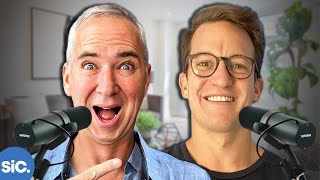
Podcast conversation featuring Cameron Herold describing his entrepreneurial background, leadership philosophy, and practical systems for scaling teams. Major themes: hiring and training managers who can self-manage, the ‘Vivid Vision’ method (leaning three years into the future and documenting a 4–5 page vision), building simple repeatable systems for recruiting/onboarding, and the COO Alliance—an invite network for seconds-in-command (minimum $5M revenue).
Chapters
Any entrepreneurial company that starts with the vivid vision, aligns their team with that vivid vision and then focuses on the critical few projects that start making that vivid vision happen. And then you build it like you're building a home. The foundation you put in the walls, you put in the electrical and the plumbing. Entrepreneurs get all distracted. They want to put in the beautiful stove and the nice cabinets, but they forget about the foundation. Right. The core values. That's kind of my approach.
Super excited to jump on and you know, like we said, well, like I said before we hit record, we're really excited about being part of the COO alliance and already seeing some really tremendous value only weeks in. So excited to know you, excited to have you share some wisdom to now 150 strong community of some really high power individuals. I've been following your content and you along for some time now and I've been super impressed. But I'd love you in your own words to tell me and rather our listeners a little bit about your background and your history and where you are today.
So I won't start with the CEO alliance. I'll go backwards and then kind of fast forward to today. So I was groomed as an entrepreneur. My father was an entrepreneur. Both sets of grandparents were entrepreneurs and they groomed the three kids, my brother, sister and myself, to be entrepreneurs. We were all taught at a very young age that having a job was a stupid idea and that being an entrepreneur gave you control of your time. It was all about having the free time to have a great life and then the money would follow, which it has. My brother and sister and I have all owned our own companies for between 15 and 25 years. So it's all we've ever really known. I had my first real operational company when I was 20 years old. I had 12 full time employees when I was I operated a house painting business, got involved with a group called College Pro Painters, joined the head office and started recruiting and training franchisees. Coaching franchisees. By the time I was 28 years old, I had coached 120 entrepreneurs. 1989 I started coaching entrepreneurs before coaching was actually a thing International coaching federation and coachU didn't start until the mid-90s. So I had even coached Kimbal Musk. I hired Kimbal Musk, Elon's brother back in 93 and his cousin Peter Reeve. They both worked for me in 93 and 20 Toronto. So that was a kind of a coaching around entrepreneurship thing. Then I left College Pro after about seven years there, joined a group called Boyd Autobody as a partner and I joined the franchising group. We built that up, took the company public. It's now the largest auto body chain in North America. It's called Gerber Auto collision in the U.S. boyd Auto Body in Canada left there and I was hired as president of a private currency company. We built that company up and sold it right at the height of the dot com era. We actually sold, but we were public and the company that bought us was public. By the time the transaction closed, our $64 million valuation was worth 3. So we literally blew up. The company blew up because the Internet blew up around us. So we lost 61 million in valuation in a period of three months. So I became a garbage man. I joined my best friend Brian, who is building a company called at the time called the Rubbish Boys. We changed the name to 1-800-got-JUNK and we built that company up. I joined as the 14th employee and as the COO. And I left six and a half years later. We had 3,100 employees system wide. We were operating in 330 cities, ranked as the number two company in Canada to work for. We'd landed 5,000 stories, 5,200 stories about us in the media, including Oprah. And I took them from 2 million to 106 million in six years. I left there about 15 years ago now and started working behind the scenes coaching CEOs of typically 50 to 500 person companies. Did that successfully for a long time. I've written five books, I've been paid to speak in 26 countries on six continents. And then five years ago started an organization called the COO alliance, which is the only network of its kind in the world for the second in command. And we built that up just to give them because there's a million groups for entrepreneurs. You know, you got EO and YPO and all these amazing organizations for entrepreneurs. But there was nowhere for the COO to go and actually spend time really digging into the business. And then I have a podcast as well called the Second in Command Podcast.
I'm actually really curious. You know, you started off stating that your grandparents, your parents, you, everyone's been an entrepreneur in your family and you were effectively groomed as an entrepreneur. Like growing up in a household like that and having that being sort of the driving light like you are. To be a business owner, you've got to run things so that you can manage your time. I mean, doesn't that create a level of competition, but maybe even stress? I mean, I'm just curious Like, I almost had the opposite approach growing up.
I think it probably did. I mean, I did a talk that's on the main site. If you go to Ted.com and look up my name. I did a talk about raising kids as entrepreneurs. I think I only had a more stressful childhood because I was always doing stuff to make money. I was always running these little ventures. But I also was in, you know, I played a lot of golf, I played a lot of tennis. I skied competitively when I golf, then played tennis competitively. So I definitely was engaged in having fun and doing activities. And you know, we didn't have the Internet back then. Like we, we didn't, didn't sit and watch tv. I was like running my businesses and playing sports and engaged in school and having a good time. I also didn't have the pressure of school. My parents told me at a very young age that my grades didn't matter as long as I tried my best. They were quite happy with a C minus. So I got a lot of 65% long tests and I wanted to get A's, but I knew that wasn't for me. I think I didn't have the stress that some kids have with school. I just went to school to learn as best as I could and then I worked really hard at my businesses and sports.
That is definitely a different world back then. Like, I think about what a waste of time. So much of the scrolling, you know, the perpetual scrolling on Instagram and how you're just never getting that time back. So definitely a good time to sort of invest in things that are really worthwhile. Your health and then your wealth and even school.
Like, I think about a lot of the learning that I did growing up as a student. I learned more from reading books about business than I did from any of the classrooms I sat in. You know, I remember when I was in second year university in an organizational behavior class, my professor said something about hiring and I put my hand up and I said, have you ever hired anyone? And I wasn't being rude, I just, I was curious whether he was speaking from a theory perspective or some, some experience. And he looked and goes, no, but have you? And I went, yeah, I actually have 12 full time employees. And the whole class turned and I was like, oh, I'm now that guy. I didn't. But I remember just that was different. So I think about, you know, something that I think business owners, whether they're small or scaling up, can really benefit from is in growing, not only growing themselves, but really growing their team and growing their leaders. You know, you've invested in your COO and putting her into the CEO alliance to grow her skill set. Our job as a leader is to grow people. It's to grow their skills and to grow their confidence. And I almost think that a leader and a manager is climbing up two ladders right beside each other. And let's say that their left foot and left hand is climbing up one ladder and their right foot and right hand is climbing up the other ladder. So the one ladder is skills and the other ladder is confidence. We have to grow their skills and grow their confidence and grow their skills and grow their confidence and grow their skills. And the more they grow their confidence, the more they'll grow their skills. Right. But more often than not, leaders are trying to hold people accountable and tell them what to do and manage them. That's not giving them any confidence. It's not giving them any skill development. And I think that's probably one thing that I learned growing up was I was given the skills and confidence of an entrepreneur. And then I worked in companies where we really focused on growing our people. I even launched a course recently called Invest in your leaders, which is the 12 core modules that I've used to grow skill sets across my management teams. Things like coaching and delegation, situational leadership, time management, email management, conflict management, interviewing, effective meetings, all the skill sets that managers and leaders don't have. I think if we train our teams on that, that's what superpowers or supercharges their businesses. So that's probably been a core for me. And I don't think I really identified it as much. I was more unconscious competent. I was really, really good at doing it. I didn't even know I was doing it because it had been a part of me for so long. Now it's become very conscious. I'm very conscious of the fact that my job is to grow people.
Yeah, really powerful stuff. I mean, one of my favorite books and a book that we have every single one of our team members that join and actually the partial brainchild of the name Multiply me is Multipliers by Liz Wiseman, how the best Leaders make those Around Them Smarter. But you really struck a nerve for me then when you were just talking through the two different competencies, specifically when you were talking about being a great leader and being a great manager. And I often when I'm speaking to my team, I say, I feel like I'm a good leader. I'm not the best manager. And so I'd Love you. To sort of break down how you would define management versus leadership and how those are interconnected or sort of built separately.
Well, let me flip it a little bit too. If you hire really good people who manage themselves, you don't need to manage them. Right. I was asked by Fortune magazine in 2003, how do you motivate your employees? I said, I don't motivate my employees. I hire motivated people. How do you hold people accountable? You don't. You hire accountable people. So I think the job of managing people disappears if you hire people that can manage themselves. Right. You don't need a babysitter to take care of kids if the kids can take care of themselves. And I think we've often forgotten that point. So what I like leaders to do is to really think about what's my org chart look like in three years, what's it look like in two years, what's my org chart look like in 12 months? And do I have those seats filled? How can I put people in those seats? How can I grow the skill sets and the confidence of the people in those seats? How can I get them working well together? So you're growing the capacity of your team, you're not managing them right. I almost flipped the org chart upside down where the CEO is at the bottom supporting the C suite and the BPs who are supporting the managers, who are supporting the employees, who are supporting the customers so you don't have to manage people. You know, there's a funny story that I heard years ago about the two leaders or managers that were out and trained charge of clear cutting a forest. And so the manager and the leader out clear cutting a forest. And one's clear cutting. He's got his whole team and they're efficient, they're chopping down trees and he's managing them to cut everything down. And the leader has his team out there and he climbs up a tree and he looks around, he says, holy, we're in the wrong forest. That's a real core difference between leadership and management is having the visibility towards strategy and the future. And what matters. There's a lot of highly productive managers that are getting the wrong stuff done.
That resonates with me deeply, just thinking through sort of the time invested over the years on things that may not actually yield a positive roi, let's say. But had we have had the foresight of actually sitting down and taking that 10,000 foot view and saying, well, is this, you know, is this something that we believe to be true a year from now? Three years from now, ten years from now. And is this really the trajectory and the vision? I mean, that's something that I think as a. As a leader, you learn in time to.
And I think that's what we have to grow the skill set around our people, our leadership team. So they're thinking that way, right? They're thinking strategically, they're thinking across the organization. One of the biggest detriments to an organization is the head of a business area. Let's say it's the head of marketing. And they think marketing is their core. It's not. Multiply Me is like the head of marketing's most important team is the leadership team for Multiply Me, Not Marketing. The head of finance most important team is Multiply Me, Not Finance. And as soon as they recognize they're not in charge of their area, they're in charge of the whole company. They just think differently. We only have three inputs. We have our people. We have time, like days, weeks and months ahead of us, and we have money, and we have to get the highest return on investment of those three inputs. So it's about leadership, deciding what are the critical few things to work on versus the important many. I think people so often get bogged down in busy work, but they don't produce anything. They're working really hard on stuff that isn't necessarily giving the highest roi.
That's definitely, I would say, something that most entrepreneurs likely struggle with. You know, that you can get so caught up in the weeds and so close to the source of what it is you're doing in the day to day. How do you approach or what's your advice to people to actually have them take that step back and actually work towards understanding what that goal really should look like.
I actually created a concept years ago, or I learned a concept from an Olympic coach 25 years ago, but it's now a registered trademark called A Vivid Vision. And so I've talked about it in three of my books. In Double Double the Miracle Morning for Entrepreneurs. And then I wrote a book called Vivid Vision. The idea is that for entrepreneurs, they can see their company in their mind. You know, what you want your company to look like, act like, feel like you've got a good vision of how you want the team to be working and your meeting rhythms. So the idea is you lean out into the future. So let's say you and I hop into the DeLorean time machine with, you know, Michael J. Fox, and we're going to go back to the future, but we're going to travel out to December 31, 2024. So we're going to lean out three years into the future and we're going to hop out of the time machine and we're going to walk around your company together and we're going to describe everything we see. We're going to describe the leadership team meetings. We're going to have three or four bullet points around what the customers are saying about the company. We're going to have three or four points about what the employees are saying. We're going to talk about marketing and IT and operations and finance and engineering. We're going to talk about the company culture and the perks. We don't know how it happened, but we're going to describe what we see. Most entrepreneurs are clear on that or they have it in their mind and it's kind of scrambled. But none of your employees can read your mind. So if you can get all of those ideas out of your mind and create a four or five page written description of what your vivid vision looks like, acts like and feels like, then you get a copywriter to polish that and pop it off the page and then you share it with your design elements added to it to all of your employees. That allows everyone to make decisions based on where you're going. And I think that's what helps entrepreneurs to prioritize. So for me, I'm very, very clear on what I'm building. Right? It's all about the CEO alliance. It's all about like the second in command podcast drives the CEO alliance. My core purpose for 15 years has been to help entrepreneurs make their dreams happen. And that's why the CEO alliance is critical. Because most entrepreneurs will never be doing the stuff like you'll learn how to interview, but your team is doing most of the interviews. You'll learn that, oh, we need to have KPIs, but your team will be managing the dashboards. So we really need to take to grow the team. So I'm so clear on my core purpose is to help entrepreneurs, but that one of the best ways to do that is to grow the CEO alliance, to push out the invest in your leaders course, to do my second grand podcast to have they're all completely aligned, my books, everything's aligned with my core purpose. So any entrepreneurial company that starts with the vivid vision, aligns their team with that vivid vision and then focuses on the critical few projects that start making that vivid vision happen. And then you build it like you're building a home. The foundation you put in the walls, you Put in the electrical and the plumbing. Entrepreneurs get all distracted. They want to put in the beautiful stove and the nice cabinets, but they forget about the foundation. Right. The core values. That's kind of my approach.
When you were even sitting there and expressing to me right now, like, what does it look like three years from now? You know, after we've hopped out of the DeLorean, like, it's clear as day to me. You know, I really can see exactly how things are going to interact. Like, the business is going to take on two or three evolutions from where it sits today, where we're still day one, even two years in, but it's extremely clear. So. Absolutely. It actually reminds me of a concept that they have at Amazon called when they write a PR faq, if you're familiar, similar construct. I think you actually take it further because that's more so around the product launch. Well, I guess it's kind of like a business, but you're building that entire framework, you know, essentially the same way.
So.
So fantastic.
I do everything backwards. It's kind of the Cheshire cats that if you don't know where you're going, any road will take you there. Right. The Cheshire Cat from Alice in Wonderland. Of course, my playa name at Burning man is Cheshire, because I'm so focused on where I'm going all the time on the playa that people think they called me the Cheshire Cat. So if you're clear on a project, you can figure out how to make the project happen. If you're clear on the design elements for a website, you can create the website. If you're clear on a project, you can get it done quickly. If you're clear on your trip that you're going on, you can have an amazingly organized trip and agenda. It's the same with growing a business. It's no different.
As an entrepreneur and as someone who's been there for some time, I mean, for me, I feel like it's one of the most valuable weeks of my year. Every year that I'm there, I've been to four or five burns now. For you, like, what does it actually symbolize? What does it actually do for you from a life standpoint?
For me, it's a connection of what really matters, which is, like, none of this matters. Like, what we're doing to make money. Like, I don't really care what you do for work. You don't care what I do for. I want to know about your fears, your insecurities, your passions, your hobbies. Like, the stuff that really Matters has started to really matter. Things don't matter anymore. I have had all the things, and I have a lot of things. I don't need things now. I want the experiences and connections with people. I just don't shake hands with people anymore. Like, I was coaching Marcelo Clare. Who CEO of Sprint. And when I first met Marcelo, I walked up to him and he's 6 foot 8, I'm 6 foot 4. And I walked up and gave him a hug, and I realized I'm hugging this huge giant in our first. And he's the CEO of the 82nd largest company in the United States. That's changed me fundamentally. I think just being aware of wonder has changed me. I think realizing how big people can make stuff, there's just. If you just let people go and be creative has been incredible. Yeah, all of it. The collaboration. I don't know everything.
I know, I get it. I mean, for me, the first time I went, it was the gift of giving without the expectation of reciprocation. When you actually. When you feel that it's in the player, it's in the experience. You can't not feel the principles when you're there. You don't have to read them to actually experience them. And from that, I mean, for me, I am most happy when I'm giving back, not taking. And that was probably the biggest fundamental.
Yeah. And we learned that in our first day, Right. Because we all show up in our first burn with stuff to trade, thinking it's about bartering and then realizing that no one's actually asking you for anything and giving anything back. You're like, oh, it's not about bartering. It's just about contributing and caring and. Yeah, it's just an amazing experience. It's interesting that if you go back to, I think 2000 ish, when Sergey Brin and Larry Page, who I hang out with Sergey at TED every year when they were hiring Eric Schmidt as their CEO of Google. In the interview process, and I'll butcher this story lightly, but they had some very solid candidates and they were looking for someone they fit with culturally. And they asked Larry, like, what do you do for fun? He's like, I make these robots and I take them out in the desert and I let them roam around and they're like, where the hell do you do that? That sounds amazing. I goes, oh, I go to this festival. And they're like, what's it called? And he's like, burning Man. They're like, dude, you're in. And because they went as well and they realized that that was their tribe. And I think companies have to think about your core culture, your core values, and obsess about your core values. That you only bring people in who fit your core values. And if they don't fit them, like, don't bring them in. Business is extraordinarily easy if we listen to everything Grandmother told us. You know, I think all the grandmotherisms of business are so true, and we overcomplicate it with our MBA thought process.
Give me a few grandmotherisms.
One bad apple spoils the whole bunch, right? If you have one bad employee, make hay while the sun shines. Like, if you're feeling gold, like, if you've got the energy, go for it. God, I got like 50 of them written down.
That's a very good example there. But that actually brings me to a really interesting point, at least on my mind. I mean, you're someone who's hired literally, not thousands, probably tens of thousands of people across your career, right? I mean, what was it you hired 3,000 people in the gut? 1,800Got John?
Yeah, I've personally interviewed and hired about four or five hundred that I've @ least interviewed and made the hiring decision. And then I've built companies that we've hired. You know, at College Pro painters, we hired 8,800 people every summer, you know, and I was on the top 30 people where we had to get 800 franchisees in four months and then train those 800 franchisees to hire 8,000 students in a month. There's not many companies on the planet that hire 8,800 people every year. We became operationally world class at recruiting, interviewing, selection, onboarding, training, and development of people. And that's probably the core. That's the core of my course. The invest in your leaders course is all of the stuff that I trained Kimbal Musk on In 1993, 1, 800 got junk. 3100 was great, but that was over six years. We were doing 8800 every year.
I mean, how do you even approach building a system or an infrastructure to enable recruiting? How do you even quantify that?
It's funny. No one's ever asked that question. So Greg Clark, the founder of College Pro, said, if it takes you more than one piece of paper to write it, you're overcomplicating it. And I want to keep it even simpler. So get it to a half a piece of paper. So I've taken it to the next level, which is every system has to be able to be documented on A post it note with letters read by a 50 year old, like with bad eyesight, right? Like, just what are the simple systems to make it happen? And if you think about simplifying it to that level, in the franchising world, you have to take every system and make it work for the worst franchisee in the worst market with the worst employee, right? Like think about like a McDonald's. As bad as their food is, there's consistency across that organization that they can still serve a Quarter Pounder with cheese or a Big Mac in every market. That's pretty damn consistent. Made by a 15 year old kid who's got pimples on his face and still serve it to the customer with us, you know, that's how you do it. And at College Pro Painters, you know, we only looked at the, at the marketing material for a two week period once a year. We didn't think about marketing again for the next 50 weeks. We would tweak it, we'd make changes and then we'd put it to bed. For a year. We only looked at our policies and procedures or operating manual once a year. We only looked at our recruiting systems once a year. It was about the minimum viable everything. It was about just get it done and get it out the door. We only had four pieces of marketing material to run a $64 million company.
Yeah, that's insane. That's insane to think. I mean, I'm really sitting here seeing a couple of trends in how you, you strike me as someone who's very meticulous and methodical. You know, everything that you are looking to actually achieve, it has purpose. You know, like you stated, the Second in Command podcast drives the value for the COO Alliance. All you want to do is help educate second in command, the CEOs of the world and help build entrepreneurs to bring their dreams. At what point in your career did you actually find that level of focus? Like, has this been something from your youth that you've sort of instilled throughout, or is this something that's come to fruition over the course of your career?
It's come from a few things. It came from sport. So for me, I've always seen entrepreneurs like a fly trying to get out the window. You know, they're going to keep banging their head on the, keep trying, keep trying crying, bang your head and you end up dead on the windowsill. And I always saw the door that was open. I'm like, I'll just go out the door. So I always saw the shortcuts, you know, I Learned that in. In golf, I learned how to take the shortcuts on parts of the course and how to get out of the bush. I learned how to. How to. To not take risks and have the most efficient shots. I learned it in ski racing, how to have the most efficient path so you have less kind of friction on the. On the hills and in your races. I learned it in the tennis court, how to find the gaps and. And how to, like, go against somebody's weaknesses because I wasn't the smartest kid. So for me, it was always about the shortcuts and the easiest paths and about simplicity because I didn't know how to make it complicated. Like, if I showed you my university transcript, you'd laugh. Like, it's pathetic.
You said that you were Getting C minuses 65%. Your parents were happy with that. You were sort of getting through, and there was no added pressure on you. Like, I'm someone who, you know, I went through formal education. I dropped out of architecture. I went and I studied marketing and management and ace that. Because everything after architecture was easy in my mind. I got very. Almost no value out of my higher education, my degree. Like, I'd love to hear your position, having the success you've had over your career and where you sit today. Like, what's your position on sort of the traditional format of education.
I'll show you my transcript. So you can laugh at it, but no one's ever asked you or me for our grades. No one. No one's ever asked.
That's not great, mate.
No, it's really bad. Withdrawn. C minus. C minus. C, D minus. D. Like, dude, I sucked at school, but I was. I started the very first fraternity in the city of Ottawa. I was the coach and on the university ski team for two years. Skied in the Canadian American Championships. I ran a business for three years while I was in university. Like, I was highly engaged in all things around campus, and I learned more from that than I did from sitting in a classical classroom. So I learned that there's theory and experience, right? I think there's some value in some kids going to university. Like I told my youngest son, who I'm starting, I fly him to Montreal tomorrow to enroll him in his first year at University of Concordia. I said, you have to do one year, just one year to have the experience. And if you decide you just want to run your own business and you want to travel the world and do your businesses that you're doing now, go for it. But you have to do at least one Year, because I don't believe that now, especially where you can access the Internet, you can collaborate with others, you can be a part of mastermind groups, you can do online courses. There's so much access to information. When I went to university, you had to be the smartest person in the room because there was no Internet. I had a typewriter in university, no laptop, there was no Internet, there was no Google. So you had to memorize everything because if the one book in the library wasn't there, you couldn't get the information out. You know, I think things have changed.
Yeah, massively so. I like that though. I like that, you know, you're pushing him to, to actually have the experience and make an informed decision because without actually ever going, you won't be able to make that, that decision. But I'd even say like my business partner, he's 26, he was going to go and take a job at a bar when he finished the army here. So he's Australian, moved here, spent four and a half years, he was a, an elite combat soldier here, Had a hundred soldiers under him. And he's a genius as well. On top of all of that, also doing this all in Hebrew. And I brought him into the last business that I was working on and left and brought him across with me and I said, listen, you can go and study entrepreneurship or you can come and work with me and you know, try the real thing. And it's now, you know, two, three years in together. And I think it's the best decision he probably ever made in his life to be an equity owner in a business that's growing at the rate we are and doing all these things like he's running a multi million dollar business now. Otherwise he would have been just theorizing all of it. I mean, I don't know.
And I still think there's something that's okay about education as long as you're there and you understand your purpose, which is to learn and have fun while you're learning, not to necessarily get the grade. I wish that I had gone to more of my classes and tried to learn more from my, to have more theory to bring into my experience learning as well. Right. I think it could have rounded me a little bit.
I can see how that might have that impact. The first thing that has struck me is that like you talked about the fact that you were coaching before coaching was a thing, you know, you were educating entrepreneurs. You said 120, if I'm not mistaken, back in the 90s.
Yeah, 1989 to 1994, I'd coached 120 entrepreneurs for a lot of people.
And we actually were talking a little bit about this, I think before we hit record was about the whole notion of, of that imposter syndrome of am I really the right person to be taking this leap and running a company or being the CEO? And I think for a lot of entrepreneurs, they struggle with this. How did you get into that first standpoint of saying, right, I'm ready to start coaching and I take on 120 people before there's like this mass push right now where everyone's a coach and everyone's got a course that's all new.
In the last 10 to 12 years. The whole coaching world really exploded about 10 to 12 years ago. It really wasn't a thing prior to that. It was very, very niche. So I was involved in a franchise organization when I ran my house painting business. I got a one year summer franchise from a group called College Pro Painters College Pro ended up becoming the largest house painting company in the world. So because I was a very successful franchisee for them for three years, I was in the top five in Canada. In my third year, they identified me as someone who was very, very good at it. And I was a really good leader of people that I was recruited to then become a general manager and to oversee a group of franchisees. So in the first year I coached 16 franchisees. Next year it was 21, then it was like 27. So over the, over the four years that I was a general manager with them, I coached 120 entrepreneurs.
Yeah, incredible. And so I guess you had sort of a staged approach like you were brought into it and sort of given that platform to really well.
Then they trained the heck out of me. I probably had 50 hours of training on interviewing. I've probably had 50 hours of training on coaching, 50 hours on situational leadership, 10 or 20 hours on delegation, 20 or 30 hours on time management, on effective meetings. Like I've had so much training, almost like I went to a General Electric, you know, the, the Black Belt, Six Sigma or Cartonville or I've gone through the really solid leadership skills of how to be a solid leader of an organization that they don't teach, you know, they don't teach you in, even in an mba, they don't teach you how to interview, they don't teach you how to do, how to run meetings, they don't teach situational leadership. These are the soft skills, as they used to call them, of leadership. And I got a lot of training around that. Fortunately, at a very young age you've.
Seen businesses at plenty of different stages from startup to scale up to, you know, effectively listing and going public. I mean you've really seen the gamut when you look at the stage in your career where you're at right now and through all these experiences, like what's building the biggest leverage? Like how do you actually turn all of that information and say like for you personally? I'm not asking as a general rule of thumb because some people love the startup mentality and they'll build it to 5, 10 million and sell it and move on. That's what they're passionate about. Once it gets once they don't know everyone's name in the building, they're not interested. Like what motivates you? Because you're someone who's built an enormous network, you can effectively tap just about anyone on the shoulder these days. What's your sweet spot?
I really am passionate about helping grow entrepreneurs and their leaders on how to grow companies. I see them working so hard, banging their head on the window and I see the door that's right here that people will complain all the time, but it's so hard to find good people. I'm like, no, you suck at interviewing. Our meetings suck. No, you suck at running meetings. They forget that they don't have the core skills to do what they're doing. You would never send a kid off to play little league baseball or cricket or rugby or soccer without teaching them the basics of the sport. They'd come home from their first night at baseball or their first night at soccer saying soccer sucks. No, you suck at soccer. And then in business we have all these leaders that they know how to do their. They might know marketing, they might know finance, but they don't know how to manage a team. They don't know how to coach, they don't know how to run one on one meetings, they don't know how to run normal meetings and yet they're struggling through that on the day to day thinking business is hard just because they don't have any training at the core. So I'm just trying to give them the shortcuts because it just seems so frustrating. I've said for years I would do this for free except my kids have to eat.
That makes a lot of sense. And again, coming from that, the Burning man world, I think that especially when I'm there, what does all of this all mean? How many more things do you need doing? All of the work for the 51 other weeks of the year. Makes that entirely worth it.
If I go back to Burning man, one of my favorite things to do on the playa is to take a virgin burner and just go for a bike ride and show them the playa so that they understand it. To show them so that they, they feel more comfortable and they understand the flow and they understand where stuff happens and not to tell them what to do, just to help grow them.
Before I do let you go. You know, you've brought up the CRO alliance a few times, but if anyone did want to join, anyone listening in or anything else that you're up to, I mean, how would they go about that?
So first off, there's no entrepreneurs allowed. It's only the second in command. It can be COO or President, VP Operations, whatever, as long as they're the second in command of the CEO. And you have to do at least 5 million or greater in revenue to qualify. We've got members from 17 countries and all they do is go to cooalliance.com and all the information is there. I've done a lot of like young.
Entrepreneur type podcasts and they're like what.
Can you do to like get in the circle? And it kind of ties into the networking thing and it's so I think.
I would say like network but add.
For some friggin value. Don't ask to be part of the group. Like if you can even scratch your way near a successful group of people, find a way to add value to them.
More from Cameron

Flutterwave Former Global Head of Operations Awa Kone | When Growth Outruns Operations (Podcast 611)







Optomi Professional Services COO Nick Murphy | The COO Can’t Know Everything (Podcast 607)


