The Virtual Hub: Scaling From VA to COO | Arnold le Rutte (Podcast 570)
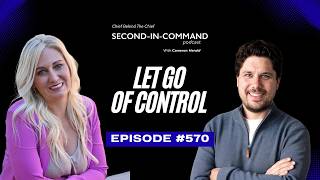
Arnold le Rutte, COO of The Virtual Hub, went from running his own e-commerce business to scaling offshore assistant teams for clients. The company thinks in tasks rather than roles, trains talent internally, and uses AI to turn notes into action items without cutting jobs.
Chapters
I think Cameron's book, The Second in Command, was actually very helpful to me as I sort of stepped into that seat. It was something that was on the table for a while and discussed for some time. In fact, the actual trajectory discussed, you know, some years ago was, do you want to eventually take this seat? And of course my answer was yes, I'd love to. The CEO-COO relationship of being a marriage, I think, rings true more and more every month that goes by because it is a relationship that has to be managed and it is unlike any other. Inside an organization. Barbara and I had both been following Cameron Herold's content for some time, so it was actually part of the deal. This seat plus COO Alliance, you'll be on the way.
Welcome to today's episode of the Second in Command Podcast. I'm Lindsay Smith, co-host, and I'm so excited to introduce our guest today, Arnold Larratt. He is the Chief Operating Officer at the Virtual Hub, where he works with leadership teams to unlock capacity throughout organizations by embedding dedicated assistant teams that absorb recurring process-driven and administrative work. The model removes low-leverage workloads from highly skilled roles and redirects effort towards higher impact execution. Before joining the Virtual Hub in 2021, Arnold spent more than 12 years as an entrepreneur building and growing multiple e-commerce businesses. Through that experience, he developed a deep appreciation for how quickly leadership and specialist capability become constrained. By operational drag. During that journey, he became a client of The Virtual Hub, initially deploying a part-time assistant and eventually scaling a 6-person embedded support team. After exiting e-commerce, he joined the company and progressed into the COO role where he now oversees a global team of more than 300 people and works closely with the founder and CEO in a complementary founder-operator partnership. Arnold brings an entrepreneurial lens to the COO role and is passionate about systems that reduce friction, lower stress, and make work more enjoyable. He is based in Sydney with his fiancée and two young children and travels regularly to North America and the Philippines where the Virtual Hops operations are based. I am pleased to welcome Arnold Luraj. Arnold, welcome.
Thank you. Pleased to be here.
I just learned that you and I had the great opportunity to be together in the same room at the COO Alliance event last March in Vancouver. How fun is that?
Yeah, it was, it was great. It was my first event, um, with the COO Alliance and my first trip to North America. So it was a, yeah, it was a good year last year, um, getting to know the members of the Alliance and I was lucky enough to get over to Boston as well in September. So yeah, great, great crew.
Oh, that's incredible. I wasn't at the Boston one last year. I had been there a few years back. It was also my first time in Vancouver, but those events are always so energizing to me. So I'm glad that you've had the opportunity to be there, and I'm even more excited that you're here with us today to share your story of being a COO. So I'm sure when you were a small child, you didn't say, hey mom and hey dad, or maybe you did. I'd like to be a COO when I grow up. So how did you end up where you are in your role?
Uh, yeah, it's an interesting story, I guess. I, um, I sort of did everything as, as a university student from, uh, delivering pizza to, um, to working in, uh, stores selling boat parts. And, um, I've worked in a call center. I've sort of done, done quite a few different things. Uh, but for, for the majority of my, I guess, pre-Virtual Hub life, I was running my own business. Um, so I had that entrepreneur journey, I suppose, and, um, learned a lot along the way. Um, I was, I was mainly in the retail and wholesale world, um, which is, yeah, pretty, pretty challenging, challenging world. But yeah, a lot of fun, a lot of good lessons, a lot of building and solving problems, which I think I do enjoy a lot. So maybe not so much of a surprise from being a child because I was always into Lego and, you know, when I was older, building things and playing with electronics and all that kind of stuff. Um, maybe not such a surprise.
Well, I've never heard a story that isn't exceptional when it starts with pizza. So if your career started with pizza, I think that everything's gonna be a-okay. How did you end up at The Virtual Hub?
Uh, so, um, I became a client of The Virtual Hub, uh, while running my business. Um, I had experimented with using offshore teams through the, the sort of traditional channels, through using, um, you know, short-term freelancers for projects, through to using a couple of other companies doing similar sorts of product offerings to what The Virtual Hub does. And at some point I was referred to The Virtual Hub by a consultant and I met the, the founder and CEO, Barbara Turley, and that's really when the whole strategy unlocked for me, uh, because I knew, I knew enough about it that I needed it to work in our business. We needed, we needed a lot of people to do a lot of backend processing work. We're a retailer. We had tens of thousands of products to sell, which had a lot of manual lot of manual work to do. And, um, yeah, really, really the key was just unlocking the simplicity that I needed to take to the, to the strategy, you know, which, which really comes, came down to getting the processes, uh, refined and simple and then putting good people in seats to do the work. Um, and it really was that simple. So once I started with a client, as a client with the Virtual Hub, we quickly scaled our team from 1 to, we peaked at 6 assistants, uh, and it was just magic because I was able to get a lot of the business on autopilot, um, with a, with a great team. Um, the, the experience was probably, um, compounded and, and I'm sure played a big role in landing me where I am today in that I flew over only about a year or two in to go and meet the team that I had at that stage. It was only 3, and I got to witness firsthand the, the vibrancy of, of the Virtual Hub. Um, I think there was over 100 people there on site at the time, and it was a little bit overwhelming to see, you know, so many happy faces, a really, a really great model, um, and really see, actually, as a client, see the value that the company was adding to, to the people that were in my team. It wasn't just a case of buying a couple of people. There, there really was this whole support structure around it which, which made it work and work well. So I think that was probably the, the turning point, was that, that trip in 2019. And from there, once I, I came home, you know, we were we were really off to the races and we grew the team some more, um, pushed the strategy along and, and the business was able to grow quite quickly.
So how did you go from a client to working within the organization?
Yeah, well, it's, um, bittersweet story in that the— my business went through a lot of exponential growth and then, uh, during the pandemic, um, we hit hit a few headwinds, not in terms of demand from our clients, but the supply chain unfortunately started to fail on us along with, you know, a myriad of other challenges so that the company was sold. And I had always joked with Barbara that, you know, if the day ever came that I stepped out of what I was doing, that I'd come knock on the door for a job. 'Cause I was, I just really liked the company. I liked working with Barbara, I was fortunate to get to know her quite well when the company was, was, was younger. And, um, the day came and, um, yeah, I, I started off doing, um, sort of some, some part-time work with the company and then within 6 months I joined full-time. So it's been, been a great ride ever since.
You have to have a really interesting insight having been a client and understanding what the client expectations are. Not just as somebody internally building what you want them to be, but somebody who actually lived and breathed and used the services. How has that helped you as you've navigated your role within the company?
Yeah, I think it has. I always have a little bit of that client advocacy, I think, that continues to shine through. But absolutely, I tend to fall back on that experience a lot when I'm mentoring and talking to our team. Um, it's a— it is always good to, um, to bring that to the table. And I think that has served me quite well, um, particularly when we're, we're unpacking the nuance of how clients are really thinking about their, their strategy, how they're, how they're breaking down the work that needs to be done, how they're thinking about, uh, what they really need in their account. You know, there's there's often misconceptions that come in. The one that we tackle a lot is, you know, clients really thinking that they need somebody, I, you know, I need someone that has this specific experience. I need someone that's, you know, had 5 years experience working with Amazon fulfillment or something, you know, and then that's where we really have to challenge that sometimes and say, well, Do you need someone with that experience? Because you probably actually have processes and a whole operating system that's actually fantastic. What you actually need is a smart, capable person that can be trained up and brought into the role quickly, and you'll probably fly. So that's probably what my experience has been is you don't often need specific experience. You just need a certain level of intellect and, and a bit of will, and, you know, things can go quite well.
It's like you have the opportunity to be an undercover boss before you are a boss. You saw everything that worked and you got to say, okay, I would do this, or I would think about this, or here's what the customer is experiencing. So I think that's just a really cool dynamic that you had. And then, so now you move into this organization and you're working with Barbara and you're working with the team. What are some of the things that you did once you moved into the organization full-time? Some of the first things that you did with the team in your role?
Yeah, so, um, I guess pedaling back a little bit is I didn't step immediately into the, the CEO seat. Um, it was a bit of a gradual process. Um, I started off doing a lot of consulting with our clients and doing a lot of sort of technical implementation of tools and refinement of client systems to better set them up for success with, you know, an offshore strategy. That was a very interesting journey in and of itself because what we really learned through that experience was Whilst we had a lot to offer and we, we ended up having a great product, it was actually difficult to, to charge the sort of fees that we, that we need to, to make it really, really a great business model. And, and, and the nuance of that really was that great small to medium businesses don't really need it. And, and that started to steer us to the, to the, the position that, you know, who are the clients that we really, you know, would love to work with? And they're actually scaling companies that are already on top of process and, and building out their organization chart, uh, mindfully. And, and they don't need, they don't need that guidance. They're already there. We, we just slot right in with the. With a people strategy that supports what they're already doing. So, um, so that was an interesting journey in and of itself. And it's, it's helped frame a lot of our thinking around how we position ourselves in the market, um, how we sell what we do, um, and who we want to do business with, as I said. So, so, um, so yeah, that's, that's kind of that, that angle of it. But what, what I was also doing while doing the consulting was, I guess, in, in a way, consulting to the business itself. And I started working with the internal team, refining a lot of our internal structures and systems and, uh, building automations and sort of having a lot of fun tinkering in the, in the back, back end of it. And then the natural progression from that, I guess, has been to, to sort of step into the operations seat, um, overseeing you know, the whole, the whole company. And, you know, we've, we've traditionally been a fully remote business. So I guess, you know, the importance of the, the tech stack and the way the systems work, uh, is, is so closely linked to, to that operating role anyway. So it's sort of been a natural, a natural journey.
So I want to go back and you said that originally, correct me if I'm wrong, that you thought that the small to medium clients were going, or companies rather, were going to be great clients. But through your consulting and working with the business, you realized that it really was businesses that had already scaled past that size and had some significant systems in place. Is that accurate?
I, yes and no. I think, I think, uh, companies pass that, that milestone at, at all different stages of, of growth. So whilst we can, you know, pigeonhole companies and we, you know, we would say, you know, our, our real sweet spot is companies operating $10 to $100 million. You know, it's not to say that someone, you know, much smaller or much larger doesn't make great sense as well. So it's more to do with the, I guess, the organizational maturity in terms of the bottom threshold. And in terms of the top threshold, it's has the organization become so large that their, you know, their security requirements and their committees that you have to jump through to get into business with them becomes too slow and too difficult. And, you know, that varies. Like we have some extremely large clients, you know, right up to listed companies. So there's no, You know, one perfect rule, but as a, as a general thing, we kind of say the nice place to be is in that, that small to mid-market. Um, we like to say companies doing real things, you know, if we, if we meet with a manufacturer that does $150 million, you know, manufacturing pipe or something like that, they're just, we salivate at businesses like that because there's usually so much opportunity.
Arnold, you say support layer strategy. What does that mean?
So the, the support layer strategy is, and I think I mentioned before, is we, we try and guide our clients to think in tasks, not roles. Um, one, because it challenges the, the preconception that I need somebody that has experience doing this particular job. You don't always. And secondly, it's the philosophy that we would argue that we can pretty reliably look at anybody's job in an organization that's relatively well paid. They're a knowledge worker and around 30% of what they're doing, give or take, will be work that they're being very highly paid for, to be polite. And really we've got to get that work off them. And what are our options? Well, we can automate it or delegate it. I mean, the classic saying, but if we can put people in to take that work off quickly, then it unlocks so much value in the organization. Not only have you freed up time and you're getting better bang for dollar on your current staff, Um, but that extra time can often be strategic time. You know, it's the time that these people needed to actually refine process. It's the time they needed to go and collaborate with, with the guys in other departments to, you know, break down where are the problems and the challenges in the organization at the moment. So, you know, it's, it's trying to get these ideas across is, is challenging sometimes. It's, I'll share an example. So we've seen this quite a few times and we'll come in and we'll start talking to a chief operating officer or CEO and they'll be saying, yeah, yeah, I'm aware that my team are overwhelmed. They all want more headcount, but I don't want to give it to them. I've told them to automate stuff, but they're moving too slow. You get this kind of story. And then what will sometimes happen is we'll, we'll have the opportunity to then bring in a department head into the conversation, sometimes in a second meeting. And, and they'll be sitting there telling us about, you know, how things run in their department, all of their frustrations. And we'll start to dig a little bit more into their, into their processes. And we're like, oh, that's really interesting. So, so Jane over here, she prints out a ream of paper every day and then she has to manually distribute it around these pigeonholes and then somebody else's job is to process it. I mean, it's a very basic example. And usually at some point we'll watch the CEO or the COO turn across and say, are we really still doing that? And they're actually unaware of the kind of this paper pushing kind of work that's going on that's entirely soul-destroying for some of their tenured great staff. And they're like, well, yeah, who else is going to do it? You know, so that's, that's where we come in and we're like, let's get this stuff off these guys so they can go and do their best work.
So when you're working with an organization like Virtual Hub, you have, you know, if I'm on the client side, I've got to figure out how to bring that person into my team and into my culture. And then you on the virtual hub side have to figure out how to manage the people within your culture, but also understand that they're being assimilated into another culture. What does that look like?
Yeah, it's, it's not with, it's not without its challenges. That's, that's for sure. But we, we have built a pretty great model where it, where it works really, really well. So under our model, our people are our people. You know, we're, we're a service provider. We, we bolt onto our, our clients' businesses, but very, very much so the, the spirit of the engagement is that, that we deliver the person on time, ready to work, and they go into the client systems. So we encourage our clients to, to fully integrate that person into their business. So that means they're onboarded with a company email account. They're onboarded into the company's tools. Obviously with the right security considerations made, just as you would with any other employee. Um, and we encourage the client to nurture them and, and, and love them like they would any other employee. And when clients come in with the right attitude, it actually, it works really, really well. Like we, we have a lot of clients that have very, you know, close relationships with with their team. Um, you know, they're, they're quite, you know, they almost say things to us like, you know, don't, don't ever let this person go and things like that. But the, the reality is that's just, that's just good business. And, um, it's, it's, it's a nice, you know, middle ground. You know, clients are not having to go and set up shop in another country. They, they, they can come to us. They can get somebody that looks and feels like one of their team. Obviously there's a, a big cost advantage as we're a, you know, an offshore provider, but, um, but yeah.
How many virtual professionals do you have in your Virtual Hub network?
So we're a bit over 300 at the moment. Um, we've got about 150 clients. Um, we've got clients that range from having, uh, larger teams, uh, and then we've, we've obviously got a lot of clients that are, you know, ones and twos. So, um, so yeah, it's a bit, a bit of a range. Um, again, we find that good, good clients are the businesses we like to work with. They always will often put their toe in the water with one, and then, you know, quite quickly over, over the course of a year, they'll, they'll start to scale that that team to the point where we've got some clients that are running essentially whole departments with us.
That's exciting. Do you find that there is a common thread in the types of tasks that people are coming to you looking for, or is it really all over the gamut?
It's, it's, it's all over, all over the gamut, I would say. It's, it's, it ranges from A lot of administration tasks, you know, from, you know, processing data, collecting data, a lot of stakeholder management. You know, there's a lot of tasks that involve communication with, with clients, customers, you know, events management, all these types of things. Then we, then we move into the, you know, the marketing support. Arena where we've got a lot of, you know, relatively creative people that, that really enjoy, you know, social media management type work where, you know, the client's got the great strategy, but we, we really slot in and do the, the day-to-day execution, you know. And that's, you know, re-clipping, re-clipping podcasts, um, you know, clips for pushing out on Instagram or whatever it might be. So, uh, that's, that's the sort of the middle area. And then the other end of the spectrum, we've got team members that really integrate themselves in helping with the systems. So more, uh, supporting on the, the CRM management and marketing automations, um, really being the kind of the techie, you know, the techie seat, um, supporting supporting the team. Um, and, and just on that, we always, we always advise our clients that there's a line, you know, and there's a— we— it's basically a strategic line where we, we have to be very careful that there's no misconceptions, that we're not expecting that our people are going to bring strategy to the table because it's not what we do. We're, we're in execution. So again, talking back to, you know, what's our ideal client? Um, often, you know, we, we get clients that are, are really looking for the, they're looking for that, um, you know, that gold nugget solution. Like if, if we pay you this, this monthly subscription, can you solve all of my problems? And it's, it's, we, we really have to push back a little bit and say, yeah, we, We can solve a lot of your problems, but not all of them. And strategy and business design is unfortunately still on your plate.
Well, you know, you have to leave something for them to do. And if you think about it, it's really no different than your relationship with your CEO. One of you is responsible traditionally for execution while the other one is responsible for that vision and the strategy, right? And so Barbara comes to you for your help in the execution, just like the virtual professionals are going to the organization to help with the execution.
100%. Yeah, absolutely spot on.
Talk about your relationship with Barbara and some of the things that you two have learned together and ways you've really delegated, you know, this is your lane versus this is her lane.
Yeah, I think, I think that's been an interesting journey where we're definitely getting better at that now. Um, it's, it's, uh, I guess when it's a founder-led organization, it's a, it's a gradual process letting go of particular areas. And it's challenging being the one to take over as well because, you know, you don't want to be the one to unwind what's being built.
All of our hard work.
That's right. That's right. So I think that's probably a universal experience in smaller scaling companies, but no, it's been been quite organic in that my, my areas of, um, uh, of focus have, have been around finance and, uh, around our systems and tools and our technology. Uh, and then over the last year, I've really moved far more into the, the daily operations to the point where I'm really starting to, um, watch over most of our Philippine operation. So I'm spending, spending a lot more time over there, and, um, which I, which I really enjoy. We have a really great team, so it's, it's, it's actually great being on the ground there. If you're the CEO of a company and you'd like to see how you stack up against the 8 core skills of other COOs working as a second in command in their business, go to cooalliance.com/downloads, grab a free copy of our scorecard where you can measure yourself against those 8 other areas, and we'll send you back a report showing you how you stack up, where you can improve, and where we may even be able to help you in your growth. Again, go to cooalliance.com/downloads.
Are you utilizing AI? Million-dollar question for, for everybody in, in every business today.
Uh, 100%, yes. Yeah, we, we've We've been probably, I would say, reasonably in it for a couple of years now. Um, we have a pretty long roadmap, um, of, of the tools that we're building internally to better, better run our business. Um, it has been quite game-changing, um, in that we can actually make our people's jobs better. That's, that's kind of been our big motivator. We, we, we haven't really, um, you know, had any huge, um, breakthroughs in, you know, slashing our team by half or anything like that. It's, it's always, um, you know, I guess the age-old line that you hear everybody saying is, you know, it's, it builds more capacity. Um, but I think before, before even the, the benefits of building capacity, what we're really seeing is we're making people's jobs better. Um, because, you know, taking notes and, and writing long stories after every call is, is somewhat painful. There may be some that enjoy it. I'm yet to meet people, anyone that does. But yeah, we're really finding with AI now that we can, we can turn conversations into, um, really well-organized output. And that's, you know, we're going way beyond you know, just some notes. We're to the point now where conversations of a particular type are driving action inside the business. So the call drives the output. So they're the sorts of things that we're finding AI just game-changing for. And increasingly incorporating it into our own software as well. So we, we run a little bit of a hybrid strategy at the moment in that we use a lot of off-the-shelf tools, but we also have our own proprietary software that drives the business. And increasingly we, we sort of experiment, fail fast with, with off-the-shelf, off-the-shelf tools. And once we get it right, then we, we put it into the queue to be sort of hardcoded into our, our operating system.
I think that one of the misnomers with regard to AI is that it is going to cut everything in half or take people out. But what I'm consistently hearing from people who are using it effectively is that it really is just allowing the humans to be better humans because it's allowing them to focus on their super skills. And not necessarily the things that they just have to check off a list. Would you agree with that?
100%. So, I mean, we're in the people business, and, you know, the more time that we can unlock for people to go and be, be humans and go and have real conversations— um, sometimes they're not, you know, like all businesses, you're not always having amazing conversations. They're tough conversations. But if we can if we can allow for more time to actually do that work, um, at the end of the day, we're, we're putting more value into the market.
I want to talk a little bit about turnover. When you're working for an organization, obviously you need to make sure that the organization has the people it needs. But in your situation, you need to make sure not only do you have the people, but your 150 clients also have the people. So what does that look like?
It's, yeah, it's, it's, um, it's a, it's an interesting game and, and behind the scenes there's a lot going on every single day, uh, making sure that we've, we've got supply to keep, keep the lights on for the clients. So, so yeah, of course, like any, any business, um, you know, we, as Barbara likes to say, you know, we deal in people, they walk and talk and change their mind. Um, So, so yeah, people, people, you know, reach the natural end of their tenure with us, um, and, you know, we might get 5 great years out of somebody and then they decide they're gonna do something new, and that's fine. And of course, you know, our clients can end up being a bit disappointed that they're, they're losing someone that's, you know, potentially been with them for, for years, um, but we have a really great transition process. So, you know, it's actually well well managed. Um, we, we generally, you know, aim for at least a couple of weeks of transition. Um, and again, going back to what we were saying before, you know, um, the, the— I think before, before the call, we were talking about, you know, it's, it's sad when people leave and, and sometimes a bit daunting. You wonder what's going to happen. But in a, a well-designed model, um, you know, the sun rises and, and business keeps going and That's really our experience with our clients. You know, there's, there's always a little bit of anxiety around a transition, um, but we can do it well. And even if someone's been in a role for, for a couple of years, um, amazingly, when there's, there's good documented process in place, um, we can, we can get a transition, you know, to go quite smoothly, um, where there's very little disruption. So, uh, that's the name of the game for us is, is really being that bolt-on resource, trying to ensure that the risk and weight of, you know, any kind of transition is not the client's problem. We sort of take care of it. But it does open up interesting discussions sometimes because, you know, clients will sometimes say to us, you know, oh, I can't, you know, I can't have this person. Sick. Like, of course everyone gets sick and they need a day off, um, they need to take annual leave and those kinds of things. So that, that's always a good discussion to open up because we actually have to say, well, you know, like, we're not a software provider, we're, we're a people provider. And, you know, humans are not, uh, 100% reliable 100% of the time. It's, it's unrealistic. So we really have to get them to look at, well, what's your what's your risk appetite for the work that's being executed? And where there is less risk appetite and there's really mission-critical work being done, we have to talk about duplication. You know, you have to, and that's the same for your onshore team. You know, you have to have a team of 2 or 3 if you want 100% coverage. And even then it's not, you know, if they're working in the office, everybody has the flu the same day or whatever, but You know, it's, it's really, um, a case of just, just looking at the risk appetite and what, what are we prepared to, you know, take on. I don't know.
How long have you been a part of the COO Alliance?
Uh, I joined end of, uh, 2024. Um, yeah, so it's, um, been extremely valuable to me. So far.
So what have been some of the takeaways, some of the things that you're like, I got that because I was with the COO Alliance or because I was at the COO Alliance Connect events?
I think, I think there's probably not a specific, you know, tool or strategy that's, that's really, um, you know, been, been particularly memorable to this point, but really what What I have been taking away from it is the time to step out of the business and get the, get the critical thinking going. I have no doubt that it's really driven, you know, some great projects and some great, great ideas that have, that have formulated in my head while, while sitting on the plane and things like that. But really the most, the most valuable part of it is, is building the confidence in the role. I think, um, you know, really, really valuable for people coming into the role for the first time, um, listening to, you know, there's, I think, what, we up to 180 members or something now? So you've got all these voices of, of people doing the same thing, uh, and we've got our online community, and you're just perpetually immersed in, uh, people thinking and, and dealing with all the same things. And that, that I think is, is the real value and, and building that, building your own confidence in your, your abilities to, to tackle each day.
It's like Cameron says when he does his diagram at the ladder, you're building your confidence and you're building your skills and you're building your confidence and you're building your skills. And that goes to all of us as leaders and not just to team members. And I think one thing, there's a misnomer out there that once you achieve a certain level of leadership, you no longer need that because you've peaked. And at least in my experience, that, that was never the case. There was always this insatiable desire to just continue to learn and to grow and to be better and to think about things differently. But maybe you're growing different skills and maybe you're growing confidence in a different way, but you're still growing.
Oh, 100%. And it's, it's, yeah, I, I don't think that we ever stop learning. So it's, it's, um, You know, it's great to, to step out and be in an environment where, you know, there's a fire hose of, of information to absorb, which, which can be overwhelming at times, but then you also have to have peace with it and say, no, I just need to take the things that I need today to help me keep, keep going for the next week or the next month or whatever it is. And then the next time you show up, it's, it's something else that you're looking for. Um, and yeah, certainly the, the community, you know, there's already, it's, um, like, like Cameron says, you know, there's the cost of your ticket is, is often paid for by one, one answer that costs somebody 5 seconds to give you, you know, what I did was this and you're like, ah, great. I've now got that in my pocket and, and that's what I needed. So it's, it's fantastic.
I love that concept that you said of taking what you need today to get you through the next week, and then the next time coming back and taking what you need then. It's like when you find a really great book and you read it, but you can't possibly implement all of the ideas that you hear in the book. Just take the one that you need and read it the next time.
It's one model or one concept that you take, and that's fine because you've got value. Got tremendous value. And I guess the other side of it, which, which I still need to do more of is, is, you know, you've, you've got to remember that you can contribute too. And, um, you know, there's stuff that, you know, that other people, you know, would be interested in hearing. So, um, I definitely need to do more of that, but it's, um, it is, it is a wonderful community.
That's incredible. I know you read books. Or at least you have a lot of books. Is there a specific book that has helped you in your leadership journey?
Yeah, I mean, I'd say, um, you know, and, and, um, uh, might not be all that exciting to say this one on this podcast, but, but I think Cameron Herold's book The Second in Command was, was actually very helpful to me, um, as I sort of stepped into that take that seat. Um, it was something that was on the table for, for a while and discussed for some time. Um, and in fact, the actual trajectory discussed, you know, some years ago was, well, do you want to eventually take this seat? And of course my answer was yes, I'd love to. And, um, Barbara and I had both been following Cameron's content for some time, so it was actually part of the part of the deal. It's this, this seat plus COO Alliance, and you'll, you'll be on the way. So that's been, um, really, really good. But the book, the book I would say is fantastic. I think, uh, anyone that hasn't read it should definitely have a look at it because that, that, uh, discussion around the, the CEO-COO relationship of being a marriage, I think rings true more and more every month that goes by because it is, it's, it is a relationship that has to be, to be managed. And, um, it is unlike any other inside an organization.
Since you and Barbara have both been following Cameron's content, have you or your teams explored the Invest in Your Leaders platform?
We have. We're still only got our toe in the water, but we have, have had a few people go through it. Um, it is, it's, it's great, great content. And, you know, we're, we're still, still absorbing and deploying. Um, yeah, yeah.
Understand when I was in my role as a chief strategy officer, I had about 35 people in the organization go through the program and created some pretty cool cohorts around the content inside of it. And it was. Really exciting for me to see people learn in ways that maybe they hadn't thought of, and especially sharing the content with people who wouldn't necessarily have always called themselves a leader. So I think it's great content to really share with anybody in the organization who has a desire to learn and to become 1% better.
Absolutely. Yeah, 100%. Yeah, we've got a whole learning and development department And, um, you know, obviously we've got a lot of, you know, huge amounts of training materials and training library that we bring our people through. And, um, and yeah, it, it, it is no doubt influenced some of the things that we're doing in there.
What does training look like from your side for your team members?
So we, um, we like to say that we, we manufacture our own product. So, uh, what, what sets us apart from other, um, players in our industry? I mean, there's a big, big spectrum of how, how people in our business work, but the way we work is we, we recruit and train for our own supply. So we have a whole training department where we have an intensive training program that people go through once they join us. that really prepares them for the way that they need to, to show up and interact with our, with our clients, as well as, uh, sharpening and, and gaining, uh, additional skills, um, you know, that will, that will suit what our clients are looking for. Um, and that, that's been, you know, a real, um, I think, game changer in the way that we can look after our clients. Um, you know, we're bringing people in with a level of consistency that's perhaps not as, not as common. Um, and our, our training area lives on throughout the employee journey. So, um, when a, when a client has a particular need, you know, they might be, um, implementing a new platform or something like that, uh, that's when we will actually take we'll, you know, sometimes take our people out of their day-to-day. You know, quite often I'll be doing overtime to do it, and we'll pay them to go and go through additional training so that they can, you know, really show up brushed up and ready to go on some new platform or some new skill that they need. And then same goes, If our people are, you know, have ended serving one of our, one of our clients, again, we've got that training department to, to fall back on to brush them up and get them ready for the next, the next challenge.
So if I'm hearing you correctly, you at Virtual Hub or your learning and development department, they take the onus of training off of your client and put it on you to teach the skills to the No, not, not quite.
We, we, we sort of, we, we train in a kind of a generic lens. I mean, it's, it's pretty targeted, but you know, basically we're, we're trying to make sure that there's sort of consistency in our product that we're confident that, that our people have, um, you know, a base level of, of knowledge and skill to go and jump into a client account. And obviously there's on account learning that has to happen. And training, but when we can supplement what the client is doing with their resources, we jump in as well. So, okay, um, so yeah, it becomes quite collaborative in that sense. Um, and our, our client success managers work pretty closely with our clients in just identifying what, you know, what extra skills and training that we can we can offer.
I think being a second in command really is like being a superhero. And so with that said, what would you say are your super skills?
Um, I think, I mean, we're always tough on ourselves and abilities, but I, I would say, um, you know, so solving, solving, uh, process problems or breaking down where things have gone wrong and then just attacking it. Ruthlessly with, um, with process. Um, and I think trying to, uh, distance ourselves from emotion and blame, uh, as quick as we can and, and getting our eyes on the prize, which is, okay, this thing's gone wrong. Let's, let's fix it and reduce the risk of it happening again. And, um, yeah, I think, I think I'm, I'm okay at attacking things that way.
I think you're great at attacking things like that. So much of the COO role is done, um, where the things that you're doing aren't necessarily seen to the public. You're doing a lot behind the scenes. What is it that you do quietly that you wish people knew or that you wish people understood?
I think, I think in our business it's, um, and it goes back actually to my experience from the client side. Is when everything works well, there's sometimes little appreciation to how much is going on to make sure it does go well. And I think that was my aha moment when I flew in and I saw this organization. I really had no idea of the complexity and the number of people driving the backend. And I think that's probably something that we can we can probably get better at is actually sharing the story a little more with our, with our clients, is that there's actually a lot going on to, to make the delivery work and work well and reliably. Um, and the, the complexity of the processes and decision trees that go on, uh, are quite, are quite mind-blowing. You know, even if I step away from a particular very specific area for more than a couple of weeks, it will take me, even if I've been the architect, it'll, it'll take me a minute to, to go back through and understand the complexity of what we've built. Um, but I think that's the beautiful thing about it is, is wonderful products or wonderful services that, that look beautifully simple have actually had enormous amount of complexity and research and development go on in the background to, to deliver it.
Arnold, when you think about the Virtual Hub, what makes you different than any other virtual professional network that might exist?
We, we, I think it's really our attitude to bolting in to, to clients. It's, it's, um, this underlying, uh, philosophy that we're really a bolt-on component of the business. We are, we are, we do want to be a genuine partner, not a, not a vendor. Um, and I think it's that aspect of it that it's, that makes us different. It's not a, we're not a recruiter. It's not a, it's not a one-off transaction chasing a fee. Um, it's a partnership that we have to keep delivering on month after month, or, you know, or we don't retain the business. So I think, I think that's what really makes us different. And then the, and then the other aspect is that we, you know, we manufacture our own product as it were. And, and that we, you know, we really drive the quality control quite ruthlessly on our side. So we, we try and take, and we do take a lot of risk off the table for our clients.
What does it look like for you? When you're in the office, your home office? What does a normal day look like in your, your life?
Yeah, I guess, I guess like the experience of most CROs, you have a, you have a plan for the day, but it, it often takes weird and wonderful turns as, as things crop up. Um, but no, my, my day tends to look like, um, doing a lot of more deep work and admin in the morning, you know, and doing a lot of reading of what's going on in the business. I have the time advantage of being 3 hours ahead in summer and 2 hours ahead in winter of the Philippines. So that tends to be the, I guess the deep work happens before midday. And then in the afternoons, it's, you know, a lot of collaboration meetings. Working on our process, working on our technology, meeting with our departments, and refining everything that we do, really. I, I think it's just a perpetual game of, of refinement, I would say, in, in what I do at the moment.
How do you protect your calendar from people who are trying to get you, or from all of the noise that comes up?
Um, I, I would say we have, we have pretty good rules of engagement internally. Uh, so, you know, the team are pretty respectful of, um, one another's time for the most part. Um, but yeah, sometimes it requires some pushback. It's like, you know, do we need the call, or can you, you know, can we, can we summarize that and, you know, distribute the tasks or the decisions that need to be made in, in Asana? And yeah, that's a constant, constant process of improvement too, because there are times where you really just need to get 3 or 4 people in the room or on the Zoom call to, to really hash stuff out and find the solution. And other times where it can just be done, you know, asynchronously quite, quite effectively. So yeah, constant, constant area of improvement, I would say there.
Do you have any non-negotiables in your life?
Uh, coffee.
Great. In the morning or all day long?
Coffee. Coffee. Yeah. In the first half of the day is pretty non-negotiable. Um, and look, apart from that, no, I, I, I really enjoy my work. So I, I tend to probably overcommit my, time to the detriment of my family at the moment. But it is an enjoyable time where we're making a lot of change and a lot of growth. And yeah, it's sort of hard now, easy later, I guess, is my mantra. I'm looking forward to enjoying the fruits of the labor sometime in the near future.
What is something that you learned moving from client to COO?
I think my personal learning has really been around how complicated the people business is, you know, in the business that we do, but also in the management of people. I think Um, you know, that, that's a case of being a lifelong student, um, because there is so much to learn in how to, uh, manage people, uh, in how, um, the, the science of behavior and motivation and, you know, all of these things is, um, you know, incredible. And certainly, certainly learning a lot through CEO Alliance because there's always a lot of discussion around that. Cameron's obviously extremely passionate and skilled in that area. Um, and yeah, I think, I think that's, that's probably the key one because, because in the past I was really just an outcomes guy. Like, it was, it was programs, goods in, goods out, margin. Did we make money or not? Like, that was kind of my, um, worldview, I think, probably before coming to the virtual hub.
So if there's a listener out there that's saying, I think I want— two questions. The first is, I think I want to be a COO. What advice would you give to them?
I think it's really about just leaning into the areas that you're great at and give as much as you can to the organization. And if it's, if it's meant to be, it will feel like a natural progression. I don't think it, I don't think it ever should be this kind of like hard change. At least for your first gig, I think it's got to be a natural, a natural progression where your, your, your natural ability to start moving across the org chart is is, um, organic, you know, in that the work that you're doing just starts spreading across. And at some point, somebody's going to recognize that and say, hey, like, you know, maybe you should be leading, you know, leading from the next layer up. Um, yeah, I think that'd be my advice.
I love that. And then if we have a listener who's saying, I might be in a position to bring somebody on as a virtual team member, what are some things that they should consider? Before reaching out?
I think one is just making sure the organization is, is ready for it. You know, you, you do have to have an element of structure in place, not necessarily a lot, but an element. Um, you need to be not looking for the golden solution. You're not trying to write a check to sort of magically improve the whole business, because that's never going to happen. It's, it's, it's really got to be about, um, being very deliberate in understanding the, the mechanics of, of, of your business and the, uh, tasks right down to the tasks that the people that work for you are doing. And, and the question is, can I unlock massive leverage if I can pull this work off myself or off, off my team, and what is that leverage? And, and I think if it's attacked from that lens, um, you know, you're coming at it, you're coming at it from the right angle, and, and it kind of takes the emotion out of it. Um, that's always a risky kind of risky path is, is perhaps looking at, looking at the strategy from a from a, you know, more cultural kind of fit and more, you know, more of the soft things. I think you've actually got to start from the, start from the financial and the, and the factual, which is, you know, do I have somebody that's going to burn out and leave me? And this is a strategy to stop that happening. You know, can I unlock their time and get massive leverage off the time I unlock? Um, you know, or, or can I hold off making another 2 or 3 local hires that I really can't afford? You know, so I think they're the sorts of questions.
I'm so happy that you and I had the opportunity to connect today, Arnold. You're an absolute incredible COO, and I really love the journey from client to COO. I think that gives you such a unique handle on the business and sets you miles above other people in your field. So congratulations to you. And thank you so much for taking the time to be on this episode of The Second in Command.
Thanks very much. It's been really enjoyable and thanks for having me.
You're so welcome.
More from Cameron

Flutterwave Former Global Head of Operations Awa Kone | When Growth Outruns Operations (Podcast 611)







Optomi Professional Services COO Nick Murphy | The COO Can’t Know Everything (Podcast 607)


