This Breathing Therapy Will BLOW YOUR MIND! | Johan Stoop, COO Pause Breathwork (Podcast 312)
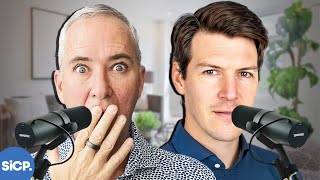
Johan Stoop, COO of Pause Breathwork, explains how the company trains facilitators and coaches people through breathing techniques to unlock human potential. He came from corporate IT and now oversees operations, finance, and the app while the company scales through events, licensing, and app expansion.
Questions this video answers
November 29, 2023.
Around 2019 (started as an extension of Hungry for Happiness).
About 1,500 alumni.
Pause has doubled revenue year-over-year for the past several years.
iOS only currently; Android planned to launch early next year.
Chapters
Seek the advice and the help of others more. Ask questions to people that you know are coaches, mentors, specialists, topical experts, even talking to like, customers or just passionate individuals. Like I said, especially in areas where I lack information because that will give you a lot of perspective on just the things that you don't know or you don't see yet. And that will really tremendously increase potential success and simplify the road to success.
Well, you're in for a treat today. We just had a great guest on our podcast you're going to get to listen to and watch on our second in command podcast YouTube channel as well. Johan Stoop is the COO for Pause Breathwork. I've been friends with the CEO and founder of Pause Breathwork for about 14 years now and watch Samantha Skelly really scale up the business. But in the last two and a half, three years, Johan Stoop has been there as her coo, really helping to double the size of the organization, create more profitability and more margin in the operation and going to talk about Breath work and how we can bring it into our daily lives and to our businesses, how they're running a remote organization with a truly global reach and how they're actually scaling this organization through kind of a lot of stuff around mindset and leadership. I think you'll love the opportunity to learn from Johan and even learn a little bit more about breath work, but also learn some of the best practices into growing a best brand like this as well. We'll see you on the inside and please share this episode too. So, Johan, welcome to the Second In Command podcast.
Thank you, Cameron, thank you for having me. It's really a great pleasure to be a guest and, you know, also be part of your amazing community at CO Alliance.
Yeah, it's wonderful having you as a CEO alliance member. I'm also super excited to get to learn about you and to learn about Pause Breathwork. I first met your CEO Sam Skelly probably 10, 12 years ago in Vancouver, Canada, where we were both living at the time. And I've been been able to kind of watch her career and watch this business grow up. And then I've also been able to experience some of her workshops. I was at PAWS session that she did for Archangel Academy about a year ago and and over the years again just having been around her. So I'm super intrigued to find out who you are, who's the guy that she's gotten, you know, by her side, running her company for her and being able to learn from you and learn about Pause So why don't you tell us a little bit about the company and we'll, we'll kind of start there and then we'll go backwards into learning about you as well.
Sam is amazing. Pause Breathwork really is a. Is a company that is focused around, well, the name kind of already says it, right? It's Breathwork. For those of you listening that don't know what Breathwork is and what it can do for you, obviously we have an app where you could totally check that out. Our mission with Pause is really to unlock your infinite potential as a human being through using the power of breathwork, right? So we offer trainings for someone to become a breathwork facilitator which will, as you know, as a person, will allow you to safely guide individuals or groups online or offline through the practice of breathwork. The idea of that is that you can, you know, add it to your existing coaching business. You could turn it into your own business or really you could use it as a mental health and wellness tool for, you know, for inside your current company or organization. The company itself started about seven years ago with, by, you know, Samantha Skelly. She was running a coaching practice before this Pause was introduced in around 2019 as an extension to Hungry for Happiness, which is, as I mentioned, Sam's coaching part where she really focused on body image coaching. So it was very female oriented body image coaching. She kind of saw an opportunity in some of the learnings and teaching that she had had. And this is a story on its own, right? It's, it's a, like a divine intervention on the highway. I think it was actually driving from Vancouver back to her parents or something along those lines. And she got this divine intervention of, hey, this breathwork thing, we should do something with that, right? So she saw the opportunity, started that company in 2019 as kind of a sub company underneath Hunger for Happiness and started from the ground up. And so with Pause, we, we really offer two key programs. One is that breath work facilitator program. The other is more focused around somatic coaching. The idea of breathwork is that you really get out of your head because when you do meditation like you, you tend to like get all sorts of thoughts, right? But breath work gets you out of your head and into your body, which is actually where most of the emotions, stress, anxiety, everything else is like bottled up over time, right? And by being able to do that, it's actually kind of. We call it meditation on steroids. And that alone is like such a captivating concept. We basically want to bring that out in the world because we know what it can do for people that are stuck in their head and are basically numb to what they are and what they should be feeling as, you know, as a natural human being. We have those two programs. We also have an app, as I mentioned. It's iOS only for now, but we're building out Android. We're going to launch that early next year. We are fully remote as a company, right. We're. We have staff located all over the world, but we mainly focus on the US And Canada when it comes to the people that we target. We currently have over like 1500 alumni in the past four years have been running Pause Breathwork. And maybe something interesting is that we've doubled revenue year over year for those years as well, which is a good indication of, you know, the state of the company and where we're going, where we're growing with this, because really the. The mission is where the impact is.
Sam's, I think, was really in Pause. It feels like it was really the first in this industry. I mean, I know breathwork has been around for thousands of years when you go back into, like different groups and different indigenous groups, but kind of making it into a business and certifying people. I remember when she told me she was going into breathwork, I kind of laughed. Like, I don't. It just seemed like such a silly thing. I was like, sam, like, you're going to teach people how to breathe? Like, we're pretty fucking good at it. We're all breathing. Like, what you talking about? I had no idea what she was talking about. And I think she really was into this at a very early stage. Is that accurate?
She was. She was. She actually found breathwork in Bali, I think, in 20, around that 2010, 2012 range. She was exposed to it very early. Back then, it was kind of more of a hippie lifestyle, kind of new age kind of thing. And you'd be surprised. I mean, I know you've tried it. The moment you try it, you. You trans. Something happens in your body, like physically that you feel just that if we are able to bring that to the people, that can bring that to the masses. I mean, she was. Yeah, she was enlightened in that sense because everybody thinks, oh, breathwork is. Isn't it just breathing? But no, it's like very conscious breathing and doing specific things to get specific outcomes as well. Right. You have breathwork to release anxiety. You have breath work to get more clarity, be able to prepare you for when you need to focus or before you go on stage or just to release like stuck emotions that are, that are there in your body. So there's a whole range even before go to sleep, making sure you have a good night rest. So there, there's a whole range of that. And I think Sam saw that as one of the earlier. Yeah, earlier person. We're really turning that into a business. There are a couple of others, but they have a slightly different angle. But Sam Lee is a, is a pioneer in that sense. And she's going to hate me for saying this, but I think she's kind of the breathwork queen around here.
What was it that you saw in joining this business and in joining Sam? What was it that saw you like, that kind of grabbed you to get involved?
Why I got to Pause was really for two reasons. One was a very personal motivation. But I was working in corporate for roughly 10 years and I really felt, especially with the pandemic, Pandora's box of possibilities when it comes to remote working and really doing what you think you should be doing. So there was a really, a personal motivation there to be able to do something from paradise, from Costa Rica, where we were living now with my wife at the time I was working in the Netherlands for FedEx. I kind of hit a ceiling in terms of, you know, responsibilities and focus areas and just the excitement I got out of work. So I really was looking for something else. The other part to that is that I was the same as you. When I was told about breathwork, I mean, my wife introduced me to it. She was like, let's do some breath work together. I was like, yeah, no thanks. That's, that's, I'm good. But when I combine like the possibility of, of, you know, working for Pause with doing breathworks, it literally took me three minutes, three minutes of doing one breathwork exercise. And it just. Which is, it's hard to explain, but really something physically changed in the way I looked at it that kind of aha, or I guess I had my own divine intervention of sorts that kind of led me to think, okay, this is something different. This is something bigger that I absolutely need to do something with in order to help other people as well. What is the best way for me to do so? Well, that was the role of, you know, director of Business operations at paws. And so that led me to go through the hiring process because Sam at the time was. Was really looking for a right hand man or a right hand person to be able to support her with all the things that she was running up against. When it comes to running a business as, you know, as a founder, as a visionary and really looking for that operational support in all the things really.
My experience with therapeutic breath work and then I've done like box breathing and WIM HOF stuff. But the therapeutic breath work is the one where I've been in tears. I've had the entire body kind of tingling. I've had almost out of body experiences. At one point I felt like I was a little bit on a. Almost like a ketamine trip where I almost felt like I was falling a little bit back through space. It was just a really profound, profound experience. My wife, the first time she did it, called me up and she was almost sweating and crying but laughing at the same time. I'm like, what is going on? And she literally had like tears streaming down her face of pure bliss and pure happiness. But she's like, I just did an hour and 15 minute breathwork session and it blew my mind. And I didn't know what it was. I'm like, it was almost like a When Harry Met Sally, like, I want what she's having kind of a moment. It was pretty cool stuff.
People ask you, what are you on? But even though I'm Dutch, I'm not that much into drugs at all. No. But this is. I had similar experience with this and I don't remember exactly who it was that said he tried out probably every drugs on the planet. Right. And he said the. The closest thing to getting to a altered state experience or an elevated state experience that did not have to do with any physical substance was through breathwork. Knowing that, that you can do so much with your own, with the force of your own body and just your breath is something truly amazing. And you know, I wish more people knew about it and more people get to experience it because it's, it's really. Especially in the pandemic, I mean it brings people back to their bodies and not being stuck in, you know, the red race to routine, the mindset.
Has there been massive changes for you in going from a big corporate environment like a FedEx and going into an entrepreneurial organization like Pause. And how many employees do you have? How many kind of freelancers roughly in the network to give people a scope of the size that you went to and the size that you're running?
My last corporate job was at FedEx where we had over half a million people worldwide. My scope there was really focus on IT management. So I had a team, multiple teams actually. I was running 25 people. And then you Know, bigger budgets. The change to Pause was big in a sense that you know, at a large corporate, you're part of a subset of, of of people responsibilities. You have a very specific focus around the product. It's part of a bigger strategy. And as a result of that, there's a lot of red tape. There's just a lot of things that you have to go through before you know, you can steer the ship into a different direction. Even though we would consider our teams kind of the speedboats at the time. But okay, changing from that speed mentality culture, which by the way, the culture was great there, but changing to a borderline startup going into scale up was definitely a breath of fresh air, no pun intended. The thing is you instead of being responsible for a small piece of the pie, all of a sudden you're responsible for literally everything.
The pie.
Yeah.
And the ingredients.
Yeah. And that's both amazing, intriguing, inspiring and super challenging. Right. So we, at the time we ran a team of I think it was like 30 people. This was two and a half years ago. 30 people. Right now we are actually doing a lot better and we have less people on the team. So we mostly work with like contractors. So because of the remote situation that we're in, we have around 24 people on our list right now that do various jobs for us. We have four people on the leadership team. I'm basically being the second in command responsible for the areas of operations obviously like the projects that are, that are company wide, finance, legal, hr, admin, IT and technology, which includes our app. That kind of spans the range of my responsibilities within Pause right now. It's interesting because coming from a corporate and people call it cushy, it's not always cushy, but it's a cushy job into being responsible for all the things and sometimes not having the right people or even skills to be able to do those things. It's a massive change. And even though I think with over the years I've kind of accumulated, I would say quite some knowledge in different areas, be it, you know, it, be it product design, be it marketing, be it sales, not that much, but things like, you know, finance, HR management, etc. But when you're in an environment like this, like, it's like you really have to try and find your way and go through the weeds to find the big things to focus on. And especially at the beginning that was very challenging because I had very little time to kind of ramp up because things were already going at hyperspeed. That's in A nutshell, my transition from corporate to startup scale up.
Was Sam worried at all about bringing somebody in who was coming from such a corporate environment? Like, what did she see in you? Do you think that allowed her to feel comfortable that you weren't going to be too corporate coming into this role?
I think a part was. So the, the main reason why I think Sam had chosen me, even though I came with a corporate background, is because of a. The diversity of my background, not just in corporate, but also in, you know, having started my own company after I graduated from university. My, you know, diverse background as well. Yeah, just a number of the areas that I was interested in, but also passionate about. I think that's, that's a big thing and that was a thing that I missed in a lot of the corporate environment was really that fire, that passion to able to get shit done. That was for me, the missing link. And, and I think that was one of the parts that she especially liked because she is very fiery, very visionary. Like, everything has to happen yesterday, preferably. And in that sense, I can, I can lift off of that. But I also know that at, at times I need to, you know, push the brakes and, and say, okay, look, is this actually the most important thing that we need to focus on right now? So having that balance, kind of that mediation power or skill, I think was one of the main reasons why she, why she went on board and why we have been, you know, operating for the last two and a half years so far. I think we're still doing a good job.
I'm curious on the, on the pushing the brakes. It's one of the things I spoke about in my book. The second in command that just came out was sometimes the COO is the brakes to the entrepreneur's gas. One of our other clients said that the COO is the leash to her dragon. I'm curious, how do you get someone like Sam, who is a perpetual motion machine, super high energy, very positive, like we're going a thousand. How do you say no to them? And how or not now, like, what specifically do you do to say that so that we don't get them frustrated, so that we don't get them feeling like we're debating them and so that sometimes we can save them from themselves.
There is a whole sequence of steps there. The first thing is to just acknowledge the idea and acknowledge the passion. I think that's the, the one thing that visionary. I'm generalizing here, but visionaries in general, visionaries are looking for is that validation of, hey, this Seems like a great idea. And then the only question becomes, okay, is this like, the most important thing right now? Like, how much, how good of an idea is this? If we think through, you know, the steps to get it done, the results that might come from it. The balance here is. And this is a, this is an ongoing process. Like, there is no one way to say this, but acknowledgement first, that's definitely a win for anybody after it's going into, okay, asking, asking more questions, basically, for them to be able to translate the idea, which might be very clear in there, in, you know, in their head, in Sam's head, to something that becomes more concrete. And as you ask questions, it's not that the motivation goes down, but the idea becomes clear, and then the opportunity also becomes clearer. That's one of the ways that we try to first of all assess ideas. And then once we have a good enough assessment of what, what it is that needs to be done, and we can say, okay, we're going to do this now, or we're going to park it and move it in. In the time frame that is most likely to give us the highest reward.
You line up with this exactly how I do as well. I know that I talked about this at one of our CEO alliance events sometime in the last year, that I think you articulated this part better. Every entrepreneur, and even most people, but for sure, entrepreneurs are starving for praise, right? They just want someone to say, I love that idea, and to say that at the starting point, I love that idea. And then what I always say is, let me ask you a few questions so I understand it even more because I know you've been thinking about it for a while, because as you said, it's clear in her mind. But when, when an entrepreneur tells anyone their idea, it's kind of like explaining your dream. You were trying to tell somebody what your dream was. At some point you're like, oh, like, I can't. I can't explain it. It's too much. There was too much in my head. Right. Well, that's what they're trying to do with their project. So by saying, as you put it, I love that idea. Let me ask you a few that allows, gives them a safe space to share a little bit more where we're not debating them. And then, as you put it, then we can say, hey, maybe it's a not now, right versus a no. So I think that that's a really, really good approach. Do you ever do that in front of the others on the leadership team, or do you Try to do that privately with Sam, because there's a bit of a balance there as well with kind of protecting them, but also being able to say no to them. What are your thoughts around that?
I think I would ask questions first. Regardless of the topic, I will always ask. Ask any questions, even if it's just clarifying questions. I. I once had an experience where this was corporate, but you had a room full of people and, you know, at some point everybody had the same question. And when they said, are there any questions? Nobody raised their freaking hands. And I was always the one that said, hey, what about this? Because I think half the room here is curious about what the hell is going on. So asking questions in the, let's say within the leadership team is the best way for us all to get on the same page. What I, what I do, and I have a very recent example of this when it becomes something that is very dear to the visionary. Sam. In this case, I try to do it separately so that we first align as kind of a pair, like CEO and kind of the coo second in command. We align as a pair before we say, hey, look, this is probably the best, you know, route to go because the last thing you want is just to create rumble within the leadership team. Even though I have to say, like, between mutual respect and, you know, openness, we are probably at a 10 out of 10 when it comes to just being able to discuss everything and anything within the leadership team. Right. But the first reaction is never, no, we can't do that. Not for me. Not. Not from others either, because there might be, you know, other topics around marketing or delivery. It's like, okay, let's. Let's explore. Let's. Let's see what this means. Let's see what, what the, the cost, the energetic cost, the time is that for us to do this and what are the details? What are you looking for? Most of the times what I find is a visionary might come with a solution rather than a problem. And I think discussing and trying to understand what the real problem is that needs to be solved is probably most more importantly than just implementing whatever comes out of the thought process of the visionary itself. Right. Uncovering that so that you get a better solution for the whole company is I think, the most important thing. And doing that as a group is even more powerful because then you can align and share the pool of thought and the pool of meaning with the leadership team before expanding or rolling anything out to the rest of the company.
Yeah, I agree with your whole assessment of all that as well. And I do like where you even said the tie in between making sure that the CEO and CEO are on the same page before we go to that next stage. Something I think you guys are doing really well is it feels like you've done a really good job at not making this, the Samantha Skelly Show. Like, this is very much a brand. Pause is the brand. The events and products and stuff are branded. I mean, she's still there as a thought leader, but has that been something cognizant that you or she have been able to move away and you've made the brand pause and less of her as the thought leader or.
Yes, this is something that we started basically two years ago, and our aim was really to make Pause the brand and at the forefront. The idea for Sam is in an ideal world is for her to be able to have the company run on its own at the same time. I mean, her personality, her energy, her connections, her just her passion for this work still means that she is very much a driver of the business. So while on the. Let's say the storefront says pause breathwork, it's in the background. It's still up to a certain extent, very much the Sam Skelly show, which is good because of what it brings us. At the same time, we're very cognizant that there are areas where we can. That we get to leverage to get 10x out of that and others that we need to let go of and basically find a way for the company to continue on its own without Sam being in those areas. This is a. It's a constant. Not debate, but a constant tension span that we're looking to solve, to really make Paws a household brand that will still be there in, you know, 150 years or more.
I spoke with her a little bit about that a year ago, and I gave her a suggestion question of having an annual licensing fee for the 1500 certified pause breathwork people, kind of having them pay an annual fee to keep using the license and keep being a certified person. Do you do anything with that at all, or is it kind of. We've trained you. You're off and going, you know, wish you luck.
So we did try out a licensing product. It was not as successful and as operationally smooth as we wanted it to be. There were a lot of ins and outs, and so we tried actually two different products. And we're about to launch something that is way simpler than before just to make sure people continue to have the energy richness, really, that is part of the containers in the trainings that we offer, basically at a licensing fee. The answer to your question is yes, and with mixed success. I think every iteration we learn and we improve and eventually we'll have a pool of people that are kind of riding the mission with us in multiple ways. And this is, you know, having a licensing is one of them.
Yeah, it was interesting to watch. You know, a brand like CrossFit. CrossFit was. It was literally just a brand that they. They taught people, they licensed it, and then every CrossFit location is independent, but they have CrossFit in the name. Right. It could be like Costa Rica CrossFit or the Nosara CrossFit or your neighborhood CrossFit. Like CrossFit's in the name. But they were a huge, huge business that didn't have to do anything other than they license people and sent them off their way and made sure brand was always very omnipresent. I think there's that. That certified Breath work, you know, the Pause certified breathwork person is going to be a powerful part of your future. Where are you taking the Pause brand?
Where.
What's the vision, Vivid Vision of where you're taking things?
We are indeed starting up with, we call Pause and Breathe events, which are literally our alumni and facilitators doing their own small events across different places and spaces across the nation. Really, it's US and Canada mostly. That is. That is a part of one of the good things that we're currently trying out. And that's, I think, where there's also a lot of potential in where we're going when it comes to the rest of the brand. So our Vivid Vision, and you've read the Vivid Vision document, which I think is great. And our idea is to grow the business through growing the impact, right? So we really want to impact and we actually monitor that. So we want to impact 1 million people by 2030 through the power of Breathwork, which is literally our mission by the end of 2024, though, which is kind of the scope of our current Vivid Vision is that we want to double again next year, basically growing the company to higher levels. Having, you know, a thousand alumni come through during that last year of 2024. So a thousand throughout the whole year. At the same time, we. We realize that there is quite a lot of potential for breath work in general to. To come to the. To, you know, the different stages and maybe even organizations like companies. One of the ways that we're trying to leverage that is through making our app more accessible to larger Crowds or developing Android as well for our app. And with that I think we'll be able to also provide a very easy way in for larger groups of people or companies to be able to just do certain breathwork exercises throughout the day with their employees, with their teams. And funny story, we actually do this ourselves as well. So within the company, we start every meeting with one to three minutes of breathwork, literally to get everybody on the same page, any stress, anxiety or weird thoughts out, focus back so that everybody can really start with kind of a neutral state, body and mind and then be the best during the meeting. So that is something that, yeah, that really works well for us. And obviously you kind of have to if you, you're in a health and wellness space and your company is called Paul's Breathwork. Right?
Yeah, but I've seen, I've seen companies that aren't even in the breathwork space or health space do do something like this or very similar. One of our former clients in the CO alliance runs a company called Dry Farm Wines and they do a 15 minute morning meditation or breath work every single day with all of their in person and remote employees. It's the way they start every single morning and they sell wine. You know, I mean, albeit it's, it's organic and you know, toxin free and all that stuff. But yeah, I think, I think it's becoming more of a. Not even a trend. I think companies are realizing if we care more about the employees and we care about their health and we care about their healthy mind and the healthy mind and a healthy body, they'll care more about the company. Right. So instead of just starting the meeting with what's our goals? Let's start with centering ourselves and releasing some of the negative energy and showing up in a better way. Our employees go, wow, you care about me. And then they work harder that day and they work harder in the meeting. So I think you're doing it, I think you're on the forefront of it.
Absolutely. I mean, they feel better, they come up with better ideas, they do work faster, they're more focused and they feel great at, you know, great at the end of the day as well, which means they might stick around as well for, you know, supporting the mission. So it's, it's a win, win, win.
I like that. I talked to Chip Wilson, who I'm friends with, the founder of Lululemon, who's also here in Vancouver, and we were talking at a lunch one day and he said that he practices doing breath work at the Stoplight at a red light. Anytime he's driving his car and he hits a red light, literally, like if he hits seven of them, he'll do a 20 second breath work, a 35 second breath work. And all he does is this box breathing at the lights. I'm like, that's amazing. He goes, well, I'm sitting there anyway. I'm either going to sit there and get pissed off that I'm sitting or I'll use that time as a forced check in. I'm like, that's amazing. What a great idea to. If you're walking and you hit a don't walk sign, do 15 seconds of, you know, box breathing.
Absolutely. Even if you're just walking your dog or just walking around the neighborhood.
I did a hike when I was somewhere in, in Colorado and I had no strips on and I put on the breathing strips over my mouth so I couldn't open my mouth for an hour. And then I only did nose breathing for the entire hour hike. And it was crazy to try to do that.
That remind me, is Colorado a very dry state?
It's a very dry state. Yeah, it was tough, but it was interesting to show myself that I could actually do a one hour hike without being. And I've always been a mouth breather, but I'm trying to flip that to doing a nose one. So you guys are a remote company. You're fully remote. But you also said something else that's intrigued me that you're focusing mostly on Canada and USA as your clients. Is Breathwork not a global thing yet or is it just that you've got such a big target market in North America that you're staying, staying focused on that for now. What are your thoughts around that?
Our target market really is the US and Canada. We focus right now mainly on female coaches just because of the, you know, the, the buying power and the, the geolocation of where people are when the programs are actually being delivered. It makes the most sense now. That's to say that we, we also have clients from the uk, from Germany, from South Africa, from Australia, New Zealand. So, so like people are coming, but our main focus is really. Yeah. On the US and Canada just because of the location and of the, the awareness and the industry that is already there.
And you, you mentioned that you're a fully remote company. I know that Sam's based in, I think she's still in San Diego or she moved to Austin too.
No, she's in San Diego still.
And then you're based in Costa Rica and then you Said most of your employees are fully remote as well. Any secrets that you're learning on running a fully remote team? Anything that works really well for you to keep people focused, productive, connected?
There are a number of things and, and some that we had to learn the hard way, I guess. But one thing that we really, that is really helpful is to have the entire team just come together on a daily basis, depending on which team it is. Right. There are smaller teams, smaller sub teams, but to come together on a daily basis and really do a daily huddle. And that can be in the format of, you know, announcements and challenges. Or if you're more like operational, then you say, okay, what did I do yesterday? What am I focused on today? And am I blocked anywhere? That's more like an agile development approach. Just having that daily touch point is extremely helpful because it gets everybody on the same page every single day. Outside of that, we connect every month with the entire team, with everybody in the company actually to do a pause and connect. And there the idea is to really navigate, not necessarily talk about work, but really share with each other what's, you know, what, what everybody's appreciated for. So that creates a very, I would say a very strong connection. And then what we've started doing recently as well is we're going back into like live events. So we had an event last week in, well, close to San Diego at the Oaks Retreat center, which is beautiful, by the way, where, you know, 50 students and a large part of the team came together to do a more advanced training in person. Those types of activities really help for the team to connect and to bond. So we try to do those more in the work context as well. We're toying with the idea of doing kind of a all company retreat. I think we tied it to our business goals as well. So there's double incentive for everybody to get together and maybe go to Hawaii at the end of the year. And in terms of us as a leadership team, we try to meet in person every quarter just to connect on every level. And that's literally on every level. You know, would obviously talk about business, but also, you know, enjoy time off, do a crazy activity and just bond.
I love that. I love that you're also using the daily huddles and I love that you're branding some of your things like calling it a pause and connect. Those are all kind of a little bit culty, which is exactly where company culture and growth really comes from. All right, I want you to go back to the 2122 year old Johan and give him some advice. What advice would you wish you'd known back then that you know to be true today?
This is always the best question. It tears me apart because I wish I could go back. But anyway, the advice I would, I would give my 22 year old self would really be to seek the advice and the help of others more. Ask questions to people that you know are coaches, mentors, specialists, topical experts, even talking to like customers or just passionate individuals. Like I said, especially in areas where I lack information because that will give you a lot of perspective on just the things that you don't know or you don't see yet. And that will really tremendously increase potential success and simplify the road to success. This is also where the CEO alliance comes to me as a huge value because it's like a not a force connection but it's like a pool of knowledge that you get and get to tap into and share with others as well. So that kind of answers that need from way back when.
Yeah. I feel your pain by the way every time I'm asked that kind of question of what would you want to tell your younger self? I really wish I could go back and tell tell me that you know, but I guess we're also young enough that we can tell ourselves that now and you know, benefit from that in the future. So super glad you're a member of the CO alliance. Super glad you're helping my friend Samantha Skelly with her pause, breath work and really building this out to be such a strong global brand. Thanks so much for sharing with us on the second in Command podcast of confidence. Right. Where, where confidence can go into cocky. It's if you can just throttle it back a little bit. But I love that like learning from some of the wizards wisdom of those that go before us too. It's profound how people that are older can just bring a level of wisdom that we discount because like oh, they don't know how to use technology. Yeah. But they understand the people side of the business and strategy.
More from Cameron

Flutterwave Former Global Head of Operations Awa Kone | When Growth Outruns Operations (Podcast 611)







Optomi Professional Services COO Nick Murphy | The COO Can’t Know Everything (Podcast 607)


