Vision and Operational Excellence | Mimi Somerman President & COO, Equilibrium Labs (Podcast 414)
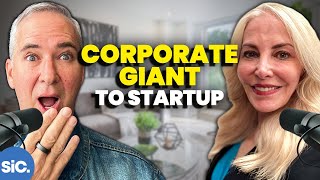
Mimi Sommerman, President & COO of Equilibrium Labs, runs two brands: Deliverance, a 17-ingredient nutraceutical sold direct-to-consumer and through physicians, and a clinic-in-a-box liver clinic with three-year licensing agreements. She discusses scaling challenges when sales outpaces operations and her focus on building processes after seven months in the role.
Questions this video answers
Arizona, USA.
Three years.
17 ingredients (proprietary formula).
United States and the United Kingdom (other countries in discussions; Canada mentioned as requiring Health Canada review).
About seven months (she states she is in her seventh month).
Chapters
Sometimes the founders are talking about all their visionary things and so I listen and then I ask questions about moving certain things ahead and how can we do that or make a recommendation on how we do it is probably more common. Get their input on what we're working on. Help them feel like they're part of the decision and that they're involved and that they feel respected at all times. And I always keep in mind that they have the best intentions.
Our guest today is Equilibrium Labs President and COO Mimi Sommerman. Mimi has a proven track record of delivering results and exceeding expectations in challenging and competitive environments. Equilibrium Labs is an R and D organization advancing blockchains and related systems. Mimi and I met at Dave Asprey's biohacking conference in Dallas earlier this year. She's got a crazy strong background working at PepsiCo, has her MBA, worked in brand management and it's amazing to see the skill sets that she brings from big corporate brand like Pepsi and working across that organization and then bringing it down into an entrepreneurial, high growth organization operating currently in two countries. You'll love this episode. We'll see you on the inside. You can also watch this episode on our Second Command podcast YouTube channel. So Mimi, welcome to the Second in Command podcast.
Thanks Cameron. Happy to be here.
Yeah, nice to see you again. You and I met earlier this year. We were in Dallas at Dave Asprey's biohacking conference in in Dallas. And then I later saw your, I think CEO in the UK at Tim Gray's Health Optimization Summit. So I kind of bumped into your company at both of those events. And when I met the group and you in Dallas, I was pretty taken by the brand and the buzz around the booth. Can you tell us, just so that people who are listening that don't know what Equilibrium Labs is and what your products are, what was it about in Dallas that had everybody around your booth? What's your company do and why was there so much interest?
So our company has two brands, two primary brands today that will change in the future. We have the liver clinic and we have a product, a nutraceutical product called Deliverance. And so what we were doing at the show is we were doing liver scans with the best in class equipment that measures liver fat and liver stiffness. And the awesome thing is that Deliverance is proven to reduce and improve liver fat and liver stiffness. So we would scan people, they'd be super excited about the results. And then they were buying 30 packs and more, signing up for subscription so they can improve Their liver health.
And that was kind of exactly what happened to my wife and I. We saw what it was. We knew we were at a conference where there was some legitimacy. We did the scan, went, holy crap. And even though we were both healthy, we bought all the products. Is that kind of a, you know, if you think about the. Gosh, who was it that did the early majority, late majority, early adopters crossing the chasm. But you're still very kind of like early adopter or innovator still.
Yeah, absolutely. We're just launching the concept of the liver clinic here in the US and we've opened our first few liver clinics and it's a clinic in a box. So we're not renting space and opening clinics. We're partnering with doctors, and particularly functional medicine doctors and others that are like minded and interested in prevention. Right. And then they introduce this whole liver clinic within their business and they basically optimize or monetize, you could say underutilized space.
Okay, and is this operating like a franchise, like a license agreement? Is it a distributor model? How does it work?
Oh, it's. So we have several models with the liver clinic, it is a license model. So we reduce the kind of barriers to entry. So rather than a doctor having to go get a loan and finance the purchase of an expensive piece of equipment, this fiber scan, we have a license model that makes it very easy for them. And it's a three year agreement. Now the distributorship part relates to deliverance and so we are doing that as well in various countries.
Okay. So that, that side of it makes sense. Now the doctors are going to be able to talk to their patients about this. But is it, is it more of a, a pull model where you want patients looking for these clinics, Are you going to be doing both the push and the pull and marketing or you know what, what's the purpose for being at these, these biohacking conferences is to find physicians or is it to generate brand awareness for the customer or both?
It's all of that. So it's definitely push and pull. Right now the focus is push because we haven't turned on marketing. So we open up liver clinics by partnering with these doctors. They get trained, fully trained, you know, certified and operating the equipment by our partner, EchoSense. We train multiple people in their office and then they can market to their own customers. Now an additional offering and the pull will start to happen as we start to market the brand and I guess.
As you generate PR and that kind of stuff too. Is that part of the plan?
Correct? Yes.
So when doctors are marketing this to their clients, it's not their core business, right? They already have clients, they already have other services that they do. How do you become top of mind with those doctors? What do you do so that they're talking to every patient about you versus every tenth patient about you.
So liver health is a huge concern, right? In the U.S. 38% of people have fatty liver disease and people don't know it. And if you look at some certain populations, it's very high. Young people are spiking with liver fat problems. So functional med doctors are very interested in prevention. And that's our model. We want to prevent people from getting sick rather than waiting till they get sick. So our model is very different than big pharma, which treats illness. We want to prevent illness. So the doctors that we work with are like minded, they're into prevention. And when we go to these conferences, we're going to one next this week actually in a few days in Nashville. And it's very much of a practitioner show. And the idea is to introduce the concept to them, right, that we can find out how healthy people are if they're in the green, great yellow or red and those are their ratings things on the results of their liver fat and their liver stiffness. But we have a solution, right? So then they, they can then sell product to their patients and they do monetize that. Right. They make some money but they help these people and then they can put them on a subscription so people get well and they can then rescan them at three months and the proof is in the pudding, so to speak. Right. You rescan them after they've been on deliverance and we see improvement in nearly every case. If somebody doesn't take their deliverance, they're not going to get improvement. Right. And people who do modify their lifestyles will get improvement faster.
Yeah, it makes a lot of sense. What about the, the direct to consumer? Can you sell the deliverance products direct to consumer or will you only be going through Physicians office or is there a transitory period where you're kind of doing both for now, but we'll move away from one.
We're going to be doing both and putting our pedal to the metal on both. And that's our growth plan. We're already selling direct to consumer and we are soon going to be unleashing that meaning really putting a push behind it. The ingredients are all approved by the fda. The FDA doesn't approve nutraceuticals, but the ingredients are approved. So it's already in distribution. It just is at a smaller level. It's also a global brand. Right. So we have clinics in London. We have several clinics here in the US now that we've just opened recently. But back to your question, we'll be doing both.
So it's interesting you said. So the FTC does not. Fda, sorry, does not approve the product, but they approve the ingredients that are in the product.
That's right. That's their view of nutraceuticals. So all the ingredients are approved. So therefore the product is. It clears fda.
Okay. By default.
Yes.
Okay, that makes sense. So you don't need FDA approval because the ingredients are already approved.
Correct. And they do not. That's not something they do anyway. Right. With regard to Nutraceuticals.
Interesting. What are a couple of other nutraceuticals in other spaces that we would know the names of so that we understand kind of the comparison.
Okay, so I'm thinking of things I have in my cupboard with. They would be standard supplements that people take. Sorry, I'm just not having it off the top because I don't think of other brands that much. But I'll give. Give me just a second. Turmeric. Okay, so turmeric is a product that people take. They'll just buy it as a capsule. Our product is an elixir. Right. And so elixirs absorb, they're more bioavailable. But turmeric is an example of one that you might think of. Ginseng is. Is a product that you will find is the nutraceutical in various forms as well.
Okay, makes sense. So. So you're kind of in that same category then?
That's right.
And has that been. Was that a hoop that you had to try to figure out or did you just know that right from Incep? Were you going down a path at any point where you thought you were going to need to get FDA approval and you didn't or change the style of the business to avoid that?
So our founder, Siggy, our founder and CEO, and he's my dragon, as you said, he developed this product over the course of 20 years and went through many iterations that he worked on optimizing, you know, all ingredients, the amounts of all the ingredients. It's a proprietary formula. And so along the way he explored everything with regard to the product. It has 17 ingredients, you know, organic ingredients, some of the best available out there from the best places that it all comes together into this amazing elixir.
But, but I'm sorry, but I'M curious, was was he ever going down the path that this was going to need FDA approval and did he have to switch off that or was it always that it would be an elixir style?
I believe it was always an elixir.
Okay.
Yeah.
And the reason, the reason I'm asking was it just, it seems to me that it's a very complicated industry when you're dealing with big pharma and when you're dealing with FDA and you're dealing with like that kind of a space, but you're, you're kind of straddling the medical space and the. Well, I guess, yeah, you're still in the medical space. Right. Do the doctors have to get any kind of okay for this to be able to do this work and do these treatments?
What they do is they just have to. Their office, their staff need to be certified in liver scanning and that's the training program that we provide. So each person that is trained gets a certificate. I now am a super user, so I'm authorized to actually train other people. I just went through this last month. So essentially what we do is there's pre reading, classroom training, hands on training, and then post scanning where they show how their scans are delivering and there's images of each scan. The machine uses ultrasound and shear waves and then AI to interpret it. So it's not an actual picture of our liver, it's an interpretation like you would get in an ultrasound.
Is it different in any countries and how many countries are you operating in.
With, with liver clinics? We're in the US and the UK and we're talking to other countries as we speak. Deliverance is also in the US and the UK and other countries are coming on board.
And then is it similar with their, you know, government, whatever that you have to go through? Are they similar to the fda or does the FDA give you a kind of a head up because it's so restrictive already that if you're FDA approved or if the FDA is okay with it, you've almost got a door open in these other countries.
Well, because the ingredients are FDA approved, that certainly helps, right? Because other countries like that things are approved here. However, in other countries, say Canada, you still have to go through Health Canada approval. And that's the same in other countries as well. They're going to review what we have, our science and other information to provide clearance for us to distribute there.
I guess the last question on the, on the kind of logistics of all this stuff is manufacturing and formulation. Where do you do formulation and where do you do the manufacturing?
The manufacturing is in Arizona, usa.
Is it cheaper to do? You know, when manufacturing of hard goods tend to be done offshore? Is the manufacturing of nutraceuticals just so much easier and cleaner to do in the United States than it is in other countries? Or why is it. Why can you do it at a cost basis that's reasonable in North America?
So a couple things. This is a premium product, so we're less oriented around cheap and we're very oriented around quality. So quality is our primary concern because it's premium. And so we do source ingredients globally, so we have the best of each ingredient that is a part of our product and that then is sourced here. And those ingredients don't come from China, by the way, so don't be worried about that. They come from other places. And so then we, we have, we. Then they get combined here into the elixir and packaged and then, you know, prepared for sale.
Interesting. All right, so you, you've been with the organization for seven years?
No, not seven years.
I thought. I thought you've been there for seven years. Why did I think.
No, six months now?
Seven months. Okay.
Yeah, I'm in my seventh month.
Right, okay, good. Similar question, but then slightly different perspective on it then. One of the things you said before we went live was that it feels like you're kind of getting all the packages ready to put on a train and you're getting ready to load them on the train, but the train's already driving down the track and you're running to try to catch up. And the train needs the stuff that you're posting, but you know, you can't slow the train down. What's that? Can you give us some examples, some specific examples of what, what's going on that makes you feel that way and how are you dealing with that? Part two of that. How are you dealing with that kind of feeling? When you are new to the business in the industry, then how do you wrap your head around a train that is going that fast? How do you learn it that quickly?
Well, so Sigi feels like sales comes before operations. So you get the sales and then you worry about the operations later. And so that's one of the challenges. Right. So the sales come in and then I develop, I develop the process while we're working on selling. So it's concurrent so we can get things in place. For example, liver clinic license agreements. We already had deals happening and I had to get the agreements together. And then the process to make sure we were going to Give them everything. So for me, how does it feel? So I started in a big company, one of the biggest companies, and along my career, I've got moved to smaller and smaller companies and worked for a number of founder entrepreneurs. And so I'm really accustomed to moving fast. So for me, I'm okay with that. But it takes a certain kind of person. It's not only moves fast, but it's super flexible.
How do you be flexible? And, and we talked about this before we went live, that, you know, our job as the COO is to often be the leash to their Dragon, but we don't want to choke them, you know, we want to almost save them from themselves or keep them within their swim lanes. How do you stay kind of nimble like that and, and stay flexible like that without being too flexible, you know, without letting the, the dragon take full control?
It's a balancing act for sure. And, you know, the Dragon is full of passion and vision and all those things, and the, the operations portion of it and the process stuff can be boring to the, to the founder, but that's what I need to get done. So I choose my battles and talk about the most important things and ensure that we're focused on the most important things, that I'm getting him involved where it matters most. Other things I put to the side.
How do you choose your battles and how do you decide what to put to the side?
I prioritize everything and some things I can. We're very lean, so I haven't hired yet in the US So I wear every hat. Some days I put on a finance hat. Other days I put on a legal hat. Other days I have operations. Other days it's more admin. Right. So the things that are, are coming due that are required, say in fundraising, we have to provide certain documents. That's a very high priority. So we need funds to do marketing. Right.
So some of that is, is being able to say no to them or not now to them or to ask them more questions and kind of choosing the battles or doing it delicately. Can you speak to what it's like to work with those entrepreneurs when they are going, when the company is growing so quickly? How do you ask those questions, make the tough statements, try to pause when pausing is needed? You know, can you speak to some of those?
What I've learned to do is I've worked very hard during my career to become more patient with people and to understand and try and understand their point of view. And sometimes the founders are talking about all their visionary things and So I listen and then I ask questions about moving certain things ahead and how can we do that or make a recommendation on how we do it is probably more common. Get their input on what we're working on. Help them feel like they're part of the decision and that they're involved and that they feel respected at all times. And I always keep in mind that they have the best intentions. Of course that's what they're doing.
It's their business. Right. Of course they have the best intentions because they're doing it for that whole, you know, for all the reasons why they do it.
Correct.
You mentioned that you've got two brands currently, I guess with the Liver Clinics and Deliverance. But that will change. What will change around that? Is there more brands to come? Are there more products to come? Or you're going to have to have different brands in different countries. Can you speak to that?
There are more brands coming. We will. I can't speak to the details yet. They're kind of in the secret stage right now. We will start to test products probably next year. So in the next year or two we're going to start to see line extensions for other uses that with the core being Deliverance. But Deliverance has so many benefits that we're going to be working on. That's already in process with Siggy, our formulator and founder. Right. So he's already working on these other products and some other research studies are starting as well.
What's the purpose for going the route of having physicians telling their clients about it versus just building a nutraceutical brand that in and of itself has enough buzz, enough marketing and enough client demand, they buy it.
That's a really good question. So we're building the value of the company. And there is. When you start at the foundation, right. It's. It's your profitability, it's your ebitda and there's a multiple on ebitda and that comes from revenue. But then you have a multiple on top of that, which is the intellectual property. But the big multiple and the Rembrandt in the attic is data. And liver clinics, while they do something amazing for people, they help us prevent, find issues with people and help them not get sick. But from a business perspective, it's the Rembrandt in the attic and that's the data and the data will come from liver clinics. So that's why we have sort of a well rounded approach to this.
Yeah. I was curious whether the liver clinics were more of the moat in trying to Prevent competition. If you had all these clinics that. That it was hard for others to come into the space. The concept of the Rembrandts in the attic is if you and I were out buying a home, and we were both in Santa Monica, and we're walking down the beach, and you see this home, and you offer $10 million for the home, and four other people that day offer about $10 million for the home, AND I offer 13. You're like, Cameron's crazy. Why would he offer 13 million? Well, I went into the home and walked around, and I was up in the attic, and I saw these two Rembrandt paintings. I realized they're each worth 5 million bucks. So I'll buy the home with all the contents for 10, you know, for 13 million, because I got $10 million for the paintings. And most businesses don't look for the Rembrandts in the attic. The hidden value. And that can be like your customer list, your employees, the data, IP trademarks. You know, what are the things that you did as an organization to discover the Rembrandts, and how do you try to build out and establish more and more value around that? And a third, I guess, is, when do you know that you've done enough with that one, that you've established enough value that you can stay focused on building the business?
Well, building the business will create the data. As we build liver clinics, or not build them, but open more liver clinics, there will be more and more data, patients using deliverance and the results of that use because of multiple scans and those kinds of things, all the data that would be entered. They stopped eating hamburgers all the time, for example, or they changed their diet, they started exercising more. Whatever it might be that is related to an individual is data. And so all of that will just. It will grow and multiply as we grow and multiply the number of liver clinics. Okay, you know it.
So you know that the data is a Rembrandt, but you're not focusing cognizantly on building the value of that. You just know that it will. It will combine or become more and more cumulative as you have more and more clinics doing the work.
That's right.
Okay, makes. Makes a ton of sense. All right, can you. Can you walk us through maybe what you've done in your career to be able to come into an organization like this that is on a big. A big kind of growth trajectory? You're kind of getting close to an inflection point. It feels like now, too. Walk us through some of your Career in getting here. And then I want to talk a little bit about what it's like to go from some of the bigger organizations to more of these entrepreneurial high growth organizations.
I joined Pepsi after my MBA at ucla. I worked in brand marketing, field marketing, general management, operations. Had responsibility for manufacturing, logistics, sales, all channels of trade. You know, you could wherever you would find the product, right? Chain, food, drug, mass convenience stores, et cetera. So it gave me a very broad understanding of all elements of the business with P and L experience early in my career. From there I moved across industries. We owned restaurant chain at the time. I moved there for several years. Also have been on the agency side leading accounts and selling and managing accounts and then went back to restaurants. And each time I made these moves it was a smaller company. So I went to generally smaller companies and different kinds of ownerships. So I worked for a couple of companies that had private equity ownership, worked in a retail space, jewelry space, also private equity, dealt with several transactions, contributed significantly to that process. So I became very comfortable and always have been comfortable working with finance and legal. My undergrad was finance, so I'm a quantitative person. Math award in high school. That was sort of my foundation. But that's too far back.
It's actually not because I think a lot of people don't recognize the necessity for people in ops to be good at math because we have to actually understand the balance sheet and cash flow and P and L. We have to be able to understand forecasting and margins. We have to be able to understand the analytics in different parts of the businesses that we might not have domain expertise on. We have to be able to understand how we make decisions based on the inputs and the outputs we're looking for. So I think math is super critical. But I think the biggest thing that you've got from, for transitioning from a big company to a small tell me if you think this is right is the Pepsi brand management. I look back at anybody who's a brand manager for Unilever or Procter and Gamble or any of those great brands like you were a part of that was a real world mba. I mean that has to be more valuable than your actual mba.
I'm thinking about that. I think it was probably more valuable in a different way. My MBA was heavily quantitative because UCLA fires competence and calculus to get in. So. But, but Pepsi was incredibly valuable. And they're different than other big companies because you have to figure it out. They give you some training, but mostly figure it out and it's up or out and so you figure out how to get things done and get results. And then operations was very much about leadership there. And I managed all kinds of people. Blue collar workers, white collar workers, dealt with people stealing cases of Pepsi and how to terminate them, which was the stupidest thing they ever did in their lives. But I also grew up in the barrio in LA and so I'm very grounded in real people and very comfortable with them. And I think all of that has really helped me as I've worked with smaller and smaller companies and founder think.
About the bigger organizations like the Pepsis and dealing with the cross functional matrix decision making and teams and the bureaucracy and corporate and 100 years of legacy and systems to these entrepreneurial organizations where it's all new and we're figuring it out as we go. And as you said, we're trying to load up the cases that are critical and put them on the train. But the train's already going and there's no way we're going to slow the train. We actually want the train to go faster. What do you need to unlearn from the bigger businesses that is allowing you to excel in the smaller high growth.
Companies in the really big company, particularly in operations? I would say the orientation was process improvement and I want awards for that. Right. That's taking a process that exists and making it better, you know, making things more profitable, delivering 15% growth on EBITDA, things like that. Fast forward, small company, no process to improve. It's process creation. So it's creating all the processes that need to be in place, finding the resources, the you know, very softwares that will do things for us that are optimal for our situation and then putting them to work for us. I'd say that's one of the biggest differences as well as there aren't necessarily the teams to help support in that process improvement in process creation. I haven't hired the people yet, so I'm creating.
Is that a mindset shift for you that we just got to kind of roll up our sleeves and get dirty right now versus being able to hire the team and or rely on the team that's already already in place. Have you had to learn that as a skill?
I've learned it along the way. I was fortunate because Pepsi was about rolling sleeves and doing a lot of things with various technical expertise. Right. We had to do our own analysis. Other companies I had an analyst rolling the sleeves up started happening as the companies I worked for got smaller and smaller. So I've had years of experience with that and that has definitely helped me be prepared for this point in time right now.
Question Just around, around some of the logistics of running the business right now. Curious what it is that you're doing for, you know, outsourcing and not hiring full time people, full time talent. Because I think there's a part of that that you're doing. Can you speak to that? Whereas, you know, growing businesses. Twenty years ago we were, you had to hire everybody. They had to all come to an office. It was all nine to five. You couldn't be fractional. You know, we didn't have the tools for that. How are you starting to leverage that now as a business and a brand?
Yeah, that's a really good point. So what we're doing is as we identify priorities like building processes for logistics and warehousing, distribution, bringing in somebody that's fractional on a project basis to help us develop that. Right. He's an expert, happens to be a man in this case. So he's helping us with that particular project. We are, we've brought in a US attorney also on a project basis. So it's not like full time people like you mentioned back in the day where they, you know, they were in the office down the hall or at a different floor. This is a, all these are all distributed working in different places in the country and in some cases in the world. Right. There's people we're working with in London too that do various things. We have a designer that's, that's been with us for a while in Spain. So we learn to adapt to time zones. You have to be really comfortable that you're not in an office all the time. And people have to be responsible. It's got to be, you know, like a core strength is responsibility that they don't need somebody overseeing what they're doing.
Yeah, totally. Right. I was asked by Fortune magazine 20 years ago, how do you hold your people accountable? And I said, I don't, I hire accountable people. Right. That I'm not going to try to hire people and become their babysitter in an earlier stage business. What do you think? And again, you're building a global brand too. Why are you operating already in two countries? And I think your founder was from the uk. Is that part of it? You, you're from the UK and opened in the US or have I got those talks backwards?
Well, he was born here but moved there and I don't even know his whole story exactly, but had one parents American, the other is European, but he started the business there and then Started expanding Deliverance here because he lives in multiple places. He lives in Arizona, he lives in London like you were talking about and then traveling a lot. And so the original plan was to scale there, but he decided it would make more sense to scale here because we are very much forward thinking in the US particularly on the west coast about health and wellness and interest in things like what's the next big thing? Liver health making, you know, advancing the future of liver health. People get really excited about that. And so that's when he brought me on, was to help scale this business.
What do you think he saw in you? I mean, besides the obvious of the Pepsis and stuff, what was it that he saw in you that had him decide to bring you on board for this? And because I think some could have been scared by the bigger corporate, the bigger business background for you.
Well, I think the first thing was a really good value match that we're aligned on how we view the world, how we treat people with honesty, integrity, respect. That that's really important to him. We both are people of faith. Not that that that's why he would hire me, but that's just, you know, it's a common, common thread. Now you're right about some people being scared by big companies. If I was working at Pepsi last year, there's no way I would be in this job today. It happens that Pepsi was quite some time ago. And in the meantime I've gone to various companies, smaller and smaller, more and more entrepreneurial, including retail. So I've dealt with that. I've dealt with tons of digital work, online sales. Right. So direct to consumer as well as in healthcare space. So because of the journey, I'm grounded in strong process and discipline. But I've developed great, a great deal of flexibility in working with people. And of course I have a background in flexibly working with people because of where I grew up. So I think all of that combined into me being the right person.
It's interesting if we, if we were to draw the line in reverse back to when you were starting your career, now it all logically makes sense, but you wouldn't have known back then that this is where you were going to end up and kind of move to and have all these skills, but they are, they're definitely like combining into the perfect match for a COO. I want you to go back to the 22 year old Mimi and give yourself some advice. What advice would you give the younger you that you know to be true today?
Don't stress so much and really work on patience.
I love it. Mimi Summerman, the President and COO for Equilibrium Labs. Thanks so much for sharing with us on the Second Command podcast.
Been my pleasure. Thanks Cameron.
Appreciate it.
Checker has taken the 1% pledge to pledge 1% of our profits, our equity and our product to social impact and we are investing tremendously in fair chance advocacy and awareness. I can't tell you how life changing it is for people and also businesses win or like society wins.
More from Cameron

Flutterwave Former Global Head of Operations Awa Kone | When Growth Outruns Operations (Podcast 611)







Optomi Professional Services COO Nick Murphy | The COO Can’t Know Everything (Podcast 607)


