What is a Bitcoin ATM? | Scott Buchanan, COO Bitcoin Depot (Podcast 336)
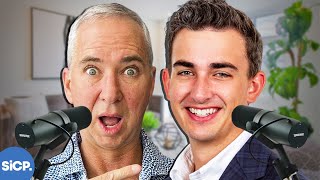
Scott Buchanan, COO of Bitcoin Depot, explains how Bitcoin ATMs convert cash to cryptocurrency and serve customers without bank access. The company operates roughly 6,500 kiosks across 48 US states and Canadian provinces, holds about 24% US market share, and went public on Nasdaq in June after growing from 10 to 200 employees.
Questions this video answers
June 30, 2023
Roughly 6,500 kiosks deployed
48 states (all except Hawaii and New York)
20,000+ cash collections per month
Roughly 200 employees
Chapters
Bitcoin atm. It looks a lot like a traditional atm, but with just a big touchscreen on the front for us to interact with the customer. And they exist so that consumers can convert physical cash to Bitcoin. So people walk up to the kiosk, they enroll with the touchscreen, enter some identifying information, and then they insert cash and we send Bitcoin to their digital wallet. And the reason these exist is for people that are underbanked or unbanked or just choose to transact with cash, this gives them a means to access the cryptocurrency, the ecosystem. Whereas the traditional exchanges, you have to have a bank account, and that's really the only way to fund your account. We serve more of the lower income underbank community as one of our core customer bases. And that's kind of the purpose of Bitcoin ATMs.
All right, so we've got a great episode today. We have Scott Buchanan, who is the COO for Bitcoin Depot. They are a digital ATM service all over North America. They're in Canada and the United States, and they provide a crypto service for people that are traditionally kind of underbanked. So the people that can't really take money out of their bank account and deposit it, they're not a coin, they're not a shitcoin, they are not an exchange like FTX or Coinbase. They are literally like the ATMs that you see where you go in and you buy, take out money. This is a place where you bring money, you put it into the ATM and you walk away with Bitcoin, which is a really, really cool service. About $50 million in profit in the company. Last year, they just took the company public. They're on the Nasdaq and you're going to love learning from them and learning from Scott into their growth. He joined the company when There were only 10 employees. There's 200 people there now. I think you're really going to enjoy the episode. You'll really enjoy learning about this space. They have 25% of the current US market, and they're just continuing their growth. So we'll see you on the inside. Also, maybe you want to check out this episode on our YouTube channel as well. So, Scott, welcome to the Second Command podcast.
Thanks for having me.
Yeah, very much. Looking forward to this. Actually, I've been involved in the crypto world for about 10 years, heavily for about the last seven years. But I was first introduced to bitcoin back in 2014. I was at the main TED conference and they gave us a bitcoin and they said that the value of it was a hundred dollars at the time, but it was this piece of paper and we had had to take this long key and go do something with it. And I remember just thinking that was really stupid. And so along with the rest of the gifts that I got, like the socky water bottle and the thumb drive that got tossed in the garbage. And then I guess about four or five months after that, there was a guy in Vancouver, Canada who was started accepting bitcoin. Roger Hardy from Clearly Contacts. And so I kind of jumped on the bandwagon and people thought I was crazy for accepting it back then. They still think I'm crazy for accepting it today. Do you get the same kind of response like why are you in the crypto world? Why are you in the bitcoin world?
Yeah, it's great hearing you got in so early. We got that a lot more back when the company was starting compared to now. Now thankfully that we've been around six, seven years, we don't have that question as often. But back when I started at the company in 2019, I got those questions from my peers about why I was joining a bitcoin company that just didn't understand it, didn't understand the long term potential, and especially the fact that I was joining a bitcoin ATM company, which sounded even crazier.
And then all of a sudden you go from, you know, from being involved in it when it was kind of moving up towards its high, and then you go through this massive market crypto winter where it just crashed, you know, down by 75%. How did you answer the questions of your peers and your friends then? And then how did you answer the questions to yourself to stay involved in a company through something like that?
Yeah, I think that's one of the things that's interesting about our business is that we're thankfully haven't been very correlated with the price of bitcoin. So from just business metrics and me internally, it was easy to see why I was still here. Because we continue to grow throughout that period. We see that our customers use the kiosks for use cases different than speculative investment that a lot of exchanges see volume based on and then peers externally. I mean you definitely get the questions of hey, bitcoin's dying, why are you still there? How's the company going to keep growing? But being in the company and seeing the actual results, it was always very encouraging.
Right. And it's just a lot more fun than working at Their accounting firm or law firm or wherever they happen to be.
Added bonus for sure.
So walk me through the core of what your model is, because I think you just touched on something that you are different from an exchange and you're not actually a currency itself. I don't think you're actually based on a coin. So walk us through what the Bitcoin ATM is and how people do use it.
Yeah, so a Bitcoin atm, it looks a lot like a traditional atm, but with just a big touchscreen on the front for us to interact with the customer. And they exist so that consumers can convert physical cash to Bitcoin. So people walk up to the kiosk, they enroll with the touchscreen, enter some identifying information, and then they insert cash and we send Bitcoin to their digital wallet. And the reason these exist is for people that are underbanked or unbanked or just choose to transact with cash. This gives them a meaning. Means to access the cryptocurrency ecosystem. Whereas the traditional exchanges you have to have a bank account and that's really the only way to fund your account. We serve more of the lower income, underbanked community as one of our core customer bases. And that's kind of the purpose of Bitcoin ATMs.
You've also got to be serving the, not necessarily underbanked, but the kind of gray market or the black market, I would guess. Right.
People that, well, that's a common misconception. We still do all the same KYC AML that the exchanges do. We have a over 20 person compliance team with well over a hundred years of experience and we collect identifying information from every customer. And we potentially are more secure than all my exchanges because we have a camera on the kiosk and we see who's in front of the kiosk when they're transacting and we can match that to their IDs. You can't really account share like you potentially could on other digital platforms where you have a little more anonymity because no one can see you. So it's definitely not serving the black market or gray market, but that's a common question we get for sure.
Wow, okay, so that's a huge, huge insight then that I didn't know. And I've been, again, I've been involved in the crypto world for, for 10 years. And I actually ran a private currency 22 years ago, 23 years ago we had 30,000 companies buying and selling using our digital currency instead of the US dollar. And so I'VE been around this space for a long time, but my big assumption was that 80% of your market would have been the, you know, the underbelly, the, the criminal world or the people that are really wanting to stay off the grid. So because of the camera system, that's not true at all then?
Yeah, I mean, there's always people trying to get around the system. Right. So I'm sure it's hard to prevent all of it, but yeah, it's not really an easy path for them given the. The camera system. And you have to physically go to a location Right. Where the store has cameras, our kiosk has cameras. It's not anonymous at all.
So nobody's standing there with a duffel bag filled with cash, shoving. Yeah, okay.
We'd be awfully profitable if we could, but we know we spent all that.
Yeah. Would you ever. Now? Okay, talking about the underbank then. Now, how many markets are the ATMs in currently?
Yeah, so we're currently in 48 states. Everything except for Hawaii and New York, and then we're in all the provinces in Canada.
Interesting. Why not New York?
Yeah. So New York has a special license for cryptocurrency called the BIT license. It's a long process. We're currently in the application phase still and we hope to get a license soon. And we're very eager to install kiosks there as well.
And is that I helped build a company and we had to open up in New York. It was called 1-800-GOTJUNK. And I remember when we were opening up in New York about 20 years ago, we had to go through all the anti mafia legislation. Is. Is this kind of tied up in that as well?
Not. Not so much, but I think it just goes to. New York does have a lot of legislation and they just have the most difficult cryptocurrency license to get in the world right now. And so it's just a long process to get approved for it.
I remember our whole leadership team had to go down and get fingerprinted at the police station. I'm like, we're opening a garbage company? Like we're not.
Yeah, we have to do that for all the states we get fingerprinted and all those databases. Yeah.
How is it opening up now? This is. I can ask this question as a Canadian because I understand, you know, Canada a little bit more, but how was it opening up in Quebec? With Quebec, you know, the French civil code and the laws in Quebec, was that as tough as New York?
Different. Different challenges, but it was definitely Tough. We expanded into Canada thinking it was the easiest next step from the US and it was largely just outside of Quebec. Quebec, for example, has special stickers we have to put on every kiosk to number them and label them and file returns for each location. You added to the French language, obviously for customer support and for the kiosks language. So it was definitely more complex than anywhere else we've been in currently, but they were at least quicker than New York's been in getting this license.
Okay, so you started with the company about five or six years ago. You've been through quite the kind of the growth. How many states and provinces were you operating in when you got there?
Yeah, I don't know exactly, but we were probably in 15 states or so when I got there, and no provinces.
And is. Is the legal side of the business and the accounting side of the business, is that really the crux of the business once you get going, or is it more of a real estate play?
It's more of a real estate play in logistics. So to grow the business, the two of the biggest factors. One, securing locations. So our sales team has to go and sign leases essentially with all the retail locations where we place the kiosks. And we have roughly 6,500 of those kiosks deployed right now. So it's a lot of different leases. And then the other piece is the physical logistics of moving the kiosks, collecting the cash. Right. So we're taking physical cash into these kiosks. We got to work with the armored carriers to collect the cash. We do 20,000 plus cash collections every month at these kiosks. So there's a lot of logistics involved there. In addition to installing them initially and maintaining them if any parts break. So those are the two biggest pieces of the business.
Yeah, it's interesting, the logistics. It's funny, I forgot about the cash. I was like, wow, it's easy because you don't have any cash. You're not taking cash out of the machines. You're in the pretty cash. You're taking the cash out. So you do have to deal with all that then.
Yeah, yeah.
Where do they find the locations? Where do you find these 6,500 locations?
Yeah, so they're primarily in gas stations and convenience stores. That's our biggest kind of type store type. But they're also in malls, grocery stores, et cetera. Our largest partner is Couchtard Circle K. We have about 1500 locations with them, and we've got an exclusive agreement where they're. We're Their sole provider of cryptocurrency in Canada and the U.S. interesting.
Yeah. Circle K is just opening in Canada now as well. Now, do you have any kind of a barrier that you're not allowed to go and work with, you know, any other of the retail chains and gas stations or.
No, thankfully not. No, we're not exclusive from our side. We can go inside any retailers we want. But we do have an exclusive arrangement on our side where Circle K can't install other Bitcoin ATMs.
And is anybody talking to Starbucks?
No, we haven't. We haven't been talking to Starbucks. It's an interesting thought. Generally, the store size is much smaller, and so the space is at much more of a premium. So it might not be the right fit, but it's an interesting thought.
Yeah, Starbucks for me is intriguing just because it has a demographic that's there every single day. They're walking in with cash. They're on every street front, like they're. They're kind of hardware. But I think some of those plays might be quite interesting, and it is. They've always had this intriguing approach to me. My old mentor was being groomed as the COO at Starbucks when I was the COO for 1-800-got junk. And they always had this interesting partnership model that would bring traffic into their stores, too, where they did music for a long time and then they did games, and then they did, you know, all the ancillary products that were similar to the coffee space. But, yeah, interesting to see where you guys are going to be ending up. So in the last year or so, you, as a company have gone public. What was that like?
Yeah, so it was actually June 30th this year. So even less than six months ago, we went public on the NASDAQ. We went through a de SPAC process, and it was definitely an exciting and challenging process. Some of the challenges were the fact, obviously, the crypto was in a turbulent time. Crypto has gotten a lot of scrutiny from the sec, other regulatory agencies. And just coming off the back of the FTX collapse, there's a lot of uncertainty around crypto. And so going through that public listing process during that was. Was definitely challenging. And then also SPACs had been really popular a year and a half, two years ago, and we were kind of on the back end of this. And so SPACs had also kind of lost their luster for a lot of people. And so pushing through that and raising the capital we needed was definitely challenging as well. But we learned a ton as a group. We raised the capital, we got through the legal process, went through our audits with KPMG and just matured a lot as a business. And we're excited to be listed.
Now what was some of the learning that came through that? And actually before you say that, just because some people don't know what a special purpose acquisition company is, define what a SPAC is and how it's different from maybe a direct public offering.
Yeah, so a SPAC's different in the sense that the SPAC sponsor founds a SPAC and goes public. Kind of more traditional route with the spac, but the SPAC is just set up as a fund of cash essentially. So people invest in the spac, it has a couple hundred million dollars and the SPAC company's whole purpose is to find a target and then do a reverse merger. So a SPAC finds us or we find a SPAC and then we come up with a merger agreement and we essentially acquire the SPAC and we become a publicly listed company by acquiring them as an already listed company. And so it's kind of just a reverse process of a more traditional IPO where no one's listed, the company decides to raise capital directly and then get listed. The SPAC process is slightly different and can be quicker because there's already a publicly listed company in the process that's raised the initial IPO capital.
And then what was some of the learning in the process then? You know, from, from the, hey, we're going to, let's do this to, you know, we got it done. I'm sure it was only a couple weeks work, right?
Yeah, it was a little over a year long process. We learned a ton about the capital markets, how the capital markets viewed crypto and how they viewed SPACs. And the overlap of those two things were especially challenging. But we found some great small cap investors that are now large holders of the business that we're excited to grow with. We also learned a lot on the legal side and regulatory piece, navigating that SEC process, filing several hundred page proxies, answering SEC comments. We learned a lot about how to get companies through that private to public process and what the SEC is going to be digging in, digging in on. And then specifically within that was the accounting and financial reporting side. And we're audited by kpmg, which is obviously a great firm and just moving from that private company startup mindset to public company, intense reporting, internal controls, all of that. We just took a lot of steps as a group and matured all those processes to get through the SEC listing.
Do you think it's going to make you a better run company now that you have to go through all of those regulations and now that you had to go through those hoops and just kind of formalize stuff versus being entrepreneurial?
For sure. So it's definitely made us a more mature business and more attractive to a lot of different investors. When you're in that startup mindset still, you, there's a lot more risk for an investor coming in, right? You're not sure if they're doing financial reporting correctly, you're not sure how they have internal controls around cybersecurity, you're not sure all these things. And once you go through the SEC process, you get a lot of validation because you've had all these big law firms, the sec, kpmg, looking with a fine tooth comb and kind of signing off and saying, hey, you can be publicly listed now. And so I think establishing all that puts us in a much better place for growth in the future.
Where do you go from here? I mean, now that you're public, do you do another raise of funding as well or are you good for cash now for a period of time?
Yeah, so. Well, thankfully we have more flexibility there. We've actually been profitable since month one of the business. We've never been a cash burn business and so we're generating cash every month. So there's no need to fund the business by raising capital. We might do an additional capital raise at some point if we have a specific growth opportunity, like a large acquisition where we'd want to bring in more cash to the business to fund that. But we don't have any specific plans for it right now.
Was this just a liquidity event, a way for some of the founders to take some cash off the table, or what was the purpose for going public then?
Yeah, the primary purpose was acquisition. So in the Bitcoin ATM space, there's dozens of Bitcoin ATM operators with some scale around North America primarily. And none are public and none are private equity owned. So us going public, we want this public currency, once we're more stable and past this SPAC process, to use that public currency and cash to roll up some of the competition. We think the space is really prime for that type of strategy and consolidation. We currently represent about 20% of the global market of Bitcoin ATMs. We're the largest, but there that means there's a lot of space for us still to acquire other companies. So that was the primary purpose and then obviously the ability to have public equity for compensating employees, for liquidity for the founder. That's nice as well. But our founder still owns roughly 80% of the business even after we've gone public. So he's still fully committed.
Wow. Interesting. All right, so I was just over in Africa a couple times in the last 12 months, and in, I think it was in Kenya or Uganda, I saw something called M? Pesa, which is a digital mobile currency phone based. Are you guys moving into the Africa market at all to go after that market, or is there just so much left in North America and Europe and Asia?
Yeah, so there's still a lot of room in North America. We are primarily focused here still over the next 12 months for sure. But we are exploring international opportunities. We started making contact with some small bitcoin ATM operators around the world and just seeing where it might make sense to do an acquisition there and kind of jumpstart the expansion internationally with an acquisition.
So you said you've got 20% of the market is what you are globally? Yeah, globally. Okay. What percent of the U.S. market are you?
Like 25, 24% or something? Over 90% of the global Bitcoin ATMs are in the U.S. okay.
So years ago again, when I was being mentored by Greg, who is the incoming kind of CEO at Starbucks, I was asking him why they did no advertising. And he laughed and he said, you just don't recognize it as advertising. I said, okay, you know, Yoda teach me. And he said, well, on your way from your home to your office, that 15 minute drive, how many Starbucks locations do you pass? And I kind of counted. I said, I passed five. Five locations. And he said, you always go to the same one, don't you? And I said, yeah, I always go to the same one. I pass five others. He said, the five other locations are advertising for the location you go to, and your location is advertising for one of the ones you don't go to. So what he was showing me was that they were so ubiquitous because their locations were their advertising. At what point do you think Bitcoin Depot is so ubiquitous that we are seeing the machines everywhere? Now, I haven't lived in the U.S. to be fair, for the last two years I've been traveling globally. So I'm not bumping into your machines. And I'm also not walking into Circle ks. You know, I go to the gas station, I fill up and leave. At what point are. At what point is everybody seeing these machines? At what point is it, you know, where. Where is saturation yeah, it's a great question.
It's interesting. Thought your mentor mentioned about Starbucks. I don't know what the saturation point is, but with 6,500 and roughly 6,300 of those in the US they are getting a lot more common. And attribute that mostly my opinion to when we talk to investors. They used to have never seen one and now most investors we talk to have seen one and they know what it is.
I've seen one. I've seen. I recall seeing one. I'm not sure if it was yours or not, but I do recall seeing one. But that can't be saturation, right? Like you've got.
No, we're not at saturation. Yeah. And I don't know exactly where that is, but I think we're getting, I think we're getting a lot more visibility and knowledge of the industry than we used to have.
I remember back when we did a marketing survey at 1-800-got junk around 2006, we were just hitting 100 million in system wide sales. And we did a survey where we asked two questions. First one was if you needed to get some old stuff hauled away and we kind of named the stuff without using the word junk. We said, who would you contact? And 1,800got junk didn't even come up in the survey results of 5,000 people in a meaningful number. And then we said, have you heard of 1,800 got junk? And it was 3.4% of the people had heard of 1,800 got junk at 100 million in sales. We were, we were just outside of the margin of error of the survey. So I was like, let's not even bother wasting our money on the survey for the next three years until we get to half a billion dollars in revenue. We're not even worried, like saturate. We're not even close to saturation.
Yeah.
Is 60,000 machines saturation for you? Do you have a ballpark or.
Well, for us or for the whole industry?
No, for you guys. Yeah, we.
If we had 60,000 kiosks in the US that would definitely be saturation. I think, I think it's probably lower than that. It's probably 40 or 50,000, but it's really hard to predict. Right. We're still serving a small fraction of the. If you look at the global crypto consumer base, the vast majority are going to use exchanges. Right. That's a separate model. So we're looking at the addressable market of people that use cash and prefer to use cash. And then how saturated are we with that segment of the crypto population. So as crypto adoption grows, our addressable market's going to grow and saturation point increases. So I don't know what the terminal value is there, but it's, I don't know, between 30 and 50,000 kiosks maybe is a rough guess.
Yeah, that's about my, that would be my guess as well that you're, you're, you've got to be about seven to eight times still before you're even close to saturation. And then that's the other question I've got around your industry. And you guys have got to be rocking your head on this one too. I was in Denmark last summer and I, I tried to give somebody cash, like a coffee shop or something, and they didn't want it. Like, yeah, like they just didn't want cash. And then I, you know, I'm walking down the street and somebody's playing guitar and I reach into my pockets to give them money and I'm like, God, I don't even have any, I don't have any cash. Like, not only do I not have any coins, I don't have any bills. What happens to your model when we move away from that? Are you working with debit cards? Are you going.
Yeah, yeah. So we're going to accept, we're going to accept debit and credit on the kiosks too. That'll be minority of the business though, Right. Because there's so many online places you could buy with debit and credit cards. We're still hyper focused on the catch. We've heard the concern since the company was founded seven years ago. Right. What happens when cash disappears? And it is a small subset of the total global transaction base, but it's, I mean, it's trillions of dollars still of cash transactions, so. Right, yeah. It's not, I don't, we don't believe it's going to disappear. We think some people are still going to prefer cash. We think there's a lot of government mistrust out there that drives people to cash voluntarily in addition to people that just are underbanked or unbanked. And so we're going to still stay focused on serving that cash based transaction, but we are adding ancillary services that use other payment methods.
Interesting. All right, I want to flip to the fact that you mentioned you've been profitable since day one. I mean, I was at a conference years ago and talking to a roundtable of CEOs and someone, I think it was Ryan Holiday, Ryan Holmes from Hootsuite. He kind of bashed his fist on the table and he goes, can we please start talking about building profitable companies? Why are we constantly talking about raising money? You guys have done it right in that you've been profitable since day one and focused. Has being focused on profitability. Has it always been a focus and was it, was it based on fear of raising money or based on just you had a good model, you know, grow from profitability. What was it based on?
Yeah, I think our, our founder always likes to say he never wanted to be a future money company. And so he from day one had the kiosk was profitable. And so when he just had one or two kiosks it was making money. And his logic was, well, I'll just take this and buy more kiosks. And never really thought about raising capital until at least a couple years in and when we had a few hundred kiosks and at that point it was like, why would he give up a piece of the company when you can fund it with just the profits and fund it with debt if he needs to? It just didn't seem to make sense to give away part of the company when he didn't have to. And so he, I mean he owned 100% of the company until we went public five months ago. I mean, right. We were over 600 billion of revenue, over 50 million of EBITDA and he owned the whole thing without anyone else on the cap table. So it was a pretty unique experience and, and just a great decision making in hindsight. Right. That he didn't give up equity early on because he didn't have to. And we were able to do that because we were always hyper focused on profitability and cash flow.
Where are you traded right now?
We're on the NASDAQ right now.
Pink sheets are on the main, the main exchange.
Yeah.
Okay. And what's your ticker code?
Our ticker symbol is btm.
Very cool. All right, so you and Scott, I mean, five years ish that you've worked together easy. Every day.
Yeah. Brandon's the CEO. Yeah, myself and Brandon have worked together for almost five years. Yeah, I mean we, we built, we built a great relationship. If I look back to when I started, Brandon had less than 10 employees. He had his controller resign. He was looking for a new controller and I was looking to join a startup and I met him through that process. Being a controller wasn't exactly what I wanted to do. I, I had an accounting background and so I told him I'd help him out Close the books for a couple months, just help him until he found a controller. And we both just enjoyed working together. I was excited about the business and excited about his vision and we found a full time role that made sense for me to come on shortly after that. And working with him since then, it's been great. He's an entrepreneur from the start. He started his first business back in high school and he's had two or three before. He founded this one in college. He's been just really visionary and really set the industry. Bitcoin ATMs that people have followed since then. It's been a great experience.
What do you think are the secrets or the keys? It's kind of like asking a husband and wife like what are the keys to a good marriage? What are the keys to a good kind of CEO COO marriage? What makes the two of you work?
I think I can't speak for all of them, but for us, I mean, I think the mutual respect is really important. We treat it a lot as a partnership. Obviously he's the CEO and he owns the majority of the company, but you have to have a lot of trust back and forth and really be able to split responsibilities and not waste resources. And I think having this long term relationship now over five years, we really have a high degree of trust in each other and he values my opinion and lets me make a lot of the decisions and I think that's worked well for us. So he focused on the big picture things and growing the company long term.
How many employees do you have in the company now?
Roughly 200.
Okay, so 200 employees. How many were there when you joined?
Roughly under 10.
So from 10 to 200 employees, effectively it's exactly the same thing. Right. Where have you had to change and where is the company changed? And do you have any kind of hurdle points in the company? Like from 30 to 100 was different or from 100 to 200, like where were the hurdle points?
Yeah, so hurdle points to the company. I mean the biggest, the most obvious one for us was get signing Circle K. So prior to signing Circle K as our largest partner, we're under a thousand kiosks. No one in the industry, us or competitors, had really signed a large multi thousand store retail partner. And we put a lot of time and effort into that RFP process of winning that bid. And once we signed them, we now essentially had more locations than we could ever need for installing kiosks. Right. They have close to 10,000 stores, which was pretty much bigger than the whole bitcoin ATM industry globally, that really changed the scale and speed of what we needed to do from an operations standpoint, from a compliance standpoint, from a accounting standpoint, all across the company, it just really exploded after signing Circle K. So that was the biggest turning point. And then obviously the second was going public, working this past year, process, getting that point, really had to scale up processes like I talked about earlier.
And at some point on that kind of growth, from the 10 employees to 200 employees, you started to probably bring in some outside executives. I mean, you're not always promoting from within as you scale. You know, how do you bring in these outside executives without messing up the culture? And the current team, two executives that.
We brought on about a year after I joined that have been highly instrumental in the growth of the company. Jason, who's our VP of operations, and Bill, who's our head of product, they both came from Cardtronics. Cardtronics is the largest cash ATM operator in the world. And so they both had decades of experience there. And that obviously translates very directly to our business where Jason was managing over 10,000 cash ATMs. The cash collections, the servicing of those, translating that to Bitcoin ATMs translated really well bringing those people on. They also had a lot of relationships from others at Cardtronics and other ATM companies. And so they were able to scale their teams underneath them once we brought all those executives. And so that was very important for us. And they've merged into the culture. Great. And then more recently, we've added the new general counsel and our cfo, Glenn. They, they were less so in the ATM space and not even deep in the crypto space. But they just had great expertise working with startups in the legal side and CFO side. And so bringing those on was kind of a different hiring process than bringing on people that had direct translating industry experience. But they've, they've both worked out great.
Can you give us the shortcuts or the cheat sheet or the system on? How do you onboard these people so that they don't cause too many negative ripple effects?
Yeah, I don't know if there's a cheat sheet. I think it's. It's very dependent on the role of the person and their personality. But I mean, for me, I like to have them do nothing essentially for the first 90 days, but learn and listen. Right. Don't come in and change things the way you think they should work. Just come in and listen and be part of the process and build relationships with your team and the other teams. Before you come in and try and make major changes. And I think that was. That's the one guiding principle I've used. But outside of that, it's very different by role and department. I found.
Yeah, it's interesting. I talk about that in my newest book called the Second In Command. In the first 90 days, I say in the first 30. Their job is to, like, meet with everybody and listen and sit in on meetings and kind of second 30 days is test all their assumptions. And yeah, I think too often people can come in and try to make all the big decisions too early, and they haven't built the trust. They don't really know the business that well, and they kind of shoot themselves in the foot. This Circle K partnership that you mentioned, I want to go back and ask about that as well. What was the secrets to landing them? You mentioned that you had to work at it for a long time. How did the company work at landing that? Can you give us the path to that?
Yeah, initially it was trying to find a connection in Circle K and building a relationship with someone there. And that took a long time. But even once we found that connection, it's convincing them, hey, you want Bitcoin ATMs in your store? It's not something they'd been thinking about. It's not something they'd been saying, hey, we should find a vendor for this. We had to educate and push them and explain why they want one. Right. And then once we did that, we're like, great, it's going well. They're going to sign us, we're going to have sign Circle K, and we're gonna have massive growth. But kind of the big setback there, from our point of view, was then they decided, well, we got to do an rfp. So we did all the education for a year, two years, convinced them they wanted one, and then they went out and did an RFP with, I don't know, seven or eight people in the industry that are competing with us. And we all had to bid on the bid on the. The Circle K stores. And that RFP process included, obviously the economics of the bid, but explaining our compliance systems, our operations, our everything, right? So they can get comfortable with us as a vendor and putting all that bid together, putting our best foot forward. We had. We had Bill and Jason coming on, so that Cardtronics experience. We won the bid for a variety of reasons, not just economic, but that was the process that we went through to get that signed.
Really interesting. Remember back in the day when Starbucks was going after the airlines, they really wanted to land United, but they started cold calling Horizon Air and landed this small little, you know, Oregon airline. And then they landed Alaska Air, which is kind of the Pacific Northwest. And then they got to United and they kind of stairstepped their way in. But you guys kind of went right after one of the big boys.
I don't know if that was always intentional. I think we, we were going after several. We just ended up finding a great connection into Circle K and they seem to be more progressive and wanting to put a bitcoin ATM and then we could push some of the other ones at that point. And so then that just kind of got the ball rolling faster. We're still going after lots of others that aren't quite at the point yet of wanting to put Bitcoin ATMs in their store. But we think they'll get there in the coming months and years.
And you guys have just had a pretty record growth period as well. You're just coming off some, some pretty rapid record growth. Is that because of the circ integration or is it because of brand acceptance?
Several reasons. I mean, we signed Circle K two years ago, so it didn't just happen. But yeah, in Q2 we, we had record revenue of $197 million, which was up 18% from second quarter 22 and gross profit was almost 26 million. And that was 85% growth from 2022. And so we really see a lot of growth in our margins as we generate scale. One of our biggest expenses is the rent to the retail location. And so as that location has been installed over time, we establish a customer base and see volumes growing at the top line for those locations. But the rent is really a fixed number per location. And so we generate really strong scale margins. And we're starting to see that play out in our Q2 results we released.
Does the fact that bitcoin is back to. I mean, I'll kind of date stamp this. We're recording it November 1st. Bitcoin's at about an 18 month high again, back to about 34 plus $34,000 a coin. Does that help you when the cryptocurrency market is starting to do well again, or at least bitcoin is doing well again. Or does it matter?
Two part answer. It doesn't really change our volumes that much at the kiosk. Our consumers, as I mentioned earlier, aren't doing so much speculation based on the price. They're buying it for things like money transmission or they're using it to digitize their cash to buy things online. So it thankfully doesn't affect our volume up or down really, but it does help on the sales side when bitcoin's more prevalent and just has a better outlook. Stores seem to be more open to installing bitcoin atm. Right. When things like FTX happen, it really slows down our sales process into retailers. Because even though we're the furthest you can get from something like ftx, we still just, it gives a bad taste of people's mouths about the whole crypto industry. And so it always helps us when the price is going up and there's more good news around the space that.
Makes sense in a big way. Okay, now what about something like El Salvador? You know, got a country that is, has, has made crypto or has made bitcoin the fiat currency of the country. So I've made it kind of the, the currency for the country. Does something like that help you and do you start going after those markets?
Yeah. So we're not in El Salvador. There is a bitcoin ATM operator that's more prevalent in South America and they've, they've gone in there and partnered with the government to do that. And the government has kind of subsidized fees and they're very heavily involved in this ATM side of it. It probably generates good volumes, but it's not, it's not a country we're specifically focused on. We want to go to kind of larger scale countries just because now that we're public, the cost involved in expanding internationally, there's a lot of just overhead. So it's definitely interesting and it's helped the growth of the overall crypto space, obviously, but hopefully it expands more countries in South America and that might be a catalyst for us going to one of those.
What do you focus on day to day in your role as coo? And how do you prevent yourself from getting sucked into, you know, every meeting and every decision when you've got a 200 person company?
My role kind of has evolved since I started. So when I started at Bitcoin Depot, I was just actually kind of in the finance CFO seat. And I was the CFO for about three and a half years. And in the past year and a half, I switched to the coo. I was kind of doing both jobs and as we went public, you know, I couldn't do both. We needed two separate roles there and I moved solid as CEO. And so for me, one of the biggest challenges was pulling myself more out of the finance side, because that was just naturally where I came from and, and what I felt the most comfortable in. And so now from a day to day perspective, I still work very closely with the cfo, but I manage most of the other departments. And I try to make sure that I just build a lot of trust with the managers of those teams. Right. And that's the only way to extract yourself from those decisions at all those meetings is making sure that you have the right people and have a great communication line with to make sure that you can trust them to make those decisions. So I spend most of my time on the marketing side with the marketing team trying to drive volume for the kiosks. And then also on the engineering side, we hired a CTO recently in the past few months and just spending a lot of time with him, making sure our engineering team is going down the right path as we work on building out other products.
How do you educate a market that is kind of underserved on the banking side of things is, do they understand the market or is there an education component to this as well?
There's a lot. There's definitely an education component. So the view, we've tried out a lot of different things on the marketing side, but where we've landed now is we're not trying to do a ton of education at the top of the funnel and converting people to Bitcoin ATMs. We're focused on more bottom of the funnel of people that know they want to buy bitcoin. And we want to make sure we're visible and prevalent for those people. So on Google AdWords, things like buy bitcoin near me or buy bitcoin with cash, those types of things where people are very bottom of the funnel, they know they want bitcoin, they're just finding out how to get it. We want to capture that. We've talked about moving up funnel a little bit again, but it's just there's a big education curve and we see people like Coinbase and the big exchanges really educating people and it will grab them closer to the bottom of the funnel when they're making a purchasing decision.
That's interesting. Is anybody doing kind of, you know, the whole like top up your purchase or you know, like when you're, when you're at the kiosk, is anybody doing anything at the kiosk where you take your additional money or you take money from every transaction and that goes into crypto or is it.
Not that I know of.
No, it's probably the transaction fees are still too high to be able to.
Facilitate that I think that's part of the challenge. Yeah.
How about your growth as a coo? Where have you had to grow?
Yeah, I think just building out comfort level and knowledge bases of all the different departments. Right. Like, like I said, I came from the finance and accounting side, so that came naturally. Building out levels of knowledge on the marketing side and engineering side to a degree. I'm not a coder by any means, but understanding Sprint planning and all that stuff, that's where I've really had to grow more and just doing research there, trying to learn best practices and taking in as much knowledge as I can for people internally, but also externally that I know through other companies.
Yeah, it's been interesting. We started something called the COO alliance six years ago. We've got members from 17 countries now. And one of the unique things in our role is that every COO tends to have very different roles and responsibilities from the next coo. It's like versus the head of marketing could probably be the head of marketing for every company or most companies, the COO, you have to match the CEO's strengths and weaknesses and this trajectory you're in. And so where do you go learn? Are you plugged into communities? Are you devouring books and content? Are you getting mentored and coaching?
Maybe all of the above. There's definitely a mentor for my last role, my boss at the last role, he'd been a CFO and COO at a startup and kind of exited that. His name's Kurt and he was, he's been a mentor for me before I joined Bitcoin Depot and really taught me a lot. And then since I've joined, we, we've had some great advisors on the legal side, the accounting side and just all across the groups we, we've really connected to people in the Atlanta market and that's helped be a mentor and also give us advice. And then obviously devouring content online and books has been a big learning mechanism as well.
I love it. Let's go back to give yourself some advice. If you were the 21, 22 year old Scott Buchanan, you're just getting ready to start out career. What advice would you give the younger you that you know to be true today?
That's a great question. I mean for me, I guess in my seat, diversify your knowledge as much as possible. Right. So there's all this push towards specialization. I really like a book called Range that, that talks about diversifying your skill set and having a, a more broad experience and how you can apply that to decision making and strategy across the company and not just focused on one specific skill. Right. So I started out on the accounting side and it was a great base for me to learn and build up into a CFO type role. But I think it's really important to be curious across the business, even if it's not your department, and learn how the business works as a whole to help you make those right decisions.
I love that. It's actually very, very kind of foundational at the Starbucks leadership team. They rotate executives in their roles every three years, whether they like it or not, to give them that kind of range of different functional areas and roles and responsibilities. All right, Scott Buchanan, the COO for Bitcoin Depot, thanks very much for sharing with us on the Second Command podcast.
Thanks for having me, Cameron.
Appreciate it.
You could be a badass when it comes to business and have aggressive goals and go after it and work really hard, but it doesn't have to be mutually exclusive from just being empathetic and kind and being like Buddha. And for me, that's a daily challenge. You know, there are some days where I do well with that balance, and then there are some days where I'm, you know, where I don't and I get caught up in, you know, in my own negative cycle.
More from Cameron

Flutterwave Former Global Head of Operations Awa Kone | When Growth Outruns Operations (Podcast 611)







Optomi Professional Services COO Nick Murphy | The COO Can’t Know Everything (Podcast 607)


