Why Block & Associates Switched to Pod and Won Big | Inaas Arabi (Podcast 533)
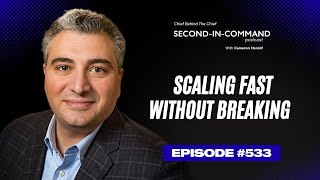
Anas Arabi, COO of Block and Associates Realty, switched to a three-person pod model for property management: an asset manager, maintenance coordinator, and tenant coordinator. The company doubled in size twice under this structure and is preparing a third doubling.
Chapters
Your math on hiring one person, it's either 100% or 50 50. Right? Meaning it's either 5050 they're good or bad. Or it's 100% if they walk out. Right. Those are your percentages versus if you're hiring three people, it's actually 33 and a third percent for each one of them and 33 and a third percent for each of them for results. Because if one of them walked, you only need to hire one out of three, not the entire pod.
Today on the Second in Command podcast, I'm joined by Anas Arabi, the chief operating officer of Block and Associates Realty, a leading real estate and property management firm serving the greater Atlanta and North Carolina markets. In his two years as CEO, Anas has led the company through remarkable growth, doubling its size twice in just over two years. All while building the operational backbone needed for sustainable success. With an impressive career spanning leadership roles at Zillow, RealPage and Tiber Capital Group, Enos brings a rare blend of operational discipline, growth strategy and tech driven real estate experience. In our conversation, we dive into his blueprint for creating a strong foundation for healthy expansion, how he navigates rapid scaling without losing culture, and why building a trusted advisory board is one of the smartest moves a second in command can make. This is a masterclass in scaling the right way. Let's dive in. We are live with Anas. Welcome to the show.
Hello, how are you?
We are doing great over here in Austin, Texas. Obviously it's really hot. I always tell you. Before we got on the show I was like, I needed to take a second to turn on my fan because the sun's not come through the window. It's 102 degrees here today.
Yeah. So I, I was in Texas over the weekend at Dallas area and it was certainly hot, much hotter than what I'm at now, which is Raleigh. Today it's a little gloomy with a little bit of rain and much lower temperature. So, you know, hopefully we'll send you some of this rain your way with this.
Yeah, we could use it. Well, let's go ahead and start us off. Tell us a little bit about Block and Associates. What do you do? Who do you serve?
Yeah, so my name is Anas. I'm the chief operating officer for Block and Associates Realty. We're a third party property management company. We engage with owners to be able to manage on their behalf and we typically do single family, a little bit of Multifamily and also HOA board members or management of HOAs. Our job is really to make the owner's life a little bit easier and provide them with services to be able to take care of their assets, take care of their rental and provide maximum results for them at the end of the day. Either that an appreciation or it might be cash flow or it might be a better budgeting requirements or better service for the hoa. But all encompassing of it's a service business that takes care of people, whether they are owners or tenants or HOA boards.
Very cool. And you've been with the company for over a couple of years now, but it sounds like it's your first kind of real COO title. So that.
Right, yeah. So I, I have about 25 years worth of experience and I've held many leadership positions. This is an official first Chief oper position and I, I'm really enjoying it. I love it. It, it's a, it's a continuum to what I've done before and it's the right move from what I, where I came from and overall I'm enjoying it. And yes, I've been here about two and a half years, close to three now. So.
Great. What was it about this company that drew your interest or how did you find yourself in the role that you're in?
Yeah, so this is an interesting story. I actually met the CEO via LinkedIn of all places. Right. And we've, we became LinkedIn friends for a little bit. You know, I am known to be an expert in our industry, which is the property management industry or proptech property management. I've worked for much, much larger companies prior such as like Zillow, RealPage, American Homes for Rent, Progress Residential UltraSource. All of these are like maybe 10 to 50 times bigger than block. But so the CEO reached out one time and says, hey, I'm really having a problem, I need some help. And I'm like, well look, you need to have someone that comes out to your to be able to take a look at what's going on and provide you a little bit of a plan of what to do. And the problem that they had was the make ready turnover process was just taking way too long. Some of these properties would be taking like about three months for them to get through the make credit process. And that's a killer for any investment because it's just vacancy loss and a lot of expenses on everybody's side and no revenue. So I came in and I met the people, I went through the process. I came back with the full plan for the CEO that he implemented. That was helpful. To kind of reduce that churn time from three months down to about 13 days, which is awesome. And then we started talking about where do they want to go and what is it that they want to do with block? And what really got me to be very interested is the fact that we have an alignment of prioritizing growth and prioritizing operational excellence. They didn't understand scalability when I came into play. Look, a lot of CEOs, with all the love of my heart that they want to grow, but a lot of them don't recognize that they have to scale to be ready for growth, right? You can't just grow. You have to be ready to be able to grow with your scale. And you need to have the right models, you need to have the right setup in order for you to scale while you go, right? If you double the size of your company, you wake up next day and you don't have a scalable model. You cannot maintain the same level of service for all of this added business that you've received.
And so that's what drew me to the company was that plus the people are absolutely awesome. And the company had very well, you know, positioning in the market. They had really great reviews from people, from clients. So was providing great service and was taking care of clients which just wasn't ready for scale or scalable for growth. And I got really excited about the building blocks of kind of coming in, redesigning for scalability for growth while maintaining operational excellency. So that's, that's what drew me to it, and that's what got me to come here and kind of work with them.
And, you know, it's interesting to say it's been two and a half years, and I'm very comfortable to say that everything we planned on doing, we did. So now we do have that scalable model that we can just plug and play. We do have a growth. Like we've done doubled our size twice, and we're working on our third doubling of our size. So when I started, we doubled the first time and then just recently doubled for the second time, and we're working on our third doubling. Obviously, every level of that, of that growth requires certain setup, requires certain maneuver. But the scalable model is here and it's implemented. So then we just plug and play and kind of work through, through it. And the beauty about all of this growth, we still maintain the same level of service, if not even better, that we were well known for. So when you really look at all of those three things, it's been A success on all fronts, you know, on all the accomplishments.
Well, sounds like they're probably very happy to have you. Congrats on all the success when they reached out to you or you guys connected on LinkedIn. I'm curious how that initial relationship was. Were they initially wanting to just bring you in a co full time and you were like, hold on, let me do an assessment of the company, or was it more like, yeah, what was, what was that? Were you in a full time role still? How did that work?
Yeah, so I was definitely in a full time role. So I, I, like I said, I came in just to help out on a, if you want to call it a consultancy basis just because of the relationship that I've had with the people. But once they, they presented me with the opportunity, I mean, I, I did my due diligence because again, this is much smaller than what I'm used to. Right. When you work for Zillow, RealPage and some of the American homes who rent those, those companies are publicly traded, or at least they were publicly traded like RealPages no longer is. But the, the, the thing that kind of drew me the most to the size is the fact that you make an impact more, much faster. Right. Like you in larger companies, with all due love and respect to these larger companies, you make a local impact for whatever area you are managing or responsible for, but you certainly do not shape the overall projection of the company. Right. You know, when I worked for RealPage or Zillow or American Homes Rent, I did extremely well for my areas, you know, like RealPage, we've increased revenue by 19% for, for my area that I was GM for, but that was not the same for the entire company. Right. I reduced expenses by 7%. It was not the same for the entire company. You know, when I worked for Zillow, I've done something very similar, but it wasn't the entire projection for Zillow in here because this is a smaller company. Every decision you make makes the biggest impact on the entire projection or trajectory of the company. Company. I mean, when, when we, when I say to you we've doubled our size twice.
This is, I, I mean.
Probably less than 10 companies in my industry that have been able to do that and it might be even less than 5, but I'm being nice and saying less than 10. So this is not something that could be pulled off just out of, you know, hey, come on in and just reduce expenses here, increase revenue there and make it happen. It's an actual rebuilding block by block. You know piece by piece, meaning for the entire operation for block in order for you to be able to make this happen. So it's, it is. It had to be analyzed and it had to take its time. Like they, they probably quoted me for probably about three months before I said yes at the end of the day.
And I asked a lot of good questions that I was never asking for larger companies before. This might be interesting for your listeners. When I got hired for the larger companies, I would be asking questions about budget, about what am I responsible for, what's my P and L responsibility looks like. But I never asked about resources because you would assume a large company like all of the ones that I've mentioned to you, they will have some resources available to you to be able to do your job right and if they don't, they'll get em for you if you make the case and you prove the fact that you can deliver on the results with those resources. Adblock, because this is a very small company, I had to take a very deep dive on what are the available resources because this is a small company. So what are, what is it that we have available to us as an example? We've grown by acquisition so we bought other companies. So then my questions were what's the finances looks like? What's the financial standing for the company? Are we profitable? Are we not? What's the P and L looks like? Where is your finances coming from? Who's tied into what? If we are to go buy a company tomorrow, are we going to finance it? Are we going to pay for it in cash? Are we going to do a mixture between some private equity stock option and something else? All of those questions, literally I had to dig very deep into them to be able to get answers for before I said yes. And I know this is a long answer to your question, but hopefully I've provided deep knowledge of what took place on it.
Yeah. Well, I love that you have this perspective of going from a bigger company to a smaller one and I would love to dive into that in a little bit. I would be curious to kind of first circle back to when you came in and you said that you kind of did this audit and you found like they were not ready to scale. What was that process? Like what did you do to find out those pieces and what did you ultimately find?
Yeah, that's awesome. And that was also part of the, of the timeline for us to be able to have conversations and us meaning myself, the CEO and, and the leadership people here because the one thing that you always wanted to be asking for is are you really ready for the scalability? And are you ready for what that really means? And do you understand what are you about to go through? Because look, I don't know of any CEO that does not want growth.
Typically it kind of is synonymous with the word CEO. You're always like looking to grow, right? That's always the case. And as coo, my job is to basically say, yes, that's wonderful, fantastic. I love growth as well, but I need to have a plan that would allow me to deliver on the results for that growth. Because just having growth without results, it's just as bad as not having the.
There's more chaos.
Exactly right. So we, I had developed a plan that we sat down and we went through over a couple of days. And I mean, I was very strict in my.
Asks, if you want to call it that, because I knew that coming into the company it's going to change a lot of the setup, a lot of the logic, a lot of the layers that we've had.
We might, you know.
We might end up losing some people because of it. We might end up having to do something different as a company because of it. So I had to be very clear with the leadership on what is it that we're about to get into. And I needed to make sure that they're supportive because if they were not, quite honestly, I would have been like, okay, great, here's my plan. But I'm not participating. Right.
What was interesting is the leadership for this business came from private equity, not from property management or real estate. Right. So they understood or understand finance extremely well and numbers extremely well, but they're not real estate or property management professionals. So nothing against them for that. It just when you're coming at it from the number side with, without understanding the business itself, you don't know any better. Like, meaning you take whatever you bought and you're just running it because it's revenue generating, profit generating. So why mess with something that it's working. But if you want to grow it, what you had was not allowing you to double or triple the size of where you're at. So you need to think about what do you need to change and how do you redo it in order for it to be ready. And my goal was to make sure that they understood that and they were willing to stand behind it before we got into it. And I'm happy to tell you all of those moves that I told them about did cause a little bit of risks in.
Not between me and the Leadership, but really in the company itself. Right. Like some people used to doing one thing, all their history with this company, and then they woke up one day and we're like, all right, now we're changing your job, we're changing your title, we're changing your requirements. That or we're hiring somebody new who's going to do something different. That would certainly make an effect on what's going on.
But I'm, I'm here to tell you the plan that we set up, it's proven itself.
To be absolutely effective.
Uh, I mean, what was like one of the two, like major changes that you made?
Oh. So.
We. And without kind of boring you with a lot of details about my industry, but I'll say it this way. There are several ways of how these companies are set up. One of them is what we call a property manager centric. So what that means one person as a property manager is responsible for a portfolio of, of units, houses, that would be responsible for the entire financial outcome for that, for that portfolio. So that would include things like marketing, leasing, property management, tenant management, collection, maintenance, turns.
Asset management, owner relationship, vendor relationship, legal and compliance relationship. Like pretty much everything under the sun. The problem with that model, it might seem to be efficient on the surface, but it's not scalable. Right. Because if I want to double the size of the company, I'm going to need what, twice the number of people in this setup to be able to manage double the size of the units. Right? Yeah. Well, finding those guys is very difficult. Training them is extremely excruciating and it takes a long time. And then three, one mistake could be catastrophic because if, let's say, this person that you've hired decided to walk out or decided to quit or decided they don't want to do the job anymore, you're all of the institutional knowledge about my portfolio that they were managing has gone out the door with this person who's leaving, including things like relationships with owners, relationship with vendors, sometimes even relationship with tenants. So all of that was very what I would say concerning for somebody like me. So what we did, we came in and redesigned this, the setup where we are what we call a POD structure company. So what that means there will be three people on a POD that they manage a portfolio of houses. Each of them is responsible for one aspects of this business. So you have an asset manager who is responsible for the financial outcome for the portfolio. You have a maintenance coordinator who is doing maintenance. You have a tenant coordinator who's doing the tenant communication and the collection and the renewal. And then on top of that, they also work with what I would say like a departments that they work across different pods, like the accounting, the assessments, and the leasing. So this pod would work with a leasing agent who's going to go do leasing, would work with the accountant who would do accounting and the assessment who would do inspections. But the three of them are responsible for that portfolio of houses. And when you look at this concept, this model, the mixture between these three people, it's easier to be put together compared to just doubling the number of property managers.
One of them is licensed, the other two are not, versus my earlier description that property manager had to be licensed, they also had to have certain credentials. So when we looked at it that way, that was our model. So for every certain number of units, we need to create a pod. And we knew what that pod looks like, we knew who we need to find. So now when I talk to my CEO and they say, all right, and us, we're buying a company tomorrow with X amount of units, we go back to the model and we say, all right, X amount of units equal this many pods. This is how many people I'm going to hire. Here are the profiles for them. Let me go find them to be able to get them hired and ready to go. Does that make sense?
Yeah. You're like creating little teams that kind of run their own little ecosystem, which probably eliminates complexity because it's like you have the smaller, you know, you're, you're, you're looking at the results of like a whole unit versus like an individual person and all the different pieces across the board. Like this.
That is correct. And the specializations. Right. Like when you put one person on doing one task, which, let's say it's maintenance, they get to be extremely great at it. Right. Like they manage 200 work orders like no tomorrow versus if you take the same person and you say to them, you're going to be managing leasing, five minutes later you're going to be managing collection. Five minutes later you're going to be managing owner relationship. Five minutes later you're going to be managing something else. And yada, yada, yada, yada, yada. What you're going to find is that person would be good at maybe one or two or three things, but there is no way on earth that they'll be good in all of the 15 things that you just laid up on them. So they tend to do the things that they do very well, which is the one to five things. And then everything else takes a Backseat or they may be doing them at a lesser efficiency, lesser product production, lesser.
You know, results and wouldn't yield good benefits at the end of the day. Does that make sense?
Makes total sense. I mean this is something very similar to what I did with the. I built a recruiting company and I. Once we started scaling, we were scaling so fast. We were doubling every month the first year it was insane and, or I would say doubling every month. We were like hitting record months for the first year and a half every single month. And so we're growing so fast. And what I originally had my recruiting managers sorting through applications, interviewing them, putting them into the system, connecting them to clients, managing the client process, and they're doing the whole thing. And so as we started to scale, I just kept hiring people and training them the same way. And then that clearly was not working. And so it took about a year and a half for me to really figure out the model of that team team which ended up being kind of these pod like structures where I had a full on application operations team that I had just the interviewers, people who are really good at talking to people, that's all they want to do. They take notes, that's it. And then people who are really good at account management, sorting, working with clients. But it did, it took some time and so I would. There's two things that are coming up on this that I have questions about. One would be when you're hiring a whole pod, you are. You also are risking having one or two or three people who are bad at their job and it creating conflicts or a disruption in culture versus just making one hire and then them being really, really good or not and you just waste one person. What are you looking for when you're hiring or when you're onboarding to make sure that you have a pod that works seamlessly together from the get go.
Awesome. So the example that you gave with recruiting is an awesome example because it's really very, very closely related to what we built here. But let's look at the math for a second. Right, Your math on hiring one person, it's either 100% or 50, 50. Right. Meaning it's either 50, 50, they're good or bad or it's 100% if they walk out. Right. Those are your percentages versus if you're hiring three people, it's actually 33 and a third percent for each one of them and 33 and a third percent for each of them for results. Because if one of them walked, you only need to hire one out of three, not the entire pod. Right?
Right.
So that's the math. Now let's talk a little bit about what do you do from a recruiting perspective. You wanted to find the right profile for each one of those individual positions. Like because they're not the same, one of them is dealing with maintenance. They, that person has got to have like vendor relationship down, they got to have to have detail orientation down. They need to know how they work a problem. Like they need to be a problem solver like no tomorrow. Right. Because when you're looking at a maintenance issue, you really have to go kind of through a list of things to figure out what took place, what the issue is, how my options are to fix it, what is that going to cost, and how do I do it. When with the best results and the cheapest way. Right? And the fastest timeline. That's technically what a maintenance person is doing versus when you look at a tenant coordinator, they're really making sure that that tenant is happy and satisfied in their home. So they. Customer service, it's a lot more important here. A little bit of conflict resolution. Because sometimes some of these tenants might call and say, hey, I'm having a problem with my roommate, they're not paying rent, I haven't. Or this, that whatever.
Ability to train and educate. Because you're training the tenant on your systems, you're educating them on how to do certain things and you're also educating them on the process, right? Like, hey, you want to submit, you want to pay your rent? Here is how you pay your rent. Here is the best ways to be able to pay your rent. Here's maybe the cheapest way to do it for you. Here's the most fastest way. What happens if you don't pay rent on time? Like all of that, it's all training, right? That is a different profile than the maintenance coordinator. Then you have the asset manager who's a completely different profile to the other two. So if you profile people correctly and then you take that profile and you take it down to what skill sets are you looking for for that particular profile, then you can create more of like a Persona for each one of these that you can go after and you find the people that fit into these places. Now again, this is all about skillset, right? Every employee is really three things for us. You have attitude, willingness as well as skillset. This is only addressing the skillset. So when you find them to have the skillset, you gotta bring em in and you gotta go through the interviews, you gotta go through the process to make sure. That they are a good cultural fit and they do have the right attitude and they are willing to do the work and they are willing to be a team member and be part of this bigger picture. And if they check all of these boxes, boom, they're hired, Right? Now you might say to me, well, look, you're hiring three people compared to hiring one person. Yes. But here's the deal. If it's easier to go find someone who's an expert in maintenance compared to finding somebody who's an expert in 15 different things.
Yep, that makes sense.
And because of that, even though I'm hiring three people, which on the surface might look like I'm tripling the work, it's actually a little bit easier because it's very specific to what Persona or profile that you're looking for. It's almost like a sniper approach compared to the Shop one and four coach. Right? Yeah.
It's also easier just from, like, a accountability standpoint, too, when you've got someone with a very clear. This is your one thing that I'm looking for. Clear KPI. It's easier to manage if someone's doing well or not and to coach them or not than like, I've had people on my team that, you know in the early days when they are wearing a million hats. Even for myself, when I find myself wearing a million hats, I'm like, where is the best place for me to really focus my energy? How do I know if I'm doing a good job? Am I the same for the team? So it also, I think, makes it easier on that. That front. The. The second thing I was going to bring up is one of these core concepts that I think Jordan Peterson talks about, which is order comes after chaos. And when I was originally taught this by Cole Gordon, he brought this up to me because Cole was the owner of the recruiting company that I built.
He mentioned that I was. He's like, you're putting too much time into building systems and trying to figure out a model that we don't even know is what we're going to need. Because I was. I was like, trying to prepare us for scale. And I. I knew we were about to, like, bring on more and more and more. And so I put all these things into place, and then we did end up, like, pushing growth, and things broke, and it actually wasn't the right model. And so the. The big thing that I learned from that was sometimes you gotta let the things break. Sometimes that you actually know what's going to happen and who's Going to need to do what then? Like trying to plan it all. Because I think that's where some CEOs, they get really lost in the weeds or do like trying to make themselves busy. And I'm going to go build this system and let's build, let's go get this software and let's have an SOP software for this. And we're just kind of building these things just to feel like we're doing something. So how do you find the balance between knowing what to build, like building for growth and scale scale while also knowing what to actually build for before it happens?
Yeah, so that's an awesome, awesome question. And I was smiling because it happens almost every day, right.
Typically CEOs, they're very concerned about building systems and making sure that things don't break. Right? Because we're responsible for the actual delivery of the goals and the aspirations of the leadership.
And CEOs. Right.
But the, the thing about it is, if you know a particular program or a system that doesn't allow you to grow, then you need to really raise your hand and you need to have a very honest conversation with this leadership and you need to be able to explain your point extremely well. Right? Yes, I do agree. You can never build for perfection. Nothing is perfect in life. No system's perfect, no human being is perfect. Of course, no operation is perfect. But what we have to be comfortable with is a certain level of error rates that you shouldn't be going above and beyond. Right? We're in service, so this is a little bit tougher for us to recognize versus if, let's say we're building widgets. Typically manufacturers, they say, hey, my error rate and this is X percent. Right? And they mean as long as you manufacture this within that lower error rate, you're okay. Right. In service, we tend to think that we would have to provide perfect service all the time. And while that's wonderful aspiration and everyone should be aspiring to that, but the reality on the ground, it's something different. The reality on the ground is you're going to make mistakes. You and your team and your process and your technology and everything you've got is going to fail you at some point. So then the instead of trying to build for perfection, build for what comfort level you have with that iterate, right? And try to minimize it as you go through it. So even though the early stages of building a system or a process may not be perfect for giving you zero errors, if it gives you, let's say, 10%, figure out a way to make them 5%, figure out a way to make it 2% and make it better as you go incrementally to actually get to the point where you're comfortable. That's one. Number two, it's also important that you have alignment on, you know, what's the future looks like. Yes, if you built a program or a system for something, you're going to be there 10 years from now. That's probably not going to be well perceived. Right. But if you're building systems and programs that you're going to need in about three to six months, that's very relevant. If you can explain it well and you can explain the reasoning for it. Right. And every growth is going to have one level of chaos to it. Like there is no growth in the world that is going to be just a walk in the park. Doesn't happen. I've never seen it. Right. Because you have to challenge the status quo in order for you to grow. Right. You got to do different things in order for you to do bigger things things. And all of this means that you're.
Having some kind of chaotic or chaos around you. So as long as you're willing to live with that and figure out a process that gets you closer to that iterate that you're comfortable with, I think you, you, you'll be okay. But to think I want to build something perfect or something that I'm going to use for 10 years or 20 years or whatever, it's just not the reality of today, today's world, at least from my perspective.
Yeah, well, things are changing so fast. I can't imagine building something that far in the future. But I do know I have heard stories from people that, yeah, they just. I have, I have had some people that have even worked with in this very last year where like I start asking them what they're building and what they're working on and they're okay. Here's a really simple example. I have a friend who has this really big, beautiful, beautiful vision of kind of like an ecosystem for entrepreneurs to support each other. And the way that he has the vision is beautiful. And there's nothing that's actually happened yet, but he's building a website. And I'm like, why are we building a website? No one's like, we're not going to be running traffic to it. No one's going to be searching for this. And then even if they do find the website, there's nothing that you can offer yet. So it's not the right first step. So yeah, I Think all, all the things that you said are super key. And another key thing that I wanted to talk about today was you had mentioned in your preform that trusted advisors have really important for you in your journey. Can you share with us what that means for you?
Yeah, that's awesome. So can I reflect back on the exact same example that you gave with your friend? Because I, I am on the advisory board with a couple of startups, similar situation. Typically this is what I find.
Look a lot of them, they have wonderful ideas, fantastic view of where they want to be in like 10, 15 years, right? But truthfully, you need to solve a problem, any product, any service, any industry, anything in the world. You have to be solving some kind of a problem problem. What we solve for is owners don't want to manage their own properties because it's tough and hard and froth with problems and legal issues. HOA boards don't want to manage by themselves because they don't have enough time in the day to be able to do it. And this is a full time job. And plus they need the expertise of somebody to be able to kind of handheld them throughout the process. Right? That's what we solve for if we're trying to solve every problem in the world. It might take me my whole life to be able to build this vision and probably will never accomplish anything. You need to set smaller goals, stepping stones to be able to get you to that bigger vision that you can rely on to show yourself that you're making improvements or making, you know, achieving things. Right? We as human beings, by the way, we appreciate achievements.
I know some people may, may question what I'm going to say, but it's really we appreciate achievement and achievement. We look at it in different ways by the way, it's not money, it's not status, it's a lot of different things. It could be as simple as, you know what, I've had a really great day today and I'm happy. It could be as large as like hey, I've made X amount of millions in sales or X amount of millions of money or whatever. But we like achievements. So if you, if we like achievements then we gotta give ourselves ability to show ourselves that we're achieving things by breaking this big huge grand scheme view into smaller steps that will get us there, right? If you're going up a mountain, either you're going to go one step at a time if there is a, you know, stepping stone to be able to get there or you're gonna climb it by kind of, you Know, going one stone at a time until you get up to the top of the mountain. You don't sit at the bottom mountain and you say, hmm, I really wanna be on the top of the mountain. And boom, you're on the top. You have to kind of go through it. So I would say take a large scheme of things and then break it down into one step at a time to be able to allow yourself to achieve it. Now, how do you do this is by really having advisors that could come in and say, okay, I can see this big, huge grand scheme of what you're trying to do, but what is it that you're trying to solve today? And then how can we work through this? And what is the small item that we can work with today to be able to get you to achieve something, to make you feel good, to want you to build bigger and better things? Right? And then those advisors also allow you to see any blind spots that you may not be aware of. Right? We, as human being, we always think that we're great, wonderful, and we have a lot of great skill sets. And.
You need someone to say, you're great, you're wonderful. But did you notice there is a blind spot right here that you're not aware of that you really need to be able to take a look at? And some of those blind spots could be personality traits, some of them could be operational problems, some. Some of them could be financial issues, some of them could be a lot of different, you know, alignments, whatever.
You know, I. I mean, I. I worked with a mentor of mine before, and one of the things he said to me says in us, when you get excited, you talk too fast. So I don't understand what you. You're saying, you need to slow down. And I was like, what are you talking about? Like, I'm. I'm explaining things to you, and you're getting it. He's like, yes, but you're talking too fast. You need to slow down to allow people to catch up to what you're saying. It's a very blind spot of mine. But had he had, had that, he had not taken the time to explain it to me. No one or I may have not known that I had this issue that I need to kind of work on to be able to be better operational problems all the time. Like, when you really have trusted advisors that you bring them.
Process or you bring them a model and you say, what do you think about this? And they say, did you think about that? Did you think about this? Did you think about this? Did you think about that? And they work through it with you to make sure that you have tried to make it as close to effectively perfect as it could be. Right. Because it's never going to be perfect, but effectively perfect.
I share with you maybe a personal example. So when I was building the model for Block, I talked it over with a advisor of mine and the first thing they asked was like, Anas, did you work out the salary differences between one person and three people? Like how are you going to make up the difference in salary between 1 and 3? And how are you going to work through the effectiveness? Like the, the profit margin? Like, how do you do that? And then I'm like, you know what, you're right. So let's take a pen and paper and let's go through it. And quite frankly, after we've been through that exercise, couple of times, we've changed slight things onto the model that allowed us to be effective financially. Right.
You know, one of the things is like the number of units for that pod is a little bit higher than the individual person if you multiply it by three. In our industry, our property manager effectively manages about 80 units. Maybe they can go up to a hundred if they want to lose sleep all day, all, all night, but typically they're around a hundred, about a eighty to a hundred. My setup is allowing me to do a lot more than that, which then allows it to be more financially available or stable. Additionally, the pay structure for the three people, because the specialization because of differences was a little bit different than what we do with the one person. So then also allowed me to make that profitable or manageable. So again, just an example of a blind spot that somebody says, hey, did you work this out? Did you work that out? So I do believe every successful person should have an advisor or several of them that could help to be able to bridge the gap for you and provide you.
Assurances that you don't have any blind spots around you.
Where do you find your advisors?
Oh, so typically you start off with the industry, your sphere of influence in the industry.
Also you might have experts by going out and looking for them. There is plenty of, especially nowadays there are plenty of services and advisory boards and things like that that can help.
You know, you need to kind of network too and you need to know what you want out of the advisor. It's again a two way street, right? If you're bringing me in to talk to you about building a rocket ship, I'd be like, wow, yeah. I mean I, I can bring it down to Steps but I'm not an engineer by trade. I really don't know how to put somebody on the move. So I'm not your expert, I'm not your advisor. Right. But if you gonna wanna talk to me about property management or prop tech, I'm your guy. Right? So that's where you would have to find the right person and the right place and the right people that you surround yourself with. The one thing that I would say about being a COO that was interesting and you hear it all the time when you go up in ladder, it's a lot more lonely or it's lonelier as you go up on the leadership ladder. And what I think people are meaning is that you need different advisors from outside your close knit of people to really, truly be able to be honest and upfront with you about some of the blind spots, some of the things that you gotta look for. Maybe they want to talk to you about maybe approaching things a little bit differently. Maybe you want to talk about, you know, doing things maybe a little bit better. And when you get on that COO CEO scale, a lot of times you don't have those people in the company that you're working with, then you got to look outside to be able to find these folks and bring them in and make them your advisor on board. I think every leaders should have an advisory board and every startup should have an advisory board. Now for a startup the advisory board should be from within the industry. Absolutely experts within the industry that you're trying to operate into. If you are personal and you're as a person, you're trying to build your own advisory board for yourself. You can mix and match with people from different areas. Like some people might be higher on the HR advisory compared to finance and so forth. Because you're going to want to have a well rounded 360 around you to better yourself.
That's phenomenal advice. And I think there's, there's two ways that you can go for. It is like you can try to just find mentors who are happy to give their time because they see something and there's some value and benefit that they're going to be getting back from pouring into you. I have found that I think a lot of my free mentors over the years it was either a, like they just really were looking for a different outlet to make impact and they knew that I would like. I my commitment to anyone that ever mentors me is I will take action and I will report back. Because the most frustrating thing is when you're mentoring someone, you just give them all this amazing advice and they come back with the same questions and they haven't done anything. And so just being committed to actually taking action. And when someone's investing into someone who is truly changing their. Their ways of being or the action that they're taking, and you get to see them grow and evolve, it is so rewarding. I mean, I'm seeing that now, and I know that my mentors have felt that with me over the years. And so there's just like, even if there's someone listening now, or maybe you don't have the money to go invest in. Into mentorship and like a paid program. Just. I have two now, like, female mentors that I met as a posting through this podcast where afterwards we had a great connection and I just simply was like, hey, I'm really looking for more female mentorship in these areas. I think you'd be amazing. My commitment is that I'll tell you what I'm doing, and those have been just incredible additions to my life. And the other way that you can go about it is if you're CEO listening and like you said, you're kind of moving up the ladder and you're finding yourself not really having anywhere on the executive team to share certain problems or you're just running into new situations that you don't know how to solve. That's why Cameron created the COO Lights. I remember running into hiring issues when I started to really recruit for different positions in the company that I didn't have experience in. There was also not a lot of other people in the company that could give me a lot of help. When I joined the COO alliance, it was the first time I'm like on a group call with all these other people that are doing very similar things in different industries. They got different perspectives. And one guy, like, booked a full separate call with me. Man, his name is escaping right now. I wish I could give him a shout out, but he booked like an hour and a half long call with me, showing me his entire recruiting funnel, the way that he uses personality assessments when he doesn't use them. And I immediately was just able to take all of that and implement it and probably save myself, you know, over a hundred hours potentially of wasted mistakes and building the wrong stuff. And so you can also go just the paid route of like buying a program, paying for mentorship and coaching. And both routes work. It just depends on what you want. Like you said, getting really clear on what your end outcome is and then finding the person that can solve that. So this has been absolutely phenomenal. I always love to kind of wrap up with hearing a little bit about you personally. What are you most excited about in the next six months?
Yeah, so I do want to comment a little bit about the. The.
Basically the advisory or. Or the leadership or kind of getting mentorship, because this is really, truly important. And you're 100% correct. Some people out there are absolutely willing to mentor some people, right? It. It is because it's rewarding for both sides. Sides. When you see someone who's doing really great and you're able to help them out and you're able to kind of do that. Couple of things that I'd say. One is be respectful of their time. Right. Especially if they're doing it for free. And then number two, really, truly ask yourself if you are looking for a mentor to get better or if you're just looking for a mentor to kind of check the box. Right. Or somebody to kind of help to check the box. Right. I love what you said about the fact that you promised action and you promised, you know, to bring back the results, to kind of talk about them. Right. A lot of times people reach out and be like, hey, I really. I want to. I want a mentorship. You know, can you help me out? Can you do this? Can you do that? Yeah, absolutely. I'm. I'm open to, to helping anybody because I believe we all grow together. But then I get some people unwilling to do what we're talking about or the taking action on some of the tasks that we're saying. So then you're like, okay, looks like I'm just wasting my time. I'm kind of giving you what we both feel like it's the right thing to do, and we gave you the task and you didn't do anything with them. And if you continue on doing that several times, you'll find that those mentors are going to shy away from you because. Because you're not providing them what you promised to provide, which is that ability for them to see that you are growing and doing bigger and better things and obviously respectful of their time. I mean, we all know this. We all busy people. So, like, you know, don't ponder them like a million times a day with text messages or emails. Like, like, really, truly be respectful of their time. And if you're. If you're meeting with them, let's say once a month, meet with them once a month, and then just respect the boundaries of the time that they gave you, because that's really important. Anyway, so having that, we put that out of the way. I wanted to answer your question about what am I excited about over the next six months? We, as a company, we are working through our third doubling up. Right. Remember we talked about first, second double, and now we are talking about a third doubling up. I am absolutely convinced that we could double up in the next 12 to 18 months. So that's a little bit longer than six months. Um, but I am absolutely excited about that and excited about what we're doing in the next six months to get us ready for it. Cause that is. That's the. The promise that, that basically I made to myself when I came into block is like, look, I want to do three doubling minimum. Might be five, but three minimum. Just so I know that I've achieved the results that I wanted. And as far as. Personally, I'll tell you that I'm an avid traveler with my wife. We've been out to 39 of the 50 states. Our goal is to get to all of them in the next couple of years.
Like I said, I was in Texas last week. Wasn't my first time, but I was in Texas last week. And I want to make sure that I finish out all of those 50 states as far traveling to them to kind of match that.
That's. That's the box you can check for sure. What is your favorite state been so far?
Statement about like work statement or something.
Else or state that you visited?
Oh, state. I'm sorry. So each state has a flavor, right. And. And it's kind of brings in some certain specific memories. So like, I like, for example, like, Hawaii was the place where we went out to our honeymoon. So that would always remember that as. As the honeymoon state. Right. For us versus, you know, Illinois is the place where I really had my first leadership position that kind of caused me to be on the map. Right. So I never forget that as a. As a state and as a place. So again, it's not just a one flavor. It's more of making sure that you have the right memories that allows you to be able to remember these states. And each one of them brings those memories.
To mind. I would say visit Chicago in the summertime and visit Hawaii in the wintertime. That'll probably be much better. Coach.
Yeah, I love that plan. Well, Anas, thank you so much for your time. This has been really amazing and I'm excited for your third doubling that's going to be happening. It sounds like you are a phenomenal leader and thank you so much for sharing your wisdom with all of us.
Appreciate you. Thank you very much. It was a pleasure talking with you today.
More from Cameron

Flutterwave Former Global Head of Operations Awa Kone | When Growth Outruns Operations (Podcast 611)







Optomi Professional Services COO Nick Murphy | The COO Can’t Know Everything (Podcast 607)


