Why Having Processes is More Important Than Chasing Automation | Chris Beer, (Podcast 391)
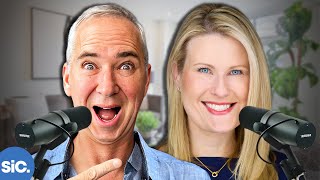
Transcript of a Second in Command podcast interview (guest Chris Beer, integrator & co-founder of BuildYou'd.Org) discussing the integrator (COO/second-in-command) role, readiness for hiring an integrator, process documentation before automation, acquisition integration, fractional vs full-time leadership, EOS and operating frameworks, and practical services BuildYou'd.Org offers to document and optimize company processes.
Questions this video answers
Six times.
Done‑with‑you: $8,500; Done‑for‑you: a little over $25,000.
Chapters
Visionaries and integrators are not the same people, especially as defined in those roles. And so having the realization that yes, I can be an integrator, it's just going to drag my battery down a little bit more. Or as my friend Spee Schwartz said, you know, Michael Jordan can play baseball. It's just maybe not the best use of his time.
Our guest today is Build you'd. Org's integrator and co founder, Chris Beer. Build you'd. Org is a firm that helps growth minded entrepreneurial teams find and execute solutions when they outgrow their systems or their people. People specializing in companies running on eos. Build you'd. Org's clearly defined system helps align teams, streamlining processes, build automations and grow businesses throughout acquisition. And Chris is going to walk us through all of that. She's also been a six time integrator or second in command for a company and she's going to talk to us about the ups and downs of that role. And she also leads the culture division of Build you'd. Org where she geeks out on the depth of the second in command role. You're going to love this episode. You can also watch it on our second in command podcast YouTube channel. See you on the inside. So Chris, welcome to the Second in Command podcast.
Thanks so much Cameron.
Yeah, looking forward to this. You were introduced to us by Max Hansen, who is a partner of our COO alliance. I have sent a number of clients to Max over the years. He's been a great friend of our CO alliance. He's also a good personal friend of mine. They actually do a lot of recruiting in the COO space. And you and your company Build you'd. Org are kind of similar in facets. You're not exactly a recruiting firm, but you really focus around the integrator. Can you walk us through what Build. You'd. Org does?
We have a couple different elements. We help orgs by integrating frameworks and think of business operating system. We automate processes and then we help you navigate acquisitions. And so a big part of we quite often partner with companies like Max's because they found a great second in command for the company and now they need to make sure that that great combination is actually fitting and that the duo is stepping into the full potential.
And what do you mean by navigate acquisitions? Do you mean acquiring new companies or acquiring new clients or acquiring new companies?
So once you've done the good work of getting your foundation in order, once your machine is running well, the next thing that you want to do is expand your footprint.
So do you work with a lot of M and A firms, private equity firms, VC firms? Who's your kind of. Where do you work with?
We work with M and A firms and we come from an experience of a software company that rapidly scaled and now we want to share those, those learnings with the entrepreneurial community.
I love it. There's not a lot of people that actually focus on. There's a lot of people that are out there focusing on helping companies sell, but there's not a lot of companies that are helping them do like the acquisition side or the integration side.
I always say that once you've done the hard work of building that strong foundation and creating operational efficiency, you love this thing and you want to expand the footprint. I don't think that the. I understand for some how the, the finish line is the, is the sell, but I think for a lot of people getting the house in order is just the beginning of the race.
Yeah, it's interesting. I did some acquisitions years ago for what's now called Gerber Auto Collision in the US it was called Boyd Auto Body in Canada. We became the the largest collision repair chain in the world. And when I was doing some early stage acquisitions, the buying the company was easy. I helped negotiate a number of different acquisitions that we did. But the integration component is where it got really hard. Can you walk us through some of what you see on the integration side? And I'll talk about some of navigating the acquisition side too. But what are some of the lessons you've seen on the integration side once you've bought the company that works well or doesn't work well.
So I think it's really taking it down to the studs and seeing, you know, can we get into an alignment in terms of a shared vision, the organizational structure and the milestones to get there. So, you know, with different operating systems, that's called a number of different things. But now that we are, you know, combined entities, we want to make sure that we understand ultimately with this new group together, where do we want to go? Not based on, you know, what we were. Family one and family two and family three as this new combined unit, where do we want to go? Do we have the right structure to get there of that structure? Do we understand what people are accountable for? I think there's so many just really easy misses that are made when we don't stop and do that foundational work.
I like that you started with the core values and the vision component because I think a lot of People try to go to we want everybody using the same system, we want everybody using the same software. That doesn't matter if you're not aligned and all going in the same direction if you're not all.
That's the easy stuff.
Values. Yeah, yeah, exactly. Well, it's, it's hard to do but, but it doesn't matter that you start spending time on that if nobody's aligned and going in the right direction or if you don't understand the core values the organization. So I'm glad you start with all that talk about the, talk about the actual negotiation side of things. Do, do companies ever make any big missteps there that they should be guess a little more cautious or a little more careful, a little more thoughtful on the acquisition side?
I mean I think this goes for all of life.
That there's probably a lot.
Yeah. But you know, I think the biggest thing is, is leading with emotion and as opposed to, you know, making data based decisions. I tap into my, my first career, I was an options trader for about 20 years. And the best trades that you made were when you, when you were not in love with, with the trade you were going to make and you were, you know, you were willing to be detached from the transaction and is that.
So do you see that a lot of entrepreneurial founders or visionaries would probably lead more with emotion than they should be and not enough with the data? Is that what you're saying?
Leading more with emotion or leading more with ego?
It's interesting. There's an old saying at Google. I don't care what you feel. What's the data say?
Exactly. Right, exactly.
Of course.
Well, and again it's one of those things that's very easy to say and it's easy to say when you're not the one who's in it. And that's through a variety of services and software. We help, we're helping organizations get, get just a little bit pulled out of the weeds and look further down the field.
So talk to me about that. You mentioned some of the different systems or what was the term you used? I mean you've mentioned EOS operating systems, I guess. Are you kind of operating system agnostic or do you lean in the favor of one versus another or do you kind of pull two or three of them together based on the actual company and you iterate.
I'm a big believer in full and complete frameworks. So they're built to be full and complete and you get the best results when you fully subscribe to one or the Other versus creating these like franken systems. We have a lot of clients who run on EOs and so that's where we tend to navigate to. That being said, the relationship of all the things I'm talking about, the strong base of the second in command, understanding, organizational clarity, role clarity, how we're measuring success, things like that, that transcends any sort of a framework. That being said, we do work with a lot of people who are running on EOs and quite often are at this, I'll call it a teenage stage of adoption where they really like the system, they're growing with it, but they might be realizing that you have the visionary who is also sitting in a few seats, one of the. One of which might be the integrator or second in command seat. And so they're making that realization, they're finding readinesses there to make the shift and they don't quite know how to make it.
So when an organization scales, I mean I've worked behind the scenes coaching the CEO of Sprint and the second in command at Sprint, you know, the 82nd largest company in the United States. The at some point the visionary integrator model breaks in that the traditional visionary is not supposed to have any direct reports. They all report to the coo. But that doesn't entirely scale where at some point most corporations or most organizations maybe of plus 100 people, the CEO does have some of the C suite reporting to them. So do you see some kind of iteration when you go from teenager to adult or teenager to adolescent, adolescent to adult, where does that switch that the visionary is no longer allowed to have no direct reports?
I think it's where you said somewhere the hundred plus is where it does start to get a little bit more dynamic. And also I think one thing to note is we talk about headcount as one to one. However, what's really interesting about the time that we live in is that a lot of people are serving fractionally or perhaps maybe know an outsourced resource. Who do you count them as one or do you count them as three quarter time?
Let's start with that. So instead of me going back into talking a little bit more about EOS for a second, can you just talk a little bit about the fractional versus full time and any thoughts around when to go fractional, when to go full time? How do you recruit fractional people? You know, is it different from recruiting full time people?
Here's the thing with fractional, there are a lot of companies, whether they acknowledge it or not, who currently have fractional Employees and those fractional employees may be really full time employees who are sitting in three or more seats. If I'm your integrator, who's also your director ops, who's also your hr, hi, I'm your fractional operations leader, I may not be named as such. So I think that's the way for people who can't wrap their heads around having someone, especially a leader, who is not fully dedicated to the business. I think it's kind of wrapping your head around the reality that we do have a lot of people who are currently splitting their time and therefore are fractionals.
Well, it's interesting. When I started as the second command at 1-800-got junk. I remember in the first couple weeks that I was there, I drew out the org chart and then Brian, who's the visionary said, you can't hire all those people. And I said, no, no I'm not. I'm trying to think about what percentage of my time I'm going to allocate to each of the hats that I'm currently wearing. So I think I'm going to do like 5% of my time to HR, 5% to PR, 5 or 10% to marketing. Like I was trying to think about how many hours a week I would be able to allocate to something and then which ones I would start to hire towards.
No. And I'm sure in doing that exercise you probably found that it's not quite simple math because you could say, well, HR takes 5% of my time, but if it's not something that is in your natural ability, it may actually drain your battery a lot faster and it feels like it takes up 20, maybe it's 5% of your time, but it's 20% of your energy. So making sure that you're, you know, when you're thinking about how am I allocating people to seats and all of this making sure that you're, you're siding with getting people in their and their unique ability before just assuming that it's simple math.
You talked a lot as well about some of the work that you do is around helping companies automate processes. Can you speak to that a little bit?
Sure, absolutely. So it's funny. So two words there, automation and processes. And which one do you think is more sexy? Automation. Right.
Well, the automation is more sexy, but the value stream mapping and actually understanding the process and even do we even need to do the work is probably where the real value comes in.
Right Cameron? That's where your operational brain is shining. Yeah, most of them Yeah, I think that a lot of people want to jump right to the, we want to build in automations to our company and that's where, you know, ultimately we want to go. And we don't want to necessarily focus on the drudgery of one, you know, looking at our existing processes, looking for ways to make them better and just the pure documentation of it. But we help companies do both. And so every company does start with process documentation in which you are, you're working with subject matter experts within the team to identify how you do what you do. And naturally through that exercise you're going to find things that are clunky and sticky and they're the clunky and sticky things that you can fix. They're the clunky and sticky things that you never should have been doing to begin with. Right.
And yeah, that's where my mind tends to go. Stop, optimate, stop, optimize, automate, outsource. And the stop is like before I even document the process, do I need to do the work? If I've decided I need to do the work, then document it, then optimize the process, then automate the process or outsource the process. But so you guys are really big in that sector and helping companies with it.
We're really big in IT and we have a proven process of getting all of the core processes in the company documented in a shared by all playbook within a quarter. So it's one of those things that I feel like is on everyone's list of things to do but you know, where your partner and actually getting it done.
Yeah. How are you working with people as their partner on that? Are you sitting down and actually like mapping it all out with them? Are you getting them to map it out using some tools? Are you, can you walk us through kind of the rough overall framework that you use to help companies do it?
Yeah, absolutely. So we have, we have three routes that we'll go through and one is our free option and we're, we're big believers of, you know, like Alex Mosey and kind of give it all away. And so we, we give away our SOPs that we have our internal staff use to document processes when they come into a team. Option number one is to, you know, download our course, check out our, we have a Miro board that helps you visualize your processes and a couple of Google sheets that help you organize the work. Second option, because quite frankly, you know, a lot of people, it's similar to say an exercise plan. It's very simple to Say on paper, this is what you should be doing, but you need, you need either accountability or you need coaching to get the results that you want. So we do have two options that are more high touch. One is a done with you and one is a done for you. So and I've been a on the, I've been a client on both sides of these. So the, the done with you is an alignment session where you're, you're just doing a dump of what, what do you have in place right now and who are the people on your team who can help extract what you need to get to. And our team helps create a schedule and then puts you out there to go execute it on it yourself. The next step up would be our team working with you. You're doing that discovery work and then our team works with you two working sessions a week over the course of quarter to extract all of that data from your team.
What's the rough cost of each of those? Or is it, is it kind of fluid based on the size of the organization, how many processes you identified?
So it is a little over 25,000 for the done the done for you and 8,500 for the done with you.
And that's the 8,500 for the quarter that is a.
So 8,500 is coming in and getting your team in alignment, putting up a package, a plan in place and then being there as a resource as you're executing the plan.
Yeah, I love it. I think it makes way more sense to have the done for you component. I mean I can't see a whole lot of companies that don't have a lot of processes already documented really running this process for the first dozen or so at least. Right. I think they have to learn it and having a guide seems to help more.
And even if you have the most fastidious documenters, they're, they're doing it in slightly different ways.
Yeah.
You know, so everyone's contributing and it doesn't, it still looks like a potluck. This, this way you have one, one uniform way that you're documenting your processes and a plan to continue that good work.
I've always felt that if you can't document a final process on a post it note, you haven't thought clearly enough. And I think that so many companies tend to go like right into process grid or right into suite process and they try to document it all beautifully. And I'm like, you haven't thought through the actual steps in the process and tried to like optimize it do you push people back towards like a Google Doc and a Google Sheet first or even before that to like a Miro board or a storm board with post it notes? Like where do you, where do you start the process with people and, and how do you prevent them from trying to move it into some great tool like a trainual or whatever, where they're not ready to go there yet?
Yeah, and I'm so glad you point that out because those are great tools, but you need to start with the foundation and quite often that is just good old sticky notes or we love Miro. So having a visualization tool like Miro is how we, how we lead our clients through a lot of the initial work. So it's combination of Miro, Google Docs and Loom videos. And Loom videos are great because you can report what you do on your video. Sometimes shows a little bit different story. Yeah.
There's an AI tool right now that documents processes quite well, that videos you and then it like creates a process. Do you know what it's called?
I don't. I'll have to talk with Adam Schweit or my partner. He would.
Yeah, I'm kind of blanking on what it's called right now, but I know my team is starting to look at using it a little bit to document some stuff. Basically it videos you while you're doing the work and then it starts to strip out some of those tasks and kind of creates the model, which is creepy. It can even do that, but it's.
Creepy and great at the same time because anything that can get you started, of course you need the final human touch on anything that involves AI. But I think if any tool that can get you started on something that you've been kicking the can on for.
A little while through your work and through Build, you'd org you have a lot of insights around bringing a proper integrator into the organization. What a good second in command really is. You know, how they have to match the visionary of the CEO. Can you speak to that a little bit?
And before I go into that, I really want to touch upon readiness factors. So before in the book Rocket Fuel, Winters and Wickman go through four readiness factors that any visionary needs to have. So I've served as someone's first integrator six times. I've learned a lot. There is and there's. There have been times where it's gone, you know, it's been an incredible experience and there's times where it's been a rockier road. And I'VE learned that it's not necessarily due, due to the shortcomings in terms of skill of one person or another. A lot of times it just comes down to emotional readiness. So, you know, just the, the readiness factors defined in Rocket Fuel are, you know, financial readiness, the, the ability to pay a person to do this, psychological readiness in terms of giving up some control lifestyle, which is, you know, like wanting, wanting to not work seven hours a week doing it all and then unique ability. What I talked about, you know, your visionaries and integrators are not the same people, especially as defined in those roles. And so having the realization that, yes, I can be an integrator, it's just going to drag my battery down a little bit more. Or as my friend Spacewart said, you know, Michael Jordan can play baseball. It's just maybe not the best use of his time.
And time. Yeah, it's interesting. We did, we used some Colby profiles, did some personality profiles on all of our COO alliance members and all of their CEOs who are the visionaries. And the Colby profiles presented very, very different data sets. Almost all of the CEOs of our members are very high quick starts. So like they start a project, they plan later, right? They're classic visionaries. Almost all of our COO alliance members presented very high fact finder, very high follow through. So they all like asking a lot of questions before they start a project or they like putting in place a playbook or a system before they start the project. And it's almost like men are from Mars, women are from Venus. They just see the world from a very, very different place.
They just see the world differently. And so once you've figured out, done the temperature check, yes, I am ready for this person to come in and partner with me. I think it's the realization that you are getting someone who is your, is your yin yang. They are, they are not an extension of you. So, you know, the realization that they're, they're not an assistant, they're not someone to go out and if you're the gas, they're not someone who's going to be the brick on your gas pedal. They might scoot your foot over a little bit and every once in a while hit the brakes. They're going to push back on your ideas, but they're going to love the company just as much as you do. They're going to be in love with that just as much as you would do. They're doing it out of consideration of the greater good of the company.
Well, they're the brakes to your gas, but they're not the parking brake. Like, they're not going to lock the company up and stall you, but they have to kind of slow you down and control you. They're almost there to save you from yourself. Right?
They are. And it's comical view of the wild, crazy visionary and the captain, no integrator. And it's not as black and white as that. It's definitely more, you know, you're a little bit. Just your guardrails and you're making sure that this fantastic energy is getting steered in the right direction.
So when you've played this, the, you know, the integrator six different times, what were some of the big lessons that you've had from that role? And are you medicated now, like, in not doing that again? Like, that's crazy town.
This is crazy town. So I'm actually, I'm. I'm. I've left feeling inspired to help people avoid making the mistakes that I made, also to get to the place that they want to get to faster. Because I applaud anyone who makes the first step of hiring an integrator very passionate about helping both the visionary and the integrator realize that it takes two to tango. So to build this relationship together and to model to the rest of the team what an integrator does for the company. Because again, an integrator is not the person, it's not the scapegoat, it's not the. The person who's just facilitating things. They're. They're a partner to the visionary. So in order to build that strong relationship, I put together a program that helps visionaries and integrators realize kind of the best practices that they can go through to build that solid foundation. So one thing is to. To have a shared language. And this is going to sound absolutely small, but if I am talking about clients and you're talking about customers, there's this. There's this tiny little disconnect between you and I, you know, rocks and goals, things like that. So as much as we can, if I hear you saying a word that's not something that I'm using, just call it out so we can get to the same spot. Another thing would be to redirect what are called end runs in eos. But that's, you know, in the world where visionary lives on a visionary island and integrator is the person that everyone is flowing through. If you bring on a newly hired integrator, but you're continuing to go around and spread Your fantastic ideas that you have at three in the morning with the team or give them tasks, it kind of undermines the, you know, the hard work that the integrator is putting in.
Yeah. If the visionary is using a skip level meeting structure and they're following a skip level meeting structure, they're doing it properly, then great. But more often than not they don't. It's kind of the seagull management where they swoop in, they shit all over everybody and they leave or it's that random add moments where they're excited and they go around the people and share and it just causes disruptions. So, okay, so you're working with them on that. What else?
Working with them on that. And then I would say go into, you know, use assessments. So use. I love you. You mentioned Colby. I'm a Culture index person myself. I. Everyone's, you know, got their favorite. But whatever it is, use those. Take those assessments and use them as language and use them as a tool for good. Meaning that I'm not going to look at, you know, your, you know, your Colby rating or dots on a culture index and say oh, that's, you know, that's why that person. I was doing that. I'm going to, you know, it'll help me understand your tendencies and perhaps the team's tendencies and, and again, just approach ways and your own tendencies and your own tendencies. I, yeah, according to Culture Index I'm a, I have four out of four hostile traits. So I can come off as a, I can come off as a robot. And it's important for the team to know that as I'm, you know, sometimes bulldozing through things, seeming like it doesn't affect me, that it's just my tenant.
And again, and it is important for the individual themselves to understand themselves because I think so often it's that leadership and self deception where we think we're coming across great, they can see the other side of us, but if we're not self aware to see it as well, don't have that kind of intuition to see it ourselves. That disconnect never actually gets any better. Right. We have to be able to see both sides. And I love personality profiles for the same reason. To be able to learn about the other person, to understand the other person, to communicate and collaborate better with the other person too. So did you use them when you were the integrator? The six times? Did you use those as a way to lead up in the organization or to lead yourself in the organization? And what were some of the Other specific lessons you learned being an integrator?
Yeah, definitely in, in all of them used different culture, either Culture Index or Colby to help understand, to understand the team and to help us communicate. And they were shared, as shared as that with everyone because it's, it's hard. Especially if you have someone coming in new encouraging you to take an assessment and they are doing a hard look at the organization, you start to get a little nervous. Right. I think it's really important to say that this is a tool for good. This is something to help us understand each other better and help you understand me better. And then in terms of understanding, another learning that I had was there's a great assessment that EOS puts out called the Organizational checkup. And it's 20 statements based on different parts of the organization. You take it independently and you rate the truth of the statement on a scale of 1 to 5. I think it's a great tool for visionaries and integrators to take as well as teams and take it not only for, you know, what is the average score. What's more important to me is the delta thinks that we're a five. You know, we're a five on this and I think it's a two. We need to talk.
Well, there's that one that I like, which is that let's get us all on the same page so that we're all looking at the same way. The other thing I like to do is every time I do that assessment, whatever it assessment is going to be on the organization is I bring myself back to zero again and look how march I can still grow. Like just because I'm a four out of five. That shouldn't rest on our laurels, let's say, well, what else could we do to get to a six? What could we get to a seven out of five? Like how, how can we continue to grow? Right. That's interesting. How about in terms of your growth as a leader and an integrator, where did you have to spend time growing?
I spent a lot of time in the eos's Integrator Mastery Forum. It's a professional group that after you take the EOS Integrator Masterclass, you have the option to join. And there are bi weekly collaborative calls where integrators come and, you know, under, under the, you know, code of confidence, share all the things that are going wrong in the company and we help each other ids perhaps the solution that we don't see right in front of our faces or identify what the, you know, the best next step is I love opportunities like that to learn with, learn from my peers. It's one of these things where coo, second in command integrators, you're in this, you're in a unique spot where I don't think there's, you know, there's not going to be any one engagement that we ever have that teaches us all of it. There's always going to be something that you can learn from someone else's experience. Whether it's, you know, how to deal with a different, you know, difficult personality type, perhaps how to deal with, you know, a plateau that you're going through and a business so many things that you haven't, you haven't lived yet. You know, any sort of professional group where people are there to share in a health first way from lived experience, jump into that 100%.
I think it's also the, the part of, of our role that is so different from the other C suite roles. If you're the head of finance, you could pretty much be the head of finance for most companies your size. If you're the head of marketing, you could be the head of marketing, you're the head of it, the head of hr. When you're the head of ops and you're kind of that second in command, that integrator coo, you have to be really good at all the stuff that the entrepreneur or the visionary sucks at. You have to be really good at all, you know, all the stuff that drains them of energy. Like I did not have finance and IT report to me during the whole hundred million dollar growth that we did when we went from 2 million to 106 million. I didn't have it or finance report to me that entire time. All lots of other COOs, they have it report to them or they have finance reports to them because their CEO or happens to be weak at that. It's a really weird mix that we have to be able to kind of connect with each other but also be good at stuff that our peers don't necessarily have. Have you learned anything around that at all around kind of helping to support integrators through that journey?
Yeah, I think, you know, a couple things that, that you called out is that, that no two companies, especially at any moment in time are exactly the same. Even you know, 1, 800 got junk at one point is not the same as three years down the road. And the advice that you would give or take around those two pinpoints are much different. And so I think that it's great to be able to be part of a, you know, whether it's, you know, part of a peer group, to be able to willingly accept resources from other people, but to also know that your organization's makeup is unique and so you need to be able to discern what's best for your group.
So I've got a couple kind of wrapping questions. One is if you're, you know, if you are the visionary or you're the CEO of a company and you're looking to hire that kind of integrator and bring them into your organization, what are the two or three main starting points that you want to make sure that you nail so that you can bring in the right second in command to your company? And then secondly, once you have them, what's the really good starting point for having good role clarity between the CEO and the CEO in terms of who does what? And that last part is assuming that it's that the CEO or integrator is not running everything. Right. That in some cases the CEO is going to have some direct reports.
So I think with, with both of those questions, it's really important to bring in the entire leadership team for weighing in versus just the visionary. And reason being is that I think we all have a lot of blind spots. And I've spoken with visionaries who will tell me and just we'll start out with in terms of readiness, financially, psychologically, da da da da da. And their team in the background is saying they're not, they're not. And same thing goes with skill set. It can be, hey, I, I love to live in sales and marketing. And the team could be saying, well yeah, you do love to live there. Are you the best person to live there? Again, you're, you're very rarely going to get consensus, but you are going to be able to gather perspectives and uncover some blind spots that you might have in both of those questions.
I love that. Okay, then what about the actual, you know, recruiting and the, the recruiting, like how do you know what you're looking for? How does a, does a visionary decide what are they really looking for in that second in commander in the integrator?
Have you ever read the Road Less Stupid?
No, but I know I've, I've seen him speak. He was at a conference I was at.
Okay. Yeah. So our team has an obsession with, with Keith Cunningham right now and the concept of thinking time. And so Cunningham's book has, you know, it's these little vignettes and has ends, everything ends with six or seven pretty point blank questions. About how your business is currently operating, how are things feeling? How's the culture feeling where balls getting dropped and I would say a couple of good old fashioned thinking time sessions. And thinking time is literally just, you know, it's you and a pad of paper and thinking about where, where is their strain and being able to be open and honest. You know, assuming you're going with a recruiting firm, being open and honest with them about, this is where I'm really falling short and this is where I need someone to step in and complete me.
All right, I want you to go back to your 22 year old self and give yourself some advice. What advice would you give the younger crisp beer that you wish you had known back then but you know to be true today?
I would say that there's always a detour in the road and sometimes that detour leads you to pretty cool places. Don't get too freaked out when you see a construction sign.
I love it. I'm in London. There's a lot of construction signs right now.
Tis the season.
Exactly. Chris Beer, the integrator and co founder of Build you'd. Org. Thanks so much for sharing with us on the Second Command podcast. Really appreciate the time today.
Thanks.
Cameron, you come to work and you're a rock star, but you're not a good husband or a dad or a son or a husband, wife, whatever. Then what are you doing? Right? Like, because the balance of life and work, you have to be happy at home to be happy and productive at work. I just took a big trip with my family. I took slack and deleted.
More from Cameron

Flutterwave Former Global Head of Operations Awa Kone | When Growth Outruns Operations (Podcast 611)







Optomi Professional Services COO Nick Murphy | The COO Can’t Know Everything (Podcast 607)


