Your COO Isn’t Ops—They’re the Keeper of the Flame
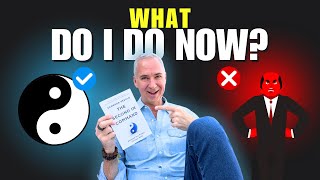
Cameron Herold explains how CEOs should work with a COO: stop micromanaging, delegate using an activity-inventory spreadsheet to build teams around unique abilities, and resolve conflicts privately. A COO isn't an operations manager—they're the person who lets you focus on strategy.
Chapters
All right, what do I do now? That's what we're going to talk about. On today's chapter of the second in command. I'm going to do a deep dive on what do you do when you have that second in command inside of your organization? They're working with you, they're working with the team. What are the highest leverage points that you're going to be able to get out of them? Inside of that business, how do you get the highest return on investment and how do you support them in the day to day? You're going to get some great tips on really leveraging this. This CEO, coo, Yin and Yang relationship. What do I do now? We have a strong work culture where the spotlight gets shined on lots of different people beyond the CEO and myself. Overall, we both have a strong sense of self worth. Rob Davies, President, JAM Group A COO changes the dynamics and the way the organization accomplishes work, but the scale of that change can come as a surprise. You hired a second in command to help get responsibilities off your plate so you can focus on your unique abilities. But old habits die hard and it's not always easy for a CEO to let go. When your role changes, it's natural to feel unsure about how to react. So make sure you're reflecting on the best uses of your time and energy so you can avoid becoming a source of resistance to the coo. It bears repeating that you must know yourself well before you ever bring in a second in command. If you can't work with a competent COO or you feel threatened by letting them do their job, then you've hit a leadership ceiling that will hamstring yourself. As CEO, you need to learn vulnerability. This person is there as your partner, not a threat. It's still your business and you can fire them if you need to. There's no reason to feel intimidated. You're paying someone to do a job for you, so let them get on with it. Learning to Let Go that doesn't make the transition easy, necessarily. As CEO, you're going from having the whole company depend on you to having a COO who does much of the heavy lifting. What should you do with all of your time? Again, rather than grasping at responsibility or authority, effective leadership requires learning to let go. Your job is to get results through people. You ensure the business scales and all the work gets done, but not by you. As you begin letting go of some of what you used to do, you'll have the time to spend on what gives you energy and what you're best at, you can plan for the future, observe, hold skip levels, do deep dives into different business areas, and report back with what you find. Your job is to think strategically rather than be down in the trenches. While a COO gets on with execution and heavy lifting, you can slow down enough to converse, listen, and give timely feedback where it's needed. It might feel like you're not getting anything done, but this thoughtful leadership is hugely important. Once you free up your time and energy, you can make better decisions with major implications. One of my coaching clients, for instance, sat down with his team and asked them to make a list of all the projects they were working on. He discovered they had almost 200 projects underway across the company. It was a ridiculous number because they really had time to work on 10 or 12, so he completely eliminated 150. When he showed me the list of what he eliminated, I made him throw it out. He'd wanted to keep those 150 ideas for later, but I knew he would never need them. They had plenty of ideas. Because he was able to slow down and think, he probably de stressed the organization. By 10x, they no longer needed to worry about random responsibilities of little value. Now they could focus on the critical few. If you find it difficult to let go, try looking at what you're gaining rather than what you're losing. Having someone else take work off your plate is a privilege rather than a hardship. You've earned the chance to free up more time to focus on strategy and your biggest strengths and passions in the business. If you've hired someone to manage five business areas that used to report to you, it's important to figure out what your new job is. How do you spend time thinking about strategy? How do you spend time working with the board? How do you spend time to better understand the industry? How do you observe the organization from a distance? And which areas are you best at where you could spend more time? Figuring out your new responsibilities and how to deal with them will allow the COO to work on their own responsibilities. Don't scatter shit. Working with the COO is to a large extent about not getting in each other's way. Remember that you're hiring an expert to come in and run the business for you, or to run a number of the areas of business you need to let them do that. If you bring them in to run the business, let them run it, which means getting out of the way. Of course, to do so you need to trust them and yes, ask questions. But don't micromanage or engage in seagull management. That's what I call a scenario in which the CEO swoops in, shits all over everything and leaves. Entrepreneurs tend to feel like they're adding value or identifying something that frustrates them, so they intervene. But when they realize they're too busy or don't want to deal with it, so they fly off. It's much better to pull the COO aside, share what you saw or what frustrated you privately, and then let them take care of the fix. Follow the same principles as the skip level meetings by reporting back and conferring rather than taking over. On a recent call with Jason Hennessey, CEO of Hennessy Digital, and his COO Scott Drumm, who's also a CEO alliance member, Jason said, things are going too well right now. I'm not sure what to focus on. I feel like I need to break some stuff to get engaged again. Entrepreneurial founder CEOs are often starved for praise, which makes sense. As I've said so many times on stages, I feel like we're all 16 year olds trapped in adult bodies. We're all still dealing with our teenage insecurities in some way. If someone else comes into your company and starts sharing the praise, accolades and recognition with your teams, it's natural to feel less loved or less secure. Recognize though, that people think more of you because of who you've brought in to help grow the company. It's dangerous to interfere thinking you can fix a problem faster than the COO you because there will be repercussions. You start to undermine them when your job is to actually shine the spotlight on them. If you swoop in to do something, you're actually hurting that COO's ability to do more inside the company, even if that's not your intention. The job of the CEO is to grow the skills and the confidence of the coo. Delegation and Unique Ability Teams Dan Sullivan, who built Strategic Coach, talks about building unique ability teams based on the areas of strength that you're most passionate about and energized by. Delegate everything except genius. Get everything off your plate. Accept your unique abilities. If you're great at speaking and dealing with the media, do those 80% of the time. Do more speaking, more talking to the media, and more outreach, and then spend the rest of your time thinking and observing the industry, not doing the COO's job. Most CEOs still keep three to five business areas reporting to them, or whatever is a manageable number. You might keep finance or marketing because you love that area. Maybe you keep legal and compliance for strategic reasons. I'm sure Steve Jobs kept product reporting to him, but I doubt he had the retail experience reporting to him. He often talked about product design and marketing, but he didn't have a whole lot to say about retail. The key is to identify the areas of the business you're best at leading and that give you energy. The ones that harness your unique abilities. Delegate everything else. If you make the right coo, hire someone who loves and excels at what you don't, then everything gets done and people gain energy and fulfillment in the process. On the other hand, if you hire a COO who wants to oversee areas in your unique abilities, there's bound to be friction. Delegation represents a way to supercharge the growth of the organization. You have more time to work on what gives you energy, which allows you to bring that energy into the rest of the business. Instead of transferring stress and a sense of being overwhelmed throughout the company, have the COO build teams such that each person only works on their unique ability areas. To build unique ability teams, the COO should start with having every key leader do the activity inventory, making a spreadsheet of every task they do over the course of a normal month. Column A lists the tasks. In column B rank them by incompetent, competent, excellent, and unique ability. The first step is getting everything off their plates that they're incompetent or only competent at. Next is to redistribute some of the excellent tasks to other executives so they're only left working on their unique abilities. It often isn't your job as CEO to engage in strategies like building unique ability teams, but it's a tremendous point of leverage when a COO does. If you haven't already, come, check out the Second Command podcast on YouTube. It's at YouTube. Ndcommandpodcast Conflict at the Top despite the care you took in hiring the right coo, you're not always going to get along. The key with conflict is to remember that as in a marriage, it's natural. When you're spending so much time passionately engaged in an endeavor with another person, there will sometimes be miscommunication, mismatch, energy and stress. Both people are trying their best, but sometimes life intervenes. When addressing conflict, focus on what went wrong, what you need in the future, and how you feel about what happened. Ask the other person how they're feeling as well. Remember that you're upset with the result, not the person. You don't like an output, but the person is not the problem. Work through the situation. Get your feelings out in a compassionate way and make sure the other person knows that you still care about them. You value the relationship, but this specific issue isn't working for you. State specifically what has frustrated you and let them air their side too. COO Alliance Member and Redirect Health COO Guy Berry emphasizes the importance of not making conflict personal. The big thing is words are words. They can't hurt you. If you let those words hurt you and break you down mentally as a leader, you're just not going to be able to last. It's going to tear you apart. Address the specific issue. If you're upset because the COO shows up late, explain what you felt in that specific situation and why. Rather than snapping, you're always late to meetings. Remember, you're stronger together than you are apart. Working through the rough patches leads to strength. You're always busy, growing and working hard, so it's better to work with the person through trust than to demolish everything the second it gets hard. Deal with conflict in private because arguing in front of employees or the board will send negative ripples throughout the organization. Find a way to engage in healthy disagreement without burdening the leadership team or board of advisors. If you constantly argue or debate things in front of others, you undermine the whole foundation of the organization. You need to figure out how to work together, even when you have different perspectives. Don't go to HR to solve a conflict. HR can coach you on how to go back and solve the conflict for yourself, but they should not serve as the arbiter. HR's job is to teach people how to solve their own issues, not to become the union steward or do the uncomfortable relationship work for people. Managing conflict is much easier when you've built a foundation through date nights and shared activities that transcend work and cultivate personal connection. If you've grown trust and mutual respect, then conflict won't destroy a relationship. Remember that the COO benefits you, whether by shortening your work week, growing the company, or expanding your capacity and capabilities. Stay focused on those benefits. You can work through difficult times in service of the positives. When you air conflict, though, it's like parents fighting in front of their kids and and unnecessarily scaring them for days. It creates a negative butterfly effect throughout the organization. Instead of resolving your conflict together with each other, at the end of the day, it's your company. You're ultimately responsible. Even if you're not the owner or founder. The buck still stops with you. However, that doesn't mean that you can Run the business as my way or the highway because you'll hurt the culture of the organization and undermine the whole point of bringing in a coo. Being too controlling or too much of a hard ass will lead to churn. You need to flip the org chart upside down and focus on your role as the Chief Energizing Officer who supports the leadership team and supports the managers who support the employees, manage conflict and foster relationships for the good of the organization. Avoiding Ego the COO needs to come in with humility and drive, building consensus and building teams. They can't come in as an autocratic dictatorial leader because they won't earn respect. As I've said, the employees in the company will respect the COO title, but they also need to respect the person who's in the seat. CEOs too should be wary of ego. You should have confidence, but ego is dangerous. It leads to backchanneling, lack of motivation and employee turnover. People don't want to work for assholes. They want to work for confident people. But you need to check your ego at the door. As Jim Collins talked about in Good to Great, Level five, leadership includes a blend of personal humility and personal will. Ego can seem charismatic at first, but then it turns people off and undermines success. You don't need to be self facing, but you do need humility. Coos have to check their ego at the door and be okay with the fact that the CEO will get most of the limelight. The CEO tends to garner the fame and accolades, but a good COO will have the temperament not to care. In some cases you might share the limelight. When I worked with Brian at 1-800-GOTJUNK. We often shared the limelight because I asked for credit for my part in building the franchise program, a strategic decision to build my personal brand and career. I didn't want to invest six years in making his company what it was and have no way to leverage those accomplishments at the same time. Because I wasn't ego driven, I was happy to shine the spotlight on him as founder and CEO. The CEO's job is to grow people and instill confidence in each member of the leadership team, allowing them to receive accolades for work well done. The CEO doesn't just shine the light on the founder, but also down to other leaders. Doing so requires not needing to swoop in and take all the credit. Instead, the CEO can highlight how great their VPs and directors are. The goal is to grow the skill set of others, not toward recognition for themselves. Making Making an Impact I saw so many CEO'S and entrepreneurs struggling. It felt like I was watching flies banging their heads on windows trying to get out and I wanted to help them. It was such a huge need that we had to build the COO alliance that has expanded now to hosting the second in command podcast, helping my clients and coaching their COO's. I'm also excited about the thousands of managers learning from the content in my Invest in youn Leaders course. Larger companies are increasingly working with us and listening to the Second Command podcast too. CEOs can gain some good insights from the podcast and see issues from a different perspective. Business interviews tend to focus on the CEO side, so there's an opportunity to expand your perspective to the COO side and use a different lens. We keep gaining traction, scaling and gaining podcast listeners. I've made my mark, I feel good about it and I don't need to be a COO again. Sooner or later I'll probably have an operations person whom I can delegate to, but I don't think I'll ever need a full coo. I can keep my current projects within my span of control Most of the guests on the Second Command podcast are unknown names. I usually find a company, brand or CEO and want the rest of the story, so I ask for an introduction to their second command. I wanted the story of Rippling, Shopify and Bumble because they were doing so well. They must have great coos, but I didn't know their names when I started. My podcast is often the first place people really get to know COOs. Many aren't used to interfacing with the media, whereas CEOs tend to do so frequently. I love the chance to get the unvarnished rest of the story about business growth that we don't typically hear when we only talk to entrepreneurs. It's like only hearing Mom's opinions on child rearing. When of course, dads have their own valid perspective too. One of the first coos whose name most people know is Sheryl Sandberg. She was with Facebook for 15 years as COO before announcing that she was stepping down. Before joining Facebook, Sandberg was the Vice President of global online sales and operations at Google. Before that, she was the Chief of Staff for the United States Secretary of the Treasury. The COO is akin to a politician's chief of staff, and that label has become popular in the business world. Mark Zuckerberg has shone the light on her to make sure she's world famous for having been his second in command. As a result, she was okay with remaining COO because she got the accolades and people knew she built the company alongside Zuckerberg, in addition to receiving generous financial compensation. Of course, Zuckerberg has openly admitted that in the early days she was there as a babysitter and helper, although she later became his partner. Most COOs are not trying to move into the CEO role or grow their careers beyond the COO level. They're happy and well suited to growing the organization until their skill set no longer serves. Their satisfaction comes from their contribution and from fair compensation, not necessarily from any wider recognition. Often COOs appreciate autonomy and increasing opportunities such as extra PTO to work on an executive MBA COO satisfaction comes from feeling like they're doing great work, working with great people and being paid fairly for their time. The personality type is such that most don't want the limelight or the stress of the CEO role. When I asked one COO for the reflections to include in this book, they thanked me for the opportunity but said I respectfully decline as I prefer to be in the background and not the spotlight. They said they take their cues from Roy Disney, who made his brother Walt's magic run on time from behind the scenes. They quoted Roy Disney as saying, it's not hard to make decisions when you know what your values are. Written and narrated by Cameron Herold Text Copyright 2022 by Cameron Herold Production. Copyright 2023 by Cameron Herald. All rights reserved. Thank you for listening.
More from Cameron

Flutterwave Former Global Head of Operations Awa Kone | When Growth Outruns Operations (Podcast 611)







Optomi Professional Services COO Nick Murphy | The COO Can’t Know Everything (Podcast 607)


