
0 To 4 Million: How My Filmmaker Friend Balances Multiple Businesses
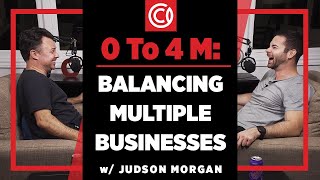
Ryan Daniel Moran talks with filmmaker Judson Morgan about running multiple businesses that hit 4 million in revenue. They discuss the challenges of scaling, staying authentic, and why passion matters more than chasing money in entrepreneurship.
Chapters
Don't you love capitalism?
Yeah.
Yeah. I've kind of gotten okay with the idea of the market saying no. Like, I'm much more like, you know, after, you know, having 98 SKUs or whatever, I'm like only 20% of them really, really work.
That's right. The biggest mistake is that people don't move on fast enough from failures. They try to fix failures.
Totally.
When someone by the initials of TB arrives, you just send him down. What are you pulling out of my hair?
Sorry.
Excuse me. All right. Oh, that was cute. That was cute, Jetson. We take things real seriously here. Real seriously. Judson, we have to tell the story.
About how we met, okay.
Before we start talking about money and business even get there.
Yeah. Politics, religion.
Oh, I'm in. I. I need you to prayer.
Let's open in prayer.
Any who. I. I've actually never heard the full story from your perspective.
So I guess I start from the phone call.
Right? I got a phone call. Maybe I should start from before that.
I think you should start with how you discovered my work.
Okay. So I won't start with a phone call. Fine. Ryan.
Yeah. So I had a video production company in Los Angeles and I, you know.
You were an actor.
Oh, yeah, I was an actor. Just.
And. And you had like one famous scene, right?
I don't know. I don't want to talk about it. I was on. I was on angel, you know.
That was your breakout.
Yeah.
You were on the. A series. An episode of Angel.
Yeah.
I love how uncomfortable you are right now.
This is embarrassing. I was on an episode of Strangers with Candy. If you. It's a very weird show. Amy Sedaris, you know, David Sed. Amy sedaris was a 40 year old who went back to high school in this story and she was like awkwardly in. In high school as like a 40 year old woman and the whole thing. So.
So like Billy Madison but with a woman character.
Essentially. Yeah. Wait, what's the guy who hosts the Tonight show now? David Letterman. Who took over today? Steve. Steve.
Oh, my goodness.
Yeah.
What's Steve Money. Help me out. Why can't I think of Steve? Steve. Stephen Colbert's name? Why can't his name. What's wrong with me?
I can't either. He's. He was on that show and a writer. So I worked with. I worked with him on that show, but I. I played. This was my. This is the real thing that if you want to go look me up, Google this episode. I was like a. A boy that. I was like a kid. I was like, when I first moved to New York City and I played like a love interest of Amy Sedaris, who was a 40 year old in high school, and I was like a high school age kid.
Oh, man.
And go judgment. We had. Yeah, it was hilarious. I played the cowbell in the band in the show, and that's how she fell in love with me.
This sounds freaking awesome.
Yeah, it was. No, no, I'd be proud for anyone to go watch that. Anything else? No.
Don'T go see. Don't try to find anything else.
Then you went behind the camera, you started a production company.
Yeah, I figured out that being an actor was.
I mean, that is a terrible business. You're like, literally like, oh, I'll go into business where I try to make a living, where it's like 0% up to me if I succeed or not. It's complete luck.
Terrible. So I started.
Doing documentaries, commercials, stuff like that. The. The service business. So making videos for people is just hard to scale. And so I started listening to Pat Flynn's podcast, only because it was named Passive Income. I didn't even know what the that was, you know what I mean? But I was like, of course, none of it actually is passive, come to find out. But you were on there.
Yeah.
Was that like a very early podcast for you?
Yeah, it was super early.
Okay.
Yeah.
So, yeah, so I caught Ryan on that and I had listened, I swear I listened to 40 episodes, 20 episodes, a lot. And he had all kinds. Yeah, he had all kinds of different business models on there. And I was like, that could be interesting. This could be interesting. And then when you came on, it was like.
That makes sense. For the first time, I was like, that's a business model. That makes sense to me. Like you, you said, I really like the idea of physical products. It was the first time I'd ever thought.
I'd ever considered physical products as like a thing, as a business. And it was, it was just like super clear to me that it was like such a good idea. And the way that you articulated it, I was like, oh, my gosh, this is amazing. So light bulb went off. So I.
Literally from that day, like bought like 500 cell phone cases from Alibaba or something.
Forgot about this story.
Something like that part. Yeah, yeah. And I was just like, just to test it out, you know, there were like 50 cents each or something. And I did like leather, just so it was differentiated a little bit quotation.
Mark leather as you just.
Oh, yeah, it was faux leather.
And they sold the Money's in faux leather.
Yeah, totally. I think you said that on the podcast.
So they totally sold out. I mean, you know, like, I was like, oh, my gosh, this totally works. Like, Ryan's totally right. And, I don't know, six months goes by or something maybe. And so I. By that point, I had, like, started a brand and, like, started to do the whole thing on Amazon.com while I had the production company. So it's sort of like a side thing, right? Well, it's completely a side thing. And then I got a call from producer friend of mine. He's like, hey, there's a. There's a guy who wants to make documentary. Thought you'd be perfect to, like, direct this. And I was like, okay, cool. What's it about? And it's like, oh, it's. It's a. It's, like, called Losing My Religion. And he. You know, it's a guy who, like, used to be a pastor, and I was, like, a businessman, and I was like, oh, I'm interesting. And he's like, yeah, I think the guy's from, like, Austin, Texas. And I was like, was that Ryan Moran?
And he was like, what the.
Like, he was like, how in the world do you know that? I was like, oh, I listen to his podcast, and I'm like, totally start a business because of him. And.
And you didn't tell me any of this. Yes. Like, we talked about the documentary. We talked about, like, what the film was gonna look like. And you never brought it up.
Yeah.
Until we met in person. And you're like, so there's a story I have to tell you.
Yeah.
And I was like, first of all, 80% of me was, like, thrilled out of my mind. Like, this is a, like, as we used to call it in the church, a God thing. This is, like. This is inexplicable.
Right.
And 20% of me was, like, pissed.
You didn't tell me.
But 80% of me, like, this is the, like, the trippiest experience.
Yeah. Yeah. It felt like. When you think back on it, it felt to me like I didn't want to muddy the waters. I didn't want to make it about me.
Yeah, it was.
It was about you because you helped me do something, but I wanted it to be about the film.
Yeah.
That's why I did that. Does that make sense?
Yeah. And so this. The interesting thing is we. We have this strange relationship now where, like, you were a hero to me in this area of my life that I know nothing about. Right. Filmmaking.
Right.
And I'm a hero to you in this area that you felt like you knew nothing about, which is business.
Yeah.
And all I did was, you know, talking to a microphone a few times, and you did all the work. But you perceive me as way ahead of you, and you make this film, which is right in your zone of genius. And so we have this strange relationship where, like, I admire you and you admire me, and I think we each put each other on a pedestal, and we both think it's weird that the other person puts each other on a pedestal.
Yeah.
So we have this just strange relationship that I think is such a mirror of how most of us are operating in life. Like, we're. We're comparing ourselves to other people's highlight reels and, like, overlooking where our genius is and.
Yeah.
Because we have a weird relationship.
No, yeah. It's true. And in a way, it's like the great. It's the best. Right. It's like people that really respect each other. And it's like there isn't. There's a hierarchy, but not as a whole. It's like, I look up to you in one way, you look up to me. Exactly. It's like.
And that's how life is supposed to freaking work.
Yeah.
Like that. Like, that's how it's supposed to be.
Yeah. We're all really good at certain things.
Yeah. And we try to be good at what somebody else is good at or.
Try to do it like status.
Right. Yeah. It's so up.
Like, I'm gonna. I'm gonna take that tactic that that guy does, and I'm gonna do it. I'm gonna copy that. Or I'm gonna try to be like, X or Y or whatever. It's like. No, no. Be you, man. That's your grace. Especially as, like, a creative in, like, filmmaking world or the acting world or something. It's like, if you try to be this or that or whatever you are, you're dead. You're dead in the water. Be you. Be as weird as you are, bro.
Yeah.
You know, the weird. Honestly, the weirder people that I knew, quote, unquote, that were coming up with me as actors. So this one dude, Brian. Bob Garner's his name, he. Does anybody watch the Office? The American version of the Office? So he's the. The big guy that plays Kevin.
Okay.
Like, you know, we were friends. We did a play together before he ever moved to Los Angeles, you know? And of course, that dude, because he's so unique, he's so Him. Looks. No one else looks like him. No one else has that humor. You know, he's very him. He like, succeeded like that because he was like, I'm. I'm me, man.
Do you know Kelly Felix?
No. An actor. It's.
It's funny. You kind of look like him.
He was. His, like, breakthrough success was an info product called the Rich Jerk way back in the early 2000s. It was the first thing I ever bought on the Internet. And he's a similar story as you as actor turned entrepreneur. But his. His biggest highlight reel, he was. He was a teenager on 7th Heaven. I love it.
That's awesome. That could totally been me.
Well, he likes to tell the story how when he was doing auditions, he noticed that if you tried to play a part, if he tried to play a part, he wouldn't get the role. But if he started auditioning for roles that were him, he would get the part. So he saw the producers just. They didn't want to get somebody who was good at acting like an arrogant prick. They wanted to go get an arrogant prick to play a part. And it's just like, be yourself.
It's a massive unlock, I think, for. For anything. So anyone who's listening, who's like, wants to. Is starting a business. Do you do. Do the thing you're passionate about, you know, create it right, you know, you know what I mean? Like, and do it your way. Like, take the information that you're getting and. And put it into you as a person. You're going to succeed. Like, you actually, so you're moving more toward things that you love, whether it's like keto brownies or right things that you genuine, like foods. It's a passion of yours, it's an interest of yours. It's. You don't have to be like, get up every day and be like, oh, man, I gotta work on this. It's like, no, no, I want to. I love it. It's me.
Well, I, I just. I'm being genuine in how I say this. I have given up at things that. A constant struggle.
And just kind of my overall life thesis right now is that this, the deck is kind of stacked for things to be easy. Or actually a better. A better phrase is resistance free. There is someone who is talking today about how they have this business they hate and they're trying to fix it. And all they want to do is just do the business that they're passionate about. And what life is giving that person the opportunity to learn is that it doesn't have to be hard.
Everything is hard. Everything Takes hard work. But not everything feels hard. And you know what the measure on it is, is its energy. It's your own personal energy. That is, that is the sign. The sign is, are you getting more energy out of something or is it draining you? Because energy is infinite. You can, it's created. And when things are draining that, it's not your highest and best use.
Yeah.
So that is, that's what I'm discovering.
Yeah.
Anyway, so that's how we met.
That's how we met.
We made a documentary over about two years. It's sitting on my hard drive somewhere. You're entrepreneurial add. And my entrepreneurial ADD.
Like to start things ideas around and not finish them. So.
Yeah, we didn't only kick it around, we did. I mean we're like at the finish line.
Oh yeah, yeah.
We just, we just don't want to step over.
That's right. Well, part of me also just like, man, that was so hard to capture on film, like the evolution of a lifelong journey. Yeah, it was hard to condense that down and like we got it done.
Yeah.
But I mean that's more, I think going to end up being the introduction of the journey. And I'm a completely different person than I was when I started making the film. When we completed the film. I'm a different person. I believe things now that I didn't believe a year ago because my work has continued and I'll share more about that. But tell me about the business side of it. Like what you start following, you build this business. I think you were like right at a million or something when we met. I don't know if you were like a year in or something, but don't know that much about business. I don't know if you talk about the brand publicly or what, but sure.
Yeah.
We, I, I can't remember when we met, where I was at, but it felt earlyish. But I always had, I always really bought your premise that built to build a brand, you know, and it naturally played into who I am and, and I'm a storyteller, so I, I always bought that and I wanted to tell. I wanted, I didn't want to just sell spatulas. Yeah, I never, you know, so, so you. I heard that version of E commerce like, you know what I mean? I heard those podcasts sell things on.
Amazon, sell what everybody else is selling.
Yeah, but you were always talking a bigger game and I think your audience probably resonates with this, that that is a lot of what draws us in is like you're talking a big game in a lot of ways, but building a real company is something you always say. Yeah, I'm. I'm, you know, 30% of the way into building a real company. Like, it's something I want to talk about more. And, like, you know, we. We were talking earlier about hiring and firing and those. All those things. Like, it's hard, but, yeah, I think I was at about. I don't know. I can't remember about a million. But we started selling fashion jewelry. I don't even know how that happened, actually. Yeah. Yeah, I don't. I. It's strange. It's. My wife and I, you know, we sort of came up with stuff together, and, like.
It'S. It's funny. I just. I don't remember how I ended up there. So we're. We're one of the bigger, you know, fashion jewelry companies on Amazon.
We should probably. I don't know the revenue numbers. Doesn't matter. It gives people a gauge of what. Right. Yeah, we have about. We have, like, a 98 SKUs, so. We have a lot of SKUs. Yeah. And we. We're targeted to do around 4 million in revenue. So this year.
It's great, man. Congratulations.
Thank you.
How does that feel to say.
Right then I felt a little bashful about it, but.
Bashful? Like, afraid. It's low. Like.
No, no, no, no.
You feel like you're bragging.
Yeah. Just kind of stupid, you know, because, you know that.
You know, it's so. It's so funny that, like.
We'Re so afraid to be judged around something as stupid as.
Yeah.
Numbers.
Both of these things happened today, or. No, both of these were. Last night. One person came up to me and was like, look, I feel uncomfortable because I think I'm the poorest person here, which is probably the seventh time somebody has said that at my house. They can't all be right.
And then someone else said, ryan, you know, my business is struggling, and every time I see you, I feel like you're gonna be disappointed in me. I'm like, dude, like, I don't care how much money you make. I don't care if you're making $10 million or $10. I'm happy for you at the top, and I want to help you at the bottom. Like, what do you want to impress me?
It's just interesting how we have. You're a little bashful to say what your revenue was because you're like, I don't want to seem like a dick.
Dick.
And other.
I think we Also, we also really know how. How broken our businesses are.
Yeah, we know all the going on under the hood.
You know what I mean? Like, I think some people.
Have their worked out. It feels like they know what they're doing. And then I think most of us, you know, we're like, yeah, we don't really know what we got to 4 million, but it could all fall apart. Or. Or, you know, it's on. It's a house of straw. It's. It's a house of cards. They're like, oh, if. You know, I mean, I'm not a complete idiot. I. I do look at SKU level profit margins, and I'm not 100 sure that there. That the software that I use actually calculates it correctly, but I. But I am doing that, and I think that's, you know, I look at each per. At each item, at each SKU as a. Its own little business, so. Right. So if. If. If it's not profitable, I got to figure that out or get rid of it. I liquidated my first product. The 2500 units.
The leather cases or whatever it was.
No, no, I stopped selling that.
Oh, so your second product.
Those sold out. Those worked. Those didn't. Those worked too well. So you went on the second product and you liquidated those?
No, I mean, just recently, I liquidated one.
Oh, okay.
That's what I mean. Like, I did this whole thing, 20,000 bucks. It was a lot. And I was like, oh, my gosh, this is not working. I. I cannot believe this. I tried all new images, I tried new copy. I tried all this different stuff, and I couldn't get it to work. And why didn't it work?
The market just didn't want it, man.
It was a set of three candles.
Okay.
And it's just. Nobody wants a set of three candles.
Like, like, my wife and I were like, dude, these are cool, man. What's.
Why'd you launch it then?
Because we had had other successful products. Similar.
Okay, I have to ask. The other products that were similar, why did they work or why did you launch those?
The way that we've been thinking about stuff is we do a little bit of, like, you know, product research, but mostly we're launching things that we want.
And that was those other similar products that did well.
Yeah.
And then you went for the money.
And it sucked.
Mean, like, just doing more versions.
Well, the. The next product, you justified it in your head. You were like, well, these are doing well, so let's just do a different one. The market obvious likes and Then it failed.
Yeah.
Is that right?
Yeah.
Man. I see that so often. I don't know what the principle is there.
Yeah.
But as soon as you start doing things for the numbers and the algorithms for the data.
Things suck.
Yeah.
When you do things because you just have, like, this internal pull for. It always works out. And part of me thinks of it. It's just because it's like something you want anyway. Numbers are a reflection of what people want, not a precursor to what people want. So some people will look at numbers and then try to sell to the numbers, but the numbers are actually a measure of people wanting other stuff. And.
What you're describing is an example of, like, you wanted something, you made, it did well. Then you're like, let's go for the numbers now. And it didn't go so well.
Yeah.
None of my really successful products had data to back up that they would be big sellers. None of them. It was. It was. They sold, and it, like, created a category, and then other people flooded in and started doing marketing and stuff, and it made the category bigger. And. But there was no reason to. Who was selling organ, like mold free coffee 10 years ago, right. No one. Who was selling MCT oil 10 years ago? No one. Somebody brought it to market and it created a category. Yeah. Started copying it, and it takes off. Don't you love capitalism?
Yeah.
I've kind of gotten okay with the idea of the market saying no. I'm much more like.
You know, I. I. After, you know, having 98 SKUs or whatever, I'm like, only 20 of them. Really, really work.
That's right.
You know, And. And so it's like, okay, this one's one of the 80%. Some of them I keep around. They're singles that are doubles, right?
Yeah.
But if it's. If it's a. A strikeout, move on. Let's move on.
Tai Lopez said something really smart to me once. We were. We. We both advise a company who said the board of a company. And he said the biggest. The biggest mistake either he's made or that he's seen other people make is that people don't move on fast enough from failures. They try to fix failures.
Totally.
And so instead of just being like, up. Didn't work. Let's go. Next thing next. Man up. Let's go. It was. This is working. I'm gonna try and fix it and force it. And then you spend three years trying to force it.
Yeah. How much time?
The least resistance man.
Right. Totally. How much more time did it take for me to try and try and try all these different ways for that one product when I, all that energy could have been spent on the great products or, you know, if I, if I work on a way to convert 1% better on my best product, that's going to be infinitely more roi, you know.
Yeah. And I've made the mistake two dozen times. I don't know what in our brains makes. I think it has to be hard.
Yeah.
But it doesn't. Right.
I know when, like talking about launching, you know, on Amazon for example, like certain products just launch, they just, they just go. Yeah, because.
Just move.
Because they're beautiful and they're, they're. You're meeting the market at the time that it wants them and you know, it's like, oh, I don't have to do anything actually so.
And this here's another observation. When you genuinely want it, it's really easy to write copy around it.
Totally, totally.
And so the copy comes across as authentic, meaningful. But when you don't want it, you're trying to write in like the most wonky ass way. Conversions suck.
Yeah.
So it's just, if I follow.
I'm only giving myself that. I'm giving myself this advice, like, just follow what's easy, like what feels energizing. I don't mean easy lazy. I mean like energy creating.
Yeah.
For the juices.
I feel like humans are.
Like you were saying earlier, we started today with a little meditation, if you don't mind me saying so.
Yeah, please. I would actually, I'd love your thoughts. Thoughts on that. I really enjoy leading group meditations.
Yeah, it was great. I call Ryan the entrepreneur pastor.
I'll take it. I'm not going to, I'm not going to market myself as that. But if other people refer to me, I'm going to.
So Ryan the entrepreneur pastor. Or is it pastor Entrepreneur? No, entrepreneur pastor.
He said the, like the pastor for entrepreneurs. So like the entrepreneur pastor.
Yeah, the entrepreneur pastor. Because he led us in, you know, a beautiful, completely unrelated to business, but everything. Meditation in the morning.
What was I saying though?
I have no idea.
Completely.
Hold onwards. We rewind here.
Bullshit amount. Entrepreneur pastor got me distracted.
Well, I said it doesn't have to be hard. And then you said, oh yeah, this meditation. And that's where you were going.
Yeah, I, I think it's an awesome way to, to.
We said, I said it doesn't have to be so hard. And you said, yeah, like today you let us in a group meditation.
Yeah, yeah.
Yeah. That's the point that I Can't remember.
But. But I. But I. But I do have an answer to the meditation. Okay. So it was lovely. I mean, you know, it's. It's. It's like Tony Robbins where he's like, your. Your business is only as successful as you can develop your. As a person.
Right.
Whatever that quote is.
And.
Oh, I remembered what I was gonna say. So.
We. You said. You said this morning in the meditation that we. That it's a group meditation. There's energy in the room.
Yeah.
Right. And there's a connection, which I. I totally believe there's connection with human beings, and we're made to connect and all that stuff. And so when we're trying to develop. This is the point that I was trying to make from. From before, when we. When we're trying to develop a product for another human being. Right. Like, this is human. Human to human products are not outside. Like, they're all about humans. And if we're doing it out of a place that's like.
Based on an algorithm or based on math, based on.
The result that you hope that you get.
Yeah.
From another human being.
The other human being, by the way, they feel that, you know, I think there's like, this subconscious exchange of, like, oh, this product feels very organic and real. And like you.
You.
You believe in a brand because it feels so real.
I think you're 100.
You know what I mean? And it's like, even on an Amazon listing, we can. We can sense it.
You'll feel the difference.
Yeah. You're like, oh, this is. This is like a. Somebody really made this. Like, they. They believe in this product. Like, this isn't some knockoff. What. You know what I mean? I'm not articulating that super well.
But entrepreneurship is a spiritual act.
Yeah, totally. Totally.
And.
If entrepreneurship is a spiritual act, then if you're approaching it with the intention of getting something, it is like being in a room or on a date with someone who's trying to get something. We feel that.
Yeah, totally.
And if entrepreneurship is a spiritual act and you're coming at it with, what can I create? What can I give?
What can I give?
Magnify. What can I amplify?
Totally.
Where can I have alchemy when I create something out of nothing? People feel that too.
Yeah. And then your products are awesome.
That's right.
You know, because you, You. You're trying to do something good in the world.
Right.
You're not just trying to make another of this or whatever because it says that you're going to Sell a lot. The, you know, the plugins tells you. It's like, no, no. I'm going to build something real that I really want to give to the world. Like, like when we create products, our brands, I can't wait to get returns shipped back to my office or my house, because then I have a bunch of stock and I can give them to my mom when she comes over.
That's right.
Because I love the fucking product.
I did the exact same thing in.
My businesses, you know, isn't. You know what I mean?
It's like when you love the burden to get returns. Yes. Cool. I got my own free stuff.
Yes.
That's exciting.
Yeah. And my whole team's like, awesome. We got four boxes of returns, got Christmas presents for everybody, all of our family, for family, you know, because we love the products. That's right. It's like if, if you have that, it's like, so, you know, you're saying to me that, like, you know, you know that I love making films and that is a unique ability of mine, something I've done for a long time. And, And I have found that the creation of products, telling a story in this direction, telling a story around them and creating really special little things. I mean, a piece of jewelry that my wife designed or whatever, that if I. If I see it in the wild, I had this dream of, like, seeing somebody wearing a necklace that my wife designed in Disneyland just like a random person. And I've seen it a few times. Like a random.
You know, that's happened to me.
Has it a T shirt?
My brother took a selfie with somebody wearing the capitalism.comt shirt.
That's so it's. It's epic, right? Yeah. It's like, that's an idea I came up with out of an organic, real thing in me. Right. Right. And it's. And it's in a small way, changing the world, you know, like giving this person. We make products with purpose, you know, products with meaning. Like, I just feel like that's what everyone should do. Out of your own heart, your own life, your own experience, your own pain, solve your own pain. So, you know, like, build beautiful things. They're gonna kill, dude.
Yep. You take. You take ownership for the problem you want to solve.
Yep.
And you create something that's in service to other people.
Yeah, it's.
That's it.
That's it. It's not that hard. And then, you know what?
We make it so hard because we're, like, afraid it's going to fail.
Yeah.
And we're so attached to the result.
Yeah.
Which we end up creating. Because if you're attached to the result, then you're taking.
Right. Totally. We.
When we were on the bus coming back from dinner tonight, you were talking with Mike about how creating is just like the most joyous thing. Like that zone that, like, that is just pure fun. And I really believe. I don't know if it's everyone, but definitely entrepreneurs, when they're in that sense of they're creating, that's what we're all really after. That's the feeling like we want to. What we really want is not the money. What we really want is not the status. We want to be in constant creation. And what is the. What is the opening verse of the Bible? Genesis 1:1. What is it, Judson?
It's.
You can do it.
It's in him where. I'm so bad. Yeah, I'm so. I'm so bad at remembering exacting. In the beginning was the word.
That's John 1.
In the beginning, God created the heavens and the earth.
Yeah. What did God do in the beginning?
In the beginning, he created.
Oh, he created.
Yeah.
Yeah.
So what. What's God's favorite thing to do?
Yeah, create.
Boom.
Totally.
No, I was thinking the same thing. I was. I was going to say the same point. It's. It's. We are created in God's image.
And if that's true, then. And God creates, what's our highest use? Totally creating.
Yeah.
Entrepreneurship's a spiritual act, man.
I believe it 100%. And to be honest with you, that is one of the reasons that I resonate so much with you as a, you know, influencer or whatever. It's. It's the tactics and all the stuff that you learn in business in general, all the different stuff. Right. It's like just as a random example, but like, getting influencers to promote your brand becomes easy when your brand has real products that human beings love and. Right. It's like, oh, they. They actually want. So. So we have some home goods and stuff and like, it's super easy. They're beautiful. People want them. We don't have to knock anybody's door down. Like, it's just get.
Getting to have review hacks.
Yeah.
When people love the product.
Yeah. They're like, can I have it? I want to review it. They see our next product come out. They message us.
Yeah.
They're like, hey, hey, can we.
The review hacks can be nice.
When you have a lot of people giving you bad reviews for no reason and then you get to four stars and you're like, hey, can I just get a few hacks so I can get back up to four and a half stars?
Yeah, but that's like when it's 20% of your business.
Yeah, totally. I agree.
Not 80%, that's okay. But most people are trying to build.
Businesses around those hacks.
Yeah, totally. I mean, this was the advice Matt Clark gave to me at Torchy's tacos back in 2013. I was doing like eight grand a month in sales and I was like, dude, like, all right, come on, I'm making sales now. Tell me like, what's different? Like, what are you doing different? And he was like, ryan, you've gotta make the hacks like 5% and go build a real business. I was like, that's really good advice. And that then I just went all in on building a real company.
It's so much more fun. It's so much more fulfilling.
It really is.
It really is. It just. That's.
Like I get the easy quick wins of like, oh, I could get X amount of reviews or something like the easy quick wins, but they don't, they don't pay, they don't pay off. Because if you get 35 star reviews and you're launching your product some hacky way, then the next 10 reviews are bad because your product is shitty.
Yep.
And people, real people, don't like it. You're not going to succeed anyway.
Still.
You're still going to lose.
You've got to out hack the earlier hack.
Yeah. And then your margins just completely like you're build a beautiful product that has a high margin because people really want it, you know, and, and because it's real and organic and like I, I'm saying all of this and I could totally get better at this. Like.
Yeah, we only give the advice that we need ourselves.
Yeah.
But we know this based on a lot of struggle. Like, you and I have both failed at a lot of things and it's been my experience that I fail at the things that I also did for a result and were the hardest. Like, oh, there's gonna be a great result. I'm gonna go all in on, like, just grind my way through this. And it sucks because we think it's supposed to be hard. It doesn't have to be. Can be. You can work hard. It doesn't have to feel like a drag all the time.
Yeah. You know Dan Sullivan?
Heard of him?
He, I don't know him personally. You were actually in.
Yeah.
Strategic coach for a while, but I just am over on the side listening to the podcast or something.
But he's the only person that I listen to at normal speed.
Like, that's funny.
I love hearing Dan Solomon.
That's funny. He's great. Yeah, he, you know, just the simple thing to think about your thinking, right? Like, he always talks about thinking about your thinking.
It's like.
You know, like the hack, it's just like, okay, you know, like, it's personal development. It's like, why, how am I doing? Why am I doing this? Why am I like we were talking about today, one of the things that came up today for me in downstairs was like, I know I have these limiting beliefs. I know I have limiting beliefs around.
You know, how I should be progressing in my businesses, multiple businesses. It gets complicated. I'm working too hard, right? I'm working, like I calculated a couple days ago, I worked like 13 and a half hours, you know, and, and I have three kids and a wife and young kids. I don't want to miss their lives, you know, Like, I'm at that stage.
Where one of them's two months old.
Yeah, yeah, yeah.
What are you doing at my house right now? You have a two month old.
I know, I'm a terrible, I'm a terrible father. No, you know, to be honest, totally honest with you, I, I, I prioritize. I, I haven't been leaving at all, right. I, I, my team does any travel that needs to happen. They do all that. Like, I.
I'm here because I'm trying to unlock something big. And I knew this is a place that I can have those conversations.
How do you feel? And we're halfway through. How do you feel after today?
Really good. Getting some important, important unlocks. I think.
Some, some nice things. Like, okay, it's funny, you have things that are like, I know I should do this, man. I know I should do this.
This is my read on you, actually. You, you, Unlock isn't the right word. It's like doors opened, but you're still locked down. Like, my read on you right now is that we've unlocked a lot of doors where you're starting to see how big this can get. But you are held back by the chains of what make it hard and you're afraid to let those go. That's just my overall read on you.
The discussion we had at dinner about how you can leverage your greatest passion to get equity in companies that legitimately could make you $10 million over the next five to 10 years. Could.
And what's funny about that is. It wouldn't be that hard.
Right.
That's the funny thing.
Yeah.
The other ideas of like how to make 10 million sound hard, you know what I mean? Like scaling my company, getting another 500 SKUs or what, whatever it would take to. Yeah, that sounds like a lot of work. But the idea that we were talking about sounds kind of easy.
Yeah. Sounds easy. And. And could legitimately be the most profitable thing you do ever.
Yeah.
That was a big door opening, I think for you. Because the other thing you had, the other idea that you were gonna say, which. That you brought to the table, that I thought sounded really hard, sounded like a lot of work. And I have a feeling would be a real struggle business.
But.
I think, you know, and feel like that unlock that we had would.
Take you to where you want to be. But there's like this. You don't know how to let go and allow yourself to go.
Yeah.
In that direction.
Yeah.
Is that, is that an accurate read?
I think so. Yeah.
Why do you think you have that or what? What's the struggle for you allowing it to be easy?
It's similar to what I was saying in the group today, which is that the working hard has. Has sort of proven itself to be working. You know what I mean? Like I was kind of saying that today where it's like, maybe other people feel the same thing. Where it's like, yeah, I've. I've been grinding. I've been doing the Gary V. Burning the midnight oil. I've been. I've been working 14 hour days, 18 hour days, whatever. And it's actually gotten me from zero to a 4 million dollar company.
Yeah.
So it's like giving that up because it quote unquote feels like it worked.
But you're lying.
The thing that you're grinding at is the thing that makes you the least amount of money. We've had this conversation. You have one trouble business that takes up.
Yeah.
The most of your time and makes you the least amount as the same with me. And my, my, my trouble children get most of my attention. Yeah. So I could just. And I've made the decision recently to like relax around those.
I'll just come out and say like my trouble business is capitalism dot com. Because I thought it had to be complicated. That the truth is if I just allow myself to do what's easy for me, this podcast is really easy for me.
Yeah.
And someone's been listening to the whole thing.
No, we, we seriously, like I was like sitting down right now to, to record this and I was like, we're just, we didn't prepare with it. We're just gonna talk. He's like, yeah, that's how I do it.
We just.
Because Ryan's got a gift in this, in this way and like, it's, it's fascinating. So, so you're, you're this easy.
Yeah. But you, you, yeah, but every time I try to think my way through content, it sucks.
Yeah.
When I just show up because I want to show up, man. I'm good. I'm really good. And the truth is I've been, I have been making it hard on myself and every time I go into, like, I have to get the result out of this, it sucks.
So if you just, if you allow yourself in that trouble business to do what feels good to you.
I promise you it's just gonna like bubble up out of you. You won't be able to help it.
Yeah.
This is why we need to hang out more. You see it in me?
Yeah.
Yeah, I see it in you.
Yeah. No, that's why, that's why I prioritized coming.
Because you like me more than your kids.
You're so much more handsome than my 2 month old. His beard hasn't come in yet.
Ah, poor chap.
I also don't have to.
Clean up your poop.
That's true.
No, because I pay other people to.
Clean up my poop.
I, I, Because I'm, I'm very much. I'm ready to be free and I'm ready to, you know, like, there isn't, there aren't a lot of places where so entrepreneurs were weirdos and we're, we're unique breed, you know, we're the 1%.
And it's such a, it's a, this is maybe an advertisement for the tribe, but it's like there is just, there is so much value, dude, to, to gathering together and rubbing shoulders with people that are doing similar things, that have completely different businesses but are similar people, that have similar businesses but are totally different people. So they're, they're doing it in a different way. But we all.
You know, like just hearing someone struggle or hearing someone had the unlock or like, hey, read this book. Like, that happened to me last time when, when we were here last time was like a couple people said, read this book and I just devoured them and I was like, man, this is exactly what I needed.
What was the book?
The one I'm thinking of is now is built to sell.
Okay.
So it's really about building a real business.
Yeah.
That provides an offering that is.
Like a, like a proven concept. So a unique selling proposition developing. So for a service company like my video company, developing like, this is the butter way. This is how butter does it. And offering that and saying, we don't do anything else, this is what we do.
That's, that's exactly right.
Yeah. And so what I, what I, I had an idea of how to do that and I presented it to Ryan. He said, I, I think, not that one, but how about this one?
I think my exact words were to you, man, if you do that, I think you could make hundreds.
Ryan Ryan's a real dick. Ryan Ryan could be a real dick.
That's mean. Judson. I have feelings, you know, I'm kind of a feel.
Sensitive.
You are, you are a feeler. Let's talk about that.
Okay.
You have a lot of, A lot of. You have a lot of feelings and a lot of.
No, but you do. You do. It's like, it's like a great, it's like it makes you such a great human being and a great businessman and I think it's also a struggle.
It may, it causes a lot of pain for you.
Oh, yeah, right. Oh, yeah, yeah, yeah.
And, and I, I really, it's, it's really beautiful of you that you've gone on this journey, spiritual journey and then self development journey, and you've brought us all in with you into the different pieces and said, like, I'm trying this, I'm trying this, I'm trying this. And.
You know, it's, it's. I, I think it was Jim Rohn who said that he, he had this peace in his life. I think he said, I think he said he got it from his parents where he, he had, I think he called it ultimate trust. Something like that. Something, something about trust. But like he called it faith. Faith in God, you know? But the words he used were something cooler like ultimate trust, where he's just like, no matter the way the winds blew, I had peace, you know, I had peace. And I just. You on your journey, you are seeking that and finding it. And it's beautiful that you are allowing.
Us to see our own junk through mine.
Yeah, yeah. Sort of, sort of experience some of the things without going to Burning man ourselves.
You know? You know what I mean? Because if you weren't open and being like this, this is hard. This was very hard. And then.
Well, I don't feel like there's a whole lot of value in a facade. Yeah.
I don't think people really benefit from it. And I don't like having it, like, who wants to be loved for what they project out, not who they are. But we all do it. We all build, like, this crazy facade of what we think will allow us to get the result, get loved or accepted. And so we build, like, this framing on top of who. Who we really are.
Especially men.
And there's just. Yeah, we're really good at it.
Yeah.
So we. We just don't. I just don't like it. And I follow what feels good. Or I should say I'm practicing following what feels good.
Yeah.
Because I still have, like, areas where I have a facade. Yeah, we all. We all have.
Yeah, me too. Totally. Yeah. No, it's. It's refreshing because you have people who follow you and, you know, you're. You're sort of leading the charge in this community and, like, build a community, you know, around ideas or whatever, but also around yourself. Right.
Yeah.
And then you, you know, we come and, like, it must feel. There must be pressure.
It's so much more than, you know.
Yeah. I can. I can imagine. And like, in the face of that, still being able to say, you know what, that. That this. I'm. I'm. I had a hard week and I, you know, had to let somebody go or I had to.
This. This business is really kind of sucking. And pretty sure I said all those three things. Yeah. And that's. I can imagine that. That's. I think you and I have. We've had good. Outside of this context, conversations, and I went through that whole thing, the journey with you of making the film or whatever.
So.
But. But my impression is that you. You would probably say that to most people that are in the.
Well, so here's an experience I had when I was in my mid-20s.
No one in my family is an entrepreneur. And because of some experiences that happened in my teens, I've always kind of felt like I was on my own. I always felt like I was alone.
And.
Which I've worked through, through a variety of different psychedelics. I was going to say therapies. Actually, the most profound experience I had on that topic specifically was through emdr, which is a form of therapy. I'll talk about it sometime. But it was basically like a psychedelic experience. But it is. You're completely sober. It's just a certain type of therapy. I was shocked by it. But.
What I discovered in my mid-20s was, was I felt all this pressure and I felt all this loneliness that finally I just, like, broke and talked to my mentors about it. Cause I Didn't know who else to talk about it. I couldn't go to my family because they don't understand entrepreneurship. I can't go to the people that I feel are, like, successful because they're gonna see I'm a failure. I can't go to my following and talk about where I'm insecure because they'll lose respect for me. So who do you go to? Most people just shoulder it and keep going. So I just, like, open up to and mentors. And the more I opened up, the more I heard. I've been there. Me too.
Yeah.
And all of a sudden, it was like, wait, this actually isn't Orion thing. This is a human.
Yeah. Yeah.
Humans are not that similar or not that different.
Not the different. Yeah.
And so the more I open up about it, the more I get to be free of it, and the more other people are like, I'm not the only one. Yeah. Everybody else is trying to build a facade over how they should be perceived. Nah.
No, thanks.
Yeah, it's. It's that. It's like Brene Brown's talking about vulnerability, you know? You know, you know about her. That talk. Yeah. Like, she. It's like, that's what's connecting, you know, talking about how good things are is not connecting. Connecting is being vulnerable. Because you know what? We are all struggling. We are. We all struggle every day.
Yep.
And so we know that we. So it's like, we can celebrate good things for sure, but it's not that connecting, you know? Like, I, I, I enjoy celebrating people that I know who have successes for sure. But what's really connecting is if this isn't something that you know. You know, like, I'm not saying you. I'm talking to the audience.
Try it out. Like, if you feel disconnected at a party, you're. You're at an event, whatever, Reveal something about yourself, and boom, I did it today. So when we're. I didn't mean to, but it's just naturally how I am. And I think you too, but, like, when we were talking around the table and I was like, guys, I get this, but this is. I, I can't figure this part out. I opened up that I, I didn't get it.
Yeah.
You know what I mean? And then we had an awesome conversation as a whole group, and everyone. A bunch of people came up to me and were like, dude, thank you. I feel the same way. I had, like, four or five people do that.
I, I sensed that and milked that conversation. Because you were willing to go out.
On that limb, and it's just vulnerability.
Yeah. I. I knew that that was not an uncommon struggle. So sometimes when you're in a group setting and somebody's just talking about one specific technical problem, you're like, shut the front door. I'm done with this. Yeah.
Right.
But that was one where I was like, we're going to milk this sucker. Because, like, Judson's willing to bleed in front of people while everybody else is like, I'm hurting too.
Yeah. And I noticed. And I noticed that, like, I had just people looking at me all day. Like, it was like, I just. I revealed something. And I think, you know, you do the same thing, and then everyone feels like they know me.
You know, so it's instant connection to everybody. So now I'm, like, super connected to everybody here when half of them I never met.
So here's. Here's the. The dangerous side of that is, is some people then associate pain with their ability to connect. So it's not about sharing something that's painful. It's just about being real.
Yeah.
Like, if you are genuinely pumped about a win, I can connect with you just as much. The truth is that we experience in our world, we. We hide more of the repressed junk.
Right.
And that's where we can connect. But if you and I do something amazing together and we celebrate what we just did together, that is just as much connection as sharing in the hurts.
Yeah.
But most people just aren't real.
Yeah, totally.
That's. That's the clincher behind it. Just. Just be real.
Yeah. They want to produce, like, the Instagram effect, where it's like, they want to project the good. Yeah. Right. So that. That's the tendency. We don't project the bad. So you know what I mean? So that's why I say, like, the vulnerability, often the connection will come when you say that thing about something that's hard.
Yeah, I understand.
You know, because the, in fact, sharing of the good can be disconnecting, you know, like on Instagram, like, you. You. You are always like, the. The life you're. You're putting out, it's the projection of the good. So the real good.
I hear you. If it's a projection. Yes.
Yeah.
I think. I think the measure is, is it fake or is it real? Like, I. I genuinely will post. Like, when I'm feeling. When I'm feeling really good, I don't need anything from anyone. And I'm in that place where I can just give.
Yeah.
And so I'm being genuine. And, like, when I put out positivity. It's genuinely so and that's projecting the good, but it's genuine. And the fakeness is like, look at me, look how great I am. That's the fakeness part. When you're building the facade, that's where I think it crumbles. You made the observation of, you said, Ryan, you're a feeler. This is going to be fun and weird for me. You have literally seen me at my most vulnerable because of some of the things we filmed.
Yep.
Like you have. You have seen me in places that no one will see me.
Yeah.
What is something surprising that most people wouldn't think about me?
Ah.
I mean, I think you're pretty open. That's the problem. I'm trying to think of things you haven't revealed. Like, you know what I mean? You're pretty open and you revealed quite a bit.
Because I, like I was gonna say like, you really, you really love your mom.
Oh.
You know, and you, and you struggled with her and you.
You. But you wanted to honor her even though you were separating yourself from her in, in terms of the spiritual beliefs and stuff. That's. Something comes to mind probably. People don't know that.
The look of surprise just. I, that wasn't what I expected you to say.
Yeah.
I thought you're gonna say like, he never uses a script or something like that.
Yeah. He can go on this like crazy diatribe, like this perfectly like articulate 10 minute rant and you're like, what the dude, where did you get that? He's like, I don't know. I just said it. It's like you didn't think about that at all before you did that whole thing. Like you just like rat. I couldn't even remember the first verse of the Bible when I, when put on spot. And I'm like the most evangelical Christian ever. I was like gonna be a pastor. You know, both of us were. I was going to be a pastor.
I didn't know that about you.
Yeah. I thought, I mean, you know, if you're a good Christian kid, you're. You're supposed to, you're supposed to give.
Up everything in pursuit of the Lord.
Yeah. So like, if you're like, you and I, we're leaders. And so when you're a leader as a young kid in Christian church, you're. That guy's going to be a pastor. And you're like, okay, I guess. Yeah. Yeah, probably. You know what I mean? You're like, yeah, makes perfect sense. Totally.
Right.
I like, I Did the sermon on the Youth Sunday. I don't know if you guys had youth Sunday where the youth people led the actual main service. I was the one, I was a 16 year old. Gave the sermon and so, so, Ryan.
I have not given up my faith.
But I feel like you and I connect quite a bit. Yeah. And we're actually at a very similar place. But you, you went. I think part of it is different childhoods different. My parents were pretty open, open minded. Yeah, yeah, yeah. So I think that's part of the difference. Although my brother did turn from his faith and is like that was some serious bullshit where my, my older brother and I didn't, didn't do that. But.
So you're sitting across from me here, someone who doesn't really go to church.
Right.
Can't remember the first verse of the Bible anymore.
Oh, you don't, you don't go to church. Okay.
Mimi? Yeah. What.
What do you think about the fact that I still say like, I'm an evangelical Christian?
I haven't, like, I don't have any reaction to it.
Trying, I'm trying to spark some controversy. No, no.
Are you trying to get me to say, like, that's because you buck the trend? Like. Yeah, I do think it's weird that you called yourself the most evangelical person ever and then you're like, well, I don't go to church. A curse.
Yeah, yeah, it's true. I'm not, yeah, you're right.
Right. Maybe not the most evangelical ever.
Yeah, but.
But I did the, the on the side of like evangelical Christian Christianity. I did decide where I was like my, I put my daughter in public school, my 8 year old. And then we were like this, this is some.
Oh, really?
Put her in Christian school. Christian school, yeah, because.
And then you know what, dude, the Christian school is epic. It's epic. They love our kids so much, you know, public school, they're, they're like, is.
A bunch of atheists. They're bad people. Don't trust the 8th. Don't trust the atheist, man.
I don't know if it's that, it's. I, I don't know.
Good, because it was a joke.
I, I, you know, whatever. Now I'm getting weird.
Well, here's the thing. I have no judgment over.
Anyone who labels himself as an evangelical or otherwise because I have now fully reconciled my faith. Yeah, I am, I have fully reconciled that. And so I don't have to be right. I don't have to debate, I don't have to.
Prove my own conclusions. To be correct. I'm. I'm good. Like, I am fully reconciled with Christianity, with Christ, with God, and now I just get to grow.
So, okay, was Jesus a real. Was that a real human being and was he God and stuff?
All right, hold on. So now are we. Sorry, we're going from personal transformation language now. You're asking for my opinion on reality. Is this right? Like, are we switching that mode? Because those are different modes.
Yeah, there's different modes.
There's, like, there's my relationship with it.
Yeah. Yes.
And then there's. What do you think actually happened?
It makes perfect sense to me that you've reconciled with it. And, And I guess what, what led to this next question was what does that mean in detail? So if you've reconciled it, are you like, Jesus was. Probably not. That probably never happened. And what's going to happen with you and I at the end of this life?
Okay, so there was several questions in there. Would you please prompt me with the one you want me to answer first?
What was it? What's your take on this Jesus guy?
Could you be more specific with your question?
Did he exist?
Yes.
Was he Jewish?
Yes.
Was he God?
Yes.
Okay, so he was God on earth?
Yes.
Beautiful. Are you also God on earth?
Yes.
Okay, that makes sense. So he was one of. Was he particularly important in the. In the pantheon of.
Yes.
Okay. And what will happen with you and I when we. We die?
Yes.
Okay. Do you believe in death?
Yes.
Oh, my gosh, Chris. Not sure I'm getting anywhere.
I'm going to have some. Xevia.
Does exist.
Yes.
What's the person's name?
Yes.
Sweet.
I could go for three more hours.
Feel like I'm trying to get. I'm trying to bait Ryan into some deep.
You can. I told you today that I wanted to start a personal podcast that was just politics and religion.
This is the.
This, this might actually be the nice transition we needed.
You know, have you heard. Have you heard?
Once you have a four million dollar business, this is the stuff you can sit around and talk about.
That's right. Totally automated. Yeah. Do you. Have you heard of the phrase backdoor pilot?
Yes.
I don't know. I don't know if he really has. I have heard of a backdoor pilot. Okay. So, you know, it's like Law and Order and when Law and Order spins off Law and. Or svu, they do a. The characters come into the last episode of Law and Order and then they spin it off into a new show.
Okay.
Right now we could do a backdoor pilot. Backdoor pilot.
The back room pilot.
Yeah, the back room pilot and spin off into your personal podcast.
All right, well, I'm just gonna make the announcement right now. So since I'm not going to go down rabbit holes on politics and religion, every episode of capitalism.com will keep this mostly about business. I'm going to start a personal podcast where I talk about politics, religion, love, sex, parenting, the journey inward and outward, and say business for capitalism dot com. Right now I think I'm going to call it the Ryan Daniel Moran podcast. Tbd officially later. But that'll be.
I love it.
That'll be the wormhole podcast.
And you're gonna do like debate reactions.
Yes.
Right, like right after the debate's over, you'll like give us your thoughts or. I think, I think especially coming in the next six months that there's be a lot of fun episodes like that.
But we all know what's going to happen.
If somebody bet me billion to one odds.
That a Democrat was going to win, I'd be like, great, I just made a dollar.
It's. It's just.
Yeah, there's. Well, we probably know what the result. Yeah, the end result will be there, but I think it's gonna be fun along the way.
So the one thing is like, if I don't think Biden's gonna be the nominee, but if he is the nominee, like, I just feel bad for him.
I know, dude, I know.
It won't be fun. It'll be like, can we get this over with?
Yeah, it'll just be. It'll just be a beat down.
This podcast may not age very well. We'll see. We'll see what happens. We could do the.
We could do the religion. That's where we were going. I don't know how we ended up on politics. I. I'm not a good person to have the politics conversation anyway.
Me neither. Cuz you will change all your beliefs.
Don't talk politics unless you want to. Come to my side, boys and girls. That's why I subscribe to the Ryan Daniel Moran podcast.
The perfect companion to your business favorite, capitalism.com.
You can call it my side.
What?
You could call it my side with Ryan side.
It's not bad.
Come to my side.
We need to.
I feel like we need to bring this home.
Okay.
With like, with like a, like a, A nugget. But that's just me trying to make it hard. So screw that. Let's just keep going forever.
Let's just roll until we roll. How long has this Been, how long.
Have we been here? At least like six hours, right? That's about 70 minutes. So.
Wow. It goes fast though, because I love doing this too. And so, Ryan.
Yes.
Can I ask you, maybe we can wrap up with this? I have no idea why, but can I ask you a question? So we, I always.
I don't have the talent that you have of consolidating information and sort of regurgitating in a way that's like really helpful for people. I, I think I do have some talent in, in, you know, being vulnerable and talking in a way that really engages people. It's a different one than yours, like a different version of something. But I do tend to find that people listen when I talk. Does that make sense?
Yeah, I understand.
So.
I, I, I have a video company and I have physical product products, brands and so the, the space of bringing those together is something you and I have discussed quite a bit. And being, there's a little bit of an opportunity for me to be a.
An influencer in that space. So video, it's, I think it's a, it's an, it's a, maybe a smaller niche and maybe not worth my time, but it's a little bit happening naturally. Where I got invited to speak here and I'm going to be on a podcast next week and sort of speaking about E commerce video.
But somebody said to me recently, they're like, you, you wanna, I thought you wanted to like stay home and you know, like, it involves a lot of travel and like I already have a bunch of businesses. Like.
What'S the question? The question is, is that something that you as an influencer, as a content creator, is that something that I should sort of lean into or.
Not?
Here's my advice.
Do it without trying to make it a business.
Do it and then let's the parts that will make it sustainable come to you. You've got two businesses. One of the biggest mistakes I've made.
Like seriously, top three mistakes I've made in my career is trying to businessify it, make it sustainable before you really find the juice. It's like selling the product that you try to force into the algorithm. So if you want like you, you are an, you become an influencer by influencing, not by charging a speaker fee. Yeah, charging a speaker fee does not make you an influencer, but being an influencer allows you to charge a speaker fee. It's what is the barrier. It's what makes it sustainable. Most people try to make the business before they have the juice. Yeah, you have to have the, like, the. That soul behind it first. So if you want to go do talks, do content, whatever you want, do it, but don't businessify it.
I love that.
Not for quite some time. I love that. And the other. The other reason for this is if you don't have the pressure of business, of finding it, of making it a business, then you won't ever do it for the result.
So you'll be in your zone.
Yeah.
And that will give you the shot. And making it a business, if you want it to be a business. Really, really big mistake that I have made many times, and I really hope it's the last time life had to give me that lesson. I really hope.
Cool.
Thank you.
Where do you put out that content, by the way? Or where do you do that stuff?
I haven't done anything.
All right, cool. Well, Judson Morgan.
You'Ve been on capitalism.com talking about E commerce video. I'm pretty sure that makes you an expert now.
That's right. So if you want E commerce video, go to group4.com.
That's the.
I'm gonna charge you absurd advertising fee now.
Yeah. Or we can just do an affiliate.
Affiliate relationship.
You know my opinion, you should go for equity deals. That's my opinion.
I like it. I like it. It's exactly why I'm here. Because that's much bigger thinking. Right. I'm in the grind. Think I'm. I'm a grinder. I bet a lot of people out there are grinders.
Let's get you out of mule mode and put into magician mode. Yeah, yeah, yeah.
Yeah. I just had this thought of, like, what we really did with you today is we. We started deliberate, your entrepreneurial genius, which makes you really powerful. And most entrepreneurs come in with, like, all this gunk, like all, like all the.
All the things they're trying to force. And what happens when you really get plugged into people that complement you as you liberate that entrepreneurial genius?
Yeah.
Yeah. Well, my friend, I really enjoy every minute with you.
Likewise. This is awesome. I thank you so much for inviting me to be on. And let's do it again.
We have. I have several moments that are like life moments.
Yep.
The time at dinner when you told me you'd been following me. The first shoot we did for the documentary. The closing scene of the documentary.
The first shoot of the documentary, by the way. Ryan and I cuddled for hours.
Kind of.
We did how you're like, hold my hand.
I would not let you stop holding my hand. Yeah, you're like, terrified out of my mind.
He was in the seventh layer. Seventh levels.
I basically was. Yeah.
And holding my hand. Yeah.
And I would not, like. I. I remember. I would not let you leave.
Yeah. I think you were calling me Judy.
Judy.
I'm pretty sure. Dude.
We had met the. The day before.
Look, I get attached quick, man. I'm a feeler.
And you were high as a kite.
Can you call it high?
Yeah. I don't know what you mean. I don't know. I have. I've done no drugs. Zero drugs. I was.
I don't think I was high as much as I was. Very grounded.
Yeah.
Extremely grounded.
Yeah. Yeah. That wasn't high.
It was a hard night. Another hard night. And one of the most profound transformations of my spiritual journey.
Yeah.
And I've had several of those since, some of them on substances and some of them not. I believe all kinds of. You know what? On the Ryan Danny Marin podcast, I need you to be the one who pulls out the religious part of me.
Okay. I'd love to.
And that's how we'll bring you back. All right, my friend.
It's a deal.
Thanks for hanging out with me.
Thanks, sir.







