
2 Stocks I Bought, ChatGPT Is Losing, & A Cleaning Product Makes $20k/mo
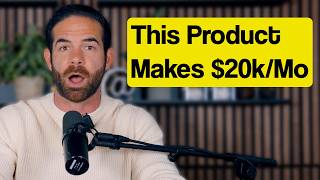
This YouTube episode (Capitalism.com, host Ryan Daniel Ryan) covers: recent trades made during a market sell-off (buying VOOG and MicroStrategy; selling cash-secured puts on PayPal—800 contracts—for which he received $5,000), analysis of Anthropic’s new product Claude Cowork (positioned as a $100/month virtual assistant and argued to have a clearer path to profitability vs OpenAI), brief commentary on Davos/world events, and a detailed review of a stain-remover brand (Thanks Mom Company) that currently earns about $20,000/month with specific marketing and pricing recommendations (raise price via multipacks, stronger proof/demo content, lean into natural ingredients, and build an email opt-in). The host also promotes capitalism.com/100k and solicits audience feedback and community engagement.
Questions this video answers
VOOG
MicroStrategy
Cash‑secured puts; wrote 800 puts on PayPal
$5,000
Claude Cowork; $100 per month
Chapters
Today I'll tell you what stocks I bought during the recent market sell off. We'll look at the latest breakthrough in the AI revolution and I'll show you a stain remover company that I think is sitting on a million dollar opportunity. This and more on this Week in Capitalism. This week the markets had their biggest sell off since last October. And it was on the news that Trump is trying to do something with Greenland. To be honest with you, I don't really understand that situation and I don't need to understand that situation. What matters is that the market had a really big sell off. Stocks in almost every sector were down. So rather than pay attention to what is going on in politics, what I pay attention to is what is happening for my money. And what this means to me is that some of the stocks that I have been watching are on sale and a few of them hit very interesting price points that I wanted to buy. So I'm just going to tell you what I bought when the markets fell this week. First, I bought voog. This is the growth index tied to the S&P 500. And there's no real big strategy here except that before I make any other investment, I put some money into an index fund. I call this my stupid tax. Just in case I'm making a stupid decision in another area of my investments, I want to hedge that with an investment into a long term index fund. And then I put an equal allocation into MicroStrategy. MicroStrategy is my number one stock pick for 2026, by the way. That's just my personal opinion. I'm not a financial advisor, don't listen to anything that I say. But MicroStrategy I think is poised for a really big breakout in 2026. So I put more money into MicroStrategy. Now I did one more thing that you might find very interesting and that is that I took in $5,000 in payments from a strategy to that is called cash secured puts. Here's how it works. If I want to buy a stock, but it's not quite at the price that I want to pay, I can sell an option for me to buy it in the future. And I did this on PayPal. PayPal is my largest holding and it has not done well. In fact, I'm down like 25% in my overall portfolio of PayPal holdings. But I still believe in the company and I still think that it has very strong fundamentals to be a winner over the long term. Instead of buying more PayPal, I sold several hundred puts and that means that if the stock stays at its current price, then I will have to buy it at that price in the future. So I wrote or sold 800 puts on PayPal stock and if those are executed, I have to buy them at their current price. But I got paid $5,000 to make that transaction. If the stock goes up in price, I don't have to buy it at the price that I previously agreed to pay and I just keep the $5,000. What this essentially does is get me to agree to buy a stock that I already want to buy, that I already want to pay the current price for. But I'm paid to be patient. This is a strategy that I use when the market has a sell off and I'm thinking about making a decision on buying a stock, but I just need some extra incentive to make that decision. I call this just being paid to be patient or my paid patient strategy. And So I got $5,000 given to me immediately for agreeing to potentially buy a stock that I already want to buy in the future. That is how I trade down days like what we saw this week. So I bought an index fund, I bought my number one pick, and I wrote options on PayPal that I might have to buy in the future. And if that's the case, that's perfectly fine with me. It's tempting to try to have an opinion about everything that's going on in the news. And the reality is I have no idea what's going on with Greenland, I have no idea what the play is there. And I shouldn't try to become an expert or act like an expert. Instead, I should be an expert on my money and what my plan is. And if I can keep my wits about me with my investing plan and my business plan while everybody else is freaking out about whatever the news is right now, I'm probably going to come out ahead. The news media would love for you to get focused on whatever they are telling you is important right now. But the people who win are those who have a very long term strategy that is gonna withstand these scary days and the really good days. So I like to take advantage of the scary days and ride the really good days. That's the long term strategy. That's how you win in capitalism. This week Anthropic, the AI company released Claude Cowork. And this is basically a virtual assistant that will do a lot of your online tasks for you. And it's things like organize your desktop or organize the most important emails in your inbox or to organize and go through files, even to go through your Google Docs and pull out the most important information. This is basically like having a virtual assistant for about $100 a month. This is very interesting for new entrepreneurs and solo founders because this is like having somebody sitting by you assisting with your work for $100 a month. This is going to be very interesting for those of us who are scrappy bootstrapping entrepreneurs to have a suite of potential AI agents that are working for us. And if you know what you're trying to accomplish, this is the first evidence that we're going to have this team of artificial intelligence agents working on our behalf. Now, the interesting, bigger news here is that this is the first time that Anthropic has shown that they might have a leg up on OpenAI. And I'm going to be a little bit of a predictor here and say that in the long term, Anthropic is in a better position to be profitable and maybe even take market share away from OpenAI. It seems like an elephant in the room right now that OpenAI is sort of on the downswing. They're the mass market product. They're the product that most people use most often, but they don't take in that much more revenue than Anthropic does. So here's the business lesson in this. Anthropic went after the high margin accounts. First they went after corporations and enterprises, and now they're creating a product that at $100 a month will be applicable to the next base of the market. That's entrepreneurs and solo founders and people who just work at desks and want to be more efficient. OpenAI went the other direction. They went after a mass amount of customers, a mass amount of PR, and they've only monetized about 10% of their user base. So they're going for the low margin customer but the highest amount of costs. Now, OpenAI may still win in the long term, and the fact that they have the most users allows them to do things like have an ad platform or a marketplace in the future. But Anthropic went the enterprise direction with the highest paying customers and as a result, I think they're going to be profitable first. In fact, if I were betting on one of the two companies, I would want to put my money into Anthropic because I can see a clear path to profitability. And they've modeled that out in their financial reporting. They've said that they think that they will be profitable within a couple of years. That's incredible for a company that Is this new and operating at this size? So for those of us who are building businesses, does it make more sense to release the mass market product that gets the most amount of customers, or does it make more sense to release a high margin product that gets only a small part of the market but creates a lot of profit? In my opinion, it's usually better to go after the high margin customer first. If you want to go after the mass market and you want to do that first, you have to raise a ton of capital because the only way to win in that game is to burn through cash acquiring customers. I think it makes more sense for most entrepreneurs to look at their highest margin customer and go after them. And then over time you can release more products that trickle down to the rest of the marketplace. So I think Claude is going to win in this race long term. And I think there's a very interesting business lesson for those of us who are entrepreneurs. This week the world elites met in Davos for the annual World Economic Forum. The only reason I am bringing this up is to take my annual victory lap. Five years ago, I just debated all kinds of trolls on the Internet that told me that the World Economic Forum was going to create a big socialist takeover. And by 2030 their agenda was that we would own nothing and be happy. I made a couple of videos about this and here we are in 2026 and we still own things. Stay tuned for annual updates showing that I won this debate. Now I'd like to show you a stain removal company that I think is sitting on a seven figure opportunity. This is a brand that's in our community which is for entrepreneurs who are building million dollar businesses. And this is a brand started by one of our members named Suzanne Boyd. Suzanne shared with me that her business is currently doing about $20,000 a month. So I took a look at her website, her Amazon listing and her Instagram page and found a few things that she's doing well, as well as a few things that I think could be improved in order to get to the million dollar run rate a little bit faster. So let's take a look at this business. This is the website called thanks mom company and you'll see that the primary product is this stain remover. This is the website and you can see that they've got a little bit of information about the product and you can buy it on site. The this is the Amazon listing and not a bad listing. Some pretty good photos on here, but I immediately see some things that they could do better. And then this is Their Instagram, where they're creating content not every day, but once in a while. And something stands out to me right on this page that we could do a little bit differently. So let me start from the top. The first thing that stands out to me is that I think that this product should be more expensive. I don't like selling anything for less than 25 or 30. And the reason for that is because I want to keep as much margin as possible so that I can be aggressive on advertising. Now, when you're selling a small product like a stain remover that, you know, can't really command a $50 price point, the way that you can get around this is by having multi packs. And so if we were to combine three of these into one pack, then we'd be able to sell that for between 30 and $40, which is really where I want to be at a starting point. But I think there might even be an argument that this product could be higher priced if we change the marketing strategy just a little bit. Now, the second thing that stands out to me is that this listing needs more proof. Now, there's a few videos on here that show the product being used. And these are awesome. I want as many videos and photos showing a before and after as possible. And I think that these videos can be edited a little bit punchier so that they show this is what it was before and this is what it was after. The most perfect example of this was the late, great Billy Mays. Oh, they don't make them like Billy Mays anymore. He was the best pitchman of our time. He was the one who put Kaboom and Oxiclean on the map. And Billy Mays said that the Bill Best sales mechanism is a demonstration. If you can show an immediate use of a product, that is the best way to sell something, especially when you're selling well stain removers, which is what he specialized in. So I would want this page to show as much proof as possible, showing miraculous things that this stain remover got out of shirts and clothes. If you can show proof, that is the best way to increase your sales on any platform. There's one more thing that I think this sales page is missing, and that is there's not a lot on here that leans into the ingredients or it being natural. And that's important because it's a key difference from the rest of the market. They sort of tease at it in some of the their product images and throughout their listing, but I want to see them really lean into that difference. For example, this is gross. But if you were to take this stain remover, pop off the lid and lick it and explain why you can do that because there's no toxic ingredients in it, that would get some attention and I would bet that that would increase conversions. So that's what I would change. On the listing on the website itself, I notice that so far I have not been given the opportunity to opt in to any list and I want this brand to be throwing as much attention into building their email list as possible. In fact, I think for a lot of brands your website could be simplified to just an email capture because that's where a lot of the nurturing happens with customers, especially if you're putting content on social media. So that takes us over to the thanks mom company social media page immediately. When I look at their Instagram page, I see some opportunities to build their email list faster. When I click on this link in bio, I'm taken to three different sources. We don't want to do that on your Instagram page. No matter what you are selling, you should have one call to action. When we have these multi link options in your Instagram bio, it suppresses response a lot. So instead, what's the one place that you want to send attention to? In this case I would want their Instagram to link straight over to their opt in. But I haven't seen their opt in yet and that's a huge missed opportunity. In their Instagram content, they're making some decent stuff, they're showing some good proofs. Some of these things are getting a decent amount of engagement. But on the content itself, there's not a call to action to drop a certain word in the comments so that they can get a discount or to go see the link in bio to where they can join the VIP list. There's no call to action to build the email list and that is the first thing that I would want to see this brand change. What we would hope to see from this brand is that they can make content that every time puts more people on their email list and then sends them over to wherever they're collecting the order. In this case it's Amazon and that is a very high converting page because it uses a lot of proof that will generate more conversions which will get you more free traffic in Amazon's algorithm. And I think it'll allow us to raise the price as well. So if we build the email list, raise the price and increase our conversion rate, then this product probably goes from $20,000 a month to 40 or $50,000 a month and then we just need to release one or two more products for this business to be a multimillion dollar brand. If you want me to review your business or you want to see the entire framework for how we build multimillion dollar businesses, go over to capitalism.com 100k and that will show you how we build million dollar businesses. And you can also submit some information about your business if you'd like us to take a look. That's capitalism.com 100k On a personal note, I have no goals in 2026, but I have systems that I want to improve upon and one of those is I want to change up the way that I do content and have more fun doing it. So I'm experimenting with different formats and different ways to interact with my audience and I'd love to hear from you. If you like this type of a format, what you liked and what you didn't. You can drop a comment on YouTube or you can just email me directly@ryanapitalism.com I'm also looking at different ways that I could engage with my community and I'll have some details about what we're doing and experimenting with in upcoming episodes. I'm thinking about putting together a free group where I can just go live and interact with more of the people who have been following my content for a long time. I often hear from people when they say that they've been following my work for like 18 months and they just are now starting a business. Or I hear from people after they build a million dollar business and they come back to me and say thank you for all your content. It was so helpful and I'm like, why did we not interact when you were in the middle of the journey? I love being a part of the entrepreneurial experience and I appreciate you letting me be in your ear or your eyes on your journey as well. I'm Ryan Daniel Ryan with capitalism.com, thanks for watching and I'll see you next time. Take care.







