
$200M Per Year Working 25 Hours Per Week | Ryan Deiss
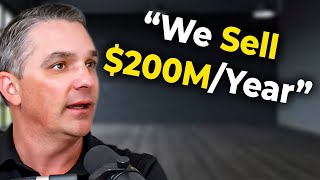
Ryan Deiss built a $200M-per-year portfolio by systemizing sales and marketing, then hiring only into those systems. He moves through staged exits: first from daily work, then from management, then from the org itself. The key is separating the growth engine from fulfillment so you can eventually step away.
Questions this video answers
November 13, 2023
$200 million per year (combined portfolio)
Approximately 67% (two-thirds) over roughly five years
About 19 years old
One company does about '80-something million' and his stake is less than 10%
Chapters
When markets are hot, stupid crap works. 2/3 of the Inc. 5000 businesses fail. Do not define your business by the products you sell the way that you sell them. Define your business by the people you serve.
Amen.
If you do that, you will be around for a very long time.
How do you build a company that actually scales? How do you build multiple companies that actually scale? How do you have a portfolio of a bunch of different exciting projects so you can pursue your entrepreneurial add without wanting to kill yourself? Ryan Deiss is one of my mentors. He's one of the really good guys. He's one of those guys that makes way more and does way bigger stuff doing it than teaching it. He teaches this stuff so he can get lead flow on more exciting businesses. I've been learning from personally in masterminds and events from Ryan for 10 years. He's actually the reason why I moved to Austin, Texas. So when Ryan is doing something and when Ryan is talking about something, I pay attention. Recently I heard Ryan talking about how he builds structures and systems into businesses, which is the most boring topic in the entire world. But when Ryan shared it with me, it was the first time that I could see that I could have a portfolio of businesses and think really big and do it in a way that gives me a life. I immediately took some of the things that I learned from Ryan and I taught them to my team and we've been implementing them into our business so that we have a healthier, smoother, more balanced and predictable business. They had such an impact on us that I asked Ryan to come onto the podcast to share some of the things that I learned from him. And in this episode we talk about how Ryan manages multiple eight figure companies and he still has time for his four kids and for hanging out with me. We talk about how entrepreneurs can have their first exit and the first exit is exiting doing everything in their business. And there's multiple exits that give you more and more freedom even if you never sell a company. And we talk about how to free up your mind and your calendar so that you're focused on the things that actually build your business, not the things that everybody says will build your business. If you are an entrepreneur who feels stressed, overwhelmed, stretched thin, has a calendar full of all the stuff that you got to do and you can't see any way out of it, I'm confident that this podcast may change your entire life and business. This is one of those lessons that I would have paid thousands of dollars to learn and I'm bringing it to you in this conversation with my friend and mentor, Ryan Deiss.
Ryan, the way that I like to start these is by asking, how did.
You make your money selling stuff on the Internet? I mean, going all the way back to 1999. Freshman at the University of Texas, realized that I needed to make some extra money and I launched my very first website. It was an ebook on how to make your own baby food.
And you were like 12?
I was, I guess 19. I just turned 19 years old. We get into like, why an ebook on how to make your own baby food? If you want to go down that route, the story's not that interesting. But yeah, I had this one stupid little website and a single page website. I realized that nobody was really looking. There are people looking for it, but nobody's really serving that audience. This was, man, Google was a science fair project at this point. Ranking I was trying to rank for altavista.
Not even, oh, wow, you know that reference you're old in?
Yeah, you're fricking old. And the big growth hack, not even kidding, was you would want to stuff the keyword over and over and over again at the bottom of the page. And then if you really knew what you were doing, I mean, if you were like a fricking marketing gangster, you would make the text, your keywords, the same color as the background.
Yeah. Because it would be hidden. Right. And Google would still crawl it.
That was the big growth hack that would have won wicked smart back in the day. But yeah, I remember putting the website up a couple days later, making my first sale for like 14 bucks and thinking, what if I had a hundred of these? And that was kind of where it started.
Am I remembering correctly that you were working for some big company that had a big email list and you saw the power of what happened when you send an email to a list. Am I remembering that correctly?
Yeah, they were spammers. I mean, like, so they were.
You were working for a spamming thousand percent.
Now this was 1999, maybe getting into 2000. And so like the can spam act hadn't happened yet.
Wow.
I mean, so if we go all the way back there, nobody knew what the Internet was going to be and nobody really knew how these channels were going to develop. And so early on, people treated email the same way that they treated your mailing address. And so people would harvest email addresses from forums and chat groups and things like that. And they would send out emails, unsolicited commercial emails. And that was just how the Internet worked back then. Now this company Was a big company, well funded, had massive clients, big magazines. Because their whole thing was we practice opt out marketing. They considered that to be permission based. And here was their big breakthrough, their whole thing, because I remember going with them to sales pitches, is if somebody clicks on the unsubscribe link, we actually remove them from the list.
Wow.
Nobody else was doing that at the time. In fact, if you click unsubscribe, everybody else in the industry was like, we got a live one. Hit them harder. But they were like, now let's take them off the list. But their model was actually pretty smart. What they did is they would send out, I think it was up to two emails, but they required, whoever the publisher, whoever the client was, they would. Then they'd send out two emails of this list. And all the emails were going to a landing page to get them to opt in on behalf of them. Okay, so it was like, nice spam, right? Now, obviously that company wound up going out of business as soon as the cam spam, like their entire business model went away.
But yeah, I saw the power of email. What I also saw was the power of focus landing pages. Because I came on as a web designer. Now, I did not know how to design web pages, but I lied and told them that I did because I needed the money. And I figured if I got the job, I could learn how to design a simple webpage. But back then, do you remember Flash?
Oh, yeah, yeah. Homestarrunner.com.
God, yeah. So you'd go to a website and as soon as you'd go there, it's like all this swirly twirly stuff spinning around and you're like, ooh, that's cool. So that's what everybody wanted, but I didn't know how to do it.
Okay. That was, that was like the big design trend.
Yeah, the more swirly twirly, the better. And it was this whole Flash intro kind of thing and different colors and movement. I didn't know how to do any of that stuff. And all I knew how to do was to build a very simple page in front page, Microsoft front page. And there was like a, you know, there was a border around it and I put a headline on top and there was a sub headline below that, and there was a form below that and there were some bullet points below that.
My goodness.
All I knew how to do. And.
They were about to fire me. Like, when I was like, this is what I made. It's like, I made you this. It's like the kid that brings home the crappy macaroni art. Only I was a paid employee. And to their credit, they said, we'll test it. It's different enough that we'll test it. And my landing pages crushed everybody else's. And so they decided that I was a marketing genius. No, I just didn't know. If I knew how to do the flash thing, promise you, I'd have done it. But I didn't. And I just lucked into the thing that I knew how to do. We now know that's just what works.
You know what's funny, Ryan, is like, that still works today, 25 years later. And we're going through. I mean, obviously the industry I'm in is mostly E commerce and the E commerce wave is in a trough right now. Valuations have come down, the aggregators have gone out of business. Amazon has matured. And so you have all of these E commerce entrepreneurs. I think the good days are over. And yet we're seeing faster and better results than ever because I have all our people focusing on that. They're doing a little bit of direct response, building up an audience, and then they buy things and they're just crushing. And this is the first time in a long time that I'm seeing that what's old is new again.
Now that the economy is not red hot all over the place, there's less pursuit of what is new and what is novel and there's just going back to the old greatest hits that are profitable and that work over and over. And they've worked for 25 years. They'll probably work to some extent 25 years from now.
Yep. When. When markets are hot, stupid crap works. Now. The cool thing about first principles is that they always work. They just get ignored because they're not the cool sexy thing. That's maybe. But all of that was always built upon layers of first principles and things that did work. And then a lot of that goes away. I mean, so when you're not in a zero interest rate environment anymore, that's the. It's, you know, it's Buffett. Right. Tide goes out, you see who's, you know, whose pants are down around their ankles and.
Or whatever the saying is.
Whatever it is. Yeah, something like that.
I get excited about times like these. You know, we were talking before. You and I are old in Internet years. This is my third kind of recessionary cycle.
Yeah, me too.
And I'm like, thank God. Like, because so much of the just crap is getting washed away. It's like, we can do real work again. We can build Real stuff again. And there's not so much noise around us that I gotta.
Yeah, I do better during these times because I'm distractible like everybody else. So when things are booming, I want to chase the new shiny object too. When things are a little bit calmer in terms of what's working and what's not, I feel like I can settle into doing good work. And that kind of leads me to the first thing I wanted to ask you, which is I know that you have. You've got a portfolio of businesses, and I don't know if they all follow the same playbook or if they all have the same first principles, but I have never put together how you're able to run so many different things seemingly well from the outside. I don't know what it's like inside. Maybe it's a total cluster, but it seems like you have very well organized chaos in this total portfolio. So could you walk us through what the portfolio looks like? I know you've had some exits in the last few years, but you have a portfolio of businesses, not just one. And you used to just teach this stuff. Now that's like a small part of your overall empire and you have real scalable businesses.
Yeah, I mean, arguably. It always was a small part. And I say arguably, like, mathematically, the teaching and the talking about what I was doing was always a relatively small part of the portfolio.
Well, forgive me for cutting you off, but I do wanna share. I think I bought a product from yours. I think it was maybe continuity blueprint in like 2007, 2008. And I got an email from you inviting me to an event. That event was in Austin, Tex. Graduated college. I'd never been to Texas. I had nothing else to do. So I came here, came to the event, and I felt like I learned real marketing for the first time. I was doing affiliate marketing and making a few hundred grand a year from my college dorm room mostly. And I ended up moving to Austin. Met my best friend in your mastermind, Mark, Jenny. Yep. I found that all the principles of marketing applied better to selling real stuff, which was my start in E commerce. And then so that was like a big turning point for me and my career. And now I live here, obviously. And 15 years later, I feel like I'm going through a transition again. And I came to your event a few weeks ago and it felt like old is new again. So forgive me for cutting you off. Like, I came into the context of. That's how I discovered your work had a really big impact on my Life. But back then, you were even applying it to real scalable businesses.
Yeah, I mean, so if we go back to the, you know, the very first product, how to make your own baby food, and I said, what would happen if I had 100 of them? Well, by the time I graduated, I didn't have 100, but I had 80 something. Wow. And so now that was a mess. Like, that was a big, giant, unsustainable mess. There were no real systems. It was so driven by, like, ability to rank in the Google algorithm. There was one little Florida update, algorithm shift, and they were all gone overnight. I mean, so there's tons of stories there.
But.
But yeah, I've always talked about what I was doing in part because people ask and I don't know how to say no, that's a personality flaw. But I learn by teaching and I learn by sharing and I get more out of it. And what I discovered is that it was a pathway to deal flow. Like, it was a pathway to acquisitions, to partnerships and things like that. And so, yeah, I mean, if you fast forward from that time, my business really didn't change that much. It got more sophisticated. But it was always a media first model, an audience first model. And whether it was we're going to have a blog, you know, or, you know, we're like, again, this is kind of old stuff, old school stuff, or, you know, podcasts or a different channel. Right. Whatever it's going to be, let's aggregate an audience first and then let's figure out what they want to buy and build brands underneath that. And so I always saw it as like a solar system where at the center was kind of the, like the holding company, where we had ops and we had finance and HR and all that kind of stuff was at the center. And then each planet would be its own media property. Okay, that clearly said, like, this is our who we serve this particular audience. And then orbiting around that planet were moons that were different product brands. And so for years and years, that looked like survival life and it looked like makeup tutorials and it looked like all these different media properties where we were selling E commerce, you know, we basically had E commerce businesses. The media properties also generate some advertising revenue and we had a nice, you know, big portfolio of those that I largely exited in 2018 and 2019. Right. Was. And so at the end of 2018, 2019, I basically just had digital marketer. I only had this business where what was kind of the side business where I taught everybody how to do the things. And that was when it was like, okay, what do we want to do next?
Yeah, that makes sense.
You know, do we want to get the band back together? What do we want to do? And said, I want to do it again, but this time I'd rather do it in B2B. This time I'd rather do it more on, you know, the services side because consumer's hard, man. You know this consumer's hard. E comms hard.
And when you apply that skill set to bigger industries, B2B, it gets really exciting.
And I don't have to go to China on buying trips and you know, there's just so many nice. I don't have to worry about longshoreman strikes and.
And you like all your customers. Yeah. You're just. Because there are other business owners.
Mango.
So. So now you have this portfolio and I think you're investing in and taking equity stakes in sometimes. As an advisor for some of these bigger companies, would you give us kind of a high level view of what that portfolio structure looks like?
Yeah. So the portfolio, all the companies combined right now do about $200 million a year. Sounds cool.
Ish.
But like, you know, for some of them, there's one of them that does like 80 something million. My stake in. It's less than 10%.
Right.
So I mean, some of them I own a lot of. And they do. They do pretty well. Some of them that do really, really well. I own a tiny.
Yeah.
And you know, by.
Can you share what company that is?
I can't share that particular one because I am a minority and I didn't get permission from. Okay.
I'll tell you.
Happy to tell you offline. All right. But. But yeah, there. It's a business services company. So there's that company. There's some real estate services type thing companies in there. But I'm basically good with. With anything almost as long as it's not sometimes if it's. It can't have heavy capital. Intensive or heavy inventory is kind of our process. So we actually have an interest in an automotive service repair company. But their model is such that all the parts and things are centralized.
Okay.
They mostly serve like electric vehicles. So there's a cool tie in there. Little bit of retail like food kind of stuff.
But again, so a variety of different industries.
Yeah. And I really don't care too much about the business now because our whole thing is like find companies with solid operators who need help with the system side and the marketing, the growth side.
Oh, that's interesting. So this is kind of similar to the acquisition.com model, but he's in a different industry and he's on growth and the marketing side. You're coming out on the op side specifically.
We'd like to do both. And Alex would say that they help on the op side too, and they do. There's nothing really that unique about what we're doing. What we're doing is just private equity. It's just more active private equity. And typically from a private equity perspective, where they're adding value is in capital and financial engineering. They can help a little bit with recruitment and things like that, but for the most part, it's capital. It's some financial engineering. It's getting. It's getting the founders some liquidity so they can kind of breathe again. But that's mostly what they're doing. They want to go 3 to 5 and 3 to 5 and they want to flip it and do it over again. We're more interested in how do we come in, how do we add value, that capital? Sure, we can try to get it, but most of these businesses, it's not capital that they need. That's not their primary constraint. Their primary constraint is they don't have any systems in and around the sales and marketing side. Maybe it's overly founder dependent, overly referral dependent, overly single channel dependent, but they've got no systemization, no scalability. From a sales and marketing perspective, we want to come in and solve for that.
I want to go into that more. But could you first define what you mean by financial engineering? This is a new term for me in the last six months or so, and I'm fascinated by it. What do you mean when you say financial engineering?
Usually what it looks like is going and getting a whole lot of debt and encumbering a business. I don't know if you've ever heard of this happening to companies like maybe ones that you've sold for example, too soon.
It's been five years and I bought it back, so it's okay.
But that is often what they do, right? So what they're gonna do is they're gonna go in, they're gonna put a lot of debt on that company. That's going to allow a lot of the value to come out to the people that did the deal. Now, if the growth happens right, if truly what the company needed was capital for scale, if that was truly the only thing holding it back was capital for scale, then it can work.
Yes, right.
It can work. And what you get from a financial engineering perspective is you get to take a lot of Money out today, the company still stays very liquid, like they've got a good solid war chest to work with. That then allows you to attract technically better talent. And if the company can 3 to 5x in 3 to 5 years, they can do another round of that. Maybe they'll sell to somebody else, but it really gets to be in the flipping business. So what most financial engineering really is, it's how do we increase the value of this particular company from what we're able to take out as opposed to how do we actually increase the value creation of the business?
Yeah, it's like playing with the numbers on the valuation versus making the business healthier. Right now in our fund, we will invest debt specifically for one thing, and it's inventory financing. And I found when you have a bootstrap entrepreneur who's doing $100,000 a month and they're taking all their profit and just buying more inventory, Debt is a very powerful tool. We've seen brands 10x in 12 to 18 months because all of a sudden they can do bigger inventory purchases.
You almost can't scale without it.
Yeah, yeah, you can, but it takes a lot longer. It's way more stressful. And so we bring in some debt and they 10x sometimes and all of a sudden that increases the valuation by 5 to 6x. And now we can raise capital to be able to fund the operations and build out a real team and build real systems. Now, I read this stat that you shared in your book. And at the event that I went to recently, which was something like 67% of Inc. 500 or Inc. 5000 companies fail within a few years. Tell me more about that.
So the Kaufman Research Institute in coordination with Inc. Magazine. Now, why INC Magazine allowed like support of this? I guess they agreed to do it before the stats came out. But yeah, I mean, they basically looked out, you know, after five years. Let's take a look back of all the companies that made the Inc. 5000 list. And what they found was that 2/3, 67% had either.
Shrinked substantially, so declined substantially. They had been sold disadvantageously, so sold at a loss or something like that, or gone out of business. I would define all of those as failure for an entrepreneur. And so what that tells me is 2/3 of the Inc. 5000 businesses fail on around, you know, five years. Now what's fascinating about that, right, is that the five year failure rate of just any normal business, right? Just take any business that gets started. You know, most people think that the failure rate of a small business is like 80, 90%. That's true. If you go out eight, 10 years, right. In the first year, it's actually about 20%. And then after that, it declines about 10%. So the normal business, like just any business that doesn't make the Inc. 5000.
The failure. The average failure rate of that business is like 48.6%. That means that the failure rate of Inc. 5000 companies is actually higher. Higher than the normal class. That's when. And look, having. I've lived this, you know, in 2016, I had three different companies on the Inc. 5000 list. Two of them failed, one of them succeeded. Right. So I've lived that two thirds stat. And that's why I know, like, growth. Growth is not enough. Growth is not the answer. It's why so much of my focus has shifted.
Yeah, that. That brings up a thousand questions for me. But it does remind me of. There's a business that we're buying right now. We're buying the business at a very attractive valuation. And this is a company that was promoted in PR as having an exit and raising a bunch of venture capital. And I know what this. Like, I'm buying it.
Yeah.
So I know the real story. And we often just see those headlines. We have a mutual friend who sold a company. And at the closing table, the private equity group said, what do you want the headline to say that you sold the company for? And he's like, what are you talking about? This is the number. I mean, we can make the numbers, whatever you want. Cause we can have an option to buy one more share five years from now. At this valuation. It could be a $1 transaction, but it's at this valuation. And so we can make the headlines. Say what? Whatever you want. That, to me, is financial engineering that is done improperly and dishonestly.
Yeah. Well, that's lying. Yeah.
It's stretching the truth real far. But there's also some really healthy things that you can do with financial engineering too, when it's used appropriately, like we talked about. But when you're getting into these companies that are either distressed or not growing anymore, how are you coming in and stabilizing these businesses so that they can take advantage of those types of opportunities? Because a lot of people will think, I just need to raise more capital or I just need to sell more, or I just need to hire the right person? And that can be one of those things that breaks a successful company and puts it in the 67% that shrinks or fails. And that's so counterintuitive to Most entrepreneurs. So what are you doing differently?
So the first thing that we do is we're going to go in there and we're just going to do a quick triage and see is there something major that's gushing blood.
Right.
And.
Usually there's not. Like most of the businesses that we're working with, I'm not in the turnaround game, so I don't necessarily want to take over a business that's losing lots of money. We're almost never going to do a deal that's actively losing money unless we look at it and we go, okay, well, they're losing from this. We can lop that off. But in general, we're looking at businesses that are flat or just not growing as fast as they would like to do. So usually they're pretty fine. The first place we're going to look is. Talked about this before. How do we systemize our sales and marketing efforts? And that can be just as simple as, we will create a flowchart. We'll ask the question, how do customers happen? How do they happen here? It's amazing to me that most entrepreneurs have never asked that question in their business. How do customers happen? And I'll ask entrepreneurs and be like, so that's my exact question. How do customers happen in your business? Well, we get some referrals and we run some ads, and people will opt in for some things. And I think we got an email list and do those podcasts, and then people buy things. It's good. I wonder why that's not scaling right. And so I don't just want an answer. I want a picture. I want a visible picture. And so what we do is we actually. Nothing. I invented just basic business process mapping. But we will say, okay, how do people first find out about you? What is that initial point of awareness? And we're busting out sticky notes and a whiteboard and be like, oh, we run ads and we do. Okay, tell me all the ways in which people do. Okay, great. And we'll put those on the whiteboard. Great. Then what happens? Where do they go after here? Well, then they go to this page. All of these? No, some of them go over here. Okay, great. So we'll map this whole thing out. And what we'll have in Fairly short order, 20, 30 minutes, is a visual picture of the entirety of that initial customer journey.
Yeah, there's. We all know that we should systemize things, or we hear that all the time, but we often systemize the things that don't matter.
Well, and what People think are systems. When they hear systems, they think that systems are checklists. And I can tell you that by and large, one of the worst things you can do if you decide everybody does this. Like they read the E Myth, which, not knocking the E. Myth in Michael Gerber, I think it's a great book, but people read that and they go, that's it. I need to systemize everything. And they go, that means I need to create checklists for everything. I did this, I did this about 14 years ago now. I remember reading the E. Myth coming, you know, busting up down the door on Monday morning and you know, company wide meeting, you know, which by the way, as an entrepreneur, anytime you do that, don't. All right, you're about to do something stupid and expensive. So I come in. Bugles blaring public formal declaration. Effective immediately, there's gonna be no new hires, no projects being greenlit, no nothing until everybody in this company has created a checklist for everything that they do. And you know, there was much weeping and gnashing of teeth because people are like, are we getting fired? This is a waste of time. Do you think? Do you not trust us? But we finally got it done and all these checklists went in a binder. And I remember looking at the binder being like, we did it, we did it, it's done. And I put that binder in a bookshelf and swear to God, dude, we never looked at that thing ever again. Checklists are not systems. Right. A system is understanding the value chain. Right. It's understanding a value chain. What is the combination of things that creates value in a business? And all businesses can really only create value if you're capturing.
Capturing market attention. If you're getting new customers and clients and then you're serving them.
That's right.
Like that's all we do is the.
Two functions of business. How do you get customers and how do you serve those customers?
Yep.
And if you, until you have systemized that, until you have a plan in place or at least a thesis that we're going to test.
Yep.
Everything else is kind of a distraction and a waste of time.
And that's. And you're right. And what we find in most of these businesses is they are distracted by things that aren't actually improving any of the core value chains. And it's so simple to see when you actually are using post it notes and you're saying, okay, then, then where do these people go? Well, they go to this page. Okay, then what happens? Well, then they go to Here. Okay, then what happens? And then what you find is there's all these like little orphan sticky notes. You're like, what about this thing over here? Where does it go? Yeah, I don't know. Cool. Then we're going to stop doing that until we can draw a line from it to somewhere within this value chain because it needs to be driving the value creation aspect of the business. Or it is like by definition a pet project at best, or just a giant waste of time.
We did this inside capitalism.com and we have a relatively new employee. His name's Matt and he's our director of operations. And he came in about four months ago and just started kicking down doors and getting everybody on the same page and increasing communication. And he's been a huge, just a huge shot in the arm to the entire team. But we did this exercise when he was, he'd been with us maybe two months and he watched the entire company get mapped out. And he, I saw him just get angry and I'm like, what, like, what is going on with you? And he said, I can't believe how understaffed and under resourced the most important things in the business are. And we put so much attention into this piece and this piece and this piece. I never realized like he was, he was actually mad at himself. He's like, I didn't realize that the business was being driven by these activities. And we're giving all our attention to these other things.
We see it all the time. And when you.
That's not a me thing. That happens all the time.
It happens to all of them. And it happens for a variety of reasons. But if you will take the time to map what we call a growth engine. So this is how customers happen. And then you map your fulfillment engine. And where a growth engine stops, a fulfillment engine should pick up. That is the entirety of a customer journey. Now, as businesses scale and get more mature, they might have multiple growth engines. If you've got multiple flagship programs and products, you might have multiple fulfillment engines. But most businesses that we've seen can get well into the mid eight figures. With a growth engine or two and a single fulfillment engine, it's not that much. And then when you look at it and you visualize it now, now you go to each one of those little sticky notes and you say, okay, what are the ones that we really don't want to screw up? What are the ones that are absolutely mission critical? Those true value drivers build a checklist for that. And only those create a checklist and SOP for only those things. And then say, okay, now who is uniquely responsible and accountable for this one?
This is actually my favorite part of your model.
Yeah, what about this one? And you start value process first and then work your way backwards. And, and what you discover, and what we discover all the time with the businesses that we're working with, whether they're our clients or our portfolio companies, is just what you said. Whoa. There's this area that is critically important and we got one dude who's just fricking dying, like, burnt out, doing all of it. And this place over here, you know, there's like some, you know, mythical, like, little sticky note over here that has a team of 17 people that's literally pointing at nothing. Like, what if all we did was take some of these people, move them over here or release them to the marketplace to exercise those skills for somebody else who can value them? But let's give those core value drivers the help that they need.
What does this mean for a business that is platform dependent? So I'm thinking, I'm thinking about one client I have who is very dependent on Amazon.com for his sales. And he would probably tell you he's not exactly sure how certain products win and why some don't, but some have created millions of dollars for the business and some have struggled. And in his mind, he's always thinking about, what's my next play? Should I try this thing over here? Should I experiment with this? Should I hire this person over here? For somebody who's platform dependent and a little bit unclear as to how customers happen, does the process change for someone like that?
So I would argue, I would reframe that a bit if you're platform dependent, meaning, and let's call that platform Amazon, because that's probably what for most people they're talking about. Maybe it could be the, you know, a different app store or something like that. But let's talk about Amazon. If you're really being honest, you're not in the E commerce space. You're not in the retail space, you're in the wholesale space. You're a wholesaler to a single retailer. And it's a big one, it's a good one. But you're really. Your customer is not the end user. Your customer is Amazon.
That's fair.
And so it's a very simple growth engine. I mean, it really is. It's basically, I need to go and have a relationship with Amazon done. They've got a form I can fill out. So what I would do is, I would think about it that way and say, okay, we've got one good wholesale relationship. How now do I go and create multiple wholesale relationships with other retailers? And now your growth engine isn't around the end user, the end customer. It's around how do I get multiple retailers or decide that now we're going to own our own distribution and now it's a new growth engine for that particular value chain. But if you're on Amazon, your growth engine is pretty simple. You got one customer, that customer is Amazon.
I see it a little bit different. So here's the way I heard what you just said. I know the same person that I'm thinking of just heard you say that and said, okay, so next play beyond Walmart, be on Etsy or petsmart or all the other major retailers. But I know that what that person needs to do is get awareness in front of the customer before they hit Amazon. Because that is what is going to get Amazon what it wants, which is foot traffic. Just like foot traffic in Walmart, Walmart runs commercials to put people into the store as E commerce owners, you have to run advertising or build awareness to drive people to Amazon or Shopify or wherever you're taking that sale. So is that what you're saying, that you would go onto multiple platforms like that or are you suggesting something else?
All the above. I mean, so I'm not going to necessarily prescribe a strategy for this particular person without knowing it, but I think it's important to acknowledge that right now you're actually in the wholesale business. Now it's very common for wholesale products people, just like you said, to run advertising on behalf of its retail partners.
Right.
And so that's a great strategy. But then what your growth engine looks like is we're going to run ads and those ads are going to send people to the Amazon listing or a.
Landing page where you collect the options. Yeah, maybe.
And then go. And so all that's. But, but that's, it doesn't change anything. But it's important to acknowledge that you are going to have a relatively simple growth engine because you only there's this big important part in the middle where the actual transaction takes place and the follow up. Even from a fulfillment perspective, Amazon's got all of that. Now the nice thing is, is that it's simple and I love simple businesses. But as soon as I make a simple business work, I want to try to figure out how can I own the other critical parts of the value chain. Because whoever owns the most pieces of a value chain, they capture the Most value.
That's right.
It's really simple. And so if you can even look at your business, and I've seen other folks in services businesses do this where they outsource their sales. Right. Or they outsource all their marketing efforts. Right. To, to an agency. That's fine in the beginning. If you don't know how to do it, at some point you want to bring this in house and own that as an aspect of your value chain because you're giving your margin to somebody else.
That's right.
They're capturing more of the value in this chain. You're giving it to them.
Yeah, there's a lot of Amazon sellers will see once it sells on Amazon, they're done. Yeah, that's where, that's where the business ends. So how do we just launch as many of these products as possible? And I'm thinking about, okay, once a transaction happens, how do I get that person to my locus of control either before they buy or after they buy? Because in a supplement brand, for example, I want to sell them telehealth services. I want to sell them referrals into doctor's offices. I want to own the entire journey. And Amazon is a step on that journey. But most people don't view it that way. They view it as the transaction ends.
Because what you're describing is a market centric audience centric business versus a product centric business.
Correct.
And most people really, if they're being honest, they're a product centric business.
Total.
I've got this product to sell. And they define their business by the product they sell or the way they sell it. Which to me is even worse. Like I define myself as an Amazon seller.
Yeah. I'm an Amazon business. I'm a Walmart business.
Freaking gross.
That's not a real business.
No, you're gonna die. Right. I mean, you do not, do not define your business by the products you sell, the way that you sell them. Define your business by the people you serve.
Amen.
If you do that, you will be around for a very long time. You will be able to pivot different algorithm shifts. A great example of this is Chanel. Right? Think about the brand Chanel, Coco, Chanel. That brand was launched because of one powerful grand slam product. That was the little black dress, Right. That was what made Chanel. And now Chanel could have decided. Coco Chanel could have decided, well, that's it. We're in the little black dress business.
That's all we do.
But no, they said, okay, we're going to identify and define ourselves by the woman we serve first and foremost. And as long as they want little black dresses, then we're in the little black dress business. The second that changes, we are out of that business. We do not live and die by our products or the way that we sell them. It's about the customer.
Yeah. Amen to that. I couldn't say it better myself. This is the transition that I take e commerce sellers through that are selling on one channel and they're like, I sell spatulas. No, you don't. That is one little leg of the stool. Who's the buyer? How do we create four products for that person? How do we create a market for these for that customer? Then you're in business for life. Because it's actually kind of hard to sell product, but it's really easy to get in front of people. And when you're in front of people and you communicate with them, they will buy anything that they have demand for. You talk about the five exits that an entrepreneur makes. Yep. I talk about one exit that an entrepreneur entrepreneur makes. And ironically, it's the one exit I've done which is selling a business. But you talk about four other types of exits. And one of them is when someone is lost in the sauce like we're talking about, they don't really know where things are going. They have to exit staff and they exit operations. And first you have to clarify what those operations are, which is mapping out how customers happen and how we serve them. But would you talk about those exits that happen along that customer journey?
Yeah. So the exit number one is exiting the line. And this is just getting out of the, in the trenches grunt work of, of doing all the, all the little things that you write down in the.
Post it note, doing everything yourself, doing.
Every little thing yourself. And so anytime when you make your first hire, whether it's an outsourced freelancer, like anything, if you can not master delegation, but if you can just kind of do some delegation, you're starting to exit the line right now, that's great because what you're doing is you're going from worker to manager when you exit the line. And that's the first exit. Any entrepreneur, if you're gonna have really any business that's gonna go beyond a couple million dollars a year, you're almost certainly gonna have to do that. The next exit is when you exit the staff. Because being a manager is great if you've been on the line. But anybody who's ever like managed people know like, this actually is Frickin worse. I went from doing like dealing with stuff and dealing with customers to like, now I'm dealing with staff and team members and like emotions and emotions and like, I broke accountability, you know, all that kind of stuff. Now people love it and I love those people. They need to be managers. That ain't mean it's not most of the entrepreneurs that I know. And so exit number two is to exit the staff. And this is when you become a true CEO. There are lots and lots and lots of entrepreneurs who've given themselves the CEO title. And they are a CEO by title only. They are a manager with a CEO title.
I know what you mean.
Yeah. And until you have an operating system in place, like, you won't have that. So what I kind of described is like the foundation of an operating system. We're gonna map our value chains. We're gonna figure out the ones that are important. We're gonna map different people to each of those. Cool. That's an operating system. We're gonna connect scorecards, all the stage we can measure it. We're gonna have a meeting rhythm, we're gonna have goals and all like, that's an operating system system. That's a basic, fundamental operating system. Once that exists now you can actually function like a true CEO. Until that operating system is in place, you can call yourself a CEO. That's adorable. You ain't a CEO, right? You ain't a CEO. You are always, always, always going to be sucked down to the line. You're going to be sucked down into the staff. The second somebody leaves, that's you. Because you don't know how to replace it. And so I think exit number two is exiting the staff and becoming a true CEO. That's the first real breath of freedom that an entrepreneur can have.
And by the way, I will tell you, the first time I heard you share this, I had my chief of staff with me. We kind of looked at each other and was like, this is us. Yeah, this is where we are now. We made steps in this direction, but now we have a goal. This is an exit to make Ryan an actual CEO. First step, let's map out how we get customers and how we serve those customers.
And that's. And that's great. And for a lot of entrepreneurs, that's where they want to stop because they like being a CEO. They like walking into an office or they like leading the team meetings, they like leading the vision of the company and all that. Exit number three is exiting the org. And this is when you fundamentally replace Yourself with a full time operator. Now this person doesn't have to have the CEO title or president title. This is when maybe they're a chief operating officer, you know, maybe they are a president, maybe they're. But this is when really you're kind of the Queen of England, you know, rest in peace. Like you, you're, you're a figurehead. You're not running the day to day anymore. And it may be that you're not on the org chart at all. It may be that you're now, you know, a managing director or you know, you're chairman of the board or something like that, but you're not on the org. You might attend meetings, but you probably don't. That's exit number three. And that, that, that's what I want. Like, that's what I want for you. Ask like, how do we run all these different businesses?
That's how. It's exactly where I'm going.
Exit number three is all about that. To do that, you've got to have a competent operator. Here's the mistake that every entrepreneur makes. Every entrepreneur hires an operator before they have an operating system. And if you hire an operator before there's an operating system in place, you're either going to set somebody good up to fail or you're going to wind up hiring somebody who's a six figure glorified executive assistant. And I've just again seen it happen now if you bring somebody in, it.
Happen by someone I know very well named Ryan Daniel Murray.
Man. And you know, same first name, different last name.
And I'm with it.
So you, so that's important now if you know, that's what you do.
I'm sorry, I'm sorry to interrupt, but one thing that I heard you say that I thought was so insightful was that you don't hire someone until their role is systemized. Meaning that you don't bring that person on until you have a very clear place where they fall into the value chain.
Yeah. Until I can say somebody says, I want to make a hire. Great. Show me where they're going to fit. Which one of these little squares, which one of these steps and stages on the value chain are they going to impact? This one over here. Amazing. Show me the playbook that they're going to execute day one. Great. Show me the metrics that they're going to impact on the company scorecard. If I can see those three things, then let's have a conversation.
That was so clarifying.
Yeah. And everybody wants to do this. We always Want to hire people ahead of systems because we assume that, oh, I'll bring these people in and they'll systemize their business. No, they won't. Okay, like, they won't. Good people don't fix broken systems. Like, broken systems break good people. I've just seen it time and time again.
That was really convicting. When I heard you say that, I was like, oh, well, I might need to write an apology to that person.
The number of people that I have absolutely burned out and then the amount of talent that I've wasted by expecting somebody to come in from the outside without having any of the context that Meyer my team has today saying, like, systemize it. Not gonna work. Now you can bring in outsiders to help with the systemization process. I mean, that's what my company does. But they can't just do it by themselves. Right? They can't just come in and they don't know what you know. They don't have that tribal knowledge that needs to be extracted from yours and your team members brain and systemized. Once that's done though, now we can bring an operator in. And look, I love, I think that the book Traction. Yeah, heard of that.
Gino Wickman. Yeah.
Traction. Gino is a great, great human. I think it's a phenomenal book. I think that what. And he didn't say it like this necessarily, but what people take from that book, I think is one of the biggest, just absolute entrepreneurial killers. This concept that as an entrepreneur, you can be this adorable little snowflake who just gets divisionate all over the place and somebody else is going to come in and do all the dirty work. I'm not saying that that isn't possible, but to think that you get to skip steps and leap right to that is a myth.
Right?
Exit one, exit two, then exit three. Now we can bring in an operator, integrator, whatever you want to call it. I would just call them an executive. I don't like these different terms. I don't like renaming things that already have names. Hire a chief operating officer, hire a president, a general manager, a CEO. That's what the right people want to be called. Chief of staff could be another example of that. So that's exit number three. The last ones are simple. Exit number four is when you exit the board. So that's when you're no longer have you. Not only do you not have any operational responsibility, you have no governance responsibilities, you're not even sitting on the board anymore. You're a passive investor. Right. If you got stock in Apple or Tesla, this is same thing. You're an owner of the company, you got stock in your own business and you're passive. That's exit number four. And exit number five is when you do sell completely, that is when you exit the business, exit your equity, exit your position, you know, and you liquidate.
It sounds to me what I've kind of pieced together is we, we used to each other all the time, then there was like an eight year gap and I'm getting plugged into your world again. And it seems like the strategy you're following is that the playbook that you used to pull yourself out of the line and out of the staff is now the operating system that you're plugging into other businesses. And it keeps you in a board position or an investor position. And so you can now enter into these companies and say, use this playbook, use this operating system and this will make your business better. And this is part of the value that I bring is this. 20 years of experience figuring out how to exit the line and exit the staff. Is it fair to say that that's the overall strategy for building the portfolio, is that you're looking for deal flow where you can bring this playbook in, help systemize the business and make it better, and you're building holdings?
It is a strategy.
Yeah.
I mean that is the whole strategy. And all I'm doing is what I've always done, which is share what I know.
Yeah.
And yeah, I mean, there were some dark days. 2016 sucked. I mean, fricking sucked. To have a company that, you know, is crushing. It goes from basically 3 million to $30 million in a year and then is practically bankrupt within three months of appearing on the Inc. 500 list. That's pretty humiliating what was happening there. Growth at all costs, you know, grow, grow, grow. As long as we're growing, as long as, as long as there's enough revenue, as long as there's enough sales, surely there'll be enough leftover at the bottom. But nobody we were good at. How do customers happen? I don't know. But look, they're happening, so don't ask any more questions. Right. That was basically what we were doing. And we were very, very good at acquiring customers at a loss and didn't have the economics, didn't have the financial maturity, didn't have the right people. Because what we were also doing was saying, things are going really fast, let's throw humans at it. And so we were taking human beings and picking them up by the head and slinging them at problems like, oh, we got this issue, let's hire somebody. And I see companies do this all the time. We got a problem. I know, let's hire somebody. Well, the problem is, the challenge with that is if you haven't actually diagnosed the problem, there's a really good chance that you hire this person to fix this problem. And if they do their job right, the problem is gone. Well, now what does that person do? Right? If they're a good, honest, hard working person, they're gonna look for other problems to solve. They're gonna look for other ways to add value. And what that winds up looking like is them kind of getting with another team and then maybe saying, oh, if I hired some people, then I could do this thing over here. And you wind up with these little fiefdoms all around your company and these little things bubbling up and all these people working on stuff that is utterly disconnected from how the business creates value. And the reason that's allowed to persist is cause nobody knows how the business creates value.
Yeah, this is actually my favorite thing that you talk about in your new book and that you shared at your last event. You call them accountability bullets. Is that right? So this is where once you've mapped out how we get customers and how we serve these customers, and once we've created checklists for the most important pieces, we're now assigning those steps to specific people on the team. This was such a braingasm for me because all of a sudden there was a way to measure who was in charge of what and who was about to break.
Yep.
And we've all experienced this where someone on the team is bored and another person stressed, and you're like, what are you doing here? And why do you have so much work? Can you help this person? And then, then now you got two people working on and no one's doing that person's job over here. And it's just a mess. But when you map it out with what are all of the different pieces of the operating system that are being assigned to someone? And you can see all of those pieces, all of a sudden you see where you're understaffed, you see where you're overstaffed, and you shared this, you can also see where someone's being underutilized. Someone of talent is not operating within the two core functions of the business of getting customers and serving those customers. So they need more responsibilities or you need to have an honest conversation with that person. I've never seen such a clear way to evaluate people in an honest, transparent, non threatening way. Because otherwise it's just like a judgment call based on how you're feeling about that person that day. So that was extremely helpful for me to see how we hold people accountable and where they're adding value to the team.
Yeah. And it came out of my own failures and frustrations. Right. I remember going to somebody one time and calling them to the mat and being like, you know, you're not doing anything. Like, we got to figure something out because you're not doing anything. What do you mean I'm not doing anything? I'm doing this and this and this. Then I was like, oh, crap. Yeah, I didn't know about all that stuff. But at the end of the day, clearly that stuff wasn't dry because I wouldn't have been upset with this person if we weren't. If the company was doing great, we were sucking and we were freaking sucking win. And it's like, here's this very high paid person that obviously isn't doing anything because we're sucking. But I had not connected the actions and activities of the team to the value creation process. So there is something magical that happens when you map it out in your visual engine. Okay. Dispassionately, who or whom is uniquely accountable for making sure that this gets done. Well, this person needs this and this person's helping them out with that. Okay, great. Let's now say what those things are and give those people what we call critical accountability bullets. So you do this, you do this going all the way down the road. And when you do this for the first time with your team, they go, ah, I get it. Okay. That's what it is right now. And they feel this sense of connection to the, to the company that they didn't have before, this confidence that like, wow, my work does matter. Because I go there how different people on the team, even if they're in different departments, different functional business units, how they fit together. But you're right, I mean, it will also uncover major gaps. Who does this one? If you're an entrepreneur, good chance that you're going through, like me with this one. Me. Yeah, me. And what we found time and time again is that there's. There tends to. If when we go into a company, whether it's a private client or an acquisition, there's almost always somebody who's very important, has been with the company forever, very well paid, and their name never comes up. Now if they're a great delegator and they're a great manager and they're Truly overseeing and running the teams that make fine. But usually what we see more times than not, especially if things aren't going well, is this is somebody who's politically been able to kind of hand off all their stuff and they don't have any more value to add. And those can be tough conversations because sometimes what that means is, you know, you're not the person to take us to the next level. You have handed everything off. Thank you so much for your service. But we got to move on and find somebody who can take us to the next level.
I remember one time sitting down with my team and going through. This is years ago now, an exercise of, like, what's working in the business and what's not, and somebody put into their presentation from their department what's working. Ryan's working.
That's not good. Yeah, thank you.
That is not good for your department. That person wasn't with us much longer, and it was just, yeah, Ryan is responsible for this and this and this. And there's the tap on the shoulder of, hey, I need this. I've got to stay busy so that you can do your job. That's the bane of my existence when somebody tells me that I haven't done something so that they can continue doing their job. And it's like little things like, I couldn't do this because I didn't have this drives me crazy. So being able to map all that out into, here's who's accountable for what was a huge relief for everybody on the team because now they can see where they fit into where we create value.
It's a recipe real quick just to close the loop. It's a recipe for achieving exit number two. If you want to ascend to the CEO role. And exit number three, make sure you have zero critical accountability bullets. There should be none, you know, so if your name is on any of those, then you're not functioning as a CEO, because CEO should not be in the trenches driving the core value creation functions of the business. They should be creating, you know, treating the business like a product.
That is such a great goal to put in front of entrepreneurs who want to make that transition.
You should have no idea. It knows your hiring plan. It informs your organizational structure, informs everything.
Yeah. I want to wrap things up by something that you shared at your most recent event, and it was a story where you were feeling frustrated with a partner and you felt like you couldn't agree on anything, and you ultimately made this statement. Can we just agree that we want a scalable business that's profitable, provides a nice living and makes a dent in our corner of the universe. And it seemed like that was the transition point of saying, okay, how do we get there? How do we actually build an operating system that allows us to do that? Would you tell that story?
Yeah. I mean, and if anybody out there has business partners, you know, it's a good partnership. If there's friction, if as business partners, if you're constantly, always agreeing, then one of you is probably unnecessary. So I just want to preface this by saying that if you're in a business partnership and there is some of that friction, it's not necessarily a bad thing. It could be a good thing.
Totally agree.
But in this case, it had reached a level of almost toxicity where any suggestion that I would make was just like, no, that's stupid. And any suggestion that my partner was making was like, well, no, you're stupid. And it was just, it had gotten to a gross place. And so I realized like, we've got to come to just some basic central point of agreement. So yeah, it was, can we agree that we want to build a scalable business where we play to our strengths, Right. Where we adhere to our company values, you know, behavior and make a little dent in the universe. And what I realized years later after saying because it was, that was a moment where it's like, yeah, we can agree on this. Okay, now let's define what we mean by scalable. Now let's define what we mean by, you know, adhering to our core values. Let's define what we mean by playing to our strengths. Let's define what we mean by make a dent. You know, but I realized that those four things are how all decisions are made. Right? Those four things are how every decision is made. If you're an entrepreneur, if you're a business owner, if you're a CEO and you're left with a non obvious decision, you're running it through the filter of number one, what's the business case? Right. Is there a business case for this? If we do this thing, will it get us closer to our company goals? Yes or no? It's if no, you're generally disregarding it. If yes, then let's move on to the next one, the customer case. Because when we think about make a dent, we're really thinking about is this fulfilling on some greater purpose?
Yeah.
And that's not like airy fairy kind of stuff. It's real. I think a big mistake that happened during zero interest rate environment is that took preference over the business case.
You mean the values and a dent in the universe. Like the purpose.
Our company. The purpose is all that matters. Purpose, all that matters. Like not worried about profitability. Well, you're not going to be in business very long.
Yeah, you're not going to achieve any purpose if you're not profitable.
So the selfish business case comes first. Great. This checks that box. Will our customers be happy? We did it. What's the customer case? So business case number one, Customer case number two, company case team case.
Number three. Does this align with our values? Are we going to ask our team to do something that inherently violates anything? Yes or no? If no, obviously we shouldn't do it. If yes, the last one that most entrepreneurs miss is the competitive case. Right. Are we playing to a known strength? And that's the one that has been the biggest breakthrough for us. And so, yeah, we call it our clarity compass. Because like on the north we plot what are our company goals in terms of revenue, profitability, you know, on the south pole, our company purpose, because that's kind of the fuel that's driving us northward. And then on the east is our core values and on the west is our, what we call strategic anchors. These are the things we're good at that keeps us on track. And it did come down to that statement of like, God dang it, can we just agree to this? Now we need to define what those things are. But if you will do that. People call it goal setting, they'll call it strategy, you know, they'll call it come up with your values. But usually when people do that, they're disconnected from everything. What it really is is it's a framework for decision making. And so the last thing that you get to hand off as a CEO if you're gonna exit the. Org is you wanna exit the way you think you wanna exit. The way you make decisions. The way you do that is you give your team a framework for decision making. And those kind of four cases.
That'S it. That's the whole thing. That's what makes that piece work. And the biggest mistake that I see companies make is they do those things before they systemize their business. They do.
Good.
Read any frickin business book in the world. And chapter one is like goal setting. Screw that. You do goal setting after you've clarified how you create value in the marketplace.
Well, there's, I think a lot of entrepreneurs know that these things are important, but there's no playbook of tying it all together.
Yeah, they got the sequence wrong.
Yeah, it feels like just a mishmash of Google Docs or binders over here that don't really have an aligned purpose. So I want to close by telling you one reason why I like you and one reason why I friggin hate you. Okay, so the reason why I like you is I wrote a playbook for getting to a million dollars called 12 months to 1 million great book and sold hundreds of thousands of copies. And people tell me it's the playbook that allowed them to build a seven figure business. I feel like you wrote this playbook for exactly where I'm at in business because I'm making that transition of exiting the staff and becoming a true CEO. And I didn't feel like I had a real playbook to get out of the weeds. I could kind of visualize it and see it, but I didn't have a map to follow. I didn't have a path to walk down. And now I feel like I do and we're making incredible progress on capitalism. So that's the reason I like you. This is the reason why I friggin hate you. At your last event, you basically gave a summary of this book in the first two sections of the event and you went 100 miles an hour. And I wrote, I type 100 words a minute and I was writing, I was typing 150. I mean I'm just going nuts. And my chief of staff is with me and she's going just as fast. And then I come back from the event, we're like, okay, like let's go. Let's schedule a values engine conversation. We're ready to get down to business. We develop these processes and these checklists and these resources that we can use to fill in all the gaps. We spent weeks doing this. Then your book was available for pre order but I did not have a copy on page frickin one of the book. You have all the downloads available that I just spent three weeks developing myself?
Yeah.
And all of the Excel sheets and documents just in the bonus section, just come download them. You didn't give them to me at the event and they were in the book and I spent three weeks building them myself. And yours are better.
Well, sorry about that. Yeah, Book wasn't ready yet. We wanted it to be. It just wasn't yet. That was the whole thing behind the book is I didn't want it to just be a book. I wanted it to be a complete package of you can take this and you can build your operating system. There's the tools. We almost didn't put them in. We almost Were like, oh, we could charge for these separately because we have. We've sold courses for thousands of dollars on how to do this. We're like, let's just put in the book. Let's give every. Just give everybody the exact same tools that we use. There you go. You can have them, no excuses. And I did. We wanted to be. There's lots of books out there, yours included, which, no joke, is one of the best out there. The steps that you lay out are great, but there's lots of books out there that teach you how to go zero to seven figures. And it makes sense because it's a much bigger audience. The number of businesses that reach seven figures, microscopically small compared to the, you know, 3.38.6 million businesses in the US alone. Tiny, tiny fraction. Get to a million dollars. But I wanted the book that I wish had existed when I got there. And how do I go from seven to eight and eight to nine?
Yeah.
And so that was. That was the goal behind it.
Yeah. So I hate it when podcasts are like, go get this book wherever books are sold. So I'll just say this has been a book that has been really helpful for me in that transition of going from seven to eight. And I've had one eight figure business and we were just, you know, hustling. And if we had had this five years ago, I think we could have built a mid eight figure company. And I feel like this is changing the way that I view business in terms of what do I prioritize next to be able to have a scalable business that caters to our strengths, that makes a dent in the universe. So you had a huge impact on my life when I was just getting into this game, and I feel like it's come full circle and now you're having the same effect on me just at the next level of business. So thank you, Ryan Dice.
Thank you, buddy.
Good to see you. This is so cool, man. I mean, it's so cool that we get to sit down with these industry leaders and talk about how we build real empires. And I really like the idea of being able to build an empire and build a life. And for a long time it kind of felt like you could only do one. You could either have an empire or you could have a life. And sometimes you're over indexed in one of those two areas. But something that I have learned not just by listening to Ryan, but watching Ryan, watching how Ryan runs his life, is that he actually has fulfillment in both. Ryan pursues projects that make him happy where he can add unique value to the world. And he also has a life and four kids each in the told me off camera, he's like, you know, my oldest is going to be graduating high school soon. I'm in that mode right now. You know, I'm not in scale mode right now. I'm in take care of my teenage son and spend as much time with him as possible. And yet he's still publishing a book and investing in companies and doing events and doing cool things. This is something that I felt inspired by because I want more of the both of those things. I consider it a privilege when we can learn from entrepreneurs who have great businesses, but they also have great lives because at the end of the day, that's what most of us are in this game for. If you found value in this episode, I do have a request. This channel has been growing faster than it's ever grown before and it would mean the world to me. If you're finding value in this, if you hit the subscribe button. And the reason for that is because when you hit the subscribe button, it gives us leverage with more conversations with people like Ryan. The reason why Ryan took an hour out of his day away from his portfolios to come be on this show is because he has a book that he's releasing and we have an audience here. And the more people who hit the subscribe button, the more that we can have these under the radar people who are are doing amazing things in the world come and invest in you and your business. I make a point to bring onto this show the people that you don't hear on all of the other podcasts. I make a point to bring the entrepreneurs and the capitalists, not just the good communicators. We don't need more of those. I want to bring the great people who can actually give you something of real value into your life and business onto this show. And it makes it easier for me to do that, easier for me to serve you on your journey if you hit the subscribe button. So if you have not done that, please take two seconds and do that now. I'm Ryan Daniel Moran with capitalism.com thanks for watching. I'll see you next time.







