
3 PRODUCTIVITY Hacks I Use to Run Multiple Businesses
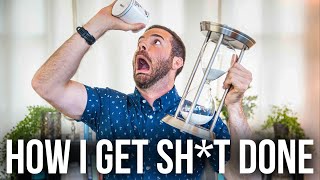
Ryan Daniel Moran runs multiple businesses using three habits: a Monday Hour One ritual to schedule tasks into Google Calendar, alternating buffer and focus days; selective use of nootropics like Modafinil alongside sleep and diet; and delegating ownership so division leads run their areas like separate businesses.
Chapters
So today we're going to talk about managing multiple businesses. Because if you listen to a lot of people who talk about business or teach business and entrepreneurship, you'll hear them often say that you should focus on one thing, that you should be obsessed with one thing, that you shouldn't be distracted by a bunch of other projects. But if you look at their lives, all of them have multiple projects, you're not gonna care that much. But Elon Musk has multiple businesses. Jeff Bezos has multiple businesses. Even the author of the One Thing, the book about focusing on the first domino in front of you, Gary Keller, he has lots of businesses going on. So what is the dance Focus and following the interest of having multiple things going on. Because as an entrepreneur, I like having multiple things. I like trying new stuff. And I also know that in order for any of them to happen, there has to be focus on them. So we're going to talk about that. We're going to talk about some productivity hacks I use in order to run multiple businesses.
So the first thing that I do, and this is a process that I learned from my friend Brooke Castillo. She calls it Monday hour one. It's just a process for organizing everything that's in your brain and getting them on the calendar. So what I do is Sunday night or first thing Monday morning, I make a list of all the things that I need to get done that week. So right now I have outlining videos for our next YouTube shoot. I have.
Some book promotion stuff that I want to do for my book. 12 months to 1 million. I want to do a big promotion for that. There's some stuff for our event, the Capitalism conference. It's coming up in a few months. So I have all of this written down as like, oh, these are all the things I need to get done this week. And what I used to do is I used to have kind of a file on my computer, the to do list. And I would just like pound out what needed to get done in order and I would pull, you know, 12 hour work days and check a bunch of social media posts and kind of hate my life. What I do now is I take this list and I organize it to what's most important and then I put it into my Google calendar. So like right here I have the smallest action that I need to take in order to get each one of these done. So today is Monday and it's content recording. That's kind of what we're doing right now. This morning I had to reach out to Emily, who is somebody that I want to invest in and needed to email my list to promote the Capitalism conference. So that what was on here? I was preparing for our quarterly meeting which is coming up. So I had to finalize our focus. And so I just put the tasks into my calendar so that I'm not operating from a to do list anymore. I'm operating from the priorities that I already decided were important. So what this allows me to do is ensure that on a week to week basis, there's nothing that is super important that is getting neglected. The most important thing, of course, is showing up to that task like it's an appointment that you set with yourself. There's one other way that I like to play with in terms of establishing priority. There's a system that Dan Sullivan, founder of Strategic Coach, found. He pioneered this. It was the idea of having buffer days, which are basically preparation days and performance or focus days. That's when you actually show up to get the work that you're paid to do done. So a buffer day for me would be outlining videos and a focus day would be showing up to film. Or a buffer day might be writing copy for something, whereas a focus day would be performing whatever it is that I sold, a workshop and event or something like that. Breaking things into those buckets is another way that you can establish the same kind of habit of setting priorities, outlining what needs to get done in that time block, and then showing up to do the work.
So the second thing that I do, and this is a little bit more controversial, if you will asterisks, I am. You should not listen to anything that I say. Health or business or financial or anything. Talk to a doctor. Because the second thing that I have had good success with is smart drugs and nootropics. And of course every brain is a little bit different and so you'll respond differently to different things. But there are tools out there to enhance your own focus. To enhance what the. The best shot that your brain has to be happy or productive or be energized or well rested. So I just see this as a way to like stack the deck in my favor, to perform the way that I want to perform. There's. There's two things that I've had good success with. One is an actual drug. I've had really good. I respond really well to something called Modafinil, which is, you would call it kind of a smart drug and you need a prescription for it. It basically just makes me feel locked in. But I also don't like taking pharmaceuticals. So One thing that I do is I like to experiment with different combinations of nootropics or smart drugs or racetams. If nothing else, it's just kind of fun to see how you respond to certain things. One that we developed@capitalism.com is called on Switch. This is like we developed this. This is one of the brands that we have@capitalism.com and this is made to increase serotonin and dopamine in the brain, which make you feel good and also kind of give you a productivity lift. It's like it gives you a little bit of feeling of being in flow, kind of like right after you had that really good cup of coffee. But it extends for a couple extra hours if you don't want to do something like that. There's other stuff, like I have Dave Asprey's brain octane oil in here. I have this stuff that a friend told me about that I don't think I like. This is like a. This is a nicotine and some other thing. I don't think I. I don't think I'd like it. I don't really use this one. But anyway, there's a. Another, just a very simple one is 5 HTP. Again, I'm not a doctor. Don't listen to anything that's. Do your own research. But when you find kind of the combinations that you respond well to. And again, every brain is different. When you find that combination that makes you feel how you want to feel at this stage in your life. And it will change. Like, you'll go through periods where your idea of a nootropic is you need to relax more. Or you'll go through periods where you really need to focus and get things done. And you'll go through periods where what you really want is a mood lift. And there are combinations for that to give you kind of that extra lift. And of course, the best nootropics in the world, sleep, stress management, food, relationships, meditation, being healthy, those are your biggest levers. And then there's other stuff that you can do in order to give you a little bit of a lift. But what I have found is if I am well scheduled by prioritizing what I need to focus on, and then I'm physically optimized and then mentally optimized. That is when I am able to really dial in and get my best work done, that doesn't exist.
And the final thing that allows me to run multiple companies is encouraging ownership. I expect a team member to come in and own their division or their area of Expertise and to almost kick me out of it. So on this whiteboard right here, this is. I did not put anything on this whiteboard. Two team members whose job it is to come in and take ownership over one of our programs was mapping out kind of the next chapter of what that program might look like and how we would fill it and how we would serve our members really well. And I come in and poke holes in it. But I encourage ownership of those members to put treat it like it's their own business and treat it like those customers are their customers. Because if they can't, then I can never move on to build the next stage of the vision. If someone isn't taking total ownership of something, then I can't walk away from it and do what needs to be done to grow the business. Now, it's also really hard to give up ownership of something that you've been controlling because you have a way of doing it, because you have expectations for it that you don't even know you have. So it's been a process over several years to get clear on what it is that I'm actually expecting that area of the business to look like and what I want that other person to do to be able to set me free in order to grow the next stage of the business.
In fact, one of the things that we teach our students is something called the owner's model. In fact, I kind of have it drawn out on this whiteboard. Didn't plan that. But the owner's model is basically where you, as the owner of the business from day one, create partnerships with people who will own different pieces of the business. When it comes to sales channels, do you want to be a master salesperson? Do you want to be an Amazon manager? Do you want to be a master copywriter? Or do you want to partner with a person who already is so that you sit in the owner's chair and come up with the next stage of the vision? When it comes to product management, do you want to be a product expert or do you want to partner with the person who is. And there's no right or wrong here, but we teach people to cast a vision for the business, create partnerships that allow you to stay high level. And that way you can always be thinking about the next stage of the vision, the next stage of the vision, or the next project that you want to pursue. And that's what we help people do inside of our program called the Capitalism Incubator, because most entrepreneurs will go into wanting to make more money and then, you know let's work 12 hours a day or 16 hours a day and you can get to a certain level doing that, but you can't have multiple projects going on. You can't have a real visionary business when you're in the weeds of it all. So that's why we work so hard on getting people to see the vision first, then the partnerships, then the execution happens, whether you're involved or not. Which is what I think the real sweet spot of an entrepreneur is casting the vision, creating those partnerships, still working hard, but working on the things that move things forward rather than being stuck at the bottom level of everything. If you want to find out more about what we do, basically our tagline is we help entrepreneurs build seven figure businesses that they can sell. We love to work with people who know Internet marketing or are influencers, but they're tired of monetizing their audience with sponsored posts or people who have had successful businesses but not something that they could scale or sell. Those are kind of our three people that we love to work with and we help them cast a vision, build partnerships, and create foundations for a seven figure brand that's profitable, scalable and sellable. So if you want to find out more about what we do there, that's at capitalism.com inc. Capitalism.com inc. That's our incubator. And when you do that with what we talked about in this video, you can have multiple projects going on at the same time while still having a life. Do you have anything weird that you do in order to increase your productivity or to make sure you have multiple projects? Once again, every successful entrepreneur that I know has multiple things going on. Somebody that I admire, Brian Lee. He's an entrepreneur who built The Honest Company LegalZoom, Art of Sport. He invested in Honey, the app. He built Shoedazzle with Kim Kardashian. And he's like 50 years old and he has multiple billion dollar projects on his resume. So it's possible you can do it. You don't have to marry one project for the rest of your life. You have lots of them going on as long as you stay in the visionary seat. So if you do anything interesting to stay in the owner seat, the visionary seat, let me know what they are in the comments. And if you want help starting your next project, we do that inside of the incubator. Thanks so much for watching and I'll talk to you soon. Thanks.







