
3 Things That Will Make You Rich In Your 20s
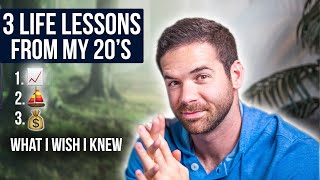
Ryan Daniel Moran gives three pieces of advice for people in their 20s: invest early in index funds and stocks rather than hoarding cash, spend on travel and relationships because they pay off long-term, and use your income to explore interests instead of letting work define you.
Chapters
A member of my team asked me last week, hey, if you were 10 years younger, what would you do differently? He is 23 years old, I'm 33 years old. So it was a logical question. It's actually Alex, he's standing over there, yell, hey, Alex. Hey guys.
And I was a full time entrepreneur when I was in my 20s. Now being in my 30s, there's a few things that looking back, I wish that I had done differently while I was in my 20s. It would have helped me make more money, it would have helped me be wealthier, and it would maybe happier as a result. So in this video I'm gonna share with you three things that I wish I had done differently when building a business in my 20s. The first thing that I hope you do differently than me is that you start investing more aggressively and earlier than I did. Now, I started investing when I was in my early 20s, but I hedged. I didn't go heavy into it. I didn't put everything that I had into investing. If I had simply put everything I had into very simple index funds in the S&P 500, I'd be way more rich than I am today. But at the time, I was so worried about running out of money and having to not be an entrepreneur anymore, of having to work for somebody else or losing what I had that I didn't invest most of my money. I kept most of my money in cash. Now, I know this is super rich person problems, but there were times in my twenties that I had hundreds of thousands of dollars in cash that I didn't know what to do with. And you know what happened? I was scared I was gonna lose it. I was scared inflation would waste it away. I was afraid that I would make a business mistake and it would go up in smoke. I was always afraid that there would be some downturn that would take my money and. And so therefore I just kept it in the bank. Ten years later, that money should have 10x. The market has averaged like 16 or 17% over the last 10 years. So it would be like five or 10 times what that cash was actually worth. And so I didn't invest that money until much later and I was worse off as a result. So as soon as you are profitable in business, as soon as you have an income, as soon as you have a job, as soon as you have a side thing, please take as much of that as you possibly can and put it into things that are going to grow over the long term. That's things like dividend paying stocks, growth stocks that you believe in. If you believe in cryptocurrency over the next 10 years, you know, go for it. Put what you're not afraid to lose into that. But don't hold on to cash. Cash is trash. Now, there's something to be said about holding cash reserves. Of course, I always have six months of emergency funds in both my business and in my personal life. And I also do sometimes hold cash and wait for the next downturn so I can buy more stocks or real estate or what have you. But in the long run, cash is a asset that goes down in value. So please invest everything you can into other businesses that are going to go up in value, because that's what will set you free and protect the money that you've earned up to this point. Number two, there are two things that are worth spending money on. Relationships and traveling. When you're in your 20s, this is the period of your life that you have the most flexibility to travel. Especially if you've got a job that allows you to work virtually or you have an Internet based business, you have the opportunity that you may not have ever again in your life, at least until you're 50 or 60 years old. And that's to see the world. I traveled. I circumvented the globe a couple of times, but I wish I had traveled even more. And part of the reason for that is because getting to know new cultures is good for business. The world is coming online, and because of that, the more you understand other cultures and see other ways of life, the better you will be in business over the long term. If you can learn a new language or at least understand how different cultures think differently than you, you'll be in a better position to come up with products and services and marketing messages that will connect with people. As the rest of the world catches up with the first world, do you realize that still only half the world has Internet access?
We're only in the third or fourth inning of this big boom that we've had over the last 25 years. So as Africa and Southeast Asia and other parts of the world start to catch up, there's going to be all kinds of new opportunities that you will be able to tap into if you have a broader understanding of the world. And once you get married, and believe me, when you have kids, those opportunities just don't present themselves as much anymore. It doesn't become possible for you to peace out for a month and to travel or to book an Airbnb somewhere and just hang out. Your kids, go to school, your spouse has a job that keeps him or her in the same place, your parents are starting to get old and you want to spend some time with them. Those are the kinds of things that keep you in one place. Whereas when you're in your early 20s, even your late 20s, you have more freedom than you will probably ever have until you get to retirement age. So spending money on travel and experiences does have an ROI in the long term, and so does relationships. Relationships are things like mentors, masterminds, coaches, people who are 10 years or more ahead of you and can help reduce the learning curve for you. Those are the two investments that are worth spending money on. And when you're in your 20s and you can afford to spend the money on travel and take the time away and put many years into building a relationship with people who can help you cut your learning curve, those are things that are worth pursuing when you're in your 20s. Number three. This lesson is so important. Please get this one earlier than I did. If I could go back 10 years, then probably the top thing that I wish I had done differently is I would have used my income to pursue my interests, hobbies and passions rather than letting it define me. Here's what I mean. When I was in my 20s, I was making pretty good money as an Internet marketer, an affiliate marketer, as search engine optimizer, doing things that produce cash. And what I did was I said, I have an opportunity here. I'm going to work really hard and focus on this skill. And there were times that I didn't leave my apartment for days because I was working. And I became miserable and depressed and unhappy. I lost weight, I fell out of relationships and I wondered what I was doing with my life. I know woe is me, poor me, who cares? Here's why it's important. I wish that I had taken that opportunity to go explore what passions I didn't even know I had here. And here's why. If you find things that you genuinely enjoy, you'll work hard at them. And if you work hard at them, you will be successful. Success is kind of like a muscle. Once you've got it, even if you atrophy and pull back a little bit, you can get that muscle back really quickly. When you're successful, as long as you use that muscle on something, you're going to find a way to make it successful. Once you're successful, you don't need to be successful at that one thing. You can apply the skill set to other things and it'll take time It'll take hard work, but once you know what it takes to be successful, you know how much time it takes and how much effort it takes and how much thought it takes and the relationships it takes, you know what to do when you can apply it to just about anything as long as you have a natural liking for it and some general talent for it. Now, there's one thing that I wish I hadn't done in my 20s, and if you're watching this and you're under 30 or 35 years old, I would suggest that you take this one to heart. I wish that I hadn't shared my opinion so much. When I was in my twenties, I shared my opinion on all kinds of things. On social media, on podcasts. I shared my life, my personal life, all kinds of things that I wish I could take back. When you are in your 20s, you don't know shit. I'm 33, I still don't know shit. I've built eight figure companies. I don't know shit. I've helped hundreds of people become millionaires. I don't know shit. I don't know if I'm right about things. I've changed my mind politically. I've changed my mind on religion. I've changed my mind on investing strategies. I've changed my mind on the way that I see the world. And when you're 35 instead of 25, you'll look back on what you believed when you were 25 and you'll say, what was I thinking now? If you don't believe me, keep in mind that When I was 21, I was in college thinking I was going to be a pastor. And I thought that was going to be my life and my commitment until I died. Now I don't even believe that anymore. I don't believe what I believed back then, which I thought would be absolutely crazy. You know, right now we're in this cancel culture where anything that you've said in the past can and will be used against you. You.
I want my grandkids to be proud of me.
And there's times that I look at things that I posted, things that I shared, and I go, man, I hope my grandkids never see that. Now, part of that is a sign of growth because if you're not embarrassed of who you used to be, then you're not growing. And we all know people who never graduated high school and they're in their 40s, they still have the same mindset of thinking back to the glory days when they were in high school. And they were the exact same person. That's a person who hasn't grown. You're not one of those people. You're one of those people that is going to grow for the next 50 years. So keep your opinions to yourself until they're fully fleshed out and until you can share them from a place that is non judgmental. Because when you are judging the world, it means you're blinded by your own opinion. If you can't clearly articulate what the other side would say about a certain topic, then you don't have your opinion fully fleshed out. And unfortunately, in my 20s, I shared lots of opinions that were one sided based on my own limited worldview. And when you're in your 20s, you have such a narrow view on the world, you can't understand how anybody can see it differently because all you have is your life experience. But once you get a little bit older, you start to realize there's lots of different experiences out there and yours is a drop in the ocean. So what do you know about the world versus what somebody else knows? Listen, if you're watching this and you're in your 20s, you have so much time and the beauty about where you are is that you don't need to be in a rush. And anything that you're excited enough about to commit the next five or 10 years to is probably going to be successful. So you're in such a beautiful spot to take risks, to lose money, to learn things. You can always recover from them because you'll be smarter and wiser ten years from now and you'll be making a video about all the mistakes that you made and how you're still successful. So invest, travel, meet new people and keep your opinions to yourself and you'll be really, really well off a few years from now. What I do is I help entrepreneurs who are in their 20s, their 30s, their 40s, some in their 50. I have one who's 19, build businesses and invest the profits. And if you're just discovering this channel, there's a few ways that I can help you do that. Number one, when you're ready to build a business that you want to see sell, I run an incubator for entrepreneurs to help them get clear on their vision to launch profitably and build the foundation of a seven figure business that they can scale and sell. And that's called the capitalism incubator. The second way is I have a mentoring group called the 1%. This is for people who are building 1% net worths. So we help them build businesses and invest the profits. And we have a community of opportunities and resources to help you do that. And that's called the 1%. And then the third way. Like if you're just getting started and you're just looking for some help, make sure you're subscribed to the channel, but also you can download some of our best content and the Cliff Notes to my book. And everything is in the description of this video. So if you're one of those three people, just find the links in the description of this video and that will take you to the next step of your journey. I'm Ryan. Daniel Moran from capitalism.com thanks for watching. Talk to you soon.







