
3 Tips For 7-Figure Physical Product Brands and Amazon Sellers
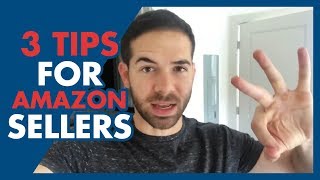
A short YouTube talk by Ryan Daniel Moran (uploaded by Capitalism.com) advising Amazon/physical-product sellers how to respond to tightened Amazon review policies. He urges sellers to (1) control their own audience (email/Messenger lists), (2) target very specific customer segments (super-micro brands), and (3) position products as premium to avoid competing on price and to build a sellable, high-margin brand.
Chapters
Oh, hey, fastlaners. Ryan Daniel Moran here. I'm about to go pick up the most beautiful three year old little girl in the world. Be spending a couple days with her. And before I go, before I kind of sign off for the weekend and be dad for the weekend, I wanted to talk about three things that you need to be thinking about if you sell physical products right now. And the reason I'm making this video right now is because Amazon made some changes, as it always does. We'll get to that in a second. But these were big ones. There were some things that came out this week that involved changes to Amazon's review policy. And basically, without getting into the nitty gritty, Amazon is eliminating some loopholes that people used to exploit. Now, they weren't unethical loopholes. These were things that perfectly reasonable sellers have done for years, but they were things that Amazon felt did not add to the value of their marketplace. Which if you look at what the loopholes were, you're like, okay, kind of get it. But they hurt a lot of people, meaning sellers. They made it more difficult for people to use tricks or to use, we'll just call them tactics to be able to get reviews. And so Amazon sellers are going to need to be a lot smarter about how they go about ranking for keywords and how they go about getting reviews. So we're going to talk about three things that you need to be thinking about right now if you sell physical products specifically on Amazon. But this will apply to all Amazon sellers because I like to say I have said this, what is old is new again. The unscalable things, the things that are difficult to do are cool again. And they're cool again because the sexy stuff, the automation stuff, the loopholes are getting harder to exploit. And so the things that were popular and some of the things that were old school are now new school again because they're the things that entrepreneurs and sellers need to be thinking about and focusing on specifically. The way that I approach and have always approached Amazon is that it's a tool in your tool belt. It's a way to support a business. But your business is not Amazon. If you have followed my work on Freedom Fast Lane for any length of time, I've been doing it since 2013, documented my entire journey as an Amazon seller from zero to taking it to $10 million a year, to selling the majority stake of the business for more than $10 million. I still own 20% of that business. I continue to advise that business. I still have a portfolio of physical Products brands. I now advise some very well known people on building physical products brands. I have a portfolio physical products brand. Anyway, if you have been following me for any length of time, you have heard me cringe at the thought at the phrase Amazon business. I hate that phrase. And I hate that phrase because the assumption that Amazon is your business is really dangerous territory. And it means that when there's changes in the marketplace.
It can devastate you. It's the same thing as when I got started in this business. I've been an entrepreneur since 2006. In 2006, the way to make money online was you got really good at Google AdWords, which is still around more than a decade later. But back then it was driving pay per click traffic to a sales page and taking the order. And when Google AdWords said, you know, we don't want sales pages all over Google.
Thousands of businesses were harmed overnight because what they really had was a Google AdWords business. I cringe at the idea of an Amazon business specifically because it reminds me so much of those days when people were entirely dependent on someone else sending them customers, sending them traffic, sending them any sort of social proof. And if you are not developing that independent of Amazon, it's going to make it really difficult. You are not an Amazon business. You have a business that sells on Amazon. That distinction is slight, but it changes everything because the three things that we're going to go over that will impact your business will impact any business, not just someone who collects orders on Amazon. So the first thing that you need to be focusing on right now that will make reviews easier, which will make your prices higher, which make you less price sensitive, especially on Amazon, is to control your own audience. Now I have been preaching that till I am blue in the face for years now. I'm really high right now on Facebook messenger as a way to build an audience. Now, you can podcast, you can do YouTube videos, you can drive traffic to squeeze pages. I've built all of my businesses right in my career on email. Driving traffic to squeeze pages, collecting the email address, warming people up and selling to them via email. I've built all my businesses doing that. But right now, if I were starting over from scratch, the thing that I would be focusing on, and I'm doing this in my businesses right now, is spending a lot of money, a lot of time and a lot of energy developing Facebook messenger lists. So doing lead magnets, giveaways, developing content and getting people to subscribe on Messenger. If you do that, the numbers are really attractive and there's some really cool things that you can do with Messenger. As long as you're being cool, please be cool. Right? So many entrepreneurs just go for the ask right away. That is a quick way to go out of business. Give, give, give, get people engaged. And then when it comes down to do a product launch, you can pull the lever and have all these people saying you're shooting stuff, right? And messenger is a really great way to do that. So a nice hack for you to think about is think about a pain point that your product solves. Run a Facebook ad about the pain point. Click to send a message in order to get the relief of that pain point. Or a coupon code. Tell them what the relief of the pain is. You've got the relief to that pain point. Offer a discount code, have them click to send you a message to get the coupon code. Have messenger send them the coupon code. Now you've got them and now it's your job to engage them. All right, so that is the number one thing that you can do. Have build an audience. I like messenger and I like email because I want to control the customer experience and I want to control it over the long term. So building an audience is the first thing that you can do in order to really build a company that's bigger than Amazon. But it will really help you right now in light of all of the changes that are going on. Remember, you market to people, you don't just sell products and that makes it easier to think about building an audience rather than just selling and hawking products all of the time. Number two is a build on that last one which is go super micro brand, super micro brand. Get very, very clear on exactly who the person is, who is the person that you are targeting and then go get as many of those people as possible and go super micro with them. So, for example, an example I like to tell is it used to be in the olden days that protein powder was protein powder and you went to the supplement store and you bought protein powder. Now you've got grass fed protein, you've got pea protein, you've got paleo protein, you have protein for vegans, you've got protein for people with digestive issues, you've got all kinds of things, right? The market is getting way, way bigger in terms of your ability to sell physical products because people can choose what's specific to them. Same thing, like if we go into protein bars, like I have four different kinds of protein bar in my house. I've got quest, I've got Julian Bakery. I have Boo fit bars, right? And buying one is not really competitive with the other. I actually now that I buy one type of protein bar, I'm likely to buy other types of protein bars because I'm a protein bar buyer. So you can afford to go really, really micro with your targeting. Is your product best fit for people who do CrossFit? Is it best fit for moms? Is it best fit for, for.
Expectant mothers? Whatever your best customer is, you can now get thousands of those people in your audience. And if you go super micro, you can raise your price. So.
If you're the workout bands for moms, and here's why they're for moms, you can charge more than just the workout bands. And that makes going out to people like bloggers and YouTubers and podcasters, we way easier because you just go to the mom bloggers. You don't go to the fitness people and say promote my bands over their bands because my bands are green and yours are blue. No, you go to the mommy bloggers and you say, look, we're passionate about moms. We have this fitness line that is all about moms reclaiming their bodies and we sell fitness gear. Would you talk about us? That is a much more impactful ask. That is a much more impactful endorsement than going to the fitness blogger that is going to maybe talk about you versus the other person who's selling the exact same product as you. Your differentiation is who you target, not just my product's better or my product is, I don't know, green.
Alright, so that's number two, go super micro. So number one, build your audience. Two, go super micro. And number three, position yourself as a premium brand. A brand sells multiple products to the same person. You are not a brand until you've got three to five products marketed to the exact same person. And if you're marketing to a person, you can go premium and you can raise your prices. I am retired from the low price game. Trying to compete on price is a terrible, terrible differentiating factor. Price is the worst differentiating factor because there is no differentiating factor. People are choosing you based only on cost. That means that they're not your ideal customer. When your price is the last thing that people consider when they're making a buying decision, the last thing.
So if you get them before they are at the end of the buying cycle, that means that you can charge way more money and it's way easier to get those people. But Amazon sellers specifically are notoriously bad at this because all the buyers are There ready with their credit card, looking for workout bans. And so all they're doing is trying to compete on price. Guys, that is not how you build a business. It might be how you make some cash flow, but it's not how you build a business or a brand. So go super premium, build the audience, go super micro and build an elite high margin brand that is going to be more sellable. You will have more raving fans, it will keep your profit margins high. And that is a much more enjoyable business because you only need a fifth of the people to be raving fans to pay high prices compared to everybody else who's going out there trying to squeeze as much margin, like as little margin as possible. I should say they're lowering their prices compared to everybody else begging for reviews because they have no raving fans. And that makes it really difficult to scale. And with Amazon getting smarter, these things are going to be more and more important. They're necessary now if you want, if you want to have a profitable, scalable physical products brand. I would say that we are entering into a new wide open west, period. Because the people who are cutting corners are going away, they're getting kicked off, they're having a really hard time. So if you put in the work, if you do these things, there's like a new golden age that is about to happen. There's a new wide open west, there's new opportunities opening up that I didn't expect. I thought there'd be more and more consolidation and that has kind of happened. But with Amazon starting to kick people off for breaking the rules, there's now room in different markets for people to get an edge. But remember, it's way easier to go from audience to product than it is to go product to audience. So if you've got the audience, those are my favorite people to work with. If you've got 100,000 social media followers, 100,000 email addresses, 100,000 blog readers, man, you can just, you can monetize physical product. You can build an eight figure brand around that audience very quickly by doing these three things. You already have the audience. So go super micro and go premium. And those are my favorite people to work with. I can build, I can spit out million dollar businesses like nothing. In fact, I have a team that will do it for you if you've got that type of an audience. If so, like shoot me a message on Instagram or something. Ryan Daniel Moran but those are the three things that we would focus on. Those are the three things you should focus on. And in light of the changes and just to have a more sellable, scalable brand, that's where the money is. It's not in settling for the scraps. All right, so those are the things that I want Amazon sellers, new entrepreneurs and brand builders to understand right now in light of all the changes and just to build a sellable, scalable, profitable business. So hope you found this valuable. If so, let me know in the comments. And by the way, we're doing an event. We're putting people who like this stuff, who get this stuff, we're putting everybody together at an event called the Brand Builder Summit. It's kind of an experiment to talk all about physical products, brands bringing in some of the best in the world. And if you want details on that, you can get them@brandbuildersummit.com thanks for watching. Let me know what you thought in the comments and I'll talk to you all soon.







