
7 Passive Income Stocks I'm Considering Right Now
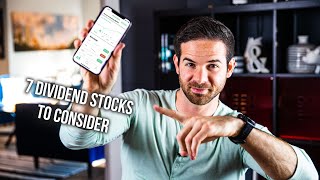
A Capitalism.com 'Capitalism and Coffee' livestream (Dec 10, 2020) with Ryan Daniel Moran focused on passive-income stock investing for entrepreneurs. Moran reviews seven dividend/ income-oriented stocks (AT&T, Unum, Walgreens, Altria, AbbVie, Exxon Mobil/Chevron, IBM), explains a 'paid patience' strategy using naked puts and covered calls, gives two bonus/watchlist stocks (NRIM, Coca‑Cola), and follows with audience Q&A on investing platforms, option strategies, and entrepreneurship.
Chapters
Hey, cheers, everybody. Good morning. Welcome back to capitalism and coffee. Hey, Tim. Hey, Andrew. Thanks for hanging out with me here in the green room. If you are watching live, please say hello in the comments. Hello, Drew. Hello, Susan. Hello, everybody who is watching over on the stream on YouTube. Good to see all of you. Today we're going. I almost fell into a reference. Screw it, let's do it. Today we're going to make one more time. Today we're going to learn to make plutonium from common household items. Does anyone know that reference? I'll give you 25 seconds to put it in the chat box. 10 points to whoever knows that reference on today's capitalism and coffee. Good morning, Sue. Good morning, Brian. Good morning, Salome. Good morning, Stefan. Good morning, Mayor. Good morning, Raj. Good morning, Alexandros. Hello. Good to see all of you.
No one knows that reference. My favorite movie, uhf, was written, directed by, and starred by Weird Al Yankovic. Yes. If you haven't seen it, go watch it. Uhf. It was a cult classic. Uhf. Go watch it. It's. It's just the best. It's the best. You have to. Yeah, you.
You gotta have a really wonky sense of humor. You really. You got. You just gotta get it. If you get me, you will get this movie. So go. Go get it. That is. That's your. That is your homework assignment for. For this weekend, we. I need something that we do here to kick off the day. It's something called the simultaneous sip. It's a way that we kick off the day. It's a way that you start the day on an amazing foot. And what's funny about the simultaneous sip is the day just keeps getting better after you have it. Have you guys noticed that days with the simultaneous sip are just better than the other days? It's because it works. Ladies and gentlemen, you'll notice that today just keeps getting better and better and better and better and better. After the simultaneous sip, in stark contrast with the other days of your week, which just kind of sucked, and you'll go, oh, right. I know why today was a good day. It's because I had the simultaneous sip. So grab a cup or a mug, a glass, a chalice, a stein, a tankard, a thermos, a vessel of any kind, and join me in the thing that we ripped off from Scott Adams. It's called the simultaneous sip. Go.
Mmm.
Ah. The day is better already.
Raj asked a really good question in the queue. He says, how do you make a billion dollar business? That's an excellent question, Raj. We'll Cover that in the next 30 minutes and by the end of this live, you will be a billionaire, my friend.
Should I add a disclaimer to that or does the FTC know that I'm kidding? I don't know. I don't know.
Hey, we're entering the age of Biden. Who knows what's going to happen in the ftc? All right, let's do this thing. Good morning, everybody. So for the last quarter, we have been talking about passive income, we've been talking about investing, we have been talking about how to grow your wealth. The two steps to financial freedom are build a business and invest the profits. And entrepreneurs tend to be really good at the first part. The building the business part is where most of our energy goes. Yet I can't tell you how many entrepreneurs that I know who are magicians. They make money appear out of thin air and then they make it disappear out of thin air just as fast. So the important thing that will really set you free to go all in on whatever it is that you want, whether it's the business that you got or it's some other business or it is.
Whatever you want to do with your time, the thing that will do that for you is the investing piece. So most people put their attention on the, the making the money side of things, thinking that making the money will set them free to do the things that they want. And what really happens is that the peace of mind frees you up to do what it is that you want and you really get the peace of mind from the investing side of things. So that's why we've been beating this to death all quarter. It's because it is the most important thing that will free you up to go do the things that you want to do and that you love to do in your business and outside of your business. Now, today I'm just going to be focusing on examples. I'm just going to be going through examples of things that meet the criteria from the work that we've done over the last three months. So how many of you just give me a one in the comments. If you have gone through the Investing for Entrepreneurs class that is in the 1% members area, give me a 1 in the chat box. You have gone through that training.
I'll sit here awkwardly. There we go. Thank you, Tyler. Thank you, Drew. Drew, Hitchcock's gone through it twice. Brandon. Good, good, good. Brian.
Alright, so this is not a high enough percentage of you. So. Okay, good. Wes, Good work.
Salome is still going through it. All right, so this is. This is not enough of a percentage of you because.
This stuff may not excite you like Bitcoin or like the new cool business idea, but it's the most important thing that you can do. Now, I'm going to be speaking at a level today that assumes you have gone through that class. So the rest of you are going to be confused as fuck. So if what should be.
This is what I would recommend. I recommend that you go through the examples that we go through today and that you go back and you watch this class. Then you come back and rewatch the replay of today's call and you'd be like, oh, that's what they were talking about. And the class is like. It's like an hour and a half long, maybe two hours long. So you can speed through it. You can get through it on a Saturday morning if you want. It's quick, you'll get it. Today is meant to lock down all of the points that we talked about in that class and over the last three months. So if you are taking notes or like to take notes, I'm going to read off.
Seven stocks that meet our criteria for this class and then we're actually going to go through them together. And then we'll leave time for Q and A about business and investing at the end of this. All right, so here are the stocks.
Number one, AT&T, they trade under the stock symbol T.
Number two, Unum, they're an insurance company. They trade under UNM.
Number three, Walgreens, WBA.
Number four, Altria, they trade under MO, they're controversial. We'll talk about that.
Number five, AbbVie, they trade under ABBV.
Number six.
Actually, this is a. I'm going to give you two that make up number six because they're very similar companies. Exxon Mobil and Chevron.
So Exxon is xom, Chevron is cvx.
And number seven, IBM.
I'm also going to give you two bonus ones. One is very new to me, so I don't know a lot about it. I've just started researching it. Researching it. It's a. It's a bank that specializes only in Alaska investments. And they trade under nrim. Nrim, that's bonus number one.
And bonus number two is a stock to add to your watch list because it does not meet our criteria. But one of the things that we've been talking about is you add stocks to your list, watch them, and once they meet our criteria, that's when you go in. So one example of this was we had A bank on our watch list that has done extremely well but it no longer meets our criteria. It's too expensive now. So one that is flirting with our buy criteria is Coca Cola. They trade under ko.
Now what I'm going to do is we are going to go through these examples.
I'm going to show you how I come to my understanding of them being worth watching and then we're going to actually look under the hood of them. All right, so let me pull a couple things up.
All right, so I'm going to pop over to my screen and show you a couple things.
Nope, not you. Stand by. There we go. All right, so what you see on my screen in. There we go. What you see on my screen right now is an ad, an ad on MarketBeat.com this is MarketBeat.com MarketBeat is the service that I use in order to kind of go through this stuff also it was started by a member of our community so we like to support them. He's been on the podcast several times. His name is Matthew Paulson. This is their dividend screener. So you could come in here and search for, you know, any stock. So here's IBM. It would pull up a whole bunch of stuff about the company.
There's only a couple things that I'm looking for when I'm looking at this company. I'm looking at its dividend yield which I can find anywhere. IBM's is over 5, which is very good. What I'm actually looking at on Market Beat specifically.
Is, I am looking at, at is it on this screen? I think I'm looking under analyst ratings.
So here it is. What I am looking for is this chart right here. So this chart is an, an A summary of analysts ratings. So analysts will give kind of their price target for a stock. And I like to see that a stock's current price is below the average what analysts say they're going to be. So if we look over kind of the last few months, we can look at a trend here. We can look at IBM's price versus what analysts say it is worth or what it is going to be worth. So right now IBM is trading at 125. Analysts say that it's worth 140. Now this doesn't mean anything except it's a data point. It's like, oh, okay, good. This is what the marketplace says it's worth and this is what analysts say it's worth. So it's just worth paying attention to. This is kind of a sniff test for me right before I make a purchase of a stock. Now, IBM specifically, if we come over to the dividend section of MarketBeat.
We can get a whole bunch of data about IBM's dividend. So IBM, we remember in our criteria we look for a couple things. We look for a dividend yield of at least 3 1/2 percent. Awesome. We are way above that. We look for dividends that have raised their dividend every year and Market Beat gives us that data. But we can also see here that it has gone up and we look for aggressive dividend raises. So IBM's three year growth is 16.9%. That's, that is adequate. It's not great, it's not awful, it's adequate. It's about where we need to be. Right? So this is what I'm looking at as a stock that is passing the sniff test or not. Now this is kind of a go signal for me because it matches our target yield. It's been going up, the dividend is going up over time. And if you see here their track record, IBM track record, 20 years of consistent dividend growth. We want a minimum of 10 years. So these are all good, clear signs. Now if you've gone through Investing for Entrepreneurs, then you are familiar with something that I called the paid patience strategy. The paid patience strategy simply says that we can get paid to wait for the stock to hit our target price. So if we look at the IBM section, the IBM search inside of E trade, and we go over to options, the paid patient strategy is selling a naked put. And if you've gone through that training, then you know that we go a couple months out. So I will go over to February. Today is December 10th. So this would be two months out. Almost on the nose now. Check this out.
Gonna put my face on the screen just so you can see how serious I'm about to get.
Check this out. All right, So I just went through a very, very quick sniff test of a stock, right? We went through it real quick.
Now I want to, I want to ask you something.
If you were happy buying IBM at its current price.
Actually it's trading at 126 today. Are you happy buying it at 125?
So are you happy if you're like, oh, this matches my criteria, I'm, I'm, I'll buy it at 125 even though it's trading at 126. Would you agree to buy it at 125.
If you're already happy with that price? The answer is yes.
So check this out.
Oh, I see. Thank you, Drew, for the heads up. I gotta switch to a different Chrome tab inside of Streamyard. Not you. Here we go. Thank you, Drew.
All right.
All right. So if we were to agree to buy the stock in February at a 125 price, this price of a dollar or 125.
We could sell a naked put for $6. You see this?
What is that percentage? I'm going to run calculation here. So if you got $6 and you bought it for 125, you'd be getting a 5% return today. You'd be getting paid a 5% return, which is another dividend. You'd be getting a year's worth of dividends today for agreeing to buy IBM at the price that you want, which is in this case 125.
And you'd be in the position to get 5%, which goes up every year due to dividend raises.
And that's how you always get a stock on a discount. You set your price now, you wait for it to drop, you lock in the discount through the naked put and you get that premium up front. You buy the stock at a discount and you hold it for a very long time.
So that's one of the stocks that matches my criteria. Now I prescreened some of these, which is why I'm able to give you this group of seven that you can track or consider. Because IBM has this huge 5% payment upfront for buying it at today's price and a dividend yield that is very healthy at 5 and a quarter ish percent. And it goes up every year. All signs a go for something like that. So that is one example. The next example I want to show you is.
Let'S do Unum Unum. Unm.
So Unm.
It'S an insurance company. Full disclosure. Unum is one of my largest holdings. So I own quite a bit of Unum.
So in the financial world we say I am long Unum, I own a lot of Unum. All right, so Unum right now pays a dividend 4.86%. Now we've been talking about Unum inside the 1% since it was down here at like $1618. So during the COVID boom right here, during this guy, we were talking about dividend paying stock and how they weren't going to stay cheap forever and that. And so we were talking about Unum in this window right here. Now it's had a really nice bump up, but it still got a 4.86% yield. So let's say you were looking at this and you were like, I wish I had bought it at.
$20.
I wish, I wish, I wish, I wish I had bought it earlier. Well, we can do that. We can set our price target for June of next year to be at $20. Meaning you're agreeing to buy this at $20 and you're getting at a premium for that. You're gonna get a payment for that. And that payment right now is about a buck 70. A buck 70 right here. So right now if I were to sell a put on a $20 strike price of Unum, that means that I'm agreeing to buy this at $20 before June of next year. And then I'm gonna get a $70, $1.60, in some cases, $1.80 for agreeing to buy that stock. What does that end up being? That ends up being an 8 1/2% return today paid into your E Trade account today for agreeing to buy the stock at $20, which is something that you say you want to do anyway. And you're getting a stock that is paying about a 5% dividend.
Now, for those of you who went through the course, for those of you who went through the course, is this making sense? Oh, good question, Drew. I didn't look up UNAM's dividend growth rate.
But that's an easy Google.
So what you should be seeing here is that you can get paid now.
To agree to buy the stocks that you want to buy anyway. And that's the paid patience strategy. That is you're getting paid now for agreeing to be patient, to wait for your stocks to hit their ideal price. It is just a good, prudent way to start buying dividend paying stock. The cool thing about this, for those of you who are a little bit like gun shy about putting your money to work, is because you're casting way out into the future. You know, you're not, you're not agreeing to buy it at a lower price in March or April of next year. If it doesn't hit that price, then you just keep the money that you were paid and you don't buy anything. That should give those of you who are a little bit gun shy about doing this yourself a little bit of coverage and a little bit of peace of mind to be able to go execute on this. Because you don't have to buy any stock to be able to run this strategy and to be getting, you know, really good returns, you just have to agree to buy them if they hit your ideal price by the Way. I bought UNAM via a naked put earlier this year. I put in a really conservative price. It fell. I bought it. And I'm up 50% on my unum right now. Awesome. Why? Because I made my money when I bought. I made my money when I bought the stock. I got paid to buy the stock at a really big discount. So I bought unum at 16 bucks. It's now at 24. So I'm up 50% in six months on my UNAM investment because I just said, I'll buy it if it hits 16. Sure, yeah, hit 16. I'll buy it. And somebody paid me to agree to buy it at $16. That's the beauty of this. Like, this is outsmarting most people. You have your list of stocks you're happy buying. Now you agree to buy them at low prices, and you get paid for it. Awesome. Let's look at a couple more examples just for fun. All right, so let's do ExxonMobil, because ExxonMobil is a little bit weird. So Exxon Mobil has an 8% dividend. You see it right here. 8% is a ridonkulous, awesome dividend. The reason why it's so high is because ExxonMobil is very cheap right now because people are skeptical about, well, is Tesla gonna keep booming? Are people gonna go back to driving after? Like, are they gonna go drive to work? Is the oil boom over? So there's a lot of spooked money running away from oil right now and into things like alternative energies. It's a legitimate concern. But if you buy this at a significant discount and if you look at the profits of the company, you can kind of rest assured that you're at least not going to lose your entire investment right now. So I still like ExxonMobil. I have a significant amount invested in ExxonMobil, full disclosure. So. But right now, 8% dividend, which is really, really good, really healthy. Let's take a look at the puts on this. So right now, it's trading at 40, about $44. My target price for something like this is anything $40 or under on Exxon Mobil. Pretty compelling. Pretty compelling to buy to. It's pretty hard not to buy ExxonMobil for me if it's under $40. So let's take a look at.
Let's do April of next year.
So four months from now, January, February, March, April. Four months from now, I would be agreeing to buy ExxonMobil at $40.
And we can see that the premium on this is about $2.40.
So that is a 6% payment today for agreeing to buy ExxonMobil at a 10% discount from what it is right now. That's pretty darn good. That is pretty darn good.
Now, for those of you who went through the course.
Do, do y' all know about. Do you remember the rent your stock strategy? Tim is nodding his head. Good man, Tim. You're a good man. If no one has told you today, you're a good man. You're a good man. You're caring, you're thoughtful.
You'Re happy. Most of the time, you think about growth.
You're just handsome af like, you're just a good man for knowing the passive income rent your stock strategy. And Andrew Griffith, I like you, too. You know, I don't know you super well, but I just, I love your beard. You know, I love that you still wear flannel in 2020. I just, I just, I just think you're a good man. All right, so yes, Wes, covered calls are the strategy for the renting your stock passive income strategy. So I'm, I'm going to kind of flip this on you. So I'm assuming, you know, it's April 2021, you just bought a whack ton of ExxonMobil at $40, and you're happy because you wanted to buy it at $40 anyway, right? And you got paid 6% up front for agreeing to make that payment. Like you are winning right now. So if that's the case, what do you do from. What do you do from there? You've got your 6% up front. You have 8% in your dividends. It's actually more than that because the stock would have dipped a little bit, but we'll just go with that. So now we're at 14% return already. We just bought the stock and we're already projecting a 14% return year one. That's good, right? That's good. So now let's flip the game. Let's flip this a little bit. For those of you who are experienced with this, you're going to know that I'm oversimplifying this a little bit. I, I understand.
But for the emphasis of point, I want to show you what happens if you do the rent your stock strategy after you buy Exxon Mobil. So we see here that ExxonMobil is trading at $44. Let's assume we just bought this today at 44 bucks.
We could agree to sell it at $50 and we'd get this premium.
It was about 175.
So we're not. We don't have to sell it. It's just that if the stock crosses 50 bucks in April of next year, we would need to sell it at $50. This is the rent your stock strategy, the stock renting strategy. So if we were to do that, we'd get $1.75 up front.
The stock is currently trading at 44 bucks. So we'd get a 4% additional yield for four months. For four months. Assuming we did that twice a year, that's an additional 8% on our money. Now, I know I'm going really fast for those of you who haven't gone through the class, but if you've gone through the class, this makes sense, that you just basically projected a 20 to 22% return on your money for agreeing to buy a stock that you wanted to own anyway and own it long term. So this whole thing, this whole strategy takes about an hour a month to manage and oversee. And with that amount of active management, you can far exceed what most people are doing as they're just passively doing this stuff. I'll take a vote here. Do you want me to do one more example, or do you want me to just go, okay, Valentin is saying yes, Juliana saying yes. Tim's nodding his head. All right, that was a very unscientific poll, but let's do one more example.
So let's do. Let's do Walgreens, because that's actually my favorite one. If I were. If. No, I'm not gonna say. I am not gonna say that. Walgreens is my top pick. I will not say that because I'm not here to make recommendations for investing, but I do like Walgreens quite a bit. All right, I like Walgreens for a myriad of examples, but let's just look at the numbers. Actually, let me. Let me. Let me call a left turn here.
And let me. I'm just gonna super nerd out with you for a second.
And show you something that we don't usually do, but for fun, for those of you who have really been active on my stuff.
There we go.
All right, so this is a service that I use. It's free. It's called Big Charts. Just helps me look at. Get a snapshot of where a stock is right now. So let's take a look at Walgreens. Type in Walgreens.
So we'll get kind of a look at this, this chart, and we can see it just kind of all over the place. So I'm going to actually zoom out to a year.
And get a year snapshot of where we are in Walgreens. Okay. This gives us a better picture.
So what we can kind of see here is over the last year, specifically since the COVID plunge, Walgreens has kind of stayed in this little channel between 40 and 45. That's. It's like safe zone, right? That's like, it's. That's where it's been hanging out. Now we had this nice little dip here a couple months ago where it dropped all the way to 35. That, that was a really good time, in my opinion, to get into Walgreens. Once again, I own quite a bit of Walgreens, so I'm totally biased. This is not investing advice. I am blinded by the fact that I own a lot of Walgreens. But for somebody like me who believes in this company, likes this company, invests in this company, I'm looking at a dip to 35. And I'm like, awesome, let's buy a lot more of this. And now we see that in the last two months, it's popped back over into this channel of 40 to 45, which suggests that we might either hang out here for a while or we might go start climbing again because Walgreens is. Pharmaceutical companies that are not actively fighting Covid have not yet recovered from the COVID plunge. So we've got room to come back to its pre Covid levels if Walgreens recovers from that. All right, this nerdy rant has been brought to you by capitalism.com let's go back to the regular schedule programming where we look at the dividend of.
Walgreens. All right, so Walgreens here paying a 4 1/2% yield. That's really good.
Let's pull it up on MarketBeat.
And look at the history of it.
What do you mean you don't have. Oh, and user error.
Walgreens.
Right here. Four and a half percent return.
Looking at the dividend.
Dividend growth over three years, 22%. That's good. Not awesome, not great, but good.
And right here, 45 years of consistent dividend growth. It's gone up every year consistently for 45 years. That's very, very good. Let's look at the analyst ratings.
So analysts say that it's actually right at where they project it to be. Okay. Not the best news. I'm okay with it. If we were to come back to earlier in the year, analysts were saying it was going to be higher. Interesting data point.
So Analysts don't like Walgreens. I do. So let's take a look now. Oh, I was showing E trade that whole time. Damn it, Ryan, switch your damn screen. Sorry, guys. Now we're back on E trade. You were on E trade the whole time. If we look at the options for Walgreens, if we were to agree to buy this.
Before April.
Let'S say at a $40 price point.
You'D get a $3 P premium up front.
$3 on a $40 price point is a 7 1/2% return. So you'd get 7%.
For your put option up front. Today, you'd get a four and a half percent return on your dividend. So you're at 11 and a half percent. And then if you write covered calls on it, you can get additional passive income of 8 to 12%. By the way, all of this is assuming that the stock price never goes up. This is all income. All we're calculating is the passive income. If the Stock goes up 10% next year. Now you're looking at 30% returns for the year.
So when we're doing all this analysis, we're taking the stock price out, out of it. We are taking the speculation out of it, we are taking the upside out of it, we're taking growth out of it. And we're only focused on passive income. That's kind of the beauty of this is we don't have to bet on the stock going up in price. If it goes up in price, awesome. We're happy even more. But it doesn't have to go up in price for us to be really happy. Let me go through the list one more time because I get the sense. My Spidey senses say your brains have seen enough examples. So we can go into more if you would like them throughout this call. But let me give you that list one more time. AT&T.
Unum.
Walgreens.
Altria, A L, T, R I A, Altria, Abbvie, Abbv.
Exxon Mobil, and Chevron. They share a spot. And IBM. All of these are stocks that match our criteria. And by the way, stuff comes into our buy territory all the time as the stock market goes up and down and up and down and up and down. We're at record highs right now, guys. There's not a whole lot available on a discount yet. There's still seven that I could find that were like, oh, yeah, these work. These all meet the criteria.
There were two bonuses on that list. One that I just don't know enough about yet. But I'm just starting to research trades under nrim. They're in an Alaska investment company, an Alaskan bank. The second is Coca Cola. Coca Cola is not yet in our buy territory, but I want you to have something on your watch list so you can practice this stuff.
So that is the list.
All right. With that I'm going to turn it over to the green room.
For Q and A. You can ask about business or investments. I don't care. I just like hanging out with you. So I'm gonna call you out one by one. Tim, my favorite person of the day. Would you like to come into the green room? Let's do this thing. Good morning my friend. How are you?
Hey Ryan. Good to speak to you buddy.
Good to see you as well. What's going on?
Well, it's actually late afternoon here in Scotland, so it's cool.
Where in Scotland?
It's in a place called Peebles which is in the Scottish borders, so south part of Scotland.
Okay, got it. Great.
Yeah, it's a not, not, not warm and sunny, that's for sure.
Well, what can I do to make your day warm and sunny?
First of all, I'd really like to thank you for putting together this particular training. Like, you know, I've followed a lot of the stuff that you put out there over the last couple of years in the 1% and it's all been superb. But this one has really, really been great to actually allow my brain to kind of like pull the trigger on actually doing some of this investing stuff because that's been the biggest challenge is kind of like there's so many different conflicting kind of methods, systems of investing and this is by far the one which has made the most amount of sense to me. So it seems the most simple. As you say, it takes a huge amount of risk.
Risk, haha. Out of.
The whole speculation part of buying and selling stocks.
So.
And that's been great to kind of like set my mind at ease there are so glad.
So I'm very glad to hear that.
No, that's really appreciate. And the guys who haven't gone through this course on the 1% definitely, definitely spend the time this weekend because it will massively like simplify everything that you've ever known about investing before. So it's, it's definitely worthwhile the sort of hour and a half worth of time to go through it. My question, obviously I'm in the UK and we have very, very different platforms available to us.
We can't get an E Trade account, for example, one of the Biggest challenges I'm finding is actually finding a platform that will allow me to do things like a naked put or a covered call. I don't know whether it's something which you may not be able to answer right away or you might not be able to find an example. But I did ask in the group earlier in the. And one of the examples that came up was, I think it was called Tasty, Tasty Works. I think it's called it's platform and I don't know whether it's something that you could potentially do a, an example through that in the future that would be really helpful for us.
This, this is my, my only question and forgive me, I am not an expert on this topic at all. But when you're looking at this, are you looking at buying US companies like we're talking about or are you looking. You are? Yeah. Okay. So all you're really looking for is a platform that allows you to buy US companies?
Yeah, pretty much. And I say a lot of the. When I look at say for example, a lot of the online stuff that you get through your mobile. We have our own apps, things like trading212 and eToro and that kind of stuff. They just don't offer the ability for you to do the naked put type of purchasing. You can do things like. I can't even think of the right terminology for it. Still relatively new to it. There's other methods of actually buying stocks, like buying options, but they tend to be kind of like, kind of like spread betting type things.
I understand. Got it. So you can trade and speculate, but some of the. So my, my guess is so naked. Naked puts you. You might be out of luck on most platforms. The one that I think you're referring to, people are saying is called tasty trade. I'm not, I'm not familiar. But covered calls, the stock renting strategy, my guess is you'll be in the clear on that. So covered calls are extremely conservative. Some people think that naked puts are risky, so some platforms don't allow it. But covered calls are like industry standard, been around forever, very conservative.
Most platforms will allow for covered calls to exist. It's like, it's like the most conservative level option trading that exists. Naked puts are like the next level up. So I talk a lot about naked puts because it's my preferred way to buy. But all the stocks we talked about today, like I'd be happy buying today too. So I might not get my extra 6% but I'm still happy buying IBM at 126. Yeah. So. So doing that and then writing the covered call is enough to make this strategy still extremely valuable for you. And we can kind of solve the naked puts challenge later. But. But hopefully somebody in the group is familiar with something like that more than I am. Cool.
No, thanks for that, Ryan. Appreciate it.
You bet. It's great to see you, Tim. Thanks for hanging out with us.
Pleasure talking to you.
All right, you as well. Take care.
Andrew Griffith, you're on deck. Would you like to come into the green room? Let's do it. Good morning, Andrew. How are you in your beard today?
Oh, pretty good. You know, not too bad today for one. It's awesome to be on here. Like, this kind of stuff makes me a fan for life.
Good.
I'll give you that.
So I'll just cut to the chase with it. I'm a week away from getting my product right. Like, it's this weird, like, gray zone.
And I don't know, like, if I'm taking on too much, like, I was in the process, you know, obviously listed on Amazon, Shopify, and I was like, flirting with the idea of a sales funnel via through click funnels. And I don't know if I'm like, putting the cart in front of the horse and need to, like, double back on. Is that a yes? Like, I am.
Yes.
Gotcha.
So, yeah, that was like my. Here's the thing, man. Like, complexity slows down results. So your. Your whole job right now is to take damn sales. It's just like. And I don't even care if you're profitable. You just got to be taking sales in the simplest way possible. I mean, even. Even at my level with what I. I do and focus on, I still go back to like, what's the simplest way that we could do this was the simplest way we could take this sale. What's the simplest way that we can take this order? And I keep making the process simpler and simpler and simpler and simpler and simpler and simpler. And my advice to you, pick whatever sales platform you're already on or most comfortable being on and go all in on that for the next three to six months.
Unless you need to take pre sales. If you need to take pre sales because your inventory is delayed and you promised everybody that you were going to launch on December 15, then you need to take pre sales on your own website. But apart from that, if you're already on Amazon, stay on Amazon. Put all your attention, all your traffic there. Get enough momentum for it to be valuable for you. And six to 12 months from now you can ask the question, do I need to be on another platform? Not do I not. Should I be? Because everybody's gonna say you should.
Yeah, there's a lot of noise.
You need to. Yeah, yeah. I mean, it's just like what Tim was bringing up about the investing. Everybody has their flavor, they're preaching about their flavor. And the only flavor that matters to you is the one that tastes good to you. And that's the one that it matches your skill set, matches your product, matches your audience, matches where you are in the process right now, which matches your momentum, which matches just where you're at to be able to take that sale quickly. And for most people, that's Amazon at the beginning because it's just the easiest platform. Not everybody, but for most people, that's what it is at the beginning. And I don't suggest that you be distracted from that for a good six months. That's my long answer to your question.
Fine. It's not long winded when it's interesting and then if we got time. So on another side note about investing, I've played with options a little bit, usually lost my ass on them, but that's besides the point. So I'm in a position where, like I've started this business, I don't have any personal overhead for the next 12 months. Like I've got all that covered and I have an additional ten grand sitting on the side. Should I, I mean, obviously, and give this kind of advice. If you were me, would you take that 10 grand, split it half towards investment and half in case something comes up with the business or bank all this information until a little bit later when I've got some more to play with.
Do you have a full time income right now?
I'm sorry, say that again.
Do you have a full time income from some other source right now?
Yeah.
Okay. So I would not recommend that you.
Try to start two unrelated businesses at the same time. So you've already got momentum on the business. I mean, you're a week away from your product being launched. If I were you, I'd be keeping that 10k as an emergency fund for if and when you need to order more inventory, if and when you want to run some advertising, if and when you want to hire somebody in the Philippines to do some images and some website stuff for you. It's the perfect amount of capital that I say you need in your book to have ready to go in the event that you need it and things start to grow faster than you expected and you'll know that within six months. So let's not put our money to work in the stock market unless you've got 2,500 bucks that you just want to play with to buy and sell options, which by the way, I do. You know, so I'm willing, I'm willing to lose my ass trading options because I enjoy it so much. It's, it's my, it's my video game that I play. I trade options.
So it's a hell of a lot of fun.
It, it is. So if you want to put, you know, 2500 bucks away for that, you know, and you're okay losing it, go for it. My recommendation from a wealth building and focus standpoint is to keep that 10k as your, as the business's money and to give, you know, give six months of a real go at this and see how far that you can take this on a bootstrap and then you can reevaluate in six months. And by the way, I asked about the full time income because you can take 10% of your take home money from your job or your other business and put it into long term dividend paying stocks and not hurt your lifestyle and not compromise the business. And that would be my recommendation of how to split your focus there.
Cool. Make you sense.
Yeah. Other than that, thanks for taking this call. Really loved your book. It's opened up some doors for me putting out great content.
I appreciate it. Thank you. Andrew, great to meet you.
Thank you.
By the way, I appreciate the compliment of our content being great. I'm more proud of our content than I have ever been. So those compliments, they meet. You know how when do you guys ever. Do you have a person in your life? Like, I'm thinking about a girl in high school who everybody thought was super cute, but every. But she didn't think that she was cute. So every time you complimented her, she would say, stop, stop. And she like couldn't take the compliment. Do you know anybody like that where they're like, oh, you're so smart. You're like, I'm not that I'm not smart. It's like, because you don't believe you're all that smart. Well, with me and content, there have been times where I'm like, my content kind of sucks right now. And people like, man, that podcast is so great. And I'm like, no, it wasn't, it wasn't great. It wasn't great at all. But right now I'm like, yeah, our content's real good. So compliments mean more to me right now. And then they do specifically about our content. So thank you for the kind words. They mean more to me now than they. Than they have if. If you're not subscribed on YouTube. We're putting out really good, really good stuff on YouTube right now. And we finally have, like, a really great strategy for. We're going with this. And so we're actually, we're. I. I'm so confident in what we're doing right now that I've been playing with. I'll actually show you.
This is my current journal entry. You can see at the top here, it says a thousand days.
So I'm thinking about, like, what would my life look like if I set thousand day goals? Like, I am willing to go all in on YouTube for a thousand days and not care about the result. Am I. Will I commit to cultivating a quiet mind for a thousand days? Well, I cultivate to creating, like, great mobility in my body because that's my primary fitness goal right now, is just mobility and ease in my body, being pain free. Like, am I willing to do that for a thousand days? And I'm doing that with my content right now. Will I just dedicate a thousand days to creating amazing content? Alexander's asked, can you elaborate on your strategy? I think you mean about my YouTube strategy. My. Our YouTube strategy is exactly the same as my strategy was for writing the book. Create amazing shit and see what happens. That is. That is my strategy. Valentin, you are up next. Would you like to come into the green room? Yes. Hello, Valentin. How are you?
Hey, man, I'm doing good. How you doing?
Good to see you. Doing well. Thank you, man. What can I do for you?
No, I'm just. I'm excited. I'm trying to. I've learned so much onboarding you guys. And, yeah, really, really like the content. It's stepping up a lot and it's great. Getting more and more focused on the key things that I feel are helping me clear out my old junk.
Glad to hear that. Thank you.
Yeah, it's just been so many and so wide, trying to kind of build it up. I turned 40 recently, and, you know, you accumulate and becomes almost like a mound. You know, you get way down. So getting to getting through that little kill bill move, where you get to the top, it just clarifies, you know, you get that. And now I feel like I'm there. I'm getting my head up, I'm getting that and I can see clear.
So clear.
I'm picking the right kind of Relationships. And bit by bit, moving from that prior done for you to a hybrid to just being able to breathe my own product. So it's really cool.
Appreciate. You bet. Well, how can we help you take the next step today?
I think I just need to do that myself. I just need to get rid of stuff I know, like all the stuff you're putting out. I'm trying to catch up, focusing on. I followed. I'm trying to be better at listening and following instructions by mentors that I like. I know they are ahead. I know they are successful at things I want to be successful at. I still have a shiny object syndrome where. Oh, I figure, you know, I got other ideas here and there. That's the only thing I'm trying to battle with on my own. Just trying to listen, find mentors, listen, and then keep racing that mentorship level. And I think, I think that's something that a lot of people struggle with. They're just bad at following instructions and listening.
So let's, let's talk about that real quickly. So you don't need to shut off your ideas because it's like the most fun part. Right. Like idea people like us, like, telling us not to come up with ideas is like telling us not to breathe you with it.
Yeah.
Like. Like if you tell me not to breathe, all I'm gonna want to do is take a breath even more.
Yeah.
So. So don't. You don't need to shut off that energy stream. It's where all your power is. But what the way I personally manage this is, my team came to me and were like, we need you to save your ideas for later. Like so. So what I have learned is coming up with ideas is the most fun thing that I do. And. But I can't share them until they're fully thought out.
So I think what you're.
Yeah.
What you're bringing and entangling other people with.
So you gotta. Right. But. But.
I have people in my life who are there as my brainstorm people. They're. They're just there for me to talk things out with and work things out with. And I have a file on my computer which is called Ryan's Ideas, where I just dump all my ideas and then some of them come back over and over and over and over again. And some of them go away.
Yeah.
And some of the best ideas I've had were the ideas I didn't pursue. I look back, I'm like, that was. What was I on that day? Like that.
Yeah.
It's a terrible idea.
Yeah, so.
So the more that you can wait and let them percolate, the stronger the good ones will become. Until they. Until it'd be a breath that you have to take because it's. It's so strong within you.
Yeah.
So what you, You. You said some. Use some language, which was, I just need to clear more or like, I just need to. And I want to know what you mean by that.
No, I think where.
Me personally, I've gone through so much, and I would say it's ADHD that I've learned to manage, to control. I think it's been artificially created. It's not something. I don't believe it's something I have, like a disease or anything or I. I believe it's something your life can create. It shatters your revolution. You get almost addicted to small, small, small dopamine kicks.
And it gets.
Yeah, sprinkler.
Right.
So you get that popcorn sprinkler.
And.
That, as you get older, is hard and hard to sharpen again. It's harder to do that. And you're always looking for the new thing or the big thing or whatever it is. So mastering that and clearing out has been.
It's.
It gets a little more difficult unless you. You learn and like meditation. For me, I. It gets so noisy. I would say noise is a big thing. It gets so noisy that every day just has to. The muddy waters have to go down. But you enjoy getting, you know, getting it all rounded up because that's where you get the ideas. Yeah, it's in there. How do you get the clarity? You know, long walks. I love that. Having these, you know, I see futures of masterminds and. Yeah, the workshop is just heights. It's long hikes like the old this, you know, disciples following, you know, so it's clarity is what I get from you. What I get from. From following the courses and finding mentors that I. I submit to, which is something I don't do. I've never. I don't do that. I've always been, you know, the. The loner. I do it my way and I'm gonna do it. But before I can do those things, truly, I have to submit. And that's been my clarity. But I'm still fighting. My body is doing things and I'm like, you know, you get insight, but acting upon it and mastering that habit is two different things. Everybody has insight and get a cognizant.
So. So my assessment is.
You have your best ideas. When things are real quiet, you're a lot like Me in that. In that way. Long walks, getting out into nature, going. Like, when you go on vacation, do you just have the best thoughts and the best ideas?
Oh, awesome.
Yeah.
And just went, yeah, exactly.
So what happens, though, is we come back to reality and we drown it out with information. And you kind of said that that was the case. You're like, I'm behind, and I'm catching up on a bunch of things. My advice to you would be not to catch up.
Okay.
I like the feeling of that. When you see.
Good, like, you have nothing.
You have nothing to catch up on.
Yeah.
Because you already know what you want.
You know.
You know what your next steps are, and there's a lot of them that you just don't want to do. And I would say don't do them, because if you don't want to do them, you're probably doing them because you think you have to. And have to is based on all the information that you've gotten from other places that weren't from the place of inspired action that you get when you're on long walks and you're on vacation. When you're on vacation and you have an inspired thought, you're never like, I have to. I will now take myself on a vacation mode, and I will force myself to write this. No, you're like, that sounds awesome. Let's do that. It's like the next thing you want to do on vacation. When your next action set, when your next step feels just as exciting as the thing that you're about to do next on your vacation, that's when it's inspired. It's like you can't help, but you feel so compelled to do it that you feel drawn to it. But most of us spend 80% of our time.
Just, like, forcing it, hoping that one day we get to go on vacation.
Yeah.
And.
And it's not good. I tell you, the cortisol levels and all this. Like, you feel it when you're in this worst. It is. It's absolutely.
That is not freedom Unhealthy.
No.
No.
You're jailing yourself.
True.
That is not freedom. That is the same feeling that people run away from when they feel like they're stressed out at work.
Yeah.
And so they get stressed out at just being an entrepreneur instead.
Yeah. I have a good friend. He's a country artist, and we had two different roads. Like, we went. We went. I just want to share that story real quick. We went two different ways. We didn't go different ways. We just. He said at a Certain point, we're going up to Kentucky, long pickup truck, you know, ride. And we're talking about. He said, I'm gonna go all in. I mean, what do you mean? I'm gonna go all in on music. Like, I can't live without it. I gotta do it. I gotta go all. I'm like, you crazy? You got. You gotta do this smart way. You can't just go all in. You'd be a starving artist. You do this. So I got to do it. I'm like, dude, I. I was fighting him initially because I have a different way looking at it, but then I started looking. You're doing it. You're crazy.
But I love it.
You crazy bastard. You're doing it. Go, man, go. I'll take care of this. I'll start looking at how. How to grow the businesses, how to do these things, how to like, how do you do this with music? Like Leah's awesome example. I just want to give a shout out to her of how she's done it, but. And we both went in these different ways. We both had kids now at the same time, and we both are my entrepreneurian and my businesses are growing, getting established. I've not been able to work with music as much as I love to. And last year we were in Rolling Stones and it was a huge get to. But I'm not. I can't jump in there because there's. It's very difficult to make money there. He goes that way, I go this way. But we realized we can't leave each other ever.
On that part.
We called it the Kentucky Treaty. Music is so much in your heart, and it's the chaos that makes you free and feel. And it's the way it makes everything worth it, right? Then you can't leave it if you just go for money in business and do this. But if he's gonna start just making music and Covid hits and he can't play now, and he can't, but he needs to, then that's not good either. So we keep. We staying together, working on. We call the Kentucky Treaty that I never leave music. But he and I will teach him more about those things. Like both things together is. And that's how I feel.
Valentin. The older and wiser I get in my 33 years, the more I realize that as I go through life and I'm picking up these pieces of data and information, like it's never really too late and it's never really, like the opportunity is never really gone. I'm just becoming a Clearer and clearer and more focused person for everything that I want.
Yeah.
And so for you, you are now about to be a really good business resource for a lot of people who are starving artists. You're really close to being that person. It is just a reaction. Says everything.
I think that that's spot on. And it does. And you still like, you know what, you want to go in and start. You get into this world and you want to start golfing and you want to start hanging out with, you know, a different crowd and do all those things. But you realize you can't leave the people behind. You can't believe. Leave that kind of. You know, I was raised in a harbor, pretty much working class and gritty and all. You know, you hate rich people. It's all that taking the journey from Swedish harbors and your very own. That side, going to a conservative, you know, I will guess more on the Republican side or center, but getting more older. You know, you go into that journey.
But then you come full.
You come full, you know, full circle and, you know, but how do I.
How do I.
How do I get my friends in here? How do I lift up more people?
You don't.
That are stuck.
You don't get your friends in there. You go focus on lighting up yourself and your own business and getting really frickin excited about what it is that you're doing. And you will naturally light other fires. Yeah, you will. You will naturally be infectious to have that spread to other people. You cannot lift people up higher than you are, but you can draw them up to where you are.
Yeah.
And so your job is to go be really, really happy with your business and your life, and you will naturally draw in those other individuals. I mean, you are talking about your friend right now who decided to go all in on what it is that he wants. And you are being drawn up by that inspiration. He wasn't doing it for Valentin. He was doing it for himself. And now you're inspired by him, and he is. He is spreading his positivity towards you. Your job is to do the exact same thing for him by focusing on you. The strategy is not to mimic what he did, but to mimic how he approached it, which was by being selfish for a while and doing his thing for long enough for it to catch fire and to be an inspiration to other people. That's your play.
Yeah, I like it, man. Thank you.
Cool, man. Good to see you. Thanks for spending part of your morning with me.
Hey, my pleasure, man.
I appreciate it.
Talk soon.
All right. See ya. All Right. Kyle and Drew, we're gonna wrap up with the two of you. So Kyle, give me a thumbs up if you want to come to the green room. Let's do it. Good morning, Kyle. How are you?
Good. How are you, Ryan?
Doing well, thanks. What can I do for you?
Excellent. Well, first of all, just again, thanks for the great content.
Appreciate it. Thank you.
I love your. Where you're at right now. Your backdrop looks really good. I saw you were trying to experiment with another, like, location. I think there's like a window in.
The background or something as my actual studio. Yeah. This is my office and upstairs is my studio.
Gotcha. Well, I like this one.
Appreciate that.
Yeah. Just, just. Yeah. So well. So I think you answered my question on the trading with.
Earlier, but.
I just don't have a lot of just like cash laying around to put into the account. I was looking at the E Trade account and some of the stipulations. So really I think it would make more sense to wait until I had just some discretionary income or money laying around to invest. But I don't want to wait to start investing in retirement either.
Yep. So this is what, this is what you should do, Kyle. Take 10% of your take home income. If you're making, if you're making.
If you were just. If you had $1,500 that you were taking home every month, take 150 and buy one share of IBM.
Okay.
Every month. Right. So 10% of your income, your take home income, put it into an E Trade account and get that snowball rolling.
Cool. Yeah.
You start, you start planting those seeds. Just start planting them. They'll grow over time. And then your focus needs to be on starting your business, on getting, getting cash flow from your business. That's where your focus is. It takes 15 minutes a month for you to buy a stock from 10% of your income, but your focus goes to your hustle, which is starting your business. That's how I would suggest you reserve your time.
Okay. And so I'm going to start a business, but it's going to be about a year away. Right now I'm working on quick camo, my dad's business that he started 10 years ago and I came in to help him after lost my job with physical therapy. I was like, okay, I'm going to take this opportunity to really grow this business. So we've rebranded, we've done so many things. So my question is, though, the business has been around for 10, 12 years and I've heard products kind of have a A lifetime of like, average of 10 years.
Okay.
So it's like, is it going to be too late to sell quick camo? Because the product has been around for a while. Do you know, have you ever heard.
That, like, how long has Coca Cola been around?
A lot longer than 10 years.
Yeah, yeah, yeah, yeah. Starbucks coffee been around? How long has McDonald's been around? Yeah. Now you could make the argument, well, McDonald's changes their menu every five to ten years, and that's true, but the brand of McDonald's is still there, and they're there to serve people.
Yeah.
So quick Cam, if you get the faster you can make this pivot, and it's going to be harder for your dad than it is for you. If you can get the company to make this pivot of realizing that you're in the people business, not in the product business, then you'll be around for 10 more years.
Yeah.
And the reason for that is because the people who buy your product have other needs and wants too. And if you serve them, then you're always going to have a brand and it won't matter what the products are.
Yeah. And I've just started the Facebook group Turkey Hunters, and we're really focused on. On the people, so we. We. Yeah, I've read your book. I'm really trying to follow and changing the quick camo to really be that audience focus, and I think we're doing a pretty good job. We're getting some amazing feedback from our. From our customers.
Really good.
Awesome.
So keep doing that and keep deepening the product line of what you're wanting to release to them, and you'll have no problem growing that business for the next 10 years if you want to.
Yeah, well, we really want to sell it in the next 12 months so we can start this other business, but.
Good. Sounds good. Then you're doing the right things to be able to do that.
Yeah. Okay, cool. Awesome. Thanks, Ran.
Appreciate it.
Yep.
See ya. The man with the golden voice. Drew Hitchcock, ladies and gentlemen. Good morning, Drew.
Hey, hey.
Hey.
How's it going?
Oh, man, you just. You make me feel bad about myself because you've got such a great podcast voice.
I mean.
It'S. It's on the bucket list of things to start creating, so. So my question is actually more just curiosity. You've teased several times in some of your emails about this investor list, and I just wanted to see if you were able to share a little bit more details of what that is and where you see that going.
Sure. Yeah. So I announced my list that I'm going to be starting kind of a side investor list. This is for a couple of reasons, just for context. One, I realize that not my entire audience wants to hear me nerd out about investing all day long. The core my audience is still building businesses, but I can't not talk about investing. So I'm going to just have a little side list where I talk about the stocks I'm buying and the investments that I'm making. Mostly for fun. The second reason is more of kind of a selfish reason, if you will, because. Drew, did you happen to listen to the podcast that we posted this week where where four of our members pitched their ideas?
It's on my calendar for 2 o' clock today.
Cool. So what you'll what you scheduled podcast listening. So what you will notice is that there's four good ideas from that group and if I or my fund wants to invest in that company, we might put some money in. And if we need to kind of raise more, I can go out to my investor list and help that person raise more money. And the fact that I'm personally backing it and I'm having them on the podcast and give them all this exposure gives me some leverage in actually helping that business grow. I can raise capital more easily. I can sell products, I can open up doors more easily. Some people who are on that podcast already said that people are reaching out to them, either wanting to support the brand or invest in their company. So that's kind of the more business reason behind it. So I'll do announcements of, hey, we just invested in this company and that might be for fun and it might be because we need something I'll do. If I'm ever doing a raise for one of my clients, I might put it out to my investor list. If I go buy a whack ton of IBM this week, I might do a write up about why. Just because I think it's fun for me to do stuff like that. So it's just a side little list that I want to do so that I can keep my primary focus on entrepreneurs who are building businesses. But it still gives me an outlet to do the things that I want to do on the investor side.
Gotcha. Okay, cool.
And you can get on that list by going to capitalism.com investing, I think. Or maybe Sue. What's the link? I don't know. For the investor, you can buy the Investing for entrepreneurs course brought you by capitalism.com awesome.
A couple things we have not heard an update on. Switch in.
I knew you were gonna ask that. Yeah. We're launching first week of January.
Sweet.
Yeah. I had it in my coffee today. We have a formula that we're happy enough with to launch with. I had to put my own perfectionism aside a little bit. And we are. We're launching first week of January.
Cool. And then, just as a side comment, because I'm still allowing people in, for those who are in the 1%, I put a link or I put a post. I launched a beta course last month.
Nice.
Who want to get in and learn a little bit about YouTube that is in the members area, or not in the members area, but in the Facebook group. Just reached out to me via messenger and we can get you hooked up.
And it's a YouTube course.
Yep.
Good stuff. Drew knows what he's doing on YouTube, so go through his shit. Anything else, Drew?
That was all I had.
All right. Good to see you, man. Yeah, thanks for hanging out with me. See ya.
One final house cleaning item before we call it a day. Next week is the final capitalism and coffee that we will be streaming over to YouTube because we are keeping things in house moving forward so that people are more comfortable talking about their businesses inside of the 1%. So we will not be streaming these publicly and into 2021. So you can either join the 1% or you can subscribe on YouTube for the clips that we release from the calls that we do. Thanks for hanging out with me as part of your Thursday morning. Good to see all of you, and I'll see you next Thursday. Take care, everybody.







