
A New Beginning: Moving Forward After Failure
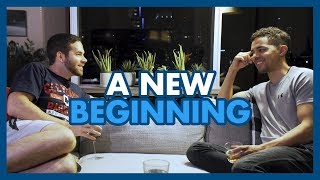
Ryan Daniel Moran describes stepping back as operational CEO after layoffs and over-expansion, refocusing on relationship-building and content creation instead. He and Chris discuss using energy and authenticity as decision filters, setting ambitious team goals through quarterly retreats, and pivoting their media brand toward action-oriented entrepreneurship content.
Chapters
We have no idea what to talk about, do we?
Yeah. I was driving over here thinking, like, man, what am I gonna talk about in this video?
You know what? Okay, I feel like I should reference the last time.
I was just gonna say, what did we talk about last time?
So last time you and I did a video together.
I mean, quite honestly, you talked about letting a couple people go.
Yeah.
On the capitalism team. It wasn't a good fit. You talked about expanding too quickly, and then.
You were just kind of feeling like a failure. Honestly, it was a really rough time. And I was like, hey, this is like a new beginning. This. We're going to be doing some awesome content. Of course, you know, I. I was like, well, I get more time with Ryan to do videos. And our YouTube has been blowing up. We've got a bunch of new subscribers, bunch of really awesome vlog content.
I must be a heart of myself, because I'm like, blowing up.
It's not at a million.
I was trying to make it sound good for YouTube.
I mean, so. But one of the things that's happened since we did that video, though, is that, you know, we traveled, Traveled the world. We went to Eastern Europe, we went to Ukraine, Romania. And then we bumped into entrepreneurs and.
People 6,000 miles away who'd seen content we've made were like, hey, it's C money. And then I feel like this, like, I don't know, E list celebrity in these very niche events. So it's super cool to meet people who appreciate what we're doing.
Mean, how would you recap what's happened in the last quarter?
Yeah, a couple things. First of all, I think.
What you just framed is a different perspective because you're seeing your own growth.
Yeah, yeah.
And the way that I was evaluating my own growth three months ago or the last time we were here on the couch. Here on my couch. Just got this new succulent plant right here from Costco.
You know what I like even more than cheap plants from Costco? Expired wine.
I'll drink to that.
In fact, I'm way more proud of this wine and liquor collection over here than I am about the 10 million dollar check I got.
I love Tyler Pez, genuinely. So anyway, you're talking about your own growth.
Yeah.
And three months ago, when we were here on the couch, I was like. I was. I felt like in a personal recession, so you might have been growing even through that time. Just like if somebody was. Someone got a promotion during an economic recession, like, what Everybody's. What's everybody complaining about? Things are great, Right. Because we tend to see things from our own perspective. Bought a boat, right? Yeah. So here's the first, like, takeaway.
The big. One of the big shifts for me was when we were in Eastern Europe and we were sitting at dinner with Corin, and Corin was talking about that story that we put on YouTube about Mark Cuban. Nobody calling him when he's a billionaire.
Yeah.
And the words, nobody gives a. Yeah, nobody gives a fuck about the hard times you have or the good times you have. Everybody's living their own life, and we only beat ourselves up when we assume that other people give a fuck.
You know, you should do is. Is get a photo of the 10 million dollar check.
Yeah.
And print it out, like, above. Like, when you exit your bedroom every morning. Look at it as a.
No, no. Because it's old news. Like, that's yesterday's.
Well, that's true.
You were also feeling like, have I already reached my. My peak?
Right.
Or are people passing me now?
Yes. Right. So it's funny, as soon as I felt like as soon as we recorded the last video of me kind of licking my wounds, that, to me, was the reset.
Huh.
That to me, was like.
Me being back at zero and being like, all right, let's go again. And so to me, I now feel like I'm at the. Now I feel like I'm at the beginning because so. So sorry, I have a history of cutting you off in these. In these couch talks, but.
I give you permission to cut me off at any time.
Well, what I was thinking here is that it probably took a week and a half or something between when we recorded this feeling like you're trying to figure things out, and the time it actually got released and then maybe a little longer for it went on the Freedom Fast Lane podcast. And by the time it was already out, you were like, I'm in a totally different headset now. Like, different mindset. So, I mean, would you say, like, almost all entrepreneurs have these rapid ups and downs? Oh, yeah.
I mean, Cameron Herald has an entire chapter in his Double Double about the entrepreneurial roller coaster of having an idea and thinking everything's amazing, and then riding this energetic craze upward and then realizing how much work it is. Crashing, freaking about about the crashing, and then being at the trough of that. You get to decide if you're going to continue or not. And if you continue, you're continuing with. With information and data. If you crash, it's because you gave up.
And so I just. I decided to go forward as you.
Are shifting from kind of less entrepreneur and more investor.
Yeah.
Do you think that's helping you think about business differently?
Yeah. So.
The hardest thing for me.
In.
Going through a period in which.
Things weren't going how I wanted was shedding the things that gave me meaning and purpose leading up to that point. So being.
Get the purpose and the meaning that I got from running a, you know, a really successful physical products brand. That was my idea. That was.
You know, I chose the first handful of products alongside my partner who developed them. Right. It was a. Like my. A lot of times, it's my brains, his sweat.
The meaning and the purpose that I got from that, or the pride of saying.
That'S my baby in.
The world on shelves.
Right.
Selling in people's homes.
Right.
In people's photos, workout photos, Instagram.
And when you get. When you walk away from that and you don't have that anymore, then the feeling was, I feel like everybody's passing me because all my peers are still Amazon sellers who still have all of these great brands in the world.
Yeah.
So for me, it was letting all of the past be in the past. Like, what I'm really jazzed about right now is investing. And.
What'S happening now is me coming up with ideas for brands and just having people around me that run with them. But I'm never in the operations. You know, what Clement and I are doing on the initiative side of things.
What we're setting up is to be more like the extension of. We come up with ideas and we have people that run with them, but we're never in the operations.
Well, I feel like this mindset's kind of bled into the Brand Builder Summit event, too. Compared with previous events in that. In a lot of your copy, you were saying, this is not gurus. This is not teachers. These are practitioners that are doing it. These are people that have done it. And this. The whole sales approach.
Is a little bit less of, like, I can ask. And in some of your email copy, you've said, like, you can come if you want and stay home if you don't.
Well, we said here on the couch that we should. Or was it somewhere else? We talked about adopting a no sales. Sales approach.
I think that was an office video.
Okay.
Which was also on the Freedom Fast Lane podcast.
Okay. We're not there yet. But I. I'm getting more to the point where, like, I genuinely don't enjoy pushing sales, so I just don't want to do it. But you have to sell in order to keep a business. Alive or do we?
I mean, I'm much more in, I'm much more in tune with what I want my energy to be rather than anything else.
I've never known how to phrase it in the past, except now I feel very sensitive to will this give me energy or will this zap my energy? And whereas before I made decisions based on what made sense, now I make decisions on.
Does this give energy to me and thus the world, or does it take it out of it?
Well, and it sounds like other entrepreneurs that are less for less far along in their career could take that approach too. And that like when you're energized and I've seen this personally, that, yeah, when you're coming from a place of energy, it's so much more authentic, especially as a content creator. It's like making videos for people that like think this is a hot market. I think this can make a quick sale versus like I'm really passionate about this and if I can win over a thousand people that love it, then awesome.
So passion is a great hack for maintaining energy to do the work. And an opportunity, like a niche market where you just see an opportunity to make a bunch of sales can provide a lot of energy. But there's got to be way, there's gonna be the enter the opportunity almost has to be so good that the energy sustains itself. Because passion is basically self fulfilling. It exists because it compounds on itself. So both can provide energy. And passion tends, there tends to be more energy, but at the same time, just because you're passionate something does not make it a good idea or viable in the marketplace either.
Yeah, it's fun being impassioned. I'm, I'm reminded when we were in Ukraine and you like gave me the call to action, Slash called me out on my bullshit and was like, chris, I think, you know, you can play harder. You can step it up.
Is this, is this when I pulled you aside and was like.
Basically said I what? What Exactly. I don't want to misrepresent it.
It was, it was basically.
Well, basically saying like I, I see you go into either shooting mode or editing mode instead of just like having a better, better workflow. And I see you relaxing a little bit too hard when we're having a good time in Europe and you basically like, I'm almost uncomfortable without, with how much you're, you're chilling when we' this trip.
You know, it's just from my perspective, yeah, it's, it's something that like comes and goes.
Your energy or Your passion. Okay.
And for me, what's energizing, I guess, is getting feedback from either audience members.
Such a great.
Or team members.
Such a great differentiation. Chris.
But when I'm in the editing cave, when I am isolating myself from people.
You kind of go like, what is it all for? Who cares? And you've said that as a face. It's like, I want to see these one minute clips go out, I want to see the stories go out. I want to see bits and pieces and compilation videos all come together and then you feel like it matters and it makes a difference.
Yeah.
And you know, every once in a while we just shoot something that I just think isn't worthy of the Internet. I'm like, oh, you know, it can't all be winners.
You, you just made a great differentiation between energy and passion. Because I don't have passions, I don't know what I don't. I don't have a passion project, I don't have a thing passionate about, but I have the very easy time identifying what gives me energy and what doesn't.
Yeah. And what drains energy, Right? Yeah, I think we've gotten a lot more clear over that.
And, and if we're analyzing the result on something that gives me energy, my result is that I'm more energized. I don't give, I don't care at all what the result is if it's providing me energy and it's exciting. But the strange thing is the things that give me energy always get better results.
Yeah.
I don't know why.
Yeah.
But they always do.
And that's almost like a, you know, like, is it like a law of attraction, like sort of thing going on here? Something ethereal?
I think we are emotional beings before we are rational beings and that we respond to other people's emotions. I think you pick up on other people's emotions, you, and you pick up on it in the written word, in the spoken word, in person, in letters. So when, when something is communicated at a high energy, people want to feel that way and they resonate with it. Whereas if something is communicated with a low energy or an ask, people notice that too. And so the response is going to go down because people emotionally cast it out.
So.
Braingasm. Braingasm. So for people that weren't at the quarterly retreat and aren't in the capitalism.
Slack.
Anybody who's watching this who is not one of the six people in the world who is at our quarterly retreat.
Okay. How do you communicate what energizes you versus Takes energy away from you because there's identifying it yourself, but then there's letting your other team members and co workers understand so that we can all sort of work together better.
So what was the question?
Oh, yeah. How do you communicate to others? What energizes you and then what de energizes you?
I call it my zone of genius. And what I attempted to do was peel back the three things. Three or so things where I'm really good and when I'm really jazzed. Building relationships, opening opportunities, and creating content are my three biggest skills. And I have to rely on the team to allow me to do that.
Yeah.
And if I'm in that zone, it doesn't matter what the vision is, it doesn't matter what the project is. Magic happens when I'm really in those three things. And so what I've been attempting to do and what our last quarterly retreat was so integral for doing was communicating those three things and then building the structure and the flow amongst the other team members of what are your two or three things? And how do they support me and the people around you in staying in theirs as well? And everything else really doesn't matter.
Yeah. I have to give you some kudos on the retreat here because it was interesting how basically we set these quarterly goals, and then everyone has their personal goals, and they all seem to be in alignment with each individual zone of genius, but it was structured in a way and in which there's almost like a circular ring of dominoes in which they contributed to one another. So, for example.
Building the audience is more people that can be attached to an offer, and those are more people that can join an email list, and people on that email list can take this step. So there was this beautiful feedback loop.
How did. How did you even come up with that? Was that something you and Evan, like, brainstormed on together?
No.
So.
So what C Money is referencing is we set company goals. We set usually two to three priorities for every quarter.
And this quarter there were three. And then what I did differently this time was I gave everyone on the team what we call an impossible goal. A cause that they are to champion.
That they. They would have to go get new skills in order to achieve. But I set them with each person, and each person was in charge of working with me. And basically they said, you know, where their zone was. So for, like, for Tiffany, for example, she really lights up about building email lists. Awesome. How big do you think an email list our email list should be? She's like, you know, 500,000. And I said, how long do you think it would take? And she's like, five years. And I was like, okay, well. Well, your goal is gonna double that and do it in like, a third of the time. And that was a thought exercise of how would you have to think? What skills would you have to acquire in order to get like that? And the thing was, at no point, from what I could tell, did she get stressed about that. It was immediate creativity. Like.
It warped her sense of possibility so much that it made her go, what would I have to do? What would. What would have to be in place? How would I have to coach Tyler? How would I have to work with Chris? What would I need from Ryan? What would I need from this person in order for that to be a thing?
Yeah.
Because it was so condensed that now she's got to think outside the resources she currently has. So that was. And I did that with every team member. And then the next thing we did was we told the whole team what each impossible goal was. And that's when we went and took the three priorities for the quarter. And the team came up with the dominoes that were going to be.
Oh, yeah, that's right.
Was going to be pushing down towards each person's goal. And it was the team's job to build that structure to where it supported everyone's goals. I guided it because I could see it, because I saw everybody else's before we showed up at that meeting. Nobody else knew what everyone else's was. So the team built that structure and I just guided it. So that's how I did that.
Yeah.
It's interesting because I'm sorry to cut you off, but. But, like, I want to bring this back to, like, the last time we were here on the couch. It felt like we were starting over. Ground zero. Yeah. And I didn't have some sort of big new direction or life vision. What I did was essentially say, I have to fire myself as operational CEO and I have to go get excited and in my zone again, and I need to take that fire and bring it to other team members, too. And that's the thing that has changed since we were here on the couch last. Not that there's been some big revel, like, realization. There's no new business model that we discovered. We got rid of the projects and the people that weren't infusing energy. And then I got really quiet and got back into my zone and created and invited the rest of the team to have the structure to have the exact same thing happen. That's all that's changed is we've been really sensitive to energy and, and I know, and I think, like, I have a really much better sense about where we're going now as a media company, as a, as a leader, like a thought leading company. But that's the biggest difference between now and three months ago.
Yeah. It's tempting for me to think that you've got like some secret master plan really, like working up really the business genius, Ryan Moran. But you know what, that tell you whatever you want to know what I think that did for me, that whole process, I think what we've described here is it given me more ownership over the media that I oversee as though it were my own company, because the incentives are there and the rewards are there. And like I said, I see that feedback. I get people, I get feedback from people in real life. That's really great.
You know, but speaking of firing yourself as the CEO of operations, you've also decided to kind of take a step back and basically let the team members do their own thing a little bit more.
Yeah.
And so.
Yeah, after Brand Builder Summit, you're going to Burning Man. You're going to be spending time in the lake house about 20, 30 minutes out of Austin. So what are, what are you hoping to get out of this process of stepping back and what do you, what do you want to try and gain more clarity on?
I'm sorry to sound like a broken record, but energy, like I'm, I'm being really sensitive to the things I need to do to have a lot of energy. So.
Now that's the theme of this whole video here. Yeah, apparently. So I'm have to think about the title. Yeah, it's something about energy. Yeah.
Well, you know, previously I was burnt out. Right. And.
So me stepping back is giving myself permission to go do the things where I'm really good. I am a terrible manager.
Chris, you do all right. I think you beat yourself up too much.
Okay. Well, compared to my ability to make content, I'm a terrible manager. Like.
The comparative advantage between the opportunity cost of every minute I spend managing versus making content is stupid.
It is potentially millions of dollars.
Yeah.
George Bryant said to me, he's like, every, every minute that you're not spending making content, so waste of your time. Like, yeah, you're, you're probably right. So the.
The, the ownership that I have invited you to step into on content creation is very simply because that's an area I've got to step out of. And I need you to step out.
And someone has to take responsibility. So.
And you and your role should be on that. And I can't tell you what to do.
Well, it's exciting. I mean, I like it.
Which I didn't know. I thought the team wanted me to tell them what to do, which was a really big shift for me. After reading the book Multipliers Dry Read, I had a really hard time powering through. I don't know that I actually ever finished it, but I got the concept within the first few chapters and it was what I needed.
I think you have said that in an email. You're like, I haven't finished it yet. But the first chapters. Oh yeah, yeah.
Sometimes all you need out of a book is just the concept. Right? Just that shift.
The difference I would bring up here though is, is I do appreciate support and I don't like feeling like I'm alone or I'm. Everything is on me, all the pressure's on me. And I think everyone feels like that, whether it's Tyler or it's Tiffany and you know, and I think everyone feels supported but they don't feel oppressed or stifled.
And so they're saying everybody feels that pressure and that alone.
No. So we've gotten so much better at that of feeling like we're all in this together. Like there's a real team spirit and that I can call on others. Some of the things that I'm not always great at is delegating, putting together processes. I'm like, so not a process person. I just want to be like making cool videos, editing awesome stuff, finding sweet music.
Yep.
Yeah.
But think about this for a second. You want to be an artist.
Yeah. Marketing artist.
And.
So I paused there because none of what you just said was about marketing. It was about finding cool music, doing cool things.
That's my own marketing of myself.
I'm an artist who makes assets for marketing purposes.
Alright, check this out for a second, Chris. What you just described was your zone of genius. What you really like doing is being the artist behind marketing assets. But none of that does anything unless the marketing systems are there to plug plug into. Which means that you need to rely on marketing manager on our team. Her name is Tiffany. You need to rely on Tiffany to go build those marketing systems or else you can't do your job.
Yeah.
At least not well. So you like so that by me being out of that, you can't come to me on that anymore. You have to go to the marketing manager. Marketing manager. Tiffany, you and her have to have a conversation about like, once you're done with this, she goes, oh, right. There needs to be a system developed here.
Yeah.
And now that's done. And there's a flow for getting it out.
So if you could, if you could take everything you've learned now.
Energy. I'm kidding.
And go back four years in the past before the first Freedom Fastline live with Gary Vaynerchuk.
Okay.
How would you, how would you do things differently? Because I feel like there's been a lot of.
Learning opportunities over the year.
Oh, it's so hard to say if I would change a darn thing. Here's the thing I would change. Here's the thing that I would do differently. I'd have been very careful.
To never.
I'd be much more protective over doing things that.
Took me out of a feeling of being with an integrity.
Made me feel like I had to put on a mask, act like something I wasn't, do things for money. The minute I step out of a really authentic place.
Things break.
They just break. And.
Trying to think of an example, like an example might be.
I'm struggling with, I'm sure with a good example actually here.
The marketing of our events for the first few years.
You're saying what you think is going to convert people.
Yeah, sure.
And for me, that's incredibly energy intensive. It's incredibly.
Mind. It takes up a lot of mind share.
It's like when you go on a date and you're trying to present yourself as what you think she would like and you're not just like, being yourself and being like, well, if she doesn't connect with me, then we're just not a good match. And you can do that with your clients and people you serve in your audience.
And if you continue projecting what you think she will, like, you will, for the rest of your dating experience, have to stay in character.
Oh, my God. This is like all my relationships. I mean, when I was growing up and I was stupid, but yeah, when.
We were young and stupid, before we turned 30.
We're still young.
Did you say I'm still.
No, we're still young.
Okay.
When, when you, when you operate your life with that mask, you never get to feel like you're yourself or you're done. And you never get to feel like you're enough because who you were, who you are never got tested. So it's the same thing with business. The example that I've said was because I had businesses that sold well on Amazon. In fact, I remember being at Mastermind talks in 2015 or 16. Somebody asked me, so you run an Amazon business? And I said, no. Now, this is before, like, that term was coined. Right. I said, no, no, no, no. I run a business and I take my sales on Amazon. And this person was. He looked at me, goes, you're gonna be successful. And I was like, I know, but why do you say that? And he was like, because you're not. You're bigger than the channel. Right. Like, he, from the outside was like, saw it and got it. And.
Because I was a business owner who did well on Amazon and I became somewhat known as like an Amazon guy, I felt the need to defend that.
Even though I've never printed a shipping label.
I don't know how to. I know Amazon strategy.
I can see where the puck is going.
I've run a paperclip campaign. But I'm really. I'm a physical products entrepreneur.
Yeah.
And.
That'S different. And so. So I beat myself up a lot about putting on the mask of, like, being what I thought other people perceived me to be. And there's just no way to live your life.
Yeah, I think that's a good takeaway. I mean, it's. You can't fully take the mask off. Like, if you've done videos, if you've done emails, if you use these website copy. And then even when people meet you in real life, you almost feel the need to, like, be that person.
Yes.
You put out into the world because they're expecting it.
Right.
And they're gonna be, like, disappointed if you're not that person.
Correct. And now I just don't care.
That's a dangerous trap. That's a place of power just to not care.
I genuinely just don't care about being anything but myself. And you know why? Because.
When it comes to unique abilities, I am really damn good at being Ryan Daniel Moran. Like, I'm so. I'm. I think I'm the best in the world at being Ryan Daniel Moran. I am not the best email copywriter, although I'm a good email copywriter, but I'm not the email copy guy. I am not the best Amazon marketer. I'm damn good at marketing on Amazon. I am not the best physical products investor, but I'm damn good at investing in physical products brands. But I have a. I have a corner on the market. I have a monopoly on being Ryan Daniel Moran.
So what is, what does it mean to you to be the best at being Ryan Daniel Moran?
It's just edit. That, to me, is freedom.
Like that. Like when you can Be so cool with yourself.
Yeah.
Regardless of the result, you are free.
Well, we've talked about this with other entrepreneurs where Gary has gotten to a point where he can just be Gary. And before that, maybe earlier in his career, he's like, oh, he's the social media guru.
You're the crush it guy.
Yeah, the crush it guy. And before that, like, he's the wine guy.
Yeah.
And it's interesting. I think you just have to get almost to a point of confidence of not caring about.
Yes.
Others. But it really comes from confidence.
Yes.
Like, you don't have to box me into something.
Yeah.
I'm just me, man.
Now look at Gary. Like, Gary doesn't even do Ask Gary Vee anymore. But nobody noticed.
Yeah, I didn't even notice because he's. He still puts out, like, clips.
He just still puts out content.
So much content.
Right. And here I am, like, trying to think of, like, what's our show gonna be? What's our thing gonna be?
Yeah.
What's our shtick? Like, how are we going to structure this so that just like, just keep doing you.
Yeah.
Keep doing your brand. Like your company brand, your personal brand. Just keep. Just keep doing you. And so many people, Chris.
Are doing this thing where they want the formula, but the minute that you copy someone else's formula, you are no longer unique in the marketplace, which is immediately less valuable. I mean, if you. If you give. It's the same idea of, like, I don't want to talk about my niche market, why somebody might compete with me and take away my market share. It's the same thing.
Well, you must have brought nothing unique to it then.
Correct.
Or nothing real to it.
Correct.
Because I've heard you say that as an investor, you're much more interested in investing in the guy or Galaxy, who basically has something to say, has something that differentiates themselves, has, like, a new spin on it.
Yes.
And they have a real connection to their audience because they understand their audience. They're part of their audience.
Yes.
And they're not just like, you know, this is crushing it right now. There's new, new toothbrushes.
But here's. Here's the other side of that.
You.
If you find out that somebody's killing it in toothbrushes and you go reverse engineer exactly what they're doing and you copy it, you have made yourself immediately less valuable because you are now the copycat at someone else's uniqueness.
It's like if I said, if I gave a keynote that Gary Vaynerchuk gave because I was insisting that, well, if it works for Gary, it's gonna work for me too.
Yeah.
I am immediately less valuable in the marketplace because all I did was copy someone else's uniqueness.
You just gotta like grab your fists and do a lot of these hands. Yeah.
Do you wanna do one of these? Same a lot.
Yeah. No, it'd be like, people hate that we get so much hate.
But so, so it's interesting. I think we pivot to like. So what does.
What is the unique.
I got a belly full of keto food right now. My goodness.
I mean, we have some donuts.
I made keto donuts and a keto cheesy bread.
Delicious.
Yeah, delicious. Yeah. And before that I made keto pizza and a keto smoothie bowl.
Yeah.
I think it's interesting.
And now I'm just. Now I just feel fat live off.
Of delicious dessert foods.
Like, no, no meat, no like traditional foods, just like cookies and cakes.
I am, I am back on the keto train. Only because it's. I find that I do get this an interesting fun fact about me. I find I have a theory right now that creativity comes from constraints, not abundance.
Well, I agree with that.
Like, if you're given a cornucopia of options.
Yeah.
You have no incentive to be creative.
Yeah.
If you're given two options, you have to be creative. So like, I find that when I cut out something, I get really creative.
So.
So it's like if I'm. If I want it.
Really feel creative, like go vegan. Yeah. And now I've got to get really. Yeah.
How do I hit my macros? How do I get enough protein?
Yes, exactly. So right now for me, that's, that's keto. Just because I was eating a really high carb diet, I get a lot of fun out of being and cooking creative. And you know, I've had stomach problems since I was a kid and keto seems to help with them. Sweet.
Yeah. No, I like. So I agree with that. Like, some photographers look down on like wedding photography as being like commercial or like thing everyone goes into. But I did a lot of my best photography within that niche because it was within a certain genre. And it's like the difference between a professor asking you, like, write a 10 page paper about anything versus like write a paper on this specific topic with this writing style, with this structure. You're like, oh, now I'm kind of out of my comfort zone. I'm gonna have to make this good.
It's good to be boxed in, I guess. As long as it's not too tight.
I found this really helpful in email copy. So if.
I don't know what to write about with email copy, I just pick an object or I pick a story.
Yeah.
And sometimes the story, like, I don't know how it's going to relate to the offer yet. So I wrote that, I wrote an email recently. Subject line, F those guys.
Yeah.
I started writing about that story. Not sure how I was going to connect it back.
You knew you're going to tie it in the brand builder summit.
Yeah. Yeah.
Really? I don't know how yet. Let me just keep writing.
Yep.
See what happens.
Yep. So I'm like, I'm just telling the story and then I'm telling the story and then it was. And I'm telling. Telling the story as well as I could remember it. And then it was, you know, connect this to, like, how I felt in that moment because I knew people would resonate with how I felt.
Yeah.
And then come to Bramble or Summit if you want. Was basically the call to action.
So you've been like, really true to yourself and authentic in your own personal brand, but you want capitalism to be bigger than the Ryan Daniel Moran Show. So how does capitalism provide a unique perspective to sort of the marketplace? And this marketplace being media on the Internet? I mean.
How would you compare that to like your Prageru or your Turning Point or your Breitbart or all these other sort of Glenn Beck, all these people out there? Like, how do we. How do we be different?
Yeah. It's funny. I love all of those brands except for Breitbart.
I have genuine respect for Glenn Beck for.
Interesting reasons.
You could even throw Ben Shapiro in that because he's doing a lot of content.
Sure. I mean, like, first things first. I wouldn't consider us like a conservative news outlet. So that makes us a little bit different. But I put a lot of thought into this. Like, if capitalism goes the way that I want it to as a media company, then there will be times that we're compared to those media outlets. And I genuinely want to be the media company for entrepreneurs and high achievers, not throwing meat to the right wing.
Yeah.
But just to answer the question very directly, I'm the CEO of the company, so it has to start with me.
As much as I want to get away from it, the company is a reflection of what is going on inside me. And so if I want.
Capitalism.Com to be real and authentic, I better get real comfortable being really real and authentic, because that will Affect. And that step one, me. Real, authentic, happy, energized, focused, clear. First things first, otherwise the rest of the company is fucked.
Yeah.
Number two, get the exact same thing from every single team member and only bring on team members that are in alignment with that. And I better be ready to remove additional team members if they're not willing to resonate with a company that's real and authentic and like, clear on that. Then we can decide where we take this ship.
Because everybody's got buy in at that point. So I think we're at step two. Step two is like giving you and the rest of the team the space to step into being real and authentic and have total buy in to where it's going while I start to steer the ship towards the direction where I want it to go and then bring on additional people.
Yeah, I was just gonna actually use that metaphor. That is inspiring when you're on the ship and there's the captain of the ship who's just, okay, three degrees this way.
Yep.
And yeah, culture just rubs off on people. You know, they see it. And you know, you were telling this story about buying the domain name when you were on the Aubrey Marcus podcast, and what was it you said that you, you made a distinction where you said you, you wanted to lead the way instead of convince people or you wanted to set an example.
Right.
Instead of make an argument.
So the man who sold me the domain, his name was the David. And David, I actually don't know David's profession. He might be like a developer. And David talks like he's a professor. He's very cerebral, he's very logical. Like Clement, I was gonna say, reminds me of Clement.
And.
He says to me.
He says, you know, I get two offers a year on the domain and I reject them all because I know the best way to win people to our cause is through healthy debate. That was his quote. And I said, david, may I offer you a different opinion? He said, of course, I would love to hear a different opinion. I said, I think the best way to win people to our cause is by leading by example. Because if we change one person's life into being an entrepreneur, that affects the way they vote, that affects how they speak to their kids, it affects how they show up in their community. And there's, and I would argue I'd put my track record against anyone in the world.
Of inspiring and empowering entrepreneurs.
And he said, I would like to sell the domain to you.
Yeah, he said it was one of the best purchases you've ever made.
Yeah, I mean, I think I've done a horrible job of leading up this, getting started, but, like, I do feel like this is the new beginning. Yeah, you might have felt that way three months ago. I feel that way now. And it, and it's, and it's purely because I am curious again.
Yeah.
I am growing again. I feel clear in what I want out of my life and my career and I can't imagine anything I would enjoy more. And that's dangerous. Yeah, like, that's what, like, that's when.
It'S like anything is possible when you have that mindset.
Yeah, I think. And so Scott Adams has talked about this.
Love, Scott. There's no one I'm more fascinated with.
Basically, people who change the world believe that history doesn't repeat itself, because if you believe that history repeats itself, then you'll think that what other people tell you is impossible. Huh. Is not like. So he's given this example with Trump where people are like, you can't, you can't bully people and call people names and still be president. It's unpresidential. And Trump's like, who says that, you know, like, I do whatever I want. And it's always, it's like that with like every leader in history who does what hasn't been done is they don't believe the naysayers, basically, or they don't believe in these limitations.
That's interesting.
But yeah, I think the biggest difference between those previous media companies I described and capitalism is that it'll be so much more action oriented, in which we have ways for people to leave their full time job and become a full time entrepreneur, or take their business and go from 1 million to 10 million, or put them in connection with the right people, whether that's to scale their business or invest so they can have like financial freedom.
On a practical, practical note, I don't feel the need to get into a debate with somebody about.
Why.
Capitalism is better than socialism.
Although we did just do a good video on that.
We did. Okay, maybe I do enjoy that a little bit. Let me say this differently. I don't, I don't spend my time thinking about an argument of why free health care, like free market healthcare, is better than socialized healthcare. That's not how I spend my time. I spend my time thinking about how to create a company that would change health care.
Yeah.
And the minute you highlight a company maybe that I've invested in, maybe that we have an equity stake in, maybe that one of our students started.
That has a solution to Healthcare. And that goes viral. You don't need to change a damn person's mind about the free market versus.
Yeah.
Versus socialized healthcare. Yeah, you just need to give them a different option. And that's when you actually create meaningful change in the world. And people go like, oh, I guess we didn't need that other program anymore. It's like.
There'S all kinds of new solutions now that are, that are basically rebalancing CO2 levels. CO2 carbon levels in the air. Right.
And cleaning the oceans.
And they are solutions the government could have never developed because they came from the market.
And so you will see the market fix global warming. You will see the market fix.
Filthy oceans. The market will do it because government can't. And the minute you highlight those for profit solutions.
People want to back that man. And it's only going to happen faster and faster and faster.
Yeah, I was just re listening to Aubrey Marcus podcast this week actually. It was really interesting to hear you guys get into all the different aspects of it because the environment is one that, I don't know, a lot of people question and basically because it's a big deal.
Yeah.
There's a lack of ownership.
Yeah. Right.
And basically what you said in this video is like, well, imagine there's a business that's monetizing the Great Barrier Reef in Australia or something and there, whether it's tours or there's all these different hostilities, but currently whatever we're doing through government like isn't working. So I think it's time for more like you're saying solutions that'll just show people the way and you don't have to convince them. They're like, oh, yep, oh, I guess we don't need to cover.
Well, I mean we're, we all fundamentally agree on wanting the same things. Like there's, there's, I would like to meet the person that is, that is like campaigning on destroy the environment.
Well, I was just a crazy person. That's like the joker.
Yeah. There's no one doing it right. But the left will say like, oh, those right wingers just want to destroy the environment. And the right wingers, like all those tree hugging hippies. Right. Because they have different priorities. But ultimately we want the same things. Both sides want a healthy economy and both sides want the environment to be clean and protected. Right. They might rank them in different order, but both people want those things. So the thing that we're discussing, the thing we're arguing is how do we, how do we get them? And the assumption is that the government is this benevolent group of people or benevolent group that can just, with the stroke of a pen, make things happen. The truth is it's a bunch of old, mostly white Christian dudes making decisions on your behalf. And you might not like what they decide. Now you can change it. So it's a bunch of liberal, atheist, multiracial.
Men and women, but they're still making decisions on your behalf. They are still human beings.
Yeah. And they still have their own perverse incentives. So.
I don't know, I guess part of me wants you to speculate on the future of the government. But maybe it doesn't really matter what's going on in D.C. if people and entrepreneurs are just taking control of their own lives. Right.
I think there is a role for government.
Maybe forever.
And the purpose of government is to protect life, to protect borders, to protect from.
Foreign invasion, to protect liberty.
And that's about it.
Yeah.
And you could make an argument, Chris, that the government has a role for solving problems that the market currently doesn't have solutions for.
Or somehow like incentivizing the private sector to do it. Like, I don't know if there's a way to get it started. So we look at SpaceX versus NASA, maybe they could have greased the wheels. It'll be like, hey, here's like, you know the X Prize, for example?
Yes.
Like, what if there's like government X prize? Like, hey, you come up with a solution.
Yes.
And here's some money. It's not like tons of money, but it'll get you a lot of exposure, it'll help you get started, and then boom, we're going to step back and you do your thing.
So NASA is a really good example because NASA is basically government funded space exploration that is now getting trounced by the market.
What is happening in Space Force, by the way? I haven't been hearing a lot about space.
What are you talking about? What happened to Space Force? Like we're protected from invaders, from foreign.
Invaders, we haven't had any attacks from Mars.
That's right. So it's working.
When was the last time you heard about aliens invading sea? Money. Space Force is working.
I don't know if it started yet, but it's definitely something's working anyway.
Since. Since.
What were we talking about? Since.
Sorry I threw you off track. Well, you're saying NASA is a good example of government program, that maybe that.
Was ahead of its time, if you will, but now it's getting trounced by the market, so probably don't need as much government spending in there anymore. And in the same way.
You could make an argument for something like affirmative action.
In the.
70S and 80s, you might have needed the government to. Or you could at least make a case.
Sure.
That people wanted there to be more fairness in education. Yeah. But now. Now fairness exists.
I would agree with that.
But I'm a white male, so I'm not allowed to have any opinion. I'm not allowed to have any educated opinion on this.
It's 2018, and there was a time in which we were recently out of the. The civil rights era, Jim Crow era, whatever. There's some growing pains. But, yeah, we're in 2018 now.
It's like, yeah, as far as the.
Market doesn't care if you're old, if you're young, if you're black, white, gay, straight, whatever.
Right.
So, yeah, it's interesting, that process.
And so there can be a dialing back of government programs once the market takes care of something. Now, when is that perfect time? That's always up for debate, which is why it's always harder to remove government involvement than it is to create it. We got. We got on a big capitalism rant, which I love. Like, I love this. Let me love this. But let me.
I got a decent segue here.
Okay.
And let me just pivot back to what we kind of started. Well, you're. You're rebooting the Freedom Fast Lane podcast.
I am.
And part of that is getting out of E Commerce guy. Amazon guy.
Right.
And you're gonna be bringing some more personal stuff, political stuff, controversial stuff, over the podcast. What's. What was. Why do you. Why did you need to reboot it? And what are we gonna. What are we gonna hear on the reboot?
Hashtag energy, man.
Yeah, that's what it's all about, as.
Grant Cardone would say.
It's right here. Right here, baby.
It's gotta feel it, baby.
Right here, baby.
So the reason is.
And I will still be talking about the businesses I invest in, the businesses I start. For example, Chris.
So it's a journey. Yeah, but you're bringing him back to where you started. It's a journey.
Yeah, but hold on, man. I got a surprise.
I think. I think I found an outlet for me to do Fungi Mushrooms.
Okay, the brand.
Yeah, the brand.
Fungi Mushrooms.
Right. Which is an E commerce brand.
Right.
I've been talking about this, like, I want to do a company called Fungi Mushrooms. It'll be. It'll be a mushroom company, not those mushrooms. Get your head out of the Gutter man.
We never do those.
I mean, I mean, I mean, like Rishi mushroom shiitake. You're like food.
Yep. Lion's mane.
Yeah. And I want to call it Fungi Mushrooms. Fun F u N G U Y Fungi Fun Guy Mushrooms.
You can see the logo already.
Yes. Ever since I was a kid, my favorite joke was, why was the mushroom invited to the party? Because he was a fun guy. Why'd they ask him to leave? Because there wasn't mushroom.
So. So I, I always want, I just want to do this company. So, like, I'll document the brands I'm involved in. I'll document the brand, the brands I invest in. But like, the minute I turn around and stop sharing the journey and I start teaching, everything sucks.
Okay.
Like, so. And what I realized is I've been teaching somewhere in the last year and a half to two years. I started teaching because I noticed that it would help podcast downloads, but I lost my own energy. And so, like, I don't want to, like, for the last six months. Like, I don't think I want to do the podcast anymore. Like, let's just wrap it up, let's just go home, start a new podcast or something. And what I, what I realize now is like, what, when it really worked was when I was excited and I was growing and I'm back in that mode. I'm on the same journey. It's just I started this journey when I was 25.
Yeah.
You know, and, and I was in between things. I had just, I mean, just six months prior, put everything I owned in my car and drove 24 hours to rent a month to month apartment, sight unseen in Austin, Texas.
Wow.
There was no physical products, brands. There was no, there was no nothing. Right. I had a couple email marketing clients that was using to pay my bills.
It's amazing what can happen in five years.
Yes. Now I'm a father of a three year old.
Now I've built and sold the company that I documented like this, this chapter in my life is complete and I have a new chapter that I'm starting. This last year was a transition for me, big one. And now I'm like, transitioning. And it's time for me to share the next part of the journey. It's time for me to be humble again as I grow a media company. It's time for me to humble again as I become wiser investor rather than a know it all guru.
Yeah. That's a big difference.
And, and so that's the shift. It's like I don't like standing on a pedestal and telling what people what I know. It's not my unique ability. My unique ability is pursuing new areas of growth in ways that other people aren't willing to do and sharing what I learned along the way.
Yeah, that's good for me to understand. You put it so succinctly, because I think there are people that are energized by teaching.
Yeah.
And then I'm not, and that's their thing. But I'm not you. And yeah, you're like, in the growth mindset. How do I push further? How do I go further?
Yes.
And then, hey, if you want to hear and listen and watch. Yes. Then I hope you're on a path and let's go together.
Yes.
You just gotta bring the energy.
I enjoy poking holes in my thinking and other people's thinking because.
My ultimate pursuit is what's true. And as I get closer to that and I share where I am and what I'm considering and thinking about, I'm sharing where I am. But going back and, like, teach, it's just my jam to, like, go back and teach the beginning. One of my mentors, Kevin, called me out on it. He's like, your biggest drawback is, is that you think so far ahead.
That you have a really hard time pausing that and coming back and serving because you want to be with people who are playing the same game as you. But there's aren't that many people because I'm always pushing, like, I get here, and I'm like, all right, well, then let's push a little further.
Yeah.
And he's right. I don't know how to shut that off.
That's what was great about hanging out with George Bryant, is he just has this great service mindset. Also going to be a brand builder.
Summit plug. Hey, so to check this out. So here's the permission that I've given myself on this is I've realized, you know, I thought I had to come back and teach in order to monetize or in order to make the numbers pop or something. But what I realized is a, if I always just stay in growth mode, I'm always hanging out with people that I like because they're resonating with that. And two, I don't need to teach a damn thing. People actually get more value out of coming and having deep conversations over meals than about me sitting here going, step one, step two, step three.
Yeah, you track the wrong kind of people, and they're like, wait, but okay, with step two, could you be more clear because I went to Google and I couldn't figure it out and I sent you an email and are you getting my emails? I didn't see that.
So it's been an interesting journey, but yeah, I'm looking forward to listening to what comes next. You know, I'm a big podcast junkie.
So, I mean, you work more closely with me than anybody. Like, I'm excited to see what, what we do.
We do.
Yeah.
Yeah. And I know sometimes you go and go record stuff and then we've got some, some audio magic for the world.
So we're rebooting Freedom Fast Lane because Freedom Fast Lane has been my show and it all. And it starts with me because I'm the CEO and we're doing some one off podcasts which we're calling like sprints or structured shows which will be, you know, we take all the things that I did teach about physical products, brands, and give it its own structured show where it lives. So people just want that they can have it and, you know, be launching the, the new podcasts later in the quarter.
Wink, wink, wink, wink. Stay tuned. Capitalism dot com.
Hey, this one was a lot more fun. The last one for me.
Yeah.
Anyway, cheers.
Yeah, let's keep the energy up.
All right. So it'll be interesting to see where we go in the next quarter, hopefully the next three months. We're celebrating.
Yeah.
Where we have gone. But this, this to me is like, feels like the new beginning. And here we go.
Let's go.
Thanks for following along the journey. I like you, most of you.
That was good, man.
Good. That was good.







