
Aubrey Marcus: Psychedelics, Capitalism, Open Relationships, and Managing 120 Employees
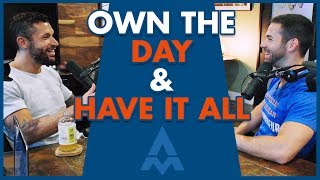
Conversation (podcast) between Ryan Daniel Moran and Aubrey Marcus covering: the role of habits, rituals and momentum in sustained achievement; how Marcus manages balance, burnout and company leadership (mentions Alpha Brain launch as a pivotal moment); physical health practices (low daytime carbs, regular training, cold exposure, breathwork); relationship philosophy including Marcus's move to an open relationship and societal reactions; cultural themes of personal sovereignty, psychedelics/plant medicine, and spiritual development; and details about Marcus's book Own the Day, Own Your Life (research intensity, chapter challenges). The transcript ends with a metaphysical analogy (toothpick vs. onion) about identity and the divine.
Questions this video answers
July 2011.
Over 300 references.
Chapter 8 ("Eat a Weird Lunch") — hardest because it required intensive research into micronutrients, anti-nutrients and the food supply (he said ~60 of the book's references fall in that chapter).
Chapters
Evaluating your validation patterns in your relationship, evaluating trauma that's come from your childhood, sitting with yourself quietly without distraction, those type of things. That's what really defines a truly happy, fulfilled life. And one that isn't.
Hello. Recording a podcast with Aubrey. Could you point me there?
Sure.
If you will sign in. Yeah.
Got some beer here if you guys want to get some beer. I actually am going to steal a coffee, I think. Thank you.
We got the spider man in the corner over there.
Okay.
Hello.
Aubrey. What's going on, brother?
What's up, man?
Well, lots of stuff. I'm. I'm excited and nervous because I have this theory about you, Aubrey, that you are. You are the man that men want to be and the man that women want to be with.
Well, that's a. I'll take that as quite a compliment. So I don't know if that's always the case.
You know, I've never met a man who was like, yeah, I don't want anything to do with his life. I don't. I don't want to have a great company and be a best selling author and run all the things you do. And I've never met a woman who's like, yeah, not into Aubrey. No, that's. That's never once happened.
I can tell you plenty who have not been into me, so I'm vehemently not into me.
Well, you and I have had conversations about living on a compound before, like in community. And I think it was. It was either our friend Josh Bazzoni or Mike Dillard. It was like, we should all collaborate on this. And my first thought was like, but Aubrey will get all the women and all the resources. He'll just. He'll own it within a day. That's not fair.
It's not Lord of the Flies, man. Within the compound, all the free market rules don't apply. We share everything in there, brother.
So since you are the man that men want to be and the man that women want to be. Be with.
I'm not going to wear that. But you can keep feeding it. That's fine.
I've got a thousand questions for you. And, and I kind of. My first question is, how much have your habits been the reason that you have achieved in multiple areas of your life versus access to resources or great ideas? Because own the day on your life is about your rituals and your habits. And I want to know how much of your success do you dedicate or do you give to your habits versus good big decisions and the big skips.
And momentum, you know, I think I reached. I reached the peak of what I was able to do. Riding off of moments of inspiration and brilliance and long periods of recovery and feeling lost and feeling like I didn't know what the hell I was doing. Like that was that categorized. A good part of the reasons that got me here is I would be super inspired. I would have an idea. I would be just passionately enthusiastic and build something. Build, build, build, and then recover, recover, recover, party, get lost, whatever. And I think that that means of achieving kind of reached its natural rate limit and then so putting in a process, it was always the next level for me. It was always the way that I could sustain something for longer and really take myself and my projects to the next level. So that kind of went hand in hand with the creation of the book. It was like, all right, I can't just do this, sprint all out and then kind of recover and flail, you know, program forever. I'd like something that's more, you know, disciplined, has more scheduled something, a process that I can rely on more. So the book was, you know, part of Take Me through that Journey as well as taking the readers through that journey.
What I loved about the book is that it was prescriptive. Most, most nonfiction books are more descriptive than prescriptive. And I liked the fact that it was. Here's all the best stuff that I have learned and hacked over the years. And my question to you in that context is there is a lot of debate over whether or not you can, quote, have it all, whether you can have all. I think it was Randy Zuckerberg. That's her name, right? Who says, who says you can pick three of fitness, sleep, family.
She just picks a bunch of areas and says you can only have three. Pick which three you're gonna focus on. And then there's some people say, you can have it all. What's Aubrey's opinion?
You can have it all.
Tell me more.
The reason is because time is not what people think time is. Because like 30 minutes of absolute presence with someone is worth three days of, you know, kind of half assed absence on your phone. You're taking a trip, but you've never really paid attention, you know, and like using the example of relationship, right, like, if you're truly present with somebody and like truly there, and you're looking at them with all the love and presence and admiration and everything that you can possibly bring and, and you're there with them in that moment. That short amount of time is way more valuable than days that you could spend On a vacation where you're half working, half on vacation, half focused elsewhere, half distracted, half resentful, half lusting after somebody else that you're interested in and all of these other things going on so you can have that relationship that, you know, that connection there that's more important. So in that way, time can be compressed because time is the rate limiting factor. And then the other thing is it's typically energy. Like, and if you can have enough energy, then you can really accomplish a lot more things. You can see your friends at the end of a long day, you can accomplish more tasks. I mean, the efficiency with which you can accomplish something is really dependent on how focused and how energized you are. So I think you can have it all. Some sacrifices will have to be made, of course, but, you know, I. I'm a huge proponent of that fully well.
Rounded life you have seemingly built that you have. From the outside, it looks. We have a very integrated life where you're building a company that you love and reflects you and your vision. It seems. It's almost like someone painted a picture of what was probably in your head. The culture here is amazing. So what, what do you attribute that ability to integrate all of that to?
I think it's like, you know, balance. If I have a God, it's balance. You know, like, I'd ask you about.
Work, like work life. Balance. That's like that word.
Yeah, I mean, I think balance in general. I mean, balance to me isn't. Isn't just being a centrist. Like, balance isn't just staying tight and doing the same thing over and over. Balance is also recognizing that there's time for extremes. There's time for complete, you know, cut off from the company where I'm out in the mountains, that I'm on a spiritual journey or complete, you know, exercise of recreational intoxication, like a Burning man or something. Something along those lines. Like, there's time for the extremes and then there's time for the. All right, 16 hours a day, working, writing, only focusing on what I need to get done, but knowing where that inherent balance is. You know, like, I just finished this huge book launch push and now balance to me is 12 days in Sedona where I'm hardly going to be on my phone, I'm not going to be on my computer, my social schedule is already going to be built out. I'm going to have virtually nothing to do but cleanse and hike the red rocks and hang out on my ranch. And that to me is restoring the balance of weeks of travel and these other things that are there. And that is something that I always keep in mind. So if I party really hard, then the next day it's not cheeseburgers and pizza, it's green juice and maybe an IV and maybe all the things that I need to do. I'll try to get back to balance as soon as possible. And sometimes it's a longer timeframe, sometimes it's a shorter timeframe.
Do you listen to your head on that? Meaning I know I went out and got blitzed and now I need to recover. Or is it more of a this is how I feel and I'm responding to that as, as my signal.
It's a little bit of both. When I'm being smarter, I can listen to my body and have that direct communication. And I think I'm getting better at that, you know, like, really asking the question, all right, body, how are you actually doing? Not like what my fear generating machine, you know, in my head is trying to tell me. But, you know, the head is a good strategist. Ultimately, you know, depending on how it skews the data and its lusts and its fears, and it's these different cravings and aversions that it may have. But the more you can tap in and actually ask yourself, like, all right, what do I need right now? You know, what do I really want? Where is this voice coming from? The better off that I am. And I think I'm getting a little better at that as I get older.
On it is how many years old at this point?
July 2011, we launched Alpha Brain. And that's when our company became the company that it is now.
Okay, so in that ramp up period now, it's easy to walk in here and see all the amazing stuff that's going on. But in that ramp, ramp up period, did you go through periods of burnout? Did you go through periods of, of being out of balance?
Totally. I mean, and that's, I think the, that's, I think the thing like balance isn't a state that you maintain constantly. It's like an AC accumulation over a lifetime. Like, did you lead a balanced life? You know, and because there could be years where you're in a sprint, but there must be years then, you know, where you're in recovery and decompression, you know, like, that's the time doesn't have to be absolutely equivalent, one for one, you know, that's not exactly how it works. But overall, you have to be balanced. And there was periods where there was just Relentless, relentless push. And this book was, was a recent one. Like I was so exhausted by the time this ended. Like my body actually finally just completely gave out. I got sick, you know, and I was like at home and I was, I was done. I was at the end, you know, because I had pushed and compressed every little thing I could do for the full month leading up to it and gave it all I had. And there was times where I did that writing, there's times where I've done that in other ways and then there's times again where I just find the ways to rest and recover and restore. I'm going to do a liver detox when I'm out in Sedona. I'm going to really try to reduce stress down to an absolute minimum to counterbalance this incredibly high stress load that I've been carrying.
At what point did you feel like you could go back into balance when you were ramping up on it? And the reason I ask is because so many entrepreneurs, myself included, get used to that ramp up grind. And then getting out of that mode is almost more difficult than the passion and the motivation to get something started. And I know so many entrepreneurs who get to the multi million dollar level, the eight figure level, celebrate it, but don't really ever give themselves the permission to back off. And this has become, I don't know.
If they're comfortable, I don't know if they're comfortable backing off. I don't know if they're comfortable knowing the self not in motion. Like perpetual action is distraction. You know what I mean? Like, so if you're continuing to move and continuing to do stuff, you're continuing to validate yourself. So you're providing external validation for your own self love and self worth. And that's something that's core at a lot of entrepreneurs is this need to validate yourself externally. So you're removing an external validation source because you're not in the seat of power. You don't have people who depend on you, you're not driving action, you're not creating something that maybe your dad made you feel like you were worthy of love when you were doing something awesome and you internalize that. And so only when you're doing something awesome do you feel worthy of love. So you do actually let love in from those people around you so you can get stuck in these traps that are actually more emotional than anything. And I think probably the key for me was becoming aware and observant of these psychological and emotional traps that I could fall in, recognize like what was actually essential for the business? And what was me just needing to feel important or me needing to validate something about myself or. Because there's typically periods where you can let the company. You can let the company be. And, you know, in the early, early days, if I would take time off, the company would be a little worse when I came back, and I'd have to fight some fires, and it'd be like, oh, Jesus, here I go back in the office. What happened? What went wrong? You know, and then there was a period in the middle where it kind of stayed the same, you know, like, I could leave and retract and go down to Peru and drink ayahuasca and come back and be like, hey, it's not it. We're okay. We didn't really improve anything, but we didn't fuck up. We didn't fuck anything up. That's amazing. Like, good job, everybody. And now I can. I have such a team in place that I can leave and come back and things are better. And I'm like, damn, things are all better. You know, this is amazing. Okay, now how can I provide value on top of that? So I think it's the earliest days, you know, you have to be willing to take a few losses. In the middle days, I think you can probably maintain and tread water, you know. And then in the later days, hopefully things will continue to grow on the momentum that you've created and you'll be able to even take more time.
What I have found is that when I'm operating from a stressful response, everything gets worse.
Yeah.
And I tend to project that stressful response onto other people, family, team members, and it has ripple effects. Everyone goes into that stress response. But when I come back to center and I am in my idea of balance, then there is things like sales are not stressful. It's fairly easy because people are attracted to the place where I'm operating from. My team responds to that. And what I really liked about the book was it was a reminder of what it takes for me to stay in that place, for me to be able to be in that place on a regular basis and operating from that place of ease rather than that place of tension and stress.
People are attracted to abundance, you know, and that's something that you feel that's not externally. You know, it's not externally validated. Again, it's internal. Like, if you are in a place where you have more to give, people are going to be attracted to you. That's more presence to give, more love to give More resources to give more influence, whatever it is. But that's. That's an internal state. And if you're hungry and scarce and starving, you know, people like, whoa, whoa, whoa. Because they can see that you're in take mode. And like, if you're the centerpiece, if you're the cornerstone of your company and you're in scarcity because you're exhausted, you're stressed, you're lashing out, you know, people are going to feel that and they're not going to want to add anything to the. To there. But if you're in this abundant prosperous mentality and emotional state, people like, oh, wow, you know, I want to plant some seeds in that garden because that garden looks really healthy, you know, so let me put some effort there, because whatever I do there, it's going to grow. And that's, you know, ultimately what we all love and enjoy to see, is that any help that we give is. Or any support that we give or any time that we give is received with value and appreciated. And then there's some of that light that's returned.
I want to talk about physical health because I know so few entrepreneurs that make health a priority. We tend to. There's that quote of man sacrifices his health to get money, and then at the end of his life, he trades that money to get his health back.
Trade all that money.
And I. A friend of mine said once, I respect any CEO with abs because maintaining both at the same time seems near impossible sometimes. And you've done that. I heard you say recently, I'm as lean as I want to be.
So I want to know.
Do you ascribe to a certain diet or health regimen, or do you live in balance in that area as well?
You know, the, the principles of the book, I follow pretty closely, you know, but I'm not. I'm not just authoritarian with myself either, you know, so eating fewer carbs and virtually no sugar throughout the day, especially if I need to be productive during that day, you know, carbohydrate and sugar is kind of. It's a narcotic for me. Like, puts me. Just makes me all sleepy and sluggish and tired, you know, because as your blood sugar rises, then the insulin dumps into your body, and then your blood sugar drops, and then when you get hypoglycemic, you get sleepy, and then it's time to curl up. So I have my carbohydrates mostly at night, and that's something that I'm fairly, you know, I stick fairly close to and working out for me is just. It's beyond the aesthetic necessity. It's just how much better I feel at the tail end of a workout. Like, I upgrade not only physiologically, but mentally and my spiritual path.
Every.
Every aspect is opened up when I actually get to move my body and, like, set the foundation in proper order. So it's as much a mental practice as. As it is a physical practice for me. And I think that's why it's been so successful and integrating in my life and why I'm kind of always training and always in pretty good shape. Because it. To me, that's. It's not just a physical practice. Like, it's easy enough to say, like, ah, well, you know, I'll sacrifice on how I look, but I'm not willing to sacrifice on how I feel, because that's my life, you know, that's. It's way deeper than that. And I know for me, the link between training and how I feel is absolutely solidified.
I should have asked this before we hit record, but can we talk about sex?
Of course.
Can we go there? All right. I want to hear your perspective as of right now on relationships, the future of relationships, and how you integrate that into the rest of your life.
Yeah, I mean.
I mean, I think we have a lot of interesting ideas about relationships, and they're.
Who's we?
I think, as a society, and that was something that I, you know, ultimately realized there's a problem that we're kind of virtually ignoring. Pretty much every CEO I know, every athlete that I know, everyone I deal with, they're all in monogamous relationships, and they're either cheating on that person or wildly coveting cheating on that person. Right. Like, they're either in one of the two states, with maybe one or two exceptions, of every single individual I know, and I know countless athletes, countless entrepreneurs, countless individuals. So my sample group is hundreds. And my outliers who are contented, you know, are two out of hundreds, you know, of people who are really satisfied with the structure of their relationship. And I was. I was in that same boat, you know, I was monogamous when I first met Whitney, and I was getting bored. Resentful, lustful, all of the things that kind of happen. And as resentment builds for your partner from restricting your options, then, you know, you start to lose, and the actual love you feel for that person starts to diminish, and it becomes this kind of working partnership that you're. And it just didn't wear well for me. So I ultimately started to see like, all right, is there a way to have it all? Like, is there a way to shift how we think about relationship that could actually be a meaningful different option. And that's ultimately how we landed on open relationship. And it's been a hellish, you know, a hellish journey to self. Love really is what it has been. It wasn't at all what I thought. I thought it was going to be about sleeping with other people, not about that. It's really about knowing yourself. But ultimately it is also as you know yourself, you get to know the other person and see them truly. And so I think you're able to move from this really falsely ascribed, barnacled, misused, you know, concept of love, which is restricting somebody else's freedom, restricting their happiness being there like pleasure dealers, you know, where you can only get happiness and pleasure from me, you know, this kind of crazy mentality to like you are with your best friend, like, oh, I'm just so happy that you're happy, you know, and getting moving to that state has really elevated my relationship and my relationships to a whole other level. So that's kind of the, the short, long answer to how like I recognize the problem, saw that pattern in myself, still see that pattern played out society wide and have tried to troubleshoot a solution which through great pain I can say has been n of one success so far.
Yeah, the part of the reason I ask is because I, I got into.
Self development, business and entrepreneurship because I wanted freedom. And to me at the beginning, and I think this is true with most entrepreneurs that meant money so that you could do whatever the heck you want, when you want, where you want. And so there's this, it starts with money and then there's these other areas of life that you don't aren't. Most people I think to this day are still not aware that you can have freedom in to decide what to do with who you want to do it and where you want to do it. And it's still taboo to have that conversation in relationships. It's still taboo when it falls outside of the confines of what society says is okay. It's cool right now to say that in money and business and success to customize your life and have lifestyle freedom.
Yep.
It's not cool yet to do it in other areas of life because it's.
Threatening, you know, it's really threatening to people who are in the structure. It's just like if you're in, if you're in prison, you know, and you've accepted that and then someone's like dangling the key, like, oh, hey, you can get out. And you're like, fuck you. No, you. I can't. I'm here and I've gotten used to here. And don't tell me there's another way, because it's just the idea of that option is torturesome. You know what I mean? It's like. It's like if you. If you're eating some, you know, sandwich that you're super bored of and someone has like a feast next to you, like, I didn't get that menu. That's bullshit. You might have enjoyed your ham sandwich before because you're eating the ham sandwich every day. Oh, it's my ham sandwich. I like this ham sandwich. And then you see someone with a, you know, Thanksgiving feast stuff, and you're like, whoa, man. Like, what? And so the natural. Some people are. Some people are curious, and some people are like, that's, you know, like you're ordering off menu. That's doesn't exist. It's not real. And, you know, so it creates this kind of polarizing approach. Like, I've. I've literally had couples, you know, from some of these, you know, even some of these athletes, you know, who've have their wives or girlfriends, and they know that Whitney and I are in an open relationship and we start off and we're great friends, we're hanging out, we're having a good time. And simply the fact that we're in an open relationship, we're not like hitting on them or anything, but simply that that idea exists in our construct. They, like, don't want to hang out with us anymore. You know what I mean? It's like, let's keep those people away in case these ideas are infectious and you might get some ideas that you're gonna want to sleep with somebody else.
Well, I had a similar experience with religion because I went to college thinking I was going to be a pastor. I come from a very black and white background of there is this way, and anything that threatens this way is wrong. And so there's a bunch of different branches of Christianity because people broke off over this issue or this issue, and we get into debates over these little tiny things that to me, didn't matter. And to me, I felt like the menu that was given to me just didn't fit to what I thought felt right, what felt true. And the customization of being okay, letting the belief system crumble and fall and then rebuilding it in a way that was honest, was threatening to a lot of people. And I've had that too, where people don't want to hang out with you anymore because you, your beliefs are, are a threat to them. So where I feel like all these different systems are crumbling, I feel like societal walls are crumbling. I feel like government is crumbling, I feel like religion is crumbling. What do you see the trend being?
I think it's a radical realization of, you know, the self in a certain way, you know, and I think in the wreck. And I think that cuts across all, all boundaries, you know, I mean, when you don't have enough appreciation for the self, then you allow the government to create these really ridiculous authoritarian laws that govern our consciousness. You know, like telling us whether or not we should be able to smoke weed in our own home or not. Like, the fact that we allow that is a systemic lack of recognition that we have sovereignty over our own consciousness. And if we don't have sovereignty over our own consciousness, then we're not free. And this land of the free thing is entire bullshit. You know, if we're doing something that doesn't affect or harm another human being and it's. We're doing it to ourselves, that is our right. If we don't have the right to tamper with our own mental state, what rights do we have? You know, so, like, I think we're recognizing that and we're recognizing, you know, that divinity is expressed internally as well as it's expressed externally. So that's shaking up religion. And so, you know, in relationship, you know, understanding that love itself is not something that can be possessed because it's free and abundant elsewhere. Like it's. It all comes down to these fundamental metaphysical shifts that are happening that affect all systems related to the self. And I think that's going to continue to happen as we wake up to the truth of who we are.
This is why I think this, the book you've written is so important. Because as things I think continue to crumble, there is a need for more responsibility and for more personal structure. We crave some sort of structure or to be told what to do, because it's safe and it's secure. And when those are removed, it ups our responsibility to define what life is going to look like on our own terms. And what I love about what you've done is you put together the context and the structure for what has allowed you to build what you have built in business, with your health, with your relationships, with your growth, with your influence. And as a result, I think it serves as a type of roadmap or a context for people to follow While they're not getting the structure from religion or government or a 9 to 5 job, which is going away.
Yeah, I mean, the book's called own the day, own your life, but it could be called, like, own yourself. You know, like, own. Own everything about who you are and take responsibility for that and, like, have a user manual for who you are, too. And that's really the purpose that the book has played. Like, you get a new car. In the glove compartment is the manual that describes all the features and functions of the car and how to optimize it, what gas you want to put in, what the maintenance schedule looks like, what the different components are, how to use the buttons. You know, we don't get one of those. We have to piece it together through, you know, shit. Our parents told us random things that our buddy told us, stuff on the Internet. A book here or there that's really specific, but it's over our head. So I wanted to kind of compile that so that, you know, as the book goes through, there's owning it and getting owned. There's when we allow processes and ideas and delusions and options to own us or when we can take responsibility and make a better choice. And, you know, that's what hopefully the book is empowering people to do.
Would you tell me something that three years ago was part of your routines, was part of your habits that you have discarded because it no longer serves you and thus did not make it into the book?
Hmm. Well, I mean, I think there was still bad habits that were there, you know, existing a couple years ago that are. That have been largely kind of cleaned up. It's like I kind of knew, you know, I kind of knew what felt best. But the book forced me to go to the clinical research and really, like, there's over 300 references in there and really. Absolutely see everything that made sense. And now I just have no. I have no mental wiggle room not to do it. You know, when I'm in the shower and it's nice and cozy, warm, and I don't want to turn it to cold. Like, I know all of the science as to why turning it cold is going to be better. 42% fewer respiratory tract infections, decrease in cortisol, boost in norepinephrine, like, decrease in chronic inflammation, cold shock proteins, everything that's going to come. It's like, if I don't do that, I'm really just, like, throwing a middle finger up to myself. Like, screw you, Aubrey. I'm too weak for you. I don't care about you. And there's too much information for me not to do it. And I think that's the biggest difference between then and now. Like, now. Now I don't have any. I don't have any reason. You know, I was in the car yesterday and I was feeling a little anxious about something coming up. And I know that six deep breaths is enough to create the state change where you can lower your blood pressure and actually start to shift your brainwave state. So whereas three years ago I might have taken a breath or two and tried to, you know, mentally, like, get out of my head or just gone with it, now I just take the six breaths. Like, I know the science, I know the result, and I don't think about it anymore. I don't. I don't leave myself any options. I'm in a kind of like a leave no option state of mind. And I think that's probably the biggest shift.
Yeah, I've. I've been practicing that ever since. You talk about mindfulness.
Yeah.
And so my drive time is. Is filled with six deep breaths in a few different cycles. I'd like to ask you about your tolerance for discomfort or your tolerance for pain, because little things like cold showers or jumping into the pool in the morning, which is something I know that you practice those. That takes getting through that part of your brain that is like, I don't want to do this, that this is going to be uncomfortable. And I'm curious what your relationship is with that and how that has influenced the rest of your life.
I think it's the single defining characteristic of anybody who's really able to achieve what they want. And those people who aren't is the ability to collapse, you know, their fear surrounding something or ability to push through beneficial discomfort. You know, there's pain just for pain's sake, which is just masochistic, right? Like, but there's the beneficial pain of self exploration and looking at your own shit and looking at your shadows or, you know, taking, you know, it can be played out in the physical. Going through a hard workout, working out when you don't want to, you know, taking the cold shower or evaluating, you know, your validation patterns in your relationship, evaluating trauma that's come from your childhood, sitting with yourself quietly without distraction. You know, those type of things. That's what really defines, like, a truly happy, fulfilled life and one that isn't. So whenever I see something that's out of alignment, where my fear is greater than actual danger, or I have discomfort preventing me from doing something that's Beneficial. I go straight at it because I know that I have to collapse it. And even if it's like a weird, silly example, like, I've given this example before. Another podcast, but I just did it last night. So I'll tell a story. Like, it's now becoming tree cockroach season in Austin. So the tree cockroaches, they. They slide under the doors and they get in little cracks in the house. I hate them.
I hate them. I'm scared of them. And so here's the options. One, you smash them and their guts go everywhere. And then you got to clean it. And I feel bad for killing it. Why does it deserve to die? It just found its way into my house, you know, So I don't like doing that. The other option is to get like a little dish, like I would a spider, slide a paper under it and let it out. That's really easy. I can do that. But the way that I can collapse, because there's no actual danger from the cockroach, the way that I can collapse my fear around it is to grab it with my hand and let it outside, right? Like, that is. That is the thing that if I wasn't afraid at all, you know, I just scoop it up and outside. And so I know that that's an area where I can work. That's an area where I can confront fear. Like, okay, here's this big pocket of fear that if I apply myself and go straight into in that specific instance, I'll be able to use that courage universally when I'm faced with something else. So again, yesterday, first cockroach of the season, I see it on the wall and I'm like, all right, I'm going to do this. First I ignored it. First I ignored it and I, like, walked by and like, maybe it'll go away, dude, go away. I was like, like, I know what my job is here. So I got myself kind of psyched up and not quite psyched up enough, you know, like, you really got to get in this in a state where you're ready to confront your fears. And I went to grab it and I, like, touched it and it spazzed out and like, fluttered its wings and I went, ah, jumped. And then my heart rate got elevated. And then I'm like, trying to chase it around and I'm like, in this totally stressed out state, like, not giving up, not quitting, but, like, battering this cockroach around like I'm a cat. And it was like this horrible, horrible scene. Eventually, I take a couple deep Breaths. And, like, come on, man. Get it together. Scoop it up in my hand. Get it in my hand, Calmly walk outside. And then it spasms, and I freak out, and I get that jolt of fear as it's trying to squirt out of my hand, calm myself again, and then let it off out into my garden. And, like, that moment is even though, like, my battle report is, like, not good. You know, it's like, fail, flail. Keep trying. Scramble, Get. Get Afraid. But that's the first cockroach of the season. Maybe next one will be a little better and next one will be a little better. But at least doing that now I know that, like, all right, you know, but in the back of my head, it's like, at least you did it, man. At least you didn't ignore that thing. Like, at least you had the courage to try it. And so whatever the next thing that I need courage for, I'm building up this pattern. I'm building up this way that I know myself. I know Aubrey as the person who will collapse fear and be courageous in the face of fear when it's not correlated to danger. And so you start to know yourself that way, and then if you start to know yourself that way, you can really achieve the kind of personal power that we all have as potential.
I have a theory that all our brains know how to do is compare that. Any evaluation that we make, what's beautiful, well, you know, whatever we're comparing it to, what's rich, whatever you're comparing it to. And things are so good right now, for the most part, no one has to worry about an abundance of food. We have to worry about taking advantage of that abundance. We have to worry about overeating. Even children have to worry about overeating. We don't have the opposite problem anymore. We eat ourselves to death. There's an abundance of opportunity. Things are so good that we don't have a comparison for anything else. And so we have forgotten what life was like a hundred years ago. And so we don't have. I actually think we do not have the ability to be as happy as we could be because our comparisons are so out of whack. The worst thing that you could imagine is compared to 100 years ago is a night and day difference. So I feel like that regular exercise of doing something that's uncomfortable re shifts your brain ever so slightly to literally be happier. Because now, you know, you have a reference point for being uncomfortable. You have a reference point for not being safe. And that allows you. It actually gives you freedom to enjoy the other side of it. And if you're never uncomfortable, then I don't, I don't know if you can ever really enjoy the other side of it.
Yeah, no, I'm, I'm with you. I think this, I think comfort is this thing that we've tried to put up there on a pedestal is something that we're constantly trying to seek. But, and that's fine. But then as that's become universal, as you said, you have to actively go seek, seek that discomfort, you know, as you have access to every type of indulgent food possible. As actively seek the discomfort of fasting with just what, like just water and sea salt for four days, you know, like you have to go actively seek that period where food is scarce and it's a conscious choice, you know, like we're not going to find monsters or enemies. All right, so where's a. Look, that cockroach is a monster. It's a monster to me. So that's my dragon, that's my, you know, snake that, that went into the tombow, that's my jaguar in the trees that might jump out and get me. Like I'm able to confront that thing, you know, nightly in my home, you know, and that, and there's benefit to that as well. So in all the areas and. All right, so maybe we don't have to run and hunt, but we can go apply ourselves to a kick ass workout, you know, and really push ourselves against somebody else or the time, you know, or compete in sports. I think that's another reason why sports are so good. Like we used to have war, you know, in Sparta. They weren't great, they weren't great at sports. They had the Olympics, whatever, but it wasn't like they were playing ball all the time. You know, they were just training for war because war was their sport. And I think for us, sport is our war really, for the most part. I mean, of course there's wars going on constantly and I don't want to disregard that. And there's some classical soldiers who are still going to war, but even the nature of war itself has largely changed. And the rules of engagement in that are incredibly perilous. And it's a much different ballgame. So for most of us, like sport is our ability to compete and push ourselves against that. So in all the areas, we just have to find ways that we can push ourselves up against discomfort to create the response to discomfort, which is growth.
One of my favorite books and the book that I have probably gifted more than Anything else is the Slight Edge by Jeff Olson, which essentially argues that our life is the product of the habits that we practice over a very long period of time and give us compounding results. Whereas most people think that it's about big jumps in progress and that very it happens, somebody's on American Idol and gets famous, that happens. But it is the exception, not the rule. And what I think you've done is you have basically given what habits you've like distilled it down to. These are the things that we Slight edge. These are the things that done over a long period of time create extraordinary results. And at this point we would, we would say like, all right, give your, give your 30 second. Where can people find the book? I'm going to sidestep that and I'm going to ask you a harder question. What was the most difficult chapter for you to write in Own the Day, Own youn Life?
Chapter eight was, Chapter eight was probably the hardest because that one is covering. It's called Eat a Weird Lunch and it covers all of the micronutrients and all of the anti nutrients that are out there. So if we have 300 clinical and academic references in the book, like 60 of them fall in that chapter alone because we're looking at all of the different food preservatives and colorings and all the different beneficial and non beneficial things that you find in the array of food supply. So the more research intensive chapters are obviously the harder because you just have to be very regimented and look everything up one at a time and the writing process is slow. Whereas something like chapter 16, which is talking about forgiveness and forgiving yourself so you can allow yourself to become the person that you believe you could become because you've forgiven your past and you're opening yourself up to that new change, something like that I can write in a flow of inspiration, you know, whereas like chapter, chapter eight, it's like one sentence, pause, back to the PubMed research site, you know, next sentence, every little thing. And that was the most challenging, you know, aspect of the, you know, chaptering of the books for sure.
I have one final question for you and it's this. When I look at my life and where I want to go in my life, I have certain people that I model and I think of my longest standing mentor, Travis Sago. I, I think of Aubrey Marcus and what you have built and what you have accomplished. And since you are in that conversation with me, with how I, who I want to be when I grow up, who does Aubrey follow? And who does Aubrey want to be when he grows up?
You know, that's interesting. I had a similar question asked to me recently, like, which people would I like to, you know, sit down and, you know, spend a lot of time with and look up to in that way? And Don Miguel Ruiz is an author, and I think he wrote Mastery of Love, Toltec, Art of Life and Death, the Four Agreements. I got to spend a week with him down in Mexico, and I've never met anybody who's that close to enlightenment, you know, ever in my life. And whatever that word means, which is, to me, this kind of state beyond suffering, you know, it's seeing the truth of the world so clearly that you can experience pain but not suffering, because you're just anchored in a deep truth of who you are, where you're going, everything else, he's made it. He's made it there as far as anybody else I've seen.
You know, there's another author, Ted Decker, who has become one of my spiritual mentors, and he is more free.
Than almost anyone I know, like, willing to drop everything, change his book contracts at the drop of a hat, break out and dance in the middle of a crowded restaurant, inappropriately wear whatever the fuck he wants because he's so unconstricted by the rules and mores of culture and society and what people think. He just doesn't give a fuck. Again, because it comes from this deep knowing of who he is, you know, and it's not that he flaunts like that. He likes to be the outlier. He likes to draw attention to himself. He just. If he feels constriction, like, oh, I would want to do this, but I wouldn't do this because people might judge me. He'll just push and lean into that. And I think that's really admirable. And then the other one is Don Howard Lawlor, who is my ayahuasca and watchumero from Peru. And he embodies, just, like, the wisdom of ages, of just knowing both this realm, animal and plant, and the realms beyond in a. Just that, in the deep wisdom of service of 50 years, you know, where he's been serving people and serving the earth and serving plants. So those are the three people that I would put up on the mantle and say, if I end up anywhere close to any one of those directions, I've done a pretty good job.
All right, I lied, because you opened up one more question, and it's mostly. You gave me what I would call a braingasm.
A few months ago. And I have thought about this several times, many times since. And I have been unable to articulate it in the way that you did. And for whatever reason, how you phrased this landed with me in a way that I hadn't thought about it. And to be honest, I thought it was a really silly example that landed with me in a way that I haven't been able to shake or re. Articulate. And it was. When you compared consciousness to a toothpick, would you please articulate it in the way that I have been unable to do?
So if you look at, like, the dimensional layers of existence as an onion, you know, so you can either. It's kind of easier to look at, you know, the outer layer of the onion as, or the inner layer of the onion. Either way, it's both the same because it kind of meets up in the circle at the end. That's like pure unicity. What you would call God, which is one force expressed, capital L, love, whatever, life itself, everything, right? And the toothpick touches that both in the center and on the edge. So really, really everything is God. But, you know, whatever you can, you touch that pureness of it where it's, like, undifferentiated, and the toothpick is the self. And so we have a piece of that. A piece of us touches God always, and it's within us. And this is not discordant from any of Jesus's teachings. When you actually go back to what he's saying. He's saying that the divine lives within us. You know, I mean, that's really a core principle of a lot of the mystical traditions that have been kind of skewed and interpreted in a bunch of different ways. I'm sure there's people who can argue that interpretation, but nonetheless, then it starts to get into differentiation into the other layers of the onion, which is dimensional existence. And so the self is, you know, soul. You could call it that word, or you could call it consciousness, that thing that exists beyond the physical realm, that is a layer of the onion. And the self crosses through that layer. And then there's the physical self, and that's another layer of the onion. And the toothpick of the self crosses through that layer. But we're the entire toothpick. And depending on our place of identification, where we identify, we can either identify all the way as our God self at the end of the toothpick, or we can identify as the physical self, or we can identify as the soul self or whatever, you know, or we can recognize that we're the toothpick, and we're all of the above. And then it's our choice where we move up and down that line. But we exist in all dimensions simultaneously. It's not like we die and become the soul. We're the soul now. We're the toothpick, crossing through all of those dimensions. We just happen to have open and available that layer of the onion that has physical existence, you know, and that can temporarily, obviously, when we die, go dark, and then the other layers of the onion are, you know, the other parts of the toothpick are available. But right now, as physically expressed, you know, we have the full toothpick available, and it's just up to us to decide where we choose our point of identification.
Yeah, I don't know if that's true or not.
No, nobody does.
But for whatever reason, it changed how I view.
This. Where I am in this life, in this experience, or whatever happens next. That analogy somehow gave me.
The ability to relax into. Now. I don't know how to put it any other way except this idea of. Of maybe we're not all separated or not all disjointed. It was like the idea of we're always united in some way just made me look at my place in the world a little bit differently. So thank you for that.
Yeah. And then trip your mind out even more. The onion's entirely made of toothpicks.
On that note, Aubrey, I think I so admire and respect what you have done and are doing in the world, and the fact that I'm so glad you're finally putting together what has taken you decades to assemble and test and try to allow you to build what you have built and to become who you have become. And I admire you. I respect you. I'm. I. I'm. I'm so thankful to have kind of the roadmap to reverse engineer the type of. Of life that I want. And I just want to thank you for leading the charge, so I appreciate.
That, Brother World, buddy, I appreciate you, my man. Thanks so much. That's great.







