
Becoming A Millionaire Monk: Build Wealth In 1 Hour Per Day w/ "Asymmetric Bets"
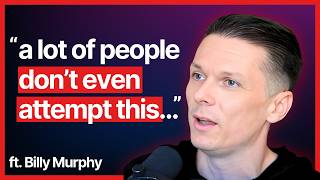
This is a recorded interview (Capitalism.com) between Ryan Daniel Moran and Billy Murphy (called the "multimillionaire monk") exploring how Murphy built significant wealth (notably by placing a concentrated bet on Apple around 2011–2012) and then deliberately simplified his life to create mental space for high-upside, low-downside "asymmetric bets" and for cultivating joy through selfless service. The conversation covers Murphy's investment rationale (margin of safety, compounding), his transition from busyness and entrepreneurship to a life focused on reading, writing, contemplation, and surrounding himself with people who model peace, and practical advice for others: buy incremental freedom, remove distracting inputs (phones/social media), journal and self-reflect, drop projects that serve ego rather than true desire, and test reversible experiments toward greater internal freedom.
Questions this video answers
Around age 28.
Around 2011–2012.
Approximately $500,000 (he said he put half a million dollars in).
Chapters
When I was, I think, 28, I bet all of my money on Apple. Every once in a while, a revolutionary product comes along that changes everything. Apple stock is jumping into record territory.
Computer stock crossed $500 a share.
The bet just seemed mispriced. I knew my goal wasn't necessarily to stay busy all the time in business or working and those kind of things. It seemed like there was a better game to play. What am I doing with my life? I understand what the happiness from beating that game feels like, and therefore I should test other games. From all my research, it seems like the payoffs from this game would be a lot better. And because it's not easily measurable, I think a lot of people don't even attempt it. There's a history of people like Gandhi, Tesla, Buckminster Fuller, a lot of these guys who have actually done this and talked a lot about it, essentially giving up all of their own selfish desires allowed them to serve the whole. And the end result was states of joy and direct knowledge. But most people live pretty busy lives, if nothing else, mentally busy. You would make more money, have more fun, be in a state of more joy if you just took the one or two things that you just loved and that nobody else could produce but you and just knock those out of the park and left the others making you nothing. What is the dream life you're trying to reverse engineer? Because that's all we're ever doing. Even if we forget that's the purpose of what we're doing.
Ah, man. I don't know how many times I need to get that lesson in order for it to really sink in and change my behavior, but I've experienced that enough to know that it's at least sometimes true. Hey everyone. Welcome to capitalism dot com. I'm really nervous for you to watch this episode. I don't really know how to set it up, except to just share with you that I have a friend who has been very influential on the way that I view this chapter of my life. And. And he has been influential for several of the people that have been recently on the show. You may remember that they have referenced this mysterious man named Billy. And Billy is here on the show to talk about the transformation that he has gone through. It's a transformation that not only resulted in a personal quest for peace, but it also resulted in him creating more money than he did through the entirety of his career leading up to this point. And the reason for that is because once he had the clarity, space, and peace of mind to not be in this chaotic and reactive world, what we often refer to as the matrix in this conversation. But then he could put his attention on things that were what he calls asymmetric, Betsy. Things that had really high upside, with limited downside, and with one good decision, with one clear intent, he was able to create more wealth than the years leading up to that point in totality. And yet he has been able to do that while maintaining a very quiet life. And so Billy has this very rare combination of having an immense amount of free time, having almost nothing on his mind, and being able to pursue whatever he desires that I think is the best example of freedom that most of us may ever have. And he has started to influence the way that my peers and I think about our lives and our opportunities. And it has shown me just how much I crowd out my creativity with noise and busyness on things that really don't matter, and that if I were to cut those out, I could start to create a life that looks different than what I have now. Even though I have a wonderful life, I could have much more peace. And Billy has served as an example for me that you can have a lot of peace while creating a whole lot of wealth. All right, let's go hang out with my dear friend, the multimillionaire monk Billy Murphy. Billy, do you know that you're my most cited guest on capitalism.com?
I did not know that.
Mike Teku, Eric from Beardbrand.
There was one other person who. Oh, it was Noah. Noah brought you up. And both of both episodes we did together, all referencing this mysterious Billy behind the curtain. And here you are. You don't make many public appearances.
Not many, man. I'm in the woods.
So you are literally in the woods, live out in the middle of nowhere. I like to start these conversations by asking, how did you make your money?
Well, it's funny because I. I'd say most of my time towards making money was business or poker.
But honestly, investment has been the majority, both through. Through stock and real estate.
Could you say more about what those were?
Yeah, when I was, I think, 28, I bet all of my money on Apple. And it's not as crazy as it seems. I mean, I was studying Buffett and Munger and Peter lynch and all those guys, and the bet just seemed mispriced, like it didn't make sense that it was so low.
And how long ago was that?
What, 12, 13 years ago?
Yeah, that was probably back in. I want to say, 2011 or 12.
Okay, so. So you can go back and look at the charts, at what was it was a good bet? We'll say, yeah. And you were reasonably sure about that bet? Is that fair to say?
Well, I would say I was relatively sure about it, but in the instance that I was wrong, I always like to bet with a margin of safety. So where essentially I'm always looking for asymmetric bets where the upside of the bet will be significantly superior to the downside. So I looked at it at the time, I put half a million dollars in and so which at the time was a lot of money for me. I was only 28. And so I looked at it and said, well, if it goes well, I think I can make a lot of money. And just by doing nothing, compounding tax free. And if it doesn't go well, I think a lot of people misunderstand the way they allocate capital and say, oh, if it doesn't go well, I'll just lose this money. It's like, well, that's not really how the math works. Maybe I bet the 500 and it turns into 300 if it goes really poorly versus turning into 5, 10, 15, 20 million, which it could be. So that's kind of the way I look at those kind of bets is I don't care if I lose if the bet is basically if I have a positive expected value and a margin of safety, I want to bet and bet heavily on the best bets.
But in that case, I mean, if you, if you put all your money in and you lose a significant amount, you don't have as much to make the next bet.
100.
Right. So, so when do you know that it's time to. What gives you the conviction to go all in on something like that?
Sure. So, you know, I didn't bet 100. I probably bet 90, 95 of what I had at the time. But I think most people misunderstand capital in general because capital is both time and money. And so when I looked at it at the time being 28, you know, a lot of these kind of financial experts, the, the frugal crowd and all these people, they look at, they see the world through fear and risk. And so they're basically playing not to lose all the time. But I looked at it and said, you know, a lot of those guys would have said diversify. And as a 28 year old, I would have said this seems silly because I have unlimited human capital to some degree. So my human capital, my time was okay, well, as this bet is, as this bet is basically compounding tax free for me. I can.
Use my time, other source of capital and go produce more money. And so that's essentially how I looked at that bet, is I was going to have more money, incoming from my time, and that bet was just set it and forget it and forget it exists.
So you made your. You made your money in poker.
Most initial money in poker. Yeah. Started doing E. Commerce, a number of online businesses, and, yeah, made large bets when they come up.
So this is something. I thought you were kind of nuts at the time, you know, because you told me, I remember when you told me that you had most of your money in Apple or all your money in Apple, essentially. Yeah. I think we had known each other.
Probably around when we met.
Well, you had been in the bet for a year or two when we met, and I remember what you told me you had in it. And about once a year, I'm like, oh, that worked out. Like, I check in on Billy on my app to see where Apple's at. And in retrospect, it was kind of obvious, but what that did for me was there have been probably half a dozen times in the last 10 years that I had that level of conviction about something like this is so obvious.
Yep.
But I've only pounced on maybe one or two of those.
Right.
And it. And it gave me the realization of how much I let fear hold me back.
But it.
But it also did something else, Billy, watching you make that bet and it working out so well, it highlighted for me how.
How important it is to have this space to make one good decision.
Yeah.
And when our mutual friend Mike was here on the show, he was talking about how he sees his job as to create enough space for that one idea to get through or that one big decision or that one breakthrough. And something that you have reflected back to me since we've known each other is how difficult I make it on myself to create that room.
Yeah.
And I've started to understand that over the last couple of years or so, but it seems like you've crafted a life in which you create room for that asymmetric bet. And I know Apple wasn't your only one, but that is kind of like your process now.
Yeah. My life is set up so that essentially the only thing on my schedule is reading, writing, and thinking for the most part. And I don't think that's optimal for everybody. But there's no busyness and distraction in my life. And so it gives me both time for these ideas to come through as well as the time necessary to investigate them and come To a certain degree of certainty and the ability to, you know, not let the normal fears get involved because I've had so much time to think about it and process. But most people live pretty busy lives, if nothing else, mentally busy to where I could show them the same idea, but they're going to be too busy to process it, too busy to look at it in the way that will let them come to the conclusion that, like, hey, this is a clear bet and you need to make it. And you can only come to that conclusion if you have the mental space to get you there. Even if you knew how to think about a bet, if it's. If someone else has 100 times the mental space and actual time to process the beta, you know, you can calculate it 17 different ways and say, there's no way I shouldn't pull the trigger on this bet. And it becomes kind of easy.
Yeah. So guilty. Like, every time I hang out with you and we talk about this, I'm like, I see all of my problems now.
Right.
I do. I do not create enough room for that.
Right.
And I don't know how I got into that, but I don't need to super analyze it. It's more like I want to have more of that room for that big lightning bolt idea to come through. So did you have to craft that? Did you have to be intentional about that? Or once you had one workout, were you like, well, never have to work again? So I'm just gonna read spiritual texts in the woods? I mean, it's like, what did you mean to do it or did it. Did you fall into it?
I've always kind of had a game plan to buy my way out of the game. I didn't necessarily know it was going to come from a couple of big bets, but I knew my goal wasn't necessarily to stay busy all the time in business or working and those kind of things. It seemed like there was a better game to play.
And I feel like the last five, 10 years, I've kind of slowly been getting closer to that game for myself. But it was. It was in. It was in releasing most of the busyness. And I've still. Up until five years ago, I was probably still caught in the trap of kind of striving for things and staying busy to make these things happen, going after certain goals. And I realized, one, I wasn't necessarily a lot happier consistently in those states of staying super busy and striving for things the way most people do. But two, yeah, it's funny looking back at you Know, I'm in my 40s now and it's like all the time.
That I've ever done anything for money. Let's say I can look at my two biggest bets that took almost none of my time and I've made the majority of my money there. So it's funny to look back and be like, wow, all that time I was striving and setting goals and working really hard and long hours. The two times I made the bulk of my money was on, you know, a year worth of time. And that's it. And it was because I had the mental space to just, I was just literally sitting around thinking. On my second like big bet, I was sitting around thinking all day, every day and came to that conclusion like the other, the other big bet I made.
When you say sitting around thinking, what do you mean sitting in a chair thinking, waiting for inspiration. What does that mean, sitting around and thinking?
For me, I love to read, I love to write. A lot of times I'm not necessarily publishing a lot of what I write. I'm writing to myself, journals or things I might publish at some point. But I come to a lot of clarity from, from basically looking at a lot of different perspectives of the world. People that are, have gone significantly farther than I have and, and you know, not the, the new age kind of stuff, but people that wrote the books 50 years ago, 100 years ago, 200 years ago. It's funny because that's. The new books are just repeating what those books said and. But it's going through a translation of someone else. So I'll sit around and read, you know, 50, 100 books sometimes and try and figure out what perspective they were looking at the world and then try and kind of put it through my filter and see how that might apply to my life. And like that's play for me. I like doing that.
The busyness that distracts so many of us from having the big idea. I think almost all of us can relate to a time in which there was just empty minds and an idea came through.
Yeah.
And then we spend two years of busyness pursuing that idea. Right. At least in my case that is true. But from what I can tell, the busyness that I allow myself to get caught into is often because I'm in some sort of fear based perspective.
Yeah. Or.
Because the goal that I'm pursuing is like a selfish egoic desire. And when I'm in that mode I feel really busy and drained. But if I'm in the mode where an idea is just captivating to me, I can't work hard enough. I've got infinite energy for that. And so I've had enough of those experiences to be able to tell the difference. But when I'm in the egoic busyness mode, I'm not conscious of it. You know what I mean? It's just I'm like, lost in it. And you seem to have found a way out somehow, or at least like you have enough perspective that you can see it in other people. So I'm actively looking to practice that. So would you talk a little bit about how you see desires? Like, you know, the selfish desires versus, like a deeper desire. You've shared this with me before, but walk me through how you view it.
Yeah, and this is kind of a constant learning process for myself is basically the. If you're coming from a place of fear, you can't operate from a place of love, let's say, or joy, because you know, your thoughts. I mean, fear is based in wanting something and attaching to something. When you think about most of our desires, they are egoic desires. We want something for ourself, a selfish desire. And we think when we get that, we'll be happy. It's not untrue. But if you look up definitions, for example, even of happiness, happiness is something that's fleeting. I mean, definitions include an instance of. For a definition of happiness. And it tends to be a temporary state. And if you look up something like joy, joy is a higher level of happiness and tends to be a more permanent state. So, for example, there's a quote. I don't know if I'll get it exactly right, but it was something like joy tends to stay and make a home in us. Happiness just comes and hugs. Hello. And I think most people are chasing happiness, and it's through egoic desires. And if we want to understand desire, we have to understand conditioning. And most people don't look deep enough to understand. They say, I want this. Oh, I've always wanted this. So of course, this is my true calling. Let's say that's not very. Well, it's not a very deep thought because they don't understand their own conditioning. So if you look at some of the great thinkers, someone like Gordjief, Nikola Tesla, I mean, some of these guys that everybody of their time looked up to, and people still know their names because of all that they were able to do. Gorgia, for example, has the man is a machine idea, which is one of his big ideas. And because man doesn't know he's a Machine, he remains a machine. And until man can step out of the machine like nature and understand he used to be a machine, if he can get to a level of actual thought, he has to remain a machine. Tesla came to the same conclusion. That was basically. I think his quote was something along the lines of, I am in automaton, which is a machine, a mechanical device. I don't know if I'm pronouncing it correctly, but. And all I do is respond to external stimuli. And so when we look at a man, all of our thoughts are coming from conditioning. And so we go around and say, this is my desire. I want this. But is not our desire because it's just coming from all the things around us.
Condition desire is what you're saying, 100%.
And so we can never get to an actual true desire until we step out of conditioning for a minute. And that's the only time. These ideas, and you know, some people may call them like a noetic desire or divine desire.
Yeah, what is that word? You use that word sometimes. I still don't know what it means.
Noetic is. I believe it might come from the gnosis, Greek word gnosis, which is.
Okay, Jordan Peterson.
Like. Like divine.
Tell me what it means.
Direct knowledge. It comes from the Greek, direct knowledge, like divine. Okay. You know, a source outside of yourself, a source outside of a conditioned self, for example.
I see. So it's interesting you talk about that. There's like we are machines. That's like our egoic nature, like our conditioned patterns, and we have those desires. But those are what you might call desires of the flesh. Sure, right. Because our biological desires to mate and procreate and survive, essentially. But what you're getting to is that maybe there is a different level of desire that is more what we might call spiritual or upper mind or beyond survival. Is that fair to say?
Yeah, that's a good way to put it.
And that's what you would call a noetic or a true desire. And you have to get out of the conditioned or program mode in order to have access to what we would call like a true or an internal desire. Yeah, that's kind of a tall order, Billy, for sure. I mean, getting out of the flesh, kind of a tall order. Unless you're going to live in the woods, living on your apple stock. Right. So how do you make this palatable for us normies?
I can only say what I'm trying to do because I'm not someone who lives in that state all the time. For example, selfless service seems to be a path that gets people there. And there's. And there's a history of people like Gandhi, Tesla, Buckminster Fuller. A lot of these guys who have actually done this and talked a lot about it, essentially giving up all of their own selfish desires, allowed them to serve the whole. And the end result was states of joy and direct knowledge. Huh.
This look on my face that you see right now is I've had.
Enough psychedelic experiences where you get out of yourself. And I have almost access to this thought of how would I approach this situation if I didn't care what I got out of it.
Yeah.
And that is what you're calling selfless service. Right. This idea of. At least that's how I'm processing it. Right. Is. Is when you can get out of that mode of what I'm going to get out of it. It's just purely for another person or for the benefit of humanity. That. And that feels really blissful. Of course, I mean, I'm on drugs when I have that experience, so of course it's going to be blissful. It's. It's manufactured to some.
Yep.
In some way. But I have.
When I have those glimpses, if I could live in that state, there's nothing that I would trade 100% because there's so much joy in the selflessness of it all.
Yeah.
The problem is, after the psychedelic experience, I still live here. Right. I'm still in my body. But where I think you're kind of going is that you've seen examples and experienced in your own life enough examples or peaks beyond that to where you believe that that can be achieved. Which. Achieved is such the wrong word in this context. But you think that that is a state that is possible.
Yes. Yeah. And it's. I've experienced it a couple times for brief glimpses, you know, a couple days here or there, a couple weeks here or there.
And.
Yeah. And I've mentioned to you my thoughts before is the only thing I could say is I would give all my money to. To be in that state all the time. And I actually spent a lot of time in the last year or two trying to find people who do live in this state and found some of them. And it's so. I know it's not just Gandhi and some of these guys who have done it. It's. There's normal people out there. We just don't hear about them because they don't have the egoic desire to go put on a show and say, look at how I live. Where our current all of our social media shows the people showing houses, cars, you can live this life. People who reach the state don't need to do that anymore.
That's so true. And most of us are glued to our phones and so we're seeing the egoic desires just constantly reinforced all of the time.
Right.
I recently uninstalled all social media from my phone and there. It hasn't been like a, a big life change, but I've had like these little peaks where it's like, oh, I don't really care about what other people do anymore. There's like little glimpses. Right?
Yeah.
Or, or huh. I don't, I don't really care what people think of me today.
Yeah, I mean, it's part of the reason why like I don't use a phone, my phone's turned off. I don't really use social media. That's why it takes me days or a week to text you back sometime just because I don't use it. And I think the only way to get there to the extreme level that we're talking about is eliminating all exterior things that are not what we want. Because if we're constantly getting downloads of all the. You should want this too. All comparison. Comparison then leads to attachment, would lead to desire, which, it's just a domino effect, so it's eliminating a lot of that stuff that we don't actually want.
So you were talking about Buckminster. Buckminsterminster Fuller. Yeah, that guy. And Nikola Tesla and Gandhi. These examples of people that based on your studying of them, focused on selfless service as almost like a proxy through to that more true innate desire. What have you started to practice in order to encourage more of that state more of the time?
Honestly, it sounds overly simple and I'm far from, you know, perfecting this, but just observing everything that happens and every thought that comes along with it.
And noticing when. And it's a lot easier to notice when you are actually disrupted by certain thoughts. It's usually your attachment to something and analyzing what that is. Where if you're constantly bombarded by negative things all day or desires, it's harder to see the difference. So like I don't have a lot of input from things. You know, I don't have a tv, I don't have my phone on social media. And so when I experience something that bothers me, let's say I can sit there and think about why did that bother me? What am I attached to?
Okay, so that is so unachievable for most of the world. Right? Like no touches your face to the.
Degree I'm doing it.
Yeah, like. Like the. This idea. I have this weird relationship with this conversation because.
I know that a quiet, peaceful state in which you have clarity of decision and peaks of selflessness is probably the best way to live. And also, ironically, as a proxy, I think probably gives you the biggest results in life too.
Yeah.
And yet I do live in the modern world. You know.
I do have two kids who watch cartoons. And so there's like this weird juxtaposition of can you live in both worlds? Can you have a quiet, uninterrupted life in which you have the clarity to make sharp decisions and then not spend five years of busyness making that a reality? Like, is that possible in a modern world? Or do you have to move to the woods and disconnect your phone in order to have the peace of mind to be able to do that?
I don't think you have to. I just think it's easier. I think I'm trying to maybe achieve something that's I think a lot of people maybe aren't aiming for. And so I'm just going about it in a more extreme way. I tend to be very all in on things, and so I just find it's easier to test it that way if I go all in versus, like, kind of dabble in it.
So one thing that we've talked about is when you're quiet like that, you're able to better see the things that take you, like, out of harmony. Right. And I notice this sometimes, like, if I turn my phone off for a few hours and I turn it back on and it's like, oh, everyone's trying to get my attention and it's really disorienting. And then within 15 minutes, I'm pulled into the vortex of interruptions and undoing that pattern or like untraining people that I will be back to them within 20 minutes or 15 minutes or whatever is. It's almost a job. It's like almost a job to retrain myself and other people about how responsive I will be or how all over something I'm going to be. And that is like a recalibration. But what I've started to learn mostly from our conversations and from observing you, is that it is a fixable problem. Like, it can be done. It took me a long time to get into this chaotic busyness of responding to emails and texts and slack messages and interruptions and phone calls and ideas and to do lists that are just constantly going in my brain. It took A while to build that it can take some time to recalibrate in the other direction. But that, that is work that is worth doing.
Yeah, yeah. I mean, we've essentially had decades and decades of conditioning in the other direction. All striving, all kind of suffering, all, you know, just the world coming at us versus, you know, where we don't attach to so much. It's, it's, it's learned. Like anything else you've, you've called me.
Out saying like, I, I probably make it harder on myself than most people because I say yes to projects. And I don't know when it was maybe six months ago or so, it was like, I'm at, I can't say yes anymore. Like I'm at this kind of capacity. But this pendulum swing back has been sluggish. So could you just riff on what you observe in me in creating this problem and how you would undo this problem.
Or undo that pattern at least?
Yeah. I think sometimes intelligence can be a trap because you're very intelligent and therefore you have the ability to take on a lot and you can set a lot of big goals and you can hit them. And it can be a trap because when you see things, you fall into the trap of, I can make this work, I'll hire more people, I'll manage more stuff, I'll, you know, and it becomes like a, it's funny when people talk about this time management and outsourcing, all these things, it's like they're trying to just shove more stuff in and it doesn't mean they can't potentially make more money and these kind of things. But it's hard to operate in a non busy state if you have many projects running at one time. And yeah, you tend to take on a lot where it's. I view the perspective of like, what if you just put that mental energy into your best idea and, or the thing you really feel called to work on? Because I've had that trap. I mean, I learned the hard way from trying to do so many things. And here's 10 projects, of course I can do them. I'll just outsource and work way more hours. And in theory it sounds good.
There's very few people who actually can do that many things at one time. And the handful of people that, that may or may not be are usually selling things related to outsourcing and this kind of stuff. So like, it's like they have a bias to like get you to think you should definitely be doing these things.
Because the most happy and Peaceful people I know aren't managing 27 different projects. And. And so, yeah, I think intelligence can be a trap because, you know, there's a difference between intelligence and wisdom. Intelligence tells us, like, we know this stuff, so therefore I can just take on lots of things and figure it out. But then we go back to the point of, well, why, like, what is the point? Like, what is the, the dream life you're trying to reverse engineer. Because that's all we're ever doing, even if we forget that's the purpose of what we're doing. A lot of us start out going after money and business because, you know, we want a certain lifestyle. And then we get there and then we set the higher bar and the higher bar, and it. It really just never stops.
Yeah.
And so with you, yeah, you're. You're smart and you have. You mean well. Like, you want to put good things out in the world. And I think you see so many opportunities because you're. You've trained yourself in business and looking at ideas, so it's easier for you to come up with ideas than the average person. Therefore, you don't want to leave anything on the table, and you end up with, you know, 10 different projects that you can do pretty good at versus one or two that you could just crush it.
Yeah.
And then we. That's where we talk about, like, the asymmetric returns and the concentrated bets. It's like, you would make more money, have more fun, be in a state of more joy if you just took the one or two things that you just loved and that nobody else could produce but you and just knock those out of the park and left the others making you nothing.
But I'm attached to all the other ones.
Right. That's what traps you.
I have emotion and attachment to the idea. Or.
But you said this interesting point of if it left you a zero. If I were to think about a truly selfless way to do some things.
If I have a project that I don't know how to get out of and I'm attached to. If I were to reframe that as. How would I approach this? If I got nothing, but I still wanted it to exist? Because that's really what I think my attachment in is. I still want this to exist. I still want to see this come through. But how would I do it if I wanted nothing from it?
Give it away.
Yeah.
For example, as an example, I mean, because.
There'S this. There's probably a little bit of a sunk cost bias that, like. Well, I already have this much time or money into it, therefore, I need to get something back. And that goes back to the attachment, selfish desire. It's like if you're. If your number one desire was truly this can do good in the world, therefore I want to put it out. You could just email your list and be like, here's five ideas I was working on. Take all the take as far as I've gotten them, and they're yours.
But. And you would do better because of that, potentially, because you'd have all your mental space freed for the couple things that only you, like, you're the only one in the world, could do a certain thing.
So how do you decide which things are worth your attention or your energy?
That's tough. A couple of different ways.
One, you could look at something like, I think it was Noah. A lot of conversations with Noah about this stuff years ago. If you had a hundred million dollars in the bank, cash right now, what would you be working on? And that's a good filter for, Man, I wouldn't be working on a lot of this random stuff that I'm kind of doing for money that If I had $100 million in the bank, I really wouldn't be working on.
You know, here's. Here's a different frame for that question, which is, if you had unlimited financial peace, what would you be working on? Yeah, right. Because the $100 million is like a proxy for, like. Oh, I mean, if I. If I. If I had a big pile of money, which of these projects would I drop that shows what I'm just doing for money.
Yeah.
Which is. Which is probably like an egoic pursuit. Probably doesn't create joy in my life. Probably doesn't create space in my life. So if the finances were out of it, which of these would I be left with? What. What would I actually pursue? And that would. That would give an indication about what was at least more of a true desire than something that was just done for money. That's how I'm kind of hearing that question.
Exactly. It's just a filter that you can no longer trick yourself into saying, like, I'm not really doing it for the money, but you kind of are. Like, I knew I used to work on things for the money. And I, like, would think I wasn't, but I kind of was.
What do you mean you thought you weren't?
Like, without a filter like that, like, for example, I'd be like, oh, I'm putting this idea out because I want it to exist, and it's good for People. But then if I thought of something like, well, if I had $100 million, I probably wouldn't work on it, for example. And so questions like that, I think are just a kind of clarifying questions, like, am I lying to myself or not?
And sometimes we will be lying to ourselves.
So what advice do you have for people like me and most of the world who have a list of things that they're thinking about and working on that probably don't match that filter because it's dropping those.
Is.
It's not a small ask in a lot of cases.
But if the real desire is more joy and more space for the big idea to actually come through, logically, I can see that I want to get there, but the experience of moving that, moving into that direction is. Is different. So, like, what advice do you have for most of the world and people like me?
Yeah, Well, I think there's two ways I'd say it, because I think you are probably not like most of the world. Like, I think it matters where you are financially because the average person, if they got two grand to their name, like, the, the blueprint is going to be a little different because, you know, they do have kind of a money worry about just surviving in the world. Right. So I like to think about it as. There's. There's kind of different stages to the game. And your goal, to some degree, like everybody's goal is essentially get to the dream life that, that you want to live. And, and that same dream life allows you to create what you want in the world. But think about it like, there's different stages. So, you know, one person who's got two grand versus you, they can't just say, you know what? I'm not working for money anymore. I'm just going to work on my passion because it'd be on the streets in a month. So I think setting a certain kind of tier one type of goal that, like, I'm going to buy myself a level of freedom, and buying myself a level of freedom allows me to create what I want in the world. Now, that's different for you, me, the average person. Like, everybody has a different answer for that, and there's no wrong answer. I. I feel like the. It depends on the level of comfort or discomfort they're willing to live with, as well as how much they actually want to work on a certain thing. So, for example, someone that has this. They've had this book idea or this, you know, idea to create some song or whatever, and they're 100% certain like that's the thing they're supposed to work on for them. It's a different level of like, just get me to a level of freedom now so I can put my art into the world versus the person that maybe has no clue what they want to work on. The process for them, I think, is. Is still in buying a certain level of freedom so that your mental space is freed so you can find that actual thing.
And then it's. It's a matter of, you know, taking certain action and some. I found the process of just removing things that aren't that thing thing is the easiest way to do it.
You talking about that was really helpful for me because it's helped me see.
In my mind, I almost see it as binary where I've got the busy mental state that is most of my experience. And then I have the few times a year when I might do psychedelics or go on vacation or.
Turn my phone off for a weekend. Like those few times a year where I get a peek into some greater level of mind, some uninterrupted attention, some selfless service that I almost stumble my way into. But hearing you talk about both buying a certain level of freedom and dropping things that are not joy helps me remember that it's much more of a spectrum than this binary in or out. And that gives me hope that it can be practiced, that there's little decisions that I could make to move in more of a direction of creating peace. And when I think about it as a binary, it feels impossible to me. But if I think about buying what's the next level of freedom that I could buy or create? Okay. Actually, I know some things that I could do in order to get to level two. Sure. And level eight might be you in the woods. And level ten is your monk friend that lived around the corner who we'll talk about here in a second. But I could get to level two and then we can reassess from there.
Yeah. And it's. Yeah.
It seems trickier than it is because of the fact that with something like money, it's simple. We can see on a scoreboard, I'm here, so I've made progress or I haven't with something like internal progress or joy and peace and those kind of states. It's like there's no metric, therefore I don't even know if I'm improving. Right. So it's just tougher to see if I do X, Y will happen. So it's more of a.
A lot of self reflection and not being hard on Yourself for not seeming like you made progress. Because the progress will just kind of show up at points. It's not like on a daily basis there can be a scoreboard of like I'm improving today or I'm not improving today.
So how do you know if you're improving?
I think constant self reflect, reflection. I mean I journal a lot. Um, I think I, I leave a lot of time for. I'm not, I'm not doing anything contemplating. And the average person can do that. I mean, not to the level of hours, maybe I'm doing it, but spending 10 minutes at the end of the day or the beginning of the day considering, like what are the actions I'm taking today? Are these actions that like lead me towards where I'm going or I'm. Am I getting busy again? Towards certain like egoic desires? And then the end of the day again, just couple minutes of.
Was I enjoy today? Like did I have peace today or was I busy? Did I feel in harmony or did I feel off? And if you felt off, usually you can tell like where did that come from? Like what activities were they?
Yeah, where did, like where did it start?
Yeah.
And you know what, Billy, a good example of this is if I wake up and check my phone in bed, I'm wrecked for the day because from the minute I wake up I am in the hurried state and I don't have a reference point for what quiet or peaceful looks like. Whereas if I keep my phone away for the first hour, then when I go to work, or then when I am responding to messages, I can have a little bit of an internal response as to what things are taking me out of peace or joy. Now some things for short times are worth coming out of for that. But when there is something that is recurringly taking me out of that place, it's time to assess. But if I don't have that reference point at the beginning of the day, then it's like I'm just completely lost in the sauce. And so there are little things that I can do in order to create more of that space. But I think for most people, myself included, our day to day lives were so lost in the busyness that we don't even know that there's a different way. We're just in the matrix completely. And you've gone a lot polar opposite direction.
Yeah.
So that you have that sensitivity for the things that are taking you out of that. Yeah.
And it started slow for me. Right. I started with the whole. I used to turn my phone off just when I was writing, and I was like, man, this is very peaceful. So it was like two to three hours. Then I was like, why don't I just leave it off for the afternoon? And why don't I leave it off for the day? And now it's just off all the time. Because I noticed the inputs I was getting.
Didn'T. There was more distraction than benefit to me. And again, we look around at the world, like, everything this is normal. And so we look at the normal and say, of course I'm supposed to be doing this, but.
Yeah.
So I don't think everybody has to go to the extreme, but just those little pockets of. Does this actually serve me, or am I just falling into, like, the way I'm, like, supposed to do something that's convicting?
Because it's just. It's so part of our lives to be on all of the time.
And I would say it is funny now, since I've started living such a different life, if I go have a doctor's appointment or something, I'm sitting in the waiting room. It's funny to see it's like I'm hanging out with, like, eight robots, like, just looking at their phones like, there's no one. It's like I'm the only one in the room because everyone else is just at a screen. And so it's. You notice how strange, like, the normal is when you step out of the normal. It's like, I go back into the world, and it's like no one is actually present. But I wouldn't know that if I was still in that world.
Yeah. And we have so few examples of a truly present experience. And I think one of the things that has allowed you to go in this direction is you've had a few good examples, Right? You've had a few people that you've either cultivated relationships with or that just fell into your lap that were even. There were extreme examples. Like, our modern world is an extreme example of busyness. You've had extreme examples of people who live in joy and peace. And the story that I'm thinking of is your neighbor, who I want to hear about. But I'm sure there's other examples, too. But, like, just tell me about some of the examples.
Yeah. One is my. He moved away now, but my neighbor Kamala, he. We used to go on walks a lot, and I lived there for probably the first year or two, and I didn't know him. And I was sitting in the front yard reading a book, and one of my neighbors drove by and Said, what are you reading? And I was reading, you know, some spiritual book. And he's like, oh, do you know the monk? And I said, no, I don't know the monk. And you got to meet him. Like, so anyways, later that day, I get a knock on the door, and it's my neighbor. He says, hey, I brought Komal to meet you. And so I go outside.
And I meet him, and it's the most joyous person you've ever met. And.
He'S just different. I mean, you could tell the guy's different. And so we talk for a minute and basically say that, like, hey, let's go on a walk. And so we'll. So we exchange contact, and, you know, we're gonna go on a walk that week. And this is crazy. I don't know if I've ever told you this part, and I still don't actually have the answer to, like, why he said this. I need to ask him again. But he. That day, I had been inside a lot of the debating whether I should hire this certain coach or not is like a year, year and a half ago. And I just met this guy, and at the end of our conversation, he puts his arm, his hand on my shoulder and says.
You have all the answers. You don't need anybody. You don't need anybody else. And again, could have just been one of those extreme coincidence things, but I'm like, that's a strange thing to say, because we didn't talk about anything related to this. And he's just, like, smiling, looking me in the eyes, and he says this, and I'm just like. My mind is like, what does this guy know? But anyways, we go on a walk later that week, and we just became walking buddies. And this guy lived in the Himalayas for. He wasn't actually a monk. I mean, the other neighbors just referred to him as the monk.
Oh, he was not an actual monk.
He was not an actual monk. But he left. He left home as a kid and started going around to ashrams. Like, he just kind of had a different life and lived in the Himalayas for 25 years. I mean, studied with people that. That are, like, the legit gurus. I forget how to pronounce the guy's name. But the guy who wrote I Am that, uh, he, like, studied in Bombay with. With those guys for a couple years. And just seeing the way this guy lives on a daily basis, he is genuinely in peace and joy all of the time. Like, he is not disrupt. I mean, we'll be on a walk and we'll come across like a flower. And it is like the first time this guy has seen a flower. He wants to just like tell me about the beauty of the flower. And he's not. It's like a very extreme childlike joy.
Do you want to be like that?
I would say it depends because the. Internally, yes, I think he's, he's probably, he probably relates to the modern world a little less because he's very extreme. Like doesn't hang out with a lot of people, can't really relate to a lot of people. But the internal states, I mean he is always at peace, at joy.
And is just not disturbed by anything. And it's. And if you hear him, I ask him sometimes, do you suffer about anything? Do you? And he just kind of laughs like why would I suffer? Like, he's just, you know, he's. That, that thought is just foreign to him. Like why would you want to be in a state like that?
I mean, but when you say that, it's almost like it's optional.
Yeah, I mean it's, it's Again, I'm, I'm nowhere near the state he is at, but I've seen it. I've. I know him enough to where that is his constant state. And.
It'S, it's totally like in conversations with him, he makes it seem like it's totally possible. Like nobody's trying though. Like nobody's actually trying, trying to get there. And Gandhi said the same thing. He was like, if any man or woman will put towards the same effort as I did, this is where you'll be.
You mentioned to me that you're enjoying studying these normal people who made kind of the transition out of the modern world. That's not right way to say it, but saw through the matrix, if you will.
Yeah, I think it's because it's hard for me to relate to, for example.
Well, who lives in the Himalayas.
It is. He's a little more. It's. It's tougher to relate to his path. Cuz I wasn't in ashrams as a kid, stuff like that. But also like you hear about the yogis who sat under a tree and like then they just got it all. It's like that's probably not my path. And so when I hear about someone like, like Gandhi is a great example. I mean he's one of the people I study a lot and think about because he was a Lowend lawyer who was frustrated all the time, got in fights with his wife. He was a normal dude. And. And then just saw, wait a minute. I'm, like, attached to all these things. And his kind of. What he lived by was renounce and enjoy. And essentially, like, renounce all the fruits of your action, do everything in service to others, and you get to enjoy and kind of be in a state of joy as a reward for that. And, yeah, everybody I've met who it's easier to relate to those kind of people. And like, one of those people, I think I told you about the guy. His name's Vaughn. Where. And this is when I went down the rabbit hole of, you know, with the health issues, trying to find, like, miraculous healers, right? And found that guy Vaughn that I reached out to, did a call with him, spent like an hour on the phone with this guy or a zoom. And we finish, and he's A normal guy, 9 to 5, works in the gym, martial artist. We finish the call after an hour, and he's like, yeah, you know, if you have any other questions or just want help thinking through something else, let me know. I'll just block out my lunch tomorrow and we'll. We'll chat about this stuff again. And it was just like, the guy didn't want anything from me. And when I learned more about his life, all he does every single day, all day, is other than work on his lunch breaks, he just helps people. He goes out and feeds the sick or heals people because he's a healer. And after work, same thing, like, hours and hours and hours a day, and doesn't want anything. And so it's interesting seeing people like, wait a minute. That's a normal dude. He's like. He's a trainer in a gym, but just is quietly, like, wants no publicity, doesn't want a following, just wants to, like, whatever you need, you can call me every day. And it's just never asked for anything. So there's people living like this. It's just like we talked about. Like, they're not looking for publicity because they kind of have the answers. Like, they don't. They don't need a following. They don't need money. They. They have kind of the greater prize, so to speak.
What did that guide you to want to do next? Meeting this neighbor? Meeting this healer. I should give some context for this question because I have described you as my most reasonable friend, like my most logical, thoughtful, contemplative person that I know. And so when you encounter somebody who's living an extremely different life and it prompts you to make changes, I know that you've been Very thoughtful about it. You have. You have considered it in as much totality as possible, and you have decided in this direction. Right. So what did. Seeing those people in your life, how did you consider that, and what did it guide you to want to change about your life?
Yeah, both in people that I've read about and meeting some of these people.
They are living a more desirable life both internally, the states they're in.
As well as they seem to be.
And this is kind of, you know, you could argue it either way, but they seem to be helping people more.
And when I look online at everybody promoting themselves and like, you two can be like me, that whole guru movement, I don't see anyone with a life I desire. And part of that is because you and I know a lot of those guys are one or two off from a lot of those guys, and, like, their online Persona is different than the actual internal state that those guys live in.
Were these guys that I'm meeting who don't need the limelight, they actually are living in states of joy, not temporary happiness. And so it's like, I joke that it seems like being selfless is the most selfish thing you could do, because we can get to these. We receive this permanent level of joy if we can get to the states of, like, wanting nothing and just wanting good for everybody. And so if I could ever desire and get attached to something, it would be. Yeah. To be in a state where the only thing I'm doing is, like, helping other people in a way that benefits them and therefore, like, my reward is being in a permanent state of joy.
Yeah. It's really helpful, that distinction between happiness and joy, because as you were talking about that, I don't know a lot of people who live the type of life that you want.
I.
In my mind, I'm like, I can actually think of. Of a few people and like, one that comes to mind is. Is Gary Vaynerchuk. Hey, Gary. It's like, I mean, but. But Gary, genuinely, genuinely, from everything that I have experienced with him in person, is very quiet inside and is very unattached from how things go. Like, it is. He is playing a game. Yeah, right. But he's the exception.
100.
He's the exception of somebody who is, like, plugged in to the world, but I think is very quiet inside. And I mean, I could think of a couple people who have aspects of it, but. But most of them are happiness, not joy.
100%.
Right. And. And the. The difference there, being like, joy is so unattached from how things Go. Whereas happiness is like a dopamine, or a hundred percent, you know, a temporary satisfaction with how things are going. It's conditional.
I mean, you hit the nail on the head. Happiness is legitimately dopamine, which converts to neuroepinephrine, which is a state of euphoria. It is a temporary state that essentially it will go down and you have to replenish it. It's a drug like we are wired to, essentially our machine is wired to want more of this drug. We felt made us feel good last time, now we lost it again. We need it back. That is happiness.
What is joy then?
The definition is like a higher state, but it's more permanent. Like you can't find it.
Wasn't there a chemical release for that too?
I don't know. I don't know the answer to that.
Yeah. So that, that distinction really makes it clear where I'm putting my attention. It's like if I'm putting my effort into the busyness in hopes of getting to a result, I'm pursuing the short term happiness. But if I am, I guess releasing that, that means that I'm letting joy kind of take control, at least giving it a shot. Right.
That's kind of the theory that.
Giving it some room.
Yeah. And again, this, a lot of this stuff is.
It'S theories that I'm testing that, you know, like, I don't have all the answers for this stuff. It's just kind of like, like with anything with any business or investment we make. This is the same stuff. Like we, we have a theory, we make a bet with that theory, we get data and then we adjust accordingly based on that data. Either we are incorrect and we move this way, or we were correct and we double down and it's, you know, we're never going to have all the answers. It's. I kind of view this as, well, I'm not going to know unless I really go all in and test this doesn't mean like I have the perfect answer for it or I'd already be there. Right.
Yeah. And could you talk a little about how you're willing to test this for a couple years? You can always go back, talk about your thought process there.
Yeah, this is a reversible decision. Uh, and I kind of joke about it like, you know, in, in a year or two from now, you know, I could say, you know what, back on the money game, you know, I'll join the crowd of, I'll take a picture in a bathtub with money and tell people, you too can be in this house with this money. You know, it's, it's. You can always go back and say, I'm going to optimize for money again. The way I look at it is kind of like I feel like I've graduated that game and I feel like that. What's that movie? I feel like the seventh year senior that just keeps going back to hang out around campus. If I'm just, if I'm just, if I'm, I'm trying to think of the movie.
Ryan Reynolds.
Yes.
Nat. National Lampoon. I forget what movie called Alex.
Yeah, but, but anyways, but it feels like, hey, I, I know that I know how to beat that game, the money game. I understand what the happiness from beating that game feels like at multiple levels and therefore like my life is finite. I should test other games because I don't know what those games, winning those games would feel like. And from you asked about me being logical, from all my research, it seems like the payoffs from this game would be a lot better.
And because it's not easily measurable, I think a lot of people don't even attempt. It is kind of my, my theory on it. But again, it's reversible. I can say in a year or two I could say, you know what, I was wrong. The money game is where, where it's at and I'm just going to play for money again. And it's important to understand too, when I say I'm not going after egoic desires at all. It doesn't mean you won't still potentially make money. It's not like all of a sudden I'm saying like I'm making zero dollars a year forever. It's. And honestly, and this isn't the goal, but pursuing things for the result of the whole honestly, I think makes you even harder to beat if you were looking at it from a competitive standpoint. Because let's say I have a, a book or whatever that I'm working on that I want to put out. If I have no thought for myself and I'm like, I'm legitimately going to create the greatest thing that ever existed for what it is that I'm creating. And someone else decides to compete and their goal is money, they can't win. Like there's no, there's no chance. Whether it's like you going after a goal like that for you, me, anybody else, that person is going to win who doesn't care about the rewards themselves because then everything will come through. That is not, you know, it's it's short term versus long term rewards.
Well, I even think about the difference in result from the action. That is effort trying to make a goal happen, striving towards that versus when you're unattached.
I don't even know how to conceptualize this in my brain, but I just know experientially that if I want to sell a million books and so I make a plan and I go book a bunch of podcasts and I go effort my way, I can get there, but I'm not really fulfilled in both the work or the result. It's just a goal that allows me to appropriately align my actions 100%. And that is useful. It is 100% useful. But also if I'm thinking about the fact that I just want to create something for the betterment of the world, if I put all of my energy and effort into just creating that thing, it hits a viral coefficient that sells a million books without me doing any goal setting.
Yeah.
So in this weird way, the more I let go of the results, the better. Often I set myself up to accomplish it. And man, I don't know how many times I need to get that lesson in order for it to really sink in and change my behavior, but I've experienced that enough to know that it's at least sometimes true.
Yeah, it's funny. And this was one of the things that gave me one of the realizations along the way. I was trying to do the same thing for the book I've been working on. It's like I reverse engineered a marketing plan where I'm like, I'm pretty sure this plan will sell a hundred thousand plus books a year. And then I looked at it, I'm like, I don't like my days, weeks and year. Like, I don't. This doesn't seem enjoyable. This seems like I'm waking up and forcing every day so that I'll have this result. And I ask a question a lot of times to myself of if I'm setting a goal and the end result is, well, then what? It's the wrong goal. Because If I sell 100,000 books, then what? Like, what is the purpose? More followers, more money, whatever. Okay, but then what? And what I like to pose to myself is, okay, well what is the thing when I reach the end of all the then what's. What do I work on then? I should probably just do that now. And.
That'S clarifying for me that I was going to waste a lot of time setting the next goal that didn't necessarily do anything for me. And like you said, you can probably reach the same results if you just. Let's just not strive for it. Let me just put out what I want in the world and look at it like a game of play. I'm just going to play. I'm going to wake up and play every day, work on what I want, talk to people I want to talk to, and just kind of see what happens. And I think being in that state will probably allow better results.
So this selfless experiment that you're on of just deleting anything that is not selfless.
How do you work, how do you work that experiment, Billy?
Yeah, it's. I'm still figuring out and I'm hiring a number of coaches. Like, the people that I think are.
Closest you efforting your way into selflessness.
I'm, I'm.
I set a goal. I'm going to hire some coaches.
I'm putting. Essentially all the people I want to surround myself with are people that are living closest to this life. So honestly, I just want to talk to them, like, honestly hear how they're doing. Like, hear what they're doing. Almost as like be a sponge to. Wait a minute. This is a normal, this can be a normal way of life, this way of living. And in the normal world, I don't have examples. Like, if we walk around here, downtown Austin, we're not going to bump into people living like this. So if in a normal life, that would be my only input was people not living like that. So essentially just spending a lot more time around people who are already closer to this way of living than I am and just kind of being a sponge and then watching my, my input, you know, not hanging around with judgmental people, not hanging around with, you know, just people. People with a lot of, like, I'll. I stop watching a lot of make money, you know, podcasts, YouTube videos, those kind of things, because I like that game. But I don't want to keep putting my mind. Oh, yeah, that more money ideas. I don't need any more money ideas.
Keep going. I need you to keep talking right now.
Sure. I mean, just like, for example, the guy Vaughn I mentioned, he doesn't coach and I'm basically just going to call him and send him money for just, hey, I'm just, I just want to talk to you for an hour a week. And he doesn't ask for money, he doesn't want money, but he says I can call him anytime. So I'm just going to call him and send him money. And the idea that he's living closer to this life than anybody I've ever met in my life.
And also the books I read, reading from people, Gandhis, reading these kind of people that like, hey, this, our thoughts become our reality if we take certain action. And you know, when people talk about manifestation, you need the thought and then you need the action. A lot of people don't believe. That's the part in the middle. People miss there's a thought, there's the belief, then the action. A lot of people miss the belief, so they never take the action. So essentially I'm creating a, a life where surrounding myself with enough people, will I have the belief to take the action or other people? That's why, you know, people put up vision boards and they never get it because they don't actually believe they can have those things. So essentially I'm creating a reality that essentially is only the people who can actually who have lived this life. And therefore it's easy for me to believe and then easy to take the actions.
So our conversations have.
Kind of given me.
The insight that I'm stuck in the Matrix.
And I hesitate to use that term because it's been co opted by Andrew Tate at this point, who ironically is telling people they're in the Matrix and then pulling them deeper into it.
But the Matrix that I've sort of been lost in is like.
The busyness of modern life and the relentless pursuit of more.
And I didn't even know that I was kind of caught in it. But like I get caught up in the game of comparing follower counts or view counts to other people or.
Projecting out my financial future and how hard I'm gonna work and what I'm gonna look like on social media. Like, I fall into that trap. And being around you has helped me see first, oh, I'm in the Matrix.
And now it's like, okay, I want to be more intentional about my state.
What steps would you suggest to someone like me? Also most of the world, that if they wanted to take steps into like, more joy and peace.
Yeah, I mean, for you, you come hang out in the woods anytime.
I will. I do.
Yeah.
I think even just the little things of more contemplation, surrounding yourself with people who aren't as trapped in the thoughts.
People who genuinely aren't trying to kind of put out a certain personality.
It's hard to find real people in this day and age. Like everything is social media. Like, I want you to think I'm this person, therefore, because I can benefit, you know, personality Comes from Persona. Persona is actor with a mask. And it is, you know, people don't realize. Most of the people you follow on social media are literally playing a character, even if they don't know it's to get things that they want from you. And so it's hard to find people that genuinely don't want things from you, that are trying to help you. It's very hard to find. So all my coaches, I have probably three to four coaches I'm hiring this year. They don't use social media. They don't need it. They're not in that game. They don't want things from me.
They are someone that, who's built themselves to be someone that other people could aspire to be. Like, they're not spending all their time convincing you they're a person to aspire to be. Like, there's a difference. So I'm very careful with. Yeah. Who I surround myself with, who's going to coach and that I can learn from. And then just spending more time with people kind of on the path, you know, similar to me. Like, I'm just trying to learn and get better and improve and finding other people that are trying to improve in similar ways. And again, it's kind of like a lot of days, weeks, months, you don't really know, am I actually making progress or am I just spending a lot of time sitting in the woods reading books and thinking? And then one day it hits, oh, I get something now. Something hits. And you'll know from an experiential point of, like, I have more joy and less suffering.
But there's also, I think, that same question when you're sitting behind a computer working on digital projects all day, even if you're making money, there is a sense of, am I making any progress? Because I don't feel all that fulfilled.
Right.
And, and so I think that question comes up either way. It's just, I, I.
I wonder, you know, when we set out on this journey of entrepreneurship, when what we really want is freedom.
Yeah.
But most of us don't actually know what that looks like 100% or what that feels like. And so we never have freedom. So we're caught up in the chase all the time, which is the exact opposite of freedom. And so there's this sense of. One of my favorite quotes from Neil Strauss is to win the game is to leave it. The way you get off the hamster wheel is you just stop. Like, the way that you finally win the game is you just, I'm done playing. But entrepreneurship is also our identity.
And so there's like, I could never not do that. That's how I feel and kind of believe that to some extent. But I know intellectually that the minute I stop doing the game to get the egoic, selfish desires, then I win the game, both on the service level, because I'll build things that are bigger than anybody else who's just not willing to play at that level, and I'll win on the fulfillment side. And so the irony is, the freedom that we seek is actually to be in a space where we need nothing from the game and we only create for it.
And the identity is almost always a trap, because if we identify, we need to constantly confirm our bias. If I, if I am, if I identify fully as something, I need to constantly confirm this bias. If I'm an entrepreneur, I need to constantly do things that an entrepreneur would do. And actually making the real estate bet I did, the only reason I can make it was I sat in contemplation about, what if I wasn't an entrepreneur, what kind of bet would I make right now? What is the best use of my capital, time and money? And, and I ended up being like, it's not, you know, because I was in the mental trap of, if I was an entrepreneur, I would start an online business. What kind of online business would I start? And these identity traps are in every single area of our life. We just go out looking to confirm biases of like, well, this is how I would do it with my fixed identity. And you talk about freedom. It's, you know, most of us start the game saying, I want to be financially free. And the funny thing is, most people who have reached that theoretical level of financial freedom are more trapped than they were at the beginning of the game. I can relate to that because the, their game changes to, well, now I can't lose it, right? And all their mental suffering and fear goes down to, like, I can't lose it all. The stock's down. Oh, I lost on a real estate bet. And the funny thing is, they're less free. And so a lot of guys preaching financial freedom online are more trapped than they've ever been because they've just, they're on a new hamster wheel. They're, they, they jumped from the old one to an even trickier one. I mean, they're just deeper in the game. Their conditioning is even deeper now that they just need more money. And it's kind of like I, I, I made up this hammer parable that I just wrote to myself one day. And it was essentially, we all started the game looking at money as a tool to essentially buy us into the life we want. And then we forgot we were in a game playing for a tool. And so we got the first hammer, we got the second hammer, and now we have like 73 hammers that we clearly don't need the 74th hammer. But our brain is optimized. We. We just need to go optimize for another hammer, even though we're not even using the other 72 hammers.
It's so painfully obvious when you put it like that. It's almost embarrassingly convicting.
How obvious it kind of is once you talk about it. But again, this is one of those things where I'm only starting to see that I'm in my own societally created matrix that I thought I was kind of advanced on. And now I'm starting to see examples of.
Maybe there's a better way, or at least there's a different way. And that different way being more peace, more space, more room for selflessness. And the peaks that I've had into that, I'm like, more of that, please. Whereas the grind of it is fun for a season.
But the whole point of it was you were excited about getting to a point where maybe you could have space and creativity and joy and selflessness. So thanks for being one of those examples for me.
This is great. This is fun, man.
I mean, I don't even really know how we wrap this except.
I give you permission to keep me accountable in this direction.
Definitely. I'm excited to.
It's terrifying. Good to see you, man.
You too, man.
A couple things before you bounce off this video. Number one, we talked about the different levels of buying back your freedom. So if you're in the grind, if you're in those early stages of your business, this conversation might just be annoying to you. So my invitation to you is I have free resources over@capitalism.com million that will help you make your first million get a business to 100 sales per day. It's a free course and a free newsletter with all of our best resources to be able to help you build your first million dollar business. Now, if you are already passing past kind of level one and you want to hear more conversations like this, I would just covet your feedback. This has been a theme that has come up quite a bit here on the show. Just naturally throughout the conversations that we've had. When we spoke with Mike Teu, he talked about how he is relentlessly protective over those two hours a day that he works because he doesn't want to crowd out any of the good ideas that might come come in like a laser beam or a lightning bolt into his brain. And Billy is doing that with investments and opportunities. How do I just create as much clarity of mind and clarity and openness of calendar so that I have the room to pursue that great idea that comes through? This is challenging for me. This is hard for me. I'm a hard charging entrepreneur who tends to fill my calendar way too much and this has been convicted for me. And I'm curious to hear from you if you want us to go further down this rabbit hole. If you do, then I will prioritize more conversations like this with the people who are exploring kind of this new way to live, possibly this new way of structuring the entrepreneurial lifestyle that might not look like it is a bunch of fancy cars and travel and full calendars and social media posts. It might just look look like quiet and it might look like depth of relationship and it might look like going deep on a few things that really call to us rather than pursuing every idea that hits our brain. If that is something that you would like us to explore further, please let me know in the comments or email me@ryanapitalism.com because I want to have this conversation further and if the audience here would find it valuable, if you would find it refreshing to hear maybe a different way that this life could be structured, I want to hear about that and we'll prioritize that. I'm Ryan Dany Moran with capitalism.com I know this isn't our usual talking points, so I appreciate you watching this extra long extended feature. Take care of.







