
Breaking Down "Impossible"
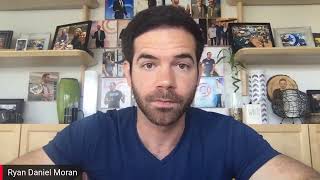
A livestream talk (Aug 25, 2020) by Ryan Daniel Moran for Capitalism.com about reframing 'impossible' goals. Moran uses Apple's rapid rise to $2 trillion, student success (Sylvia Hall), and his own failures to argue that what seems impossible now can become plausible as the world changes; he encourages adopting a future-oriented mindset, seeking justification for desired outcomes rather than evidence that they are impossible, and staying in the game despite setbacks.
Chapters
Hey, good morning, boys and girls, ladies and germs. Good to see all of you. Today's Tuesday, August 25, 2020. Thanks for hanging out with me for capitalism and coffee. It is good to see all of you. So we're gonna get to the simultaneous sip here in a second, but today I just want to have a quick chat about a thought that has been percolating in my brain about this idea of impossible and growing into what is currently impossible. Something happened in my brain last week when it was announced that Apple crossed $2 trillion in market cap. And we're going to talk about that today. So in the meantime, to kick it off, I know why you're here. You hear something that we call the simultaneous sip. So grab something to hold a liquid, then put the liquid in the cup and then join capitalists around the world for a simultaneous sip. Are you ready? Because we're doing it with or without you. Here we go. Go.
I burned my mouth a little bit. It's a hot capitalism.
Sip. Morning, Drew. Good morning, Herb. Good morning all of you who are watching live. So this week, Apple crossed $2 trillion market cap. That's just so you know, a trillion dollars is a thousand billion dollars. A thousand billion. So that is a thousand thousand million. Do you get that? So a trillion is a million million.
And Apple made it in two years. So Steve Jobs, 30 odd years ago, comes up with this idea for Apple Inc. 30 years later, it becomes a trillion dollar company, became worth half a trillion dollars, $500 billion while he was still alive. So he grows this thing from his garage to a 500 billion dollar company in terms of market cap. When he croaks, Tim Cook comes over, crosses a trillion dollars. Two years later, it creates another trillion dollars in value. Now, when I was a kid, a trillion dollars was like saying a kaboobal zillion dollars that my money didn't exist. But now there's a company that grows in market cap that much in two years. How do you interpret that? Because there's people all over the world who are interpreting that as the evil entrepreneur, people not paying their fair share. But you know what it did in my brain made me go, if Tim Cook can make a trillion dollars in two years, why in the world would I think it's impossible to make 1/1 of that in 25 years? Why in the world is it even.
Unfeasible?
Why is it not practical to think that if you start something in your garage today, 25 years from now.
That you could have a 1, 1000th of what Tim Cook did in two years that would make you a billionaire. By the way, is it so unreasonable to think that if you start something tiny, something insignificant right now, that in 25 years when the world has changed and come your way and the idea that you think could never take off 25 years from now when the world catches up, you don't think that it's possible to do 1/1,000th of what Tim Cook has done? Okay, how about this? How about 1, 1 millionth, 11 millionth of what he has done?
I've helped some, I don't know, several hundred people build seven figure businesses and still to this day people think that's impossible. And I get it, if you don't come from that context, that can feel like a big number. But it's 1/1 millionth.
Of what some other entrepreneur has done. 1/1 millionth of it. And you've got time.
I was chatting yesterday, we did a case study for the capitalism incubator. Did this case study with one of our past students. Her name is Sylvia Hall. Sylvia started this company that.
At the time there was really no market for it. There was nobody typing in looking for this specific product. Now there's a little bit of, there's a little bit more demand for it. But Sylvia kind of just came up through our ranks, did a couple of the things that we talked about, brought her product to life. She had five failed attempts at businesses not working out. This was her sixth attempt. And on her sixth attempt.
This product just incrementally grows. It's been three years. She crossed seven figures a year and a half or two years in. She's now in the multi seven figures full time. Her husband quit her engineering job. Now they're full time together. They just have a really fun, exciting company. And I asked her, I said if you, if you went back three years and talked to Sylvia from 2017 and you told her that you're gonna have a multimillion dollar business, what would she say? She said it would have been, I would have said it was impossible.
So an interesting thing happens.
Most of us have things we want that we think are impossible. And we're using the past to be able to figure out whether or not that thing is possible. We're using past references to decide whether or not what's going to happen in the future is feasible. But none of us know what's going to happen in the future. None of us have any idea who we're going to meet, what's going to happen, what opportunities are going to come our way. What things are going to show up for us that we can't see right now, what things we're going to learn.
What'S going to happen to the marketplace. None of us have any of that. Any of that. And so what most of us are doing is we're walking through the future getting data points that justify our past conclusions rather than justify what we want to be true or what we want to happen. And so what most people do is when they set goals that they feel are impossible, they look ahead to the future and then they go, that's impossible because of what's happened in the past. And now I'm walking around in the future using my past, the filter that makes us blind to the opportunities right in front of us. So if you tell most people that they can build a million dollar business, they'll go into their memory bank and sift for data and they'll say, I don't know who's built a million dollar business. And every time I think I hear about millionaires, it's about that they're evil and they should be taxed. I don't want to be one of those people.
And plus I don't have any ideas for a million dollar business immediately brain says, can't have it impossible, don't have ideas, don't know anybody. And those people are bad. Why would I even want that? That's gross.
There's no way I want to be one of those people. That's what the brain says.
But if you were to completely flip it and say million dollar business.
I'd like to have that. That person has it and that person has it and that person has a trillion dollars.
No reason why I can't do one, one millionth of that. And now everything that happens becomes the justification for what you do want.
That's, that's powerful.
And so every good goal is impossible at first.
Everything you've accomplished that is impressive, that you're proud of is impossible. At some point.
I have an 8 month old who's trying to learn how to walk.
It was impossible for him to walk four months ago. He literally didn't have the ability to do that.
But we all knew who was going to get there. We all knew he was going to grow up.
We all knew it was going to happen because we didn't expect for it to stay the same. We expect things to change.
Now here's a good test to see whether or not you're operating on past data or future hope. If the future scares you or excites you. If change scares you.
Then it's because it is conflicting with the past data that is trying to stay safe, that is trying to stay justified. So as the world changes, people saying, huh, kids these days, man, really, it's a real scary world we live in. Can't believe people are giving up their morals like that.
But if you're looking to the future to justify.
What you want to happen, then change is just constantly new opportunities, constant new evolution, constant growth, constant new ideas. Which one do you want?
One keeps you paralyzed and one pulls you forward, pulls you towards what you think is impossible.
It's kind of like if you were to set a goal right now that you perceive as impossible.
And then you can ask the question, well, what would have to happen for me to believe this? Who would I have to meet? What opportunity would have to happen?
And if those things happened, then would you believe it?
And is it possible that there's other things that could happen that would make that possible? Could that happen?
You don't have your. Your job is not to figure out how to get it done.
Your job is to look for the justification of it and then the how just flutters in. Because when you, when you know the how, it never happens that way. It never goes how you expect it to. It never plays out exactly as you expect it to. And so if you're stuck on the how, then the how that actually shows up will disappoint you, it will conflict, it will threaten you, it will throw you off course rather than justify your future.
Can you guys hear my 8 month old screaming his bloody head off all day and all night?
Hey Bradley. Hey John. Good morning, Amanda. Good morning, Sandeep. Good morning, Kimberly. Good morning, David. Good to see all of you. Hey Rhino, thanks for hanging out with me on your Tuesday morning.
So the key to getting everything you want is to know what it is and believe it's possible. And then look for justification for its ability to come your way, your ability to make it happen. Because if you think that you have to know the exact formula for it to unfold and it doesn't happen that way, then you'll feel threatened and pushed off course. But if you just know it's going to happen.
And you're actively working on it and moving toward it.
You'Re done.
And worst case scenario is you gave yourself the best chuck possible. You gave yourself the best at bat that you had.
So it's interesting, I've noticed this about myself. When I was a kid, I had no problem dreaming about owning a baseball Team. Dreaming about being a multimillionaire, dreaming about whatever. I just. I just believed it would happen. And most of the. Like, I have. I have accomplished most of those things that I dreamed about from when I was a kid. And now I'm relearning how to dream.
Because now I got to get. I got to get new goals. And goals isn't the right word. I got to get new possibilities. I got to get new ideas. I gotta get new desires. And you know where desires come from? Knowing what you don't want. Running up against walls enough to be like, you know what? I think I want something different.
And then you have a choice. Because when you know you want something different, you can either believe that it's possible or you can doubt it the entire time.
Which just keeps you where you are. Sometimes it builds desire, staying stuck exactly where you are.
But most of the time, it just keeps you stuck exactly where you are. Man, that sucks. Man, that feels awful.
Man, it feels tense.
It does not feel like growth. Growth feels like knowing where you are unfolding and then just allowing it to go and go and go and go and go and not judging what happens along the path.
So I'm just so hot on this idea that 25 years ago, making a trillion dollars was literally impossible. Today, someone did it in two years.
That's crazy. That's not the right word. That's amazing.
That's empowering. And I know some people will say, like, well, it was the Federal. Federal Reserve that did it. You're missing the point. They're saying it's Covid that did it. You're missing the point. And guess what? You're right. And could anyone have seen Covid or the Federal Reserve responding that way 25 years ago? No. Then it was impossible back then. It's possible now. You can justify it any way you want. The world's different than it was 25 years ago, and it will be different 25 years from now. Which one are you banking on? Are you banking on the world as it is today, or are you banking on the world changing so much 25 years from now that whatever you want just seems normal and appropriate for 25 years from now? Which one are you banking on? Knowing that 90% of the world is banking on that staying exactly as it is today?
So you're just ahead of all of them, and 10% of the world will be like, oh, yeah, it's totally normal. Welcome to the club.
So what are you banking on?
And so this idea has just.
Gotten into my brain over the Last several days and has shaken up all the thoughts of what I thought is important for me to be focusing on.
Versus realizing that.
For a long time I have been building goals based on now. Not 25 years from now, not five years now, not 10 years from now. Trying to craft the world as it is and bend it to my will versus realizing that I'm playing five years or 25 years from now, will. Will arrive. So I want to play for that. I'll play for that game. Yeah, I want things right now, but the things that I want right now are like, I want to be. I want to be in the process of building what it is that I want most. That's growth, that's exciting. That's what we all want.
Once you get what it is that you are working for, it's time for something else. Like, the fun is in the going along towards what it is that you perceive to be the final destination. Every day is a final destination. Every day is getting there.
It's not like working for a thing and getting it. It's like knowing that the world is going to be different 25 years from now and recognizing that every day. You're arriving.
Every day.
Session's been going on in my brain.
You could be a trillionaire. You can be a billionaire. You could absolutely be a millionaire. Like, you could get most of it wrong and be a millionaire. You just got to be in the game to be a millionaire.
And most people are even afraid to be in the game because all they see is all the past failures rather than the one winner. Do you have any idea how much I failed in the last five years? So much. I sold Tesla at 700.
I bought a business that took me three years just to turn around to get to break even.
I sold a company to a private equity firm that then went bankrupt. And I didn't get my second bite at the apple.
I've invested in things that. That went to absolutely zero. I've lost a million dollars in investments.
Still a millionaire.
Because I'm in the game and I get 80% of it wrong.
But I keep playing, and I know where I'm going. And right now I'm kind of thinking it's possible to be a billionaire in a couple decades. Not just possible, but, like, almost likely.
Because the world's gonna be so different and my skill set is gonna be so different, and the people I know are gonna be so different.
You're not gonna be the same person 20 years from now. You're gonna have the same network 20 years from now you're not gonna have the same desires 20 years from now. So why are you doubting yourself?
Why are you focusing on what you think you can't have? Why aren't you focusing on all that is possible for somebody and they know somebody and they know something?
There's no mysterious person behind the curtain preventing you or anyone else from getting everything that you desire most. It's only the story you have in your brain that says you can't.
That's a story.
And you know what? Saying that you can is also a story. You think there's some judge out there deciding whether or not you can or you can't. You're the only judge.
You're the only one.
And when you believe you can, you find justification for it. And when you believe you can't, you find justification for it. Same. It's just a scale. Which one do you want to put weight on?
That's how your brain works. Yes or no. And then everything that you see adds weight to one of the two. And then you tip the scales to yes. And based on that, you open up a new set of things that you're going to perceive. That's how your brain works.
Your brain is a filtering machine that is taking all this data and putting it into piles and weighing it out. And when one wins, it moves on to the next. Perception.
But it's all a story. And you can go get whatever data you want to justify whatever it is you want.
You're creating the whole thing.
The whole thing.
So what do you want? What do you want to create?
I mean, you can take whatever the most fundamental belief you want is.
And then you immediately will justify why you believe that thing. This piece and this piece and this piece and this piece. But all of those are simply inputs that you put onto one side of the scale over time. And it's gotten heavier and heavier and heavier and heavier. And it might be absolutely serving you. Doesn't mean it's true.
Because there is no. Like.
There is no final truth at the end of it. You're just perceiving all the time.
And based on what you conclude, you're. You'll perceive something different. So can you be a billionaire? Are you a billionaire in training?
That guy did it. That guy made a thousand times a billion. Mark Zuckerberg did it in, like three years from college.
A lot of tech stuff happening going to billions of dollars. They're creating a completely different world.
The world's gonna look really different in 20 years. I wonder what opportunities are gonna open up over the next 10 years. I wonder if I should be thinking about one of those rather than what I have been thinking about. Is there anybody who's done this while being a full time mom? Hmm?
Hmm. Wait, who's that? Spanx founder Sarah. What? Oh, she did? Yeah, but she probably doesn't have a family now. She has five kids. Oh.
Is there anybody who's done it while working full time for somebody else? Oh, really? They did?
You can always find justification for it.
It's all like.
I'm in this mode right now where I feel like there's literally nothing that we can't do. There's really nothing that I can't accomplish.
Thank you, tiffany.
And meanwhile, what's on TV is two parties saying why the other party is the fault of why you can't.
I don't know that I can end on anything better than that.
I'm done. I have nothing else to say. I'm gonna go take a family member to the airport. I love you all. Thanks for hanging out with me. I'll see you on Thursday. See ya.







