
Bud Light really messed up....
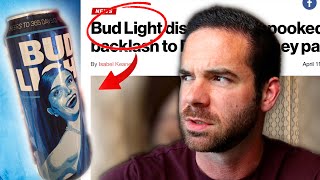
Ryan Daniel Moran argues Bud Light's real mistake wasn't the Dylan Mulvaney partnership but failing to explain what the brand stood for. The ad had no clear message, which let critics control the story. Moran breaks down what actually works: know your customer, pick influencers who match their values, and stay engaged instead of going silent.
Questions this video answers
Ryan Daniel Moran
April 19, 2023
Dylan Mulvaney
About 30% to 50% (per some store owners cited in the transcript)
Peak earlier in the year: $66 per share; day campaign came out: $66 per share; two weeks later: $64.50 per share (transcript claims ~ $1 per share decline)
Chapters
Today, Bud Light facing some backlash over its partnership with a trans. I got some Bud Lights for a billion dollars. What does it matter? I don't, I don't really get it. We put his face on a can. You hit a bud light at 50 yards with a 223 and it just explodes. This is all nuttiness. Bud Light had been kind of a brand of bratty, kind of out of touch humor. And it was really important that we had another approach.
Bud Light recently sponsored Dylan Mulvaney for an ad campaign as an influencer who was celebrating a year of womanhood during their transition from male to female. And the world lost its mind. Celebrities like Kid Rock and Travis Tritt called for a boycott. Does anybody actually still listen to them? Some store owners said that they saw as much as a 30 to 50% drop in, in sales of Bud Light at their stores. And there were even reports that Bud Light's parent company, Anheuser Busch, lost billions of dollars in the fallout from this campaign. This controversy has nothing to do with transgenderism, transphobia, or even the political divide. I know you don't believe me, but stick with me. You'll see it. The real controversy here is that this is the worst marketing campaign I've seen in my life. This is worse than Kid Rock's fake run for Congress in 2018. So in this video, we're going to break down what Bud Light did wrong because there is a chance that you could make the same mistake in the future. Plus, we'll talk about what Bud Light should have done instead and we'll pull some marketing lessons from this that'll make you some money. First of all, let's talk about a few facts. In the wake of the fallout of this campaign, there were reports that Anheuser Busch, the parent company of Bud Light, lost billions of dollars in value from lost sales and people selling the stock. That simply is not true. You are fake news. During the peak of Anheuser Busch's performance this year, they were selling at $66 a share. In fact, that was the peak. The day that the campaign came out, it was selling for $66 a share. Two weeks later, the stock was trading for 64,50. We lost $1 per share. What a fallout. There were also reports that the CEO stepped down, that the VP of Sales was fired, and even that the ad specifically over Easter weekend just to make Christians angry. But the truth is, no one resigned, no one was fired. And there's a chance that this is the exact reaction that Bud Light wanted when they kicked off this campaign because controversy is great for attention, and attention can be great for sales. The question is, did Bud Light execute this in a way that's going to grow their business? No. No, they did not. They totally botched this campaign. The easy way out is to say this is woke culture trying to take over another American brand. Woke inclusive esg. Go. Woke Go. Broke is a real thing. What we have here is a classic case of influencer marketing done horribly wrong. Because the mistake that this company made was valuing attention over conversion. Now, if you watch the actual ad, it's actually kind of a funny ad, but the ad is completely devoid of any values. You will generate raving fans for your business when you get them to associate their values with your brand. There were no values communicated to an ideal customer in this ad. And because of that, consumers filled in the void. To make things worse, they've gone completely silent. When you've gotten this much attention around a campaign, even if it completely fails, you can find find a way to turn this into a positive. This campaign got tons of attention, and it will get attention continually for the next several weeks and several months, but it will fail to get conversion. Is there anybody who is going to watch this ad and suddenly become a Bud Light supporter? There might be a few, but it will only be a few. Conversely, are there people who will watch this ad and never buy Bud Light again? Absolutely. And it's not because of transphobia or because people are against transgender issues. It's because this ad failed to communicate any values that would resonate with their best buyers. But the real story here is that Bud Light was trying to get attention with a new demographic, and it failed horribly. If you want to attract a younger demographic or any new demographic that your company isn't used to targeting, we first have to identify what values that demographic has. If we you don't say it, then the consumer is going to fill in the gaps with their own. But if we call out the values that we want to have our brand represent, we can attract raving fans and still get lots of attention. For example, if Bud Light had done a campaign that was all about freedom and they had said, the thing about America that makes us great is that everyone's free to live how they want to live. I may not agree with you, but I will fight for your right to live how you want to live. If they had taken that as the principle and the value that they wanted to represent, they could have run this ad. They could have even used Dylan Mulvaney as an example for this campaign, if they had brought in other voices and said, we may not agree on much, but we all agree that we should be free. Cheers to that. That's the start of a very interesting campaign. That's a campaign that would be controversial. That's a campaign that would get both sides talking about it. That would get a lot of attention. It would also call out the core value that their customer, their best buyer, believes in the most. Now, that's not the only way that they could have done this campaign better. There's a thousand different ways that you could call out values and still stand for something that you want to stand for. But without it, without standing for a value, then you are just putting all of the weight of the advertisement on the influencer and the person watching the viewer, the customer is going to bring their opinions of that influencer and cast it over to the brand. And that's where Bud Light's advertisement went totally wrong. So what this did instead is it left room for Ben Shapiro and Fox News or CNN to fill in their own commentary about what this ad really meant. And those people are actually influential to Bud Light's target customer. But if they had made the campaign about values like Freedom, then you would have turned the campaign and had all these influencers arguing about what does freedom really mean. You would have made the whole campaign, the whole discussion be about freedom and how we define it. And Bud Light would have been the center of that conversation. So you would have had people debating whether or not they should have featured Dylan Mulvaney as part of their ad, but you still would have had Freedom and Bud Light contained in the same conversation, which is exactly what you want to do in marketing. Rule number one in marketing, know thy customer. Rule number two of marketing, know what matters to your customer. Rule number three of marketing, know the people who are most influential on those values. Bud Light forgot all three. So here's what you can learn from this. First, if you're at the beginning of your business, you want to be thinking about who the influencers or the audiences are that speak to the values that your brand represents. And when you do an ad with them, you want to call out the values and tell a story that is much bigger than the influencer. A lot of businesses think that they can just get an individual to say, I use this product, or I like this product, or brought to you by. And consumers see through that. Now, to be effective, you need to have a reason why your brand and this influencer come together because you share some value. The second lesson is you should maximize any attention that your business gets. If instead of going quiet, Bud Light was doing podcast interviews and blog posts and writing about all the controversy, they could not milk this campaign. They could have used the negative press and turned it into a positive thing for the company. The reason they went quiet is because they didn't really have a strategy here. They sponsored an influencer that they hoped would convert a younger demographic, and it failed. If the values that your best customer believes in are bigger than one person, then you can bring in even controversial figures that your audience does not like, and you can show why your brand is bigger than the pushback against that idea or that person. That's when truly great marketing campaigns get created. And finally, whenever you are advertising in any way, think about who the ideal customer is. The ideal customer is someone who will buy over and over again, or someone who will be a raving fan of your product or your business. Or it's just somebody that has the same values of what you want to represent. Where Bud Light went wrong was not just in who they sponsored. It was how they communicated the reason for that sponsorship, because they didn't communicate it at all. As a result, there were no values communicated in this ad, and it just became about the person who was speaking. If you speak to an audience even 30% well, you will get enough people to have a successful launch of a product or a relaunch of a brand. But if you fail to do that, then you are just yelling on the street corner. And if you've already got a brand that people associate you with, you run the risk of destroying that brand. That's what happened in this case, when they should have been speaking to a core group of buyers and communicating the values that they want to be associated with. My name is Ryan Daniel Moran. I help entrepreneurs build compelling brands, get to 100 sales a day, have a multimillion dollar exit it, and if you want to launch the right way, check out the free resources in the description of this video. Thanks so much. I'll see you next time. Take care.







