
Build A $1M Business With An Audience Of 100 People
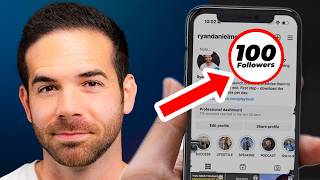
Ryan Daniel Moran (Capitalism.com) explains how founders can build seven-figure businesses by starting with a small, highly engaged audience (as few as ~100 people). He argues for a people-first approach—’dates before conversion’—where entrepreneurs cultivate trust and make deposits into customer relationships, then launch and leverage that core group's feedback and reviews to scale (examples include small launches that generated $15k from ~130 people and $100k+ in preorders after a 45-day audience build). The talk closes with CTAs for in-person events and a 90-day audience-building experience.
Questions this video answers
About 100 people.
About $15,000 in sales in the first 30–45 days.
About 45 days; over $100,000 in preorders.
July 21–24, 2024.
Chapters
Today I'm going to share with you how to build a million dollar business. Starting with an audience of as little as 100 people. Which sounds super hypey except for the fact that I've seen this happen multiple times. I have done this in my own businesses and the businesses in our portfolio start with this core thesis. I have been teaching a concept inside of our membership@capitalism.com for years now that you always start with a person that you are selling to. Because it is really hard to sell product. It's really difficult to draw attention to a thing that you want to sell. But it is really easy to talk to people. And when you do that, when you speak to people who will ideally be your best customers and you get them in your control, then building a seven figure business happens very naturally on the other side of that. But I have discovered that this is a concept that is very difficult to make the switch into because most entrepreneurs get into this game because they want to make money, because they want to sell stuff and they come up with a thing that they want to sell and then they go to sell that thing and they really struggle. They do a bunch of things in order to sell more stuff. Like they run ads, or they sponsor influencers, or they create a bunch of content, or they learn copywriting and persuasion. They build sales teams. These are all good tactics, these are all good strategies. But oftentimes we do it as a way to compensate for the fact that we are not connecting with the people who want to buy our stuff. One of my longest standing mentors is named Travis Sago. He wrote a great book, you should go get a copy. It's called Make Em Beg to Buy Make. And Travis gives this beautiful analogy in the opening words of this book where he talks about the ultimate conversion or sales page. The proposal. We actually do have a mutual friend that proposed to his now wife via a sales page. It was adorable. It was the highest converting piece of copy ever. 100%. There was one customer and she said yes. Well, when you think about someone proposing marriage to someone else, it is very rare, hopefully never that it was the perfect words that the person used in order to persuade the other person to marry them. It was unlikely the ring that they chose. If they said no because of the ring, maybe you want to get a different person. The real magic was everything that happened leading up to the proposal. Hopefully you went on a few dates, hopefully there's a values match. Hopefully there is trust and camaraderie between these two people and then they decide to get married. And build a life together. Now this is a big purchase, this is a big offer. You're deciding to spend your life with someone. A customer obviously is not that big of a decision. It's not a life altering decision in most cases. But there is some dating that happens when before the offer is made. What most entrepreneurs are trying to do is to speed date and get engaged. While they're speed dating, they're trying to get in front of as many people as possible, hoping that some of them will stick and buy their products. And so as a result, they do all of these hacky tactical things to draw, to draw attention to their business, their brand or their products. Again, they run ads, they try to get lots of reviews, they sponsor influencers, they get good at copy, they do all of these tactical strategy things, which are all good things except for the fact that they're usually using it on a first date and trying to get married. What is the opposite way to do this? I think there is an easier way to do this and that is focusing on everything that happens before you expect a transaction to happen. One of the milestones or steps that we put our clients through, inside of the 1%, which is our mentoring program for entrepreneurs building seven figure businesses. One of the milestones is to build a list of a hundred people that match your ideal customer. 100 people is enough to have a $10,000, $20,000, $25,000 launch in a lot of cases. I'm thinking of a few examples from our community. There's one guy named Ty who built an audience of about 130 people. He did a launch, made about 15k in sales in his first 30 to 45 days. That's a really good solid launch for an audience of that size. Then those customers left him reviews. Those reviews increase his conversion rate and he got to 15 to 20 sales a day. You know, like a couple months after launch, not even that long. That's a really good start to a business. Whereas most entrepreneurs would list their product for sale and then run a bunch of ads and just grind their way forward trying to get momentum in the algorithm or in front of their ideal customer. I'm thinking of one of our members, Miguel, who spent about 45 days just building an audience, released his product, did over $100,000 in pre orders to this small group of people. The product didn't even exist yet. In fact, the product wasn't going to be delivered for months after the purchase. And he still brought in over $100,000 in revenue. The takeaway is that if you have dates before the conversion, your conversions go up. And when you're selling a product, especially a physical product, you would be stunned at how few dates you need to go on in order to create a conversion. The problem with a lot of specifically e commerce entrepreneurs is they see a platform where all of the customers are, they see Amazon, they see Temu if you're selling on there, or walmart.com or kickstarter.com all the customers are here. And I'm trying to extract the people from the platform because I want to make money, I want to make profit. So what most entrepreneurs do is they treat the platform where they're getting their sales like it is this beast. And this beast needs to be fed so that it doesn't eat them. And thinking about the entrepreneurs who sell on Amazon, and they're making a million dollars a year selling on Amazon, but they're constantly afraid that the Amazon beast is going to turn around and bite them. It's going to eat them. And so they try to avoid the Amazon beast or they try to throw scraps to the Amazon beast to try and make it happy. But the way that you make the Amazon beast your friend is to feed it its favorite food. And its favorite food is happy customers. And rather than trying to extract the food from the beast, I know no analogy is perfect, but I'm going with it, okay? Instead of trying to steal Amazon beast's food, we bring it its favorite food in the form of customers that are really happy. And the customers that are the happiest are the ones that decide to buy from you but before they ever see your product compared to a competitors. So if we can bring outside traffic to the place where we are taking sales, if we have a list of people that like us or feel connected to us or want what we have, they are obviously much more likely to purchase. And then the Amazon beast becomes our friend and it starts barking at the other competitors and defending us. It becomes our guard dog. So all we do to flip the script here is to have a small group of people that want our stuff choose to buy from us and then buy it on the platform. And now we have this beautiful one, two punch of having an audience that likes us, that buys at premium price points, and we have a platform that is rewarding us for the traffic that we are bringing to it. So the question becomes, how do we cultivate a list of people that truly care about what it is that we're offering? And the answer to that question doesn't make a lot of people happy, but it's that you have to care first. When we're thinking about an extraction mindset of pulling the money out of the customer's wallet, or trying to pull the sales out of a platform, or we are trying to convince or control people into buying our stuff, then we are always looking for more and we're rolling the ball uphill. When we care first and we make deposits into the relationship bank account, it makes it easy to make a withdrawal. When it comes time to sell something or to launch something, what does it look like to care first? The real question is simply, how do I help somebody? Who is the person that I want to help? Who is the person whose transformation I want to be a part of? Whose transformation do I want to see more of in the world that my product could hopefully play a role in helping make happen? The way that we know the answer to this question is when you can simply fill in the blanks of this sentence. My brand or my business helps blank achieve blank. If you can fill in those blanks, you've got a target person that you're in the business of serving, and now your job is to care about that person so much that they voluntarily want to be a part of the transformation that you are creating. Let's think about a couple of examples. When athletic greens launched back in like 2009 or whatever it was, there was no greens powder market. Now today, the greens powder market, I mean, there's all kinds of competitors. Every nutritional brand has a greens powder and their greens powder is better than the other greens powder. And this one has more kale and this one has more vitamin C. It's just, it's all product focused. But when the leading greens powder launched, there was no greens powder market. They didn't look at the data of the marketplace and say, oh, there's an opportunity to sell greens powders. No, there was no data for greens powders. Similarly, when Bulletproof launched in, you know, 2015 or whatever that was when Dave Asprey went to his audience that he was blogging to and creating podcasts for, and he sold a mold free coffee, there was no demand for a mold free coffee. Similarly, there was not really a market for medium chain triglycerides, now known as mcts or MCT Oil. There was no market for these things. But the founder of that company had a core group of people that he had been making deposits into. He had been writing content, he'd been producing podcasts. He made himself available through Q&As, and as a result, he had a Core group of people that wanted his stuff and they would have bought whatever it is that he sold. Now, these are examples of products that didn't really exist. You know, there wasn't a greens powder, There wasn't a lot of MCT oil options out there back in 2013. 14. But what about competitive markets? If we look at an example like Dr. Squatch, which is a brand that's valued I think over a billion dollars now, that launched in 2013, there was not a lack of organic soaps in the marketplace. There was not a lack of natural deodorants in the space. They weren't first to market, but they had a very core group that they were going after. And it was men who are not used to buying that stuff. They did all of their marketing to one core group of people. Because up until then, the marketing for organic deodorants, organic soaps, was all done for women. So they targeted a different group of people and made it cool for them. They looked at how this product would create a transformation or serve as part of a transformation for a core group of people. And what did they do? All of their ads appealed to that person. All their content appealed to that person. So these are all examples of first developing a product that is for one core group of people and knowing who that is beforehand. Rather than saying, I've got this thing, how do I go get the people that want this thing? You choose the person first, and all of your marketing efforts go to serve that person. The first step is we have to demonstrate that we care about a core group of people. And then what we do strategically is get 100 of those people onto an email list and we launch to them. We then use that feedback as the way to broadcast the product to everybody else in the world. Rather than trying to just talk about the product, we take the feedback that we got from the person that we cared about and we use that as the way to broadcast it to the rest of the world. We do this by sharing reviews, by taking quotes and running it as ads, by getting people to post on their own accounts. We use that almost as our distribution source. Once we have momentum as a result of doing that, we're going back and cultivating a sub list of a hundred ambassadors. And those hundred ambassadors are people that we're going way above and beyond for. These are the people that we're giving free product to. We're spoiling. We're giving them attention. I'll take the call with that customer. In fact, I'm thinking about the first person I ever called that just bought one of my products. They bought three units at a time and I called them up, just cold called him and I said hey, I, this is, this is Ryan from sheer strength and I just noticed that you bought three of our products and I just want to know what your experience is like now. Up until that point I had thought that my market was people like me. It was 25 year olds who were trying to add muscle. This was a 53 year old man who then went to tell me about how my product had changed his sex life with his wife. There are things he told me that I can't repeat and I can't forget but man, did it change my understanding of my customer. And when I go to a group of people that are now raving fans of a product and I launch the next thing and I over serve that person ensure that they have an amazing experience, the business changes very rapidly. I have often been labeled as an Amazon guy because I have built businesses and I've sold businesses that took more than 50% of their sales on Amazon.com and the reality is I know a little bit about Amazon, but I am a marketer that knows how to get in front of people and market to people and bring them to a platform. And marketing is about understanding the journey or the pain points that someone else is having and caring enough and demonstrating that you care enough to the point where there is a connection and there is trust that is built. And as a result of doing that, you build a brand. So at first this seems harder. It takes a little bit more thought and at first it may not work as well, but after a very short period of time, and by a short period of time, I mean like 90 days or so, the compounding returns of this approach crush everybody else. And the good news for those of you who are still here, almost no brands do it. Almost none. I'd be willing to say it's 90% plus. Brands do not think about customer first, they don't think about audience first or people first. They think about selling more stuff. And if you take this approach, I would be willing to bet that in the medium to long term, meaning over six to 12 months, you end up beating almost everybody else. Before we wrap, let me give a couple of housekeeping items for those of you who want to get more involved here@capitalism.com Our next in person mastermind is July 21st through the 24th, 2024. If you're watching this or listening to this before then, you want to come hang out in San Diego shoot an email to joinapitalism.com and we will send you details. Number two, I am looking to do more in person meetups through those of you who consume my content. So if there is a group of you in a certain city, I can be very easily persuaded to make an appearance and to meet up somewhere, talk about business, grab dinner together and if you want to organize a meetup in your city, please shoot an email to me at join@capitalism.com and finally, for those of you who are brand owners that need to build a better connection with your customers, whether you are starting or whether you're already in business but you don't have an audience that is responsive, we now have a 90 day experience to help you build that core audience that you can launch to get reviews from and build momentum around your brand. If you want to join, get details same way, shoot me an email@joinapitalism.com we can let you know if there's any spots available. I'm Ryan Daniel Moran with capitalism.com thanks for being here. I'll see you in the next episode. Take care.







